How To Clean Washing Machine With Citric Acid – Guide
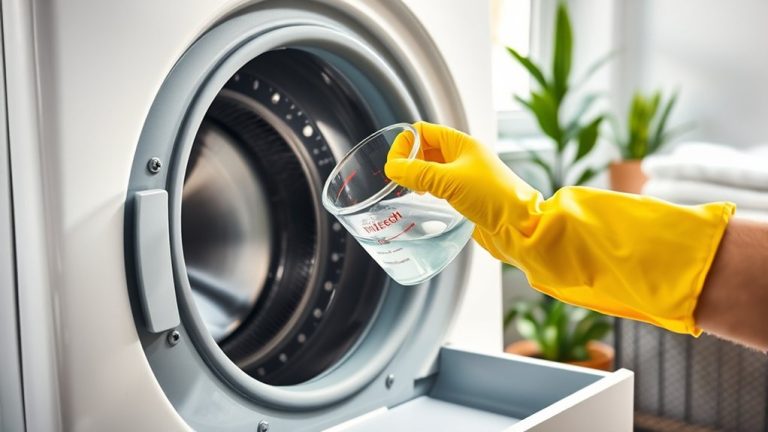
To clean your washing machine with citric acid, dissolve 1/4 to 1/2 cup of pure powder in warm water and add it directly to the drum or detergent compartment. Run the hottest, longest cycle (around 60°C) with an empty drum to effectively descale, sanitize, and deodorize.
Afterward, wipe seals and drum to prevent mold. Avoid mixing with vinegar or baking soda, and follow proper maintenance schedules. Understanding these steps guarantees peak machine performance and longevity.
You’ll discover full guidance on supplies, part cleaning, and mold removal here.
Why Choose Citric Acid To Clean Your Washing Machine
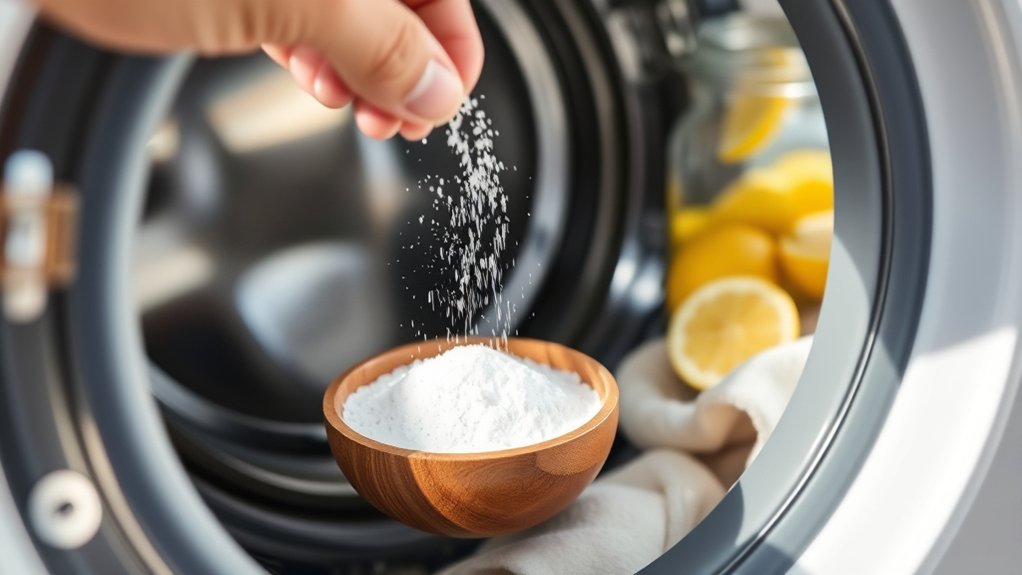
Choosing citric acid to clean your washing machine offers several advantages over common alternatives like vinegar or baking soda. Citric acid excels in descaling and limescale removal due to its strong reaction with calcium carbonate, effectively dissolving mineral build-up faster and more thoroughly.
Its low pH allows it to break down deposits and eliminate bacteria, sanitizing and deodorizing the interior without leaving any odor. When citric acid reacts with limescale, it forms calcium citrate, a highly soluble compound that rinses away completely, preventing residue accumulation.
This makes citric acid a reliable cleaning solution that protects your machine’s rubber seals and metal parts. Plus, it’s fully biodegradable, making it an eco-friendly choice for maintaining ideal washing machine performance.
What Supplies You Need For Citric Acid Cleaning
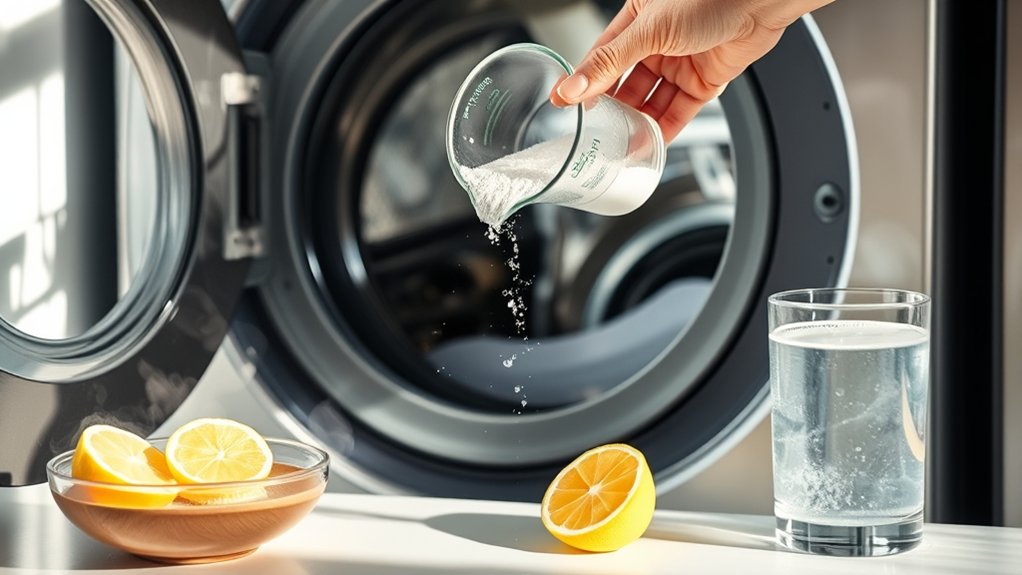
You’ll want about 1/4 to 1/2 cup of pure citric acid powder for effective cleaning. It’s best to measure it accurately using a cup or spoon.
Before adding it to your washing machine, dissolve the citric acid in some warm water.
Also, keep a cleaning cloth or sponge nearby so you can scrub any accessible areas once the cycle is done.
Essential Cleaning Materials
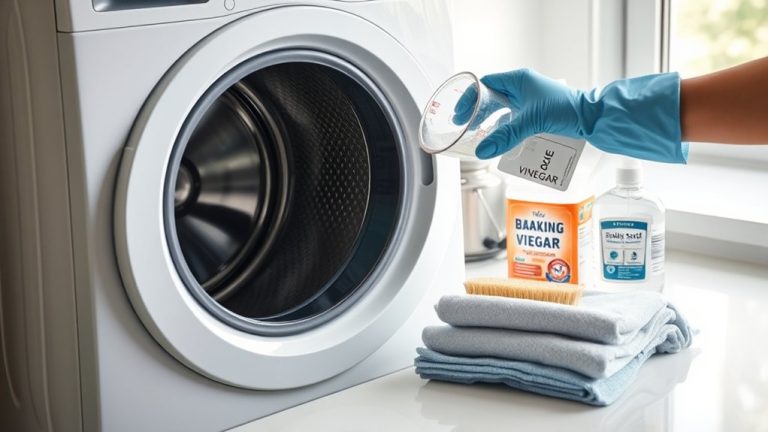
Before starting the citric acid cleaning process, gather 1/4 to 1/2 cup of citric acid, Castile soap, an old toothbrush, and cleaning cloths. These essential cleaning materials make descaling and deep cleaning your washing machine much easier.
Citric acid is a powerful, eco-friendly agent that removes limescale buildup without harsh chemicals. Castile soap helps break down any leftover grime.
The old toothbrush is perfect for scrubbing hard-to-reach areas like seals and detergent dispensers.
Cleaning cloths come in handy for wiping down surfaces after cleaning. If you have a front loader machine, an old towel or shallow baking dish is great for cleaning door seals thoroughly.
These simple, eco-friendly supplies keep your washing machine running efficiently and help extend its lifespan with regular maintenance and descaling.
Citric Acid Quantity
How much citric acid should you use for cleaning your washing machine? For a standard deep cleaning cycle, measure between 1/4 to 1/2 cup of citric acid in powdered form. This amount guarantees effective descaling without causing damage.
If your machine is over 10 kg, increase the quantity to about 200 grams (around 2/3 cup). This helps handle larger water volumes and more scale buildup.
Use a measuring spoon or kitchen scale for accuracy because precision really impacts how well it cleans.
Add the powdered citric acid directly into the drum or detergent compartment before starting a hot water cleaning cycle.
After measuring, store any unused citric acid in an airtight container in a cool, dry place. This keeps it potent for future use.
Taking the time to measure correctly ensures consistent, effective descaling every time.
Tools For Scrubbing
Accurately measuring citric acid sets the stage for effective cleaning, but having the right tools makes the process thorough. For scrubbing your washing machine effectively, focus on precision and accessibility. Use an old toothbrush as your primary brush to reach tight spots like the dispenser and door seals.
Prepare to soak seals and gaskets in a shallow dish with citric acid solution to loosen grime before scrubbing. Keep soft cleaning cloths ready to wipe residues post-cleaning. A spray bottle with Castile soap helps pre-clean parts and surfaces efficiently.
Essential tools for scrubbing include:
- Measuring spoons or cups for accurate citric acid dispensing
- Old toothbrush for detailed brush scrubbing
- Shallow dish or towel to soak seals
- Soft cleaning cloth for wiping down surfaces
- Spray bottle with cleaning solution for pre-wash
How To Run A Citric Acid Cycle To Descale Your Washing Machine
To get your machine ready for a citric acid cycle, start by making sure it’s completely empty. Give the drum and seals a quick wipe to remove any visible debris—this helps everything work better.
Next, add about 1/4 to 1/2 cup of citric acid straight into the drum or the detergent drawer. If you’ve got a larger machine—over 10 kg—bump that up to around 200 grams.
Finally, choose the hottest and longest wash cycle you can, ideally set to 60°C. This will help the citric acid do its job and descale your washing machine effectively. Easy, right?
Preparing Machine For Cycle
Before running a citric acid cycle, make sure your washing machine is completely empty. This helps avoid damaging clothes or causing residue buildup.
Follow these steps to prepare your machine:
Remove all laundry and leave the drum empty. Measure 1/4 to 1/2 cup of citric acid based on your machine’s capacity. Then, add the citric acid directly into the drum or detergent drawer.
Select the hottest cycle available, ideally 60°C (140°F). Make sure it’s the longest setting for thorough descaling. Avoid adding detergent or cold water.
Run the cycle without laundry to maximize limescale removal.
Once the cycle is complete, wipe down the drum and door seal to eliminate any residue and prevent mold growth. This simple preparation guarantees effective descaling and helps prolong your washing machine’s lifespan.
Optimal Citric Acid Dosage
How much citric acid should you use to descale your washing machine effectively? For a standard-sized machine, use 1/2 cup (about 125 grams) of citric acid.
If your machine exceeds 10 kg capacity, increase the dosage to 200 grams or 3/4 cup.
Make sure the washing machine is empty before starting the cleaning cycle. This way, the citric acid can have direct contact with limescale and mineral deposits.
Set the cycle to the hottest temperature, typically 60°C (140°F), to get the best descaling results.
If you live in an area with hard water, you’ll want to repeat this process every 3 to 6 months to keep buildup at bay.
Following this precise dosage and cycle routine will make sure your machine stays free of limescale and runs smoothly over time.
How To Take Apart Washing Machine Parts Without Damage
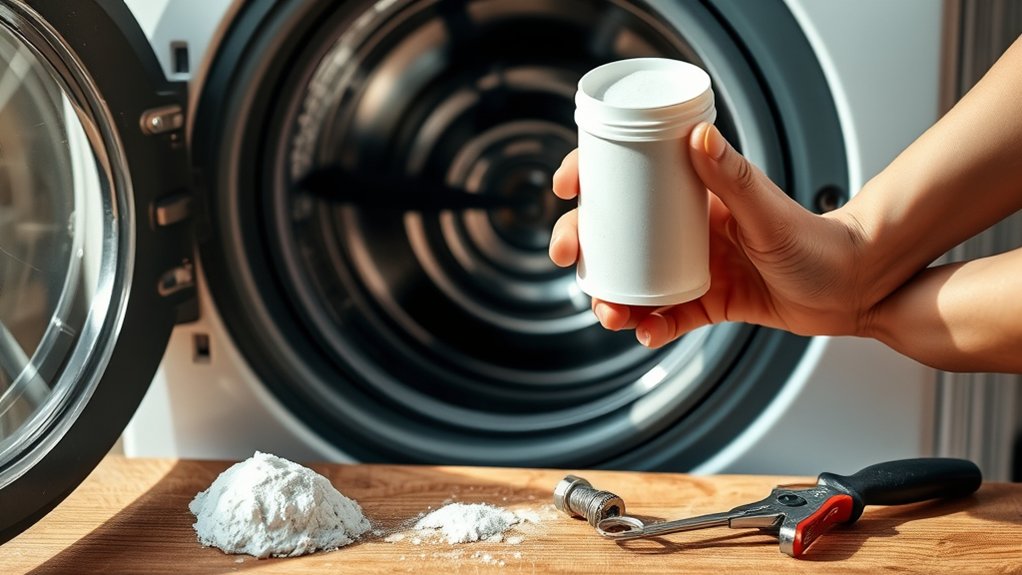
Although disassembling a washing machine may seem intimidating, you can prevent damage by following careful steps. Start by unplugging the machine to avoid electrical hazards.
During disassembly, take detailed notes or photos to guide reassembly accurately.
Use proper tools like screwdrivers and pliers to handle parts gently. Be especially cautious with plastic components and seals to avoid cracks.
Always unplug the machine before starting disassembly. Document each step with notes or photos.
Use the correct tools to prevent bending or breaking parts.
Avoid forcing or prying plastic connectors. Remove parts like the agitator or lint filter carefully following instructions.
This method guarantees safe disassembly without damaging the washing machine’s plastic or mechanical parts.
How To Clean Washing Machine Parts With Castile Soap And A Toothbrush
Where do you start when cleaning stubborn grime from your washing machine parts? Begin by mixing warm water with a few drops of Castile soap to create a gentle cleaning solution. Dip an old toothbrush into the solution and scrub the detergent dispenser, rubber gaskets, and any accessible corners.
Focus on areas prone to soap scum and grime buildup. Use the toothbrush to loosen residue without damaging delicate components. After scrubbing thoroughly, rinse each part with clean water to remove soap residue and loosened dirt.
Finally, dry all parts completely with a clean cloth or towel before reassembling. This prevents mold and mildew formation, ensuring your washing machine parts remain clean and functional. It’s an easy way to keep things fresh and running smoothly!
How To Remove Mold From Washing Machine Door Seals
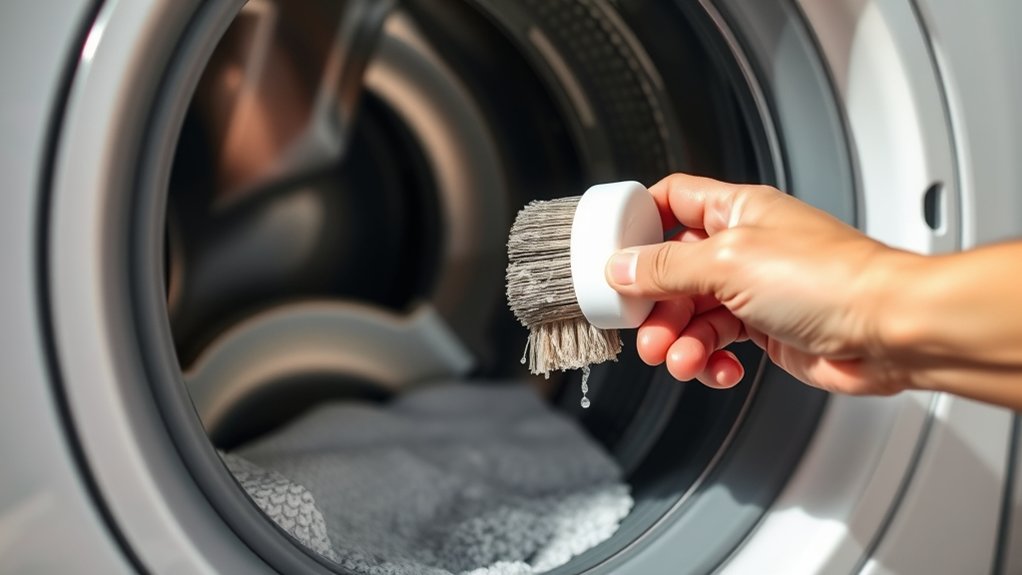
Since mold often accumulates in the folds of washing machine door seals, especially in humid environments, you need to address these areas carefully to prevent damage. Proper cleaning using citric acid targets mold and hard water deposits effectively.
Mold thrives in washing machine door seals, especially in humidity—careful cleaning with citric acid prevents damage and buildup.
Follow these steps for mold removal:
Soak a cloth or sponge in hot water mixed with citric acid. Thoroughly wipe all folds and crevices of the door seals.
For stubborn mold, apply a citric acid powder paste and let it sit 15-20 minutes.
Use an old toothbrush dipped in citric acid solution to scrub deep corners.
After cleaning, leave the door slightly open to allow complete drying and prevent mold recurrence.
This method ensures precise mold removal and maintains your washing machine’s door seals in excellent condition.
Common Mistakes To Avoid With Citric Acid Cleaning
When using citric acid to clean your washing machine, you need to avoid common mistakes that can reduce its effectiveness and might damage your appliance.
First, never mix citric acid with vinegar or baking soda because this neutralizes the descaling properties. Also, avoid running the cleaning cycle at temperatures above 80°C. Higher temperatures cause calcium citrate to redeposit, which makes descaling less effective.
Always clean with an empty drum to prevent fabric damage and dull colors. After descaling, make sure to thoroughly rinse the machine to get rid of any residues that could irritate your skin or harm your clothes.
Lastly, don’t exceed the recommended citric acid doses or cleaning frequency. Overusing it can degrade the rubber seals and cause long-term damage.
If you follow these tips, you’ll get effective cleaning without risking your washing machine’s integrity.
How Often To Use Citric Acid For Washing Machine Cleaning
Although cleaning frequency depends on water hardness and usage, you should use citric acid to deep clean your washing machine every 3 to 6 months. Proper maintenance with citric acid prevents limescale buildup and keeps your machine running efficiently.
Deep clean your washing machine with citric acid every 3 to 6 months to prevent limescale and ensure efficiency.
Adjust the interval based on your water hardness. In very hard water areas, clean every 2 months to combat limescale aggressively.
For moderate water hardness, a quarterly deep clean suffices.
If you have soft water, twice yearly cleaning maintains peak performance.
Frequent cleaning with citric acid prolongs your washing machine’s lifespan. Regular maintenance ensures thorough limescale removal and odor prevention.
This targeted cleaning schedule with citric acid guarantees effective descaling and reliable machine operation.
Easy Ways To Keep Your Washing Machine Fresh Between Deep Cleans
To keep your washing machine fresh between deep cleans, perform weekly maintenance tasks that prevent mold, mildew, and odor buildup. Wipe the door seal and rubber gaskets with a damp cloth to remove residue and inhibit microbial growth.
Always leave the washing machine door slightly ajar after each cycle to enhance air circulation and moisture evaporation.
Run a short hot water cycle with a small amount of citric acid regularly. This keeps the drum fresh without needing a full deep clean.
Monthly, clean the detergent dispenser and trap filter to prevent soap scum buildup.
You can also add natural disinfectants like tea tree oil or hydrogen peroxide during routine washes. These simple steps help keep your machine clean and smelling fresh between deep clean sessions. It’s easier than you might think!
Frequently Asked Questions
Can Citric Acid Damage Washing Machine Rubber Seals?
Yes, citric acid can damage washing machine rubber seals if you use it excessively or at high temperatures above 60°C (140°F).
To protect your seals, you should stick to proper dosages and avoid prolonged contact.
Always run a rinse cycle after descaling to remove any residue.
By controlling concentration and temperature, you’ll prevent the rubber from degrading or becoming brittle.
This way, you’ll extend your machine’s lifespan effectively.
Is It Safe to Use Citric Acid on All Washing Machine Brands?
Citric acid isn’t universally suitable for every washing machine brand. You should avoid using it on machines with delicate rubber seals or sensitive plastic components, as it might cause premature wear.
Always check your manufacturer’s instructions before proceeding.
When you use citric acid, dilute it properly and run cleaning cycles at or below 60°C to minimize risks.
Following these precautions guarantees safe and effective maintenance without compromising your machine’s integrity.
Just take a moment to double-check, and you’ll be good to go!
Can Citric Acid Remove Detergent Residue Buildup?
Yes, citric acid effectively removes detergent residue buildup by breaking down soap scum and mineral deposits. When you run a hot wash cycle with citric acid, it dissolves greasy residues and prevents hard water deposits from trapping detergent.
You should use it regularly to descale your machine. This helps ensure proper water flow and avoids residue accumulation in pipes and filters. Doing this keeps your washing machine efficient and hygienic.
How Long Does a Citric Acid Cleaning Cycle Take?
A citric acid cleaning cycle usually takes between 60 to 90 minutes.
If you run a hot wash at 60°C, expect it to last around 1 to 1.5 hours.
Keep in mind, longer cycles with soak or hygiene settings can extend it up to 2 hours.
Monitor your machine closely, especially if it’s heavily scaled.
You might need to allow extra time for thorough cleaning and residue removal.
Can Citric Acid Cleaning Help With Washing Machine Odors?
Yes, citric acid cleaning effectively reduces washing machine odors. You’ll dissolve limescale and mineral deposits where bacteria thrive, cutting off odor sources.
When you run a hot wash cycle with citric acid, you create an acidic environment that kills odor-causing bacteria and mold.
This process removes residues contributing to musty smells, leaving your machine fresher. For best results, clean regularly to maintain odor control and machine performance.
It’s a simple step that can make a big difference in keeping your washer smelling clean and working well.
Conclusion
Cleaning your washing machine with citric acid is like giving your appliance a fresh, invigorating reset. By following the steps carefully and avoiding common mistakes, you guarantee peak performance and longevity. Regular descaling prevents buildup, while targeted cleaning of parts keeps everything running smoothly.
Stick to the recommended schedule, and you’ll maintain a spotless, efficient machine that handles your laundry with precision and care. It’s just like a well-tuned instrument in perfect harmony.