How To Clean A Top Loading Washing Machine Without Agitator – Guide
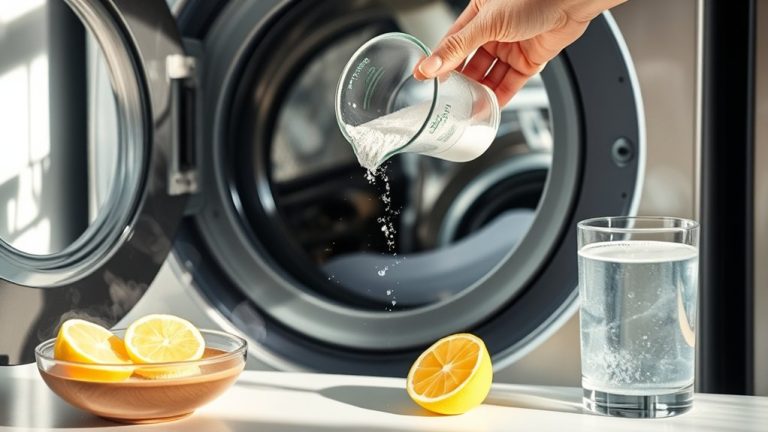
You can clean your top-loading washing machine without an agitator by running a hot water cycle with 2 cups of vinegar. Pause the cycle to let the solution sit for a while. Then, add 1 cup of baking soda before finishing the cycle.
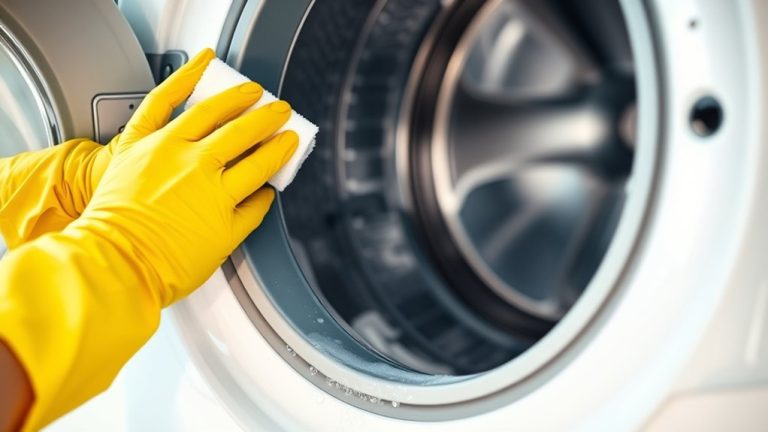
Next, wipe down the drum and seals to remove any grime and moisture. It’s a good idea to regularly inspect and clean the drain hose and filter too. Keeping the lid open after use helps prevent odors from building up.
To keep your machine running at its best, follow the additional detailed steps below. They’ll help you maintain peak performance over time.
Why You Should Clean Your Top Load Washer Without an Agitator
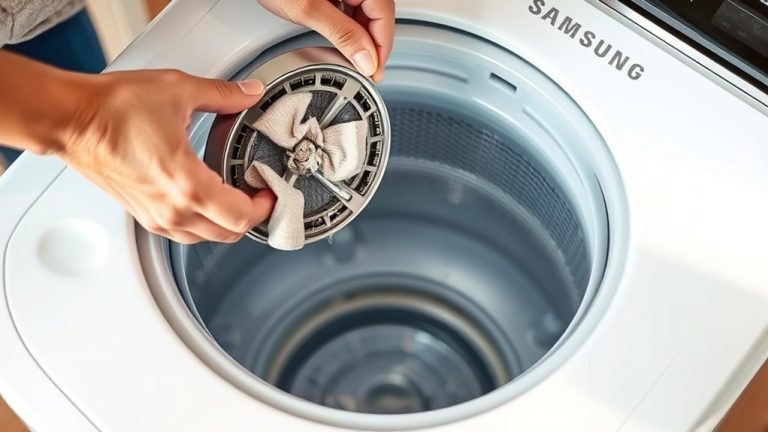
Although top load washers without agitators have fewer internal obstructions, you still need to clean them regularly to prevent mold, mildew, and detergent buildup. Stagnant water often collects in the drum, increasing the risk of mold growth.
To keep your machine performing at its best, you must clean your washing machine with regular cleaning and perform a deep clean at least once a month. This routine removes detergent residue and odors, ensuring fresh-smelling laundry.
Moreover, top load washers without agitators accumulate less grime, making maintenance more straightforward but no less essential. Regular cleaning helps prevent mold while enhancing machine efficiency and extending its lifespan by reducing wear on internal components.
Use natural agents like vinegar or specialized cleaners for effective, safe buildup removal. It’s a simple step that can make a big difference in how well your washer works and smells.
Preparing Your Washer for a Cleaning Cycle
Before you start the cleaning cycle, make sure to take everything out of the washer drum.
You don’t want any clothes or items getting in the way.
Once that’s done, go ahead and pick the hottest and longest cycle your machine offers.
This will help get the best clean possible.
Taking these simple steps ensures your washer gets a thorough and efficient cleaning.
Clear Washer Drum
Start by emptying the washer drum completely to guarantee nothing obstructs the cleaning cycle.
To clear the washer drum and prepare to clean a top-loading washing machine effectively, follow these steps:
First, wipe down the interior surfaces of the drum with a damp cloth to remove loose debris and residue.
Next, clean the detergent dispenser thoroughly to prevent buildup that could hinder cleaning performance.
Then, inspect the door seal carefully for trapped moisture or debris, as this can cause mold and odors.
Finally, leave the washer lid open after cleaning to promote air circulation and prevent moisture accumulation inside the drum.
This simple step really helps keep things fresh inside. Give it a try!
Select Appropriate Cycle
Choose the hottest and longest cycle available on your top-loading washing machine to effectively dissolve residue and sanitize the drum. When you select appropriate cycle settings, prioritize any dedicated Clean Washer cycle, as it’s designed specifically to optimize cleaning performance.
Before starting, make sure the drum is empty; this helps the cleaning agent reach all surfaces. Add the recommended cleaning agent, then begin the cycle. For better results, pause the cycle after a few minutes to let the cleaning agent break down buildup before you resume.
Try to run these cleaning cycles regularly—every 30 washes or about once a month. This helps keep your machine running efficiently and prevents odors.
Following these steps will keep your washer hygienic and performing at its best over time.
Clean Your No-Agitator Washer With Vinegar and Baking Soda
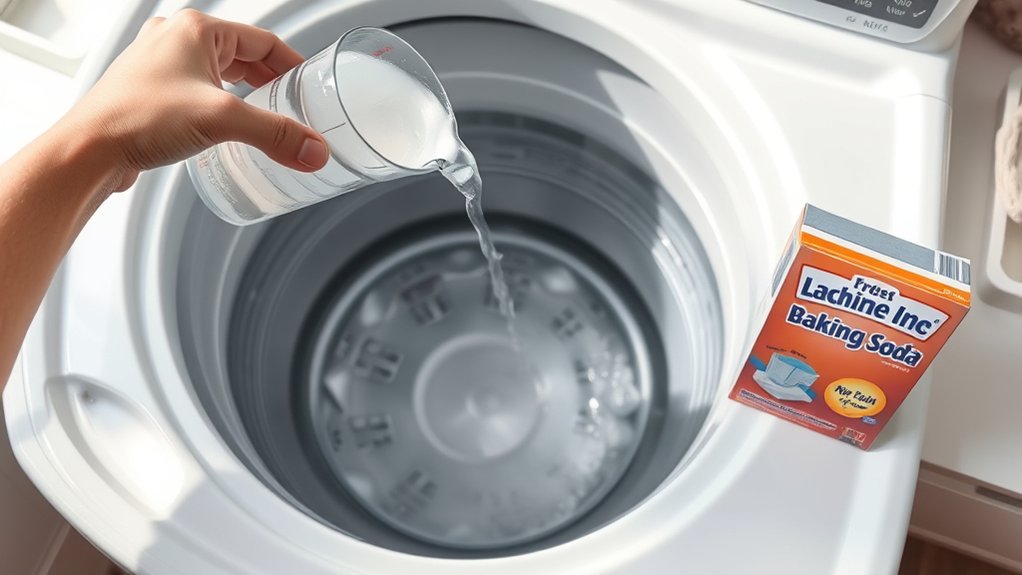
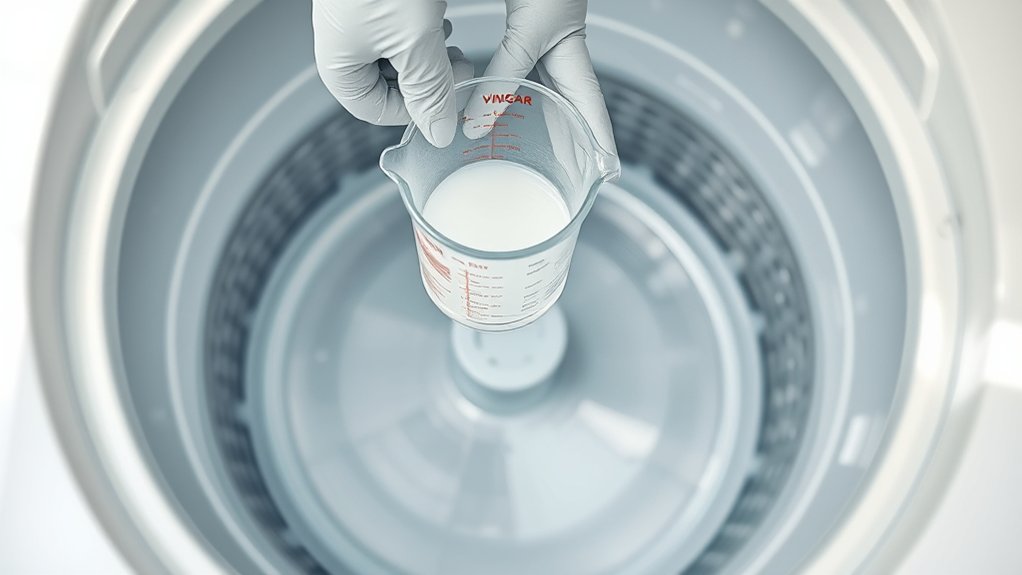
To clean your no-agitator washer, start by pouring 2 cups of white vinegar into the empty drum.
Then, run the hottest and longest cycle you have. Don’t forget to pause it and let the vinegar soak for about an hour—that really helps break down any grime.
Once that’s done, give the drum a quick scrub to remove any leftover residue.
Next, add half a cup of baking soda and run another hot cycle. This step helps neutralize odors and breaks down any remaining buildup.
Doing this once a month with vinegar and baking soda keeps your washer running smoothly and stops mold from growing.
Benefits Of Vinegar
Using vinegar offers multiple benefits when cleaning your no-agitator washing machine.
Vinegar is a natural, non-toxic cleaning agent that removes odors and bacteria effectively. When you add vinegar during a hot water cycle, it works to neutralize unpleasant smells and eliminate buildup inside the drum.
Regular use helps maintain fresh laundry and prolongs the lifespan of your washer by reducing the need for repairs. It’s a simple step that can save you time and money in the long run.
Here are four key benefits of using vinegar:
- Eliminates bacteria and harmful residues.
- Neutralizes odors for fresher laundry.
- Dissolves mineral deposits and soap scum.
- Extends washer lifespan by preventing buildup.
Try incorporating vinegar into your cleaning routine for efficient, safe maintenance of your no-agitator washing machine.
You’ll notice the difference in both your washer and your laundry!
Baking Soda Usage
One effective method to clean your no-agitator washer involves combining baking soda and vinegar.
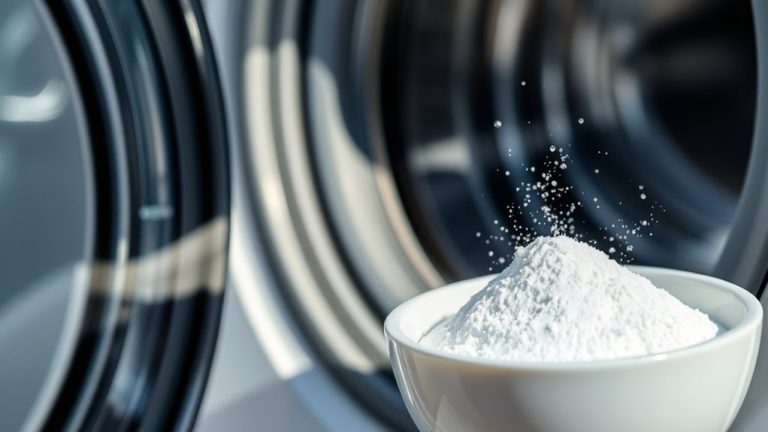
Start by adding 1 cup of baking soda into the empty drum; this helps neutralize odors and break down residue. Next, pour 2 cups of white vinegar into the drum.
Set your top loading washing machine to the hottest, longest cleaning cycle available. The baking soda and vinegar react to eliminate odor-causing bacteria and thoroughly clean interior surfaces.
After the cycle finishes, wipe the drum and accessible parts to remove any residue.
Performing this monthly cleaning keeps your washer fresh, prevents buildup, and maintains effectiveness.
Using hot water during the cleaning cycle guarantees peak dissolution of deposits and effective sanitation, making this method ideal for no-agitator washers.
Cleaning Procedure Steps
Cleaning your no-agitator washer with baking soda and vinegar requires a specific sequence to maximize effectiveness. Follow these steps for a deep clean when cleaning your washing machine:
First, fill the washer with hot water, then add 2 cups of white vinegar. Run the cycle for a few minutes, then pause and let the vinegar sit for an hour. This helps break down buildup and odors.
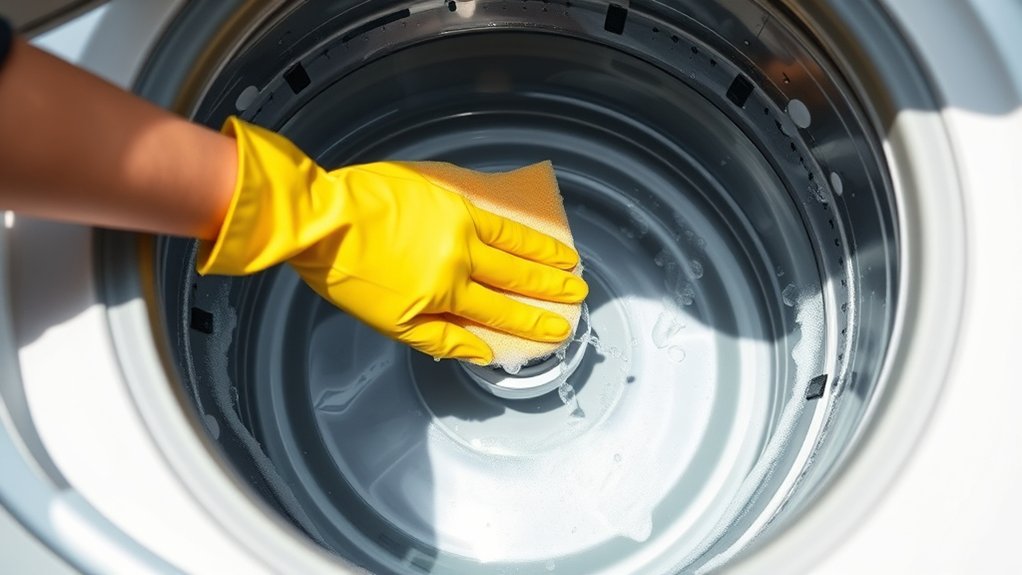
After the hour, scrub the interior surfaces with a cloth or sponge to remove any residue or stains.
Next, add 1 cup of baking soda to the water and resume the cycle. Let it run completely to deodorize and clean thoroughly.
Once finished, wipe down the drum and accessible parts with a clean cloth to remove all residues.
This process guarantees a thorough deep clean of your washer. Give it a try and enjoy a fresher, cleaner machine!
Running a Cleaning Cycle Step-by-Step
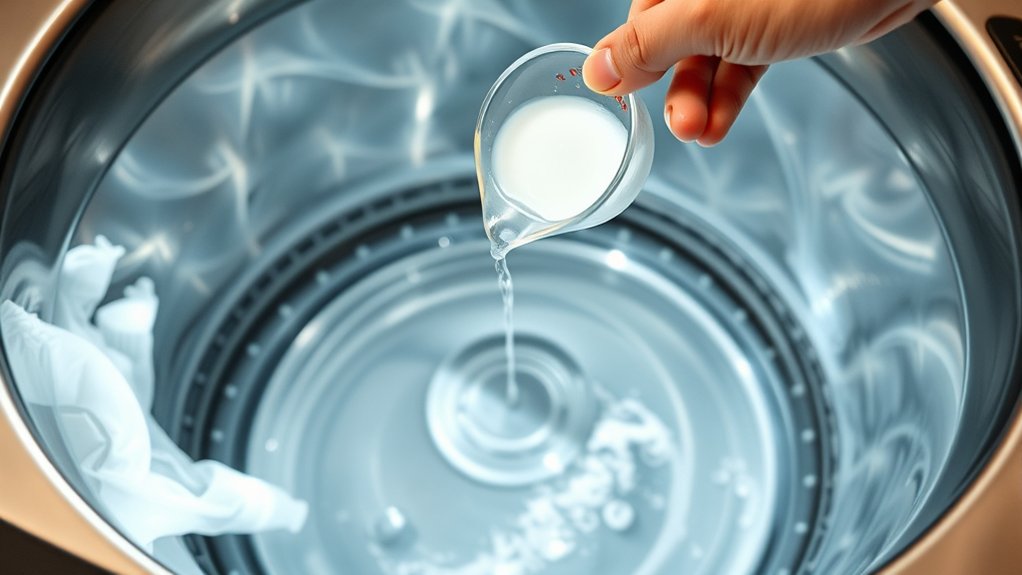
To run an effective cleaning cycle, start by making certain your washer is empty.
Then add either an Affresh tablet or 1 cup of bleach directly into the drum.
Add an Affresh tablet or 1 cup of bleach directly into the washer drum for effective cleaning.
Select the hottest and longest clean cycle available on your top load washing machine to maximize the cleaning agent’s effectiveness.
After a few minutes, pause the cycle and let the cleaning agent sit for about an hour.
This helps dissolve buildup and odors.
Once the hour is up, resume the cycle.
When the cycle finishes, wipe down the interior surfaces with a cloth to remove loosened residues.
Then, finish by running a rinse cycle using hot water to flush out any remaining cleaning agent.
For ideal maintenance, your washer should be cleaned every month or as recommended in the owner’s manual.
This will help guarantee peak performance and hygiene.
How to Scrub the Drum and Hard-to-Reach Areas
After completing the cleaning cycle, focus on scrubbing the drum and hard-to-reach areas to remove any remaining detergent residue and prevent mold buildup. Follow these steps:
- Use a soft cloth or sponge to scrub the drum thoroughly, targeting spots where detergent residue accumulates.
- Employ a long-handled brush to reach behind and beneath the drum’s lip, tackling hard-to-reach areas prone to mold and mildew.
- Wipe down the rubber seal around the lid with a damp cloth to clear trapped moisture that can cause mold.
- Run a hot water cycle with vinegar or a washing machine cleaner to rinse away loosened debris and disinfect the drum.
This method guarantees thorough cleaning and helps keep mold from growing inside your top-loading washer.
Just take your time with those tricky spots to make sure everything gets fresh and clean!
How to Get Rid of Odors and Residue in Your Washer
When odors or residue build up in your top-loading washer, you’ll need to act promptly to restore freshness and hygiene. Start by pouring 2 cups of vinegar into the drum and run the hottest cycle. Let it sit for an hour to neutralize odors and break down residue.
If your washer has a clean washer cycle, use it with a specialized washing machine cleaner to boost the cleaning power.
Always leave the lid open after each use to let the interior dry. This helps prevent moisture buildup that causes odors.
For stubborn smells or residue, run extra cleaning cycles or try denture cleaning tablets.
Regularly following these steps will help you clean your washing machine effectively. That way, you keep odors and residue away while maintaining peak performance.
How Often Should You Clean Your No-Agitator Washer?
You should clean your no-agitator washer at least once a month or after every 30 washes to prevent buildup and odors. Regular maintenance guarantees peak performance and hygiene.
Clean your no-agitator washer monthly or every 30 washes to prevent buildup and ensure optimal performance.
Follow these steps for effective cleaning frequency: run a cleaning cycle monthly using an appropriate product like vinegar or Affresh to eliminate residues.
Inspect the drum and rubber seals regularly for mold or mildew; clean immediately if detected. Keep the washer lid open between uses to promote air circulation and prevent moisture buildup.
If you notice persistent odors or visible grime, adjust cleaning frequency by increasing cycles as needed. Sticking to this schedule helps maintain your washer’s efficiency and prolongs its lifespan.
How to Check and Clean Your Drain Hose and Filter
You should regularly check your drain hose to make sure there are no kinks, clogs, or damage that could block the water flow. If you spot anything, go ahead and remove the hose to clear out any debris.
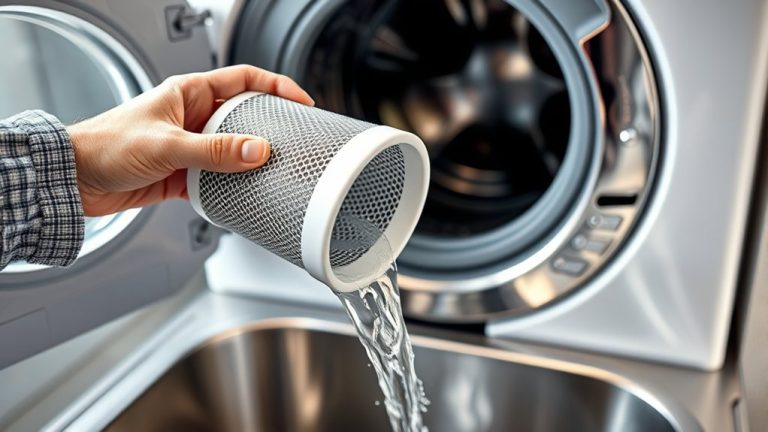
Next, take a look at your filter and clean out any lint or buildup that might be trapped there.
Once you’ve done that, securely reattach the hose.
To finish up, run a short cycle to confirm everything is draining properly. This simple routine can really help prevent problems down the line.
Inspect Drain Hose Regularly
Inspecting your washing machine’s drain hose at least once a month helps prevent drainage problems and water damage.
Regular maintenance guarantees smooth water flow and avoids blockages that cause drainage issues.
Follow these steps to inspect and clean your drain hose effectively:
- Inspect the drain hose for kinks, cracks, or blockages that could impede water flow.
- Ascertain the hose is elevated and not submerged to prevent siphoning and improper drainage.
- Rinse the hose with hot water and a mild cleaner to remove buildup that may obstruct flow.
- Check connection points for leaks or loose fittings to avoid water damage and maintain efficiency.
Consistent inspection and cleaning extend your washer’s lifespan and prevent costly repairs.
It’s a simple routine that really pays off in the long run.
Clear Filter Blockages
Two key components that often cause drainage issues in top loading washing machines are the drain hose and the internal filter.
To clear filter blockages, first detach the drain hose from the wall and check for kinks or anything blocking water flow.
Next, remove the internal filter if you can access it. Rinse it under warm water to get rid of lint and debris.
Make sure to position the drain hose about 30 to 36 inches from the floor. This helps ensure proper drainage and stops siphoning.
For a thorough clean, run a hot water cycle using a cleaning agent like vinegar or Affresh. This helps dissolve buildup inside both the hose and filter.
Doing this kind of regular maintenance keeps your washing machine draining well and prevents water from pooling after cycles.
It’s a simple way to avoid bigger drainage problems down the road.
Prevent Drainage Issues
Maintaining clear drain hoses and filters is key to preventing drainage problems in your top loading washing machine. To avoid slow drainage or stagnant water, follow these steps:
- Inspect the drain hose for kinks, clogs, or mildew caused by stagnant water. Clean it thoroughly to remove debris and odors.
- Verify the drain hose is positioned correctly, typically between 30 to 48 inches. This helps guarantee proper drainage and prevents siphoning.
- Remove and clean the drain filter regularly, if your model has one. This eliminates lint and debris buildup that can block water flow.
- Run a cleaning cycle with vinegar periodically to dissolve mineral deposits and organic buildup inside the drain hose and filter.
Consistently performing these tasks will keep your machine draining well and help extend its lifespan.
It’s really worth making these simple checks part of your routine!
Top Cleaning Products for No-Agitator Washers
Effective cleaning of no-agitator washing machines relies on selecting products designed to tackle buildup and odors without damaging delicate components. Use Affresh tablets for targeted removal of odors and buildup during full wash cycles.
Vinegar acts as a natural cleaning agent, dissolving HE detergent residue and neutralizing odors when used with hot water. Baking soda enhances cleaning by providing deodorizing properties and combating stains.
Liquid chlorine bleach offers deep cleaning, but only if your washer’s manual permits it to avoid damage.
| Product | Purpose |
|---|---|
| Affresh tablets | Removes buildup and odors |
| Vinegar + Baking soda | Dissolves residue, deodorizes |
| Liquid chlorine bleach | Deep cleaning (manual approval) |
Choose HE detergent regularly to minimize residue buildup in no-agitator washers. It really helps keep your machine running smoothly and smelling fresh.
Keeping Your Washer Fresh Between Cleanings
Several simple habits can keep your top-loading washer fresh between deep cleanings. They help prevent moisture buildup and odors, which means you can go longer between those intensive cleaning sessions.
First, leave the lid open after each use. This lets moisture evaporate and helps reduce mold and odors.
Next, wipe the drum and door seal with a damp cloth to get rid of detergent residue and lint.
Also, don’t forget to clean the detergent dispenser regularly. This prevents clogs and keeps odor-causing buildup at bay.
Once a month, run a hot water cycle with vinegar or a washing machine cleaner like Affresh. This step deodorizes and sanitizes your washer.
Frequently Asked Questions
Can I Use Bleach Instead of Vinegar for Cleaning?
Yes, you can use bleach instead of vinegar for cleaning, especially for stain treatment and strong disinfection.
However, bleach alternatives like vinegar offer odor removal and eco-friendly options while being gentler on machine parts.
Use bleach sparingly during cleaning frequency to avoid damage.
For effective washer maintenance, always rinse thoroughly after bleach use.
Vinegar benefits include neutralizing odors and preventing buildup, making it a safer, sustainable choice for regular upkeep.
Is It Safe to Clean the Washing Machine With Essential Oils?
Yes, you can safely use essential oils for washing machine maintenance if you follow essential oil safety guidelines.
Dilute oils like tea tree or lavender in water or vinegar to leverage their antibacterial benefits and odor elimination properties. They serve as natural cleaners and fragrance options, offering effective DIY cleaning alternatives.
Just be careful not to overuse them to prevent residue buildup.
It’s also a good idea to check your machine’s manual to see if essential oils are compatible as cleaning alternatives. That way, you keep your washing machine happy and fresh without any issues.
How Do I Prevent Mold Growth in My Washer?
To prevent mold growth, prioritize mold prevention through regular washer maintenance.
Control moisture by leaving the door open after cycles and wiping down the door seal to remove detergent residue. Use the correct water temperature for effective cleaning.
Make sure you follow ventilation tips by ensuring airflow around the washer.
Also, keep up with cleaning by running monthly cleaning cycles using vinegar or a washer cleaner. These steps help minimize moisture buildup and residue.
This way, you keep your washer mold-free and running efficiently without any hassle.
Can I Run a Cleaning Cycle With Clothes Inside?
You shouldn’t run a cleaning cycle with clothes inside because it hinders washing machine care and reduces machine efficiency.
Laundry can block detergent residue removal and limit odor removal, which affects how well your appliance is maintained.
Always run cleaning cycles empty to make sure the machine gets thoroughly cleaned.
Try to follow the recommended cleaning frequency, about every 30 days, so you prevent buildup and keep your washer working at its best.
This simple laundry tip helps extend your washer’s lifespan and keeps it fresh and efficient.
It’s an easy way to take care of your machine and avoid future problems.
What Should I Do if My Washer Still Smells After Cleaning?
If your washer still smells after cleaning, focus on odor removal by inspecting rubber seals and detergent buildup, especially around the dispenser.
Increase cleaning frequency and run extra rinse cycles using hot water to break down residues.
Also, check your machine’s placement to make sure it has good ventilation. Leaving the lid open after use can help reduce moisture and prevent smells.
Regular maintenance is key, so don’t forget to check the drain line for trapped debris.
Using the right water temperature and thorough rinsing really makes a difference when you’re trying to get rid of stubborn odors.
Conclusion
By regularly cleaning your no-agitator top loader, you’ll keep it running smoothly and smelling fresh, like a crisp breeze through an open window. Picture the drum gleaming, free of residue and grime, ensuring your clothes come out spotless every time. Stick to the steps—vinegar, baking soda, and thorough scrubbing.
Don’t forget the drain hose and filter. This routine maintenance protects your machine’s efficiency, saving you time and costly repairs down the line. It’s easier than you might think, and your washer will thank you for it!