How To Clean A Lg Washing Machine – Complete Guide
To clean your LG washing machine effectively, run the Tub Clean cycle monthly with an empty drum. Add the recommended cleaner or vinegar to help remove buildup and odors. This simple step keeps your machine fresh and running smoothly.
Make it a habit to regularly clean the drain pump filter, detergent dispenser, and inlet water filters. Just remove them and rinse thoroughly to maintain proper function. It’s easier than you think and really helps prevent problems down the line.
For a deeper clean, try using baking soda and vinegar during hot cycles. Also, don’t forget to wipe the rubber seal and the exterior with mild soap to prevent mold from forming. Staying consistent with these steps guarantees your washer performs at its best.
If you want to keep your LG washing machine in top shape, stick to this routine. And if you’re curious, there’s plenty more you can do to maintain it well—just explore further for detailed maintenance tips.
How to Run the LG Washing Machine Tub Clean Cycle
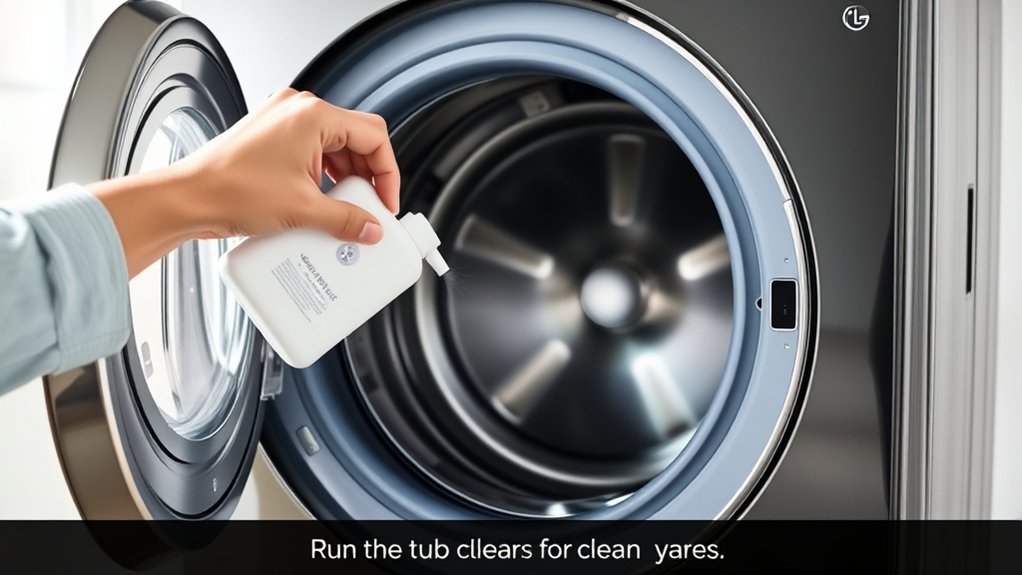
Start by making certain the drum of your LG washing machine is completely empty.
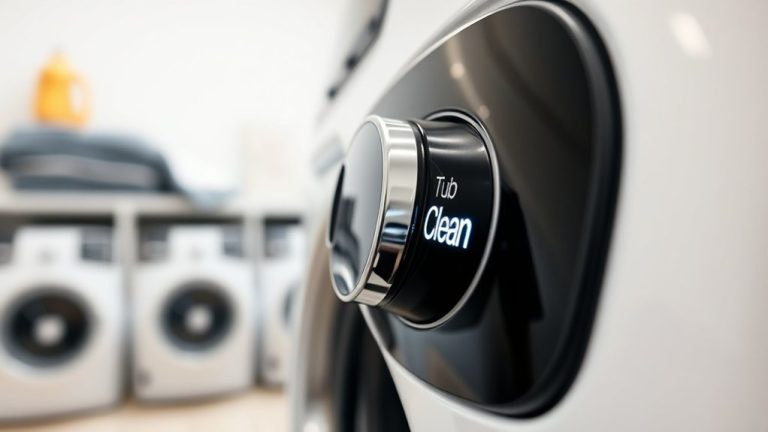
To run the Tub Clean cycle, press the “Tub Clean” button or the asterisk (*) symbol on your LG Washing Machine control panel, then start the cycle.
Before starting, add the recommended washing machine cleaner or cleaning solution directly into the detergent dispenser to guarantee thorough distribution.
This specialized cleaning solution helps clean the tub by breaking down detergent buildup and residue inside the drum.
For peak washer performance, you should perform the Tub Clean cycle monthly or every 30 wash cycles.
After the cycle finishes, leave the door and detergent dispenser open to ventilate and dry the interior.
This helps prevent mold growth and keeps your machine clean and odor-free.
Why the Tub Clean Cycle Removes Residue and Odors
Although you mightn’t see it, residue and odors quietly build up inside your LG washing machine over time. This can affect its efficiency and cleanliness.
The Tub Clean cycle uses the hottest water available combined with a specialized cleaning solution to effectively remove residue like detergent buildup, lint, and dirt from the wash drum. By circulating this solution thoroughly, it flushes away contaminants that standard cycles can’t reach.
Running this cycle regularly helps prevent musty odors by eliminating stagnant water and mold in hidden areas. Keeping up with monthly or every 30-cycle treatments supports peak washer performance by reducing motor strain caused by buildup.
Cleaning the Drain Pump Filter in Your LG Washer
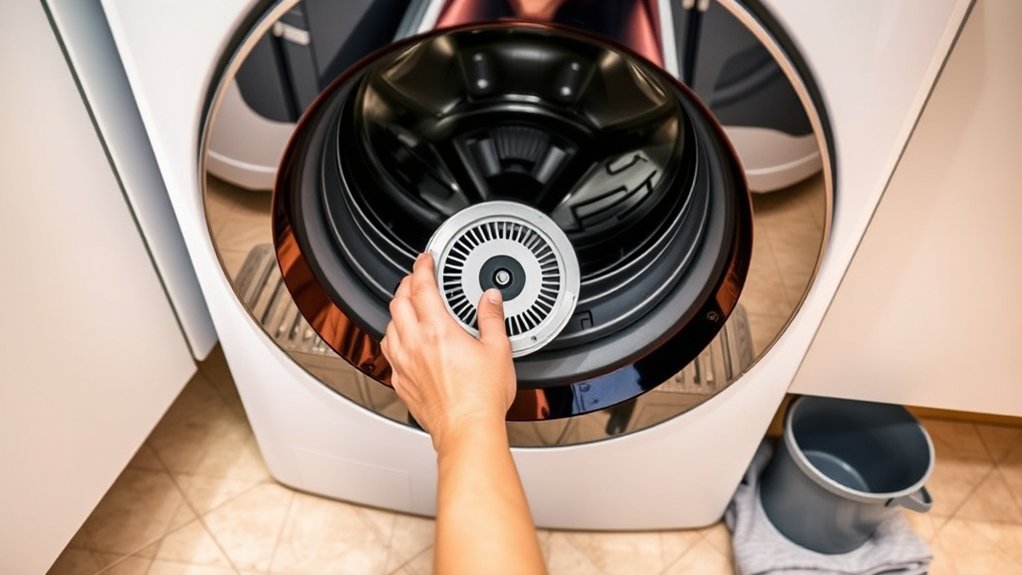
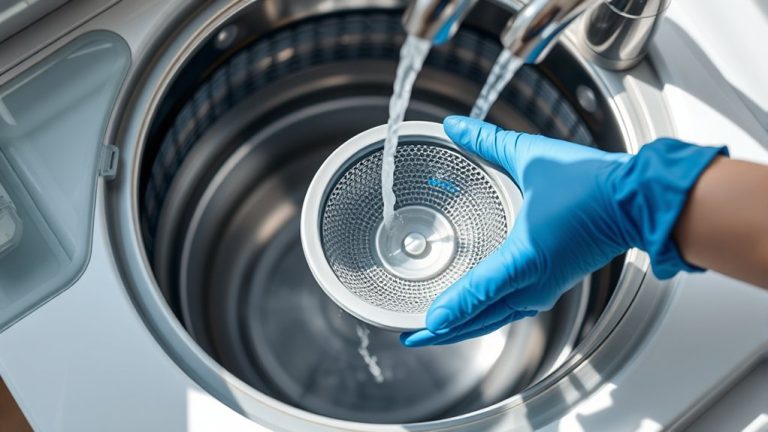
Accessing and cleaning the drain pump filter in your LG washer is essential for maintaining efficient drainage and preventing water backup. Start by turning off and unplugging your washer for safety.
Locate the drain pump filter behind the service panel at the bottom-left corner. Before removing the filter, unclip the drain hose and drain any residual water into a container to avoid spills.
Twist the drain pump filter counter-clockwise to remove it. If it feels stuck, gently loosen it.
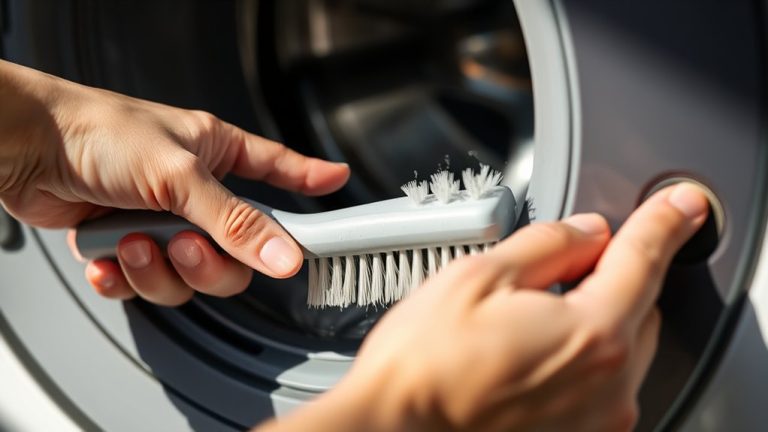
Use a soft-bristled brush to thoroughly clean the filter and its base, removing all debris and buildup. Finally, reinstall the filter by twisting it securely back into place. Don’t forget to check for leaks before restarting your LG washer.
Key steps for cleaning the drain pump filter:
- Power off and unplug the washer
- Drain residual water carefully
- Remove the filter by twisting counter-clockwise
- Clean with a soft-bristled brush
- Reinstall securely and check for leaks
How to Thoroughly Clean the Detergent Dispenser
To thoroughly clean the detergent dispenser, you’ll first need to switch off the washing machine and carefully pull out the drawer until you feel resistance.
Then, press the blue release button to remove the detergent drawer completely.
Soak the drawer in hot water mixed with a bit of dishwasher liquid or vinegar to loosen any buildup.
After soaking, use a soft cloth or a soft-bristled brush to scrub the detergent compartment and drawer. Focus on areas where soap scum tends to gather.
Rinse both parts thoroughly with warm water to wash away any residue or cleaning agents.
Make sure to dry everything completely before putting it back together. Don’t forget to return all inserts to their original places.
Once you’ve reassembled the drawer, running a cleaning cycle can help maintain your washer’s efficiency.
It also prevents soap scum from clogging the detergent compartment in the future. Easy, right?
Maintaining and Cleaning the Inlet Water Filters

First, you’ll want to find the inlet water filters—they’re located right behind the hot and cold water hoses at the back of your LG washer.
Before you start, make sure to turn off the water supply and unplug the machine for safety.
Next, carefully disconnect the hoses. You can use needle-nose pliers to gently remove the filters.
Once you have them out, soak the filters in white vinegar or a lime scale remover to get rid of any buildup.
After soaking, give the filters a good rinse to wash away any residue.
Finally, put them back in securely. Doing this helps keep the water flowing just right and your washer running smoothly.
Locating Inlet Filters
You’ll find two inlet filters at the back of your LG washing machine, where the hot and cold water hoses connect. These filters trap debris and prevent clogs during the washing cycle.
To locate them safely, follow these steps:
Turn off the water supply to avoid leaks. Then, unplug the washing machine for electrical safety. Use a wrench to disconnect the water hoses. The inlet filters are positioned inside the hose connectors.
Use needle-nose pliers to carefully remove the filters. Once located, you can clean the inlet filters by soaking them in white vinegar to dissolve buildup.
After soaking, rinse thoroughly under running water before reinstalling.
Regular cleaning every six months guarantees ideal water flow and machine performance. It’s a simple step that helps keep your washer running smoothly.
Removing And Soaking
Begin by shutting off the water supply valves at the wall and unplugging your LG washer to guarantee safety. Next, disconnect the hot and cold water lines from the back of the machine to access the inlet filters. Use needle-nose pliers to carefully remove these filters, which often collect mineral deposits.
Soak the inlet filters in white vinegar for about 30 minutes to dissolve buildup effectively. After soaking, rinse them thoroughly with water to remove any loosened debris.
| Step | Action |
|---|---|
| 1 | Shut off water supply and unplug washer |
| 2 | Disconnect hot and cold water lines |
| 3 | Remove inlet filters with needle-nose pliers |
| 4 | Soak in vinegar, then rinse filters thoroughly |
Avoid reconnecting filters now; that’s covered in the next step.
Reinstalling Filters Properly
Once the inlet filters have been thoroughly rinsed and cleared of all debris, you can go ahead and reinstall them.
Carefully insert each filter back into its designated slot on the back of your LG washing machine. Make sure they sit snugly to avoid leaks during operation.
After that, reconnect the water lines and turn the water supply back on. Keep an eye out for any leaks to confirm everything is installed properly.
Here are some key points to keep in mind when reinstalling filters:
- Verify all cleaning solution residues are fully washed off.
- Use needle-nose pliers if you need more precise placement.
- Make sure each inlet filter fits securely in its slot.
- Tighten water line connections to prevent leaks.
- Test water supply flow to confirm proper function.
Cleaning the LG Washing Machine Drum and Rubber Seal
To clean your LG washing machine drum, just run a hot cycle using white vinegar or a mix of vinegar and Epsom salt. This helps break down any buildup and gets rid of odors.
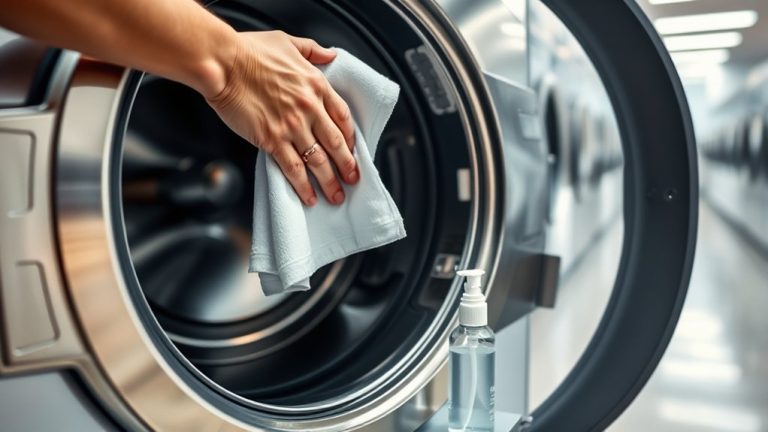
Don’t forget about the rubber seal! It’s important to wipe it down regularly with warm water and a mild detergent to keep mold and mildew at bay.
After every wash, leave the door open for a while and dry both the drum and the seal. This simple step keeps everything fresh and stops those musty smells from settling in.
Drum Cleaning Techniques
Maintain your LG washing machine’s performance by regularly cleaning both the drum and rubber seal.
To deep clean the drum, run the hottest cleaning cycle with four cups of white vinegar. Then, pause to soak before completing a second cycle adding one cup of baking soda. This combination removes residues and odors effectively.
Always verify the drum is empty before starting the Tub Clean cycle monthly for best results. It really helps keep everything fresh and running smoothly.
Key drum cleaning tips:
- Use hottest cycle with vinegar to break down grime
- Pause cycle to let vinegar soak inside the drum
- Follow with baking soda cycle to neutralize odors
- Leave door ajar after washing to air dry drum and seal
- Regularly wipe rubber seal with warm soapy water to prevent mold buildup
These steps maintain drum hygiene and extend your machine’s lifespan. Taking a little time to do this makes a big difference!
Rubber Seal Maintenance
Although the drum gets most of the attention, the rubber seal plays an essential role in preventing leaks and mold growth. When cleaning your washing machine, always inspect the rubber seal monthly for debris and moisture to block mold and mildew buildup.
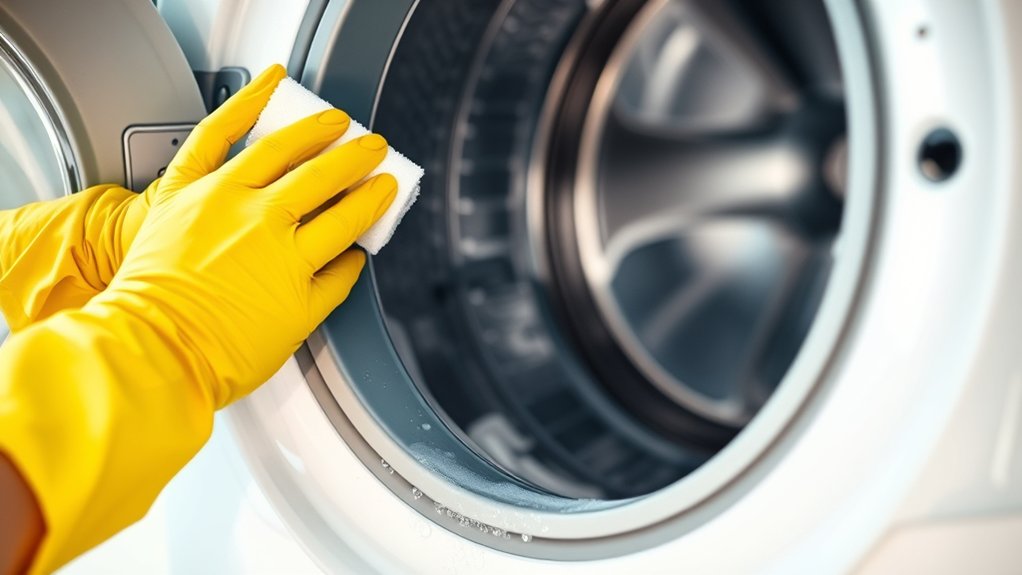
Wear rubber gloves and use a mixture of warm water and mild dish soap to gently wipe the seal after each wash, removing detergent residue.
For stubborn stains, apply white vinegar with a cotton bud to the folds without damaging the seal.
After cleaning, thoroughly dry the rubber seal with a soft cloth to prevent moisture retention and chemical residue.
Consistent maintenance guarantees the seal’s integrity and extends your machine’s lifespan. It’s a simple step that really makes a difference.
Odor Prevention Tips
When you regularly clean both the drum and rubber seal, you greatly reduce the chances of unpleasant odors developing in your LG washing machine.
To effectively prevent odor, focus on moisture control and thorough cleaning. Use white vinegar to clean the rubber seal, preventing mold buildup, and always dry it completely afterward.
Don’t forget to clean the door and leave it ajar after each wash to allow air circulation.
Incorporate these key steps:
- Wipe the drum with a microfiber cloth after every cycle to remove detergent residue.
- Run a monthly tub cleaning cycle to maintain hygiene.
- Use a baking soda and vinegar mixture monthly inside the drum to eliminate odors.
- Dry the rubber seal thoroughly to prevent mold.
- Keep the door open to minimize moisture buildup.
Following these steps will help keep your washing machine fresh and odor-free.
It’s really all about staying on top of the moisture and cleaning regularly.
Using White Vinegar and Baking Soda for Effective Cleaning
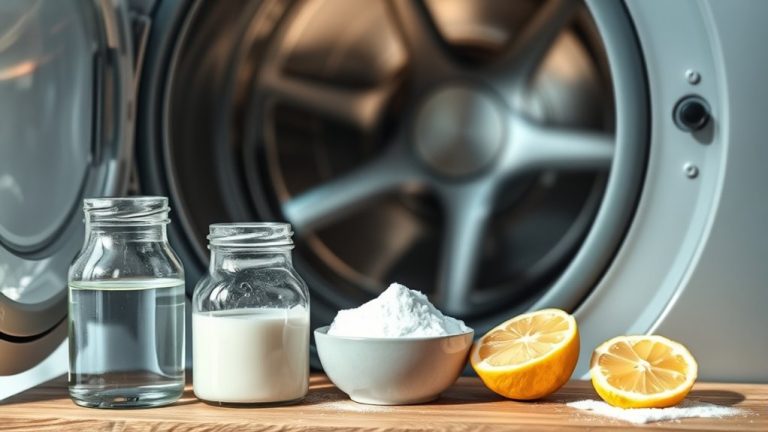
Harness the cleaning power of white vinegar and baking soda to tackle limescale, odors, and stubborn buildup in your LG washing machine. White vinegar dissolves mineral deposits and neutralizes odors, while baking soda acts as a natural deodorizer and abrasive washing machine tub cleaner.
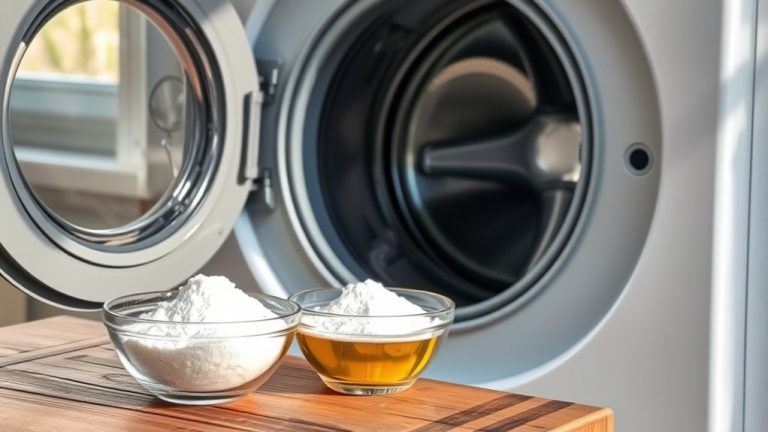
For effective cleaning, run a hot wash cycle with one cup of baking soda. Then, follow it with one cup of white vinegar for a deep clean of the drum.
| Cleaning Agent | Function | Application |
|---|---|---|
| White Vinegar | Cuts limescale, deodorizes | Mix 1 cup vinegar + 4 cups water, wipe seals & interior |
| Baking Soda | Abrasive cleaner, deodorizes | Add 1 cup to hot cycle for drum cleaning |
| Combination | Enhanced deep cleaning | Sequential hot wash cycles with both agents |
Try to use this routine regularly to keep your LG washer fresh and clean, all without harsh chemicals. It’s an easy and natural way to maintain your machine’s performance.
How to Clean the Exterior of Your LG Washer Safely
You’ll want to pick a neutral, non-abrasive cleaner along with a clean, damp cloth to keep your LG washer’s exterior in great shape.
Just be gentle when you wipe, and it’s a good idea to clean up any detergent spills right away to stop buildup and stains from forming.
If you have a stainless steel model, using a specialized cleaner will help maintain that shiny finish without scratching the surface.
It’s pretty simple once you get the hang of it!
Choosing Safe Cleaners
Although the exterior of your LG washer might seem durable, selecting the right cleaning products is vital to avoid damaging its finish.
Use safe cleaners like a neutral, non-abrasive cleaner combined with warm water and a clean cloth to guarantee a streak-free, smooth surface. Avoid abrasive cleaners or scrubbers that can cause scratches.
If you notice detergent spills, wipe them up immediately with a damp cloth to prevent residue buildup and keep your washer looking great.
For stainless steel models, make sure to use a specialized stainless-steel cleaner to protect and enhance the shine.
Regularly inspect your washer for any signs of wear. This way, you can catch issues early and keep your machine in top shape.
- Use a clean cloth with warm water and non-abrasive cleaner
- Avoid abrasive or harsh scrubbing agents
- Promptly wipe detergent spills to prevent buildup
- Apply stainless-steel cleaner on metal finishes
- Inspect regularly to maintain appearance and longevity
Wiping Techniques
Selecting safe cleaners is only part of maintaining your LG washer’s exterior. Proper wiping techniques play a key role in preserving its finish and preventing damage. Use a clean, soft cloth dampened with warm water and a neutral, non-abrasive cleaner to wipe the exterior thoroughly.
If you notice any detergent or fabric softener spills, address them immediately with a damp cloth. This helps prevent buildup and staining, which can be a pain to remove later.
For stainless steel models, use a specialized stainless-steel cleaner with a soft cloth. Just be sure to avoid abrasive materials that can scratch the surface.
After wiping, leave the washer door open to let any leftover moisture evaporate. This simple step reduces the risk of mold forming inside.
Lastly, make it a habit to inspect the exterior regularly while cleaning. Catching wear or damage early helps keep your LG washer both clean and fully functional.
Preventing Surface Damage
Maintaining the exterior of your LG washer requires careful attention to cleaning methods that prevent surface damage. To clean effectively while preserving the finish, always use nonabrasive materials and solutions. Avoid harsh chemicals or abrasive pads that can scratch or degrade the exterior surface.
Make sure to address detergent spills immediately to prevent residue buildup, which can harm the finish over time.
Keep these key practices in mind for preventing surface damage:
- Use a clean cloth with warm water and a neutral, nonabrasive cleaner.
- Wipe spills promptly with a damp cloth to avoid residue.
- Employ stainless-steel cleaner for stainless steel models.
- Steer clear of abrasive or harsh chemical cleaners.
- Regularly inspect the exterior for signs of wear or damage.
Preventing Mold, Mildew, and Musty Odors in Your Washer
To prevent mold, mildew, and musty odors in your LG washing machine, you should consistently wipe down the rubber seal and door gasket after each wash to remove moisture buildup. This step is critical for preventing mold growth in these vulnerable areas.
Also, make sure to clean and dry the detergent drawer regularly to avoid leftover detergent that can foster mildew.
Running the Tub Clean cycle once a month helps target internal buildup and odors, keeping the drum fresh and hygienic.
Always leave the washer door slightly open after a wash to improve air circulation. This reduces humidity and stops mold from growing.
Plus, promptly removing wet clothes prevents stagnant moisture that causes those musty smells.
Scheduling Regular Maintenance for Long-Term Washer Care
Keeping your LG washing machine running smoothly and odor-free goes beyond daily cleaning habits. Scheduling regular maintenance is crucial for long-term washer care and peak performance. You should set monthly reminders to perform thorough cleaning and inspect key components to avoid buildup and mechanical issues.
Focus on these maintenance tasks:
- Clean the detergent drawer monthly to prevent residue buildup.
- Clear the drain pump filter to maintain proper drainage.
- Inspect and clean inlet filters for unrestricted water flow.
- Run the Tub Clean cycle every 30 wash cycles or monthly.
- Check and wipe the rubber seal and door gasket to prevent mold.
Make sure to document each cleaning and maintenance session. This helps you track your washer’s condition and guarantees timely upkeep.
Taking this disciplined approach preserves detergent efficiency and extends your machine’s lifespan.
Frequently Asked Questions
Can I Use Bleach in My LG Washing Machine?
Yes, you can use bleach in your LG washing machine, but make sure to practice bleach safety by diluting it first. Only add bleach to the designated compartment in your machine.
Avoid mixing bleach with vinegar or other cleaners because that can cause harmful reactions.
If you want to keep your washing machine clean and prevent mold, you might want to try bleach alternatives like white vinegar or sodium percarbonate.
Always check if your detergent is compatible with bleach, and it’s a good idea to run an extra rinse cycle to get rid of any leftover residue.
These simple laundry tips can help keep your machine running smoothly and efficiently.
How Often Should I Clean My LG Washer Tub?
You should clean your LG washer tub at least once a month or every 30 wash cycles to keep it running effectively.
Regular washing machine maintenance, including tub cleaning frequency, helps prevent mold and odors.
If you notice any musty smells, try using the Tub Clean cycle weekly for odor removal tips.
There are also cycle options designed specifically for deep cleaning.
You might want to try detergent alternatives like vinegar for added freshness.
These laundry tips will help keep your washer hygienic and performing at its best.
What Detergent Is Best for LG Washing Machines?
You’ll want to choose detergent types designed for front load efficiency, like high-efficiency (HE) detergents, to optimize cleaning and fabric care.
Liquid detergents work best for cold washes and delicate fabrics, while powder excels in stain removal during hot cycles.
Don’t forget eco-friendly options because they’re effective and sustainable.
Using the right detergent amount prevents buildup and odors.
This way, your LG washer performs efficiently and keeps your clothes fresh and clean every time.
Can I Clean My LG Washer With Essential Oils?
You absolutely can clean your LG washer with essential oils. They’re like a refreshing change for your machine!
Essential oil benefits include natural alternatives to harsh chemicals and pleasant scent options like lavender or tea tree.
Just be careful when using them. Dilute the oils with water, avoid the detergent dispenser, and don’t overdo it.
Stick to the recommended cleaning frequency and combine oils with regular washer maintenance. That way, you’ll keep things safe and enjoy long-lasting performance.
How Do I Reset My LG Washing Machine After Cleaning?
To complete the reset process after cleaning your LG washing machine, unplug it for at least 5 minutes to clear any stored memory.
Then, plug it back in and press the “Power” button to restart.
If common issues or error codes persist, check your user manual for specific troubleshooting steps.
Some models might need you to press and hold the “Start/Pause” button for 5 seconds to reset.
Also, make sure to follow the maintenance tips and factory reset instructions in the manual if problems continue.
That way, you can keep your washing machine running smoothly.
Conclusion
By following these detailed steps, you’ll keep your LG washing machine running like new. This helps prevent mold, odors, and buildup that could otherwise ruin your laundry experience.
Don’t let grime sneak in and sabotage your washer’s performance. It’s easier than you think to maintain a spotless, efficient machine.
Regular cleaning and maintenance will save you time, money, and headaches. Plus, it ensures your washer delivers flawless results for years to come.