How To Clean Washing Machine Tub – Deep Cleaning Guide
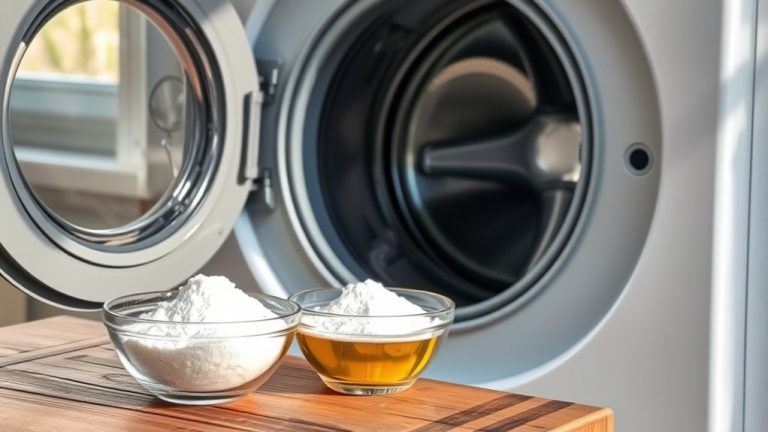
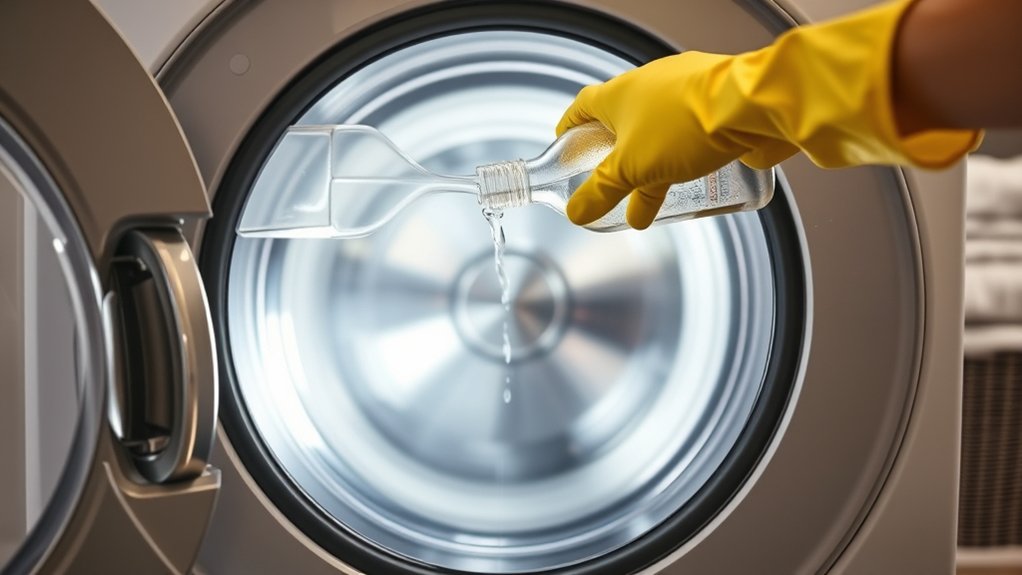
To deep clean your washing machine tub, run the hottest cycle with 2 cups of white vinegar added to the detergent dispenser or drum. Pause mid-cycle for an hour to let the vinegar break down residues. This really helps get rid of buildup inside.
Next, add half a cup of baking soda directly into the drum. This step deodorizes your washer and makes it smell fresh. After the cycle finishes, leave the door open to air out the tub.
Don’t forget to clean the dispensers and rubber seals every month. This prevents mold and buildup from forming in those hidden spots. Keeping up with regular maintenance is key to making sure your washer stays fresh and runs efficiently.
If you want, there are more detailed steps and tips that can help you optimize your cleaning routine even further. It’s worth it to keep your machine in great shape!
Why Deep Clean Your Washing Machine Tub Regularly

Although it might seem unnecessary, you should deep clean your washing machine tub regularly to prevent mold, mildew, and bacteria buildup that thrive in moist environments.
Mold and mildew accumulate primarily in front-load washers where moisture lingers, causing odors and potential health risks.
Deep clean routines effectively eliminate detergent residue and bacterial growth, which contribute to unpleasant smells and compromised laundry freshness.
Deep cleaning removes detergent buildup and bacteria, preventing odors and keeping laundry fresh.
Furthermore, mineral buildup from hard water deposits can impair machine performance and reduce lifespan.
By removing these deposits, you maintain optimal washing conditions that enhance cleaning efficiency and stain removal.
Performing a deep clean approximately every 30 cycles or monthly guarantees the tub remains free from contaminants, preserves appliance function, and supports consistent, effective washing results.
This methodical maintenance is essential to prolong your machine’s operational life.
Supplies Needed for Deep Cleaning Your Washer Tub
Maintaining a clean washing machine tub demands specific supplies tailored to remove residues, mold, and mineral deposits effectively.
Start by gathering affresh washing machine cleaner tablets or natural alternatives such as baking soda. A damp cloth is essential for wiping surfaces after treatment, while a toothbrush helps scrub dispensers and seals.
If your machine supports it, use liquid chlorine bleach to target mold and mildew. Prepare hot water to facilitate the cleaning cycle, enhancing the breakdown of deposits.
Accurate dosing is vital, so keep a measuring cup ready for powders like washing soda.
These supplies guarantee a thorough, technical approach to deep cleaning your washer tub, maintaining peak hygiene and performance without risking damage to your appliance.
It’s all about keeping things fresh and running smoothly!
How to Deep Clean Your Washing Machine Tub Naturally
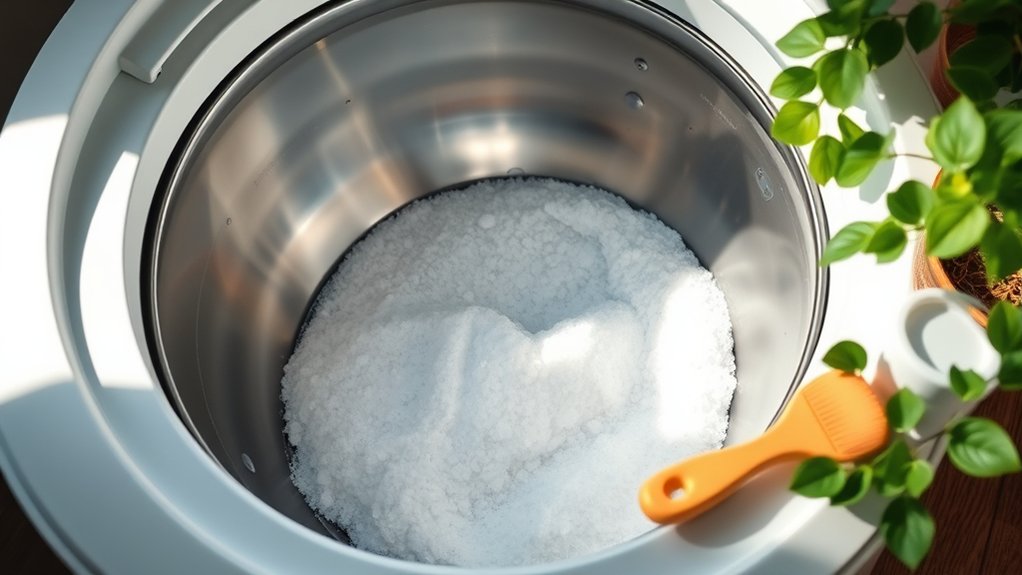
Natural cleaning solutions offer an effective, chemical-free method to deep clean your washing machine tub.
Start by mixing 2 cups of white vinegar with 2 tablespoons of washing soda. For front-loaders, add this mixture to the detergent dispenser; for top-loaders, pour it directly into the drum.
Mix 2 cups white vinegar and 2 tablespoons washing soda; add to dispenser for front-loaders or drum for top-loaders.
Initiate the hottest cycle available, then pause and let the solution sit in the tub for about an hour. This helps target mold, mineral deposits, and odors.
After completing this cycle, sprinkle half a cup of baking soda into the drum and run another hot cycle to further deodorize and clean the tub.
Finally, leave the washer door open to facilitate air circulation. This prevents future mold growth and eliminates lingering odors from your washing machine tub.
It’s an easy way to keep your machine fresh and working well!
Step-by-Step Hot Cycle for Deep Cleaning
Start by getting your washing machine ready for the hot cycle. Make sure there are no clothes left inside, then pick the longest and hottest setting you can find.
Next, add the right cleaning agents. Use white vinegar to tackle any buildup and baking soda to freshen things up. Just be sure to use the amounts that work best for your specific machine.
Keep an eye on the cycle as it runs. You might want to pause it sometimes to give the cleaning agents more time to work, making sure everything gets as clean as possible.
Preparing Washer For Cycle
Before initiating the cleaning cycle, make sure your washer is completely empty to prevent damage and residue buildup.
Preparing the washer for the cycle involves selecting a hot water cycle, which is essential to deep clean a washing machine. Hot water effectively dissolves grime and kills bacteria.
Add two cups of vinegar to the detergent dispenser or directly into the drum to leverage its natural cleaning properties.
If you have a top-loader, pause the cycle after the tub fills so the vinegar can sit for at least an hour before resuming. This step really helps maximize vinegar’s effectiveness.
Making sure the machine is empty before starting and using the hot water cycle with vinegar sets the foundation for the thorough clean your washing machine needs.
It’s a simple routine that goes a long way in keeping your washer fresh and efficient.
Selecting Appropriate Cleaning Agents
Several effective cleaning agents can break down buildup and deodorize your washing machine without damaging its components. Use natural agents like vinegar and baking soda, which effectively target mineral deposits.
For front loaders, add 2 cups of vinegar to the detergent dispenser and run the hottest, longest cycle. Top loaders require 4 cups of vinegar poured directly into the drum. Let it sit for an hour before completing the hot cycle.
After the vinegar cycle, sprinkle half a cup of baking soda into the drum. Then run another hot cycle to deodorize and clean thoroughly.
| Washer Type | Vinegar Amount | Application Method | Baking Soda Amount | Cycle Type |
|---|---|---|---|---|
| Front Loaders | 2 cups | Detergent dispenser | 0.5 cup | Hot, longest |
| Top Loaders | 4 cups | Directly into drum; sit 1 hr | 0.5 cup | Hot |
Running And Monitoring Cycle
To run the deep cleaning cycle effectively, make sure your washing machine is empty. This helps to maximize the impact of the cleaning agents.
If you have a front loader, add two cups of vinegar into the detergent dispenser. Then select the hottest, longest cycle available.
For top loaders, pour four cups of vinegar directly into the drum and start the cycle. Pause it once the tub fills with hot water and let the vinegar sit for an hour before resuming.
Keep an eye on the cycle to make sure it runs without interruption.
After that, add half a cup of baking soda to the drum and run another hot cycle. This will help break down any leftover residue and odors.
Finally, wipe down the door seals and exterior surfaces to keep everything clean and prevent buildup. This confirms you have a thoroughly clean washing machine tub.
Cleaning Washing Machine Dispensers and Rubber Seals
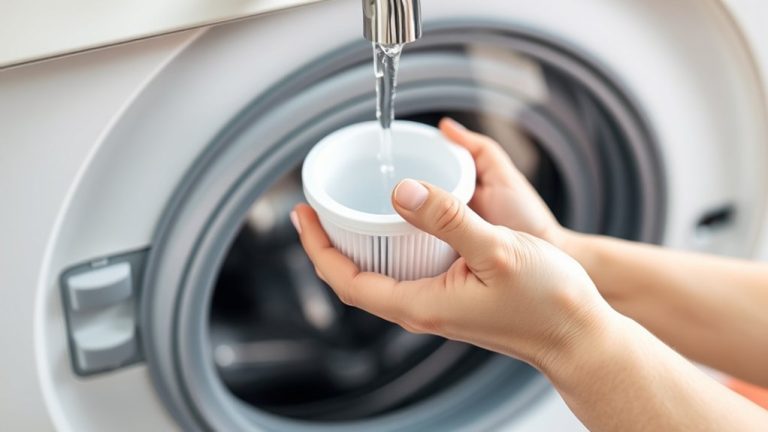
You should clean the detergent and fabric softener dispensers every 30 days. Just remove the drawer and soak it in warm, soapy water.
While it’s soaking, grab a toothbrush and scrub away any buildup.
For the rubber seals, wipe them down weekly with a vinegar and water solution.
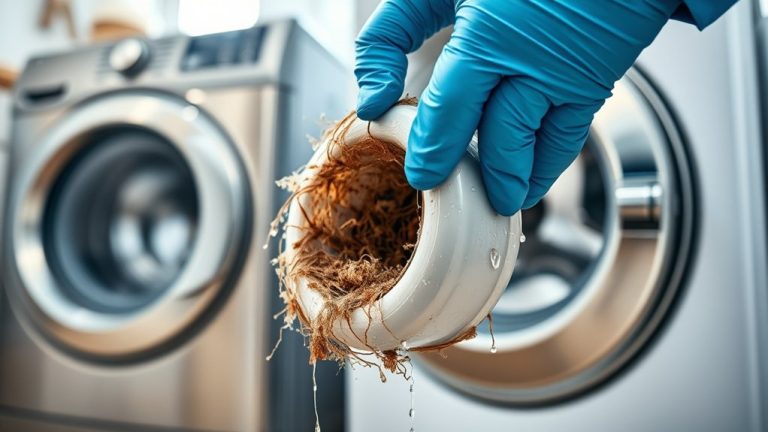
Make sure to focus on the folds and crevices—that’s where mold and mildew like to hide.
Once you’re done cleaning, leave the washer door open for a while.
This helps it dry out and keeps any unpleasant odors at bay.
Dispenser Cleaning Techniques
Cleaning your washing machine’s detergent and softener dispensers every 30 days prevents soap scum buildup and unpleasant odors.
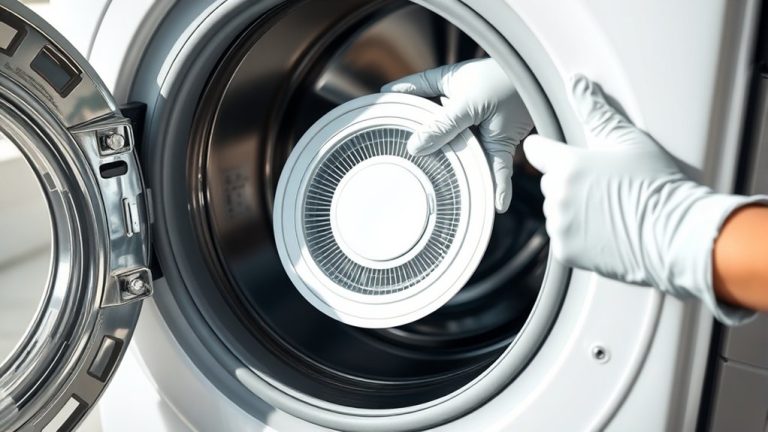
Start by removing the dispenser drawer and rinsing it under warm water to get rid of residue. Use a toothbrush dipped in a vinegar-water solution to scrub stubborn soap scum deposits.
Make sure to wipe the outside of the dispenser area carefully to remove any remaining buildup. After that, run a cleaning cycle to flush out internal deposits. This helps keep everything fresh inside.
To prevent mold, especially in front-load washers, clean the dispenser drawer weekly with an antifungal cleaner. Once you’re done cleaning, leave the dispenser drawer open to dry completely. This reduces moisture, which is what mold loves to grow.
Keeping up with regular maintenance of your washing machine’s dispensers guarantees peak detergent flow, prevents odors, and extends the appliance’s lifespan.
It’s a simple routine that avoids residue accumulation and mold development, saving you trouble in the long run.
Rubber Seal Maintenance
Maintaining the rubber seals in your front-loading washing machine complements dispenser cleaning by addressing another common site for mold and residue buildup.
To guarantee peak function, regularly wipe down the rubber seal with an antifungal cleaner to prevent mold. Use a damp cloth soaked in vinegar or hydrogen peroxide to disinfect and deodorize the seal, promoting a hygienic environment.
After each wash, leave the washer door open to allow the rubber seal to dry completely. This helps reduce moisture accumulation and keeps things fresh.
Also, don’t forget to check the rubber seals often for signs of wear or damage. Compromised seals can cause leaks and reduce your machine’s efficiency.
By adding these simple steps to your routine cleaning process, you’ll keep the rubber seal in great shape. This not only maintains its integrity but also helps extend the lifespan of your washer.
Easy, right?
Mold Prevention Tips
Although washing machine dispensers and rubber seals perform essential functions, they often become hotspots for mold buildup if neglected. To prevent mold and mildew, clean detergent and fabric softener dispensers every 30 days, removing residue that traps moisture.
For front-loading washers, wipe the rubber door seal weekly with an antifungal cleaner to minimize moisture accumulation.
Use the correct amount of HE detergent to avoid excess suds, which can leave deposits promoting mold growth. Always leave the washer door open after each cycle to enhance air circulation, reducing humidity levels inside the machine.
Also, check and clean small crevices where moisture collects because these areas are prone to mold and mildew.
Consistent maintenance of these components guarantees a mold-free washing environment and prolongs machine life. It’s really about keeping things dry and clean so your washer stays fresh and lasts longer.
How to Clean the Agitator and Drum in Your Washer Tub
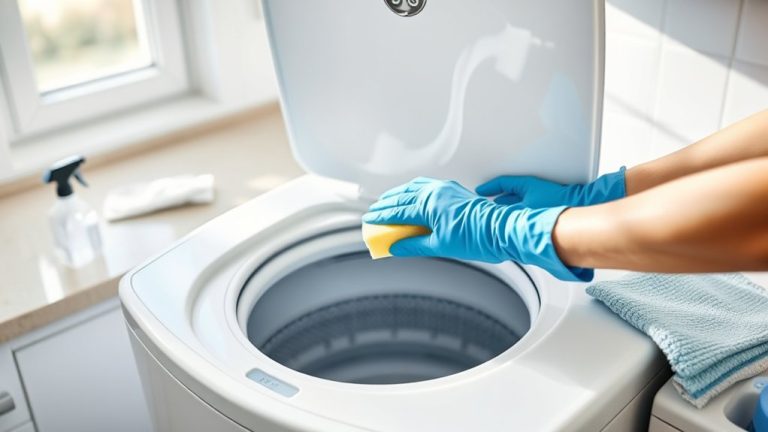
Start by checking your washer’s owner’s manual to see if the agitator is removable. To clean the inside effectively, remove the agitator if possible, then scrub it with warm soapy water or a non-abrasive cleaner to eliminate buildup.
Check your washer’s manual to see if the agitator can be removed for thorough cleaning.
For drum cleaning, run a hot water cycle with two cups of white vinegar or a specialized cleaner to break down deposits and sanitize. Afterward, add baking soda to deodorize and enhance freshness.
Remember to regularly check the rubber seals for trapped moisture that promotes mold.
- Remove and scrub agitator with warm soapy water
- Run hot water cycle using vinegar or machine cleaner
- Add baking soda after vinegar cycle for odor removal
- Regularly check and clean drum seals
- Perform deep cleaning cycle every 30 washes or monthly with an empty drum
This method guarantees a clean washer and peak detergent performance.
Using Commercial Cleaners Like Affresh: When and How
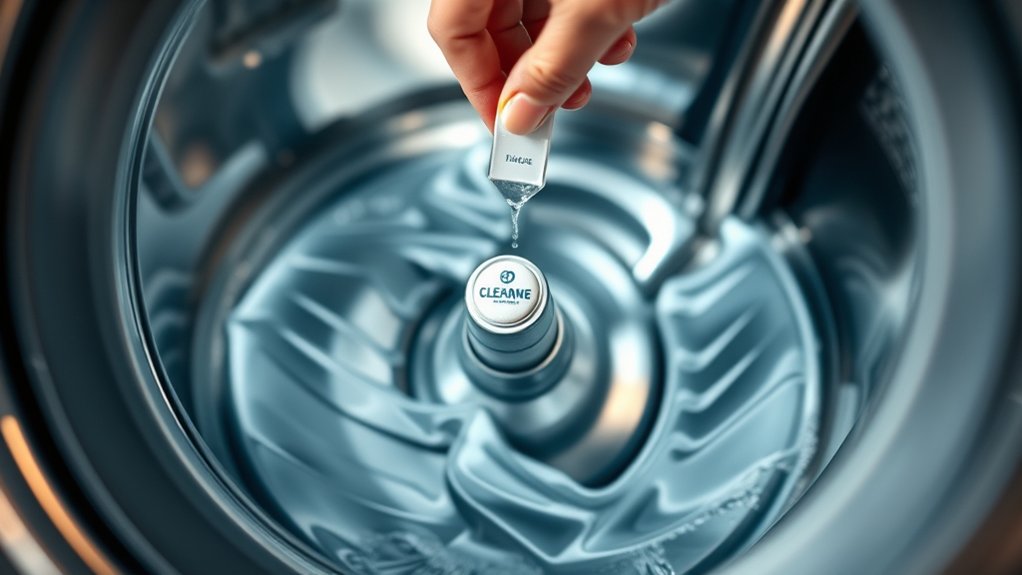
You should use Affresh tablets to break down residue and get rid of odors, which helps keep your washer running smoothly.
Just pop one tablet into the drum and run a cleaning or hot water cycle—make sure to follow your machine’s instructions.
For the best results, try to clean your washer once a month or after about every 30 wash cycles.
Affresh Tablet Benefits
Affresh tablets provide a targeted solution to dismantle residue and buildup inside your washing machine tub, ensuring a cleaner wash environment and reducing odor-causing agents.
By incorporating affresh tablets into a regular cleaning cycle, you effectively prevent odors and minimize mold growth that can compromise front-load washers.
These tablets tackle soap scum buildup, promoting peak washing machine performance and extending machine longevity.
To use, just place an affresh tablet in the drum and run a hot water or cleaning cycle as specified.
Affresh tablets are compatible with both front-load washers and top-load machines.
They break down detergent residue and mineral deposits, helping prevent foul odors and microbial growth.
They also reduce soap scum buildup that impairs function, supporting peak washing machine performance and durability.
It’s a simple way to keep your washer running smoothly for years to come.
Optimal Cleaning Frequency
Maintaining a regular cleaning schedule with commercial cleaners like Affresh guarantees your washing machine operates efficiently and stays odor-free.
To clean your washer effectively, use Affresh tablets at least once a month or every 30 cycles. This cleaning frequency ensures peak performance by breaking down residue buildup that fosters mold and mildew growth.
If your machine has a dedicated cleaning cycle, always follow the manufacturer’s instructions to get the most out of the tablets. Start the cleaning cycle with an empty washer to make sure nothing interferes with the process.
Doing this regularly not only keeps odors at bay but also helps prolong your machine’s lifespan. Sticking to this routine keeps your washer fresh, fully functional, and free from contaminants that can degrade washing quality.
It’s a simple step that makes a big difference in how well your machine works and how clean your clothes come out.
Step-By-Step Usage
One effective way to keep your washing machine running smoothly is to use a commercial cleaner tablet during a designated cleaning cycle.
To clean a washing machine using Affresh tablets, start by dropping one tablet into the empty tub. Then, select the cleaning cycle or a hot water cycle according to your machine’s instructions.
Allow the cleaning cycle to complete fully, which may take 30 minutes or longer. For best results, follow this step 1: clean procedure every 30 cycles or at least once a month.
Afterward, perform post-cleaning maintenance by wiping down surfaces and leaving the door open to let the interior dry, preventing odors and mold growth.
Use Affresh tablets monthly or every 30 cycles. Insert the tablet into the empty drum. Select the appropriate cleaning cycle and allow it to finish completely.
Finally, wipe surfaces and keep the door open to let everything dry.
Tips for Preventing Odors and Mold Between Deep Cleanings
Although deep cleanings are essential, you can prevent odors and mold between sessions by leaving the washer door open to promote air circulation. This simple step reduces moisture buildup and helps stop mold and mildew from growing inside the drum.
Also, make it a habit to clean the detergent and fabric softener dispensers monthly. This gets rid of soap scum and detergent residue that can cause unpleasant smells.
Don’t forget to regularly wipe down the door seal and drum with a damp cloth. This removes trapped moisture and residue that might otherwise stick around.
Using the correct amount of HE detergent is key to minimizing suds and preventing buildup, which can harbor bacteria and odors.
Running a hot water cycle with white vinegar or baking soda every few weeks also helps neutralize odors and break down residue.
Maintenance Habits to Keep Your Washer Fresh
To keep your washer performing at its best and smelling fresh, adopt consistent maintenance habits. Your washing machine’s use involves moisture and detergent, which can lead to mildew and soap residue buildup if neglected. Regular care helps maintain fresh conditions and prevents odors.
Try to leave the door open after clean loads to promote air circulation and stop mildew from growing. It really makes a difference in keeping things dry inside.
Also, wiping down rubber seals and door interiors weekly with an antifungal cleaner is a smart move to get rid of bacteria and mold.
Don’t forget to clean the detergent dispenser monthly. Soap residue can build up there and mess with your washer’s efficiency. Using the right amount of detergent also helps reduce buildup and keeps your machine running smoothly.
Once a month, run a hot water cycle with vinegar or baking soda. This deep cleans the tub and keeps it smelling fresh. It’s an easy step that can really extend the life of your washer.
How Often to Clean Your Washing Machine Tub?
Regularly cleaning your washing machine tub is essential for maintaining peak performance and preventing unpleasant odors. To guarantee maximum performance and prevent odors, you should clean the tub at least once a month or every 30 cycles.
Many machines feature a dedicated cleaning cycle designed to thoroughly remove residue and buildup.
If you notice severe color bleeding during loads, start a cleaning cycle right away to avoid lasting damage. Regular cleaning also helps prevent mold and mildew growth inside the tub. This is important because mold and mildew can compromise both hygiene and machine efficiency.
Always check your manufacturer’s guidelines for specific instructions tailored to your washer model. Following these recommendations will keep your washing machine clean, fresh, and working at its best over time.
It’s a simple habit that really pays off!
Frequently Asked Questions
Can I Use Bleach Instead of Vinegar for Deep Cleaning?
You can use bleach instead of vinegar for deep cleaning, but you must follow safety precautions.
Bleach benefits include effective stain removal and odor removal, but it can damage rubber seals with frequent use. For machine maintenance, use bleach sparingly as a vinegar alternative and always dilute it properly.
Limit cleaning frequency to avoid buildup.
Vinegar remains gentler and safer for routine cleaning, making it a better choice for regular upkeep.
Will Deep Cleaning Damage My Washing Machine?
Think of deep cleaning like tuning an engine. It won’t damage your washing machine if you follow maintenance tips carefully.
Avoid harsh chemicals and use essential supplies like affresh tablets or vinegar in the right amounts.
Make sure to tackle common issues like mold buildup by cleaning regularly. Always keep safety precautions in mind when you do this.
These simple DIY steps help your machine last longer and keep the seals in good shape.
Just stick to your manufacturer’s guidelines.
When you do, deep cleaning becomes a smart way to keep your appliance healthy and running well for years to come.
How Long Does a Deep Cleaning Cycle Take?
A deep cleaning cycle typically takes 1 to 2 hours, depending on your machine’s settings and model. This duration guarantees thorough odor elimination and detergent residue removal, which are essential for washing machine care.
Regular cleaning combined with maintenance tips helps keep your machine running longer.
Some cycles even include soaking phases that add time but really boost the deep cleaning benefits.
Following these guidelines will help you maintain peak performance and extend your washing machine’s lifespan effectively.
It’s a simple way to keep your machine in great shape!
Can I Deep Clean My Washing Machine Without Running a Full Cycle?
You can clean your washing machine without running a full cycle. It’s pretty easy if you follow the right maintenance steps.
For both front loader and top loader models, just manually scrub the drum and rubber seals with a mix of vinegar and baking soda. This helps get rid of odors and detergent buildup.
Cleaning regularly will keep your machine running smoothly.
Plus, choosing eco-friendly options like natural vinegar helps reduce environmental impact while keeping your washer in top shape.
Is It Safe to Use Baking Soda and Vinegar Together in the Washer?
It’s not ideal to use baking soda and vinegar together in your washer because their cleaning effectiveness decreases when combined.
Baking soda benefits include odor removal and breaking down deposits, while vinegar properties tackle mold and mildew.
For maximum washing machine maintenance, use these natural cleaners separately. Always follow safety precautions, as frequent vinegar use can damage rubber seals.
Check your machine’s manual to verify compatibility and avoid unintended harm.
That way, you keep your washer in great shape without any surprises.
Conclusion
Regularly deep cleaning your washing machine tub is essential. Studies show that 50% of washers develop mold and odors within six months without proper care. By following methodical steps like running hot cycles and cleaning dispensers and seals, you can prevent buildup and maintain efficiency.
Incorporate these maintenance habits consistently to extend your washer’s lifespan and keep your laundry fresh. Don’t overlook routine cleaning. It’s a small effort with significant technical benefits.