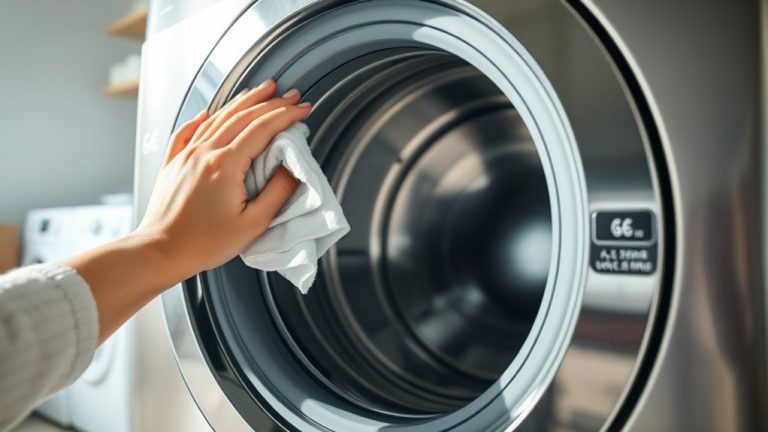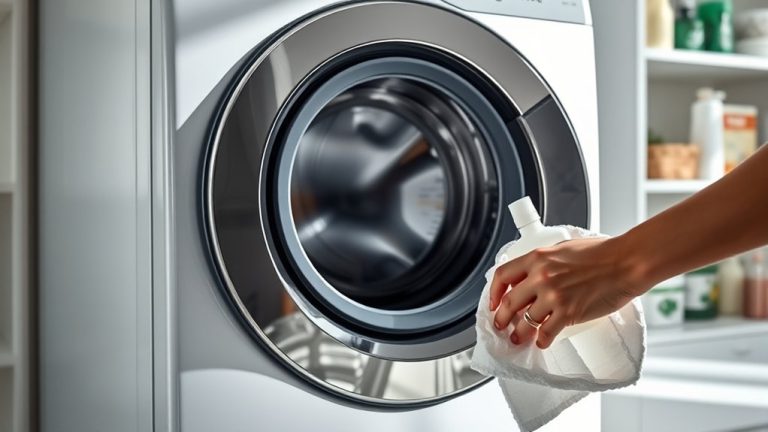
How To Clean Clogged Washing Machine Drain Pipe – Fix Guide
To clean a clogged washing machine drain pipe, start by unplugging your washer and turning off the water supply. Disconnect the drain hose carefully, placing a bucket underneath to catch any water. Use a drain snake to clear any blockages in the standpipe.
Next, flush the system with boiling water followed by a baking soda and vinegar mixture. This helps break down any remaining residue and keeps things flowing smoothly.
Once you’ve done that, reassemble everything securely and run a test cycle to check for leaks. Following these steps will help ensure your washing machine drains efficiently.
If you want, you can explore more tips on how to prevent clogs and when it might be time to call a professional for help.
How To Identify a Clogged Washing Machine Drain Pipe
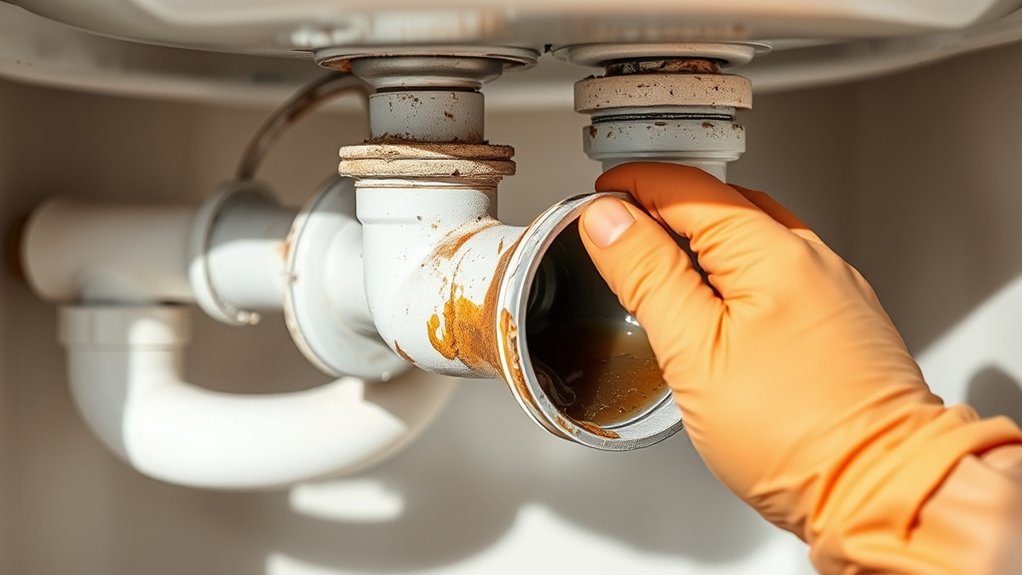
How can you tell if your washing machine’s drain pipe is clogged? One of the most obvious symptoms of a clogged drain is water pooling at the base of your machine. This usually means the water isn’t draining properly during the wash cycles.
Water pooling at your washing machine’s base is a clear sign the drain pipe may be clogged.
You might also hear unusual noises like gurgling or buzzing near the drain area. These sounds suggest the drain pump is struggling against some kind of blockage.
Modern washers often show error codes related to drainage problems. These codes are a handy way to know there might be a clog somewhere in the system.
Another clear sign of a clogged drain is water backing up into the standpipe after a wash cycle.
It’s a good idea to regularly check the drain hose and standpipe for any visible blockages. Catching these issues early can help prevent bigger drainage problems down the line.
Essential Tools To Unclog Your Washer Drain Pipe
Once you’ve confirmed that your washing machine’s drain pipe is clogged, gathering the right tools will make the repair process much easier.
Having the essential equipment on hand means you can access, clear, and manage water safely and effectively.
Here are the key tools you’ll need:
- Drain auger: This flexible tool breaks up and removes tough clogs deep within the drain pipe.
- Rubber gloves: These protect your hands from dirty water and contaminants while you work.
- Bucket and towels: Great for catching any leftover water when you disconnect hoses or clean the drain standpipe.
You’ll also want screwdrivers to remove panels for better access.
A no hub coupler can help secure connections during repairs.
Getting all these tools ready beforehand will help everything go smoothly and get your washer draining again in no time.
Safety Steps Before Starting the Unclogging Process
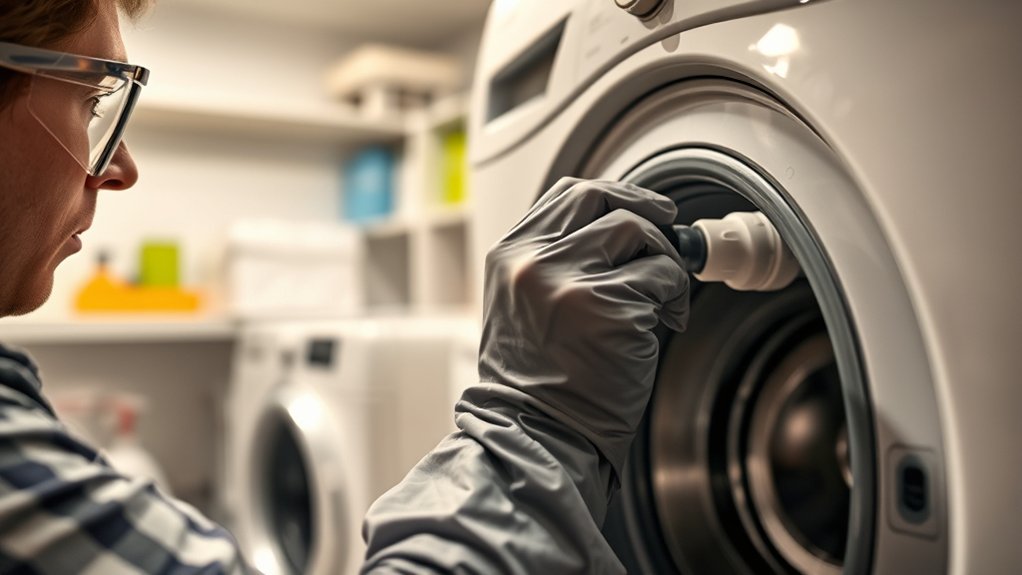
Before you begin unclogging the washing machine drain pipe, make certain you disconnect the appliance from the power outlet to eliminate the risk of electric shock.
One of the essential safety steps is to shut off the water supply to prevent flooding or water damage during the process.
Always wear rubber gloves to protect your hands from dirt, bacteria, and sharp components.
Keep a bucket and towels nearby to catch any residual water that may spill when you start working on the drain pipe.
Finally, familiarize yourself with your washing machine’s manual to understand specific safety instructions and component locations.
Following these safety steps guarantees you disconnect the washing machine properly and work safely while clearing the clog.
How To Disconnect the Washing Machine Drain Hose Safely
To disconnect the washing machine drain hose safely, start by unplugging the appliance from the power outlet to eliminate any risk of electric shock.
Next, prepare to remove the washing machine drain hose by placing a bucket or towels beneath it to catch any leftover water.
Position a bucket or towels under the drain hose to catch any remaining water before removal.
Locate the clamp that’s holding the hose in place. Then, use pliers or an adjustable wrench to loosen it carefully.
Be gentle when twisting and pulling the hose away from the standpipe or wall fitting so you don’t cause any damage.
Here are some key steps to remember: unplug the washing machine before you handle the drain hose. Position a bucket or towels nearby to catch any water spills. And use the right tools to loosen clamps without hurting the hose.
Finally, take a moment to inspect the hose for any blockages before you move forward.
Clear the Standpipe Clog With a Drain Snake
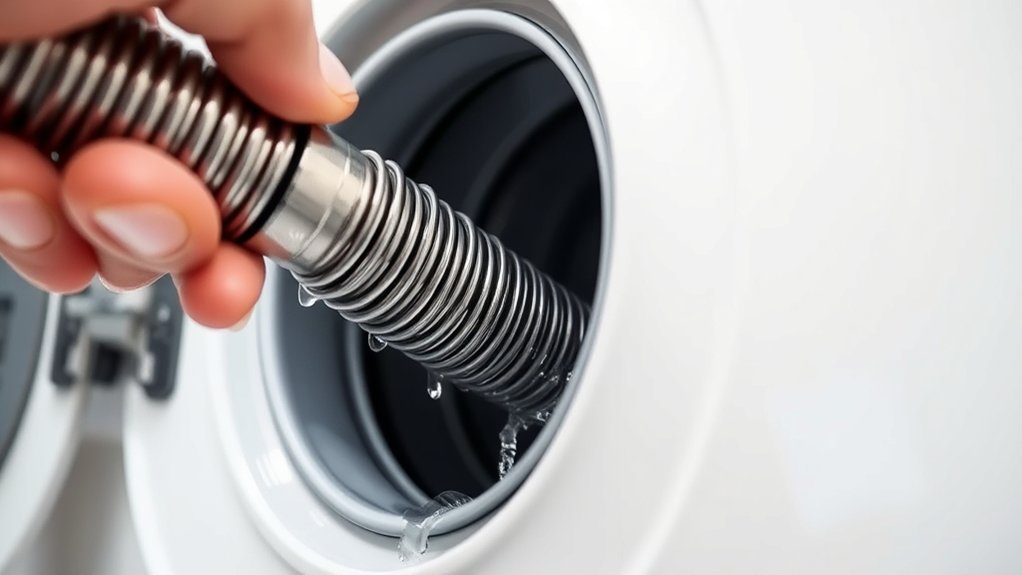
Begin by unplugging your washing machine and disconnecting the drain hose from the standpipe to guarantee a safe cleaning process.
Use a 3/8 inch drain snake to address the clog effectively. Insert the snake carefully into the standpipe, turning it clockwise as you feed the cable deeper.
When you encounter resistance, pull back slightly, then reinsert the snake to break up the blockage. Keep going with this process until the standpipe is clear and the snake moves freely.
Once it’s cleared, flush the standpipe with hot water to remove any leftover debris and make sure the drainage is working properly.
It’s a good idea to regularly inspect and maintain the standpipe. Make sure it stays at the recommended height of about 36 inches to help prevent future clogs and keep everything flowing smoothly.
How To Clean the Washing Machine Drain Pump and Filter for Better Drainage
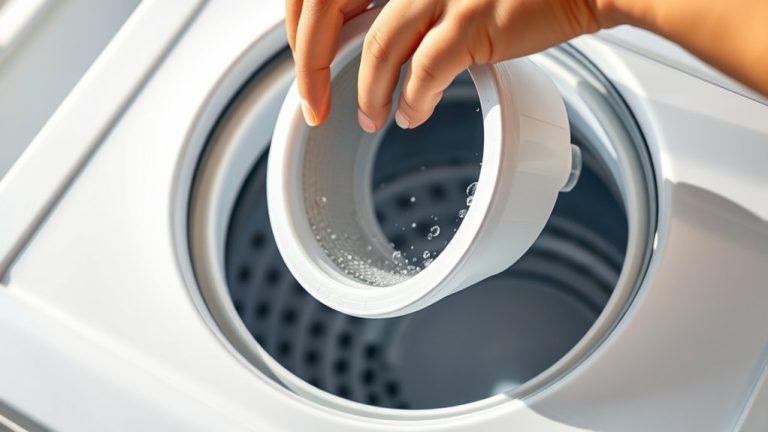
Three key steps guarantee effective cleaning of your washing machine’s drain pump and filter: unplug the machine, turn off the water supply, and remove the bottom front cover panel.
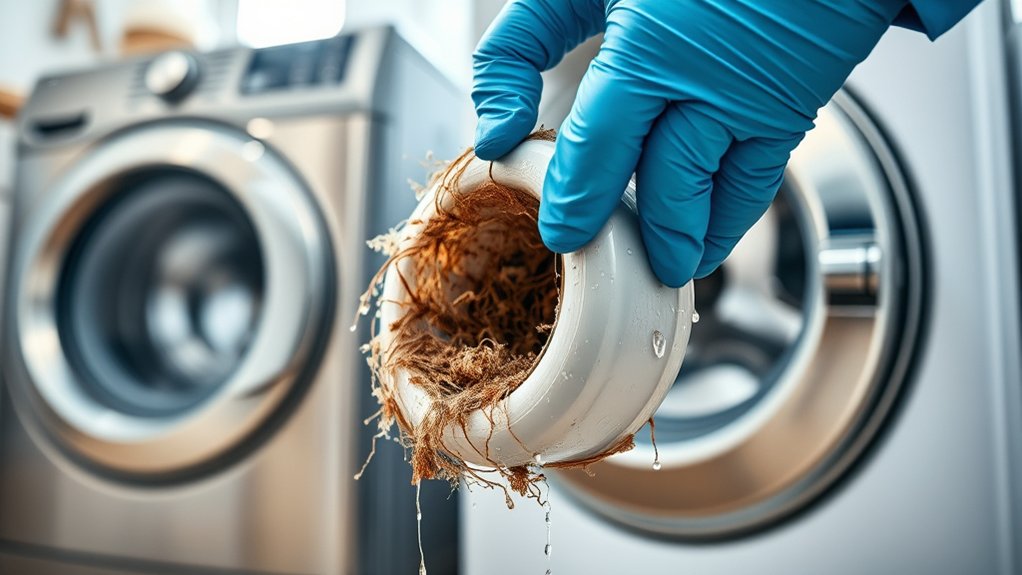
This access lets you inspect and clean the drain pump filter, which traps lint, hair, coins, and other debris that block drainage.
Focus on these tasks during cleaning the drain pump and filter:
- Remove and clear the filter of accumulated debris.
- Check the impeller inside the drain pump for obstructions.
- Reassemble the components securely before testing.
It’s a good idea to perform cleaning every few months to keep things running smoothly.
After you put everything back together, run a short cycle to make sure the drain pump is working properly and water flows freely.
This way, your washing machine will drain effectively without any clog issues.
Flush the Washer Drain Pipe and Standpipe With Hot Water and Natural Cleaners
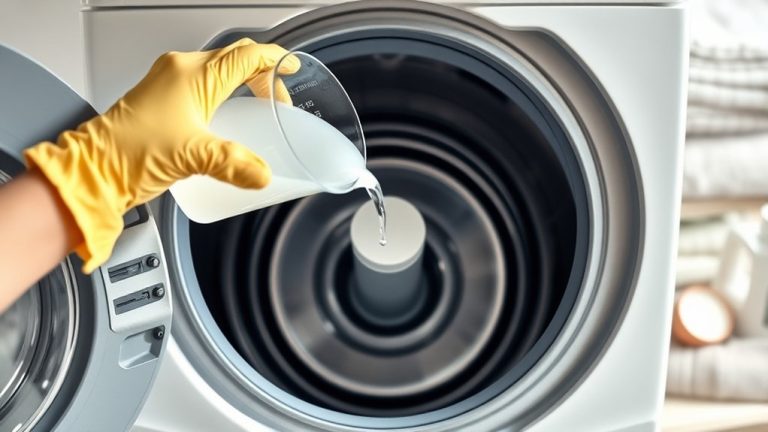
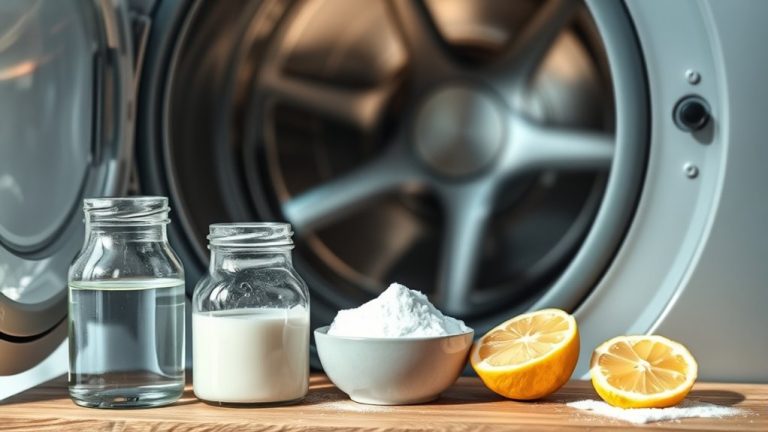
You’ll start by pouring a baking soda and vinegar mixture into the drain pipe to break down grime.
Let it fizz for about 15 minutes—that bubbling action really helps loosen things up.
After that, flush the pipe with boiling water to clear out the debris and keep buildup at bay.
Using natural cleaners like lemon juice is a great way to keep the process safe and fresh-smelling.
Doing this every month will help maintain ideal drainage and keep everything running smoothly.
Benefits Of Hot Water
Flushing the washer drain pipe and standpipe with hot water greatly improves the removal of soap scum, grease, and other residue that cause blockages.
Hot water effectively dissolves buildup that cold water can’t, enhancing your drain cleaning routine and preventing clogs. Using hot water regularly helps maintain peak flow and reduces the risk of damage to your washing machine’s drainage system.
It’s pretty simple: hot water makes a big difference. It breaks down the gunk that tends to stick around when you use cold water. So, by flushing with hot water, you keep things flowing smoothly and avoid costly repairs down the line.
Key benefits of hot water in drain cleaning include:
- Dissolves stubborn soap scum and grease, simplifying blockage removal
- Enhances the effectiveness of natural cleaning agents without harsh chemicals
- Prevents lint and debris accumulation, extending the lifespan of your drainage system
Adding hot water flushes to your maintenance routine guarantees efficient, eco-friendly drain cleaning and a fresher laundry environment.
It’s an easy step that pays off with cleaner drains and less hassle.
Natural Cleaning Ingredients
Hot water alone does a great job breaking down buildup, but combining it with natural cleaning ingredients can boost your drain pipe maintenance.
Start by pouring a mixture of equal parts baking soda and white vinegar into the washer drain pipe and standpipe. This combination creates an effervescent reaction that loosens soap scum, grease, and minor clogs while neutralizing odors.
After allowing the solution to sit and work for several minutes, flush the system thoroughly with boiling water. This step rinses away the dislodged debris and cleans the pipe walls efficiently.
Incorporating this natural cleaning method into a monthly routine helps prevent blockages, ensuring ideal water flow and extending the lifespan of your washing machine’s drainage system without harsh chemicals or complex procedures.
It’s simple, effective, and keeps things running smoothly!
Step-By-Step Flushing
Before starting, unplug your washing machine and disconnect the drain hose from the standpipe to guarantee safety.
Flushing the washer drain pipe and standpipe effectively clears blockages and prevents a clogged sink effect. Follow these precise steps:
Pour boiling water slowly into the standpipe to dissolve grease and soap residue.
Then, add a mixture of one cup baking soda and one cup vinegar. Let it fizz for 30 minutes to break down debris.
After that, flush again with boiling water to wash away loosened clogs. This method targets buildup causing drainage issues.
Repeat monthly to maintain an unobstructed drain pipe.
Proper flushing minimizes risks of backups and enhances washing machine efficiency.
It’s a simple routine that can save you from bigger problems down the line.
Test the Drainage and Reassemble the Drain Pipe Properly
Once you’ve cleared any clogs, you need to reassemble the drain pipe with precision to guarantee proper functionality.
Begin by positioning the P-trap with its opening facing downward to prevent leaks and maintain effective drainage. Use a torque wrench set to 60 inch-pounds to securely tighten all connections, avoiding overtightening that could damage fittings.
Confirm the standpipe height is approximately 36 inches and its diameter at least 2 inches to facilitate ideal water flow.
Next, test the drainage by running a short wash cycle at full blast. Observe carefully for any leaks or slow drainage.
If the water flows correctly and there are no leaks, you’ve successfully reassembled the drain pipe.
Proper assembly and testing guarantee reliable operation and prevent future drainage issues. It’s really worth taking the time to do it right!
Tips To Prevent Future Clogs in Your Washer Drain Pipe
After confirming your washer drain pipe functions properly, maintaining it regularly will help you avoid future clogs. Preventing detergent residue and buildup in drain pipes is really important for smooth drainage.
Here are some practical tips to keep your washer drain pipe clear:
Use the correct amount of high-efficiency detergent to minimize soap residue and buildup in drain pipes.
Flush the standpipe monthly with hot water and vinegar to dissolve grease, soap scum, and detergent residue.
Also, regularly clean the lint trap, drain filter, and inspect the P-trap to remove lint and debris that cause blockages.
Following these steps helps you maintain peak water flow and reduce the risk of clogs caused by detergent buildup or lint accumulation in your washer drain pipe.
When To Call a Professional Plumber for Washer Drain Issues
If you’ve tried multiple DIY methods like using a drain snake or auger without success, it’s time to call a professional plumber. Persistent drainage issues after using a plumber’s snake often mean there are deeper blockages or mechanical problems that need expert diagnosis. You don’t want to keep guessing when the problem might be more serious.
You should also contact a licensed plumber if water pools around the washer or you hear unusual noises from the drain pump, like grinding or buzzing. These signs usually point to severe obstructions or pump malfunctions that typical DIY fixes can’t handle. It’s better to get it checked out before things get worse.
Also, if your washer keeps showing error codes related to drainage, it’s a good idea to have a professional take a look. These codes can indicate complex faults that need proper assessment.
Hiring a licensed plumber means you get the right tools, expertise, and safety standards, which helps prevent further damage and gets your washer draining efficiently again.
Frequently Asked Questions
What Causes Washing Machine Drain Pipes to Clog Frequently?
Washing machine drain pipes clog frequently due to lint buildup, soap residue, and fabric softener films that trap debris.
Small items like coins or hair also cause blockages.
To guarantee clog prevention, you need regular pipe maintenance, including flushing pipes with hot water and using drain cleaners safe for your machine.
Staying proactive helps maintain clear pipes, preventing narrowing and costly repairs.
This way, you avoid frequent interruptions in your laundry routine.
It’s all about keeping things flowing smoothly!
Can Chemical Drain Cleaners Damage My Washing Machine Drain Pipe?
Yes, chemical drain cleaners can damage your washing machine drain pipe. They often corrode metal and deteriorate PVC, which can cause leaks or cracks.
Using harsh chemicals repeatedly risks melting or warping plastic pipes, and that can really mess up your drain system.
Instead, consider alternatives like baking soda and vinegar. These clear clogs safely without harming your plumbing. Plus, they’re gentler and better for the environment.
How Often Should I Clean My Washing Machine Drain Pipe?
You should clean your washing machine drain pipe every 3 to 6 months for ideal drain maintenance.
If you regularly wash heavy loads or use fabric softeners, tighten this to every 2 to 3 months. Incorporate flushing with hot water and vinegar monthly as a preventive step.
Consistent washing machine upkeep helps prevent buildup, reduces clog risks, and extends your machine’s lifespan.
This way, your maintenance routine stays both efficient and practical.
Are There Specific Detergents That Reduce Drain Pipe Clogs?
Yes, specific detergent types can reduce drain pipe clogs. You should choose high-efficiency (HE) detergents designed to limit suds and residue buildup.
Detergents containing enzymes break down organic matter like lint and soap scum, which really helps keep your drains clear.
Also, selecting low-phosphate detergents prevents mineral reactions that cause clogs. Always follow the manufacturer’s recommended detergent amount to avoid excess residue.
This way, your washing machine’s drain pipe stays clear and runs efficiently.
What Are Common Signs of a Damaged Washing Machine Drain Pipe?
You’ll notice common signs of a damaged washing machine drain pipe through leak detection methods like spotting water pooling near the machine’s base.
Frequent water backups during wash cycles and unusually wet clothes also indicate issues.
Buzzing noises from the drain pump signal strain, often from blockages or damage.
Keeping up with regular pipe maintenance helps prevent these problems and error codes related to drainage.
This way, you can make sure your washer runs efficiently without unexpected interruptions.
It’s all about staying on top of those little issues before they become big headaches.
Conclusion
Clogged washing machine drain pipes affect nearly 30% of households annually, causing water backup and potential damage. By following these steps, you can efficiently restore drainage. Start by identifying the clog and using the right tools.
Next, safely disconnect the hose and thoroughly clean it with a drain snake and hot water. Regular maintenance and preventive tips can help reduce the chance of clogs coming back.
If the clog persists despite your efforts, it’s best to call a professional plumber. They guarantee a safe, effective resolution without risking further damage.