How To Clean Washing Machine Gasket – Easy Cleaning Tips
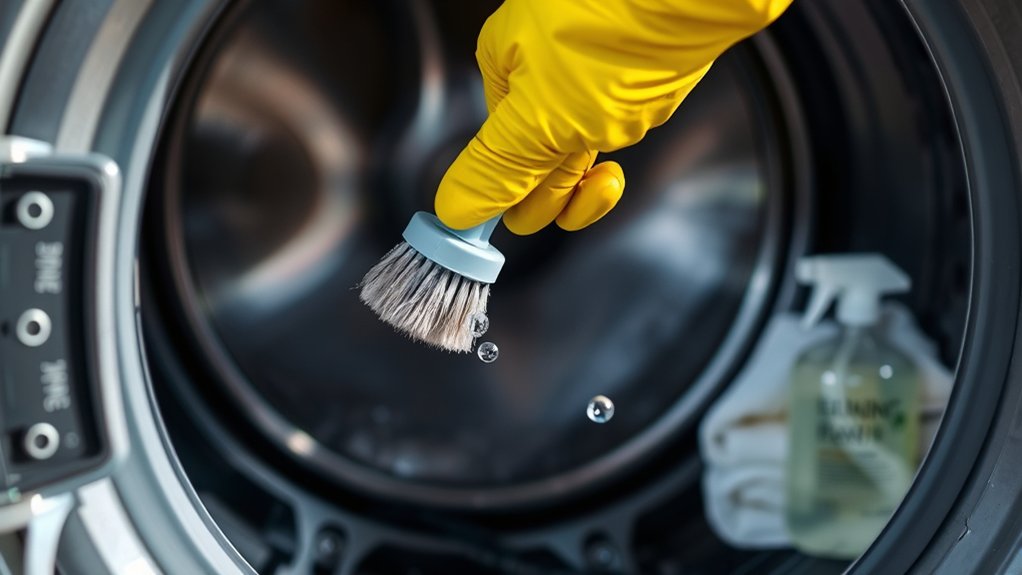
To clean your washing machine gasket, start by wearing gloves and checking for mold, mildew, or any trapped debris. Apply an all-purpose cleaner and scrub gently. If you find some tough spots, you can use diluted bleach to tackle them.
Next, rinse the gasket with warm water and dry it thoroughly to stop moisture from building up. This helps keep things fresh and prevents problems down the line.
To keep your gasket fresh, make it a habit to wipe it dry after each wash. Also, leave the door open afterward to let air circulate.
Following these simple steps not only improves hygiene but also helps your machine last longer. Plus, you can discover easy daily habits and maintenance tips to keep it fresh for even longer.
Why Cleaning Your Washing Machine Gasket Matters
Although it might seem like a small detail, cleaning your washing machine gasket regularly is essential to prevent mold and mildew buildup that causes unpleasant odors and affects hygiene.
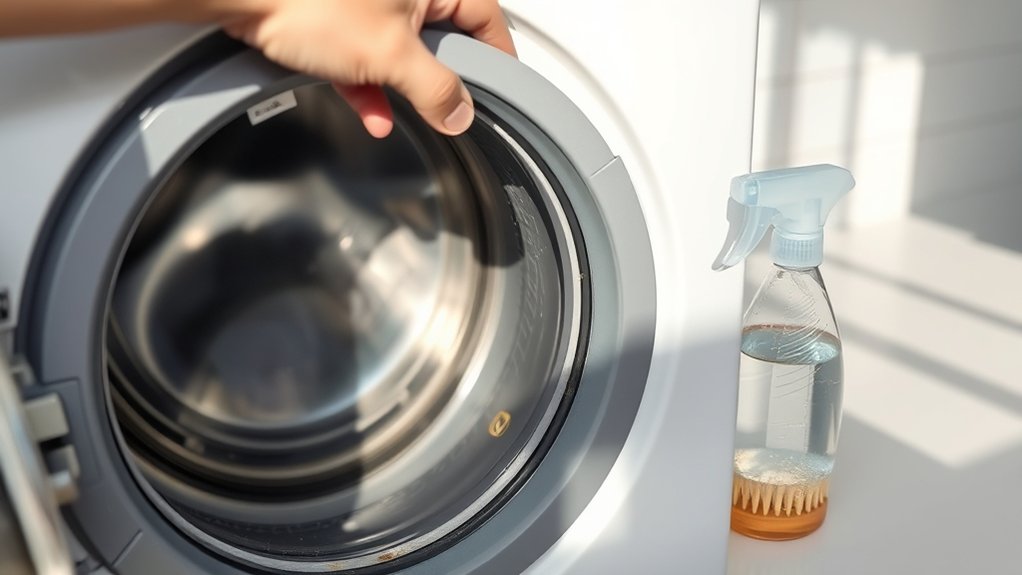
The gasket is a rubber seal around the door, and it often traps moisture and detergent residue. This creates an ideal environment for mold and mildew to grow.
The rubber gasket around your washer door traps moisture and detergent, making it a prime spot for mold growth.
If left unchecked, this can lead to foul smells and even bacterial growth, which compromises your laundry’s cleanliness.
To keep your washer smelling fresh, make it a habit to wipe down the gasket after each use. This helps reduce buildup right away.
On top of that, try to do a thorough monthly cleaning using a diluted bleach solution. This will remove stubborn stains and odors that a quick wipe can’t handle.
Plus, maintaining a clean gasket helps prevent leaks and extends your machine’s lifespan. So, it’s definitely worth the effort!
Essential Supplies for Cleaning Your Washer Gasket
First, gather some rubber gloves, a microfiber cloth, and an all-purpose cleaner to get started with cleaning your washer gasket effectively.
If you come across some stubborn stains, you might want to prepare a diluted bleach solution—but be careful with it so you don’t cause any damage.
Oh, and don’t forget to make sure the washer drum is empty before you begin.
That way, the whole process will go smoothly and safely.
Cleaning Materials Needed
To clean your washing machine gasket effectively, you’ll need a few essential supplies: rubber gloves to protect your hands, a soft cloth for gentle scrubbing, and an all-purpose cleaner to break down grime and debris.
The rubber seal around the door can trap dirt and mold, so using these tools helps you clean the gasket thoroughly without damage.
Warm water is also important for rinsing off any residue after cleaning. For tough stains, a diluted bleach solution can be applied carefully and left for about five minutes to enhance stain removal.
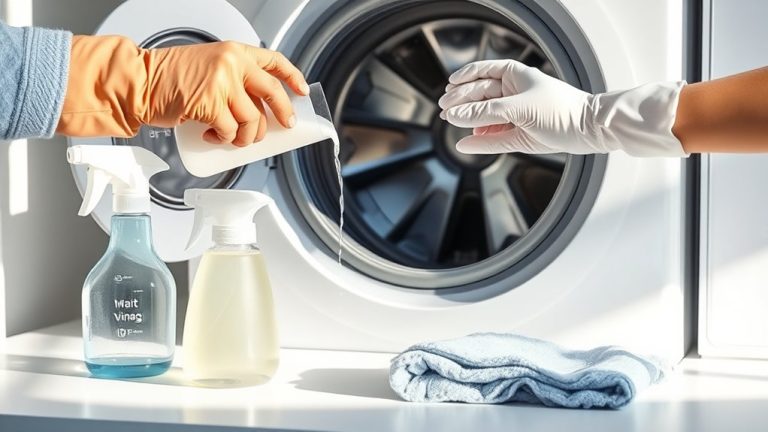
Using a spray bottle to apply your all-purpose cleaner lets you target the crevices in the rubber seal precisely. This way, you get a deeper clean and prevent buildup that causes odors or mold growth.
Optional Cleaning Solutions
You’ll want a few optional cleaning solutions on hand to tackle stubborn stains and prevent mold buildup on your washing machine gasket.
Start with a diluted bleach solution for tough grime; apply it carefully, let it sit for about 5 minutes, then scrub to boost cleaning power.
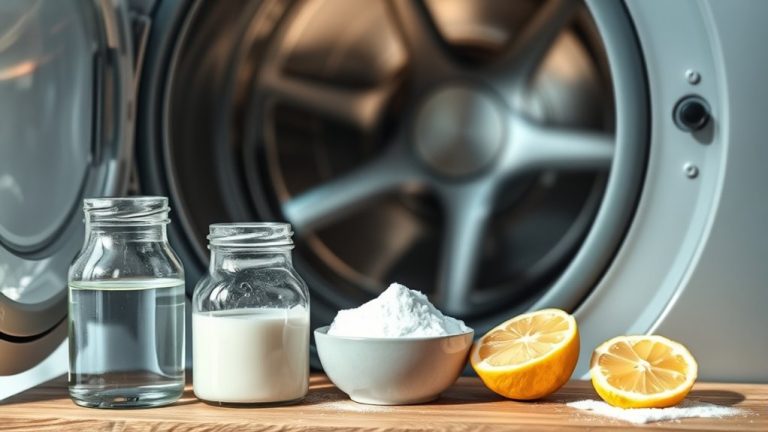
Baking soda is excellent for post-wash care. Just sprinkle it around the washer gasket to naturally deter mold and freshen the area.
Moreover, consider using a specialized mold remover like Magic clean stain and mold remover. Spray it on and let it sit for 30 minutes before running a hot wash cycle for thorough cleaning.
Remember to check and clear any drain tube clogs to avoid odors and guarantee your gasket stays clean and functional longer.
How to Inspect Your Washing Machine Gasket Before Cleaning
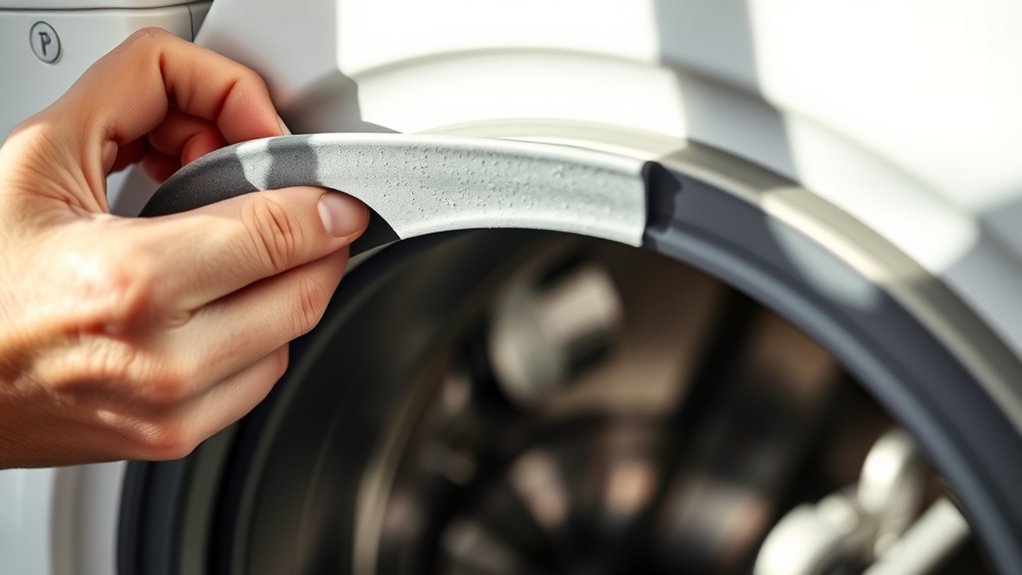
Before you start cleaning, take a good look at the gasket to spot any visible mold or mildew. You’ll usually see these as dark spots, or sometimes you might notice a musty smell.
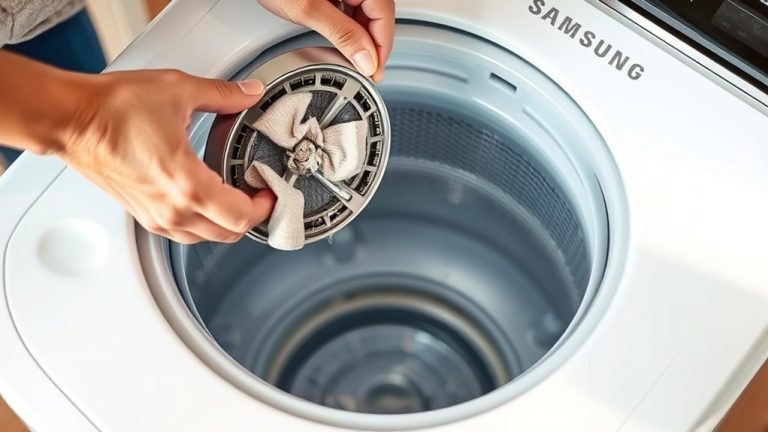
Also, don’t forget to check the folds carefully for any foreign objects like coins or lint—these can block the seal and cause leaks.
While you’re at it, run your fingers along the gasket. This way, you can feel if there are any tears or signs of wear that might need fixing or even replacing.
It’s a simple step that can save you from bigger problems down the line.
Visual Mold And Mildew
Start by carefully inspecting the washing machine gasket for any visible signs of mold or mildew, focusing on the folds and crevices where moisture tends to accumulate.
Look closely for discoloration or black spots on the gasket, as these are clear indicators of mold growth that need prompt attention.
Make sure the gasket surface is free from sticky or greasy residues, which can trap bacteria and odors, preventing your gasket from staying clean.
Regularly performing this visual check helps you catch mold and mildew early, avoiding more serious cleaning challenges and potential damage to your washer.
By keeping the gasket clean and mold-free, you maintain peak washing machine performance and a fresher laundry environment.
It’s a simple step that really makes a difference!
Check For Foreign Objects
Anyone inspecting the washing machine gasket should first make certain the drum is empty to avoid interference during the check.
Next, carefully examine the gasket, focusing on its folds and crevices where foreign objects often hide. Look for coins, small clothing items, or debris that could damage the gasket or affect your washer’s performance.
When you spot any foreign objects, remove them gently to prevent tearing or leaks. Regularly checking for foreign objects before cleaning helps maintain your washer’s efficiency and prevents unpleasant odors.
Taking these steps guarantees the gasket stays in good shape and your machine runs smoothly.
This simple inspection is an essential part of effective gasket cleaning. It’s easy to do and makes a big difference in how well your washer works.
Assess Gasket Condition
After removing any foreign objects from the gasket, take a close look at its overall condition.
Inspect the gasket carefully for visible mold, mildew, or dark stains. These signs mean it needs a thorough clean or might even require replacement.
Smell the gasket. A musty odor often signals mold buildup that demands immediate attention.
Next, examine the rubber for cracks, tears, or wear since damaged gaskets can cause leaks and reduce washing efficiency.
Also, verify the gasket is securely attached to the washer drum and hasn’t come loose. If it’s loose, it could compromise the seal.
How to Clean Your Washer Gasket Step by Step
To clean your washer gasket effectively, start by gathering essential supplies like rubber gloves, a soft cloth, all-purpose cleaner, warm water, and optional bleach for tough stains.
First, make sure the washer drum is empty. Then, check the door seal for any debris or foreign objects.
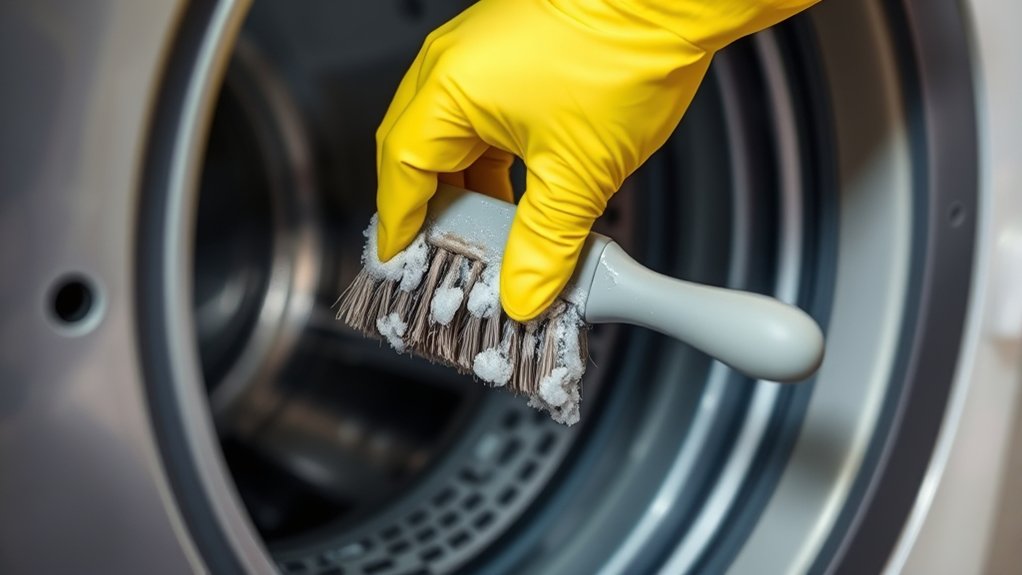
Next, apply the all-purpose cleaner to the gasket and scrub gently to remove grime. If you find stubborn spots, try using a diluted bleach solution. Let it sit for about 5 minutes before rinsing thoroughly with warm water.
Apply cleaner to the gasket, scrub gently, and use diluted bleach for tough spots before rinsing well.
After cleaning, wipe the door seal dry to stop moisture buildup.
It’s a good idea to follow these step-by-step instructions regularly to keep your washing machine gasket in good shape.
And don’t forget to leave the door open afterward—it helps air circulate and cuts down on odors.
Removing Mold and Mildew From Your Washer Gasket
Keeping your washer gasket clean involves more than just removing dirt and grime. It also means tackling mold and mildew that can build up over time.
First, regularly inspect the gasket for any signs of mold and mildew, especially in front-load washers where moisture collects.
To remove it, mix diluted bleach and water, then apply this solution to the gasket. Let it sit for about 5 minutes to kill the mold, then scrub gently.
Afterward, wipe away any residue with a soft cloth.
Running a clean washer cycle with baking soda can help deodorize and inhibit further mold growth.
How to Dry and Maintain Your Washer Gasket After Cleaning
A few simple steps can make a big difference in drying and maintaining your washer gasket after cleaning. To keep it fresh and prevent mold growth, make sure you thoroughly dry the gasket and promote good air circulation.
Use a soft, dry cloth to wipe all moisture from the gasket immediately after cleaning.
Then, leave the washer door open for a few hours to allow the gasket to air dry completely.
You can also run a short, empty cycle to evaporate any remaining moisture inside the gasket folds.
After each laundry session, check and dry any water buildup to keep the gasket clean and dry.
These little habits really help keep your washer gasket in great shape!
Daily Habits to Prevent Gasket Buildup and Odors
After each wash, just wipe down the gasket with a dry cloth. This helps get rid of any moisture that can lead to mold and odors.
Also, try to keep the washer door open when you’re not using it. This lets air circulate and helps the gasket dry completely.
These simple habits go a long way in preventing buildup and keeping your machine smelling fresh.
Post-Wash Gasket Care
Although it might seem minor, wiping down the washing machine gasket with a dry cloth after every cycle plays an essential role in preventing mold and mildew buildup.
Post-wash gasket care is key to avoiding mold growth and unpleasant odors.
To keep your gasket in top shape, follow these daily habits:
- Remove moisture by thoroughly drying the gasket after each wash.
- Use the correct detergent type and dosage to reduce residue buildup.
- Promptly take out wet laundry to prevent trapped moisture and mildew.
- Run a clean washer cycle monthly to refresh the machine and eliminate odors.
Airflow and Drying
Proper airflow and thorough drying are essential daily habits to keep your washing machine gasket free from buildup and unpleasant odors.
After each cycle, leave the washer door open to promote airflow. This helps moisture evaporate and prevents mold growth.
Always wipe down the gasket with a dry cloth to remove any leftover moisture that can cause odors.
Make sure to remove wet laundry promptly to avoid trapping moisture inside the drum and gasket.
Using the right detergent type and amount reduces excess suds and residue. Those can hold moisture and encourage odor development.
Also, run a Clean Washer cycle once a month to clear away buildup and keep things fresh.
These simple steps guarantee your gasket stays dry and odor-free.
Plus, they help extend your washer’s life and performance.
How Often Should You Clean Your Washing Machine Gasket?
Regularly cleaning your washing machine gasket is essential to keep your machine running smoothly and smelling fresh. Neglecting this area can lead to odors and buildup that affect clean loads and machine efficiency.
Here’s how often you should clean the gasket: Wipe the gasket dry after every wash cycle to prevent moisture buildup and odors.
Perform a deep clean with diluted bleach monthly or after every 30 cycles to maintain hygiene.
Increase cleaning frequency if you spot mold or unpleasant smells forming. Use the Clean Washer Cycle on compatible models monthly to tackle odors and buildup effectively.
Following this routine helps your washing machine deliver clean loads consistently while prolonging its lifespan.
It’s a small effort that really pays off in the long run!
Features That Help Keep Washer Gaskets Fresh
Keeping your washing machine gasket fresh goes beyond just wiping it down and deep cleaning. Many front load washers come with features designed to help prevent mold and odors. For instance, Whirlpool washers offer Antimicrobial Protection on the gasket, which inhibits bacteria growth.
You should regularly use the tub clean cycle. This cycle eliminates buildup and odors, keeping the drum and gasket hygienic. It’s an easy way to keep things fresh without much effort.
Plus, features like the FreshFlow Vent System use fan-powered air circulation to reduce moisture. The FanFresh Option and Dry Drum Cycle keep the drum dry after washing, which helps prevent musty smells.
Removing and Reinstalling Your Front Load Washer Gasket Made Easy
Start by unplugging your front load washer and removing the top panel, control panel, and door panel. This will give you easy access to the gasket’s spring clamps.
To remove the gasket, grab some basic hand tools and take off the outer spring clamp. Then, carefully pull the gasket away from the drum, making sure not to damage any parts.
Next, clean the gasket thoroughly with a bleach and water solution. Don’t forget to clear any drain tubes while you’re at it.
When it’s time to reinstall, align the gasket’s arrow so it’s pointing up. Push it firmly onto the drum’s white lip, and check for any gaps.
Finally, secure the gasket using the spring clamp pliers. Reattach the door panel and control panel, and double-check all electrical connections before plugging the washer back in.
- Remove with care using proper tools
- Clean gasket and drain tubes thoroughly
- Reinstall gasket matching the arrow orientation
- Secure clamp and reassemble panels properly
Frequently Asked Questions
Can I Use Vinegar Instead of Bleach to Clean the Gasket?
Yes, you can use vinegar instead of bleach for gasket maintenance. Vinegar benefits include dissolving mineral deposits and light mildew without harsh chemicals or fumes.
Mix equal parts vinegar and water, then spray the gasket for a gentle, effective cleaning alternative.
While vinegar won’t tackle tough mold like bleach does, it’s safer and perfect for regular upkeep. Just combine it with good habits like leaving the door open to keep your gasket fresh.
It’s an easy way to maintain cleanliness without the strong smell or chemicals.
Will Cleaning the Gasket Improve Washing Machine Efficiency?
Absolutely, cleaning the gasket can supercharge your washing machine’s efficiency!
With proper gasket maintenance tips, you prevent mold buildup that clogs seals and sensors. This mold prevention method keeps water levels ideal, so your machine operates smoothly without leaks.
Regular cleaning also extends your washing machine lifespan by reducing strain on parts.
Follow detailed cleaning steps, and you’ll enjoy fresher laundry, fewer repairs, and a machine running like new.
How Long Does It Take for the Gasket to Dry Completely?
The gasket usually takes about 1 to 2 hours to dry completely.
Drying time depends on things like humidity, air circulation, and how well you wipe the gasket.
For the best results, try leaving the door open after use and use a soft cloth to soak up any moisture.
These small steps can really help speed up the drying process.
It’s also a good idea to clean the gasket regularly.
Keeping it free from buildup not only helps it dry faster but also keeps your washer running efficiently.
Are There Any Gasket Cleaning Products Safe for Sensitive Skin?
Yes, you can find sensitive skin products designed for gasket maintenance tips.
Look for hypoallergenic or eco-friendly cleaners that minimize irritation. Natural cleaning alternatives like a vinegar and baking soda mix work well and are gentle on your skin.
Always wear gloves and test a small skin patch before use.
These steps guarantee effective cleaning without discomfort, keeping your washing machine gasket clean while protecting your sensitive skin.
Can Gasket Buildup Cause Damage to Clothes During Washing?
Think of your washing machine gasket as a fortress gate. If it’s clogged with mold and grime, your clothes become the vulnerable villagers inside.
Yes, gasket buildup can damage clothes by causing stains, discoloration, and lingering odors.
To protect your laundry, follow gasket maintenance tips like regular wiping and mold prevention strategies.
These simple actions guarantee you avoid laundry odor solutions emergencies. Plus, they keep your clothes fresh and safe every wash.
Conclusion
Cleaning your washing machine gasket might seem tedious, but skipping it leads to mold, odors, and poor washer performance. You don’t need fancy tools, just basic supplies and a little time.
Regularly inspecting and wiping your gasket keeps your washer fresh and extends its life. By following these simple steps and habits, you’ll avoid costly repairs and enjoy cleaner, fresher laundry every time.
It’s worth the effort, and you’ll see the difference quickly. Give it a try—you’ll be glad you did!