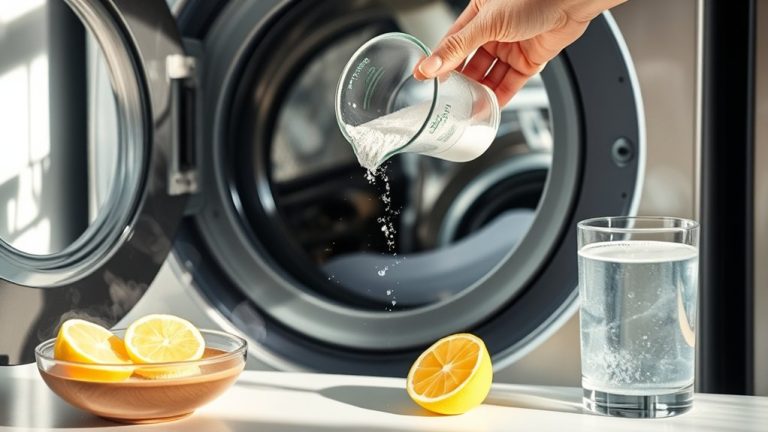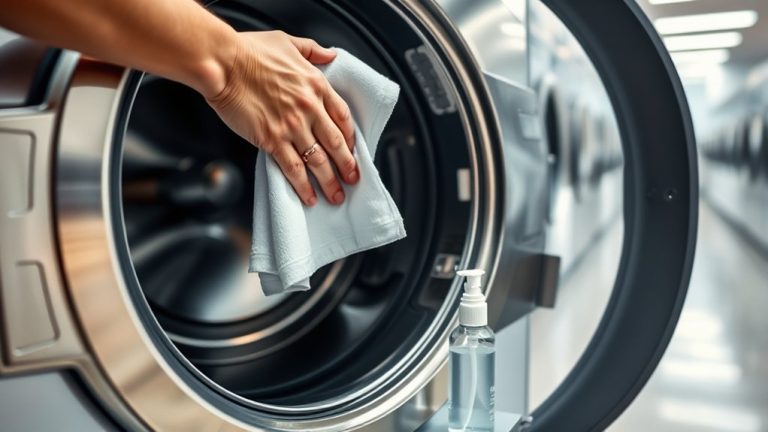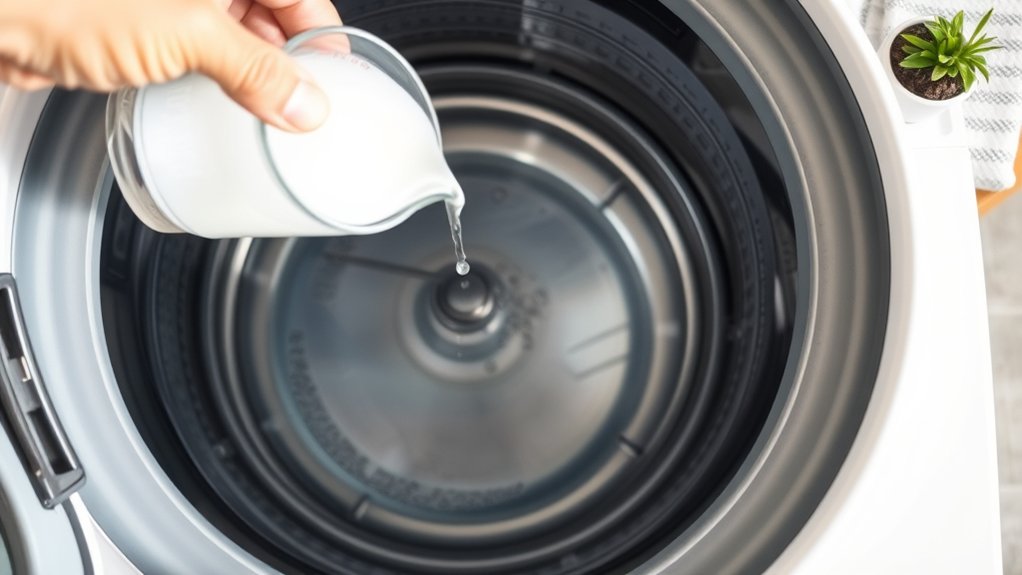
How To Clean Washing Machine Top Loader With Vinegar – Guide
To clean your top loader washing machine with vinegar, start by setting it to the hottest water and largest load. Once it’s filled, add 3-4 cups of white vinegar and let it agitate briefly. Then, pause the cycle to let it soak for 30-60 minutes. This helps dissolve buildup and odors.
After that, resume the cycle and add half a cup of baking soda. Let it sit to boost grime removal. Finally, finish with a full rinse cycle.
Doing this routine cleaning keeps your washer running efficiently and smelling fresh. Plus, following more detailed steps and maintenance tips can really help optimize your machine’s performance.
Why Vinegar Is the Best Cleaner for Your Top Loader Washer
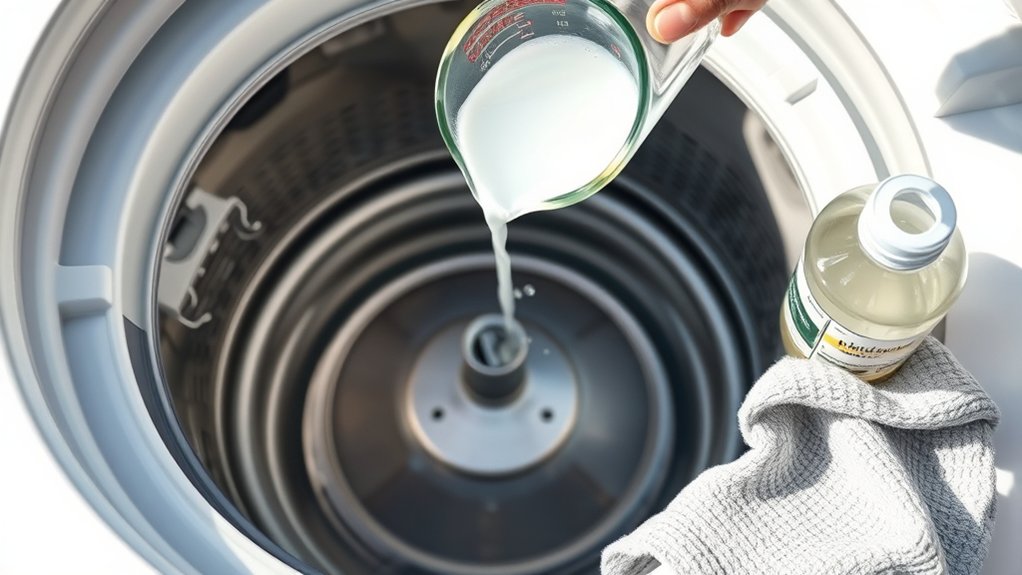
Why should you choose vinegar to clean your top loader washer? Vinegar serves as a powerful natural disinfectant, effectively eliminating mold and mildew inside your machine.
Its acetic acid content dissolves mineral deposits and soap scum that accumulate over time, maintaining peak washing efficiency.
When cleaning your washing machine, vinegar also neutralizes unpleasant odors, preventing musty smells and keeping your laundry fresh.
As a natural cleaning agent, vinegar is safe for septic systems, making it an environmentally responsible option.
Plus, vinegar offers a cost-effective alternative to commercial cleaners, delivering reliable results without harmful chemicals.
Preparing Your Top Loader Washer for Cleaning
Before you start cleaning your top loader washer, make sure it’s empty and unplugged to keep things safe. This step helps prevent electrical hazards and makes sure the cleaning process works well.
Next, set your washer to the hottest water setting and choose the largest load size. Doing this helps dissolve buildup and spreads the cleaning agent evenly.
When you’re getting ready to clean your washing machine, don’t add any detergent or fabric softener. Just focus on the cleaning solution to tackle soap scum and mineral deposits.
Using white vinegar is key, but we’ll get into how and why in the next section.
Properly preparing your top load washer lays the groundwork for thorough maintenance and helps it last longer.
Add Vinegar to the Washer Drum
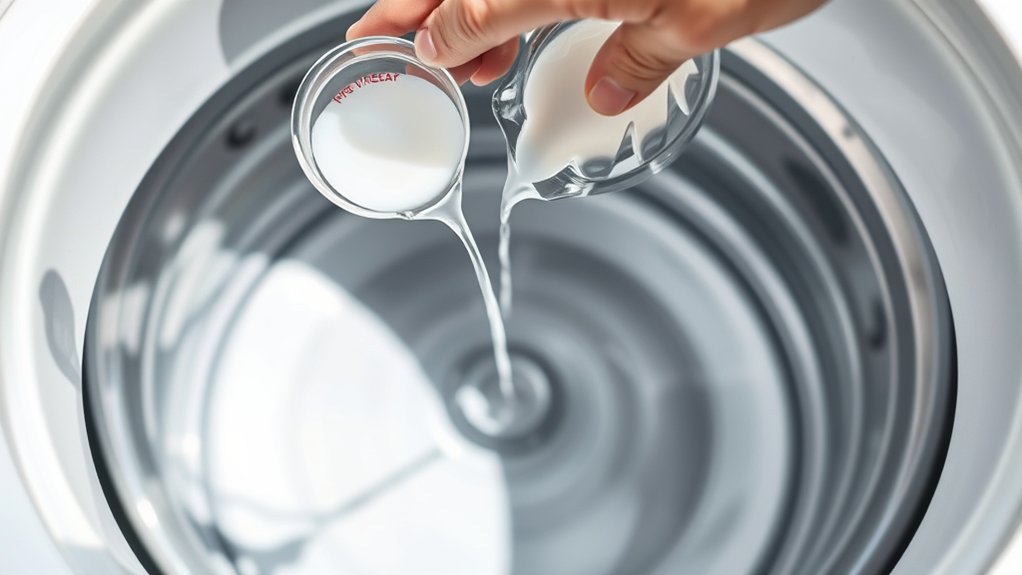
You’ll want to add 3 to 4 cups of white vinegar to the washer drum once it fills with the hottest water and largest load setting.
Then, let the machine agitate briefly so the vinegar mixes evenly.
After that, pause the cycle and let it sit for about 30 to 60 minutes.
This little trick helps dissolve soap scum, get rid of odors, and keep mold from growing inside your washer.
Vinegar Dosage Guidelines
Adding 3 to 4 cups of white vinegar directly to the washer drum during a hot water cycle really boosts the cleaning process. This amount makes sure the vinegar’s natural disinfectant powers break down soap scum, mineral deposits, and odors effectively.
To get your washing machine thoroughly clean, the vinegar needs to mix with hot water throughout the cycle. Just follow these vinegar dosage guidelines for the best results:
- Use 3 to 4 cups of distilled white vinegar per cleaning cycle
- Add vinegar to the empty drum before starting the hot water cycle
- Let the vinegar sit inside for 30 minutes to 1 hour after agitation
- Run a full rinse cycle to get rid of any leftover acidity
- Repeat monthly to keep your machine fresh and stop mildew buildup
This method really maximizes cleaning while helping your washer last longer.
Give it a try and notice the difference!
Timing For Adding Vinegar
Although it might seem straightforward, the timing of when you add vinegar to your washing machine greatly impacts its cleaning effectiveness.
For best results, start by setting your washer to the largest load with hot water. After the machine agitates for a few minutes, add 3 to 4 cups of white vinegar directly into the drum.
This timing for adding vinegar guarantees thorough mixing with water, allowing it to dissolve soap scum and mineral buildup effectively. Let the vinegar sit in the drum for 30 minutes to 1 hour before resuming the cycle.
Completing the rinse cycle and subsequent spin will flush out loosened grime and odors, enhancing cleaning the washer.
Proper timing is essential to maintain your washer’s performance and hygiene over time. So, it’s worth taking the extra minute to add the vinegar at just the right moment!
Benefits Of Vinegar Cleaning
When you introduce 3 to 4 cups of white vinegar into the washer drum during a hot water cycle, it actively dissolves soap residue and mineral deposits that accumulate over time.
This method is highly effective for cleaning your front load washer, targeting detergent build-up and lime scale that impair performance.
Vinegar’s acidic nature breaks down grime and also serves as a natural disinfectant, eliminating mold and mildew responsible for odors.
Regular vinegar cleaning maintains washer efficiency and extends appliance lifespan.
It’s a simple step that makes a big difference.
Key benefits of adding vinegar to the washer drum include:
- Dissolves detergent build-up and mineral deposits
- Kills mold and mildew to prevent odors
- Enhances laundry freshness by reducing soap residue
- Keeps towels soft and fluffy
- Improves overall cleaning performance and appliance longevity
Run Hot Water Cycle and Let Vinegar Soak
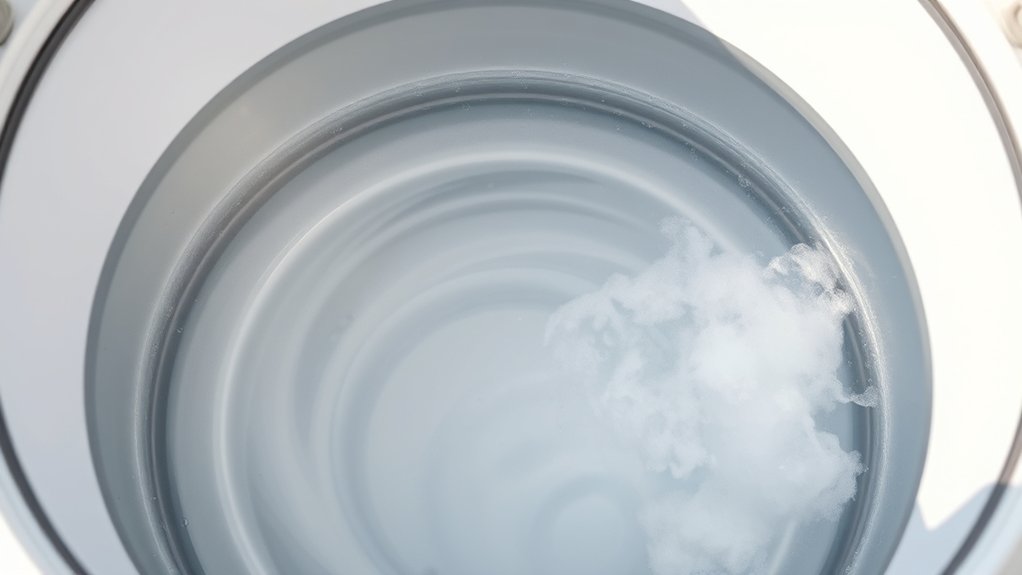
Set your top-loading washer to the highest temperature and largest load setting to guarantee maximum cleaning efficiency. Once the tub fills with hot water, add 3-4 cups of white vinegar. Vinegar acts as a disinfectant and dissolves soap residue effectively.
Let the machine agitate briefly, then pause the cycle to let it sit for 30 to 60 minutes. This soak allows vinegar to break down grime and buildup thoroughly. After soaking, just resume the cycle to drain and spin, removing loosened contaminants.
| Step | Action |
|---|---|
| 1 | Set washer to hottest water |
| 2 | Select largest load setting |
| 3 | Add 3-4 cups white vinegar |
| 4 | Agitate, then pause to soak |
| 5 | Resume cycle to drain and spin |
Add Baking Soda to Neutralize Odors and Let Sit
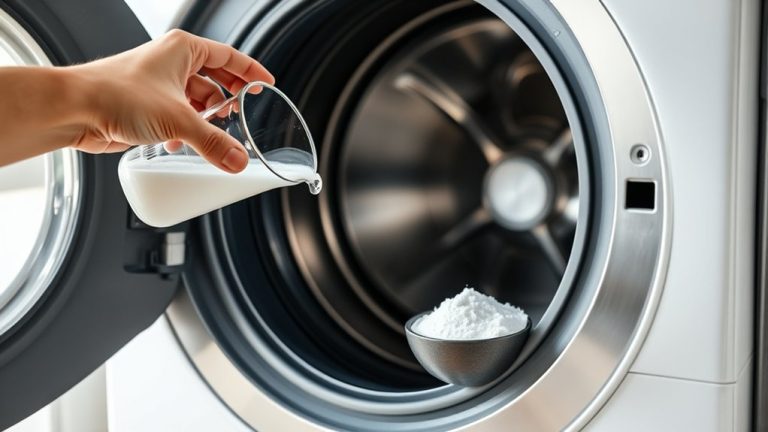
After you run a hot water cycle with vinegar, go ahead and add about half a cup of baking soda. This helps neutralize odors by raising the water’s pH, which is great for freshening things up.
Then, just let the mixture sit for anywhere from 30 minutes to an hour.
Doing this soaking period really makes a difference because it helps break down grime and keeps your washing machine smelling fresher and cleaner overall.
Odor Neutralizing Benefits
Although odors in your washing machine can be stubborn, adding baking soda effectively neutralizes them by reacting with acidic compounds that cause unpleasant smells.
To keep your washer fresh, incorporate ½ cup of baking soda during the wash cycle alongside white vinegar. This combination not only neutralizes odors but also helps break down soap scum and mineral deposits.
Letting the mixture sit enhances the odor neutralizing effect, ensuring a thorough cleanse.
Key odor neutralizing benefits include:
- Eliminates acidic odor-causing compounds
- Breaks down soap scum buildup
- Dissolves mineral deposits
- Maintains a fresher washing environment
- Prevents odor accumulation in washer and laundry room
Regular use of baking soda keeps your top loader smelling clean and operating efficiently. It’s an easy step that makes a big difference!
Soaking Time Importance
Soaking your washing machine with a vinegar and baking soda mixture plays an essential role in neutralizing odors and breaking down grime.
After adding 3-4 cups of vinegar and ½ cup of baking soda, the soaking time of 30 minutes to 1 hour allows the chemical reaction to generate bubbles that dislodge stubborn residues from the drum and components.
This period not only helps clean a washing machine effectively but also helps prevent lingering odors, ensuring a fresher laundry experience.
Incorporating this soaking time into your routine optimizes deodorization and buildup removal.
It ultimately enhances the washer’s performance and longevity.
Consistent soaking during cleaning cycles is a precise, practical method to maintain your top loader’s efficiency and hygiene.
Wipe Down Washer Surfaces With Vinegar Solution
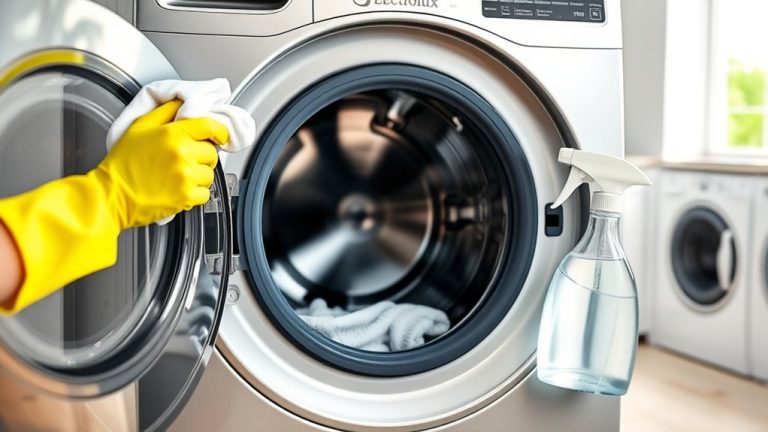
Create a natural cleaning solution by mixing equal parts white vinegar and water in a spray bottle. Use this vinegar solution to wipe down your washer surfaces thoroughly.
Make sure to clean both exterior and interior areas where grime tends to collect.
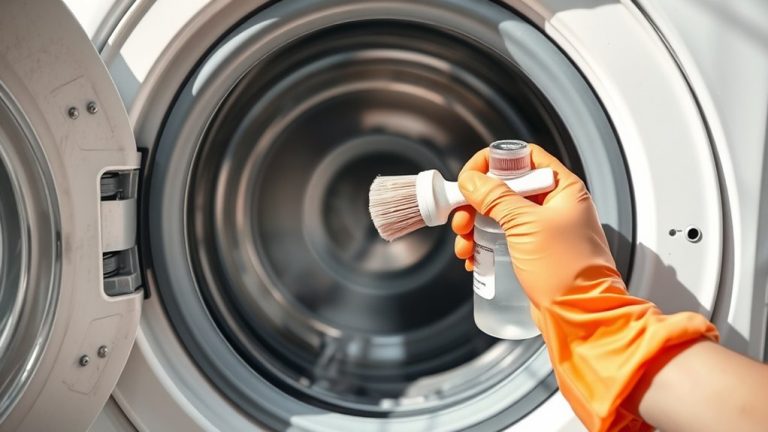
Dampen a soft cloth or sponge with the solution before wiping. Focus on the lid and hinges, control panel and buttons, door seals and rubber gaskets, detergent dispenser compartments, and crevices and corners prone to residue buildup.
After wiping down, let all surfaces air dry completely. This helps prevent moisture buildup that can lead to mildew and odors.
Regularly using this vinegar solution will keep your washer components clean and maintain a fresher laundry environment.
It also helps reduce unpleasant smells that might transfer to your clothes. So, it’s a simple, natural way to keep your washer smelling fresh and working well!
Complete the Wash Cycle and Rinse
After you add the vinegar and baking soda to the wash, let the mixture sit for about 30 minutes to an hour. This really helps to maximize the cleaning power.
Once that’s done, go ahead and complete the wash cycle so it can drain and spin out the solution.
If you want to make sure everything is super clean, consider running an extra hot rinse cycle. This will help get rid of any leftover residue and leave your machine fresh and spotless.
Vinegar and Baking Soda
Start by setting your top-loading washer to the hottest water setting and the largest load capacity.
Then add 3 to 4 cups of white vinegar. Let the machine agitate briefly before pausing the cycle for 30 minutes to 1 hour. This soak helps dissolve grime.
Afterward, add ½ cup of baking soda to the water to deodorize and break down soap scum.
Resume the cycle to complete the wash and rinse phases, flushing out residues.
To clean your washer effectively with vinegar and baking soda, remember to:
- Use hottest water and largest load setting
- Add 3-4 cups white vinegar initially
- Pause cycle to allow vinegar action
- Introduce ½ cup baking soda after pause
- Resume cycle to drain, spin, and rinse
This method guarantees a thorough clean your washer requires.
Give it a try and see how fresh your washer feels!
Cycle Duration Tips
Completing the wash cycle and rinse thoroughly is key to removing all loosened grime and residues from your washer. The total cycle duration typically ranges from 1 to 2 hours, depending on your machine’s settings and model.
After adding vinegar, allow the solution to agitate and then sit for 30 minutes to 1 hour to break down buildup effectively.
Then, resume the wash cycle to guarantee the rinse water flushes out vinegar and dissolved residues completely.
If you have hard water, residues may persist, so running an additional hot wash cycle can really help enhance cleaning. Proper rinse water flow is critical to avoid deposits.
Finally, leave the lid open after the cycle to dry the interior and prevent mildew growth. It’s a simple step that makes a big difference!
Additional Rinse Options
Though the initial wash cycle with vinegar loosens grime effectively, you’ll want to run a full rinse and spin cycle to flush out any remaining residues. Utilizing additional rinse options guarantees your washing machine is thoroughly cleaned and deodorized.
After the vinegar soak, complete the rinse cycle to remove loosened buildup and residual vinegar. If your washer has an extra rinse feature, engage it to enhance cleanliness.
For best results, run a second hot water cycle without additives, ensuring all cleaning agents are flushed out. This method maintains a clean washing machine, prevents odor buildup, and preserves laundry freshness.
- Run a full rinse and spin cycle after vinegar treatment
- Use additional rinse cycles if available
- Perform a second rinse with hot water only
- Allow agitation before soaking during cleaning
- Complete rinse process regularly for freshness
When to Clean Your Top Loader Washer With Vinegar?
If you want to keep your top loader washer running efficiently and free from odors, you should clean it with vinegar at least once a month or every 30 cycles. Knowing when to clean is essential to maintain washer efficiency and prevent odors caused by residue buildup.
Also, if you notice musty smells or your laundry looks dingy, it’s definitely time for a vinegar cleaning. Vinegar helps with color bleeding during cycles too, so use it as part of a deep clean when that happens.
Many washers have specific cleaning cycles, so check your user manual to find the best cleaning frequency for your model.
Regular vinegar cleanings not only prevent odors but also help prolong your washer’s lifespan, keeping it performing well over time.
Everyday Tips to Keep Your Top Loader Washer Fresh
Five practical habits can help you keep your top loader washer fresh and functioning efficiently between deep cleanings. Consistent machine cleaning with the right washing machine cleaner prevents buildup and odors.
To help keep your washer in ideal condition, try these tips: leave the lid open after each use to promote air circulation and reduce moisture buildup.
Clean the washer monthly or after every 30 cycles to maintain freshness and efficiency.
Wipe down the drum and exterior with a 1:1 water and vinegar solution to remove soap scum.
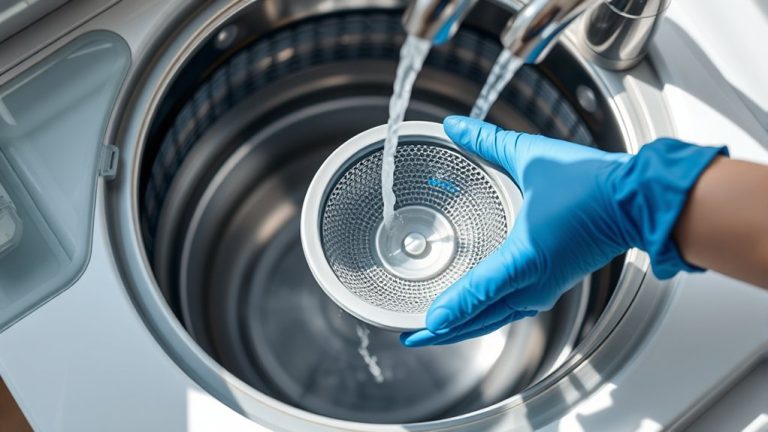
Don’t forget to inspect and clean inlet hoses regularly to prevent clogs and guarantee proper water flow.
Every few months, run a hot water cycle with 3-4 cups of vinegar to dissolve mineral deposits.
These steps can easily fit into your routine and really help keep your top loader washer fresh.
Troubleshooting Common Washing Machine Odors Naturally
When your washing machine develops unpleasant odors, trapped moisture, detergent buildup, and mildew are often the main culprits. This is especially true in humid environments or when cleaning is infrequent.
To troubleshoot these odors naturally, use white vinegar to dissolve soap scum and kill mold effectively. You can add vinegar to the rinse cycle or run an empty hot water cycle with vinegar to rinse away buildup. It works like a charm!
Regularly cleaning with a combination of vinegar and baking soda helps prevent grime accumulation and musty smells.
Also, always leave the washer lid open between uses to promote air circulation and reduce moisture. This little habit can make a big difference.
If odors persist, check the drain hose for blockages or improper positioning.
Sometimes, siphoning can happen and cause lingering musty smells inside your top loader. It’s worth giving that a look!
Frequently Asked Questions
Can Vinegar Damage Rubber Seals in My Top Loader?
Vinegar can damage rubber seals if used in high concentrations or left on too long, so you should dilute it for rubber seal maintenance.
Its effectiveness compares well to harsher chemicals for mold and grime removal, but prolonged exposure risks seal degradation.
For safer options, consider alternative cleaning solutions like baking soda or manufacturer-recommended cleaners.
Always follow your washer’s manual to balance cleaning power and preserving seal integrity.
It’s better to be cautious than sorry when it comes to keeping those seals in good shape!
Is It Safe to Use Vinegar With All Washing Machine Brands?
About 30% of washing machine brands recommend specific cleaning alternatives instead of vinegar.
While vinegar helps with machine maintenance by dissolving buildup, it’s not safe for all brands. Some manufacturers actually warn against using vinegar because it can damage rubber seals or aluminum parts.
So, always check your user manual first. If vinegar isn’t advised, just go with the approved cleaning solutions.
This way, you’ll protect your washer’s components and keep it running smoothly.
How Often Should I Deep Clean My Washer With Vinegar?
You should deep clean your washer with vinegar about once every 30 cycles. This follows frequency guidelines for ideal maintenance.
Try to set up a cleaning schedule that works with your laundry habits.
But don’t wait if you notice foul odors or color bleeding. Clean your washer right away in those cases.
Regularly sticking to these tips helps prevent mold and mildew buildup. It also keeps your washer running efficiently.
Always check your washer’s user manual for brand-specific advice on how often and how to clean.
Can I Use Vinegar to Remove Mold From the Washing Machine?
Just like a guardian fends off invaders, you can rely on vinegar to remove mold from your washing machine effectively. Its acidic nature breaks down mold buildup, making it a top choice in mold prevention tips.
For washing machine maintenance, add 3-4 cups of vinegar on a hot cycle and wipe surfaces afterward.
If vinegar isn’t enough, consider vinegar alternatives like baking soda to deodorize and enhance cleaning power.
Will Vinegar Remove Hard Water Stains From My Washer Drum?
Yes, vinegar effectively removes hard water stains from your washer drum. Its acidity breaks down mineral deposits, which helps improve your washer maintenance routine.
For the best cleaning results, add 3-4 cups of white vinegar during a hot water cycle. This will help dissolve lime and calcium buildup.
If you have stubborn stains, just let the vinegar soak for 30 minutes to an hour.
Using vinegar regularly prevents hard water from building up. This keeps your washing machine running efficiently and can even extend its lifespan.
It’s a simple step that really makes a difference!
Conclusion
By regularly cleaning your top loader with vinegar, you’ll keep your washer fresh and free from grime. Imagine the clear, crisp scent of vinegar cutting through residue, leaving your drum spotless and your clothes smelling clean.
This simple, natural method prevents odors and buildup, making sure your machine runs smoothly. Stick to this routine, and your washer will perform efficiently. You’ll save time and avoid costly repairs while keeping a hygienic laundry environment.