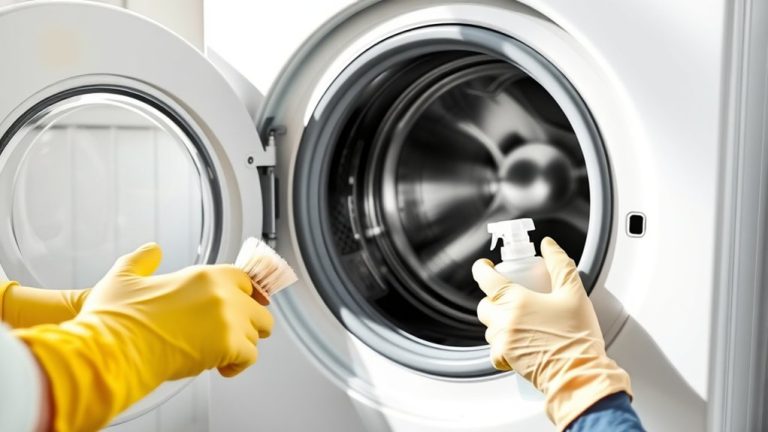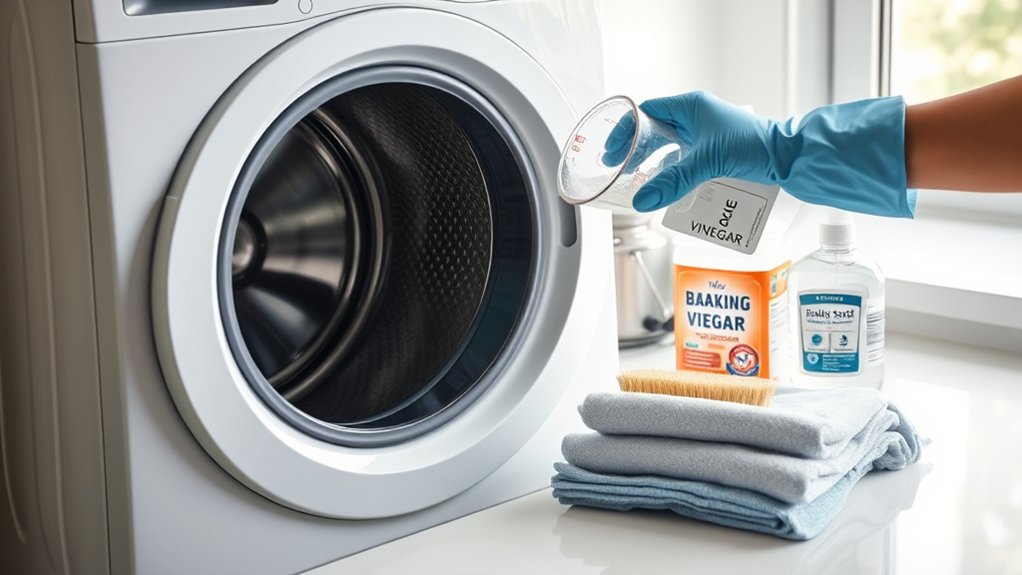
How To Clean Washing Machine – Complete Step By Step Guide
You should clean your washing machine every 30 loads to prevent odor and mildew buildup. For top-loaders, run a hot cycle with bleach, then vinegar, wiping surfaces after.
Front-loaders need a hot cycle with vinegar and baking soda, followed by wiping. Use Affresh tablets for deep cleaning.
Don’t forget detergent dispensers and door gaskets. Scrub and dry them regularly. Keep the door open between uses for ventilation.
Follow these steps to maintain freshness and peak performance, with more detailed guidance ahead.
Why You Need to Clean Your Washing Machine Regularly
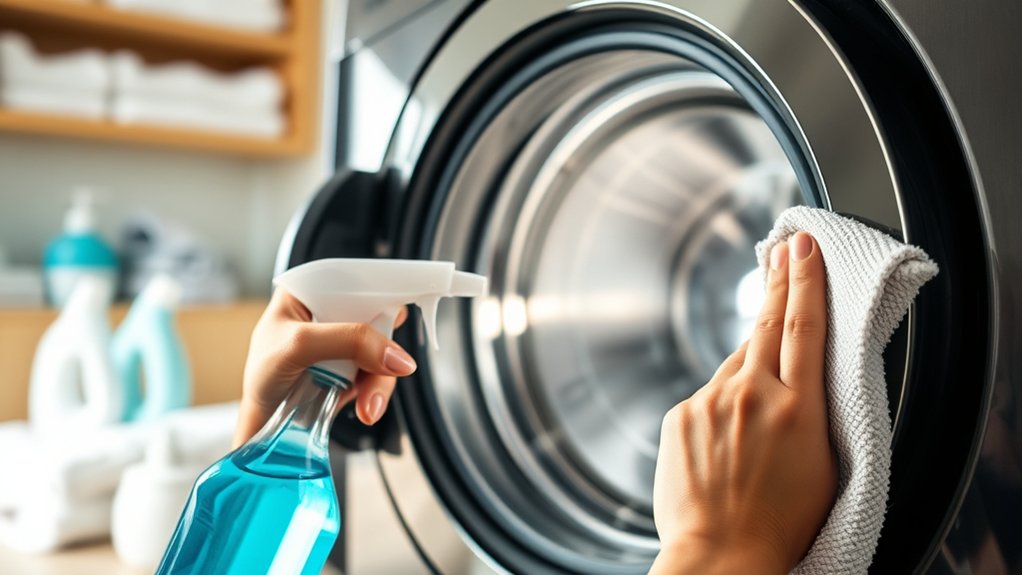
Although your washing machine cleans your clothes, it needs regular cleaning itself to prevent odor buildup, mildew, and detergent residue. You should clean your washing machine about every 30 washes to keep it working at its best and stop too much detergent from building up inside.
These residues can transfer to your clothes, making them less fresh and causing unpleasant smells. Cleaning your machine monthly helps get rid of mold and mildew, which love the damp environment inside and cause those musty odors.
Using special cleaning cycles with the right products makes sure all the buildup is removed, keeping your washer efficient. When you keep up with maintenance, it lowers energy and water use by making sure all the internal parts stay clean and work properly.
This not only extends the life of your washing machine but also keeps your laundry looking and smelling great.
What Supplies You Need to Clean Your Washing Machine
You’ll need a few specific supplies to clean your washing machine effectively. For starters, grab a compatible cleaning agent like Affresh tablets or liquid chlorine bleach.
Next, gather some tools like a damp cloth, an old toothbrush, and an all-purpose cleaner—these come in handy for scrubbing the gasket and detergent dispenser in detail.
You can also use baking soda to help deodorize your machine, but just make sure to check your machine’s manual before using it.
Essential Cleaning Supplies
Five essential cleaning supplies will guarantee you effectively maintain your washing machine’s performance and hygiene.
Start with affresh washing machine cleaner tablets or a compatible liquid chlorine bleach for internal cleaning. Use a damp cloth and an all-purpose cleaner to maintain the exterior and wipe detergent dispensers, preventing buildup.
A scrubbing tool, such as an old toothbrush, is vital for thoroughly cleaning detergent dispensers and hard-to-reach areas. Keep a sponge handy to scrub surfaces free from grime and residue.
Moreover, baking soda can be incorporated for deodorizing, but always verify compatibility with your owner’s manual.
Using these essential cleaning supplies guarantees extensive care, prolonging your washer’s efficiency and cleanliness.
It’s pretty simple when you have the right tools on hand. Just a little regular maintenance goes a long way!
Recommended Cleaning Products
Having the right cleaning supplies makes maintaining your washing machine straightforward and effective. For cleaning your washing machine, use recommended cleaning products such as Affresh washing machine cleaner tablets. These provide a simple, chemical-free solution targeting residues and odors.
Liquid chlorine bleach works well for top-load washers to eliminate mold and mildew but must be used in recommended amounts. Baking soda adds deodorizing power and is generally safe, though you should verify compatibility with your washer’s manual.
Vinegar is a natural agent suitable for both front-load and top-load models but requires confirmation of safety for your machine.
Also, keep a damp cloth and all-purpose cleaner on hand to wipe detergent dispensers and the washer’s exterior. This ensures thorough maintenance without damaging any parts.
Tools For Deep Cleaning
Essential tools for deep cleaning your washing machine include specific cleaning agents and practical implements designed to target grime and buildup.
You’ll need affresh washing machine cleaner tablets or a compatible liquid chlorine bleach to sanitize internal components effectively. Use an old toothbrush or a similar scrubbing tool to remove residue from detergent dispensers and rubber gaskets.
Incorporate baking soda as a deodorizer if your machine’s guidelines permit. A damp cloth paired with an all-purpose cleaner helps wipe down dispensers and the exterior.
Always consult your washing machine’s manual to confirm product compatibility and cleaning procedures.
Performing this deep clean every 30 washes maintains peak performance and prevents residue accumulation.
Having the right tools guarantees a thorough, efficient cleaning process, keeping your washing machine fresh and functioning at its best.
How to Identify Mildew and Odors in Your Washing Machine
How can you tell if your washing machine has developed mildew or odors? A musty smell coming from the drum or detergent dispenser usually means mold and mildew are growing. This often happens because moisture gets trapped under closed lids or doors.
A musty smell from your washer’s drum or dispenser often signals mold growth due to trapped moisture.
If your clothes come out smelling musty, that’s a sign there’s residue building up inside the machine. Take a look for visible mold or mildew around the drum, door seals, and detergent compartments. These spots tend to collect grime that causes those unpleasant smells.
It’s a good idea to check your washer every 30 loads to catch any early signs of odors. Finding these issues early lets you use the right cleaning agents, like vinegar or Affresh, to get rid of the residue causing mildew.
That way, your washer stays fresh-smelling for longer.
How to Clean a Top-Loading Washing Machine Step by Step
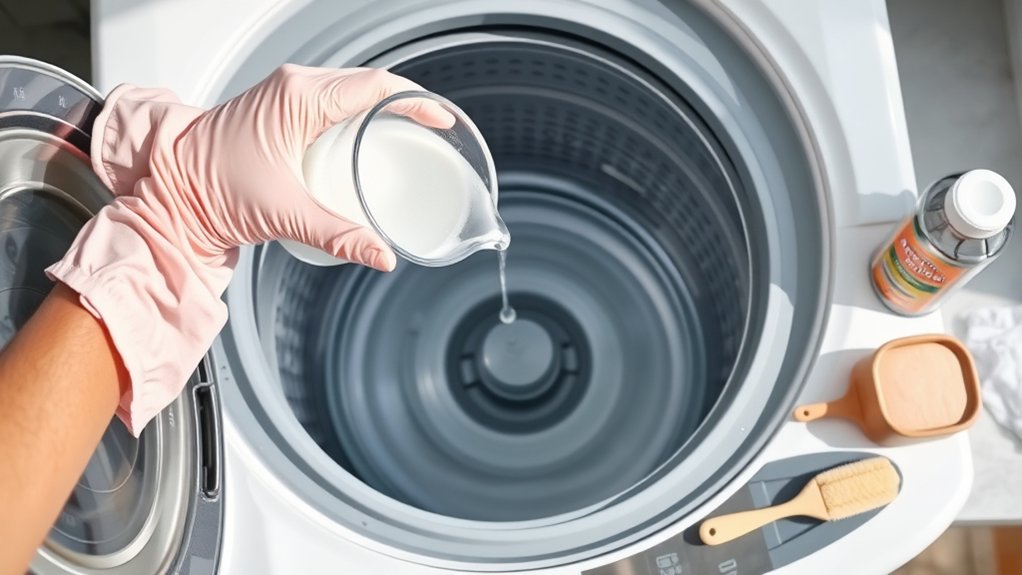
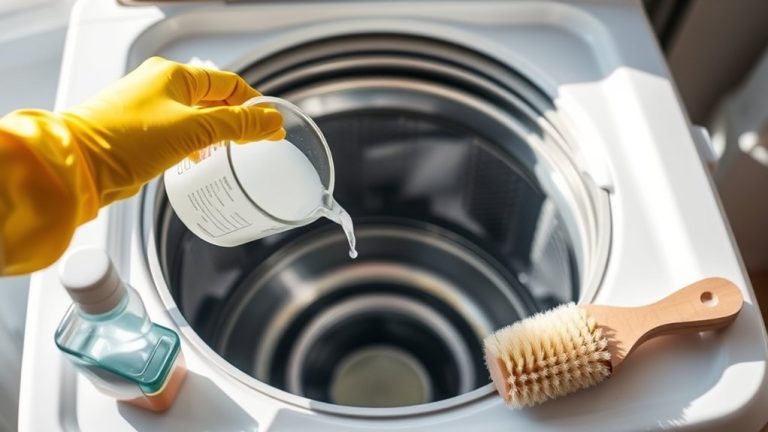
To clean your top-loading washing machine effectively, start by gathering some supplies like bleach, vinegar, and a damp cloth.
Once you have everything ready, go ahead and run a hot cycle with bleach. This will help eliminate any buildup inside the machine.
After that cycle finishes, run another hot cycle, but this time add vinegar. The vinegar works to neutralize any lingering odors, leaving your washer smelling fresh.
When the cycles are done, don’t forget to wipe down all the exposed surfaces with your damp cloth.
Finally, leave the lid open for a while. This helps prevent mildew by allowing the interior to dry completely.
And that’s it—you’re all set with a clean washing machine!
Cleaning Supplies Needed
You’ll need three main cleaning supplies to effectively sanitize your top-loading washing machine: liquid chlorine bleach, a scrubbing sponge or tool, and a clean cloth for drying surfaces. These cleaning supplies target residue buildup and bacterial growth that detergent alone can’t eliminate.
Use bleach for deep sanitization, the sponge for scrubbing detergent dispensers and lid edges, and the cloth to prevent moisture accumulation.
| Cleaning Supply | Purpose |
|---|---|
| Liquid Chlorine Bleach | Kills bacteria and removes buildup |
| Scrubbing Sponge | Removes grime from surfaces |
| Clean Cloth | Dries and prevents mold growth |
Make sure you gather these supplies before starting the cleaning process. This way, you’ll keep things efficient and effective.
Stepwise Cleaning Process
Begin by setting your top-loading washing machine to the hottest and longest cycle available.
To clean a washing machine effectively, add four cups of liquid chlorine bleach to the empty tub and let it soak for one hour. This step disinfects and removes odors.
After soaking, resume the cycle to rinse away all bleach residue completely.
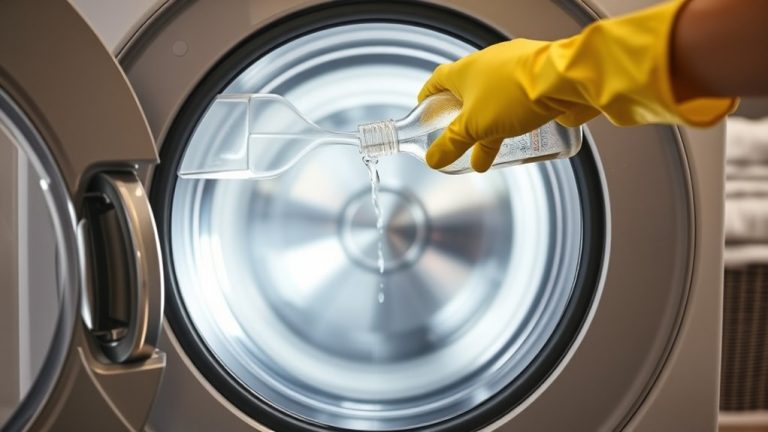
Next, run another hot cycle, this time adding four cups of vinegar to eliminate any remaining buildup and odors.
Once these cycles finish, clean all exposed surfaces, including the lid and detergent dispensers, with a sponge dipped in vinegar water.
Following this step-by-step cleaning process guarantees your washing machine stays sanitary and operates efficiently.
Odor Prevention Tips
Although regular deep cleaning is essential, preventing odors in your top-loading washing machine requires consistent monthly maintenance.
Start by running a clean washer cycle using bleach, vinegar, or a dedicated cleaner like Glisten Washer Magic or Tide Washing Machine Cleaner to eliminate odor-causing residues.
Always leave the lid open after each wash to promote air circulation and minimize moisture buildup that leads to mildew smells.
Regularly clean detergent dispensers and wipe down the tub’s interior and exterior surfaces to remove buildup.
Make sure the drain hose is properly positioned to prevent siphoning, which causes water stagnation and musty odors.
Incorporate these odor prevention tips into your routine to keep your washer smelling fresh and working efficiently.
How to Clean a Front-Loading Washing Machine Step by Step
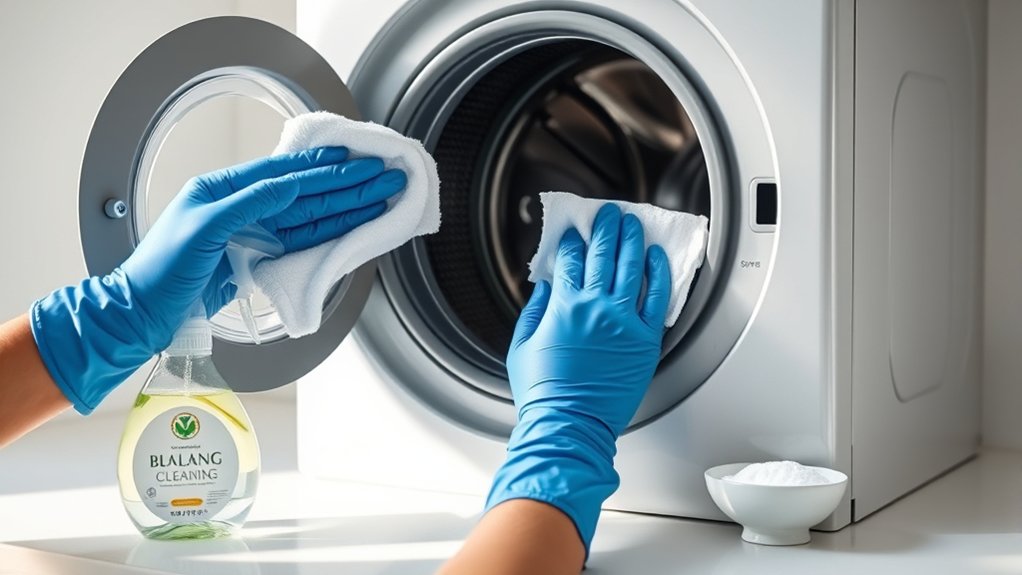
Set your front-loading washing machine to the hottest and longest cycle with an empty drum to start the cleaning process.
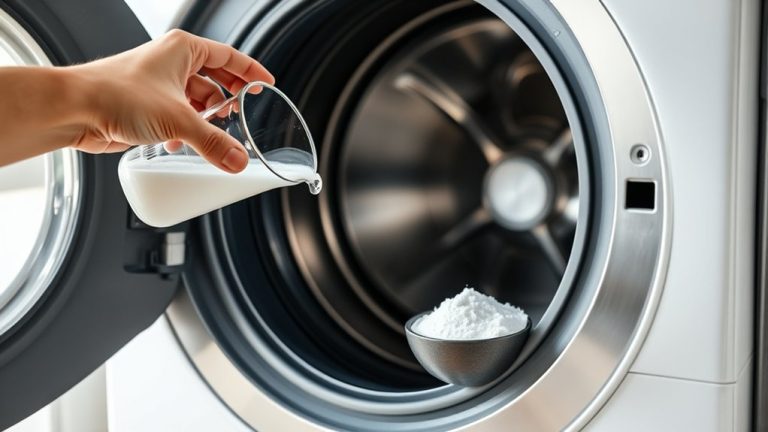
Add two cups of white vinegar directly into the drum; this helps dissolve detergent residues and neutralize odors.
Add two cups of white vinegar to dissolve detergent buildup and eliminate odors effectively.
Next, pour one-quarter cup of baking soda into the drum to enhance deodorizing and cleaning effects.
Run the wash cycle fully to allow these agents to break down buildup inside the machine.
When the cycle finishes, use a microfiber cloth to wipe down all accessible surfaces, focusing on the rubber gasket where grime accumulates.
Finally, leave the door open to promote air circulation, preventing mildew and odors from forming.
This step-by-step method guarantees you know how to clean your front-loading washer thoroughly and maintain peak performance.
Give it a try, and your machine will thank you with cleaner clothes every time!
How to Deep Clean Your Washer With Affresh Tablets
First, take everything out of your washer.
Then, drop one Affresh tablet right into the empty drum.
Next, choose the Clean Washer cycle, or if your machine doesn’t have that, go with the Normal or Heavy cycle using hot water. This gets the tablet’s slow-dissolving cleanser working its magic.
Once the cycle is done, grab a microfiber cloth and wipe down the drum and the door.
This helps get rid of any leftover residue and makes sure your washer is really clean.
Easy, right?
Preparing Washer For Cleaning
Begin by removing all items from your washer to guarantee it’s completely empty before cleaning. This step is essential when preparing the washer for cleaning, ensuring no laundry obstructs the process or reduces effectiveness. Check the drum thoroughly for any residual debris or fabric pieces.
Next, select the clean washer cycle on your machine. If you don’t have that option, go for a Normal or Heavy cycle with hot water to boost the cleaning power. These settings help activate the right agitation and temperature needed to dissolve buildup and sanitize the interior.
Getting these preparations right sets the stage for an effective deep clean and helps maintain your washer’s performance.
After the cycle finishes, you’ll be ready to use the cleaning agents designed specifically for ideal washer maintenance.
Using Affresh Tablets
Once your washer is prepped and the initial cleaning cycle is complete, move on to using an Affresh tablet for a thorough deep clean.
Start by removing all items and placing one Affresh tablet inside the empty drum. Select the Clean Washer cycle or, if unavailable, a Normal or Heavy cycle with hot water to activate the tablet’s time-released cleaning action.
The tablet dissolves slowly, targeting residue and buildup throughout the cycle.
Once finished, wipe the interior with a microfiber cloth to remove any remaining deposits.
For persistent odors or heavy buildup, run an additional clean washer cycle with a second Affresh tablet to guarantee ideal cleanliness and maintain peak washer performance.
Post-Cleaning Maintenance Steps
After completing the cleaning cycle with an Affresh tablet, you’ll want to thoroughly wipe down the drum and door seals using a microfiber cloth to remove any loosened residue.
This step guarantees you wipe down the inside surfaces where buildup can cling, preventing residue transfer to your clean clothes.
If you notice persistent odors or extreme buildup, run a second cleaning cycle with another Affresh tablet to deep clean the washer further.
To maintain top performance and keep your washer fresh, schedule these deep cleaning cycles monthly.
Regular maintenance with Affresh tablets not only removes grime but also helps prevent odors, guaranteeing your washer consistently produces clean clothes without contamination from hidden residue or mold inside the drum and seals.
How to Clean Detergent Dispensers and Washer Door Areas
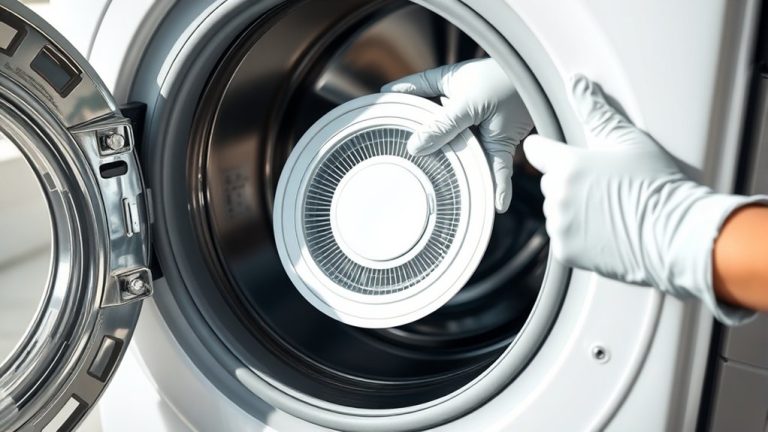
To keep your washing machine running smoothly, it’s a good idea to clean the detergent dispensers and door areas regularly. Start by removing any loose debris from the detergent dispensers.
Then, grab a damp cloth with warm soapy water or an all-purpose cleaner to scrub all the compartments thoroughly. Pay close attention to spots where residue tends to build up.
If you come across stubborn buildup, gently use a soft brush or an old toothbrush so you don’t damage the surface.
Next, wipe down the washer door, especially the rubber gasket. This helps get rid of moisture and stops mold from growing.
Make sure you dry all the surfaces completely. Leaving the washer door open between uses is a smart move. It promotes air circulation and helps keep both the detergent dispensers and door areas dry, preventing residue or mildew from forming.
Doing this regularly will keep your washing machine performing at its best.
Preventing Odors and Mildew in Your Washing Machine Between Washes
One simple yet effective way to prevent odors and mildew in your washing machine between washes is to keep the washer door or lid open. This promotes air circulation and reduces moisture retention. Both are key factors in stopping mildew growth.
After each cycle, make sure to clean detergent dispensers thoroughly and wipe down the rubber gasket. This helps remove soap residue and trapped moisture. Taking these steps will help prevent mildew and odor buildup.
Also, try using a water softening additive during hot water cycles. It minimizes hard water deposits that contribute to unpleasant smells.
Plus, make sure the drain hose is properly positioned to avoid siphoning and stagnant water accumulation. That stagnant water can lead to musty odors.
With consistent attention to these simple practices, you’ll keep your washing machine fresher and odor-free between uses. It really makes a difference!
Washing Machine Maintenance Tips for Long-Term Freshness
Maintaining your washing machine’s freshness over time requires regular, systematic care beyond just preventing odors between uses.
To keep your washer clean and efficient, schedule maintenance every 30 washes using cleaning agents like Affresh or bleach. Always leave the door or lid open after use to promote air circulation and reduce moisture buildup.
Wipe the rubber gasket and detergent dispensers to prevent mold. Check the drain hose’s position regularly to avoid siphoning and water accumulation.
| Maintenance Task | Frequency |
|---|---|
| Deep clean with bleach or Affresh | Every 30 washes |
| Wipe gasket and dispensers | After each wash |
| Inspect drain hose positioning | Monthly |
Following these clean and maintenance tips guarantees your machine stays fresh long-term. Just stick with these habits, and you’ll notice the difference!
Troubleshooting Washing Machine Smells and Problems
Although washing machines are designed to handle moisture, odor issues often come from detergent buildup, mildew, or standing water. To troubleshoot frequent odors, start by thoroughly cleaning the machine, especially the detergent dispensers and rubber gaskets where residues tend to accumulate.
Always leave the washer lid open between uses. This helps air circulate and reduces moisture retention, which is key to preventing smells.
Check the drain hose placement to avoid siphoning. If it’s positioned incorrectly, stagnant water can get trapped and cause unpleasant odors.
If your washer doesn’t have a Basket Clean cycle, try using specialized cleaners like Glisten Washer Magic or Tide Washing Machine Cleaner. Follow the directions carefully to get rid of persistent smells.
Regular, targeted cleaning keeps odor buildup at bay and helps your machine run at its best. This way, your washing machine stays fresh and fully functional for the long haul.
Frequently Asked Questions
Can I Use Lemon Juice Instead of Vinegar to Clean My Washing Machine?
Yes, you can use lemon juice as a cleaning alternative to vinegar for your washing machine.
Lemon has natural antibacterial properties and deodorizing effects, which makes it great for tackling light grime and odors.
That said, lemon juice isn’t as strong when it comes to breaking down mineral deposits and soap scum. So, you might find yourself needing to clean your machine more often.
Make sure to always dilute the lemon juice with water.
And don’t forget to check your machine’s manual first, just to avoid any damage or issues with your warranty.
How Often Should I Replace Washing Machine Hoses?
You should replace washing machine hoses every 5 to 7 years to guarantee safe operation.
Regular hose inspection is vital. Check for cracks, bulges, or leaks during hose maintenance.
If you spot any damage, replace the hose immediately to prevent water damage.
Use high-quality, reinforced or braided stainless steel hoses for durability.
Always secure hoses properly without kinks to maintain ideal water flow and reduce strain on connections.
Is It Safe to Run a Washing Machine Cleaning Cycle Without Detergent?
Yes, it’s safe to run a washing machine cleaning cycle without detergent. For effective machine maintenance, use hot water and select the appropriate cleaning cycle. Make sure the drum is empty before starting.
This helps remove buildup and odors naturally. You might want to adjust how often you do this based on how much you use your machine. Running a monthly cycle without detergent can prevent mold and mildew.
You can also use specialized cleaning agents if you want, but detergent isn’t really necessary for maintenance. It’s a simple way to keep your washer fresh and clean.
Can Washing Machine Cleaning Help Remove Hard Water Stains?
Like a knight battling an enemy, washing machine cleaning can effectively tackle hard water stains.
You’ll use targeted stain removal techniques, like running hot water cycles with vinegar or commercial cleaners, to dissolve mineral buildup.
Regular cleaning prevents deposits from sticking around, ensuring your machine stays efficient.
Make sure to use cleaning solutions designed for hard water.
Also, maintain proper water softening and detergent use for long-term stain control.
What Should I Do if My Washing Machine Leaks After Cleaning?
If your washing machine leaks after cleaning, start by checking for leaks.
Take a look at the drain hose to make sure it’s placed properly. Also, inspect the door gasket for any signs of damage.
Next, check the detergent dispensers to see if they’re sealed correctly.
Sometimes, a simple fix like repositioning hoses or replacing worn seals can do the trick.
Try running a short cycle without any clothes inside to keep an eye on where the leak might be coming from.
If the problem doesn’t go away, it’s a good idea to check the owner’s manual or get in touch with a professional technician who can help with detailed troubleshooting and repairs.
Conclusion
Now that you know how to clean your washing machine thoroughly, why let grime and odors build up unchecked? Regular maintenance not only keeps your machine fresh but also guarantees peak performance and longevity.
By following these step-by-step instructions and preventive tips, you’ll avoid mildew, unpleasant smells, and costly repairs. Stay proactive. Clean your machine consistently, and enjoy cleaner laundry with every cycle.
Your washing machine will thank you with lasting efficiency.