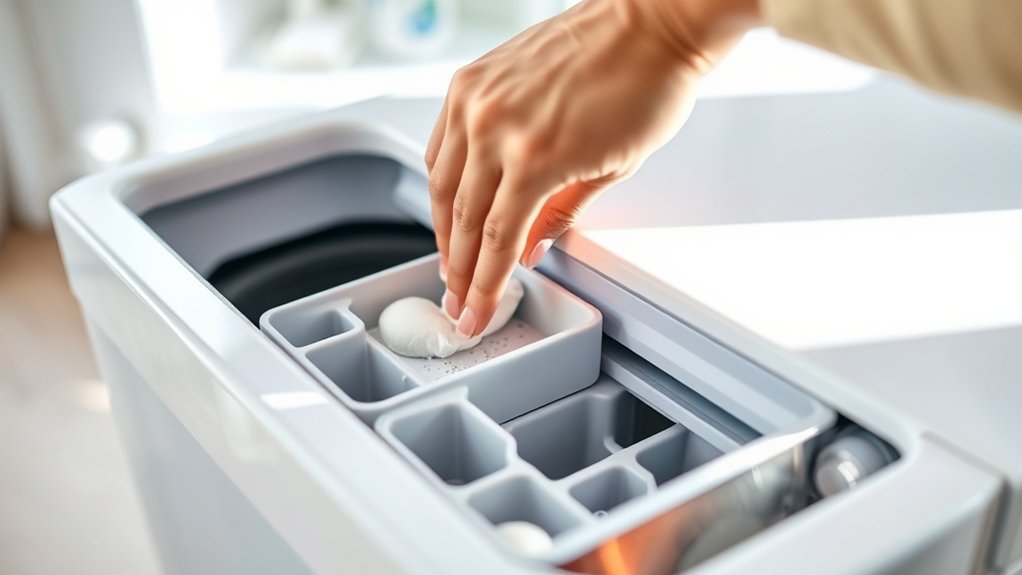
How To Clean Detergent Dispenser In Washing Machine – Guide
You should clean your washing machine’s detergent dispenser every three months to prevent mold, odors, and residue buildup. Remove the dispenser and scrub it with a 50% bleach and 50% water solution using an old toothbrush. Rinse it thoroughly under running water, dry it completely, and allow it to air out before reinserting.
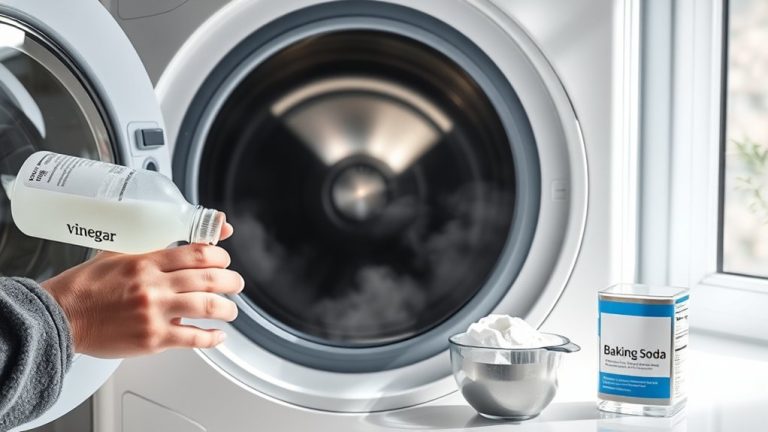
Then, run a hot water cycle with white vinegar afterward to flush the system. Following these steps keeps your machine hygienic and efficient. For detailed tips and maintenance, keep exploring this guide.
Why Does Mold Grow in Your Washing Machine?
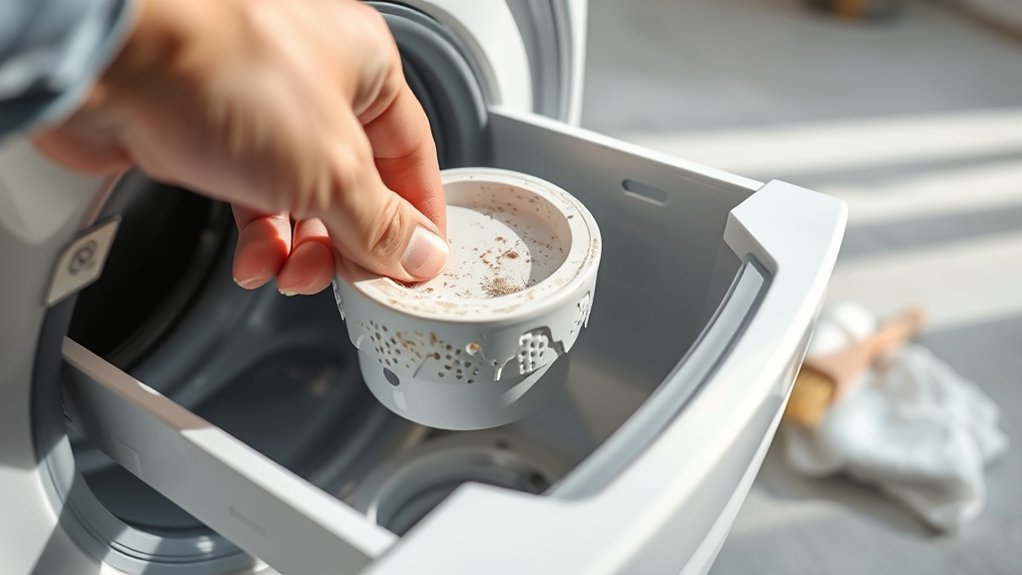
Why does mold keep appearing in your washing machine? Mold loves the moist, enclosed spots inside your machine, especially where soap residue builds up. Soap residue and leftover organic matter act like food for mold, helping it grow.
Places like the detergent dispenser are prime spots for mold because moisture gets trapped there and air can’t circulate well. This creates a warm, humid environment that mold absolutely thrives in.
If you don’t check and clean these areas regularly, mold can grow fast. That leads to nasty odors and can even contaminate your laundry.
To stop mold from taking over, make sure to keep the soap dispenser clean and dry after each wash.
Also, leave the compartments open when you’re not using the machine to let the air flow.
Doing these little things can really help keep mold away and keep your washing machine fresh and hygienic.
When Should You Clean Your Detergent Dispenser?
You should clean your detergent dispenser every three months and keep an eye on it regularly.
Look out for any signs of mold, like a musty smell or visible buildup.
Also, after using fabric softener or heavy detergent, it’s a good idea to check the dispenser for any leftover residue.
If you spot some, go ahead and give it a good clean.
Doing this regularly helps prevent mold from growing and keeps your washing machine running smoothly.
Cleaning Frequency Recommendations
Cleaning your washing machine detergent dispenser every three months helps prevent mold buildup and guarantees the appliance runs effectively.
You need to clean the dispenser regularly, including compartments for fabric softener, to avoid residue accumulation that promotes mold growth.
It’s a good idea to check the dispenser between cleanings. Look out for any musty odors or visible residue early. If you notice these signs, clean the dispenser right away—don’t wait for the schedule.
After each wash, leave the dispenser open to air out and reduce moisture. This simple step helps keep mold at bay and maintains hygiene.
Keeping up with this routine means your washing machine performs at its best. It also stops fabric softener and detergent buildup from messing with how the dispenser works.
Stick to it, and you’ll avoid costly maintenance issues down the road.
Signs Mold Is Present
Although regularly scheduled maintenance helps prevent issues, you should clean your detergent dispenser immediately if you detect a musty odor or see dark spots and discoloration inside the compartment. These signs indicate mold presence, which can include various mold types posing health risks like allergies and respiratory problems.
Mold thrives in damp areas, making prevention methods essential.
| Sign | Description |
|---|---|
| Musty Odor | Indicates mold growth |
| Dark Spots/Discoloration | Visible mold in detergent area |
| Laundry Tint | Grayish wash suggests contamination |
| Dampness | Promotes mold proliferation |
| Inspection Frequency | Clean every 3 months to prevent buildup |
Recognize these signs promptly to avoid health risks and keep your washing machine clean and fresh. It’s easier to stay ahead of mold when you know what to look for!
Benefits Of Regular Cleaning
Since mold can develop rapidly in the damp environment of your washing machine, you should clean the detergent dispenser at least every three months.
Regular cleaning prevents mold buildup that causes unpleasant odors and uneven detergent dispensing. This guarantees that different detergent types are released properly, improving washing results and keeping your clothes cleaner.
Following these maintenance tips helps avoid clogs and mechanical issues, which can shorten your washing machine’s lifespan.
Inspect the dispenser regularly to catch mold growth early, making cleaning easier and more effective.
By integrating this routine into your washing machine maintenance, you maintain peak performance, prevent damage, and extend the appliance’s durability.
Consistent care of your detergent dispenser is essential for hygiene and machine efficiency.
Tools and Supplies for Safe Mold Cleaning
Effective mold removal from your washing machine detergent dispenser relies on having the right tools and supplies at hand.
Successful mold removal starts with having the proper tools and supplies ready for use.
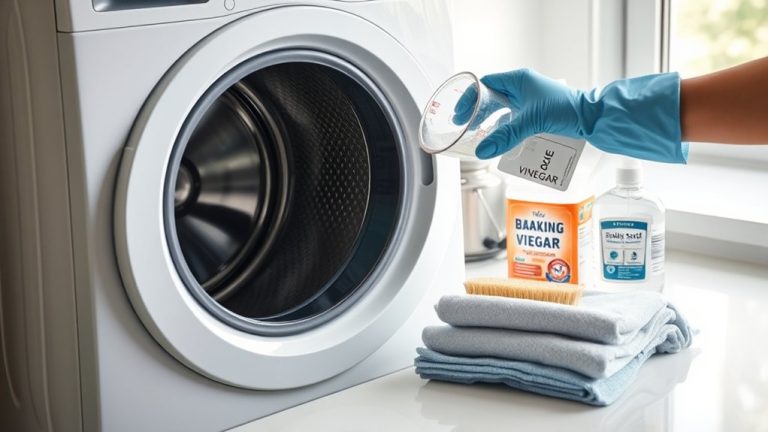
You’ll need a spray bottle filled with a 50% bleach and 50% water solution to effectively break down mold and detergent residue. Use an old toothbrush with straight bristles to scrub flat surfaces inside the dispenser thoroughly.
Rags are essential for drying to prevent moisture buildup, which is a key factor in mold prevention. Make sure to prioritize cleaning safety by wearing protective clothing to avoid bleach stains.
Also, guarantee proper ventilation to disperse harmful fumes.
Regularly inspect and clean the dispenser every three months to maintain mold-free conditions.
Using these tools and practices assures efficient mold removal and promotes long-term detergent dispenser hygiene. It really helps keep your washing machine fresh and working well!
How to Remove the Detergent Dispenser
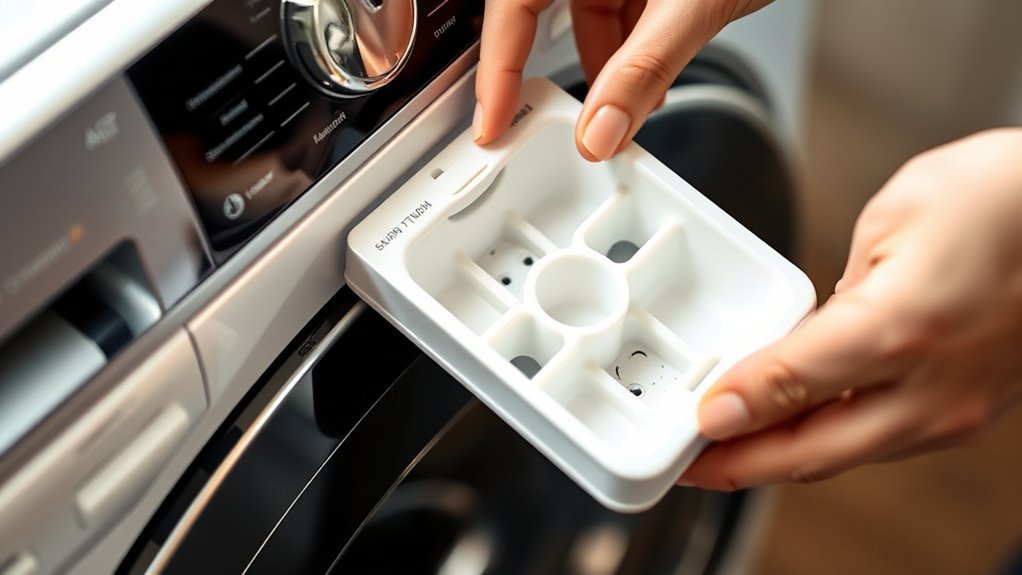
Before removing the detergent dispenser, unplug your washing machine and check the user manual for instructions specific to your model. Dispenser materials and designs can be different, so knowing what you have helps avoid damage.
Most dispensers come out by pressing a tab or sliding them out gently. Try not to force it because that can damage the mechanism or nearby parts.
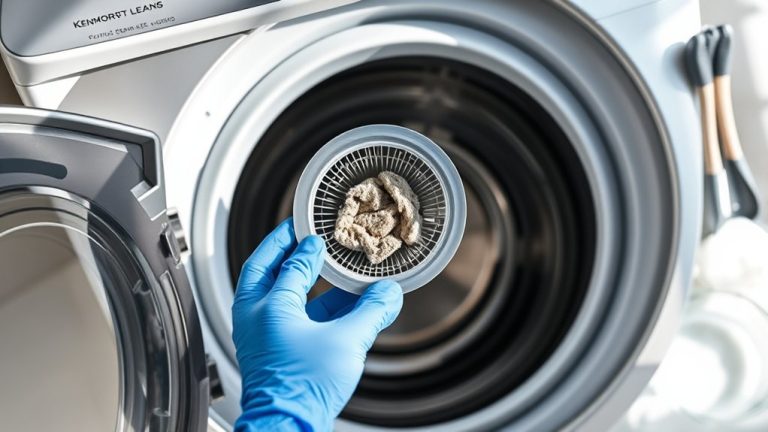
Buildup or mold often cause dispenser problems, so take a good look once it’s out. While you’re at it, clean the dispenser thoroughly using a bleach solution to get rid of any residue and mold.
Cleaning and removing the dispenser properly can help it last longer and keep your washing machine working efficiently. When you put it back, make sure it fits snugly to prevent leaks or other issues.
Following these steps helps protect your appliance and ensures your detergent dispenses just right every time.
How to Mix the Bleach Cleaning Solution
Prepare a bleach cleaning solution by mixing equal parts of regular, unscented household bleach and water. Typically, use 1 cup of each in a spray bottle.
Always follow bleach safety precautions. Wear gloves and a mask, label the bottle clearly, and store it safely.
Before full use, test the solution on a hidden area to prevent surface damage. If bleach isn’t suitable, you might want to consider alternative cleaning agents like vinegar or hydrogen peroxide for mold prevention tips.
| Step | Action | Safety Note |
|---|---|---|
| 1 | Measure 1 cup bleach | Use unscented bleach only |
| 2 | Measure 1 cup water | Mix in a well-ventilated area |
| 3 | Combine in spray bottle | Label bottle clearly |
| 4 | Conduct patch test | Wear gloves and mask |
Cleaning Mold From the Detergent Dispenser
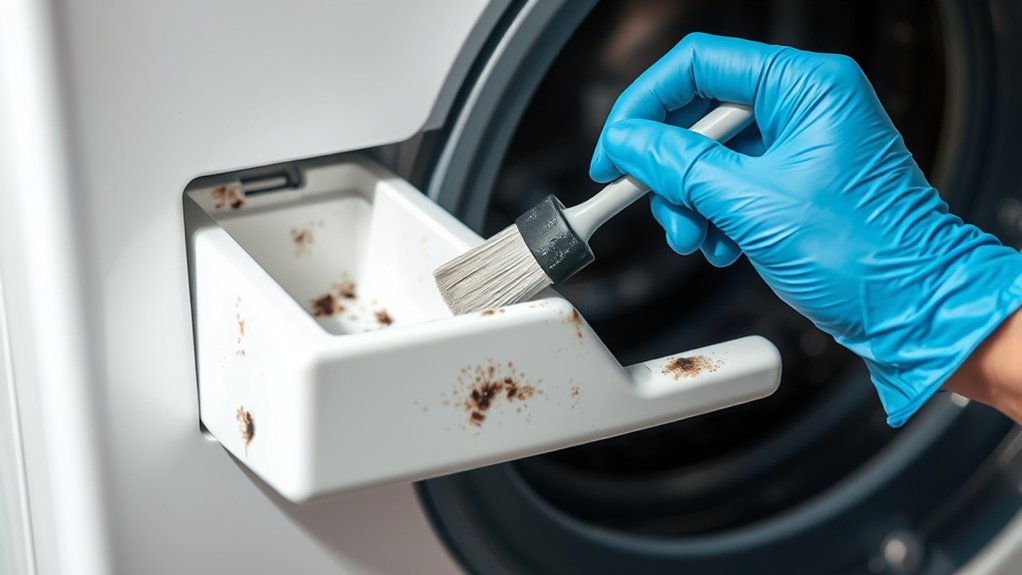
Once you’ve mixed your bleach cleaning solution, focus on the detergent dispenser where mold tends to build up because of constant moisture.
To make sure you keep the dispenser in good shape and avoid detergent residue piling up, follow these steps:
First, carefully remove the detergent dispenser from the washing machine so you can reach all the moldy spots.
Then, spray the 50/50 bleach and water solution right onto the mold. Use a straight-bristled toothbrush to scrub thoroughly and get rid of every bit of mold.
Next, rinse the dispenser well in the sink to wash away the bleach and any loosened detergent residue. This helps stop contamination inside your machine.
Cleaning the dispenser regularly, about every three months, really helps control moisture.
It keeps things hygienic, reduces mold from coming back, and lets your washing machine work at its best.
Rinsing and Drying the Detergent Dispenser
After you finish scrubbing, go ahead and rinse the detergent dispenser thoroughly under running water. This helps get rid of all the bleach and soap residues.
Then, grab a clean rag and dry it completely—this step is important because any leftover moisture can encourage mold growth.
Once you’ve dried it, it’s a good idea to let the dispenser air dry for a few minutes before putting it back in. This way, you can be sure it’s fully dry and ready to use.
Thorough Rinsing Steps
Start by rinsing the detergent dispenser thoroughly under running water to remove all traces of bleach and loosened mold particles. This step is essential to eliminate detergent residue that can cause buildup and odors.
Follow these cleaning techniques to guarantee effective mold prevention: flush all compartments completely, making sure no soap or bleach remains trapped. If needed, use a soft brush to dislodge stubborn residue during rinsing.
Wipe the dispenser inside and out with a clean, dry rag to remove moisture that encourages mold growth. Thorough rinsing prevents leftover detergent from affecting future washes and maintains dispenser hygiene.
Completing these steps prepares the dispenser for drying and reinsertion. This helps keep your washing machine fresh and mold-free.
Effective Drying Tips
Thorough rinsing removes detergent and bleach residues, but moisture can still linger in the dispenser. To guarantee complete drying, immediately wipe the dispenser with a clean, dry rag to eliminate surface moisture.
Next, place the dispenser in a well-ventilated area. Ventilation is really important because it speeds up drying and helps prevent mold growth.
For better drying, leave the dispenser open for several hours to let air circulate. If you can, expose it to direct sunlight briefly. This helps evaporation and cuts down on microbial buildup.
Always check that the dispenser is fully dry before putting it back in. This keeps detergent working right and stops clumps or residue from forming.
Regularly inspecting the dispenser while it dries makes sure no moisture is left behind. That way, your washing machine stays clean and runs smoothly.
Running a Cleaning Cycle After Dispenser Cleaning
Once you clean the detergent dispenser, you’ll want to run an empty hot water cycle to flush out any remaining bleach solution. This step is essential for maximizing cleaning benefits and ensuring rinse effectiveness throughout the machine.
Follow these steps:
- Select a cleaning cycle with a high spin speed to effectively remove residual cleaning agents.
- Add one cup of white vinegar to neutralize bleach and eliminate odors, enhancing vinegar usage benefits.
- Run the cycle for at least 30 minutes to thoroughly flush the drum and hoses.
This process guarantees a deep clean, preventing buildup and maintaining your washing machine’s performance.
Regularly running such cycles preserves hygiene and extends the life of your appliance.
How to Keep Mold From Coming Back
To keep mold from coming back, make sure the detergent dispenser stays dry by allowing good airflow and ventilation.
It really helps to stick to a regular cleaning schedule—every three months is a good rule of thumb. That way, you can catch any buildup before it turns into a bigger problem.
Also, think about using mold-resistant products; they add an extra layer of protection against mold growing again.
Ensure Proper Airflow
Although cleaning the detergent dispenser is essential, you’ll need to guarantee proper airflow to prevent mold from returning.
Airflow importance can’t be overstated, as stagnant moisture promotes mold growth. Humidity impact must be managed effectively through good ventilation.
Follow these ventilation tips to maintain airflow and reduce moisture:
- Leave the detergent dispenser open after each wash to allow moisture to evaporate and enhance airflow.
- Keep the washing machine door ajar when not in use to promote air circulation inside the unit.
- Use a fan or dehumidifier in your laundry area if humidity levels are high to minimize moisture buildup.
Implementing these steps will help you control humidity and maintain proper airflow.
This way, you reduce the risk of mold developing in your detergent dispenser.
Regular Cleaning Schedule
Because moisture and residue create an ideal environment for mold, you should establish a regular cleaning schedule for your washing machine detergent dispenser.
Clean the dispenser every three months using a 50% bleach and 50% water solution to effectively eliminate mold. Just be sure to pay attention to the dispenser materials so you don’t cause any damage.
After each wash, leave the dispenser open to promote air circulation and reduce moisture retention. This simple step really helps keep things dry and mold-free.
Regularly inspect the dispenser for mold or residue buildup.
Also, think about how the types of detergent you use and your washing habits might contribute to that buildup.
If you notice mold coming back often, it’s a good idea to clean the dispenser more frequently.
Sticking to this schedule prevents mold from returning and makes sure your detergent dispenser stays hygienic and fully functional.
Use Mold-Resistant Products
When you use mold-resistant detergents and fabric softeners that are specially made to stop mold growth, you really cut down the chances of mold showing up in your washing machine.
Adding these mold prevention tips to your washing machine cleaning routine is key for keeping things fresh and clean over time.
Here are some simple detergent selection tips to help keep mold away:
- Choose mold-resistant detergents and fabric softeners designed specifically to prevent mold buildup.
- Use a washing machine cleaner once a month to keep your machine mold-free.
- Leave the washing machine door open after you’re done using it. This helps with ventilation and lets moisture escape.
Doing these little things can make a big difference in keeping your washing machine clean and mold-free!
Tips for Maintaining a Mold-Free Detergent Dispenser
To keep your washing machine detergent dispenser mold-free, regularly check it for buildup in the damp environment. Open the dispenser after each cycle to improve air circulation and reduce mold growth.
Use detergent types that are compatible with your washing machine settings to minimize residue buildup.
Avoid cleaning myths. Just rinsing with water won’t get rid of mold effectively. Every three months, clean the dispenser with a 50% bleach and 50% water solution to thoroughly kill mold.
After that, rinse it well under running water to remove any bleach residue that could harm your fabrics or affect washing performance.
Keep an eye on the dispenser because mold can come back quickly if you don’t stay on top of it.
Following these steps will help keep your detergent dispenser clean and your washing machine running efficiently and hygienically.
Frequently Asked Questions
Can I Use Vinegar Instead of Bleach to Clean the Dispenser?
Yes, you can use vinegar instead of bleach for cleaning the dispenser.
Vinegar benefits include its natural acidity, which breaks down mold and grime effectively without harmful fumes. It’s a safer cleaning alternative, especially for regular dispenser maintenance.
Just spray undiluted white vinegar on moldy areas, let it sit for 30 minutes, then scrub.
If the mold is really heavy, bleach might be necessary. But for routine cleaning and upkeep, vinegar works really well.
Is It Safe to Clean the Dispenser Without Removing It?
Yes, you can clean the dispenser without removing it, but it’s less thorough. For effective dispenser maintenance tips, spray a bleach solution and scrub all visible areas to tackle mold and residue.
Try to do this every three months to prevent common detergent issues like buildup and odors. Make sure the dispenser dries completely to reduce moisture.
Also, ventilate well during cleaning to avoid inhaling fumes and keep your washing machine running efficiently.
It’s a simple way to stay on top of maintenance without too much hassle.
How Long Should the Dispenser Soak in the Cleaning Solution?
Soaking duration notably shapes successful sanitation. You should soak the dispenser in cleaning solutions for 15 to 30 minutes to loosen grime effectively.
For stubborn mold, extend soaking to 60 minutes.
Mix your cleaning solutions precisely, using equal parts bleach and water for maximum impact.
Maintenance tips include periodically agitating the dispenser during soaking.
Be sure to thoroughly rinse with warm water afterward to remove any residual chemicals before reinstalling.
Can Mold in the Dispenser Affect My Clothes?
Yes, mold growth in the detergent dispenser can affect your clothes by causing fabric damage and unpleasant odors.
Mold spores transfer during washing, leading to stains and reduced cleaning efficiency.
To prevent this, maintain a regular cleaning frequency for the dispenser, ideally once a month or more often if you notice buildup.
Consistent cleaning stops mold from spreading, protects your laundry, and guarantees peak washing machine performance.
What if My Washing Machine Doesn’T Have a Removable Dispenser?
If your washing machine doesn’t have a removable dispenser, focus on dispenser maintenance tips like using a bleach spray and an old toothbrush to clean accessible areas.
Make sure to check and clean these spots every three months to keep mold and detergent buildup at bay.
It’s a good idea to wipe down the surrounding area regularly.
Running an empty cycle afterward can help clear out any leftover detergent or residue.
This simple routine keeps your machine hygienic and helps prevent damage to your clothes.
Conclusion
Think of your detergent dispenser like a small garden. If you neglect it, mold will quickly take root and spread. Regular cleaning, just like tending a garden, keeps it healthy and working well.
Studies show that a clean dispenser can improve washing efficiency by up to 20%. By following these steps consistently, you’ll prevent mold buildup and make sure your washing machine performs at its best every time.
Keep it clean, and your laundry stays fresh.