How To Clean Washing Machine Drain Hose Without Removing – Guide
To clean your washing machine drain hose without removing it, start by pouring 1 cup of baking soda followed by 1 cup of vinegar into the hose. Let it sit for 30 minutes. Then, flush it thoroughly with hot water to break down buildup.
For tougher clogs, gently insert a flexible drain snake, twisting as you push to clear blockages. Regular hot water flushing helps maintain flow.
Keep going to discover effective prevention and deeper maintenance tips.
How To Identify a Clogged Washing Machine Drain Hose
How can you tell if your washing machine drain hose is clogged? A clogged washing machine drain often causes water to back up into the drum during cycles.
You might notice unpleasant odors from stagnant water or gurgling sounds coming from the pipes.
Clothes that stay excessively wet after the spin cycle are another clear sign of blockage.
Clothes remaining overly wet after spinning often indicate a clogged washing machine drain hose.
To pinpoint the issue, inspect the drain hose for kinks, bends, or visible debris such as lint, hair, or soap residue that obstruct water flow.
These factors contribute to drainage problems and signal it’s time to clean the drain.
Regularly flushing the hose with hot water and vinegar prevents buildup, ensuring peak drainage performance and avoiding future clogs.
What You Need to Prepare Before Cleaning the Drain Hose
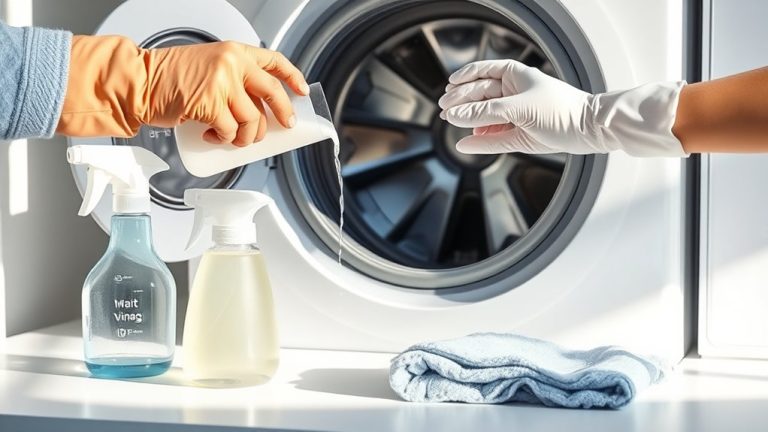
Before you start cleaning the washing machine drain hose, gather five essential items: a bucket, towels, gloves, a drain snake, and make sure you have unplugged the machine and shut off the water supply.
These steps guarantee safety and prevent water damage during the cleaning process.
Next, move the washing machine away from the wall to access the drain hose effectively.
Confirm the area is well-ventilated to avoid inhaling any odors released while you clean.
The bucket will catch any residual water, towels will manage spills, gloves protect your hands, and the drain snake helps clear blockages without removing the hose.
Proper preparation streamlines the cleaning process and minimizes risk, making your maintenance task efficient and safe.
How To Clean Your Washing Machine Drain Hose In Place
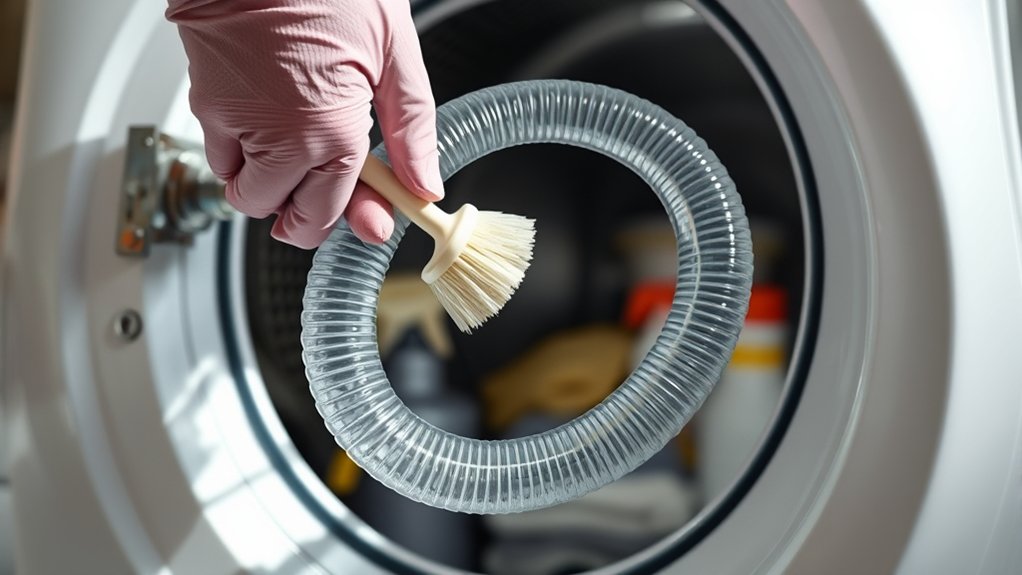
Although you don’t need to remove the drain hose to clean it effectively, you’ll want to use a combination of baking soda, vinegar, and hot water to break down buildup and flush debris.
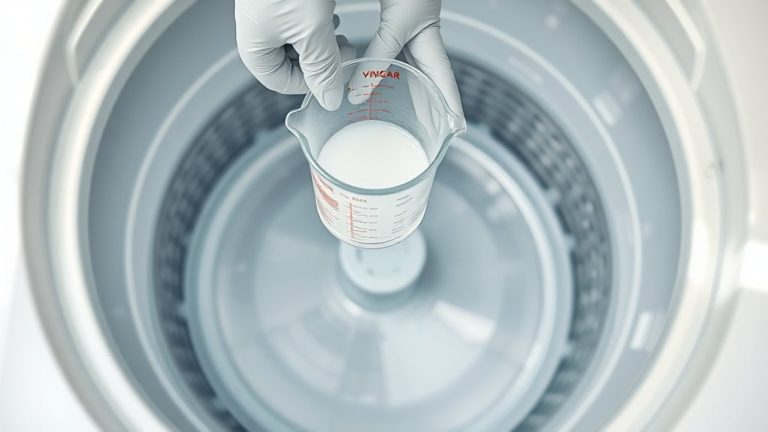
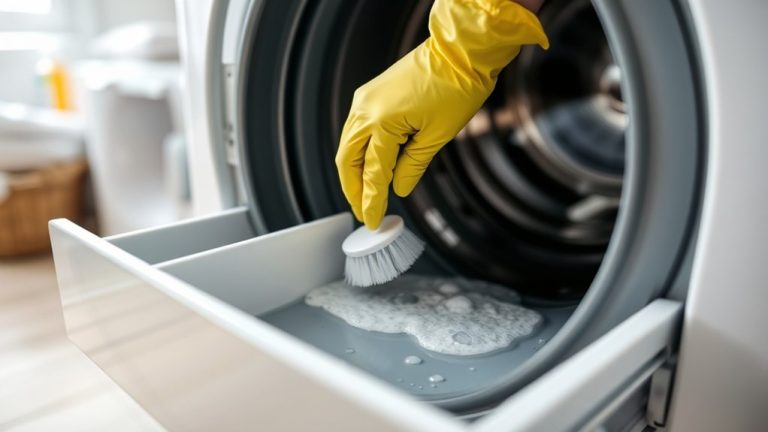
Start by pouring a cup of baking soda directly into the drain hose, followed by a cup of vinegar. Let the solution sit for 30 minutes to dissolve clogs and neutralize odors.
Pour baking soda and vinegar into the drain hose, then let sit for 30 minutes to clear clogs and odors.
Next, flush the hose thoroughly with hot water to clear residual materials. For stubborn buildup, consider using a liquid drain cleaner designed for kitchen pipes, following the instructions carefully.
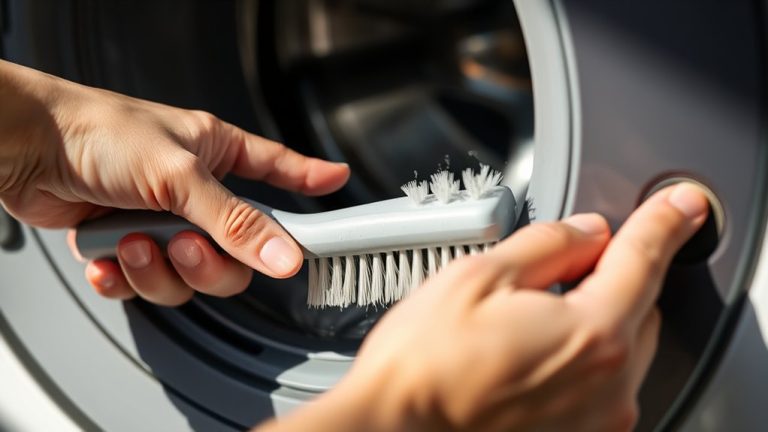
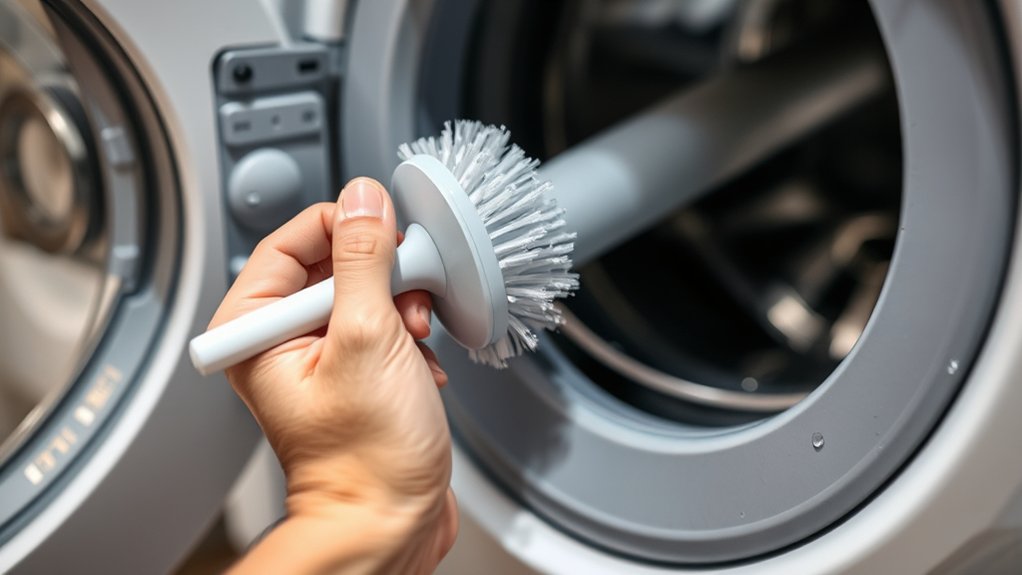
Moreover, insert a flexible lint brush into the drain hose to dislodge any visible blockages.
Cleaning the hose this way regularly helps maintain proper drainage and prevents unpleasant smells without removing the hose.
Cleaning Drain Hose With Hot Water and Baking Soda
To effectively clear and maintain your washing machine drain hose, start by pouring 1 cup of baking soda directly into the hose, followed by 2 cups of hot water.
This hot water mixed with baking soda helps break down clogs and residue inside the hose. Let the solution sit for at least 30 minutes to dissolve buildup thoroughly.
After waiting, flush the drain hose with an additional 2 cups of hot water to remove loosened debris and restore clear drainage.
Using this method regularly prevents future blockages and keeps your drain hose functioning effectively.
Avoid harsh chemical cleaners, as they can damage hose materials and cause further problems.
This simple routine guarantees efficient drainage and prolongs your washing machine’s lifespan.
How To Use a Flexible Drain Snake in the Drain Hose
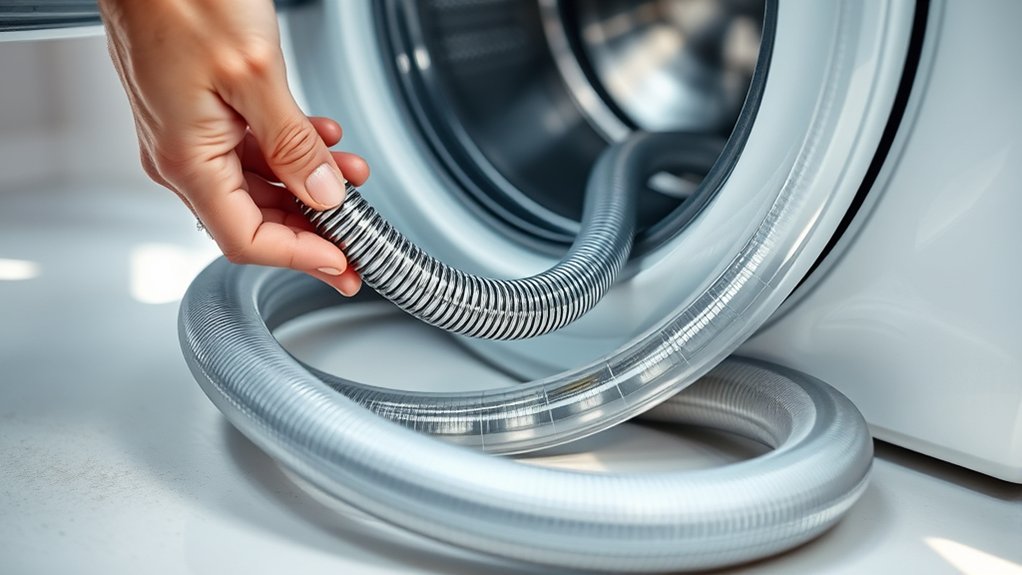
Grab a flexible drain snake to reach deep clogs inside your washing machine drain hose that are otherwise tough to clear. First, unplug the machine and turn off the water supply to avoid accidents.
Insert the drain snake gently into the hose, rotating it as you push further to break up stubborn blockages causing drainage issues. The snake’s flexibility allows it to navigate bends and effectively dislodge debris trapped deep within the hose.
After extracting the snake, flush the hose thoroughly with hot water to wash away loosened material and restore proper flow.
Using a drain snake regularly can prevent buildup and maintain smooth drainage, reducing the risk of future clogs and ensuring your washing machine operates efficiently.
Easy Natural Fixes To Soften and Clear Drain Hose Clogs
You can soften and clear drain hose clogs by pouring a cup of baking soda into the hose, followed by some vinegar. This triggers a fizzing reaction that helps break down the residue.
Just let the solution sit for about 30 minutes before flushing it out with hot water to dislodge any blockages.
For ongoing maintenance, it’s a good idea to use hot water mixed with a mild detergent or enzyme-based cleaners.
This helps prevent buildup and keeps the hose clear over time.
Baking Soda Vinegar Reaction
Although minor clogs in your washing machine drain hose can disrupt drainage, you can clear them effectively using a simple baking soda and vinegar reaction.
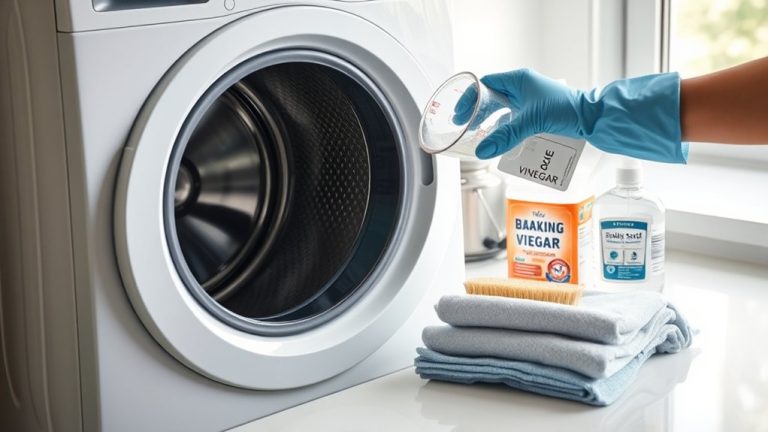
Start by pouring 1 cup of baking soda directly into the drain hose, followed by 1 cup of vinegar. This combination triggers a chemical reaction that produces effervescence, which helps break down soap scum, lint, and other residues causing the blockage.
Let the mixture sit for about 30 minutes to maximize its dissolving effect. This natural method is non-toxic and environmentally friendly, making it a safer alternative to harsh chemical cleaners that could damage your hose.
Regular use of this baking soda and vinegar treatment maintains clear drainage and prevents future clogs. It helps keep your washing machine drain hose functioning efficiently.
Give it a try and see the difference!
Hot Water Flushing
Flushing the washing machine drain hose with hot water effectively softens and clears soap scum, lint, and other debris causing clogs. To do this, pour boiling water directly into the drainage hose, allowing it to sit for several minutes to dissolve blockages.
Make certain the hose is properly positioned without kinks to guarantee smooth hot water flow.
For enhanced cleaning, you can combine hot water with vinegar or baking soda before flushing to neutralize odors and break down residue. Performing this hot water flushing monthly helps prevent buildup and maintains peak drainage.
This method requires no disassembly, making it a practical, natural way to keep your washing machine drainage hose clear and functioning efficiently.
It’s an easy step that can save you from costly repairs down the line.
Enzyme-Based Cleaners
To use enzyme-based cleaners effectively:
- Choose a reputable brand in liquid or powder form.
- Pour the solution directly into the drain hose.
- Let it sit for several hours or overnight.
- Flush thoroughly with hot water to clear softened debris.
Regular use helps digest soap scum, lint, and food particles. This prevents buildup and improves drainage.
By using enzyme-based cleaners, you keep your drain hose working well without worrying about harsh chemicals.
It’s a simple way to maintain things efficiently and safely.
How To Flush Your Washing Machine Drain Hose Effectively
First, start by disconnecting the drain hose and giving it a good look to make sure there aren’t any big chunks or debris stuck inside.
Once you’re sure it’s clear, you can move on to flushing it out.
A great way to do this is by using a mix of baking soda and vinegar.
Pour that down the hose, and then follow it up with some hot water. This combo works wonders to break down and wash away any buildup inside the hose.
After you’ve flushed everything through, take a moment to check the hose for leaks or any blockages.
That way, you can be confident it’s clean and working just right before you reconnect it.
Preparing Hose For Flushing
One effective method to prepare your washing machine drain hose for flushing involves pouring a baking soda and vinegar mixture directly into the hose. This reaction helps break down clogs and buildup.
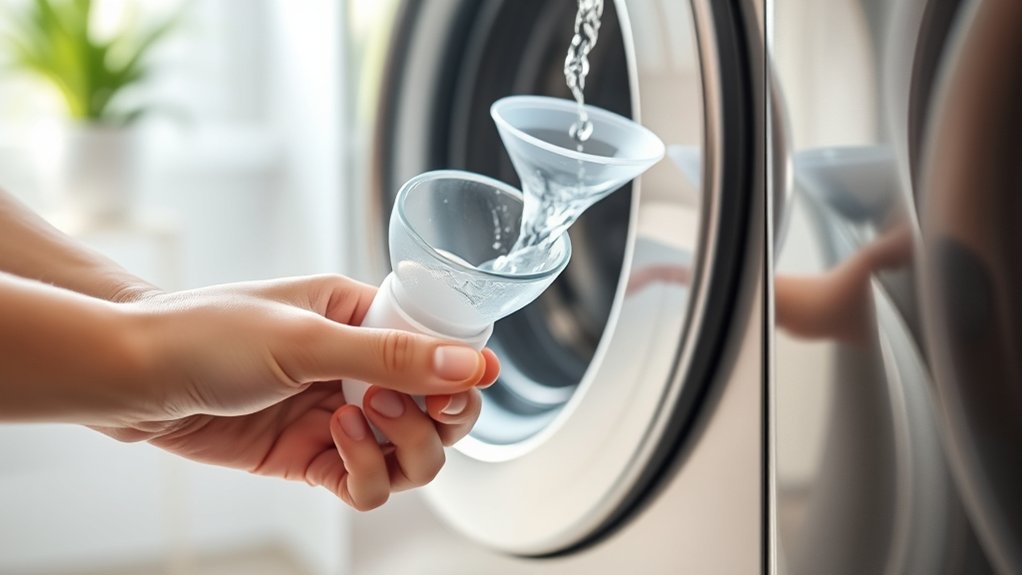
Follow these steps to prepare the hose: Insert a funnel into the drain hose opening for precise application. Pour 1/2 cup baking soda into the hose, then add 1 cup vinegar. Let the mixture sit for 30 minutes to loosen debris.
Afterward, flush with hot water to clear residues and guarantee smooth drainage. Regularly preparing your drain hose this way maintains peak flow and prevents future blockages.
If clogs persist, consider mechanical tools but avoid hose removal. It’s usually better to try these gentle methods first before getting more hands-on.
Flushing Techniques Explained
Effective flushing of your washing machine drain hose involves a few key steps that target buildup and clogs directly.
Begin by pouring a mixture of hot water and vinegar down the drain hose to dissolve deposits. Let the solution sit for 30 minutes, then flush the hose thoroughly with boiling water to clear loosened debris.
For stubborn blockages, insert a plumber’s snake or auger into the drain hose to break up clogs without removing it. Alternatively, pour baking soda into the hose first, followed by vinegar, allowing the bubbling reaction to dislodge obstructions.
Regularly flush your drain hose with hot water every few months to maintain ideal drainage and prevent future clogs.
These methods guarantee efficient cleaning without dismantling the hose. It’s a simple way to keep things running smoothly without much hassle.
Post-Flush Inspection Tips
After flushing your washing machine drain hose, inspect it carefully for kinks, sharp bends, or any visible damage that could restrict water flow. A thorough inspection guarantees your flushing efforts aren’t wasted and prevents future clogs.
Here’s what to check:
- Confirm the hose lies flat without any sharp bends that could impede drainage.
- Look for cracks or holes that might cause leaks.
- Verify hose connections are secure and free from corrosion.
- Verify that the hose position supports smooth water flow toward the drain.
Regularly inspecting the drain hose after flushing helps maintain effective drainage.
This practical step complements your cleaning routine and prolongs the hose’s lifespan. It also guarantees your washing machine operates efficiently.
When To Remove the Washing Machine Drain Hose For Deep Cleaning
If you notice persistent odors, standing water in the drum, or incomplete draining after cycles, it’s time to remove the washing machine drain hose for deep cleaning. These symptoms often mean there are blockages that simple flushes just can’t clear. Removing the drain hose lets you check for debris buildup, kinks, or bends that might be restricting water flow.
If you hear gurgling sounds during drainage or if regular maintenance using vinegar and baking soda hasn’t fixed the issues, deep cleaning becomes necessary. By detaching the hose, you can thoroughly flush or manually clear any obstructions. This helps make sure your washing machine drains perfectly.
This step is especially important when routine cleaning doesn’t do the trick. It helps prevent further drainage problems and possible damage to your washing machine’s plumbing system.
How To Test and Monitor Drainage After Cleaning
After you’ve cleaned the drain hose, it’s a good idea to run a hot water cycle. This helps you see how well the water is flowing and whether the drainage is working properly.
While it’s running, pay attention to any unusual sounds—they can be a sign that something’s not quite right.
Also, take a moment to check around the area for any leaks or water pooling. Catching these early can save you from bigger problems down the line.
If you make it a habit to regularly check how well your drainage is working, you’ll keep everything running smoothly and avoid surprises.
Observing Water Flow
Start by running a short wash cycle with plain water to see how the drainage performs. Pay close attention to the water flow through the drain hose and make sure it moves freely without any obstruction.
Keep an eye on these key points:
- Confirm that water drains smoothly, with no backups into the drum.
- Listen for gurgling sounds which might mean there are blockages left behind.
- Check if there’s any standing water in the drum after the cycle ends.
- Inspect the drain hose connections to ensure they’re secure and leak-free.
If you notice anything unusual, like slow drainage or odd odors, it usually means further cleaning or maintenance is needed.
Watching the water flow closely really helps confirm your drain hose cleaning worked and can stop future drainage problems before they start.
Detecting Leaks Early
Monitoring the water flow is just one step in ensuring your washing machine’s drainage system functions properly. For detecting leaks early, carefully inspect the drain hose and surrounding area after each wash cycle. Look for wet spots or moisture on the hose, which often signal slow leaks.
Run a test cycle with a small load and observe closely for water escaping around connections. Use a flashlight to check for drips or condensation on the hose and fittings. Placing a paper towel under the drain connection is a simple, effective method. Any dampness on it after the cycle indicates a leak that needs immediate attention.
Regularly monitoring these signs helps you address issues quickly, preventing water damage and maintaining your washing machine’s drainage integrity.
It’s a small habit that can save you a lot of trouble down the line.
Evaluating Drainage Efficiency
Evaluating your washing machine’s drainage efficiency involves running a short cycle without laundry to confirm water drains fully within minutes.
Next, carefully monitor drainage performance to verify your cleaning was effective.
First, measure the water volume expelled through the drain hose using a bucket. It should match your washer’s specified drainage capacity, usually between 17 and 25 gallons per load.
Also, listen for unusual sounds like gurgling or bubbling during drainage. These noises can signal blockages or air pockets.
Make sure to inspect hose connections for leaks. Check that the drain hose is securely positioned to prevent siphoning.
After that, run a full laundry load. If the clothes come out excessively wet, it might mean there are still drainage issues.
Following these steps helps you confirm that your drain hose is clear and that drainage functions effectively after cleaning. It’s a good way to keep your washer running smoothly.
Tips To Prevent Future Clogs in Your Washing Machine Drain Hose
Although clogs can disrupt your washing machine’s drainage, you can prevent them by regularly flushing the drain hose with hot water mixed with vinegar and baking soda. This helps dissolve soap scum and lint buildup.
To further prevent future clogs, install a mesh drain guard to catch debris before it enters the hose. Also, clean the drain pump filter monthly to keep drainage working at its best and reduce blockage risks.
Try not to overload the machine because too much lint and debris can build up in the drain hose, which makes clogs more likely.
Plus, run a monthly service wash on the hottest cycle without detergent to break down any leftover buildup inside the hose.
These simple steps will keep your washing machine’s drain hose clear. That way, your machine drains efficiently and you’ll need less maintenance overall.
Frequently Asked Questions
Can I Use Bleach Instead of Baking Soda to Clean the Drain Hose?
You can use bleach for cleaning the drain hose, but its effectiveness comes with some risks.
Bleach may damage rubber and plastic over time. It can also produce toxic fumes if mixed improperly.
There are safer alternatives like baking soda and vinegar. These options are eco-friendly and effectively break down clogs without harming hose materials.
If you decide to use bleach, make sure to rinse thoroughly afterward. This helps prevent residue buildup that could cause future blockages.
How Often Should I Clean My Washing Machine Drain Hose?
You should clean your washing machine drain hose at least every six months to keep it working well. Regular cleaning helps prevent clogs and nasty odors, which means your machine drains efficiently.
For better upkeep, try running a hot water cycle with vinegar once a month. This helps reduce buildup inside the drain hose.
Also, check the hose often for blockages or kinks. If you notice slow drainage or bad smells, clean it more frequently to avoid bigger problems down the line.
Will Cleaning the Drain Hose Improve My Washing Machine’s Efficiency?
Think of your washing machine like a car engine. Clogged fuel lines slow it down. Similarly, drain hose maintenance keeps your machine’s water flow smooth, which directly boosts washing machine performance.
When you clean the drain hose regularly, you prevent blockages that strain the pump and waste energy. This simple step guarantees faster cycles, reduces wear, and maximizes efficiency.
It saves you money and extends your machine’s lifespan with practical, consistent care.
Can a Clogged Drain Hose Cause Washing Machine Odors?
Yes, a clogged drain hose can cause washing machine odors by trapping stagnant water and debris. This buildup promotes bacterial growth, which leads to those unpleasant smells. So, it’s important to keep an eye on the drain hose regularly.
Make sure to maintain the drain hose to prevent soap scum and lint from building up. These things really contribute to foul odors in your machine. Keeping the drainage clear is key for good washing machine hygiene.
It helps ensure proper water flow and stops that musty smell from developing. You can even flush the hose every now and then with baking soda and vinegar. This simple trick keeps your machine fresh and working efficiently.
Is It Safe to Use Chemical Drain Cleaners in the Washing Machine Hose?
It’s generally unsafe to use chemical drain cleaners in your washing machine hose because of drain cleaner safety concerns. Harsh chemicals can degrade rubber or plastic. This can cause leaks or other damage.
Instead, try chemical alternatives like enzyme-based cleaners or natural solutions such as vinegar and baking soda.
These options break down clogs effectively without harming your hose or leaving harmful residues. That way, your machine lasts longer and your laundry stays fresh.
Conclusion
Keeping your washing machine drain hose clear is like maintaining a smooth-flowing river. When debris blocks the path, everything backs up.
By following these practical steps without removing the hose, you guarantee efficient drainage and extend your machine’s lifespan.
Regular cleaning with hot water, baking soda, and a flexible drain snake prevents clogs and costly repairs. Stay proactive, monitor drainage, and your washing machine will keep running smoothly with minimal hassle.