How Often Clean Washing Machine – Maintenance Guide
You should deep clean your washing machine every 30 to 40 loads and run a monthly hot cycle with a cleaning solution to prevent mold and odors. Wipe down the rubber door seal and detergent drawer after each wash to minimize residue buildup.
Check and clean the filter every 3 months and inspect hoses regularly for wear or leaks. Consistent maintenance keeps your machine efficient and extends its lifespan.
Explore these steps further to master proper care and upkeep. It’s easier than you think once you get into a routine!
How Often Should You Clean Your Washing Machine
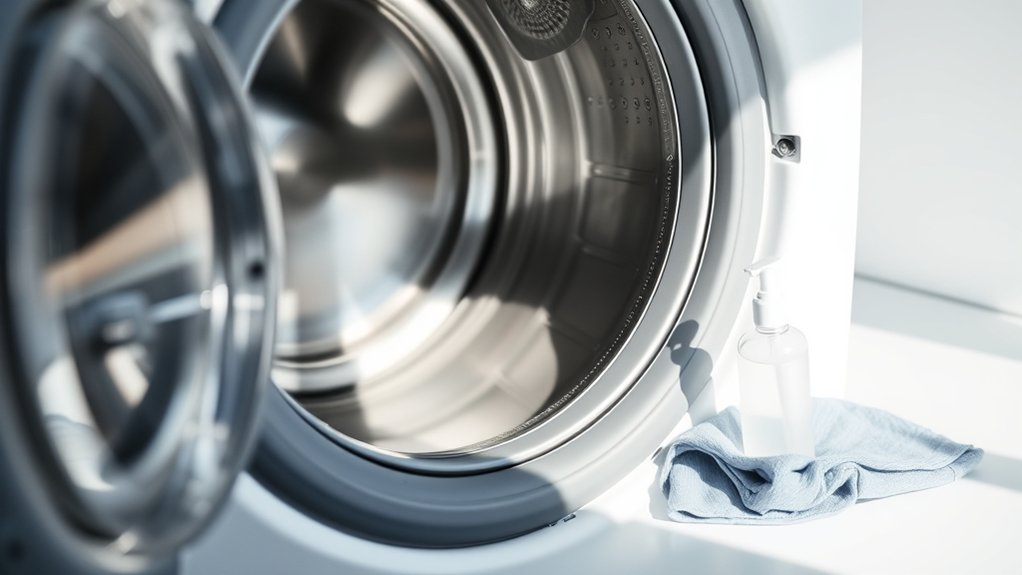
Try to do a deep cleaning every 30 to 40 loads. If you don’t use your machine very often, aim for a monthly clean instead. Running a hot, empty cycle with a good cleaning solution can help get rid of buildup.
After each wash, make it a habit to wipe down the rubber door seal and the detergent drawer. This stops moisture from building up and helps prevent mold.
Also, check and clean the filter every 3 months to keep your machine working at its best and avoid bad smells.
If you ever notice any odors or visible mold, don’t wait—start a cleaning cycle right away. Sticking to this schedule will keep your washing machine running smoothly and extend its life.
Why You Should Clean Your Washing Machine Regularly
You should clean your washing machine regularly to stop mold and odors from building up because of moisture.
Plus, keeping up with this maintenance helps your machine run more smoothly by cutting down on detergent residue and lessening mechanical strain.
When you clean it consistently, you’re also extending the life of your appliance, which means fewer repair bills and your machine performing at its best.
Prevent Mold And Odors
Preventing mold and odors in your washing machine requires consistent maintenance steps. To prevent build-up of mold or mildew, clean the rubber door seal after every few washes to minimize moisture accumulation.
Run a hot maintenance wash monthly to eliminate bacteria and detergent residue that cause unpleasant smells.
Always leave the door ajar after use to promote air circulation, which prevents stagnant moisture and discourages mold growth. Neglecting these actions allows mold and mildew to thrive in damp areas, resulting in funky odors and visible mold on the drum and gasket.
By following these precise steps regularly, you effectively prevent build-up, protect your machine’s interior, and maintain a fresh-smelling laundry environment.
It’s really not that hard once you get into the habit!
Maintain Machine Efficiency
Although washing machines are designed to handle frequent use, neglecting regular cleaning compromises their efficiency and performance.
To maintain ideal operation, you must perform a deep clean and regular maintenance.
Follow these steps to guarantee peak efficiency:
- Conduct a maintenance wash every 1 to 3 months using a cleaning solution on hot water to remove detergent residue and odors.
- Wipe down the door seal and detergent drawer after each cycle to reduce moisture buildup and prevent foul smells.
- Schedule cleaning after approximately 30 washes to avoid mold, mildew, and bacteria growth that impair machine function.
Prolong Appliance Lifespan
When you clean your washing machine regularly, you greatly extend its operational lifespan by reducing the buildup of mold, mildew, and detergent residue that cause mechanical stress.
Running a maintenance wash cycle every 1 to 3 months with a specialized cleaning solution removes these contaminants effectively. This routine prevents wear and tear on internal components by minimizing friction and corrosion caused by residue accumulation.
Neglecting this maintenance increases the risk of malfunction and costly repairs due to compromised parts. By sticking to a consistent cleaning schedule, you guarantee peak performance and durability of your appliance.
It’s a simple step that really pays off. This proactive approach not only keeps your machine hygienic but also protects your investment.
Over time, you’ll reduce how often you need replacements and service visits. So, taking a little time for regular cleaning can save you a lot in the long run.
Signs Your Washing Machine Needs Cleaning Now
You’ll know your washing machine needs cleaning when you notice unpleasant odors coming from the drum or door seal. That smell is a clear sign something’s not right.
Take a look for any visible mold on the rubber gasket or inside the drum—this usually means there’s moisture buildup hanging around.
It’s also a good idea to check the detergent dispenser. If you see any leftover residue, it can mess with how your machine works and definitely needs to be cleaned out sooner rather than later.
Odor And Smell
If unpleasant odors come from your washing machine, it means mold, mildew, or bacteria are hanging out in there and need to be cleaned up right away.
Odor and mildew usually build up because moisture gets trapped in the door gasket or detergent residue stays inside the drum.
To fix this, here’s what you should do:
- Run a hot maintenance wash cycle using a cleaning solution to get rid of bacteria and odors.
- Make a habit of leaving the door slightly open after each use so air can circulate and stop mildew from growing.
- Check and clean the detergent dispensers and seals regularly to prevent any residue buildup.
If your laundry smells funky, it’s a sign you need to clean your machine sooner rather than later.
Follow these simple steps, and you’ll keep your washing machine smelling fresh and avoid any odor problems down the line.
Visible Mold Growth
Since mold thrives in damp, enclosed environments, spotting visible growth inside your washing machine signals an immediate need for cleaning. Visible mold growth, especially on the rubber door seal or drum, indicates contamination that can worsen if ignored. This is common in front-load washers where moisture is trapped.
You’ll often notice an unpleasant odor accompanying mold, which signals you must act now. Clean the door seal carefully and run a maintenance cycle with a proper cleaning solution to remove mold and prevent recurrence. Ignoring visible mold growth leads to bacteria buildup, unpleasant smells, and dingy clothes.
| Location | Mold Presence | Action Required |
|---|---|---|
| Drum | Visible black spots | Clean with washer cleaner |
| Rubber Door Seal | Moldy, slimy residue | Wipe and disinfect |
| Detergent Buildup | Residue near seals | Scrub and rinse thoroughly |
Residue And Buildup
When residue accumulates inside your washing machine, it compromises both cleanliness and performance, signaling the need for immediate cleaning.
Residue buildup often results from excessive detergent use, leaving deposits that reduce washing efficiency and cause unpleasant odors. You must address this promptly to maintain peak operation.
Watch for these signs indicating residue and buildup require your attention:
- Persistent foul smells emanating from the drum or door seal.
- Visible residue or film on the drum interior or gasket areas.
- Reduced cleaning effectiveness despite regular wash cycles.
Perform a monthly deep cleaning to remove residue and prevent mold or mildew development in damp machine parts.
This maintenance guarantees your washing machine operates efficiently and hygienically over time.
Taking care of your machine like this keeps it running smoothly and your clothes fresh.
Easy Steps to Clean Your Washing Machine After Every Wash
Leave your washing machine door open immediately after each cycle to let the drum air out. This helps prevent odor and mold from developing.
After every wash, make sure to promptly remove your clothes to reduce moisture buildup inside.
Wipe down the rubber door seal every few washes to get rid of any residual moisture. This stops mold or grime from accumulating.
Also, clean the detergent drawer regularly, ideally after every use, to remove detergent residue that can cause blockages and odors.
Use a damp cloth to wipe the drawer thoroughly before putting it back in.
Don’t forget to wipe the machine’s exterior with a damp cloth too. This keeps it clean and prevents dust buildup.
These simple, consistent steps will keep your washing machine fresh and working well.
You’ll reduce the need for deep cleaning and help extend its lifespan.
It’s easy to maintain when you do these little things after every wash!
How to Deep Clean Your Washing Machine for Best Results
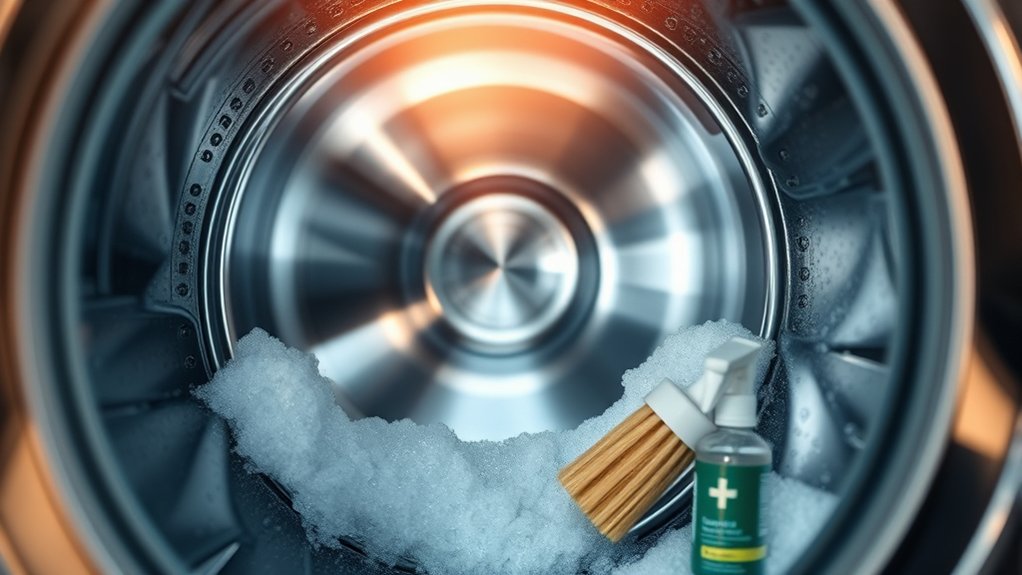
Maintaining your washing machine with routine care after each wash helps prevent minor issues, but a thorough deep cleaning is necessary to eliminate hidden residue and odors.
Routine care prevents minor issues, but deep cleaning removes hidden residue and odors for optimal machine health.
For deep cleaning your washing machine effectively, follow these steps monthly or every 30-40 loads:
- Run a hot, empty cycle using a washing machine cleaner to dissolve buildup and sanitize the drum.
- Remove and clean the detergent dispenser drawer to prevent residue accumulation that can cause odors.
- Wipe the rubber door seal thoroughly to eliminate moisture and mold-prone areas.
If you notice any unpleasant smells, don’t wait—just repeat this deep cleaning cycle.
This routine helps keep your machine running at its best, staying clean and lasting longer.
Top Cleaning Products to Keep Your Washing Machine Fresh
Three top cleaning products stand out for keeping your washing machine fresh and performing at its finest: Affresh Cleaner, Truly Free Home Laundry Machine Cleaner, and white vinegar. Affresh effectively removes residue and odors when used monthly.
Truly Free offers a non-toxic, septic-safe option that’s great for tackling stubborn buildup. White vinegar is a natural alternative, but be sure to use it sparingly to protect your machine’s rubber seals.
Incorporate these into your routine to complement detergent use and maintain freshness.
| Product | Benefit | Use Frequency |
|---|---|---|
| Affresh Cleaner | Eliminates residue and odors | Monthly |
| Truly Free Home Cleaner | Non-toxic, septic-safe | Monthly or as needed |
| White Vinegar | Natural deodorizer | Occasionally |
Use these precisely to guarantee peak washing machine maintenance.
How to Clean the Detergent Drawer and Door Seal
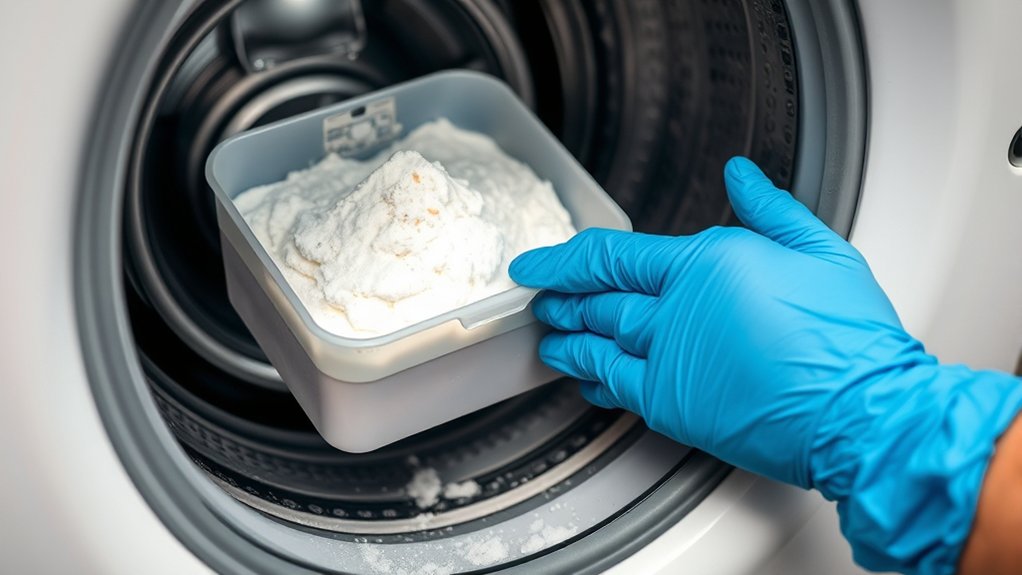
Cleaning the detergent drawer every few weeks with warm, soapy water prevents buildup of detergent and fabric softener residue that can impair your washing machine’s performance.
To clean the detergent drawer and door seal effectively, start by removing the detergent drawer and soaking it in warm, soapy water. Use a brush to scrub away residues in corners.
Next, wipe the door seal thoroughly after each wash to remove moisture. An old toothbrush works great to clean crevices where grime tends to accumulate.
Make it a habit to regularly check the door seal for any wear or damage. This helps keep your machine running efficiently.
Also, leave the door slightly open after use to help it dry and stop moisture from building up.
Following these steps will keep your machine working at its best, extend its life, and cut down on maintenance.
How to Prevent Mold, Odors, and Residue in Your Washing Machine
To keep mold at bay, make it a habit to wipe the rubber door seal dry every few washes.
Also, leaving the door slightly open helps air circulate and keeps things fresh inside.
When it comes to odors, try running a hot maintenance cycle once a month.
Adding a little white vinegar can do wonders, but use it sparingly to avoid damaging the seals.
And don’t forget about residue!
Regularly clean out the detergent dispenser and be careful not to let detergent build up over time.
This way, your washing machine stays clean and smells great.
Mold Prevention Tips
How often should you address moisture and residue to keep mold at bay in your washing machine? Regular maintenance is key for effective mold prevention tips.
Follow these steps to minimize mold, odors, and residue buildup:
Wipe the rubber door seal after every few washes to remove moisture and prevent mold growth.
Leave the washing machine door open after each cycle to enhance air circulation and reduce dampness.
Run a hot, empty cycle monthly using a washing machine cleaner or white vinegar to eliminate bacteria and residue.
Additionally, clean the detergent dispenser drawer regularly to avoid residue accumulation, which fosters mold.
Avoid overusing vinegar to protect rubber seals from damage.
These precise actions will keep your washing machine hygienic and mold-free.
Odor Control Strategies
Three essential steps can help you control odors in your washing machine: wiping the rubber door seal regularly, leaving the door ajar after use, and cleaning the detergent dispenser drawer frequently.
Wipe the rubber door seal every few washes to remove moisture that fosters mold and mildew growth.
Always keep the washer door open when the machine isn’t in use. This promotes air circulation and prevents mold and mildew inside the drum.
Clean the detergent dispenser drawer routinely to eliminate residue buildup, which can cause unpleasant odors and microbial growth.
Also, run a monthly hot maintenance wash with a washing machine cleaner to get rid of bacteria and residual buildup.
Just be careful not to use too much white vinegar, since it might damage the rubber seals over time.
Residue Removal Methods
Controlling odors in your washing machine sets the foundation for preventing mold and residue buildup that can impair its performance. It’s all about keeping things fresh and clean so your machine works its best.
To maintain peak cleanliness, implement effective residue removal methods. Here are some key steps to follow:
First, clean the detergent dispenser drawer and door seal after every use. This helps stop detergent residue and mold from building up.
Next, run a monthly hot water maintenance wash using a washing machine cleaner or white vinegar. This dissolves residues, gets rid of bacteria, and clears out odors.
Don’t forget to wipe down the rubber door gasket weekly.
Also, leave the door slightly open after each cycle. This promotes air circulation and cuts down moisture, which prevents mildew growth.
Maintaining Your Washing Machine’s Filter and Hoses
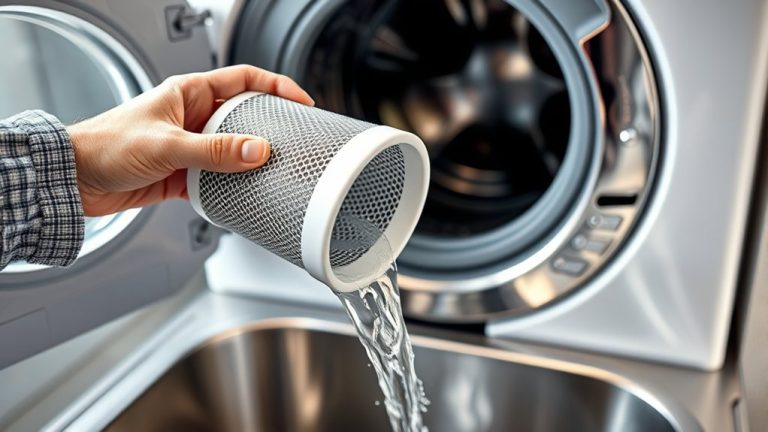
Cleaning your washing machine’s filter every 4 to 6 weeks is crucial to keep it free from lint and debris that can cause clogs and drainage issues.
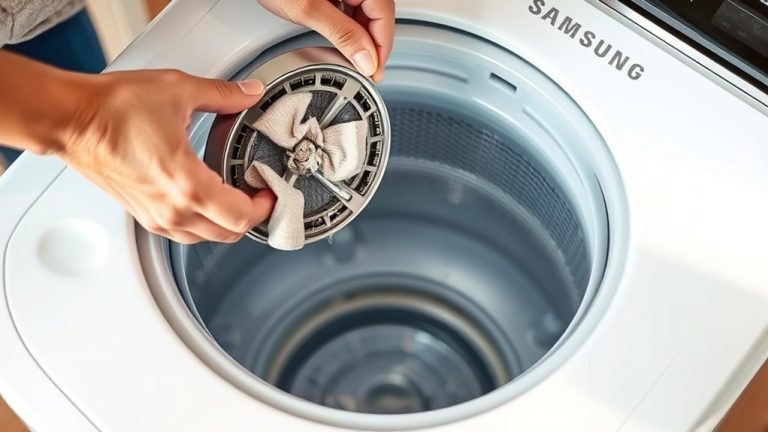
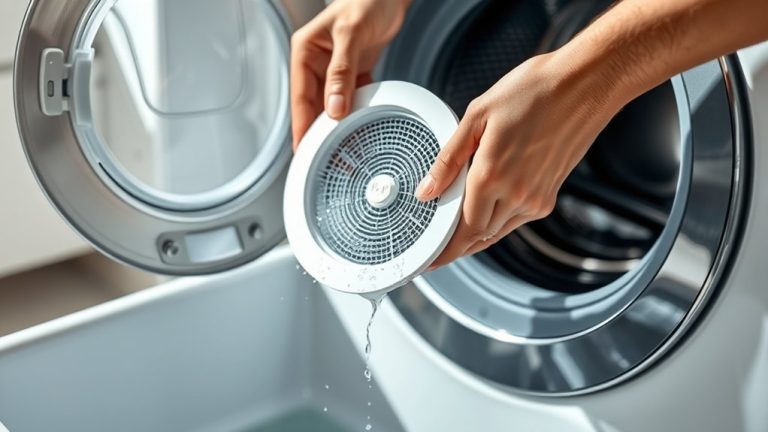
To clean the washing machine filter, first unplug the machine and locate the filter compartment, usually at the front bottom. Remove the filter and clear out all trapped particles before rinsing it under running water.
Next, inspect hoses for signs of wear, such as cracks, bulges, or leaks. Check these hoses at least every five years and replace any damaged ones immediately to prevent water damage or flooding.
Regularly maintaining your washing machine’s filter and hoses guarantees peak performance, improves drainage, and extends the appliance’s lifespan by reducing strain on its components.
Taking a little time to do this can save you a lot of hassle down the road.
Simple Habits to Keep Your Washing Machine Fresh Longer
Maintaining your washing machine’s filter and hoses helps prevent mechanical issues, but keeping the interior fresh requires a few extra habits. Focus on wiping down the drum and seals regularly to minimize moisture buildup and mold growth.
Also, running a hot maintenance wash once a month gets rid of bacteria and odors really well.
Try these three simple habits:
- Wipe down the rubber door seal and drum after every wash to reduce dampness.
- Leave the door slightly open after the cycle finishes to help air circulate and dry things out.
- Clean the detergent dispenser drawer regularly to stop residue from building up.
Make sure to remove your laundry promptly after each cycle. Damp clothes left inside can cause unpleasant smells.
Following these easy steps will keep your washing machine fresh and running smoothly for longer.
Frequently Asked Questions
Can I Use Homemade Cleaners Instead of Specialized Washing Machine Cleaners?
You can use homemade solutions like vinegar and baking soda, but their cleaning effectiveness is limited compared to specialized washing machine cleaners.
Homemade solutions may not fully remove residue or odors, and overusing vinegar can damage rubber seals.
For thorough maintenance, it’s better to opt for commercial cleaners designed to safely tackle buildup and bacteria.
This way, you guarantee peak performance and extend your machine’s lifespan without risking costly repairs.
How Long Does a Typical Washing Machine Cleaning Cycle Take?
Cleaning cycle duration usually ranges from 30 to 60 minutes. That’s long enough to deep clean a small city!
How often you clean your machine really matters for its performance. Most machines have a dedicated cycle that uses hot water and cleaners to tackle buildup effectively.
Some advanced models even extend the cycle time to handle stubborn residues better.
To keep your washer fresh, try running this cycle monthly or every 30 washes. This helps ensure thorough residue and odor removal.
Is It Necessary to Unplug the Washing Machine Before Cleaning?
You don’t have to unplug your washing machine before cleaning, but it’s a good safety precaution to prevent electrical hazards.
Always verify the machine is turned off and the cycle is complete before starting.
If you’re using strong cleaning agents or anticipate spills, unplugging adds an extra layer of protection.
Follow the manufacturer’s instructions for specific guidance.
Prioritizing safety precautions minimizes risks during maintenance tasks.
Can Cleaning My Washing Machine Void the Warranty?
Think of your washing machine as a precision instrument. Cleaning it properly won’t void your warranty coverage.
You can safely maintain your appliance by following the manufacturer’s recommended cleaning frequency and using approved methods.
Just avoid harsh chemicals or neglecting maintenance because these can cause damage and might risk voiding your warranty.
Always check your manual for specific instructions. It’s also a good idea to keep records of your cleaning routine to protect your warranty rights.
How Do I Safely Clean a Top-Loading vs. Front-Loading Machine?
For top-loading tips, regularly clean the lid and drum using warm soapy water. Avoid harsh abrasives to keep everything in good shape.
Running a monthly hot wash cycle with a cleaner helps remove buildup and keeps your machine fresh.
When it comes to front-loading machines, be sure to wipe down the door seal carefully to prevent mold. It’s a good idea to leave the door open after use so it can air dry properly.
Also, remove and clean the detergent dispenser monthly using warm water.
Try to avoid abrasive materials on the rubber seals. This helps maintain their integrity and prevents any damage over time.
Keeping up with these simple steps will make your washer last longer and work better.
Conclusion
Now that you know how often and why to clean your washing machine, the real question is, will you wait until the warning signs appear or act before problems arise?
Ignoring regular maintenance risks mold, odors, and costly repairs. By following these precise cleaning steps and habits, you’ll extend your machine’s life and efficiency.
The choice is yours. Continue routine care or face unexpected breakdowns. Which path will you take?