How To Clean And Disinfect Washing Machine – Complete Guide
To clean and disinfect your washing machine, start by running a hot water cycle with one cup of vinegar or bleach in an empty drum to remove buildup and kill germs. Use Affresh tablets monthly for added sanitation. Don’t forget to clean dispensers and door seals regularly to prevent mold.
Keep the door open between uses to reduce moisture. If you want detailed steps for top or front loaders, safe product use, and maintenance tips, there’s more useful information ahead.
What’s the Difference Between Cleaning and Sanitizing a Washing Machine?
Although cleaning and sanitizing a washing machine are related tasks, they serve different purposes. Cleaning removes dirt, detergent residue, and grime, while sanitizing targets harmful bacteria and germs.
Cleaning clears dirt and grime, while sanitizing eliminates harmful bacteria and germs in your washing machine.
When you clean your washing machine, you eliminate buildup that causes odors and reduces efficiency.
Sanitizing focuses on killing bacteria and germs, which is especially important after illness or foul smells.
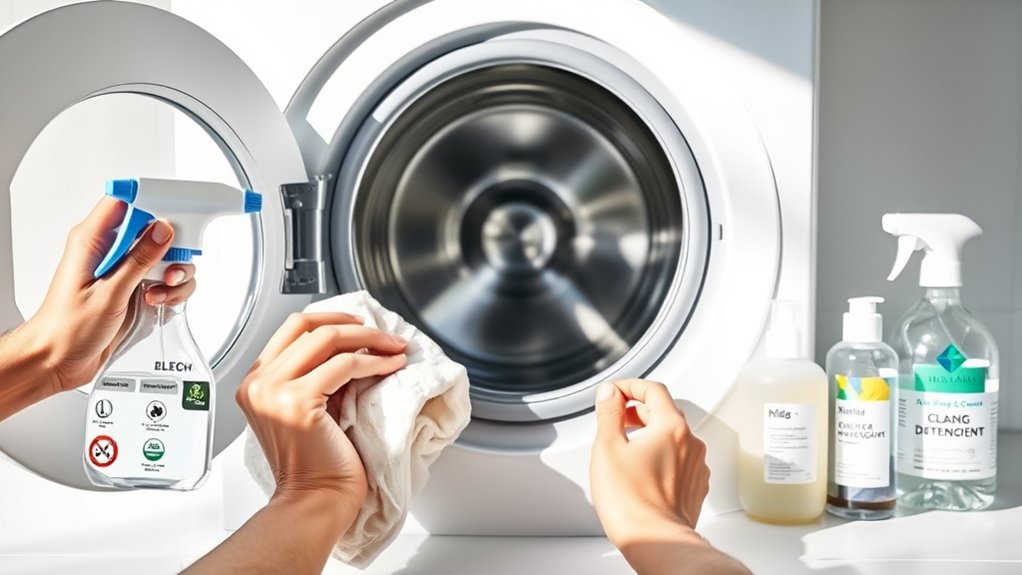
For cleaning, you can use agents like vinegar, bleach, or specialized products such as Affresh.
Sanitizing involves applying agents designed specifically to reduce microbial presence.
Both processes are essential to maintain your washing machine’s performance and longevity.
Cleaning typically happens monthly or every 30 wash cycles, while sanitizing is done as needed based on specific conditions.
How Often to Clean vs. Sanitize Your Washing Machine
You should clean your washing machine at least once a month or every 30 wash cycles to keep it running efficiently and smelling fresh. That way, you avoid buildup and keep your clothes smelling great.
Now, when it comes to sanitizing, it’s a bit different. You’ll want to sanitize your machine if you start noticing unpleasant odors or after someone in your household has been sick. This helps get rid of any harmful bacteria lurking inside.
Just keep an eye out for these signs, and don’t forget to check your machine’s manual. It usually has specific instructions and schedules for cleaning and sanitizing that work best for your model.
Cleaning Frequency Guidelines
When maintaining your washing machine, cleaning it at least once a month or every 30 wash cycles prevents dirt and detergent buildup effectively. It’s a simple step that helps keep your machine running smoothly. Just follow the cleaning frequency guidelines from your owner’s manual to avoid buildup and preserve performance.
If you notice severe color bleeding during a wash, clean your machine immediately. This quick action helps prevent odors and potential damage, keeping your washer fresh and in good shape.
| Cleaning Frequency | Action Required | Notes |
|---|---|---|
| Monthly / 30 Wash Cycles | Clean drum and detergent areas | Prevents residue buildup |
| After Color Bleeding Event | Immediate cleaning | Maintains machine integrity |
| As Needed (Foul Smells) | Sanitize | Eliminates bacteria and mold |
Always check your owner’s manual for model-specific recommendations. This way, you can optimize cleaning intervals and help your machine last longer.
Sanitizing Schedule Importance
Maintaining your washing machine involves both regular cleaning and periodic sanitizing to guarantee peak performance. You should clean your machine at least once a month or every 30 wash cycles to prevent residue buildup and odors.
Sanitizing, however, is more situational and essential for eliminating bacteria and mold that cleaning alone can’t remove.
To enhance your washing machine’s efficiency and longevity, follow these guidelines:
- Clean monthly or every 30 wash cycles to prevent grime accumulation.
- Sanitize after household illness or when foul odors appear, signaling microbial growth.
- Establish a routine combining both cleaning and sanitizing to prevent clogging and maintain excellent function.
Signs You Should Sanitize
Although regular cleaning keeps your washing machine running smoothly, certain signs indicate it’s time to sanitize. You should sanitize immediately after illness in your household to eliminate bacteria and prevent recontamination. Foul odors signal trapped soil and mold buildup, requiring prompt sanitization.
Also, detergent residue accumulation in hard-to-reach areas compromises machine function and calls for thorough sanitizing.
| Sign | Action Required |
|---|---|
| Household illness | Sanitize immediately |
| Foul smells | Sanitize to remove mold |
| Visible detergent residue | Sanitize to clear buildup |
Clean your washing machine at least once a month or every 30 wash cycles to prevent mold, detergent residue, and bacterial growth, ensuring peak performance. It’s a simple step that keeps your machine fresh and working its best.
Which Products Work Best for Sanitizing a Washing Machine?
Which products sanitize your washing machine most effectively? You want agents that eliminate odors, dissolve buildup, and kill bacteria without damaging your appliance.
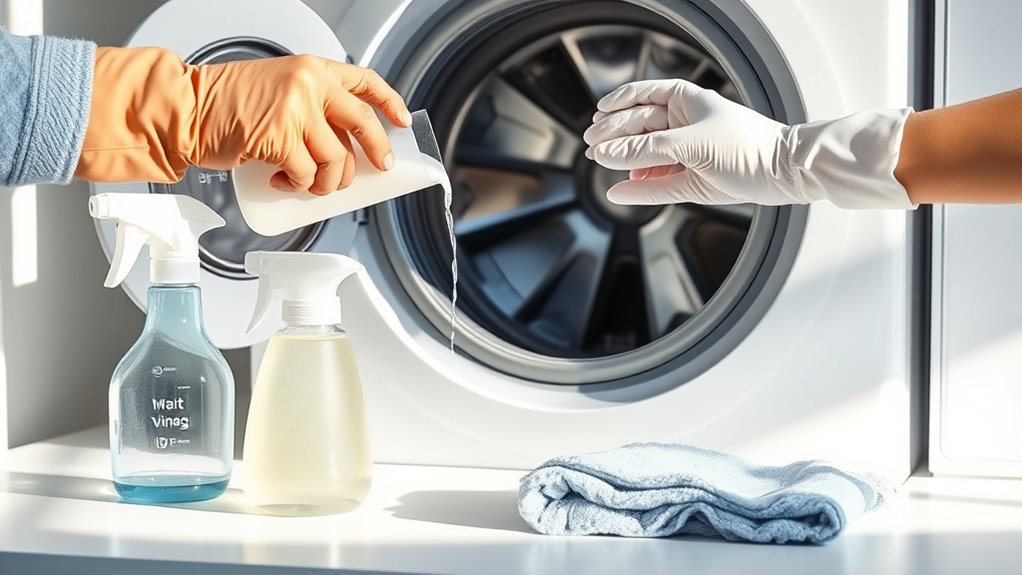
Vinegar is a safe, natural option. It breaks down mineral deposits and neutralizes odors during a hot water cycle.
Vinegar safely breaks down mineral deposits and neutralizes odors during a hot water wash cycle.
Chlorine bleach is a powerful disinfectant that removes detergent residue but must be diluted and followed by a rinse to avoid damage.
Affresh tablets are formulated specifically for washing machines, targeting odor-causing residues in a hot wash cycle.
Consider these options:
- Vinegar: dissolves minerals and eliminates odors safely
- Chlorine bleach: disinfects and removes buildup; requires dilution and rinsing
- Affresh tablets: machine-specific, breaks down residues effectively
Always check your washing machine manual for product compatibility before use.
How to Clean Top-Loading vs. Front-Loading Washing Machines
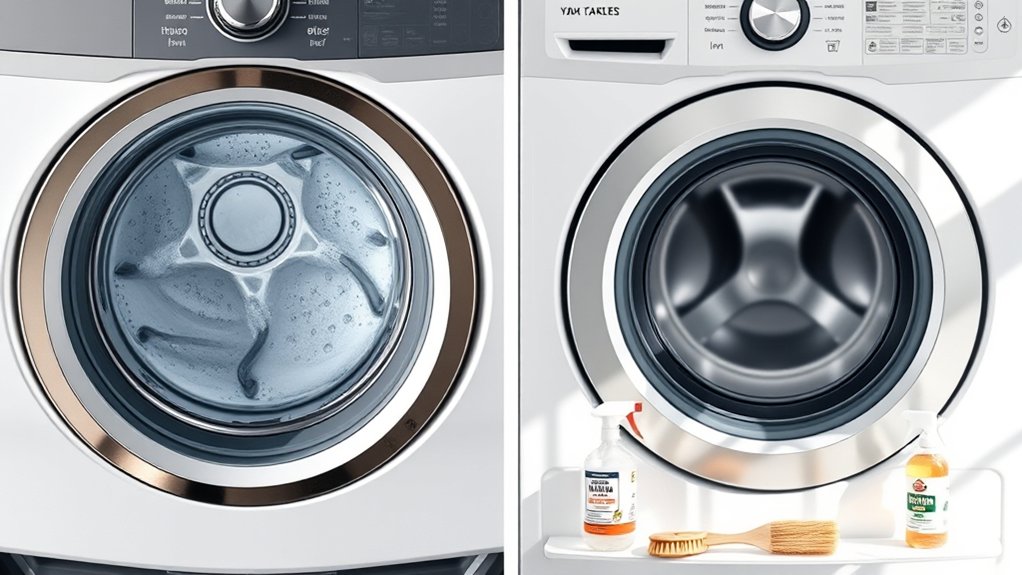
Because top-loading and front-loading washing machines have different designs, the cleaning methods vary slightly to guarantee effectiveness.
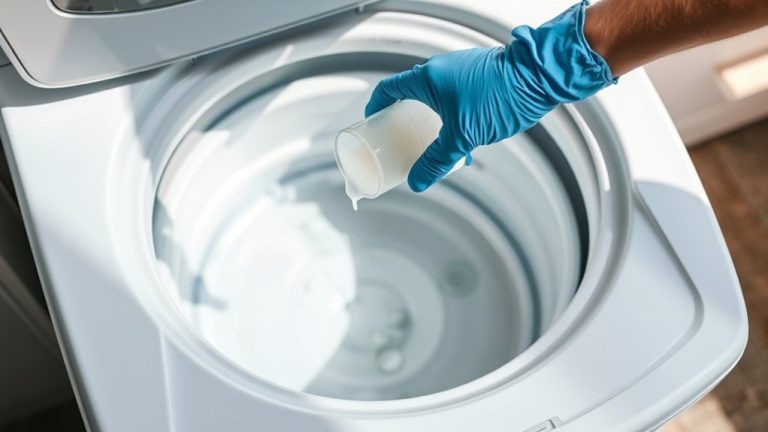
For top-loading washers, add a cleaning tablet directly into the tub, then run a cleaning or hot water cycle to dissolve residues and disinfect thoroughly.
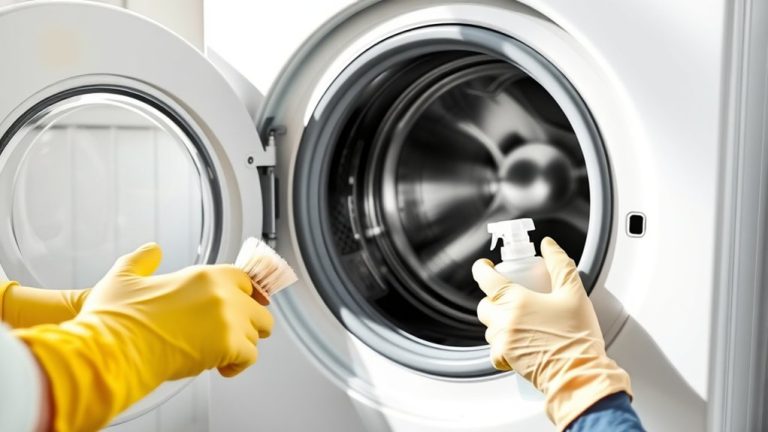
With front-loading machines, place the cleaner inside the drum. During the soak, remove and clean parts like the detergent drawer, scrubbing the door gasket to eliminate buildup.
Maintain a cleaning frequency of at least once a month or every 30 cycles for both types to prevent odors and mold.
After cleaning, always use the hottest cycle available for sanitization. Then, leave the door or lid open to promote airflow and inhibit mold growth.
How to Clean Washing Machine Dispensers and Seals
Two key components that require regular attention are the washing machine dispensers and door seals, as they often accumulate detergent residue and moisture.
To clean dispensers, remove them and soak in warm, soapy water to dissolve buildup. Wipe the dispenser compartment with a damp cloth and all-purpose cleaner to eliminate remaining residue.
Rubber seals around the door are prone to trapping moisture, which encourages mold and mildew growth. So, inspect seals regularly for trapped water and debris. Use an old toothbrush with a vinegar-water solution for stubborn stains on rubber seals.
Regularly check rubber door seals for moisture and clean stubborn stains with a vinegar-water solution.
Make sure dispensers and seals are fully dry before reassembling to prevent odors and further buildup. Maintaining these parts keeps your washing machine hygienic and prevents damage from mold and mildew.
How to Sanitize Your Washing Machine With Vinegar
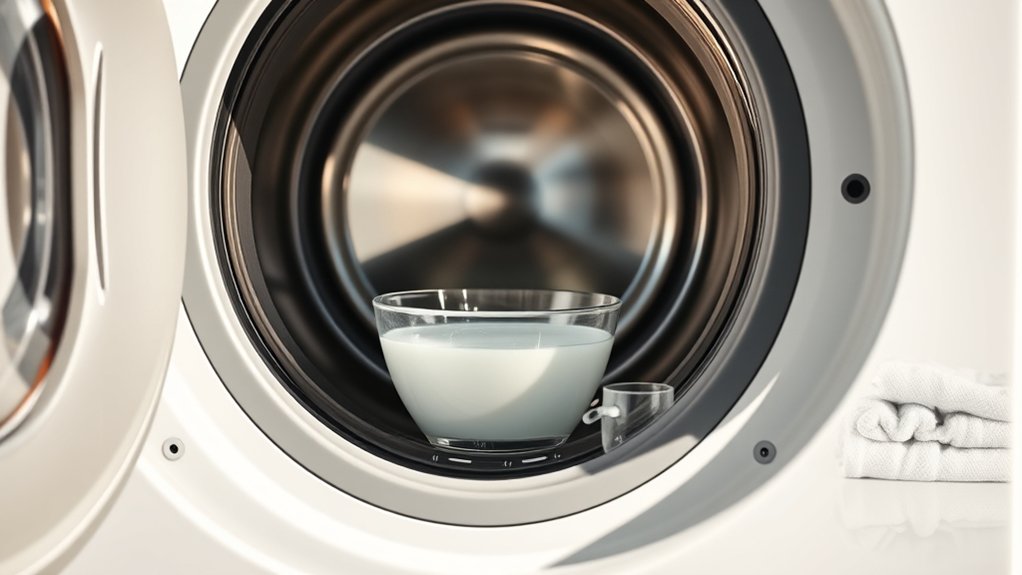
To sanitize your washing machine with vinegar, start by mixing one cup of vinegar with one cup of water.
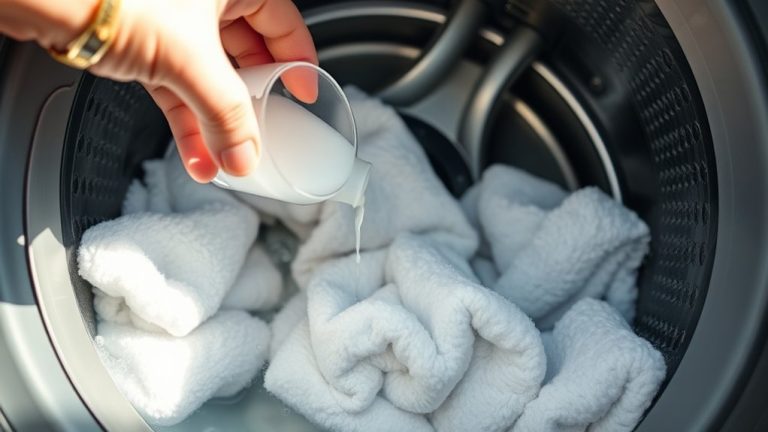
Then, run a full hot wash cycle on an empty machine. Vinegar works great because it dissolves mineral deposits and neutralizes odors, which helps get rid of bacteria and buildup.
After that, just follow up with a normal rinse cycle to wash away any leftover residue.
This step helps keep your machine fresh and clean. Easy, right?
Vinegar Sanitizing Process
Sanitize your washing machine by combining one cup of vinegar with one cup of water inside the drum and running the hottest water setting through a full wash cycle.
Make certain the washer is completely empty to maximize the disinfecting effect of vinegar during the wash cycle.
After this, run a second empty wash cycle with hot water to rinse away any residual vinegar. This process dissolves mineral deposits and neutralizes odors effectively.
For best results, follow these steps:
- Use the hottest water setting to enhance vinegar’s disinfecting properties.
- Perform this vinegar wash cycle monthly or after every 30 wash cycles.
- Confirm no laundry is present to allow full contact with the drum surfaces.
This vinegar sanitizing process maintains your machine’s hygiene efficiently.
It’s a simple step that keeps things fresh and clean inside your washer.
Benefits Of Vinegar
Using vinegar in your washing machine offers multiple benefits beyond basic cleaning.
Vinegar acts as a natural disinfectant, effectively eliminating bacteria and mold buildup that can compromise your machine’s hygiene. When you add one cup of vinegar to a hot water cycle, it dissolves stubborn mineral deposits, preventing scaling and improving machine efficiency.
This process also neutralizes unpleasant odors, ensuring fresher laundry. Regular vinegar sanitization inhibits detergent residue and mildew accumulation, which can cause malfunctions or foul smells.
Vinegar is safe for most washing machines and won’t cause damage, making it an ideal, eco-friendly disinfectant.
To maximize these benefits, combine one cup of vinegar with one cup of water and run a full hot wash cycle, followed by a rinse. This ensures thorough cleaning and residue removal.
It’s a simple trick that keeps your machine fresh and running smoothly.
How to Sanitize Your Washing Machine With Bleach Safely
Although bleach is a powerful disinfectant, you should guarantee your washing machine is empty before adding one cup of chlorine bleach directly to the drum.
To sanitize your washing machine effectively, select the hottest water temperature and run a full wash cycle. This process kills bacteria and removes odors.
After the cycle, inspect seals and gaskets for buildup and treat stubborn spots with a diluted bleach solution if necessary.
Finally, run an additional rinse cycle with plain water to eliminate any bleach residue, preventing damage or irritation.
Always consult your washing machine’s manual to confirm bleach compatibility. Use caution handling bleach to avoid skin and respiratory irritation.
And be sure to avoid mixing bleach with other cleaners to prevent hazardous fumes.
How to Sanitize Your Washing Machine With Affresh Tablets
To sanitize your washing machine with Affresh tablets, first make sure the drum is completely empty.
Then, just pop a tablet inside.
Next, select the hottest water setting on your machine and run a full cycle. This helps dissolve the tablet and gets rid of any residue.
Once the cycle is finished, grab a microfiber cloth and wipe down the drum and door.
This way, you’ll have a complete, fresh clean!
Preparing Washer For Cleaning
Before you start cleaning, make sure your washer is completely empty to guarantee the Affresh tablet works effectively. To prepare your machine for the best results, follow these steps carefully.
First, remove any laundry or items from the drum to avoid interference.
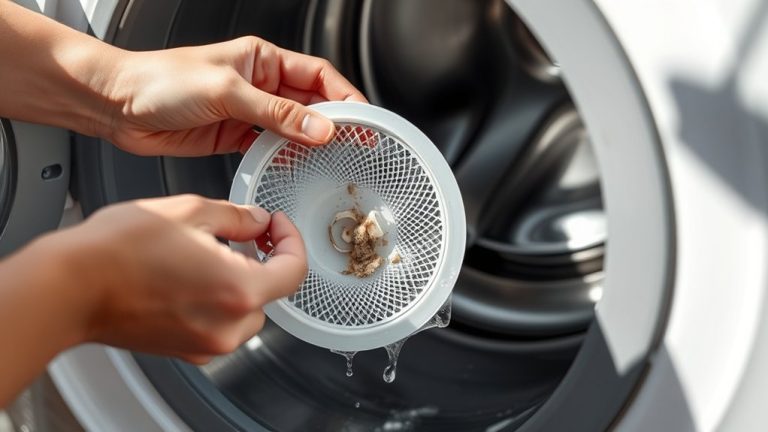
Next, check and clean the detergent dispenser. This helps prevent buildup that might reduce the tablet’s effectiveness.
Then, set your washer to the hottest water setting available to maximize the dissolving power of the Affresh tablet.
When you’re ready, place one Affresh tablet directly into the drum and run a full wash cycle. This process will thoroughly clean your washing machine by breaking down residue and odors.
You’ll end up with a fresh and sanitized environment for your laundry.
Using Affresh Tablets
Sanitize your washing machine effectively by placing one Affresh tablet directly into the empty drum and selecting the hottest water setting for a full wash cycle. Affresh tablets dissolve quickly, targeting odor-causing residues and buildup to guarantee a clean washing machine.
Running the cycle empty prevents interference from laundry, which helps optimize disinfection. After the cycle, wipe the drum with a microfiber cloth to remove any residue. It’s a simple step that keeps your machine fresh and clean.
Use Affresh tablets monthly or every 30 cycles to maintain a disinfected machine. Staying consistent with this routine will keep your washer in great shape for the long haul.
| Step | Action | Purpose |
|---|---|---|
| 1 | Place Affresh tablet in drum | Initiate cleaning |
| 2 | Select hottest water cycle | Maximize tablet effectiveness |
| 3 | Run full wash cycle | Remove buildup and odors |
| 4 | Wipe drum with microfiber cloth | Remove residue |
| 5 | Repeat monthly/30 cycles | Maintain clean washing machine |
Post-Cleaning Maintenance Steps
After completing the cleaning cycle with an Affresh tablet, focus on thorough post-cleaning maintenance to keep your washing machine functioning efficiently. Proper post-cleaning maintenance guarantees that residues are fully removed, preventing buildup and odors.
To disinfect washing machine surfaces effectively, follow these essential steps:
- Wipe the drum and gasket with a microfiber cloth to remove any leftover tablet residue.
- Leave the washer door open for several hours to allow complete drying and inhibit mold growth.
- Schedule the sanitizing process with Affresh tablets monthly or every 30 wash cycles to maintain peak hygiene.
These post-cleaning maintenance steps help sustain the washing machine’s performance and longevity by preventing residue accumulation after each cleaning cycle.
It’s a simple routine that really pays off in the long run.
Tips to Prevent Odors and Buildup Between Cleaning Cycles
Although you mightn’t notice it immediately, leaving your washing machine door or lid open between cycles greatly reduces moisture buildup that fosters mold and mildew growth. This practice improves air circulation, preventing odors from developing inside the drum and door seal.
Promptly remove wet laundry after each wash to minimize dampness that encourages odor formation. Regularly wipe the door seal and rubber gaskets with a damp cloth to eliminate trapped moisture and detergent residue.
Monthly, run a hot water cycle without laundry to dissolve accumulated detergent buildup and neutralize odors. Also, clean detergent dispensers monthly to prevent residue buildup, which can contribute to foul smells.
Following these steps consistently will keep your washing machine fresh and odor-free between cleaning cycles. It’s an easy routine that really makes a difference!
Signs Your Washing Machine Needs Professional Help
A washing machine that repeatedly leaves clothes smelling foul, makes unusual noises, or leaks water signals that it may require professional repair.
Even if you clean your washing machine regularly, persistent issues often mean there’s an underlying mechanical problem that needs expert attention. Catching these signs early can save you from costly damage down the line.
Here’s what to watch out for:
- Consistent foul odors after cleaning your washing machine, which usually means there’s mold inside or drainage problems.
- Unusual grinding or banging sounds while it’s running, often a sign of worn bearings or the drum being out of alignment.
- Water leaks or pooling around the base, typically caused by faulty seals or hoses that need a professional check.
If you notice any of these symptoms, it’s best to stop using your machine and call a technician right away. They can diagnose the issue and fix mechanical problems before things get worse.
Frequently Asked Questions
Can I Clean My Washing Machine Without Unplugging It?
You can clean your washing machine without unplugging it, but you have to follow strict safety precautions. Use gentle cleaning methods like wiping with a damp cloth. Just be sure to avoid getting water near any electrical components.
When doing maintenance, always make sure the machine is in a safe state. Never apply liquid directly to the wiring.
If you want to do a deep clean, unplugging is still the safest way to go. This helps prevent any risk of shock.
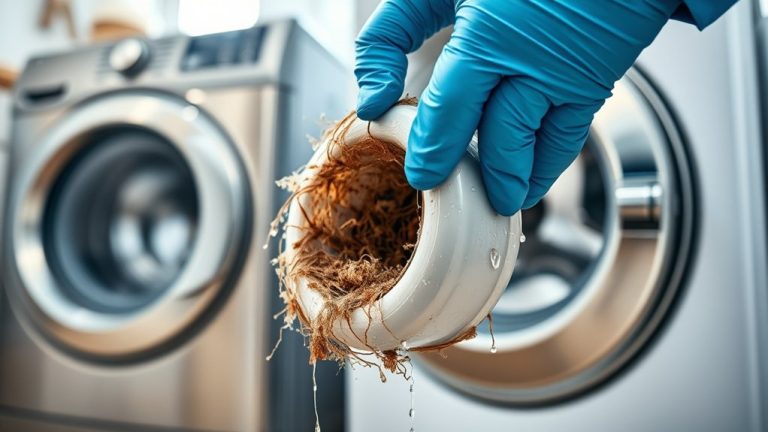
What Should I Do if My Washing Machine Filter Is Missing?
If you think skipping your washing machine filter is a brilliant shortcut, think again. Without it, you risk clogs and damage.
First, check your owner’s manual for part specifics. If no filter alternatives exist, contact customer support. Purchase the correct replacement to guarantee a proper fit.
Follow maintenance tips by regularly cleaning the new filter. Use these troubleshooting steps to prevent costly repairs and keep your machine running efficiently.
Taking care of the filter really pays off in the long run!
Is It Safe to Use Homemade Cleaning Solutions Regularly?
Yes, you can use homemade cleaners regularly, but you should address safety concerns first.
Vinegar and baking soda are effective and safe for most machines. They offer natural deodorizing and stain removal without causing damage.
However, always compare their effectiveness to commercial disinfectants when dealing with tough buildup.
Check your machine’s manual to avoid compatibility issues. Proper use guarantees homemade cleaners maintain cleanliness without risking mechanical harm or voiding warranties.
How Long Should I Leave the Door Open After Cleaning?
You should leave the washing machine door open for at least 1-2 hours after cleaning to guarantee proper door hygiene and moisture control. This duration promotes adequate air circulation, helping evaporate residual moisture that fosters mold and mildew growth.
If you’re in a humid environment, it’s a good idea to leave it open for several hours. This extra time really helps the machine dry out completely.
Doing this regularly not only keeps your machine smelling fresh but also helps it last longer.
It’s a simple step that makes a big difference!
Can Washing Machine Cleaning Prevent Mold on Clothes?
Keeping your washing machine clean is the first line of defense against mold on clothes. Don’t let the mold get a foot in the door.
Regular cleaning every 30 washes, combined with proper detergent choices, plays an essential role in mold prevention.
Use vinegar or specialized products during hot cycles to eliminate mold spores.
Also, clean rubber gaskets thoroughly since moisture tends to linger there. This helps you avoid musty odors and stops mold from transferring onto your laundry.
Conclusion
Keeping your washing machine clean and sanitized is like giving it a fresh breath of air. It guarantees every load comes out spotless and your appliance runs smoothly. By following the precise steps for cleaning and disinfecting, you’ll prevent buildup, odors, and potential malfunctions.
Treat your machine with regular care, and it’ll reward you with reliable performance. Remember, a well-maintained washer is the silent hero behind your freshest clothes.