How To Clean A Whirlpool Washing Machine – Step By Step Guide
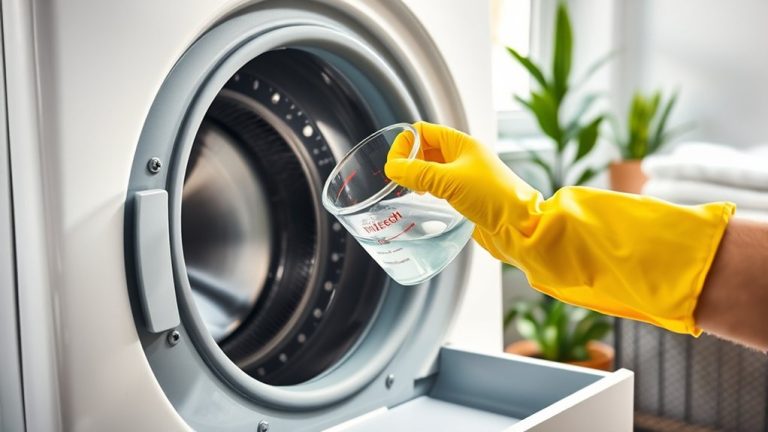
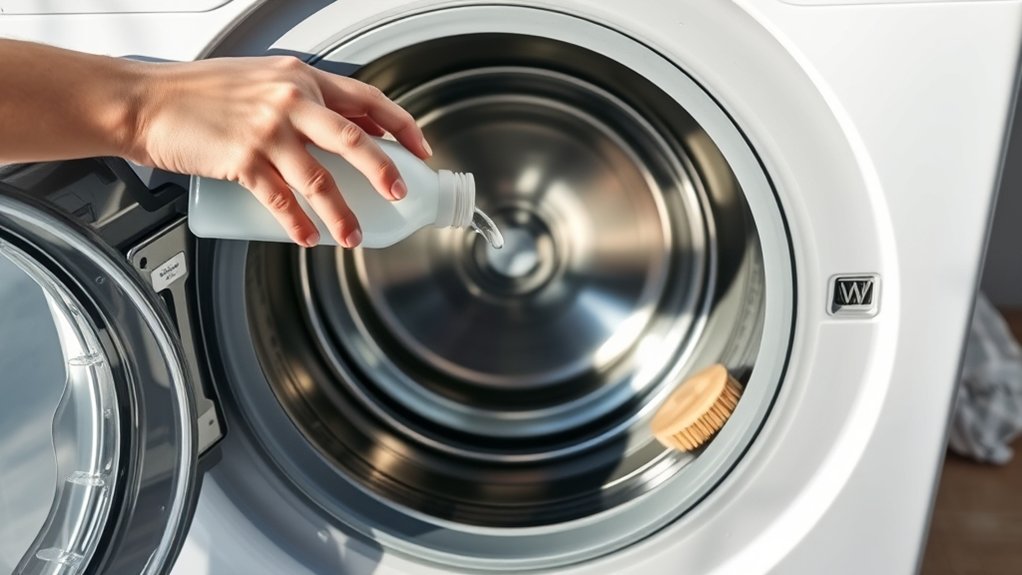
To clean your Whirlpool washing machine, start by emptying the drum and removing leftover detergent from the dispenser. Use an Affresh tablet in the empty drum, select the hottest water cycle or the Clean Washer setting, and run it.
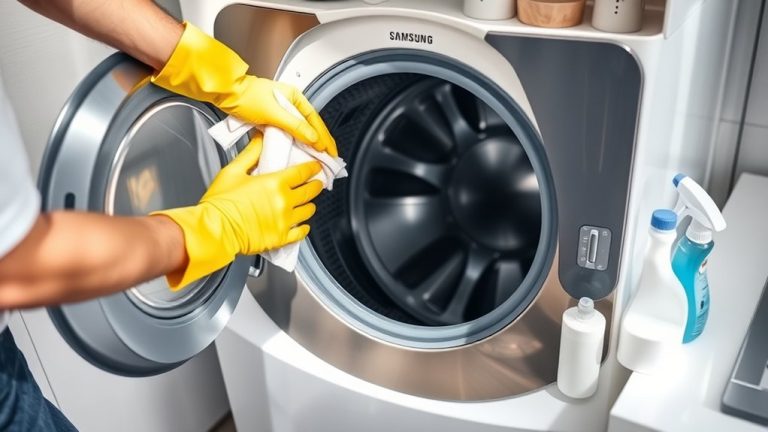
Next, clean the rubber door gasket with mild detergent to remove mold and wipe it dry. Soak and scrub dispenser parts in warm water, then dry them thoroughly.
Keep the door ajar after use to prevent odors. For detailed maintenance steps and prevention tips, continue exploring this guide.
Why Clean Your Whirlpool Washer Regularly
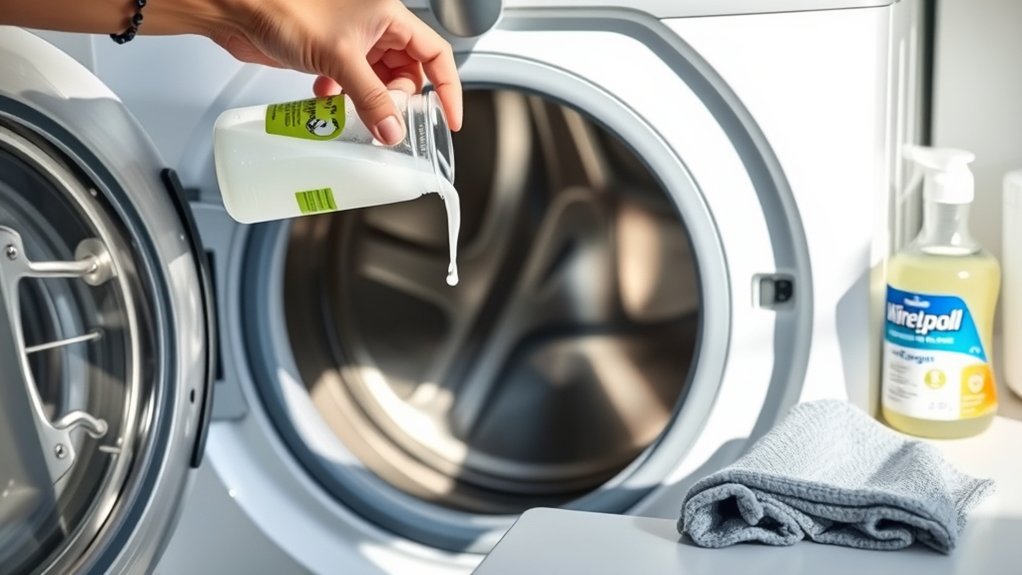
Maintaining your Whirlpool washer through regular cleaning prevents the accumulation of dirt, grime, and detergent residue that can hinder its performance. You need to establish a cleaning routine to remove odor-causing residues that thrive in the damp environment inside the machine.
Failing to do so may result in unpleasant smells transferring to your laundry and promote mildew growth. Regular cleaning also guarantees the washer runs efficiently, which helps reduce energy consumption and operational costs.
Neglecting cleaning can cause odors and mildew, while regular upkeep boosts efficiency and lowers energy costs.
By consistently eliminating buildup, you extend the appliance’s lifespan and minimize the risk of costly repairs. Incorporate monthly maintenance into your regimen to maintain peak washing results and preserve your washer’s condition.
This proactive approach keeps your Whirlpool washer functioning at top efficiency and assures fresh-smelling clothes after every cycle. It’s a simple step that really pays off in the long run. So, why not make it part of your routine?
How Often to Clean Your Whirlpool Washer
You should clean your Whirlpool washer at least once a month or every 30 cycles to keep it fresh and free from buildup. This helps prevent any unwanted odors from developing.
If you ever notice a bad smell or see mildew, don’t wait—clean it right away, no matter where you’re in the schedule.
Also, some Whirlpool models come with a handy “Clean Washer” indicator that lets you know exactly when it’s time for a little maintenance. That way, you won’t have to guess!
Cleaning Frequency Guidelines
Cleaning your Whirlpool washing machine at least once a month is crucial to prevent odor and residue buildup.
Follow these cleaning frequency guidelines to maintain peak performance and hygiene. Run a cleaning cycle every 30 washes, especially if your household uses the washer frequently.
If your model includes a “Clean Washer” indicator, start a cleaning cycle as soon as the alert appears.
Hard water conditions might mean you need to clean more often to prevent mineral buildup that can affect how your washer works.
Sticking to this schedule will keep your washer running efficiently and odor-free.
Signs To Clean
How often should you clean your Whirlpool washer? You should clean your front load washing machine at least once a month to prevent residue buildup and odors.
If you see visible mildew or mold inside the drum or gasket, clean it immediately to maintain hygiene.
Also, run the Clean Washer cycle whenever the indicator light turns on or if you detect unpleasant smells.
Hard water areas require more frequent cleaning to avoid mineral deposits.
Regular maintenance every 30 cycles is essential to guarantee peak performance and extend your washer’s lifespan.
By watching out for these signs and acting quickly, you’ll keep your Whirlpool washer efficient and odor-free without unnecessary wear or breakdowns.
It’s all about staying on top of it so your machine keeps running smoothly.
What You Need to Clean Your Whirlpool Washer
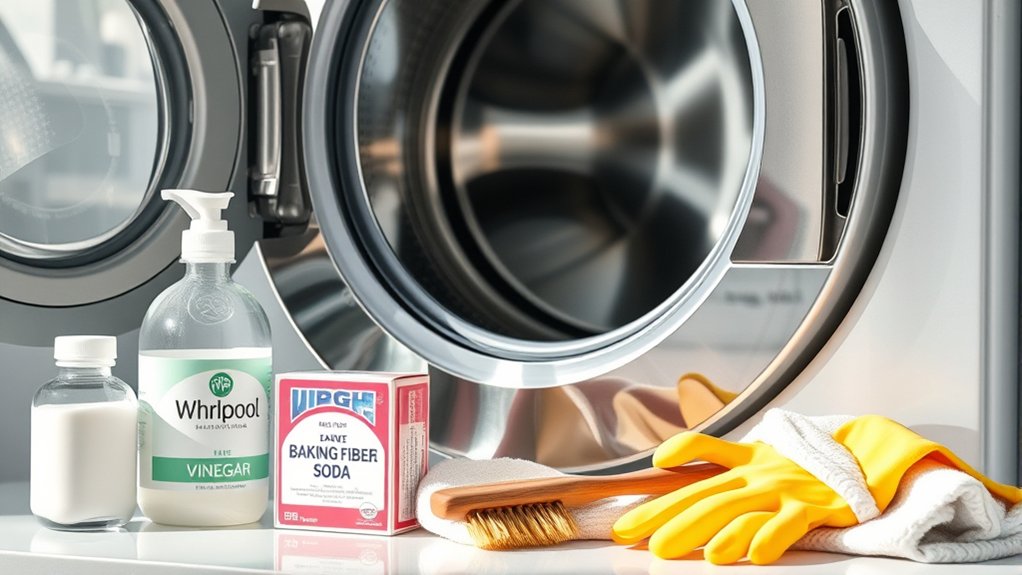
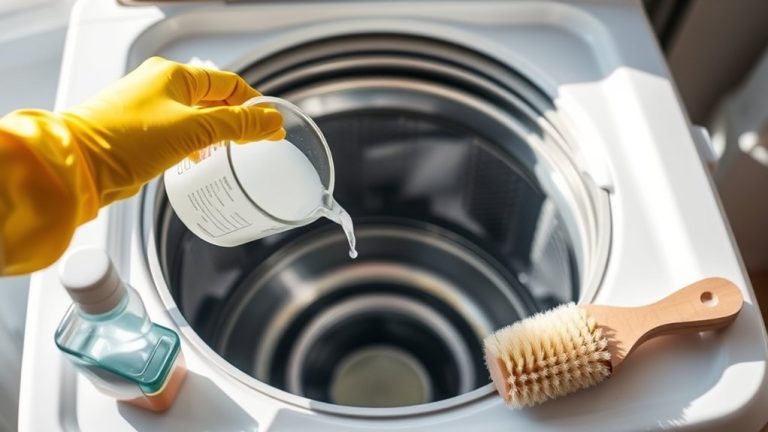
Essential supplies for maintaining your Whirlpool washer include affresh washing machine cleaner tablets, which target odor-causing residues effectively.
To guarantee thorough cleaning of your washer, gather a microfiber cloth for gentle wiping of the door, gasket, and interior surfaces without causing scratches. Use warm water to soak removable parts like the detergent dispenser, helping dissolve buildup efficiently.
Mild detergent can assist in cleaning these components as needed. Moreover, a vacuum or lint brush is useful for clearing airflow areas, particularly in models equipped with TumbleFresh™ Technology.
Confirm that you have access to hot water from a nearby sink, as it enhances the cleaning process by breaking down residues more effectively.
Having these tools ready streamlines the cleaning procedure and keeps your washer running smoothly. It’s a simple way to make sure your machine stays fresh and performs its best.
How to Empty Your Whirlpool Washer Before Cleaning
Before you add any cleaning agents or start a cleaning cycle, make certain your Whirlpool washer is completely empty.
Begin by removing all laundry from the drum to prevent interference during cleaning. Next, carefully inspect the detergent dispenser and remove any leftover detergent or fabric softener to avoid residue buildup.
Start by emptying the drum, then clear out any leftover detergent or softener from the dispenser.
Take a close look at the rubber gasket around the door for trapped debris, lint, or small items, and clear them thoroughly.
Also, check that any load sensors or related features are free from obstruction.
Once you’ve emptied the washer, cleaned the detergent dispenser, and cleared the rubber gasket, you’re good to go.
Now you can add your chosen cleaning agent.
This way, the cleaning cycle runs effectively, and your washer stays in prime condition. Easy, right?
Using Affresh Tablets to Clean Your Whirlpool Washer
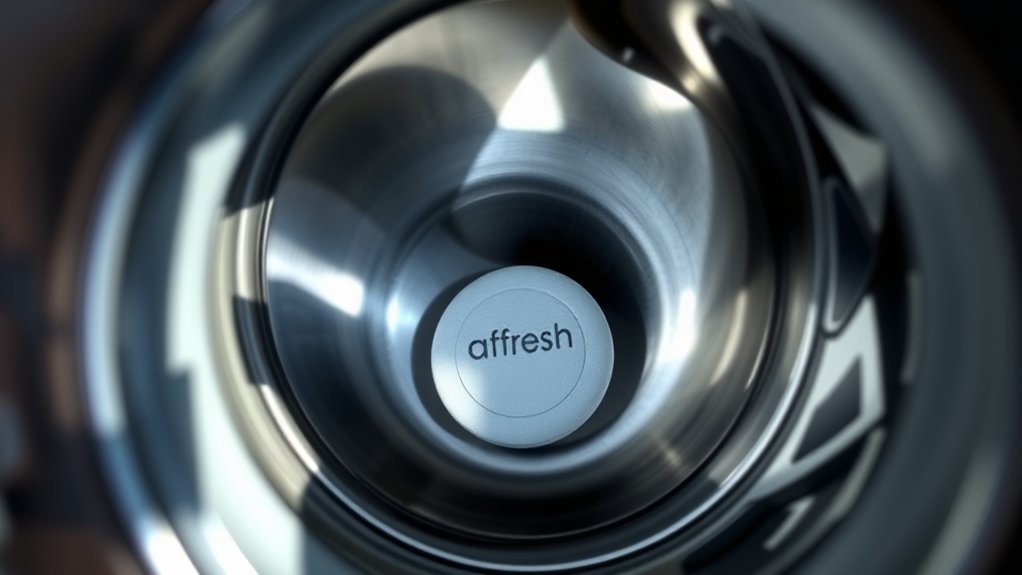
Place one Affresh tablet directly into the washer drum to start the cleaning process. Make sure the washer is empty before you begin.
Then, select the Clean Washer cycle or set the highest water level with the hottest temperature. This helps the Affresh tablet dissolve completely, so it can target odor-causing residues inside the tub, hoses, and other parts.
Using Affresh tablets regularly, ideally once a month, keeps your washer performing at its best and smelling fresh. It’s especially helpful if you notice unpleasant odors or have hard water.
Always check the expiration date on your cleaning products before use to make sure they work well. Avoid adding laundry during this cycle so the tablet can clean deeply.
Choosing the Best Wash Cycle for Cleaning Your Washer
If your Whirlpool washer has a “Clean Washer” cycle, go ahead and choose that one—it’s designed to tackle residue and odors really well.
But if your model doesn’t have that option, no worries! Just set your machine to the hottest water temperature and the highest water level to get the best cleaning power.
Make sure to run the cycle empty, though.
And don’t forget to follow any instructions on your cleaner carefully to get the best results.
It’s pretty simple, and your washer will thank you for it!
Recommended Cleaning Cycles
Three key cleaning cycle options can help you maintain your Whirlpool washing machine’s performance.
First, use the Clean Washer cycle if your model has one. It employs high water levels and heat to effectively remove residue and odors.
If that cycle isn’t available, just select the hottest water setting combined with a heavy-duty or normal wash cycle.
Always add a specialized cleaner like affresh during these cycles to get rid of odor-causing buildup. It really helps maximize the cleaning power.
Be sure to check your user manual regularly to see the recommended cleaning cycles for your specific model.
Also, if your washer includes features like EcoBoost or TumbleFresh, follow the cleaning guidelines for those to keep everything working as it should.
These steps will help you clean your machine thoroughly and keep it running longer.
Water Temperature Selection
Although many factors influence cleaning effectiveness, selecting the hottest water temperature available is essential for thoroughly dissolving detergent residues and eliminating odors in your Whirlpool washing machine.
Proper water temperature selection guarantees cleaning agents like Affresh work efficiently, penetrating grime and buildup.
To clean a Whirlpool washer effectively, always use the Clean Washer cycle or an equivalent high-temperature setting for disinfection.
Select hot water to reduce mold, mildew, and bacteria growth. Running maintenance cycles regularly with hot water helps prevent odors.
Avoid cold or warm settings since they may leave residues or allow microbial growth.
Choosing the right water temperature makes a big difference in keeping your washer fresh and clean.
How to Clean the Door Gasket and Remove Mold
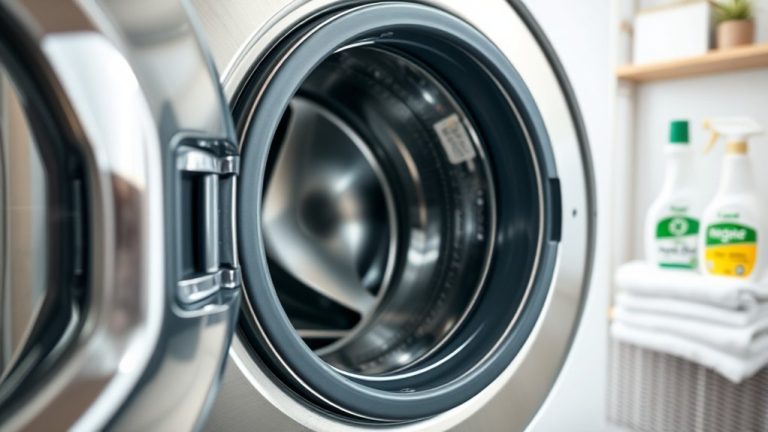
A thorough cleaning of the door gasket is essential since moisture and debris tend to accumulate within its folds. This creates perfect conditions for mold growth.
Start by pulling back the rubber door gasket to expose these folds.
Begin by gently pulling back the rubber gasket to reveal hidden folds where debris accumulates.
Use a mild detergent or a washer-safe mold cleaner to scrub the gasket thoroughly. Focus on areas prone to mildew growth.
After scrubbing, wipe away all residues and moisture using a clean cloth, including the interior door window.
Make sure you dry the gasket and drum completely to prevent future mold development. Leave the door ajar to enhance airflow.
Regularly inspect and clean the door gasket after each wash to maintain ideal conditions and prevent unpleasant odors caused by mildew growth.
Cleaning the Detergent Dispenser and Removable Parts
Start by carefully removing the detergent dispenser from your Whirlpool washer.
Once you have it out, soak all the removable parts in warm water to help loosen any buildup.
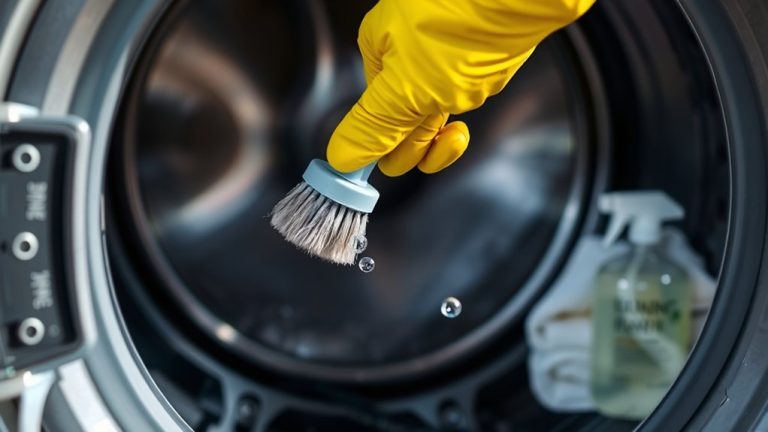
After they’ve had some time to soak, use a soft brush to clean each piece thoroughly.
Don’t forget to wipe down and dry the dispenser itself, along with the surrounding area.
This step is important to prevent any residue or mold from forming.
Once everything is clean and dry, you can go ahead and put the dispenser back in place.
Removing Detergent Dispenser
Remove the detergent dispenser from your Whirlpool washing machine by pressing the release tab or following your model’s specific instructions. This step is essential for effective cleaning and maintaining your washer’s needs.
Carefully extract the dispenser drawer, making sure you don’t damage any components.
Once removed, inspect the detergent dispenser for buildup or residue. Focus your cleaning efforts on these key points:
- Detergent compartments where soap accumulates
- Fabric softener slots prone to clogging
- Small crevices and corners that trap debris
- The release mechanism to guarantee smooth operation
Thorough cleaning prevents clogs and promotes peak washer performance.
Handle the dispenser gently to avoid damage, preparing it for the next cleaning steps.
Soaking Removable Components
Two key steps guarantee your detergent dispenser and other removable parts stay free of residue and buildup: soaking and scrubbing. Start by removing the detergent dispenser, then soak it in warm, soapy water for 15 to 30 minutes. This loosens detergent and fabric softener residues.
After soaking, scrub all compartments with a soft brush, making sure you get everything nice and clean. Rinse under warm running water to remove any soap traces before putting it back in. Regular monthly cleaning helps prevent clogs and odors, keeping your washer running at its best.
| Step | Action |
|---|---|
| 1 | Remove detergent dispenser |
| 2 | Soak in warm, soapy water |
| 3 | Scrub compartments with brush |
| 4 | Rinse thoroughly |
| 5 | Reinsert after drying |
Wiping And Drying Parts
After soaking and scrubbing the detergent dispenser, rinse it thoroughly under warm water to get rid of all the residue.
Then, wipe the interior compartment with a damp cloth to clean off any detergent buildup and leftover debris.
It’s a good idea to use a microfiber cloth for wiping the rubber door gasket, especially around the folds where moisture and mold like to hide.
Make sure to dry all the parts completely before putting them back into the washer. This helps prevent any odors and stops moisture from building up inside.
- Wipe the detergent compartment with a damp cloth
- Clean the dispenser exterior and interior thoroughly
- Use a microfiber cloth to reach gasket folds
- Verify all parts are fully dry before reassembly
Tips to Prevent Odors and Keep Your Whirlpool Washer Fresh
Keeping your Whirlpool washing machine odor-free starts with proper airflow and regular maintenance. After each load, leave the washer door ajar to help keep moisture from accumulating. This prevents mildew and odors from developing.
To clean a front load washer effectively, wipe the rubber door gasket and detergent dispenser monthly. This removes residue that causes smells.
Wipe the rubber door gasket and detergent dispenser monthly to remove residue and prevent odors.
Running a hot water cycle with a washer-safe cleaner like affresh routinely helps eliminate detergent buildup and maintain freshness.
If your Whirlpool model includes the FreshFlow Vent System, use it for added antimicrobial protection against odors.
Always unload the washer promptly after cycles to minimize dampness and mold growth.
Following these steps guarantees your Whirlpool washer stays smelling fresh and functions at peak performance over time.
When to Call a Professional for Washer Maintenance
Although regular cleaning helps keep your Whirlpool washer performing well, some issues need a professional’s touch. When routine maintenance and cleaning don’t fix the problem, it’s a good idea to call a technician to avoid further damage or costly repairs.
Think about reaching out to a professional if you notice persistent odors or mold that cleaning cycles just won’t get rid of.
Also, watch out for error codes or unusual noises while your washer is running. Water leaks or pooling around the machine are another clear sign something’s up.
If the electronic controls or features start acting up, that’s another reason to get expert help. A professional can inspect and find hidden problems like faulty hoses, seals, or electrical parts.
Getting a pro to check things out early means your washer will run smoothly, last longer, and stay hygienic.
Frequently Asked Questions
Can I Use Bleach Instead of Affresh Tablets to Clean My Washer?
You can use bleach instead of affresh tablets as a bleach alternative, but only occasionally to avoid damaging rubber components. For effective washer maintenance, dilute bleach properly and run a separate rinse cycle to prevent residue buildup.
Affresh tablets target hard-to-reach areas and are better for regular cleaning frequency.
It’s a good idea to rely on bleach sparingly, saving it for deep cleans. Using affresh tablets consistently helps maintain your washer’s performance and longevity.
Is It Safe to Run a Cleaning Cycle With Clothes Inside?
Think of running a cleaning cycle with clothes inside like trying to wash a car while it’s still loaded with luggage. It just won’t work well.
You shouldn’t run it this way because clothes block cleaning agents, reducing their ability to tackle detergent buildup and prevent odors.
For maximum cleaning frequency and efficiency, always empty the drum first.
This guarantees your Whirlpool washer stays fresh and functions properly. It also helps avoid lingering odors caused by trapped residue.
How Do I Clean the Exterior of My Whirlpool Washing Machine?
To clean the exterior of your Whirlpool washing machine, use mild cleaning products and a damp cloth. Avoid abrasive cleaners since they can damage the finish.
When wiping the control panel, be careful to prevent moisture from getting inside.
For the door and glass, a microfiber cloth works best to avoid streaks.
It’s also a good idea to regularly remove dust and lint from around the base and behind the machine. This helps improve airflow and keeps odors from building up.
If your machine has a stainless steel finish, applying a stainless steel cleaner will help maintain its shine.
Easy enough, right? Just a little regular care goes a long way!
Can Hard Water Affect the Cleaning Effectiveness of the Washer?
Yes, hard water can affect your washer’s cleaning effectiveness by causing mineral buildup inside the drum and pipes.
This buildup leads to hard water stains and reduces detergent interaction. As a result, detergents don’t dissolve fully and can’t clean your clothes properly.
To keep your washer working well, you should regularly clean the machine with products made to dissolve mineral deposits.
Using a water softener also helps reduce hard water stains. Plus, it improves how well your detergent works.
Will Cleaning My Washer Improve Its Energy Efficiency?
Want to achieve energy savings effortlessly? Cleaning your washer regularly is key. By removing residue and mold, you guarantee ideal water and detergent flow, which directly improves your machine’s performance boost.
Following maintenance tips like running cleaning cycles and wiping seals prevents buildup that makes your washer work harder.
This efficiency reduces energy consumption, lowering your utility bills while extending your appliance’s lifespan.
Conclusion
Think of your Whirlpool washer like a garden. Neglect it, and mold and odors will overgrow, choking its performance. Regular cleaning using Affresh tablets and wiping the gasket acts like pruning, keeping it healthy and efficient.
Just like a well-tended garden blooms effortlessly, a maintained washer runs smoothly and lasts longer. Stick to the schedule and prevent buildup. Your machine will stay fresh and reliable, saving you costly repairs down the line.