Can You Dry Clean Silk – Safe Cleaning Guide
You should dry clean silk when the label says “Dry Clean Only,” to protect delicate fibers, embellishments, and colorfastness. Dry cleaning works best for vintage, heavily stained, or intricately detailed silk that home washing might damage.
For sturdier silk, gentle hand washing with cold water and silk-specific detergent is often safe. Avoid tumble drying and direct sunlight to keep silk vibrant and soft.
Keep following to understand how to care for silk at home and maintain its quality.
When Should You Dry Clean Your Silk Garments?
When you see a silk garment labeled “Dry Clean Only,” it’s usually best to follow that advice to avoid damage, especially if the item has intricate embellishments, delicate linings, or metallic threads.
The silk fabric composition in such garments often requires professional care to maintain its integrity. Dry cleaning helps preserve the silk colorfastness, preventing fading or bleeding that can occur with improper washing.
Silk’s delicate composition demands professional care to maintain its color and prevent fading or bleeding.
If your silk piece is heavily stained or vintage, dry cleaning ensures deeper cleaning without compromising texture or appearance.
While some silks tolerate gentle hand washing, the safest choice for valuable or complex silk garments is dry cleaning. Always check the care label carefully.
When in doubt, opting for professional cleaning safeguards your silk’s longevity and maintains its luxurious look.
It’s better to be safe and keep your silk looking beautiful for longer.
How To Tell If Your Silk Can Be Washed At Home
Although many silk garments carry a “Dry Clean Only” label, you can often wash some of them at home by carefully evaluating their fabric type, construction, and care instructions. First, check the care label for any specific washing guidance like “Hand Wash Only” or “Machine Wash Gentle.”
Next, consider the silk fiber types; sturdier weaves like habotai tend to tolerate washing better than delicate chiffons.
Finally, test dye stability by dabbing a hidden area with a damp cotton swab. If color bleeds, avoid home washing.
Also, examine embellishments or linings since heavily decorated silks usually need professional care.
Following these steps helps you decide if your silk garment can handle gentle home washing without damage.
How To Hand Wash Silk Safely
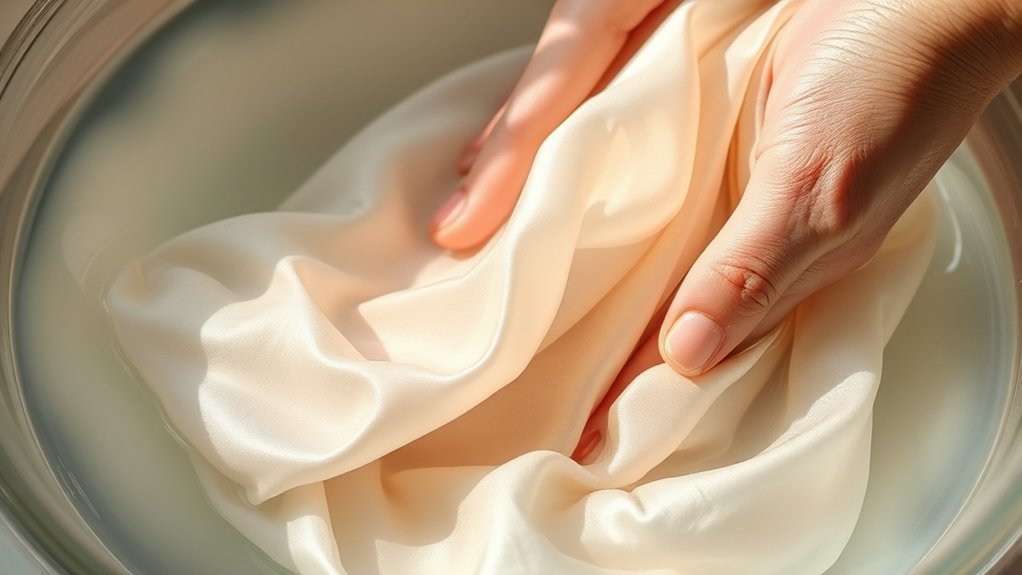
To hand wash silk safely, begin by filling a basin with cold water and adding a gentle, silk-specific detergent. It’s best to avoid anything harsh to keep those delicate fibers happy.
Next, gently soak your garment and rinse it carefully—try not to wring or rub the fabric, as that can cause damage. Just be kind and gentle with the silk.
When you’re done rinsing, press out the excess water softly without twisting.
Then, lay the silk flat to air dry in the shade. This way, you’ll help preserve its beautiful quality and softness.
Preparing Silk For Washing
Before washing your silk garment, you’ll want to verify its color won’t bleed by testing a small, hidden area with a damp cotton swab. This step is essential, especially for pieces with intricate silk dyeing or delicate silk embroidery.
Next, prepare your washing setup carefully. Fill a basin with cool water (below 30°C/86°F) and add a gentle detergent designed for silk.
Submerge the garment gently, swirling softly for 3-5 minutes. Avoid rubbing or wringing to preserve fabric integrity.
Rinse thoroughly in cold water until all detergent is removed, handling the silk delicately.
These preparation steps guarantee your silk maintains its color and texture. This way, you protect the craftsmanship behind the dyeing and embroidery.
Gentle Washing Techniques
Once you’ve confirmed your silk garment won’t bleed and have prepared your washing setup, it’s time to wash the fabric with care. Use cold water and a mild, silk-specific detergent to gently hand wash. This is especially important for delicate silk dyeing and silk embroidery.
Soak the garment for 3-5 minutes, then softly swish it without rubbing to avoid damaging fibers or embroidery. Rinse thoroughly with cold water to remove all detergent. This helps prevent any fiber damage.
Never wring or twist your silk. Instead, press excess water out by rolling the garment in a clean towel.
Finally, lay the silk flat or hang it in the shade to air dry. Keep it away from direct sunlight or heat sources because those can fade silk dyeing and weaken embroidery threads.
Post-Wash Care Steps
While hand washing silk requires careful attention, following proper post-wash care steps guarantees your garment maintains its beauty and integrity. To protect the durability of silk fabric and enhance color preservation, handle your silk with care after washing.
First, gently pat the silk with a clean towel to absorb excess water. Avoid any wringing or twisting because that can damage the fibers.
Next, lay the garment flat on a dry towel or drying rack in a shaded area. Keep it out of direct sunlight since that may fade the colors.
Finally, allow the silk to air dry completely before storing or wearing it. This helps maintain its natural texture and vibrant hues.
Is Machine Washing Silk Safe?
How safe is it to machine wash silk? Well, it really depends on the type of silk fabric and how colorfast the dye is. You should only machine wash silk if the care label specifically says it’s okay.
Always pick a delicate or silk-specific cycle at 30°C or below. Using a mesh laundry bag helps reduce friction and stress on the fibers.
Avoid regular detergents, bleach, or fabric softeners. Instead, go for gentle detergents that are silk-friendly. After washing, air dry your silk clothes away from direct sunlight. This prevents shrinkage, fading, or damage to the fibers.
| Factor | Recommendation |
|---|---|
| Care Label | Must indicate machine wash safe |
| Cycle | Delicate or silk-specific |
| Temperature | Cold (30°C or below) |
| Detergent | Use silk-friendly, gentle types |
| Drying | Air dry away from direct sunlight |
How To Remove Stains From Silk Without Dry Cleaning
If you prefer to avoid dry cleaning, you can effectively remove stains from silk at home by acting quickly and carefully. Begin by testing any cleaning solution on a hidden area to protect delicate silk dyeing and silk embroidery. Follow these steps:
Avoid dry cleaning by promptly testing and carefully treating stains on silk at home to protect its delicate details.
First, dab the stain gently with cold water mixed with a few drops of gentle detergent or white vinegar. Never rub, as this can damage the fibers.
For stubborn stains, apply diluted vinegar or a baking soda paste, then rinse thoroughly with cold water.
Blot with a clean, damp cloth and lay the silk flat to dry in the shade. Avoid direct sunlight to prevent fading.
This careful approach preserves the fabric’s vibrant colors and intricate embroidery without risking damage. Give it a try, and your silk will look great without the dry cleaner!
How To Dry Silk Without Ruining It
To dry silk without ruining it, start by gently pressing out excess water using a clean towel. You don’t want to wring it out because that can damage the delicate fibers.
Then, go for air drying — either lay the fabric flat in the shade or hang it somewhere with good airflow. This helps keep its shape and color intact.
Just make sure to avoid tumble drying or putting it in direct sunlight, as those can really harm the silk.
Preparing Silk For Drying
Where should you begin when drying silk to guarantee it stays in pristine condition? Start by preparing the fabric carefully to protect its delicate fibers, silk embroidery, and dye preservation. Follow these steps:
- Lay your silk flat on a clean, dry towel. This helps absorb excess moisture without stretching or distorting the fabric.
- Gently reshape the silk while it’s damp to maintain its original fit, preventing creases or wrinkles.
- Place the silk in a shaded, well-ventilated area, away from direct sunlight, to avoid fading and fiber damage.
Avoid hanging silk or using tumble dryers, as these can cause stretching, shrinkage, and weaken fibers. Preparing your silk properly ensures it dries safely and retains its beauty and texture.
Air Drying Techniques
Once you’ve carefully prepared your silk for drying, the next step is to master air drying techniques that preserve its delicate structure. Lay your silk flat on a clean, dry towel in a shaded area. Avoid direct sunlight to protect the dye and prevent fiber damage.
Gently roll the fabric to remove excess water without wringing. This helps safeguard silk embroidery details. Or, you can hang silk garments on padded or silk-specific hangers in a well-ventilated, shaded spot. This helps avoid wrinkles and deterioration.
Always make sure the silk is fully dry before storing it. That way, you prevent mold and fiber weakening. And remember, avoid tumble dryers since their heat shrinks and damages silk fibers.
| Method | Benefits | Key Precautions |
|---|---|---|
| Flat Drying | Maintains shape, protects embroidery | Avoid direct sunlight |
| Rolling Towel | Removes water gently | Don’t twist or wring |
| Hanging | Prevents wrinkles | Use padded hangers, avoid heat |
Avoiding Common Drying Mistakes
Although silk requires careful handling during drying, you can avoid common mistakes that lead to damage by following a few simple rules. The delicate silk fabric composition and silk dye stability demand gentle care to preserve texture and color.
To dry silk without ruining it:
- Never tumble dry silk; heat causes shrinking, fading, and weakens fibers.
- Air dry flat on a clean towel or hang in shade. Avoid direct sunlight to protect dye stability.
- Don’t use clothes pegs, as they can leave marks or distort the fabric’s shape.
Also, avoid drying in hot, enclosed spaces. Make sure silk is fully dry before storing to prevent mold.
Following these steps will help maintain silk’s quality and extend the life of your garment.
How To Iron Silk For a Smooth, Shiny Finish
To achieve a smooth, shiny finish when ironing silk, you need to take careful precautions to protect the delicate fabric. Different silk fabric types may react uniquely, so always set your iron to the lowest heat setting, ideally around 148°C (300°F), to avoid damage.
Iron silk on the reverse side using a pressing cloth or clean white cotton towel between the iron and fabric to prevent shine marks.
For delicate or heavily wrinkled silk, lightly dampen it before ironing but avoid applying steam directly.
Gently lift and press the iron without dragging to prevent stretching or snagging.
Finally, let the silk cool completely after ironing to set the finish. Following these steps guarantees your silk retains its luxurious smoothness and sheen.
How To Store Silk To Keep It Looking Great
Keeping your silk garments looking their best requires proper storage that protects their delicate fibers. To preserve the silk fiber properties and maintain silk dye stability, you need to be mindful of environmental factors and storage techniques.
Follow these steps: Store silk in a cool, dark, and dry place to prevent fading and fiber deterioration from light exposure. Use breathable garment bags or wrap items in acid-free tissue paper to shield them from dust, insects, and wrinkles.
Hang garments on padded or silk-specific hangers to maintain shape and avoid creases. Ensure they’re clean and fully dry before storing.
Avoid overcrowding to prevent crushing or snagging.
Proper care during storage helps keep your silk vibrant and intact for years. So, take a little extra time with your storage routine—it really pays off!
Frequently Asked Questions
What Solvents Do Dry Cleaners Use for Silk?
Dry cleaners use chemical solvents like perchloroethylene, hydrocarbon, silicone-based, and liquid CO₂ for silk. You’ll want to take into account the environmental impact since some solvents are harsher, while others offer eco-friendlier, gentle cleaning options.
It’s good to know what’s being used on your delicate silk items. Some solvents do a great job without being too tough on the fabric or the planet. So, if you care about that, it’s worth asking your cleaner about their process.
Can Dry Cleaning Affect Silk’s Natural Sheen?
You might be surprised. Dry cleaning can affect silk fiber’s natural luster. When done right, it preserves the sheen beautifully.
But harsh solvents or frequent cleaning risk dulling silk’s delicate glow over time. So, choose carefully.
How Often Should Silk Be Professionally Dry Cleaned?
You should professionally dry clean silk every 4-6 months or when stains appear. Combine this with proper silk stain removal techniques and silk storage tips to maintain your garment’s delicate fibers and natural sheen effectively.
Taking good care of your silk helps keep it looking fresh and beautiful. So, don’t forget to handle it gently and store it properly between cleanings. Doing this will really make a difference in how long your silk lasts.
Is Dry Cleaning Safe for Embellished Silk Garments?
Think of your embellished silk as a fragile garden. Dry cleaning acts like a gentle gardener, preserving embellishments without harsh hand cleaning techniques.
You’ll protect delicate details while keeping your silk vibrant and intact professionally. It’s a safe way to care for your special garment without risking damage.
What Are the Risks of Skipping Dry Cleaning for Silk?
If you skip dry cleaning for silk, you risk color fading and fabric shrinkage. Home washing can weaken fibers and damage delicate details, causing your silk to lose its natural sheen and smooth texture over time.
It’s tempting to just toss silk in the wash, but that can really take a toll on the fabric. Over time, you’ll notice it looking dull and feeling rough instead of soft and luxurious. So, sticking to dry cleaning is definitely worth it if you want to keep your silk looking its best.
Conclusion
When it comes to caring for silk, think of it as handling a delicate treasure. You want to treat it with gentle precision. You can safely wash some silk at home, but always check the label first.
Hand washing and careful stain removal keep your silk looking pristine. If in doubt, dry cleaning is your best friend.
By following these steps, you’ll keep your silk garments shining and smooth. They’ll be ready to wear for years to come.