How To Dry Clean A Suit At Home – Safe Cleaning Method
You can dry clean your suit at home by first inspecting for damage and removing debris from pockets. Pre-treat stains with a pH-neutral detergent and blot gently.
Then, refresh the fabric using a garment steamer, moving steadily to avoid fiber damage. Use home dry cleaning kits exactly as instructed, making sure the fabric is compatible.
After that, air-dry your suit on a sturdy hanger away from heat. For more intricate care and maintenance tips, a little extra guidance can really help keep your suit looking great and lasting longer.
Can You Dry Clean Your Suit at Home?
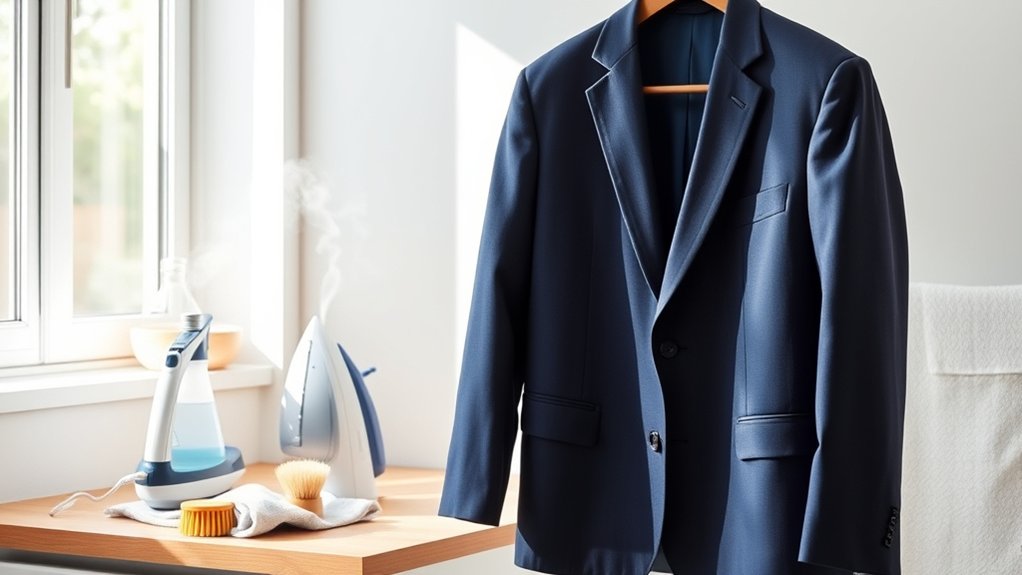
Wondering if you can dry clean your suit at home? Most suits labeled “dry clean only” need professional care because of the delicate fabrics and internal structures involved.
Home dry cleaning kits use chemical-treated cloths with low heat to deodorize and freshen up your suit, but they don’t really do a deep clean.
Gentle steam cleaning is another option that can help remove wrinkles and odors from delicate fabrics like wool and silk. It uses minimal moisture so you don’t damage the fabric.
But if your suit is high-value or heavily soiled, using these methods at home might cause shrinking, warping, or damage to the fabric.
Home methods usually involve milder cleaning chemicals and are best for maintenance rather than a thorough clean.
For the best care, it’s a good idea to rely on professional dry cleaners who know the exact needs of different fabrics and the right cleaning chemicals to use.
Preparing Your Suit: Inspection and Pre-Treatment
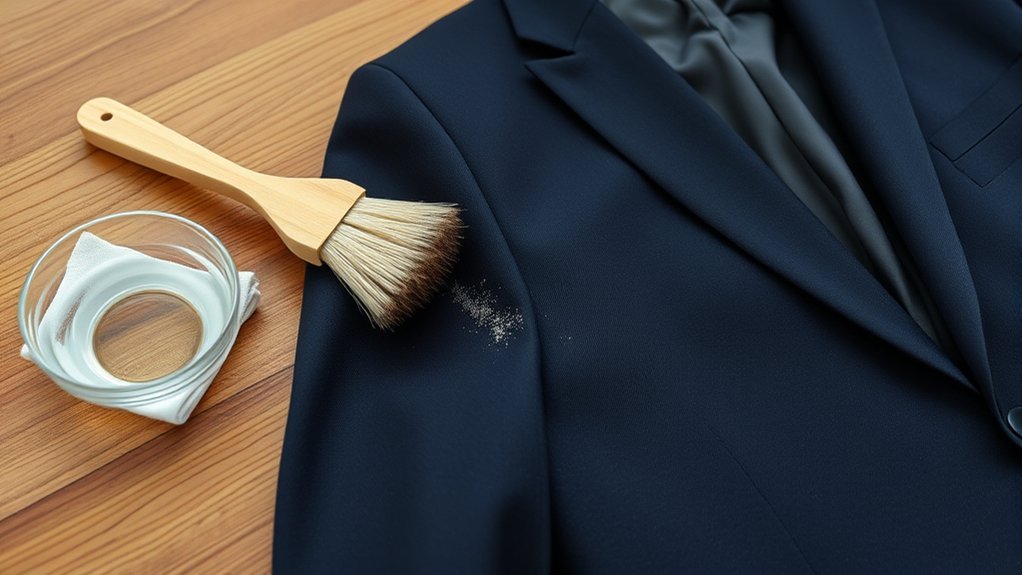
Begin by carefully checking the fabric and seams for any loose threads, missing buttons, or damage that might get worse during cleaning.
Make sure to empty all the pockets too, so no debris or residues end up staining your suit.
After that, if you spot any stains, pre-treat them with a pH-neutral detergent.
Just remember to do a patch test first to make sure the fabric can handle it before you move on.
Inspect Fabric And Seams
Before you begin the cleaning process, thoroughly inspect your suit’s fabric and seams to identify any loose threads, missing buttons, or small tears.
Assess fabric durability by consulting the care label for fiber content and cleaning restrictions. This step guarantees you select an appropriate cleaning method that won’t compromise the material.
Examine seam integrity closely. Weak or damaged seams can worsen during cleaning, so reinforce them with precise stitching before proceeding.
Also, address any loose buttons by securely reattaching them to prevent loss or damage during handling.
Conduct a spot test on an inconspicuous area using water and mild detergent to evaluate fabric sensitivity and avoid adverse reactions.
This meticulous inspection safeguards your suit from further damage and helps preserve its structural and aesthetic quality throughout the home dry cleaning process.
Check Pockets Thoroughly
Because pockets often harbor hidden debris and stains, you should turn your suit inside out and inspect them meticulously. Begin by emptying all contents like coins, tissues, and receipts to prevent staining or fabric distortion during cleaning. Make sure to keep your pockets organized so you don’t overlook any items that could mess up the cleaning process.
Take a close look inside each pocket, checking for loose threads, tears, or any residue. If you spot minor damages, fix them before you move on. Double-check that no objects are left behind since they can cause uneven cleaning or damage your suit’s delicate fabric.
This careful check is key to keeping your suit’s structure and appearance intact. Doing this sets you up for a smooth and safe home dry cleaning experience.
Pre-Treat Visible Stains
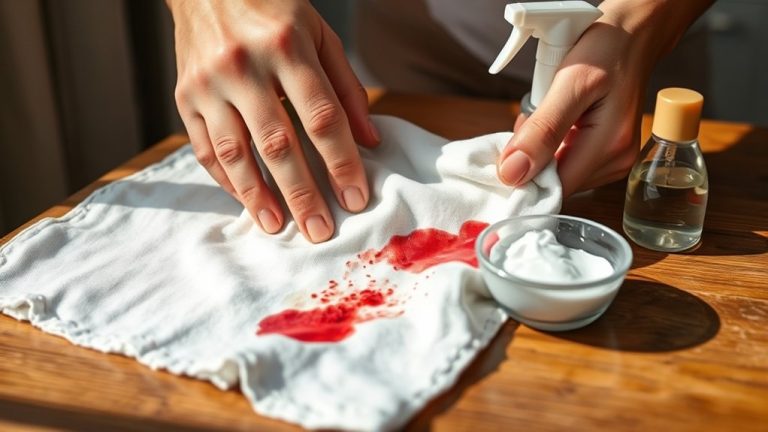
How do you guarantee your suit looks impeccable after home dry cleaning? Start by thoroughly inspecting for visible stains, tears, or loose buttons. Pre-treat stains immediately using a mild, pH-neutral detergent or stain remover to ensure effective fabric care and stain prevention.
Always test removers on a hidden fabric area to avoid discoloration. Apply gently with a clean cloth and blot rather than rub to prevent embedding the stain deeper.
| Stain Type | Recommended Treatment | Fabric Care Tip |
|---|---|---|
| Oil-based | pH-neutral detergent | Blot gently, avoid heat |
| Protein | Enzyme-based remover | Test on hidden area first |
| Dye | Mild solvent | Avoid rubbing |
| Unknown | Mild detergent + blotting | Prioritize stain prevention |
This meticulous pre-treatment step is essential for maintaining your suit’s pristine condition. Taking these small steps really helps keep your suit looking sharp and fresh every time.
How to Spot-Treat Stains on Your Suit Without Water
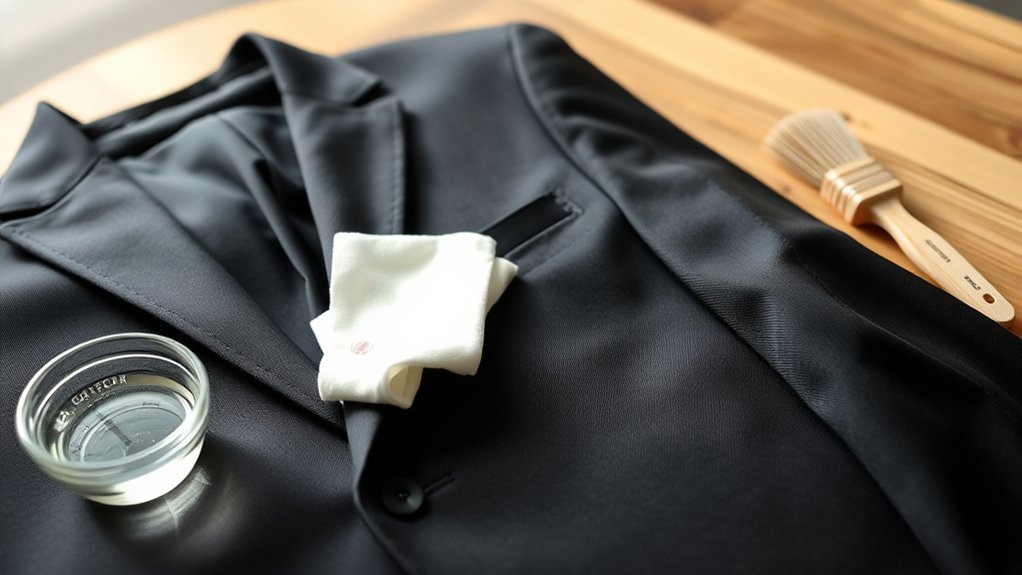
When you notice a stain on your suit, immediately blot it with a clean, dry cloth to absorb excess liquid without spreading it further.
For effective spot-treatment without water, especially for chemical stains, avoid using liquid solutions directly, as they can damage delicate fibers.
Instead, apply a minimal amount of absorbent powder like cornstarch or talcum powder to oil-based marks. Let it sit to draw out oils, then gently brush it off.
Always test any stain removal agent on a concealed fabric area first to prevent discoloration.
Refrain from rubbing, as mechanical agitation pushes stains deeper, compromising fabric care.
This precise approach preserves your suit’s integrity and guarantees targeted stain removal without introducing moisture that can alter the textile’s structure.
How to Gently Clean Your Suit With a Garment Steamer
Although traditional dry cleaning remains the gold standard for suit care, using a garment steamer offers a practical, fabric-safe alternative to refresh and gently cleanse your suit at home.
To preserve fabric durability, employ proper steaming techniques: hang your suit on a sturdy hanger to maintain shape, then hold the steamer several inches away.
Move it in gentle, sweeping motions to evenly distribute steam without direct fabric contact. This prevents damage.
The steam relaxes fibers, lifts light stains, and neutralizes odors, making it ideal for “dry clean only” suits.
After steaming, allow the suit to air out completely, ensuring residual moisture evaporates.
This method maintains your suit’s integrity while providing a gentle, effective cleaning solution without harsh chemicals or abrasion.
It’s a great way to keep your suit looking fresh between professional cleanings.
Using Home Dry Cleaning Kits Safely
When you’re using home dry cleaning kits, make sure to follow the manufacturer’s instructions closely. Pay attention to details like the temperature settings and how long the cycle runs—this helps keep your suit’s fabric in good shape.
It’s worth noting that these kits are great for deodorizing and giving your suit a light refresh. However, they’re not designed to tackle deep stains or heavy dirt.
Also, always check your suit’s care label before using any home dry cleaning products. This step can save you from costly damage and help you stretch out the time between professional cleanings.
Kit Usage Instructions
Because effective cleaning depends on following specific protocols, you need to stick to the manufacturer’s instructions carefully. This includes using the exact time and temperature settings recommended for your home dry cleaning kit.
First, make sure your suit’s fabric type works well with the kit’s cleaning chemicals so you don’t damage it.
Use the chemical-treated cloths or pads that come with the kit exactly as directed. Spread them out evenly inside the dryer or washing machine to make sure the cleaning is uniform.
Then, place your suit and the kit components inside without overloading the machine.
Pick the right cycle, usually something like “Gentle Dry” or “Delicate,” and run it for the time suggested. This helps the cleaning chemicals deodorize and freshen up your suit’s fabric properly.
When the cycle finishes, hang your suit somewhere with good airflow to let it air out.
This helps any leftover chemicals evaporate before you wear your suit. It’s a simple step but really important to keep your suit looking and smelling great!
Limitations And Benefits
While home dry cleaning kits offer a convenient way to freshen your suit, you should understand their limitations to use them safely and effectively. These kits excel at odor removal and light fabric freshening, relying on chemical-treated cloths and low dryer heat. This helps preserve fabric compatibility, especially for “dry clean only” garments.
However, they’re not designed for deep cleaning or advanced stain removal techniques. Overusing them on heavily soiled or stained suits can damage delicate fibers or fail to eliminate stubborn dirt. So, it’s best to use them carefully and not expect too much.
Regular, judicious use can extend intervals between professional cleanings and reduce costs. But you should always assess your fabric type and soil level before proceeding. When it comes to significant stains, professional dry cleaning is still the best option.
Air-Drying Your Suit to Keep Its Shape and Fabric
To preserve your suit’s structure and fabric integrity, hang it on a wide-shouldered, padded, or wooden hanger designed to support its natural shape during air-drying. Proper hanger selection is essential for fabric types like wool, cotton, or blends, preventing shoulder distortion.
Place your suit in a well-ventilated area, shielded from direct sunlight and heat sources to avoid fading and shrinkage. Make certain there’s ample space for air circulation to enable uniform drying and minimize creases.
Allow 24 to 48 hours for complete drying, occasionally repositioning to maintain form. Never use a dryer or heat, as high temperatures can damage fibers and internal suit structures.
How to Remove Wrinkles From Your Suit Safely
When you need to remove wrinkles from your suit safely, using a garment steamer is the most effective method to preserve fabric integrity and shape. Hold the steamer a few inches away to gently relax fibers, promoting fabric softening without direct contact.
Always hang the suit on a sturdy, wide-shouldered hanger to maintain its structure during steaming.
Move the steamer steadily from top to bottom, avoiding lingering to prevent damage. For delicate fabrics, test a hidden area to check for discoloration or shine.
After steaming, let the suit rest to evaporate moisture and lock in wrinkle prevention.
Remember these key steps:
- Use a garment steamer at proper distance
- Hang suit on wide-shouldered hanger
- Sweep steamer continuously, no lingering
- Test delicate fabric areas first
- Allow resting time post-steaming
Know When to Use Professional Dry Cleaning
After safely removing wrinkles with a steamer, you’ll need to recognize situations that require professional dry cleaning. If your suit fabric is delicate, like silk, wool, or velvet, professional maintenance is essential to prevent shrinkage, warping, or color bleeding.
Garments labeled “dry clean only” mustn’t be treated at home because water exposure compromises fabric integrity. Deep stains, persistent odors, or intricate embellishments need specialized solvents and equipment that only professional cleaners have.
Also, regular professional dry cleaning helps preserve your suit’s structure, color, and longevity, especially for high-end or tailored pieces. Home methods are best used just for minor refreshes. They simply can’t replace professional care when it comes to keeping your suit fabric looking great over time.
Frequently Asked Questions
How Often Should I Dry Clean My Suit at Home?
You should limit dry cleaning frequency to every 4-6 months for suit fabric maintenance. Over-cleaning degrades fibers, so rely on spot cleaning and airing between sessions to preserve your suit’s integrity and appearance.
Taking care of your suit in between cleanings really helps. Just airing it out or treating small spots can keep it looking sharp without the wear and tear from constant dry cleaning. It’s all about keeping that balance!
Can I Use Regular Laundry Detergent on My Suit?
You shouldn’t use regular laundry detergent. Over 60% of suits suffer fabric damage from washing machine risks.
Instead, opt for detergent alternatives like wool-specific cleaners. These help preserve fibers and avoid shrinkage or color fading during home cleaning.
It’s definitely worth taking that extra step to keep your suit looking sharp!
What Fabrics Are Unsuitable for Home Dry Cleaning?
You shouldn’t dry clean silk, wool blends, velvet, cashmere, rayon, or embellished suits at home. These fabrics risk fabric damage and color fading from improper handling or exposure to water, steam, or detergents.
It’s better to leave these delicate materials to the pros. They know how to treat them gently and keep them looking great. So, when in doubt, skip the home dry cleaning for these fabrics.
How Do I Store My Suit After Home Cleaning?
After home cleaning, use a wide-shouldered wooden hanger for suit storage to maintain its structure. This helps the suit keep its shape and look sharp.
Store it in a breathable garment bag to guarantee fabric preservation. It’s best to avoid plastic bags because they can trap moisture.
Keep your suit in a cool, dry, well-ventilated space away from sunlight. This way, the fabric stays fresh and lasts longer.
Can Home Dry Cleaning Remove Odors From My Suit?
Yes, home dry cleaning helps remove odors by using chemical-treated cloths that neutralize smells through heat.
Just make sure you follow the instructions carefully to keep your fabric in good shape.
Pairing the treatment with proper air circulation will give you the freshest results possible.
Conclusion
Now that you’ve mastered these expert dry cleaning techniques, your suit will look sharp without sending it off to the cleaners. Just like a vintage pocket watch demands delicate care, your suit needs precise handling. Spot-treat stains, steam gently, and air-dry properly to preserve fabric integrity and shape.
Remember, if stains persist or fabric weakens, it’s wise to trust professional services. With these steps, you’re equipped to keep your suit pristine at home.