Dry Clean How Does It Work – Explained
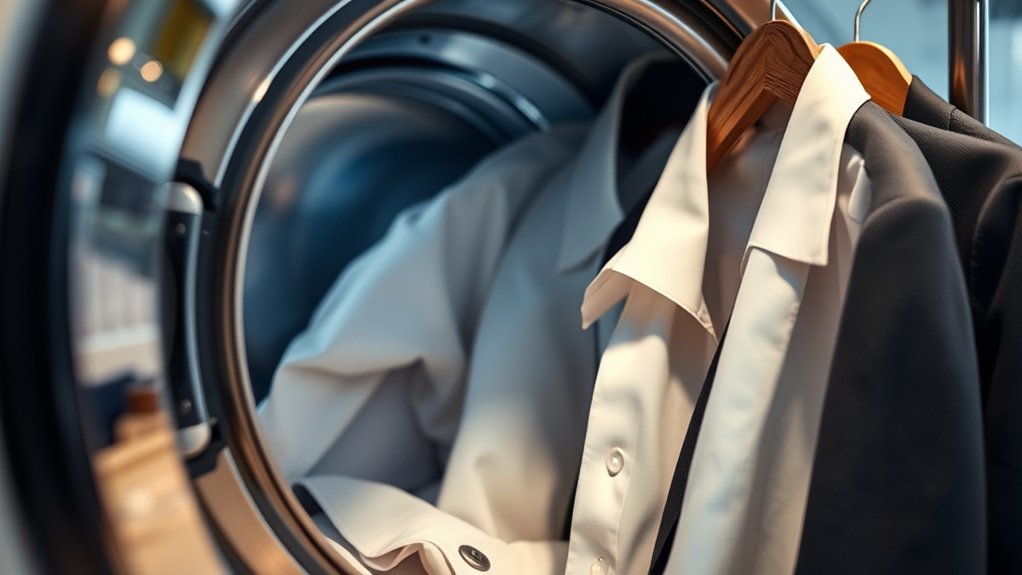
When you dry clean clothes, specialized machines use chemical solvents instead of water to dissolve oils and dirt without damaging delicate fabrics like silk or wool. Garments rotate in a drum filled with solvent, which is continuously filtered and recycled for efficiency and safety.
After cleaning, warm air dries the fabric while vapor recovery systems reduce emissions. This precise process preserves your clothes’ shape and color.
If you dig a little deeper, you’ll find more details on the solvents, equipment, and environmental impacts involved. It’s pretty interesting how it all works together to keep your clothes looking great!
What Dry Cleaning Is and How It Differs From Washing
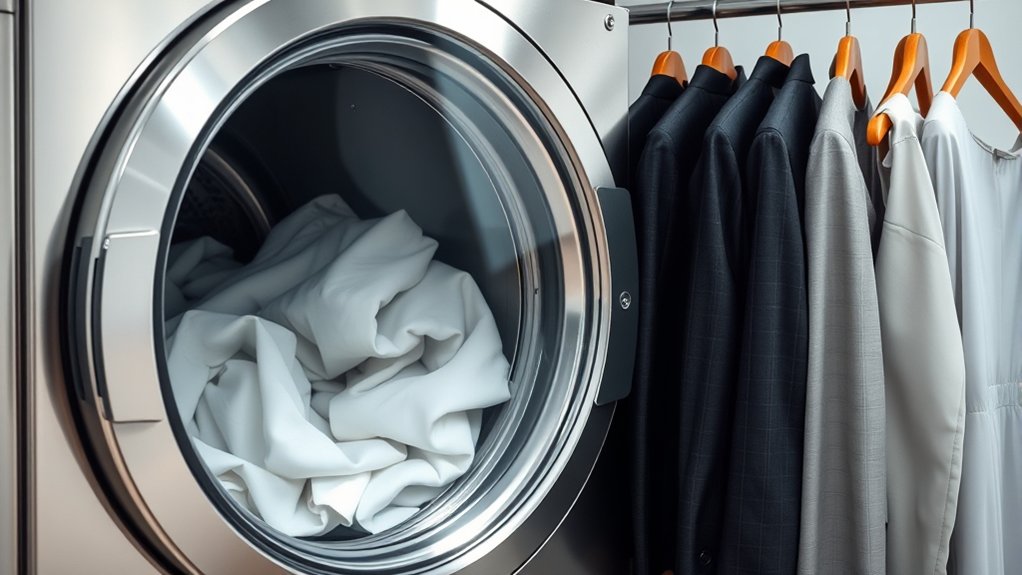
How does dry cleaning differ from regular washing? Unlike washing, which uses water and detergent to clean garments, dry cleaning relies on a chemical solvent to remove dirt and oils from fabrics.
This cleaning process, employed by professional dry cleaners, targets delicate or water-sensitive fabrics that might shrink, distort, or bleed color in traditional washing.
During dry cleaning, garments are immersed in a solvent within specialized machines featuring a rotating drum. This allows effective stain removal without water exposure.
Plus, dry cleaning uses specialized stain-removal techniques to treat stubborn marks that detergent alone can’t eliminate.
The solvent dissolves soils and is filtered for reuse, preserving the garments’ shape, texture, and appearance.
This method ensures your fabrics maintain their integrity while achieving thorough cleaning that water-based washing can’t provide.
Step-by-Step Dry Cleaning Process Explained
You’ll start by placing the garments into a specialized machine where organic solvents circulate to dissolve dirt—all without using any water. After that, the system filters and recycles the solvent continuously. This helps keep the cleaning efficient and also reduces waste.
Finally, the clothes go through drying, pressing, and steaming to bring them back to their original shape. Once that’s done, they’re ready for a quality inspection.
Cleaning Cycle Overview
Where does the dry cleaning process actually begin? It starts with a thorough inspection of garments, identifying stains and fabric care requirements for targeted stain removal.
Next, garments enter the specialized dry cleaning machine where the cleaning cycle initiates.
Organic solvent circulates, dissolving oils and dirt without water. Gentle agitation moves garments within the solvent, guaranteeing contaminants release effectively without damaging fibers.
Following this, filtration removes soil-laden solvent, and rinsing with fresh solvent prevents redeposition of soils.
The process carefully balances solvent use to maintain fabric integrity.
After rinsing, garments undergo drying using warm air, preparing them for final inspection.
This meticulous cycle ensures garments are cleaned precisely, preserving quality and appearance before finishing steps.
Drying And Finishing
What happens after the cleaning cycle completes? Garments enter the drying phase, where warm air at 60–63 °C circulates to evaporate residual solvent efficiently.
Vapor condensation systems capture this evaporated solvent, minimizing emissions and ensuring environmental safety.
Next, the finishing process begins with gentle pressing or steaming to eliminate wrinkles and restore the garment’s original shape. This step uses specialized equipment to keep the fabric’s integrity intact while making the garment look great.
Finally, quality checks and a thorough inspection confirm that all stains are removed and the garment meets presentation standards.
This precise sequence of drying, vapor condensation, gentle pressing, steaming, and quality checks makes sure each garment is impeccably cleaned and returned wrinkle-free, preserving both fabric quality and appearance.
How Dry Cleaning Machines Work to Clean Clothes
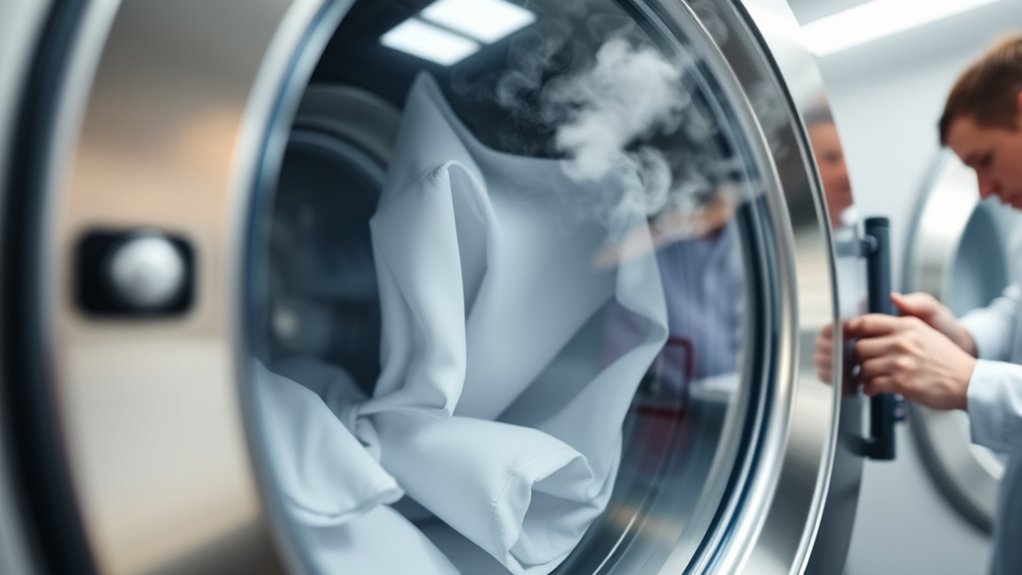
You’ll notice that dry cleaning machines use special organic solvents instead of water to break down dirt. The clothes spin around in a perforated drum while the solvent moves through them, gently but thoroughly cleaning the fabric.
As the cycle goes on, the machine keeps filtering and recovering the solvent. This helps it work efficiently and reduces waste at the same time.
Solvent-Based Cleaning Process
Although dry cleaning machines don’t use water, they effectively remove dirt and stains by circulating organic solvents like perchloroethylene or hydrocarbons through garments. You load clothes into a perforated drum, where solvent circulation dissolves oils and grime without damaging fabric fibers.
The dry cleaning machine gently agitates the textiles, ensuring thorough stain removal while preserving fabric care. Throughout the cleaning process, the solvent is continuously filtered, distilled, and recycled to maintain purity and efficiency.
After washing, the machine spins at high speeds to extract excess solvent, preventing fabric saturation. Finally, warm air evaporates residual solvent, which the system recovers via vapor condensation for reuse.
This solvent-based cleaning process combines precision and environmental responsibility, enabling effective, water-free garment care.
Machine Operation Mechanics
How exactly do dry cleaning machines operate to clean your garments efficiently? Inside the machine, a perforated drum rotates within a solvent-filled shell. During the cleaning cycle, solvent circulation pumps the solvent through the drum, enabling gentle garment agitation that dissolves and removes soils without damaging fabrics.
The system maintains precise temperature control to optimize cleaning efficacy while guaranteeing safety. The solvent remains unheated but stable. A built-in filtration system continuously removes impurities from the solvent, preventing recontamination.
After cleaning, the drying process employs warm air and vapor condensation to safely evaporate residual solvent. Throughout, the solvent recovery system captures and recycles solvent vapors, though details on solvent recovery are addressed separately.
This integrated operation ensures your clothes are cleaned thoroughly and dried efficiently.
Solvent Recovery System
Because dry cleaning relies heavily on solvents, the solvent recovery system plays a critical role in maintaining cleaning efficiency and environmental safety. This system uses a closed-loop design to continuously recycle solvents, minimizing waste and emissions.
You’ll find it depends on key processes such as filtration to remove soil and debris after the solvent circulates through garments.
Distillation units purify the solvent by separating impurities and contaminants, keeping everything clean and effective.
There are also vapor recovery mechanisms that recapture solvent vapors to reduce environmental impact.
Plus, the system recycles solvent continuously to maintain cleaning effectiveness.
It also ensures residual soils are removed after each cycle to prevent contamination.
How Solvents Clean Clothes in Dry Cleaning
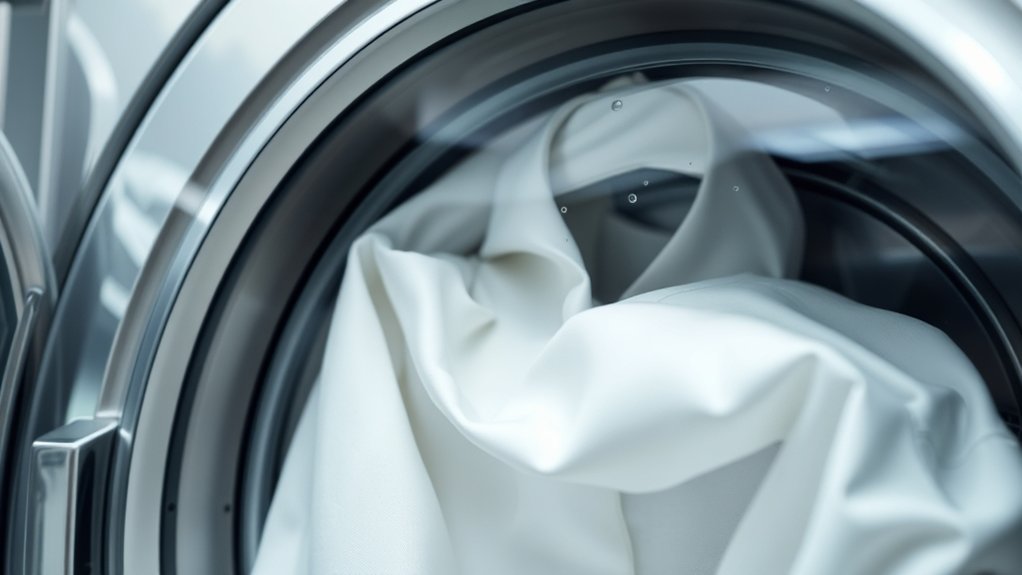
Why do dry cleaners rely on organic solvents instead of water? In dry cleaning, chemical solvents like perchloroethylene dissolve oils, greases, and stains on fabrics that water just can’t effectively remove.
During the cleaning process, garments are placed in a machine where solvent circulation gently loosens dirt embedded in fibers without damaging delicate materials.
Garments undergo gentle solvent circulation that loosens embedded dirt without harming delicate fibers.
The solvent penetrates deeply, enabling efficient stain removal while preserving garment care standards.
This method avoids the swelling and distortion water can cause in certain fabrics.
Throughout the cycle, solvents are continuously filtered and recycled to maintain cleaning efficacy and reduce environmental impact.
Afterward, warm air dries the garments, evaporating residual solvent for recovery and reuse.
This precise interaction between solvents and fabrics underpins dry cleaning’s superior stain removal and fabric preservation.
Common Dry Cleaning Solvents and Their Safety
Which solvents dominate the dry cleaning industry today, and how do their safety profiles compare? Perchloroethylene remains the primary solvent because it’s effective, but it does come with toxicity and carcinogenicity concerns.
Hydrocarbon solvents offer better environmental safety. They’ve lower VOC emissions and higher flash points, but keep in mind, they’re flammable. Emerging biodegradable solvents and liquid CO₂ are promising low-toxicity alternatives worth considering.
Here’s a quick look at these dry cleaning solvents and their safety aspects:
- Perchloroethylene: Effective but a probable carcinogen, with environmental persistence
- Hydrocarbon solvents: Flammable, reduced VOC emissions, safer flash points
- Biodegradable solvents (e.g., Siloxane D5): Biodegradable yet toxic to aquatic life and facing regulatory bans
- Liquid CO₂: Low toxicity, minimal environmental impact
- Trichloroethylene: Obsolete due to high toxicity and environmental hazards
Knowing these factors will help you pick solvents that align with environmental safety and regulatory compliance.
How Solvent Recycling Makes Dry Cleaning Greener
When you implement solvent recycling in dry cleaning, you considerably reduce both environmental impact and operational costs. Solvent recycling involves continuous filtration and distillation to remove impurities, enabling the reuse of high-purity solvent. Advanced machines integrate vapor recovery systems, capturing solvent vapors and minimizing atmospheric emissions.
This eco-friendly process complies with strict environmental regulations, lowering hazardous waste release and chemical consumption. It’s a smart way to keep things green and efficient at the same time.
| Process Component | Environmental Benefit |
|---|---|
| Filtration | Removes impurities, guarantees solvent purity |
| Vapor Recovery | Reduces emissions, conserves solvent |
| Solvent Reuse | Decreases fresh solvent demand, cuts costs |
Why Certain Fabrics Need Dry Cleaning Instead of Water
How do you determine whether a fabric requires dry cleaning instead of traditional water washing? You need to assess the fabric’s sensitivity to water and its structural integrity. Delicate fabrics and fragile textiles often suffer washing damage, including shrinking or warping.
Solvent cleaning excels in fiber preservation and stain removal without water’s adverse effects. Key factors include natural fibers like silk and wool that are prone to shrinking and fading. Then, there are synthetic fibers such as rayon that lose shape when exposed to water.
You also want to consider water-sensitive textiles with embellishments or dyes that are at risk of bleeding. Fragile fabrics can be vulnerable to permanent discoloration or deterioration. Plus, solvents remove stains efficiently without penetrating or damaging the fibers.
Understanding these aspects helps you choose dry cleaning to maintain fabric quality and longevity. It’s all about keeping your clothes looking their best while protecting their delicate structure.
Modern Equipment: Safer, Cleaner Dry Cleaning
Why does modern dry cleaning equipment stand out regarding safety and environmental impact? You’ll find it’s due to closed-loop systems that integrate internal vapor recovery, drastically minimizing solvent emissions. These machines use advanced sensors to continuously monitor solvent concentrations, automatically adjusting processes to meet stringent safety standards.
Computer-controlled mechanisms regulate cleaning cycles and solvent filtration with high precision, ensuring peak solvent recycling. This design not only reduces environmental impact but also eliminates the need for venting hazardous fumes.
What to Look for When Choosing a Dry Cleaner
When you’re picking a dry cleaner, it’s a good idea to check if they use certified, eco-friendly solvents. Also, see if they’ve modern equipment that recycles solvents—that way, you know they’re serious about safety and protecting the environment.
Next, find out how skilled they’re at removing stains and inspecting garments. It’s important they pay close attention to detail.
Don’t forget to look for industry certifications too; these usually mean they meet professional standards.
And finally, take some time to read customer reviews or ask for recommendations. This can give you a real sense of whether the service is consistently reliable and high quality.
Service Quality Indicators
Although dry cleaning may seem straightforward, choosing a quality service requires careful evaluation of specific indicators. To guarantee your garments receive ideal fabric care and stain removal, focus on these critical factors:
Employ certified technicians skilled in advanced fabric care and stain removal techniques. Utilize modern equipment maintained to meet stringent industry standards. Use environmentally safe solvents with verified recycling processes to support sustainability.
Adhere to rigorous inspection procedures, including pre-treatment and finishing, to guarantee thorough cleaning. Maintain consistent positive customer reviews and memberships in professional dry cleaning organizations, reflecting reliable quality service.
Taking these steps will help ensure your clothes are in good hands.
Equipment and Safety
Evaluating a dry cleaner’s equipment and safety measures provides clear insight into their operational standards and commitment to fabric care. You should select a facility that employs modern, well-maintained equipment featuring solvent filtration and recycling systems to ensure safety and environmental compliance.
Check for closed-circuit operations with vapor recovery technology to minimize solvent emissions and protect worker health. Confirm adherence to local safety regulations governing hazardous solvents handling and storage.
Adequate ventilation systems and explosion-proof machinery are essential to prevent fire hazards.
Furthermore, choosing a cleaner that uses certified, non-toxic or less hazardous solvents, such as hydrocarbon or silicone-based options, further enhances safety and aligns with environmentally friendly practices. These factors collectively indicate a dry cleaner’s dedication to operational excellence and sustainable fabric care.
The History and Evolution of Dry Cleaning
Since its inception in the early 19th century, dry cleaning has undergone significant technological and chemical advancements. You’ll find that understanding dry cleaning history reveals how solvents and safety concerns shaped the process. Early stain removal methods used flammable kerosene and gasoline, posing serious safety hazards.
The dry cleaning evolution introduced petroleum-based solvents like Stoddard solvent in 1924, which improved safety quite a bit. Later on, perchloroethylene (perc) became the standard solvent because it was effective and came with fewer risks.
Today’s cleaning process employs specialized techniques and advanced equipment for optimized results.
Key milestones include:
- 1821: Thomas Jennings patents dry scouring
- 1825: Jean-Baptist Jolly discovers kerosene’s stain removal
- 1924: Stoddard solvent reduces flammability risks
- Shift to perchloroethylene as primary solvent
- Modern specialized techniques enhance fabric care
Frequently Asked Questions
How Long Does a Typical Dry Cleaning Cycle Take?
A typical dry cleaning cycle takes between 3 to 15 minutes, depending on your garment’s fabric type and soil level. If your clothes are lightly soiled or delicate, expect shorter cycles around 3 to 5 minutes.
For heavier or dirtier items, the cycle can extend up to 15 minutes or more.
Modern machines adjust these times precisely, optimizing pre-treatment, cleaning, rinsing, extraction, and drying phases based on your fabric’s specific needs.
Can Dry Cleaning Remove All Types of Stains Effectively?
No, dry cleaning can’t remove all types of stains effectively. It works really well with oil-based stains because the solvents dissolve grease and makeup better than water does.
But when it comes to water-soluble or protein-based stains, these usually need some pre-treatment or special chemicals. Sometimes, stubborn stains that have set in won’t come out even after multiple dry cleaning sessions.
In those cases, you might need targeted enzymatic treatments or other cleaning methods to fully get rid of certain persistent or older stains.
Is Dry Cleaning Safe for People With Chemical Sensitivities?
Imagine you’re walking through a rose garden but suddenly start coughing because of the overwhelming scent. That’s how dry cleaning solvents can affect you if you’re chemically sensitive.
While modern machines reduce fumes, perchloroethylene and VOCs still pose risks.
To stay safe, you should opt for eco-friendly cleaners or wet cleaning methods. Also, make sure the facility uses proper ventilation.
It’s always a good idea to communicate your sensitivities to your dry cleaner beforehand.
How Should I Store Dry-Cleaned Clothes at Home?
You should store dry-cleaned clothes in breathable garment bags to avoid moisture buildup and fabric damage. Avoid plastic covers since they trap humidity, causing mildew and fiber deterioration.
Hang garments on sturdy, padded hangers to maintain shape and minimize wrinkles.
Keep your storage area cool, dry, and well-ventilated. Make sure clothes are away from direct sunlight to prevent fading and discoloration over time.
This way, your clothes stay fresh and looking great for longer.
What Should I Do if My Garment Is Damaged During Dry Cleaning?
If your garment looks like it survived a war zone after dry cleaning, don’t just sigh. Act. Notify the cleaner in writing and ask for a clear explanation.
Make sure to document any pre-existing damage and take detailed photos of the new harm.
Check the care label on your garment and carefully review the cleaner’s liability policy.
If the damage is severe, consider consulting a textile restoration expert.
Taking these precise steps helps you hold the cleaner accountable and protect your garment’s value.
Conclusion
So, next time you toss that delicate blazer into the dry cleaner’s hands, remember, it’s not magic. It’s just chemistry and engineering doing their neat little dance.
You’re not paying for water and soap; you’re investing in high-tech solvents and machines that treat your clothes like fragile artifacts. Dry cleaning isn’t just fancy laundry; it’s a precise science keeping your wardrobe pristine while saving it from the watery abyss.
Who knew dirt could meet such a refined fate?