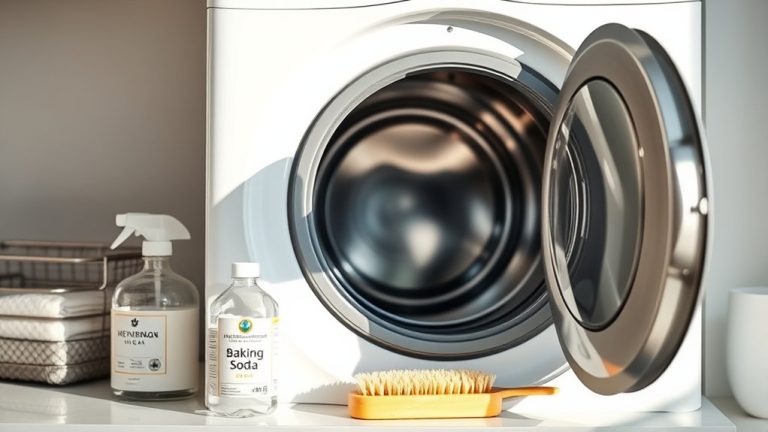
How To Clean Front Load Washing Machine With Vinegar – Easy Guide
To clean your front load washing machine with vinegar, start by emptying the drum and adding 2 cups of distilled white vinegar into it or the detergent dispenser. Run the hottest, longest cycle to remove odors, mildew, and buildup.
After this, wipe the drum and door seal dry. For extra freshness, follow with a baking soda cycle. Doing this monthly keeps your washer clean and odor-free.
Keep going to discover helpful tips for maintaining your machine’s best performance.
Why Vinegar Is Great for Cleaning Your Front Load Washer
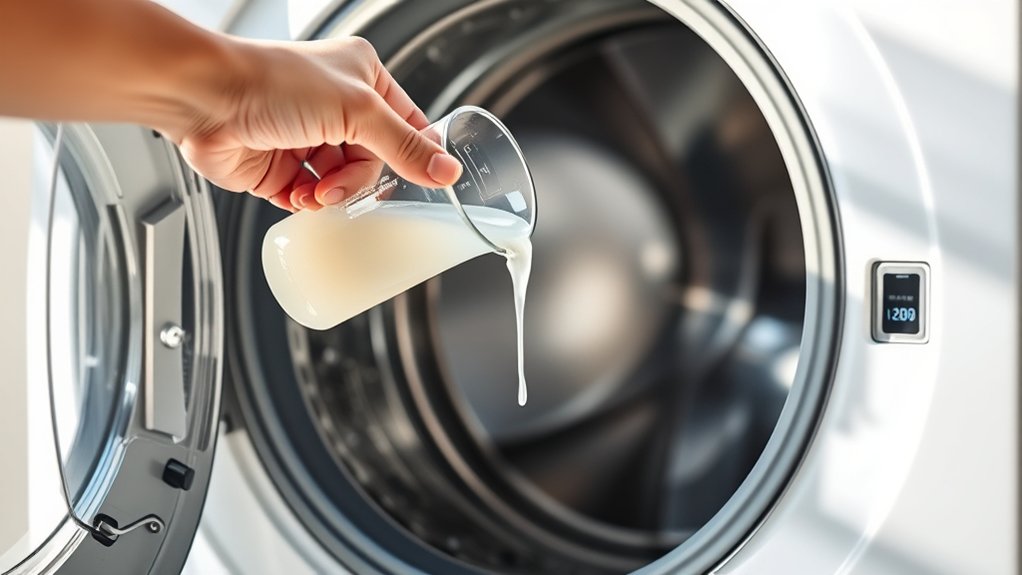
One of the easiest and most effective ways to keep your front load washer clean is by using vinegar.
Vinegar naturally tackles odor-causing deposits and mildew thanks to its antibacterial properties. When you add about 2 cups of vinegar to a hot wash cycle, it dissolves soap scum and mineral buildup.
This helps you maintain clean washing machines without harsh chemicals. Its acidity balances the pH levels inside your washer, preventing damage to internal parts and extending the appliance’s life.
Using vinegar regularly not only keeps your machine fresh but also boosts its washing performance.
By choosing vinegar, you avoid harmful cleaners, making it a safer, eco-friendly option for maintaining your front load washer’s cleanliness and efficiency.
It’s a simple trick that really makes a difference!
Preparing Your Washer for Vinegar Cleaning
Before you start cleaning, make sure the washer drum is completely empty to avoid any damage.
It’s a good idea to gather all your cleaning supplies first—don’t forget the distilled white vinegar.
Also, take a quick look at your machine’s manual to see if there are any special instructions.
Doing these little steps will help you clean your front load washer safely and effectively.
Empty Washer Drum
Start by making sure your washer drum is completely empty. Removing all clothes and items allows vinegar and baking soda to circulate freely during the clean cycle. This helps ensure the inside surfaces get thoroughly cleaned.
Check pockets carefully to avoid leaving coins, lint, or small objects that could cause blockages or damage. An empty washer drum also helps you spot any lingering odors that might need extra attention.
Preparing your machine this way sets the foundation for a successful wash cycle and a more effective clean. By starting with an empty drum, you maximize the power of the vinegar cleaning solution.
Plus, it improves your ability to clean your washing machine efficiently. This simple step is really essential for keeping your washer clean and odor-free.
Gather Cleaning Supplies
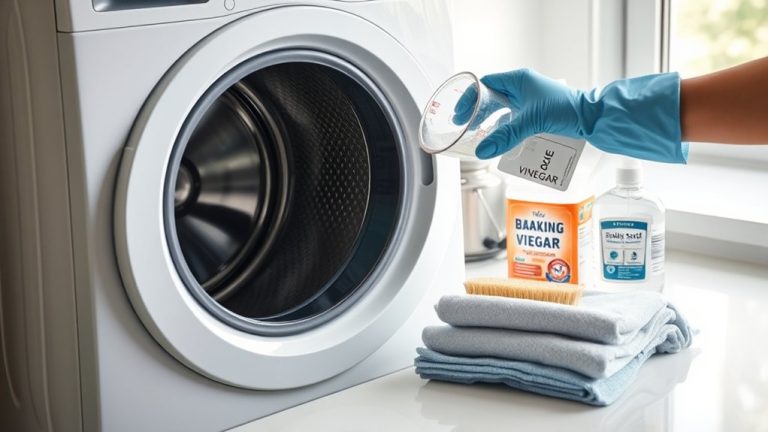
Gathering five essential cleaning supplies sets you up for a smooth and effective vinegar cleaning session.
Start by grabbing distilled white vinegar, which tackles odors and mildew inside your front load washer. Next, have microfiber cloths ready to wipe down surfaces and remove loosened grime after the vinegar cycle.
Put on gloves to protect your hands from residual dirt and cleaning agents. Prepare a shallow basin to catch any water that might leak when you access the filter.
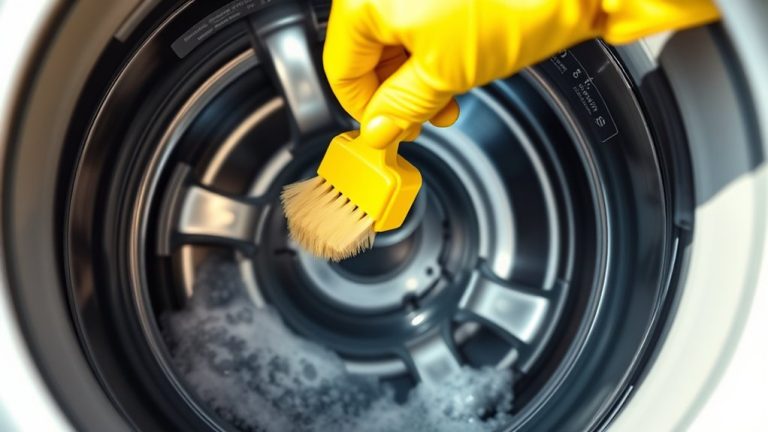
Finally, keep a small scrub brush handy to tackle stubborn spots, especially around the rubber seal and filter area.
With these supplies in place, you’re well-prepared to clean your washing machine thoroughly and safely using vinegar. It’s pretty straightforward once you have everything ready!
Check Machine Manual
Although vinegar is a popular and effective cleaning agent for front load washers, you should always check your machine’s manual first to verify it’s safe to use and won’t void your warranty.
Start by reviewing the manufacturer instructions for any guidance on vinegar use and compatibility with your washer’s materials.
Some machines have a dedicated cleaning cycle that might require specific cleaning agents, so it’s important to confirm whether vinegar is recommended or restricted.
Pay attention to warnings about parts like rubber seals or gaskets that could degrade if exposed to vinegar. Also, check for suggested vinegar proportions to guarantee effective cleaning without causing damage.
By taking these steps to check machine manual details, you’ll prepare your washer properly and maintain its longevity.
It’s a simple way to keep your machine running smoothly and avoid any unexpected issues down the line.
How to Clean Your Washer Drum With Vinegar
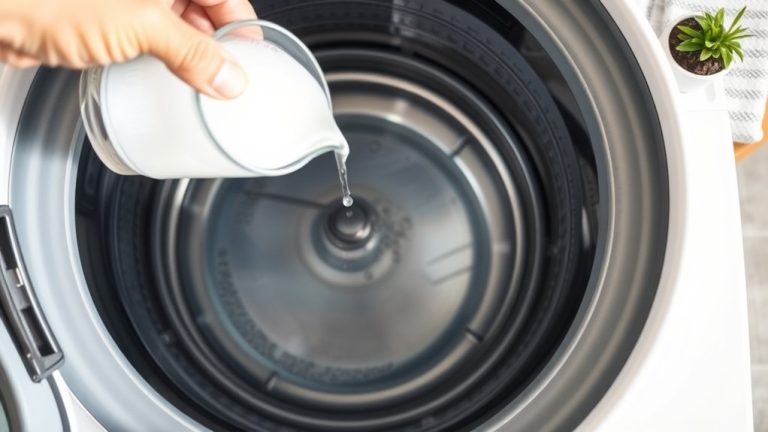
Start by pouring two cups of distilled white vinegar directly into the empty drum. This helps tackle odors and mildew.
Then, choose the hottest, longest wash cycle you have to make sure everything gets thoroughly cleaned and sanitized.
Once the cycle is done, go ahead and wipe down the drum and the rubber seal. This will remove any leftover grime and keep your washer feeling fresh.
Vinegar Application Techniques
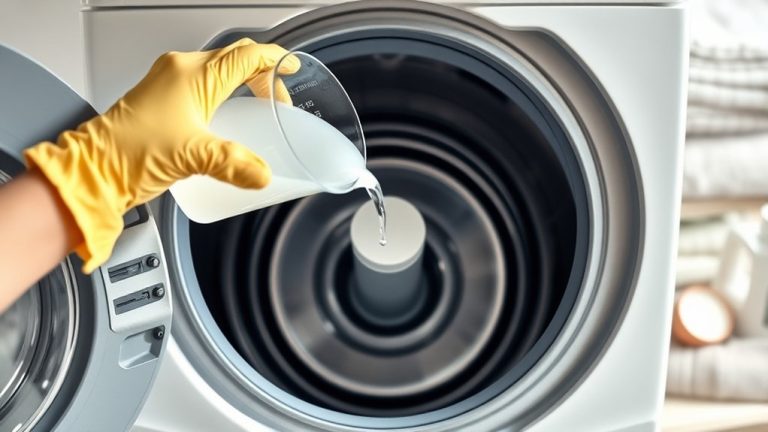
Two cups of distilled white vinegar poured directly into your detergent dispenser can work wonders for eliminating odors and mildew in your front-load washer.
To clean effectively, select the hottest and longest wash cycle available. This hot wash cycle helps the vinegar break down residue and buildup inside the washing machine drum.
After this cycle, run another hot wash with half a cup of baking soda added directly to the drum for extra deodorizing and cleaning power.
Once both cycles finish, use a microfiber cloth to wipe down the drum and door, removing any leftover debris or moisture.
Regularly applying this vinegar cleaning method every month keeps your washing machine fresh, odor-free, and performing at its best.
It also helps extend the appliance’s lifespan. So, it’s definitely worth making it part of your routine!
Optimal Wash Cycle
When you’re ready to clean your washer drum with vinegar, make sure the drum is completely empty so the cleaning solution can work effectively.
Pour 2 cups of distilled white vinegar into the detergent dispenser to tackle odor-causing buildup and mildew.
To get the best results, select the ideal wash cycle, using the hottest and longest setting available. This makes sure the vinegar fully penetrates and cleans the drum thoroughly.
After the cycle finishes, run an additional rinse cycle to flush out any remaining vinegar and loosened detergent residue.
Doing this once a month helps keep your front load washer fresh and prevents buildup.
It’s a simple way to keep your machine running efficiently without any unpleasant smells or residue.
Post-Cleaning Drum Care
Although running a vinegar cycle effectively cleans your washer drum, proper post-cleaning care ensures your machine stays fresh and residue-free.
After completing the vinegar cycle, make sure to wipe down the interior drum and door seal with a microfiber cloth. This step removes any leftover vinegar or loosened grime, which helps prevent buildup.
For extra freshness, sprinkle ½ cup of baking soda into the drum and run another hot cycle. Doing this regularly—about once a month—helps maintain ideal washing performance by eliminating odors and detergent residue.
By combining the vinegar cycle with a consistent post-cleaning wipe down, you’ll keep your front load washer running efficiently and smelling clean.
This simple care routine extends your machine’s lifespan and makes sure your laundry comes out fresh every time.
Cleaning the Detergent Dispenser and Gasket on Your Front Load Washer
Since detergent buildup and moisture can cause odors and affect your washer’s performance, you should regularly clean both the detergent dispenser and the door gasket.
Start by removing the detergent dispenser and soaking it in warm, soapy water for 15-30 minutes. Then scrub it with a sponge to remove residue, ensuring it’s completely dry before putting it back to prevent mold growth.
Next, inspect the door seal for mildew or deposits. Use a mixture of one cup of liquid chlorine bleach and one gallon of warm water to wipe down the gasket thoroughly. This disinfects and keeps the door seal fresh.
Performing these steps monthly helps maintain cleaning performance and prevents unpleasant smells in your front-load washer.
It’s a simple routine that really makes a difference!
Running a Vinegar Wash Cycle That Works
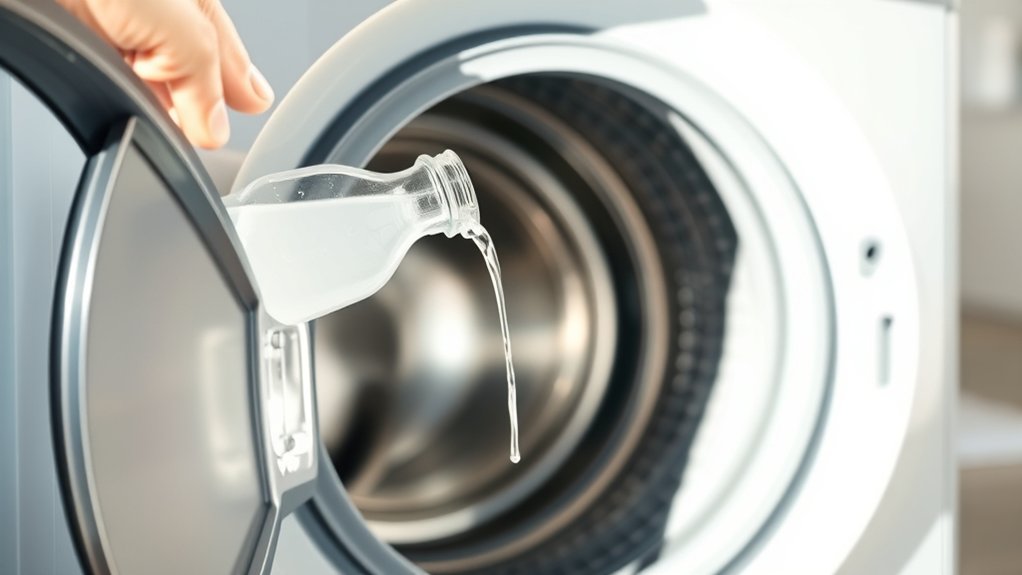
Before you start, make sure the drum is empty.
Then, add 2 cups of distilled white vinegar into the detergent dispenser.
It’s best to choose the hottest, longest wash cycle to get the best cleaning results.
Timing matters too—running this cycle once a month helps keep your machine fresh and free from buildup.
Just a simple routine that makes a big difference!
Vinegar Dosage Guidelines
To run an effective vinegar wash cycle, use 2 cups of distilled white vinegar poured directly into the detergent dispenser. This amount is ideal for cleaning your washing machine. It helps to remove odors and mildew buildup in a front-loading washing machine.
Before you run a cycle, make sure the drum is empty for maximum effectiveness. Vinegar works best when combined with hot water, so choose the hottest and longest wash cycle available. This combo really boosts the vinegar’s power to break down residue and keep your machine fresh.
For ongoing maintenance, run this vinegar cycle monthly to prevent mold growth and keep your front-loading washing machine in top condition.
Following these vinegar dosage guidelines guarantees a thorough, practical clean every time. It’s an easy step that makes a big difference!
Selecting Hot Wash Cycle
When you select the hottest and longest wash cycle on your machine, you maximize the vinegar’s ability to break down odors, mold, and detergent residue. Selecting the right hot wash cycle is key to a successful vinegar cleaning.
Before starting, make certain the drum is empty to avoid damaging clothes and to allow vinegar to work effectively.
Pour 2 cups of distilled white vinegar directly into the detergent dispenser or drum for powerful cleaning. This hot wash cycle helps dissolve buildup and refreshes your washing machine.
Always consult your machine’s manual to confirm the best hot wash cycle settings and verify vinegar use won’t harm your appliance.
Following these steps guarantees your vinegar wash cycle works efficiently every time. It’s a simple way to keep your machine fresh and clean without much hassle.
Just take a moment to check your settings and you’re good to go!
Timing Vinegar Application
Timing your vinegar application correctly is essential for getting the most out of your cleaning cycle.
To clean your front load washing machine effectively, pour 2 cups of distilled white vinegar into the detergent dispenser before starting. Always select the hottest and longest wash cycle available, since the hot cycle maximizes vinegar’s ability to eliminate odors and mildew buildup.
After the vinegar wash, run an additional rinse cycle to remove any residual vinegar from the machine. For best results, repeat this cleaning process once a month to maintain freshness and prevent buildup inside your washing machine.
Before starting, double-check your manufacturer’s manual to make sure vinegar is safe for your specific model. This way, you protect your machine while keeping it clean.
Complementing Vinegar Cleaning With Baking Soda
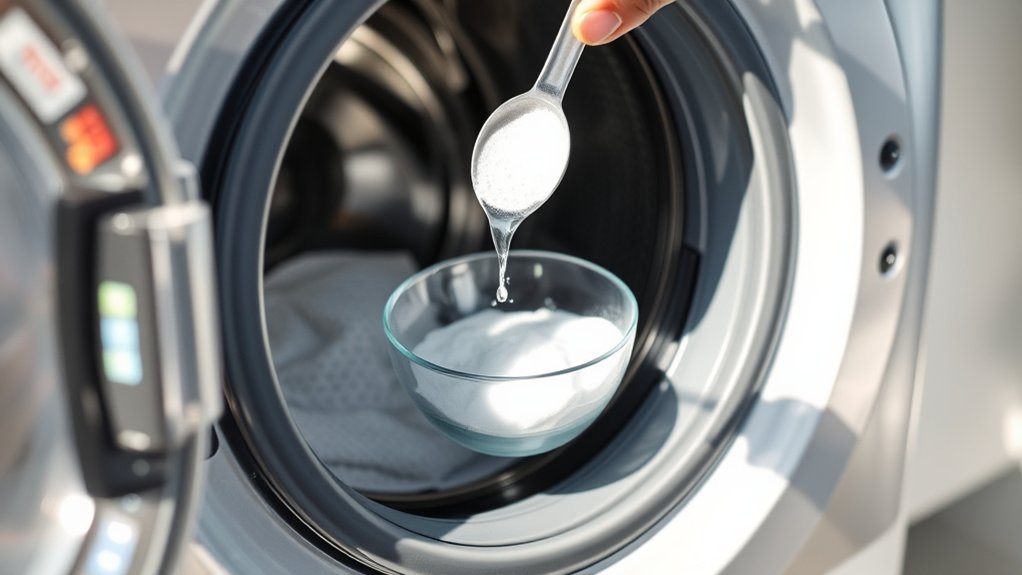
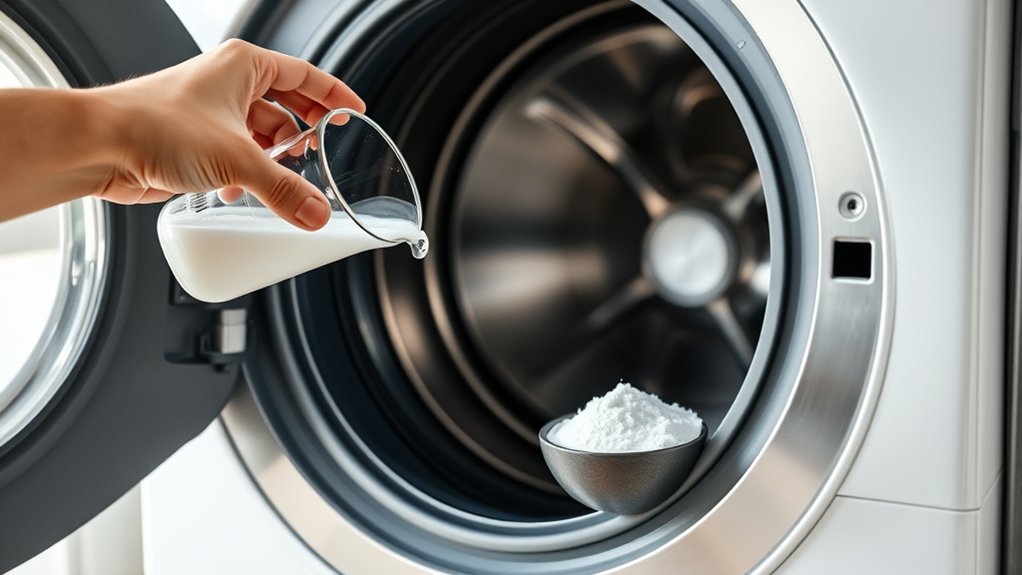
Although vinegar effectively breaks down buildup and odors, adding half a cup of baking soda to the washing machine drum afterward can amplify the cleaning power and neutralize lingering smells.
Baking soda absorbs moisture, helping prevent mildew and keeping your machine fresh between deep cleanings.
After running a white vinegar cycle, sprinkle baking soda inside and run a short wash to remove detergent residue and buildup. This combination boosts washing performance and extends your appliance’s lifespan.
When you clean my washing machine regularly this way, it stays efficient and odor-free.
Remember, never mix vinegar and baking soda in the same cycle; use them one after the other.
After cleaning, wipe down the drum and door seal with a damp cloth to remove any leftover residue. It’s a simple step that makes a big difference!
How Often Should You Clean Your Front Load Washer With Vinegar?
Regularly cleaning your front load washer with vinegar is essential to keep it running smoothly and smelling fresh. You should aim to clean it once a month or every 30 laundry cycles, especially if you use it heavily. This helps prevent mold, mildew, and stubborn odors from building up.
If you notice persistent smells or detergent residue, don’t wait. Clean your washer immediately. Consistent maintenance with vinegar not only eliminates odor-causing deposits but also prolongs your machine’s lifespan and keeps your laundry fresh.
| Benefit | Feeling You’ll Get |
|---|---|
| Odor-free laundry | Satisfaction |
| Extended machine life | Confidence |
| Smooth operation | Peace of mind |
Fixing Common Problems After Vinegar Cleaning
If you experience lingering odors or visible grime after cleaning your front load washer with vinegar, don’t worry. You can take a few extra steps to fix these issues.
First, run a short rinse cycle with just water to flush out any vinegar residue.
Begin by running a quick rinse cycle with water to remove any leftover vinegar residue.
If smells persist, run a hot wash cycle using a mixture of baking soda and water to neutralize odors.
Check the rubber door seal closely for mildew or grime and clean it with a damp cloth to remove stubborn buildup.
Also, make sure the detergent dispenser is rinsed thoroughly to avoid vinegar buildup.
If mold or grime remains despite these efforts, try a dedicated washer cleaner to tackle tough stains.
Finally, leave the washer door open after cleaning to help it dry completely.
Tips to Keep Mold and Smells Away in Your Washer
To keep mold and unpleasant odors from developing in your front-load washer, you should leave the door or lid open between uses. This allows air to circulate and moisture to evaporate, which really helps prevent that musty smell.
Regularly clean the rubber gasket and door seal with a damp cloth using a vinegar and water mix. This removes moisture that encourages mold growth and keeps things fresh.
Once a month, run a hot water cycle with two cups of vinegar. This disinfects the drum and gets rid of stubborn odors that might be lingering.
Every few weeks, add a cup of baking soda in a separate wash cycle. It helps neutralize odors and keeps your washer smelling fresh.
Don’t forget to clean the detergent dispenser monthly to stop residue buildup. This buildup can cause mildew and those unpleasant smells nobody wants.
These simple steps go a long way in maintaining a clean, odor-free washer. Give them a try and your laundry routine will thank you!
Stay Safe While Using Vinegar to Clean Your Washer
When cleaning your front-load washer with vinegar, you need to take a few safety precautions to protect both yourself and your machine. Always check your washing machine’s manual first to confirm vinegar is safe to use with your model. Avoid mixing vinegar with baking soda during cleaning cycles, as this reduces effectiveness.
Use about 2 cups of vinegar per cycle and make sure the drum is empty. Wearing rubber gloves can protect your skin from irritation. After cleaning, wipe seals and surfaces with a clean damp cloth to remove any residue.
| Safety Tip | Why It Matters |
|---|---|
| Check manual | Some models restrict acidic cleaners |
| Avoid mixing | Prevents ineffective chemical reaction |
| Use moderate vinegar | Avoids residue buildup |
| Empty drum | Protects clothes and machine parts |
| Wear gloves | Prevents skin irritation |
Frequently Asked Questions
Can Vinegar Damage the Rubber Seals in My Washer?
Vinegar won’t damage your washer’s rubber seals if you use it properly. For effective rubber seal maintenance, always dilute vinegar and avoid direct contact. Its vinegar effects can help prevent mold, boosting washer longevity.
But be careful not to overuse vinegar, as that can cause wear over time. It’s a good idea to mix things up and try cleaning alternatives like baking soda every now and then.
If you notice your seals are brittle or cracked, don’t wait. Follow seal replacement tips right away to avoid costly repairs and keep your machine running smoothly.
Is It Safe to Use Vinegar if My Washer Has a Self-Cleaning Cycle?
Yes, it’s safe to use vinegar if your washer has a self-cleaning cycle.
Vinegar enhances self-cleaning benefits by reducing odors and mildew effectively. For washer maintenance tips, use vinegar regularly but avoid mixing it with other cleaners.
Cleaning frequency depends on usage, but monthly is ideal.
If you prefer vinegar alternatives, baking soda works well for odor prevention techniques.
Always check your manual to verify compatibility and keep your machine fresh.
Can I Use Vinegar to Clean a Top Load Washing Machine?
Yes, you can use vinegar to clean your top load washing machine. It’s great for getting rid of odors and helps keep your washer working well.
Vinegar’s natural properties make it a better choice compared to harsh chemicals.
If you’re not into vinegar, baking soda works pretty well too.
For the best results, try to clean your machine every month.
Doing this regularly stops buildup and keeps your washer running smoothly.
Plus, it means your laundry will come out fresh every time.
How Do I Remove Vinegar Smell From Clothes After Cleaning?
Remember, “a stitch in time saves nine.”
To remove vinegar residue from clothes, run a second rinse cycle with warm water to dilute the smell. For better odor elimination, add a cup of baking soda or mild detergent during rinsing.
Focus on fabric care by drying clothes thoroughly and using dryer sheets for freshness.
These washing tips offer practical laundry solutions to keep your garments smelling clean and fresh. Give them a try, and you’ll notice the difference in no time!
What Should I Do if My Washer Leaks After Vinegar Cleaning?
If your washer leaks after vinegar cleaning, start by checking the door seal for any damage or debris. Sometimes, the seal might need to be replaced to stop the leak.
Next, take a look at the hoses and the detergent dispenser to see if there are any blockages causing the issue.
It helps to follow regular washer maintenance routines and adjust how often you clean it to prevent buildup.
Try running a water-only cycle to check if the leak continues.
If it does, it might be time to call a professional to avoid causing more damage.
Conclusion
Keeping your front load washer fresh and free from foul odors is a simple task when you use vinegar’s versatile power. By regularly rinsing, removing residue, and rejuvenating your machine, you’ll prevent pesky problems like mold and mildew.
Remember, routine vinegar washes work wonders to maintain a clean, crisp, and clear washer drum. Stay safe, stay smart, and keep your cleaning consistent to enjoy spotless, sparkling laundry loads every time!