Can You Use Apple Cider Vinegar To Clean Washing Machine – Guide
Yes, you can use apple cider vinegar to clean your washing machine safely and naturally. Its acidity breaks down soap scum and mineral deposits, and it helps prevent odors and mold.
Use 1-4 cups depending on your machine type, adding baking soda during agitation for the best results. Vinegar won’t damage your washer and is eco-friendly. That said, white vinegar might be better for some parts.
Just follow the proper steps to keep your washer fresh and efficient. Plus, there are more tips you can discover to maintain it effectively.
Why Apple Cider Vinegar Cleans Washing Machines
Although you mightn’t realize it, apple cider vinegar cleans washing machines effectively because its natural acidity breaks down soap scum, mineral deposits, and lime buildup that reduce your machine’s performance.
When you use apple cider vinegar regularly, it dissolves these residues, preventing clogs and foul odors. This natural solution neutralizes odors and disinfects without damaging any washer components, making it safe for all types of machines.
Plus, it’s eco-friendly and won’t harm your septic system. By choosing apple cider vinegar to clean your washer, you avoid harsh chemicals while maintaining peak machine efficiency.
Its ability to tackle mineral deposits and soap residue guarantees your washer stays fresh, running smoothly, and free from mold or mildew over time.
How to Prepare Your Washer for Vinegar Cleaning
Before you start, make sure you have all the cleaning materials you’ll need, like apple cider vinegar and a soft cloth.
It’s important to empty the washer completely.
Give the interior a good wipe down to get rid of any loose debris.
Doing this prep work helps the vinegar do its job better, so your machine gets cleaned and disinfected effectively.
Gather Cleaning Materials
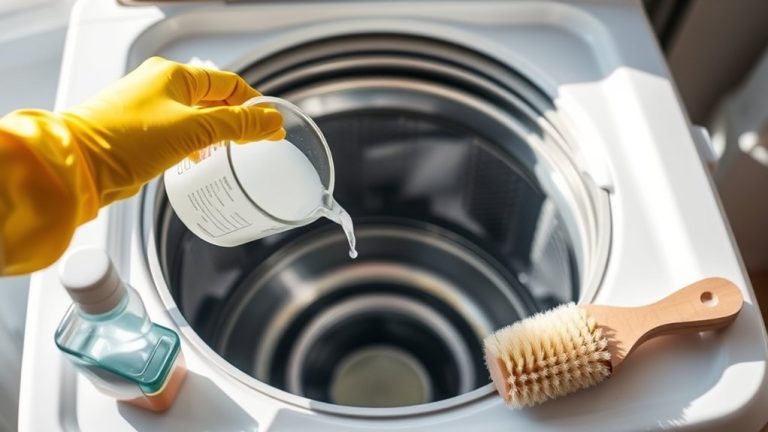
To prepare your washing machine for cleaning with apple cider vinegar, gather four essential materials: apple cider vinegar, baking soda, a spray bottle, and a clean sponge. These items will help you run an effective cleaning cycle and tackle both odor and residue buildup.
Make sure your washer is empty before starting to maximize the vinegar’s impact.
| Material | Purpose |
|---|---|
| Apple Cider Vinegar | Disinfects and removes odors |
| Baking Soda | Boosts cleaning power |
| Spray Bottle | Applies vinegar to exterior |
Have a microfiber cloth or sponge ready to wipe down the washer’s exterior and hard-to-reach spots during or after the cycle for thorough cleaning. It really helps to get all those tricky areas spotless.
Pre-Clean Washer Interior
Once you’ve emptied your washer and removed any clothes, start by running a hot water cycle on the largest load setting to loosen grime and prepare the drum for cleaning. This helps dissolve residues and gets your washer ready for the apple cider vinegar treatment.
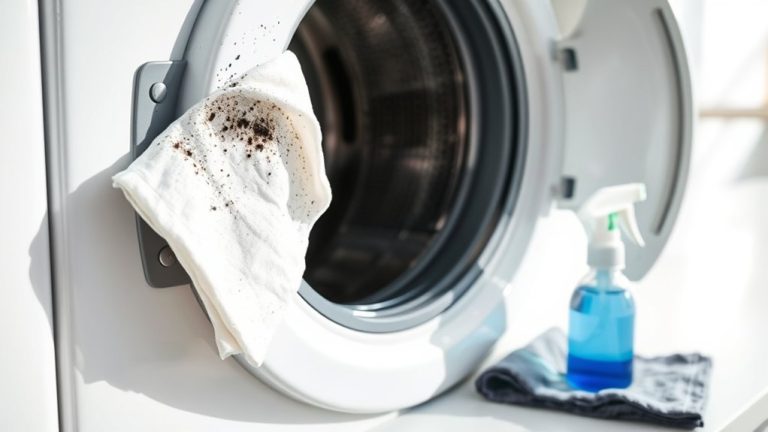
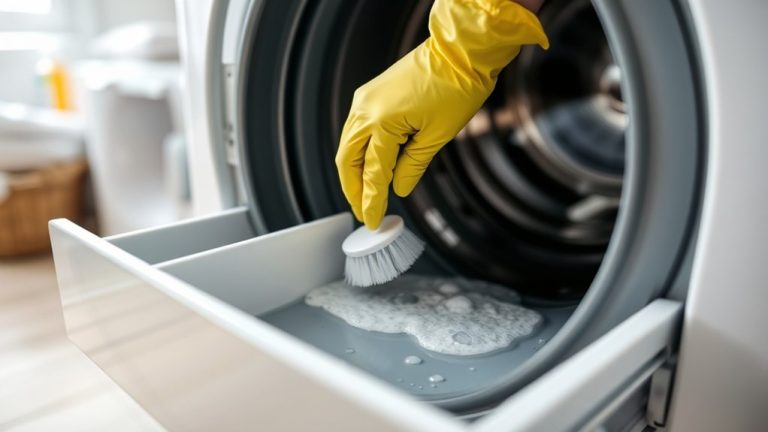
Next, wipe down the rubber seals and door edges with a damp cloth to remove visible mold or residue.
Don’t forget to check and clean the detergent dispenser to eliminate soap scum buildup that could hinder the cleaning process.
Having your apple cider vinegar and baking soda ready will make the next steps smoother.
These preparatory actions guarantee you effectively clean washing machine components, allowing the apple cider vinegar to work more efficiently during the deep cleaning.
Cleaning Your Washer Step-By-Step With Vinegar
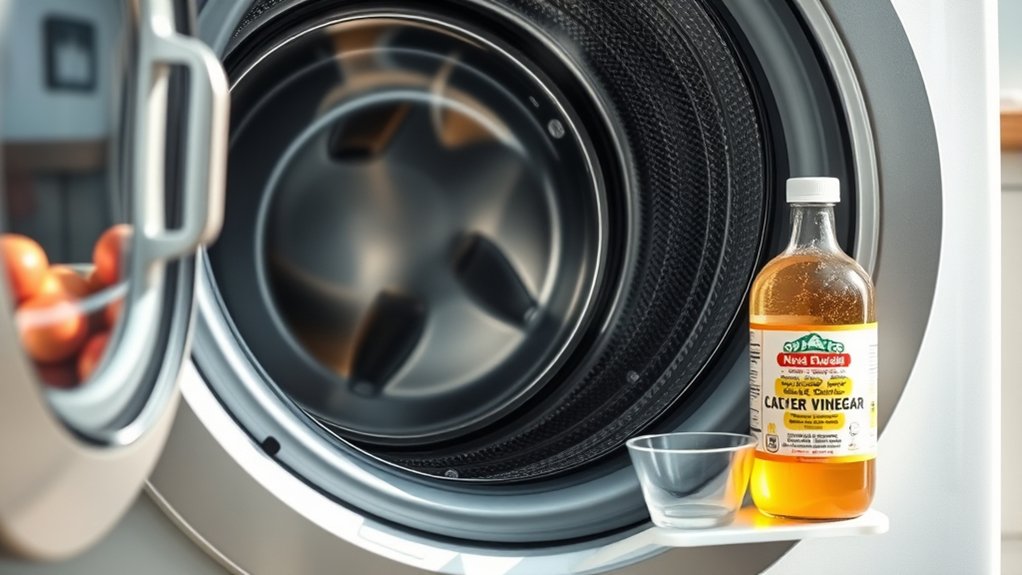
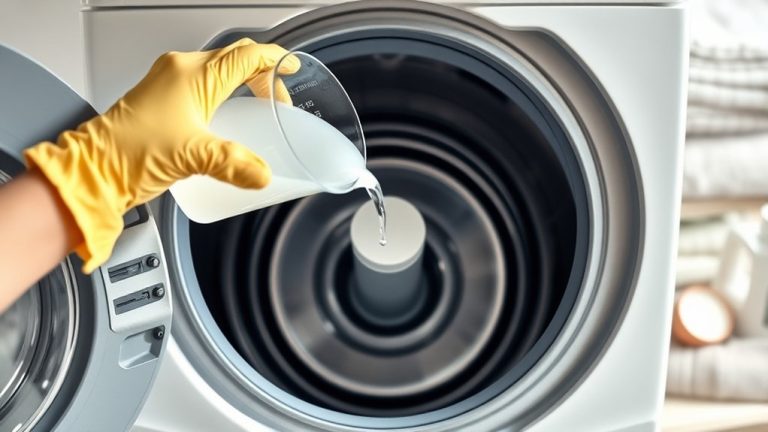
Start by setting your washing machine to the hottest water setting and pouring in 3 to 4 cups of apple cider vinegar. This helps disinfect and remove residue effectively.
Once the machine begins agitating, add ½ cup of baking soda to boost the cleaning power.
Let the mixture sit for 30 minutes to 1 hour before resuming the wash cycle to thoroughly clean the interior.
While the washer soaks, wipe down external surfaces with a vinegar-water solution to eliminate grime and odors.
Regularly cleaning your washer this way every few months prevents mold and mildew buildup, especially in high-efficiency machines.
After finishing, keep the washer lid open to promote air circulation and maintain freshness.
This simple routine guarantees your washing machine stays clean and odor-free.
How Much Apple Cider Vinegar to Use for Different Washers
Choosing the right amount of apple cider vinegar depends on the type of washing machine you have. Using the proper quantity guarantees effective cleaning without residue. Always add vinegar during the appropriate cycle and follow up with a rinse cycle to clear any leftover vinegar.
| Washer Type | Apple Cider Vinegar Amount | When to Add |
|---|---|---|
| Top-loading | 3-4 cups | In hottest water setting |
| Front-loading | 2 cups | Detergent or softener compartment |
| High-efficiency | 1-2 cups | During cleaning cycle |
Let the vinegar sit for 30 minutes to an hour for best results. This method helps disinfect and remove buildup in washing machines efficiently. It’s a simple trick that really works!
How to Remove Soap Scum and Mineral Buildup With Vinegar
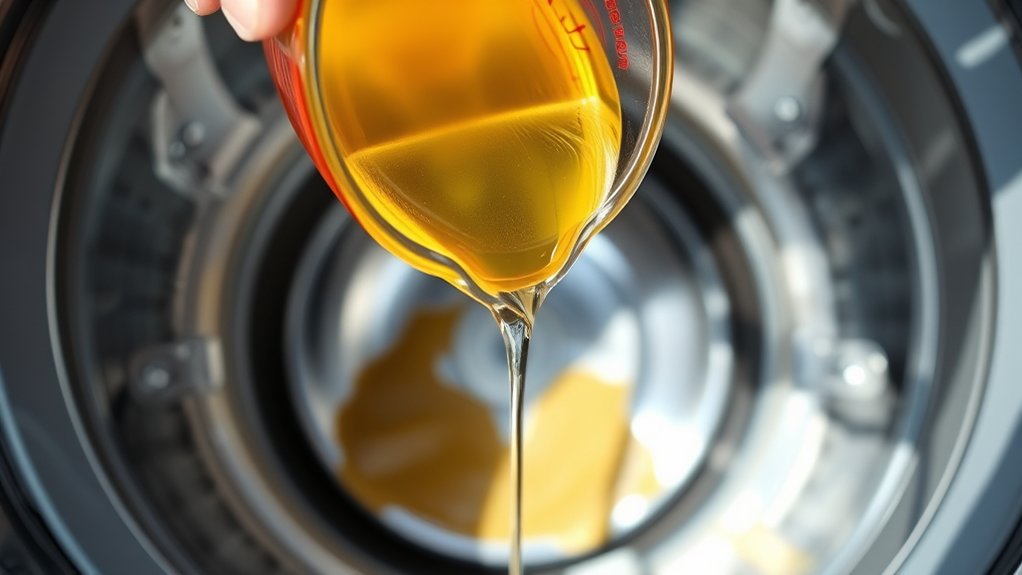
Because apple cider vinegar is acidic, it effectively dissolves soap scum and mineral buildup in your washing machine. To remove these residues, pour 2 cups of apple cider vinegar into the drum and run a hot water cycle. Let the solution soak for about 30 minutes.
For stubborn soap scum, mix ½ cup of baking soda with 1 cup of apple cider vinegar before running the cycle to boost cleaning power. This method breaks down mineral buildup and soap scum efficiently, restoring your machine’s performance.
Using apple cider vinegar regularly in your rinse cycles also helps prevent future buildup. It keeps your washer clean and operating smoothly without harsh chemicals.
How to Eliminate Washing Machine Odors Using Vinegar
If your washing machine develops unpleasant odors, adding 2 cups of apple cider vinegar to an empty drum and running a hot wash cycle can effectively disinfect and deodorize the interior.
To keep washing machine odors at bay, clean your machine with apple cider vinegar every few months. This is especially important for high-efficiency models that trap moisture and encourage mold growth.
For stubborn smells, mix 1/2 cup of baking soda with 1 cup of apple cider vinegar during a wash cycle to neutralize odors and remove soap residue.
After the cycle, leave the door open to promote airflow and prevent stagnant smells.
Don’t forget to wipe down seals and dispensers with a diluted apple cider vinegar solution. This helps eliminate lingering detergent buildup and keeps your washing machine smelling fresh and clean.
Apple Cider or White Vinegar: Which Should You Use?
You can use either apple cider vinegar or white vinegar to clean your washing machine. Both work well to dissolve soap residue and help reduce odors.
Apple cider vinegar is a bit less acidic, and it might leave behind a nicer scent. Just keep in mind, it’s a good idea to dilute it to protect the rubber seals in your machine.
Knowing these little differences can help you pick the right vinegar for your cleaning needs.
Vinegar Types Comparison
Choosing between apple cider vinegar (ACV) and white vinegar for cleaning your washing machine depends on several factors like acidity, odor, and cost.
Here’s a quick vinegar types comparison to help you decide:
- Acidity: Both ACV and white vinegar have similar acidity levels (5-6%), making them effective cleaners.
- Odor: ACV has a milder and more pleasant smell, while white vinegar has a stronger scent that some find harsh.
- Cost & Residue: White vinegar is usually cheaper, more available, and less likely to discolor surfaces or fabrics compared to ACV.
Cleaning Effectiveness Differences
Although both apple cider vinegar (ACV) and white vinegar share similar cleaning power because of their acetic acid content, you’ll notice some key differences that affect your choice.
When it comes to cleaning effectiveness differences, white vinegar is usually preferred for washing machine maintenance. That’s because it can be used undiluted and won’t risk staining.
Apple cider vinegar is effective too, but it should be diluted to prevent potential discoloration.
Both types dissolve soap scum and mineral deposits well, but white vinegar’s neutral nature often makes it more practical for routine cleaning.
ACV works well for specific tasks if you don’t mind its mild scent.
Ultimately, if you want a straightforward, potent cleaner without extra precautions, white vinegar is your best bet for washing machine care.
Smell And Residue
When deciding between apple cider vinegar (ACV) and white vinegar for cleaning your washing machine, think about their differences in smell and residue. Both work well to dissolve soap residue and mineral buildup. But ACV leaves a lighter, more pleasant smell.
Here’s what you should know: Apple cider vinegar has a milder, natural smell that fades quickly. On the other hand, white vinegar’s stronger scent can stick around longer.
Also, ACV tends to leave less residue, which means less chance of buildup inside your machine. Plus, ACV is less corrosive on rubber parts, so it’s safer for your washing machine’s components.
For best results, dilute 2 cups of ACV with water to freshen and disinfect without leaving a strong odor. This makes apple cider vinegar a smart choice if you’re sensitive to smells and want minimal residue.
How to Maintain Your Washer After Vinegar Cleaning
Keep your washing machine fresh and efficient by following a few simple maintenance steps after cleaning it with vinegar. First, leave the lid open to promote air circulation. This helps prevent mold and odors from building up.
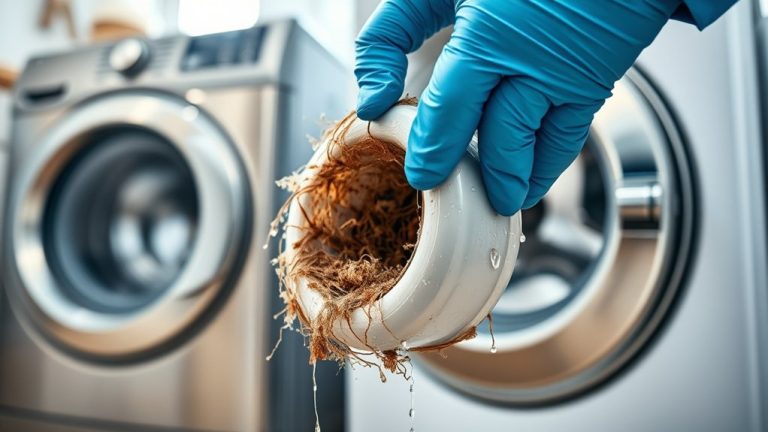
Regularly check and clean the inlet hose filter to avoid clogs from mineral deposits. Doing this ensures optimal water flow and keeps your machine running smoothly.
Every few months, run an empty hot water cycle with vinegar to maintain cleanliness and prevent soap residue buildup.
Also, inspect rubber seals and gaskets for wear or mildew. Vinegar helps keep these parts clean and functional, so it’s good to pay attention to them.
For ongoing maintenance, consider adding vinegar to your rinse cycles. This can eliminate soap residues and enhance overall freshness.
Using vinegar consistently supports your washer’s longevity and keeps it performing at its peak. It’s a simple step that makes a big difference over time.
What to Do If Your Washing Machine Smells After Cleaning
After cleaning your washing machine with vinegar, you might still notice an unpleasant smell. To keep your washer fresh and clean, follow these practical steps:
First, leave the lid or door open between uses to let moisture evaporate. This helps prevent mold growth, which is often the cause of bad odors.
Next, regularly check and clean rubber seals, gaskets, detergent dispensers, and filters. These spots can trap residue and mold, so giving them some attention really makes a difference.
Finally, run a maintenance cycle using a mixture of baking soda and vinegar. This helps neutralize lingering odors and breaks down any buildup inside your machine.
Other Natural Washing Machine Cleaning Methods
Although apple cider vinegar is a powerful cleaner, you can boost your washing machine’s cleanliness by using other natural methods. Combining baking soda and vinegar together effectively dissolves soap scum and removes odors.
Lemon juice acts as a natural disinfectant, enhancing stain removal when paired with vinegar. Borax works as a natural detergent booster, tackling mineral deposits and lingering smells. Adding essential oils like tea tree or lavender offers antibacterial benefits and a fresh scent.
| Method | Purpose | Key Benefit |
|---|---|---|
| Baking soda + vinegar | Clean & deodorize | Removes soap scum, odors |
| Lemon juice + vinegar | Disinfect & stain removal | Enhances cleaning power |
| Borax | Natural detergent booster | Eliminates mineral deposits |
| Essential oils | Antibacterial & fragrance | Adds scent and kills germs |
Frequently Asked Questions
Can Apple Cider Vinegar Damage Rubber Seals in Washers?
Yes, apple cider vinegar can damage rubber seals in washers if you’re not careful. The vinegar’s concentration effects can cause corrosion and weaken the seals over time.
So, you should dilute it properly to protect your rubber seal maintenance.
To avoid damage, try alternating vinegar use with other cleaning methods like baking soda or commercial cleaners.
It’s also a good idea to regularly inspect your washer’s seals for wear. This helps ensure they stay in good condition and prevent leaks.
Is It Safe to Use Apple Cider Vinegar on Front-Load Washers?
You might be surprised, but yes, it’s safe to use apple cider vinegar on front-load washers if you’re careful.
The front load benefits include odor removal and mold prevention. Just don’t overdo it because too much vinegar can harm rubber seals.
Use half to one cup during cleaning cycles and make sure to rinse well.
If you clean frequently, consider vinegar alternatives like baking soda.
It’s best to stick to a monthly cleaning schedule for great results and to keep your machine lasting longer.
How Often Should I Clean My Washing Machine With Apple Cider Vinegar?
You should clean your washing machine with apple cider vinegar every 1 to 3 months to keep it in good shape.
How often you clean really depends on how much you use your machine. If you do laundry daily, then cleaning it every month would be a smart idea.
Vinegar helps by breaking down soap scum and mineral buildup. It also stops bad odors from forming and makes your machine run more efficiently.
After using vinegar, always run a rinse cycle to get rid of any leftover vinegar.
This way, your washing machine stays fresh and works well for a long time.
Can Apple Cider Vinegar Remove Mold From Washing Machines?
Think of mold as an unwelcome guest sneaking into your washing machine’s party. You can use apple cider vinegar as your trusty bouncer. Its acidic nature and vinegar effectiveness break down mold buildup swiftly.
For mold removal techniques, pour two cups of vinegar and run a hot cycle. Regular use helps with washing machine maintenance and prevents future growth.
If you come across stubborn spots, try combining vinegar with baking soda for a powerful scrub. It really does the trick!
Will Apple Cider Vinegar Affect the Color of My Laundry?
No, vinegar won’t harm your laundry color if you use it properly.
When diluted, apple cider vinegar’s effects are gentle, acting as a natural fabric softener and helping maintain fabric safety. Adding about 1/2 cup during the rinse cycle prevents color fading, especially for dark or vibrant clothes.
Just test it first on delicate fabrics to be safe.
Vinegar is a smart, safe alternative to harsh chemicals that might damage your laundry color. It’s an easy way to keep your clothes looking fresh without worrying about color loss.
Give it a try and see how it works for you!
Conclusion
Ready to keep your washing machine fresh and running smoothly? Using apple cider vinegar is a simple, natural way to tackle buildup and odors without harsh chemicals. Just follow the steps to prepare, clean, and maintain your washer properly.
Wondering if it’s worth the effort? Absolutely. Vinegar cleans effectively, saves money, and protects your machine. So, why not give your washer a natural refresh and enjoy cleaner laundry every time?