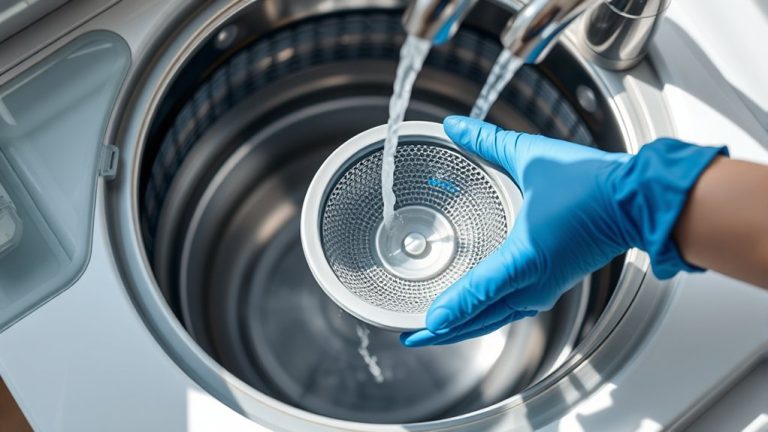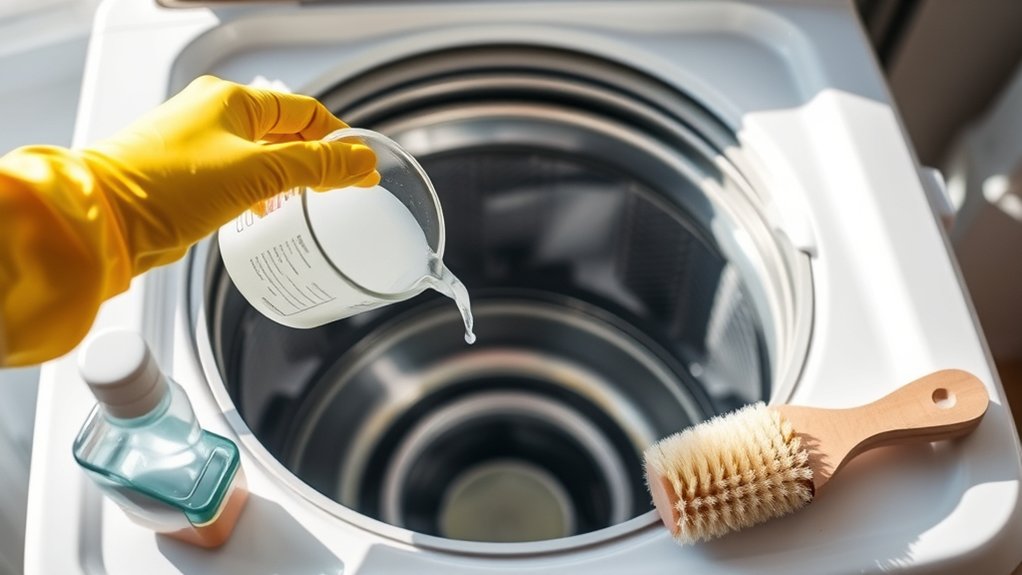
How To Clean A Top Loading Washing Machine – Step By Step Guide
To clean your top-loading washing machine, first empty the tub completely and check your manual for specific instructions. Use hot water and add an Affresh tablet or one cup of bleach if suitable. Run a full cleaning cycle to dissolve residue and disinfect.
Then, wipe the detergent dispenser and seals with a damp cloth. After that, leave the lid open to air dry. This helps keep everything fresh and prevents moisture buildup.
It’s a good idea to clean your machine regularly—about every 30 washes. This prevents odors and buildup from forming. Keep following for detailed techniques and troubleshooting tips.
How Often Should You Clean Your Top-Loading Washing Machine?
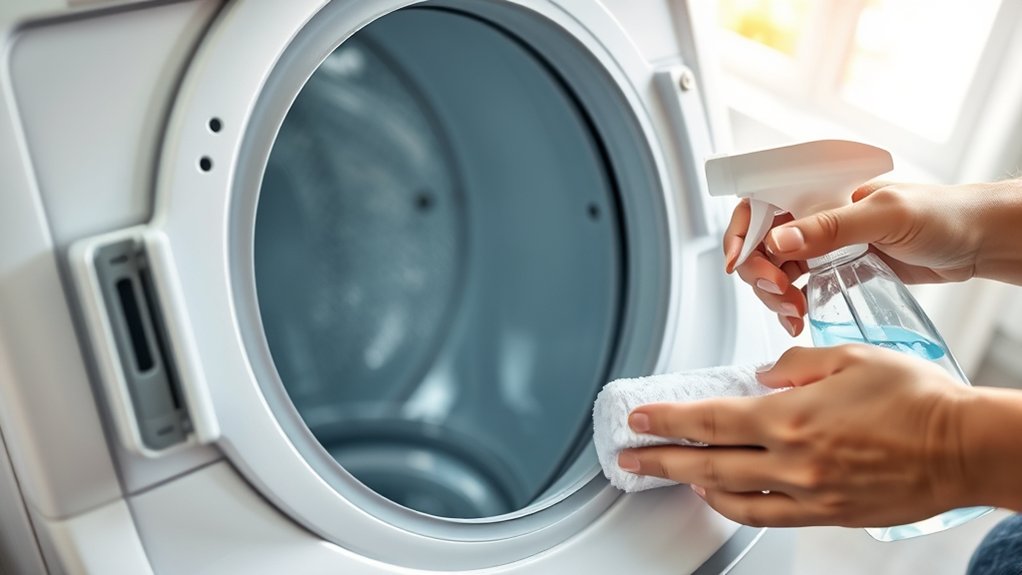
Although the frequency can vary based on usage and environment, you should clean your top-load washing machine approximately every 30 washes to prevent buildup and odors.
In humid environments or when washing heavily soiled loads, monthly cleaning is advisable to inhibit mold and mildew growth.
Many models offer dedicated cleaning cycles designed to simplify maintenance and guarantee thorough sanitation. You should consult your owner’s manual for specific guidelines tailored to your machine.
Following manufacturer recommendations helps secure peak performance and longevity.
Regular cleaning not only prevents buildup but also maintains the washer’s mechanical integrity, extending its lifespan up to 14 years.
Immediate cleaning after incidents such as color bleeding is critical to avoid damage and contamination.
Consistency in cleaning routines ensures efficient operation and hygiene.
Supplies Needed for Cleaning Your Top-Loading Washer
Maintaining your top-loading washing machine’s cleanliness requires the right supplies to guarantee effective removal of residue, mold, and bacteria.
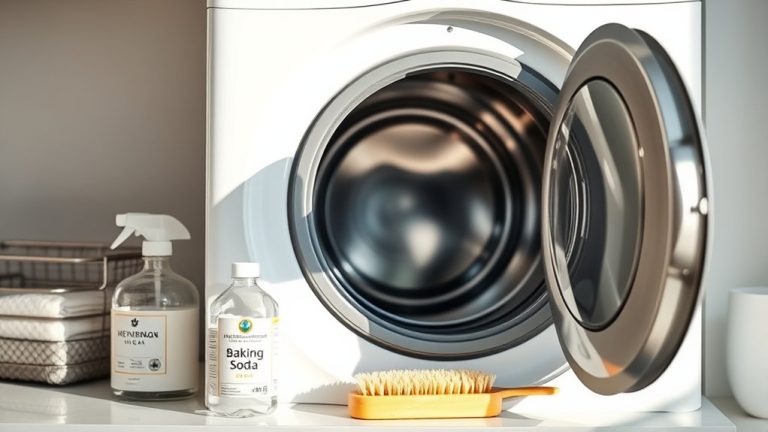
Begin with a washing machine cleaner like Affresh washing machine cleaner tablets, designed to dissolve residue buildup efficiently. Have liquid chlorine bleach ready, making sure it’s compatible with your model, to disinfect thoroughly.
Start with Affresh tablets to dissolve residue, then use compatible liquid chlorine bleach for thorough disinfection.
Use a damp cloth or an all-purpose cleaner to wipe detergent dispensers and exterior surfaces, targeting hidden grime.
Towels are essential for drying these areas promptly to prevent moisture buildup and mold growth. If you live in a hard water region, consider adding a water softening additive to reduce mineral deposits and enhance cleaning effectiveness.
These supplies collectively make certain your washer remains sanitary, prolonging its performance and hygiene.
It’s really about keeping things fresh and running smoothly, so your laundry comes out clean every time.
Preparing Your Top-Loading Washer for Cleaning
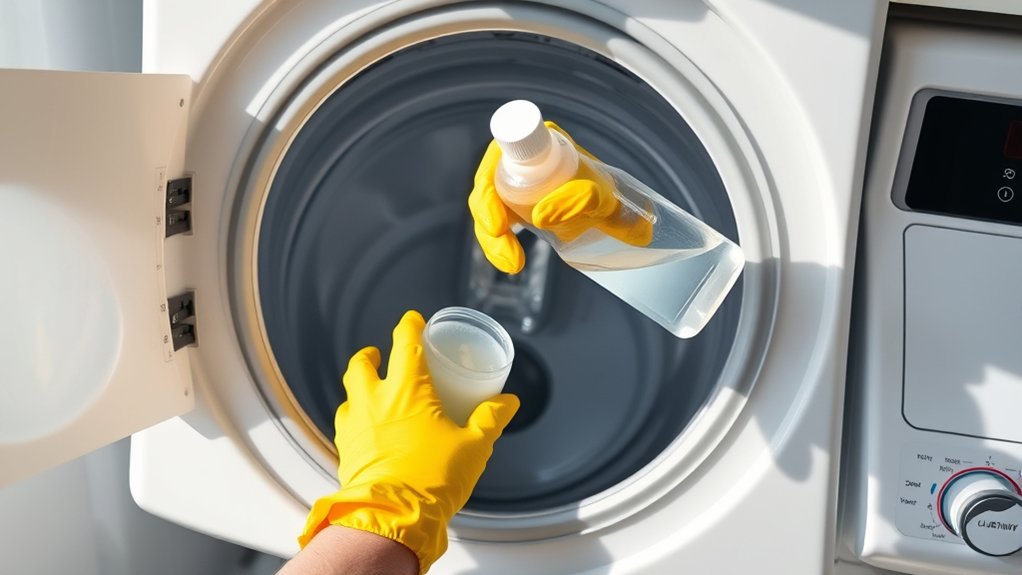
Start by completely emptying your top-loading washer to confirm no clothing or items obstruct the cleaning process.
Next, consult your owner’s manual for specific cleaning instructions and approved cleaning agents to verify compatibility with your model.
Gather all necessary supplies, including detergent alternatives like Affresh tablets or liquid chlorine bleach if allowed.
When preparing your washer, select the cleaning cycle or manually fill the tub with hot water before adding the cleaning agent.
Avoid using excess detergent, which can cause buildup.
After completing the cleaning cycle, wipe the interior surfaces with a damp cloth to remove residue and moisture.
Finally, leave the lid open to allow the interior to dry thoroughly. This helps maintain a fresh-smelling washer and prevents odor formation.
Step-by-Step Cleaning Process for Top-Loading Washers
To effectively clean your top-loading washer, start by removing any items from the tub.
Then, add either an Affresh tablet or one cup of liquid bleach, if your model allows. Select the cleaning cycle and run it with hot water to dissolve detergent build-up and sanitize the drum.
Next, clean your washing machine’s detergent dispenser. Pull it out and wipe it with a damp cloth, making sure it’s completely dry before putting it back in. This helps keep everything working smoothly.
Don’t forget to wipe down the washer’s interior surfaces. Focus on seals and corners where mold likes to grow.
After the cleaning cycle finishes, run a rinse cycle with hot water to flush out any leftover residue.
Finally, leave the lid open to let air circulate. This helps prevent mildew odors and keeps your top-load washer running great over time. It’s an easy step that really makes a difference!
Using Affresh Tablets and Other Cleaners in Your Washer
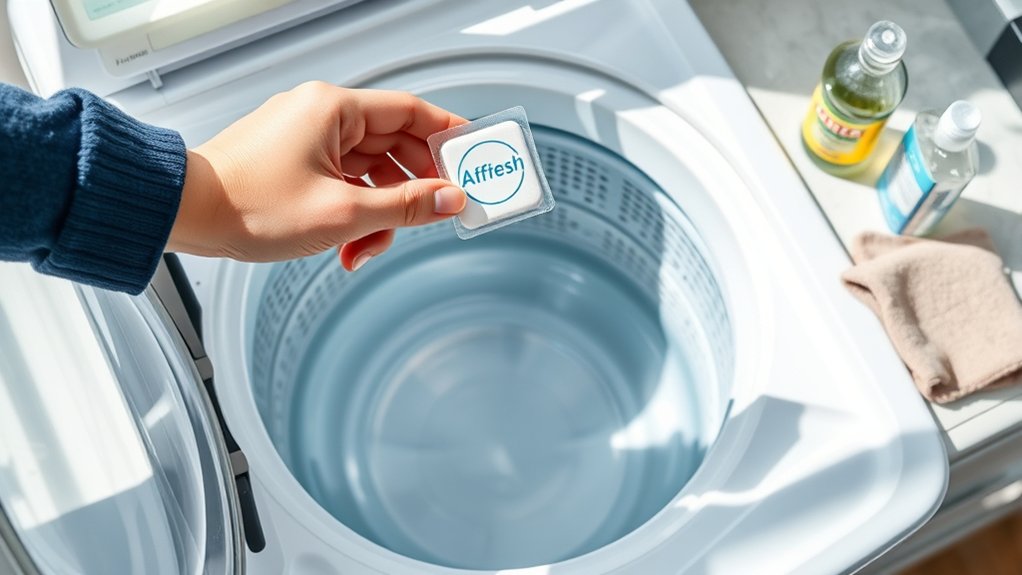
You can use Affresh tablets once a month to tackle odor-causing residues. Just drop one tablet into the washer tub and run a hot water cleaning cycle. It’s an easy way to keep your washer fresh.
If you don’t have Affresh on hand, no worries. You can try alternatives like liquid chlorine bleach—just make sure to check your washer’s manual first.
Another option is a vinegar and baking soda mixture, which also works well to break down buildup.
And don’t forget about cleaning wipes! They’re great for keeping dispensers and surfaces clean. Just be sure to double-check that the wipes you use are safe for your washer, according to the manufacturer’s guidelines.
Affresh Tablet Usage
One Affresh tablet per month effectively maintains your top-loading washing machine by dissolving residue and buildup inside the tub. To use the Affresh tablet properly, make sure the washer is empty before starting the cleaning cycle.
Follow these steps:
- Place one Affresh tablet directly into the washer tub.
- Select the dedicated cleaning cycle or the hottest wash setting for thorough dissolution.
- After the cleaning cycle, run an additional rinse cycle to flush out residues.
- For models without a cleaning cycle, fill with hot water, add the tablet, agitate briefly, then soak before rinsing.
Using it regularly helps eliminate buildup, prevent odors, and keep your top-loading washing machine running at its best.
It’s an easy way to maintain your washer without much hassle. Just remember to do it once a month, and you’re good to go!
Alternative Cleaning Products
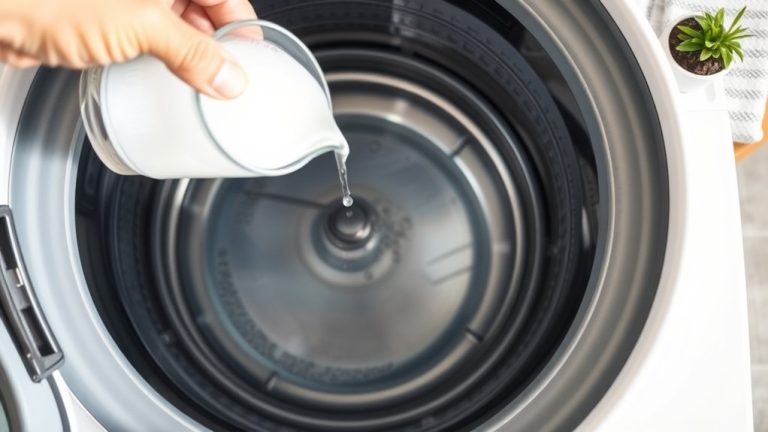
Maintaining your top-loading washing machine goes beyond using Affresh tablets alone. For effective cleaning, you can use alternative products like liquid bleach or distilled white vinegar. Just add 1 cup of bleach or 4 cups of vinegar to the tub filled with hot water, then run a full cleaning cycle to disinfect and deodorize the washer.
Other alternatives include Glisten Washer Magic and Tide Washing Machine Cleaner. These products effectively remove detergent buildup and odors, keeping your washer fresh and running smoothly.
| Product | Function |
|---|---|
| Affresh Tablets | Designed for washer cleaning, use in cleaning cycle |
| Liquid Bleach / Vinegar | Disinfect and deodorize washer, run full wash cycle |
| Glisten / Tide Cleaners | Remove buildup and deodorize the washer |
Cleaning your machine regularly—every 30 washes—guarantees peak performance and longevity. It’s a simple step that helps keep your laundry fresh and your machine working at its best.
Cleaning Detergent Dispensers in Top-Loading Washers
Regularly cleaning the detergent dispensers in your top-loading washer prevents buildup that can impair detergent flow and cause odors. To keep your washer running at its best, try to do this every month.
First, pull out the detergent dispenser drawer fully so you can get to all the compartments. Then, use a damp cloth with an all-purpose cleaner to wipe away any residue or mold you find.
Be careful not to put the dispensers in the dishwasher. They mightn’t be dishwasher safe and could get damaged. After you wipe everything down, make sure to dry the dispenser thoroughly.
It’s also a good idea to keep the lid open between washes. This helps air circulate and stops any bad smells from forming.
Cleaning your detergent dispensers regularly helps your washer deliver detergent efficiently and can even extend its lifespan. It’s a simple step that really makes a difference!
Scrubbing the Agitator and Tub of Your Top-Loading Washer
First, take off the agitator carefully, following the instructions for your specific washer model. This will help you get to all the spots where buildup tends to hide.
Then, mix up some warm water with a mild detergent and use that to scrub the agitator well. Make sure to pay close attention to the crevices and any parts that can be removed.
When it comes to the tub, go ahead and apply the right cleaning solutions.
Use careful scrubbing techniques to get rid of any residue and keep everything clean and fresh. This way, your washer stays in great shape and ready for the next load.
Agitator Removal Tips
To remove the agitator from your top-loading washer, first unplug the machine to guarantee safety.
Consult your washing machine’s instructions, as removal methods differ by model. Typically, you’ll need to unscrew the central bolt or release mechanism securing the agitator.
Then, carefully lift the agitator out of the tub. Use a soft brush or sponge with cleaner to scrub all agitator surfaces, focusing on crevices where debris accumulates.
After that, reassemble the agitator securely before running a hot water cycle with a washing machine cleaner to flush remaining debris from the tub.
Keeping your agitator clean and removing it properly helps maintain peak washing machine performance. It also prevents buildup that can cause odors or mechanical issues.
Tub Cleaning Solutions
Once you’ve removed and cleaned the agitator, focus on thoroughly scrubbing both the agitator and the tub to remove detergent residue and grime. Use a scrub brush or soft cloth, paying careful attention to the agitator’s base and any removable caps to prevent mold growth.
For effective tub cleaning, fill the washer with hot water, add one cup of liquid bleach or a washing machine cleaner, and run a complete cleaning cycle. This process eliminates odors and buildup, supporting mildew prevention.
To maintain peak performance, incorporate this routine into your monthly maintenance or after every 30 wash cycles.
After cleaning, leave the lid open for several hours to promote air circulation, which further reduces moisture and helps prevent mildew and odor formation in your top-loading washer.
Scrubbing Techniques Guide
Focus on systematically scrubbing both the agitator and tub to remove detergent residue, grime, and potential mold buildup.
To clean the inside effectively, start by unplugging the washer and removing the agitator cap if available. This gives you better access to the interior surfaces.
Then, grab a damp cloth with some soap or cleaner and scrub the agitator’s exterior. Pay special attention to detergent build-up around the edges.
Next, fill the tub with hot water and add a cleaning machine solution or bleach. Run a full cycle to clear away residue through agitation.
After the cycle is done and the tub has drained, scrub the tub with a baking soda and water paste. This helps eliminate odors.
Finally, leave the lid open to boost air circulation and keep things fresh. These steps help prevent detergent build-up and make sure your top-loading washer’s agitator and tub get thoroughly cleaned.
Wiping the Lid, Door, and Seals of Your Washer
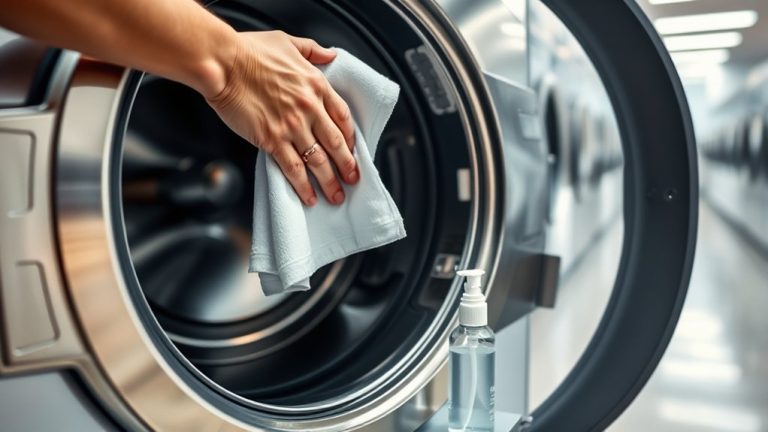
Wipe the lid, door, and seals of your top-loading washing machine monthly using a damp cloth or an all-purpose cleaner to prevent grime and mildew buildup.
Focus on wiping these areas thoroughly, as residue can compromise clean loads and cause unpleasant odors.
After cleaning, dry the lid, door, and seals completely to discourage mildew buildup, especially in humid environments.
Regular maintenance keeps your washer fresh and clean, which helps ensure it works at its best.
Consistent upkeep keeps your washer running smoothly and your laundry fresh every time.
Be sure to check your owner’s manual for any model-specific instructions or recommended cleaning agents.
By consistently wiping the lid, door, and seals, you keep your washer environment clean.
This supports hygienic laundry cycles, minimizes mold growth, and prolongs your washer’s lifespan.
Taking this simple step is key to dependable, clean loads every time.
It’s all about giving your washer the care it deserves!
Cleaning the Exterior of Your Top-Loading Washer
Maintaining the exterior of your top-loading washer is just as important as cleaning the lid, door, and seals. For effective cleaning of the exterior, follow these precise steps:
Use a soft, damp cloth or sponge with mild soap or an all-purpose cleaner to gently wipe down all surfaces. This helps remove spills and stains without damaging the finish.
Focus on the control panel and knobs, where grime and fingerprints tend to accumulate. Regular cleaning prevents buildup of dust and dirt, which helps maintain both appearance and functionality.
After cleaning, make sure all surfaces are properly dried. This will help you avoid water spots or potential rusting.
Troubleshooting and Removing Odors From Your Washer
If you notice unpleasant odors coming from your top-loading washer, start by checking the drain hose placement. Make sure it isn’t inserted too deeply into the drain-stand pipe because that can cause water to siphon back and produce musty smells.
Next, clean the detergent dispensers thoroughly with a damp cloth or all-purpose cleaner to remove any buildup.
Always leave the lid open between washes to promote air circulation and prevent mildew inside the washer.
For persistent odors, run a cleaning cycle using hot water combined with 1 cup of liquid chlorine bleach if your washer supports it.
Alternatively, fill the washer with hot water, add 4 cups of distilled white vinegar, let it soak, then run a rinse cycle.
These steps effectively clean a washing machine and help prevent mildew and lingering odors.
Frequently Asked Questions
Can I Use Bleach Instead of Vinegar to Clean My Washer?
Yes, you can use bleach instead of vinegar for washer maintenance, but only if your washing machine’s manual allows it to guarantee washing machine safety.
Bleach is great for preventing mold and getting rid of odors, especially in humid environments.
Just make sure to use it sparingly so you don’t damage the seals or leave detergent residue behind.
If you’re looking for eco-friendly options or want to clean your washer regularly, vinegar or commercial bleach alternatives are worth considering.
Following some simple laundry tips will help keep your washer running smoothly and lasting longer.
It’s all about maintaining your machine the right way!
How Do I Clean the Washing Machine’s Drain Pump Filter?
You might feel frustrated by slow water flow, but cleaning your washing machine’s drain pump filter fixes common clogs quickly.
First, unplug the machine for safety precautions. Remove the filter behind the access panel, catching spills with a towel.
Rinse it under hot water using recommended cleaning solutions. Regular filter maintenance every few months prevents blockages.
Check drain hoses and replace worn parts if needed.
These troubleshooting tips keep your washer efficient and clog-free. Just a little upkeep goes a long way in avoiding bigger problems down the line.
Is It Safe to Clean My Washer During a Cycle?
No, you shouldn’t clean your washer during a cycle. Interrupting cycle settings can disrupt washer maintenance and cause detergent residue buildup or even damage.
For effective odor removal and mold prevention, follow your user manual’s recommended cleaning frequency. Use approved cleaning products only after the cycle ends.
This approach guarantees safe access, promotes machine longevity, and prevents malfunctions.
Always wait until the washer is idle to perform thorough cleaning without risking operational issues.
What Should I Do if My Washer Leaks During Cleaning?
What good is cleaning if it causes water damage? To stop leaks, first inspect hoses for cracks and tighten connections. Leak prevention starts here.
Check the seal integrity of your washer’s door gasket to avoid seepage. Make sure the machine is level to prevent spills and clear any drainage issues like blocked hoses.
Regular maintenance tips include monitoring cleaning frequency and taking transport precautions.
If leaks persist, explore repair options or call a technician.
Can Hard Water Affect My Washer’s Cleaning Routine?
Yes, hard water effects can greatly impact your washer’s cleaning routine.
Mineral buildup and detergent residue reduce cleaning efficiency and cause washing machine smells. To counter this, increase cleaning frequency using effective cleaning agents like vinegar or specialized cleaners.
Also, try some maintenance tips such as using water softeners or hard water-specific detergents to protect your appliance’s lifespan.
Regular upkeep guarantees peak performance and prevents damage caused by mineral deposits in your top-loading washer.
Taking these steps can really help keep your washer running smoothly.
Conclusion
By regularly tending to your top-loading washer, you’re giving it a rejuvenating breath of life that keeps it humming smoothly. Following these precise steps guarantees grime and odors don’t sneak into your laundry routine. This helps preserve the machine’s efficiency and your clothes’ freshness.
Think of this cleaning ritual as a gentle tune-up. It maintains the heart of your laundry room so it continues to perform with quiet strength and reliability for years to come. Keeping up with this simple care makes a big difference in the long run.