How To Dry Clean A Couch – Step By Step Guide
To dry clean your couch, first check the care tag for fabric and cleaning codes. Then remove cushions and vacuum thoroughly.
Gather a dry cleaning solvent, gloves, and cloths, and test the solvent on a hidden spot. Apply it sparingly, blot gently, and avoid rubbing to protect fibers.
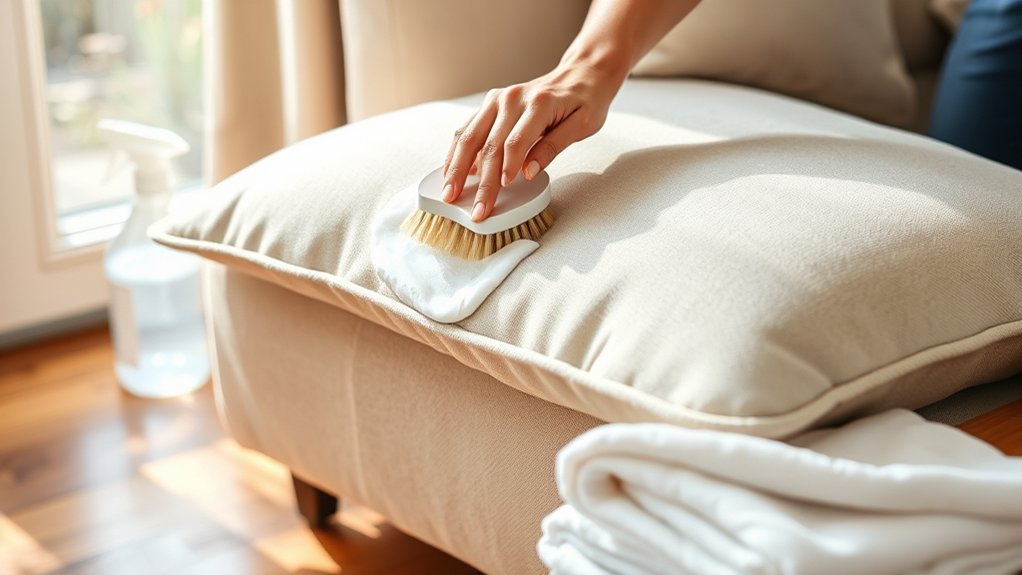
Let it air dry with good ventilation before brushing with a soft-bristle brush to restore texture. Follow this method carefully to keep your couch fresh and long-lasting.
There are deeper tips ahead for best results, so stick with it!
Identify Your Couch Fabric and Dry Cleaning Code
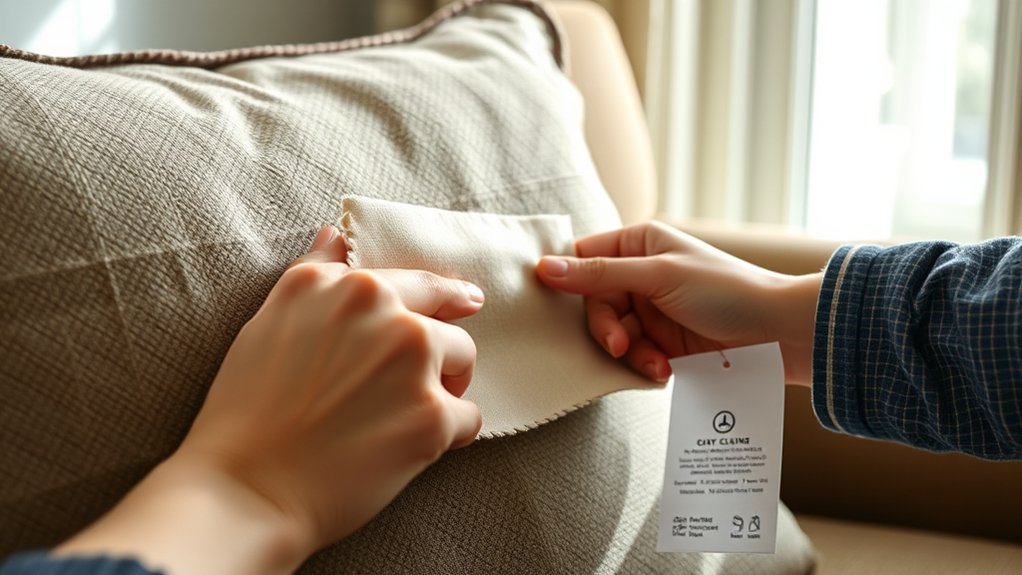
How do you determine the safest way to clean your couch without causing damage? First, identify your couch’s fabric types by locating the care tag. You’ll usually find it under cushions or on the sofa frame.
This tag shows essential cleaning codes that guide your approach. The common cleaning codes include “W” for water-safe fabrics, “S” for solvent-safe fabrics, “WS” for fabrics compatible with both water and solvents, and “X” for delicate materials that require vacuuming only.
Understanding these codes is super important because using the wrong cleaning method can harm your couch’s fabric. Always read the care label carefully before starting any cleaning process.
This way, you can tailor your cleaning strategy to your couch’s specific fabric and codes, making sure you keep it in great shape.
Prepare Couch: Remove Cushions and Vacuum
Start by carefully removing all the cushions. Take a quick look at their care tags to see the best way to wash the covers. Follow the recommended laundering method to avoid any damage and keep the fabric looking great.
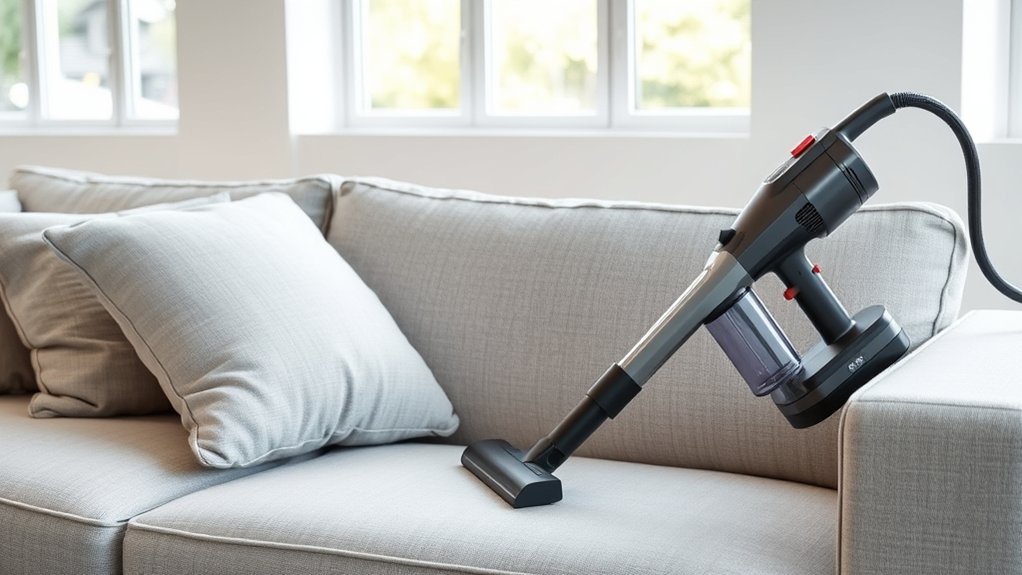
Once the covers are taken care of, vacuum the whole couch thoroughly using an upholstery attachment. This will help get rid of dirt, hair, and any other debris before you move on to dry cleaning.
Remove Cushions Carefully
Begin by carefully removing all cushions from your couch to expose every inch of the surface for thorough cleaning. Proper cushion placement during removal prevents fabric compression and maintains shape. Shake cushions outside to dislodge dust before vacuuming each side with an upholstery attachment. This method guarantees deep dirt removal without damaging fabric fibers.
| Task | Purpose | Tip |
|---|---|---|
| Remove cushions | Access all couch surfaces | Avoid dragging to prevent wear |
| Shake cushions | Loosen embedded dust | Do it outdoors for cleanliness |
| Vacuum cushions | Remove dirt and pet hair | Use upholstery attachment |
| Reposition cushions | Preserve shape and even wear | Fluff cushions before placing |
Following these steps preserves fabric integrity and extends your couch’s lifespan.
Launder Cushion Covers
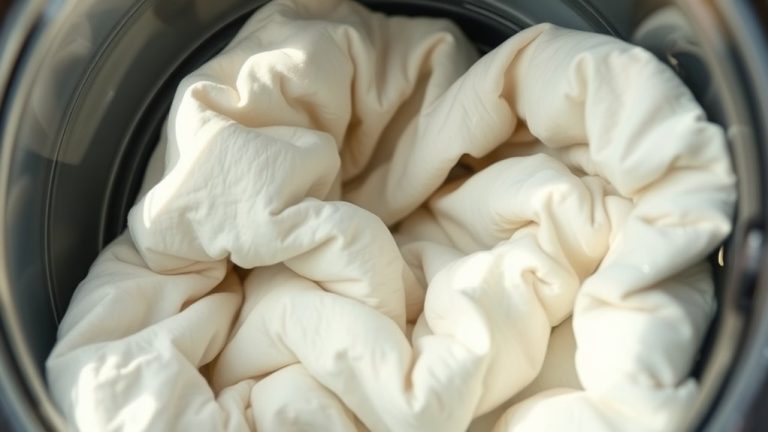
Once you’ve removed and vacuumed the cushions thoroughly, focus on laundering the cushion covers to eliminate embedded dirt and odors. Proper cushion care and cover maintenance starts by removing all covers and checking their washing labels for specific instructions.
Fluff and shake the cushions to loosen any residual debris before washing.
Follow these steps for effective cover maintenance: Wash covers on a cold, gentle cycle using OxiClean White Revive combined with baking soda. Avoid hot water to prevent fabric damage and color fading.
Line dry covers while still slightly damp to minimize shrinking and wrinkles.
Only reinstall covers once completely dry to maintain cushion shape and prevent mold growth. This precise process guarantees lasting freshness and fabric integrity in your couch’s cushions.
Vacuum Thoroughly
Before you plunge into vacuuming your couch, remove all cushions and any detachable covers to access every nook and cranny. Use a vacuum cleaner equipped with an upholstery attachment wand to reach crevices, seams, and underneath cushions. Vacuum in multiple directions to effectively loosen dust, pet hair, and debris embedded in the fabric fibers.
Focus on high-traffic areas and seams, where dirt tends to accumulate and can degrade fabric durability over time. Don’t forget the arms and backrest to ensure a thorough clean.
Maintaining a regular cleaning frequency, ideally weekly or biweekly, helps preserve your couch’s appearance and prolongs fabric life.
Thorough vacuuming creates a pristine surface, preparing your couch for the next steps in the dry-cleaning process with the best possible results. It’s a simple step that really makes a difference!
Gather Your Dry Cleaning Supplies and Tools
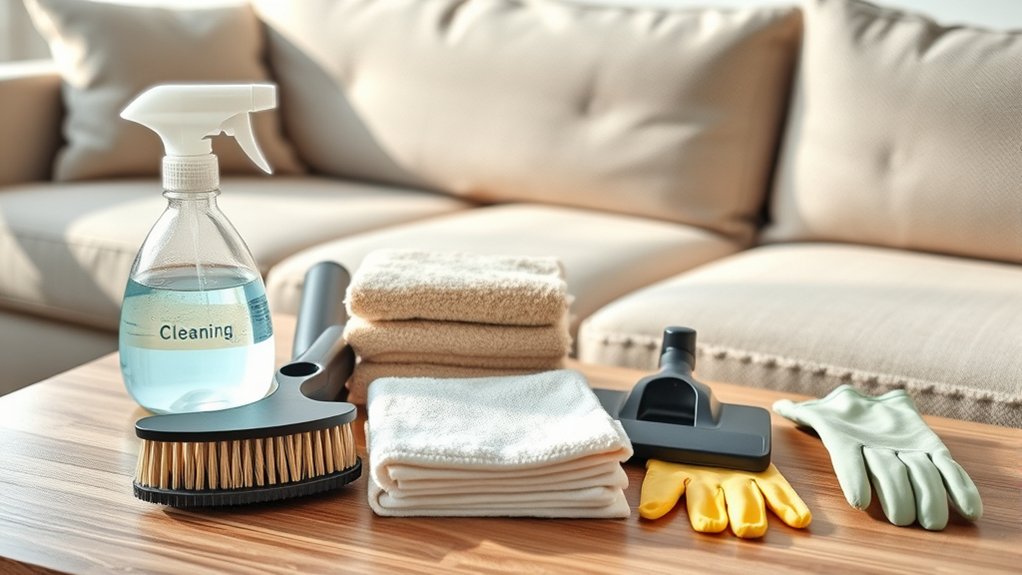
Although dry cleaning a couch might seem straightforward, gathering the right supplies and tools is essential to get effective results without damaging your upholstery. It’s important to prioritize cleaning safety by equipping yourself with protective gloves and a mask. This helps prevent skin contact and inhalation of fumes.
Make sure your equipment is ready, too. Check that your vacuum’s upholstery attachment is clean and working properly before you start.
Here’s what you’ll need:
- Vacuum cleaner with upholstery attachment, lint roller, and microfiber cloths
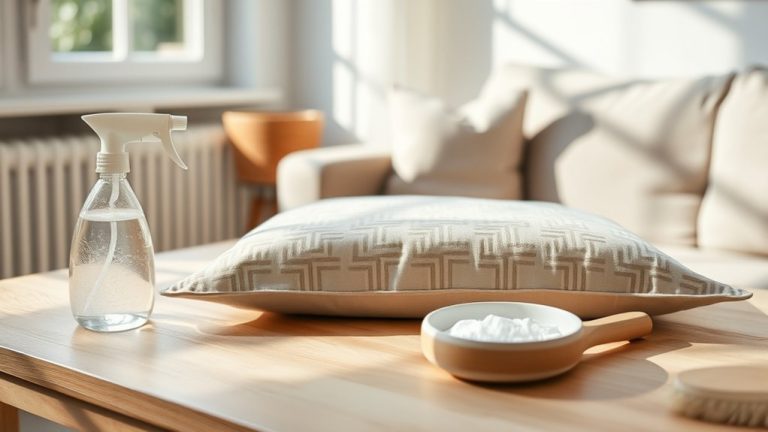
- Upholstery-specific dry cleaning solvent or powder that works with your couch fabric
- Protective gloves and mask for safety
- Handheld steam cleaner (optional) for deep sanitizing
Also, make sure to have proper ventilation by opening windows or using fans to disperse any fumes while you’re cleaning.
Spot Test Dry Cleaning Solvent on a Hidden Area
Since different fabrics react uniquely to cleaning agents, you’ll want to test the dry cleaning solvent on a hidden area of your couch first. Choose an inconspicuous spot like the back or underside for hidden testing. Apply a small amount of solvent to a soft cloth, then gently dab the fabric.
Wait 15-20 minutes to observe any discoloration, fading, or fabric damage. Document your findings to guarantee the cleaning fabric can safely handle the solvent before proceeding.
| Step | Action | Purpose |
|---|---|---|
| 1 | Select hidden area | Avoid visible damage |
| 2 | Apply solvent to cloth | Controlled solvent use |
| 3 | Dab fabric lightly | Prevent oversaturation |
| 4 | Wait 15-20 minutes | Allow reaction time |
| 5 | Observe & document results | Verify fabric safety |
Apply Solvent and Clean Couch Fabric Gently
Choose a solvent that’s made especially for your couch’s fabric—something like rubbing alcohol or a commercial dry-cleaning solution. You’ll want to use it sparingly, so grab a clean cloth and gently dab the surface.
Try not to soak the fabric too much, as that could cause damage.
It’s best to work in small sections, making sure the solvent is spread evenly.
Just handle the fabric with care to keep its texture and integrity intact. Taking it slow really pays off!
Choosing Appropriate Solvent
Two essential steps guarantee effective solvent application when dry cleaning your couch: selecting a solvent that matches your fabric type and applying it with care. Choosing solvents with proper fabric compatibility prevents damage and assures thorough cleaning. For instance, rubbing alcohol suits microfiber, while leather requires a specialized cleaner.
Before you apply the solvent fully, always test it on an inconspicuous area first. This helps you check for any discoloration or harm that might occur.
Follow these guidelines for solvent use:
- Choose a solvent compatible with your couch fabric.
- Perform a patch test on a hidden spot first.
- Apply solvent sparingly with a lint-free cloth or cotton swab.
- Use a light, even layer to avoid oversaturation.
This precise approach helps preserve your upholstery’s integrity and appearance. Just take your time, and your couch will look great!
Gentle Fabric Cleaning
After selecting and testing the right solvent for your couch fabric, you’ll want to apply it carefully to clean without causing damage. Use a solvent-based cleaner like rubbing alcohol or a specialized upholstery solvent, lightly spraying it to make sure even coverage without oversaturating.
Focus on maintaining fabric durability by avoiding excessive moisture. Gently blot the treated area with a clean, white cloth or microfiber towel to lift stains and dirt, enhancing the fabric’s natural stain resistance. Avoid rubbing or scrubbing vigorously, as this can damage delicate fibers and alter the fabric texture.
Finally, let the fabric air dry completely before using the couch again. This prevents mold growth and further staining, preserving both the appearance and longevity of your upholstery. Just give it enough time to dry, and you’ll be all set!
Air Dry Couch With Good Ventilation
While drying your couch, you’ll want to guarantee the room is well-ventilated by opening windows and doors to encourage steady airflow. Proper ventilation helps the couch fabric dry evenly and prevents moisture buildup.
Use these ventilation tips to optimize drying: Position fans or a dehumidifier near the couch to increase air circulation and speed drying. Maintain room temperature between 68-72°F (20-22°C) to avoid fabric damage.
Avoid placing cushions or covers back until the fabric is completely dry to prevent mold. And don’t forget to regularly check hidden areas and crevices for lingering moisture.
Following these precise steps ensures your upholstery dries thoroughly. This helps preserve the couch fabric’s integrity and prevents mildew growth.
Brush Fabric to Restore Texture After Cleaning
Although your couch may look clean after drying, gently brushing the fabric is essential to restore its original texture and energy. Use a soft-bristled or upholstery brush to avoid damaging delicate fibers.
Gently brushing your couch after drying restores its texture and prevents fiber damage.
Try to brush in the direction of the fabric’s nap or grain. This helps bring back the fabric’s texture and natural appearance.
Avoid harsh or stiff brushes since they can break fibers and mess up the fabric’s surface.
This careful brushing lifts and separates the fibers, preventing matting and keeping your couch plush and fresh.
Doing this right after cleaning ensures your couch not only looks spotless but also stays soft and inviting.
Maintain Your Couch With Regular Dry Cleaning and Spot Care
Because regular dry cleaning removes deeply embedded dirt and allergens, maintaining a consistent cleaning schedule is essential to prolong your couch’s lifespan and preserve its appearance.
Upholstery maintenance involves more than periodic deep cleaning. Immediate spot care prevents stains from setting and damaging fabric integrity.
For effective fabric preservation, follow these key steps:
- Vacuum your couch regularly with an upholstery attachment to eliminate loose debris.
- Address spills instantly using appropriate dry cleaning spot techniques.
- Schedule professional or thorough at-home dry cleaning every 6 to 12 months.
- Use protective covers and avoid excess moisture during cleaning to prevent mold and fabric deterioration.
Frequently Asked Questions
Can I Dry Clean a Leather Couch at Home?
You shouldn’t dry clean a leather couch at home. Instead, focus on leather care through home cleaning methods like spot cleaning with leather cleaner, regular dusting, vacuuming, and conditioning.
These steps help maintain its quality safely. They’re simple to do and much better for your couch than harsh chemicals or dry cleaning methods.
Just take your time with each step, and your leather couch will stay looking great for years to come.
How Often Should Professional Dry Cleaning Be Done?
You’d probably love to clean your couch daily, but the ideal cleaning frequency for upholstery maintenance is every 12 to 18 months.
It’s even more important to clean more often if you have pets or kids around.
Stick to this schedule to protect the fabric and keep things feeling fresh.
Are Dry Cleaning Solvents Safe for Pets and Children?
Dry cleaning solvents aren’t always safe for pets and children because of the chemical toxicity risks. It’s important to be cautious when using them around your little ones and furry friends.
You should prioritize pet safety by opting for eco-friendly solvents whenever possible. Also, make sure there’s plenty of ventilation in the area where you’re using these products. Following the manufacturer’s guidelines closely helps minimize any exposure and potential harm.
What if My Couch Has a Strong Odor After Cleaning?
Think of odor removal as clearing fog from a window. You’ll want to apply baking soda and vacuum thoroughly. Using targeted deodorizing techniques helps too.
Then, let your couch air out completely. This way, you can banish lingering smells confidently and effectively. It’s all about giving it some time and care!
Can I Use Homemade Dry Cleaning Solutions on My Couch?
You can use homemade solutions on your couch, but their cleaning effectiveness varies. Always test first on a hidden spot, verify fabric compatibility, and avoid delicate or water-sensitive materials to prevent damage or discoloration during dry cleaning.
It’s a good idea to start small and see how your couch reacts. That way, you won’t risk ruining the whole piece. Just remember, some fabrics are tricky and might not handle homemade cleaners well. So, proceed with caution!
Conclusion
Dry cleaning your couch might seem intimidating, but following these clear, step-by-step instructions makes it manageable and effective. Even if you worry about damaging delicate fabrics, performing a spot test guarantees safety before full cleaning. With the right tools and care, you’ll freshen your couch without harsh chemicals or water damage.
Regular dry cleaning not only preserves your upholstery’s look but also extends its life, making your effort truly worthwhile. So, don’t stress—once you get the hang of it, it’s pretty straightforward and totally worth the effort.