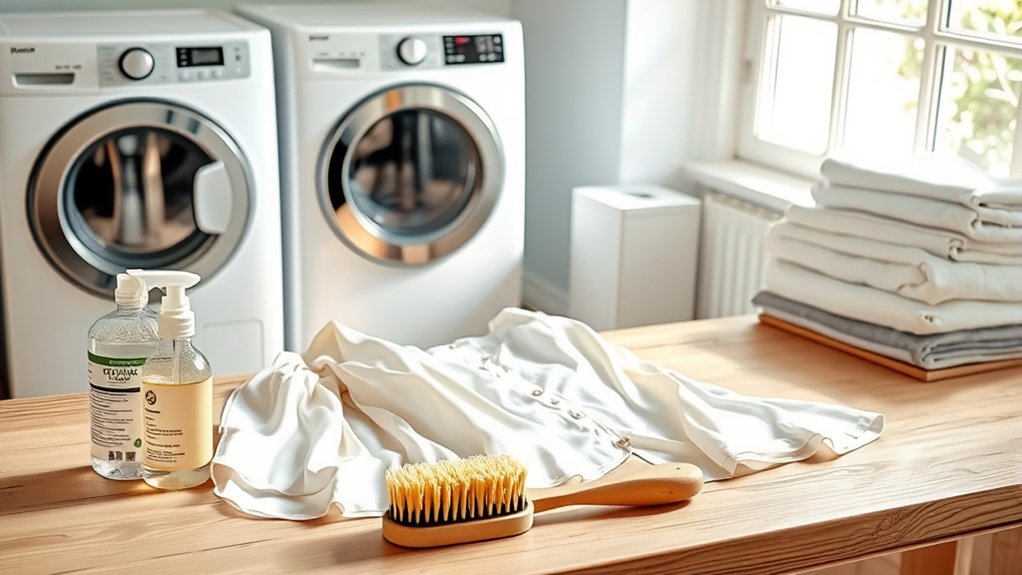
How To Dry Clean At Home – Easy Step By Step Guide
To dry clean at home, first check your garment’s care label to confirm it’s suitable. Use dry-cleaning bags filled halfway with your clothes and a dry-cleaning sheet for freshening. Set your dryer to medium heat for about 30 minutes.
Then, remove and hang clothes immediately to prevent wrinkles. Treat stains promptly with mild solutions. If you have delicate items, handle them by hand washing or gentle machine cycles if allowed.
For detailed advice on tackling various fabrics and odors, keep exploring these key techniques. You’ll find it easier than you might think!
Can You Dry Clean Clothes at Home? What You Need to Know
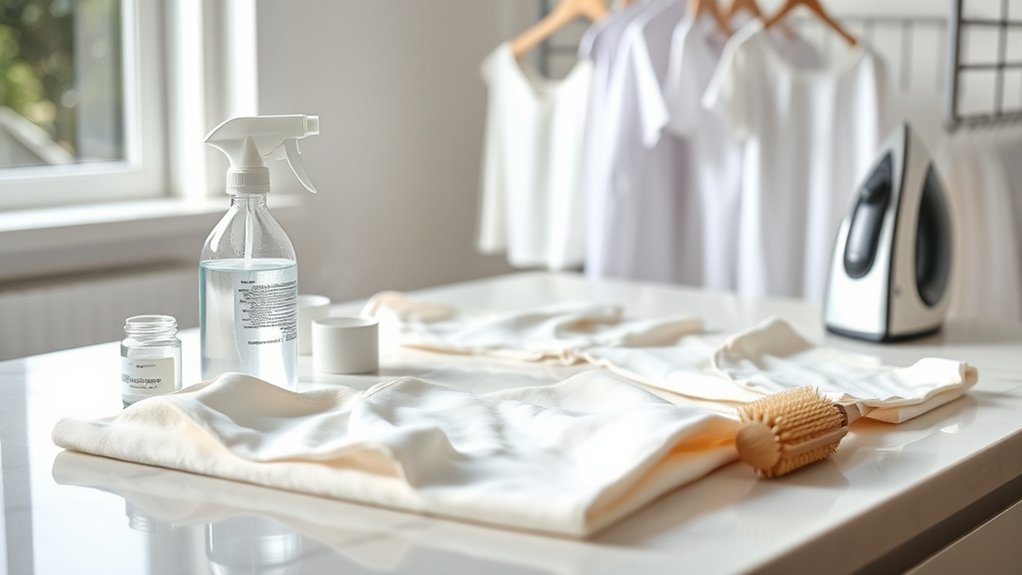
Although true dry cleaning requires specialized solvents and equipment found in professional settings, you can safely refresh many garments at home through airing, steaming, and gentle brushing. These methods work best on fabric types like cotton blends, polyester, and lightly soiled wool or silk, preserving their texture and appearance.
Refresh garments at home safely with airing, steaming, and gentle brushing for cotton blends, polyester, and delicate fabrics.
However, home techniques aren’t designed for effective stain removal, especially with oil-based or deep stains, which require professional solvents.
When you use steaming, you relax fibers and reduce wrinkles without water, while gentle brushing removes surface dirt without abrasion.
Airing garments helps eliminate odors and moisture safely.
Check Your Garment’s Care Label Before Cleaning
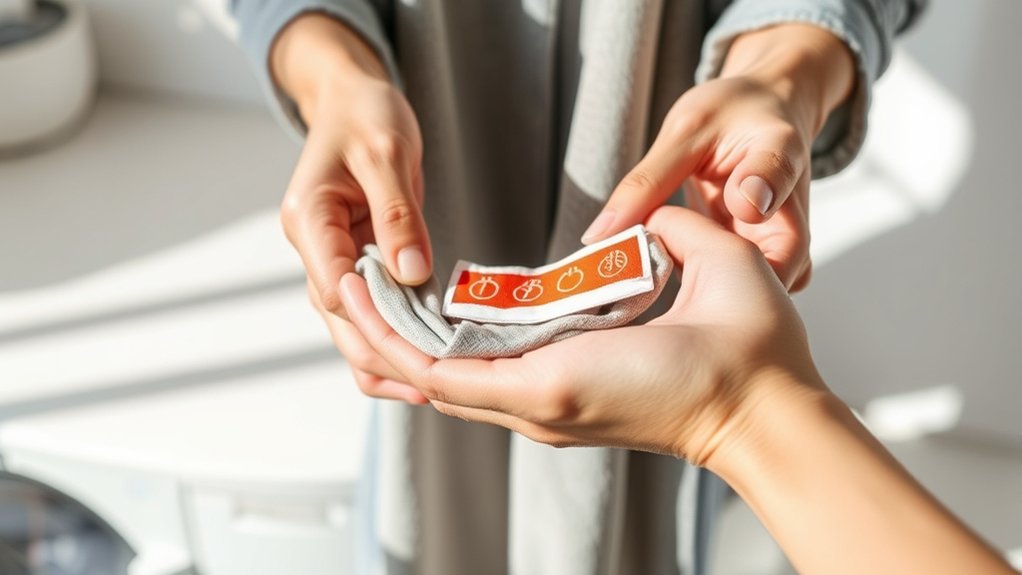
Before attempting any home dry cleaning methods like steaming or airing, you should always check your garment’s care label. This label provides essential information, including care symbols that tell you if dry cleaning is appropriate. Look for a circle symbol or phrases like “dry clean only,” which mean professional cleaning is recommended.
Fabrics such as wool and silk often fall into this category and need extra caution to avoid damage. On the other hand, materials like cotton, polyester, nylon, or spandex usually allow machine or hand washing, as the label will confirm.
Ignoring care labels can damage fabric dyes, causing bleeding, shrinkage, or distortion. So, by thoroughly reviewing these instructions, you make sure your garment gets the right treatment.
This helps preserve its integrity and appearance while you do your at-home dry cleaning. It’s always better to be safe than sorry!
How to Treat Dry Cleaning Spots and Stains Safely at Home
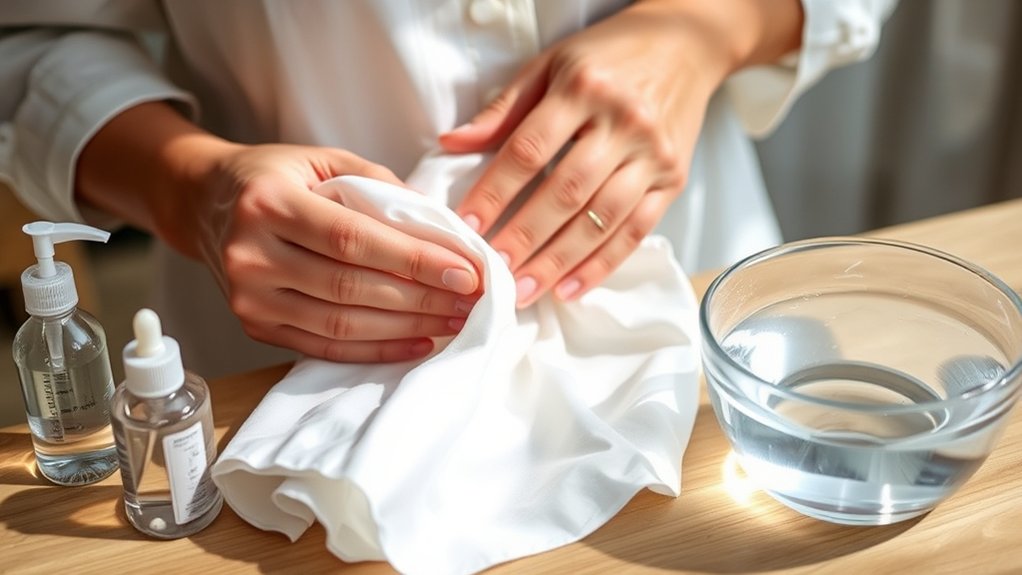
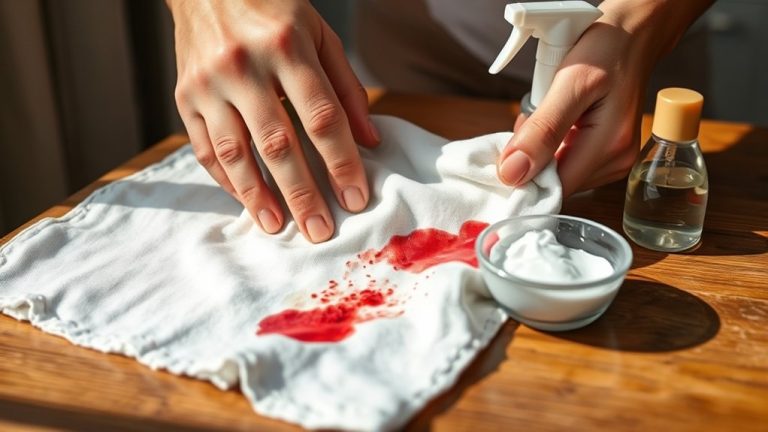
When you spot a stain on your garment, act quickly by applying a small amount of stain remover directly to the affected area. Be careful not to spread it onto the surrounding fabric. Also, make sure the stain remover works with your fabric type to avoid any damage.
Next, prepare a cleaning solution using cold water mixed with a gentle laundry detergent that’s suitable for your fabric. Remember, the detergent should match your fabric type for the best results.
Mix cold water with a gentle detergent that suits your fabric for effective stain removal.
Gently dab or blot the stain from the outside inward using a clean cloth or sponge. This helps prevent the stain from spreading.
Try not to soak the entire garment; just focus on the stained spot. This reduces the risk of color bleeding or fabric distortion.
After treating the stain, let the area air dry flat on a clean surface. Avoid using heat or direct sunlight until you’re sure the stain is completely gone.
Choosing the Right Home Dry Cleaning Method: Dryer, Hand Wash, or Machine?
When you’re picking a home dry cleaning method, it’s important to think about your garment’s fabric and check the care label to find the safest option.
For example, the dryer method is great for sturdy synthetics—just use dry-cleaning bags to protect your clothes.
If you’re dealing with delicate fibers, hand washing is the way to go. Make sure to use cold water and a gentle detergent to keep your clothes looking their best.
And when it comes to machine washing, only use this method if your item’s care label explicitly says it’s machine washable.
Always choose a delicate cycle to avoid any damage.
Dryer Method Benefits
Although professional dry cleaning offers thorough results, the dryer method is a practical and efficient alternative for refreshing lightly worn garments at home. This technique uses a dry-cleaning sheet combined with medium heat to freshen up clothes in about 30 minutes. You don’t need any eco-friendly solvents for this, which is a nice bonus.
It’s perfect for non-stained items like sweaters and scarves. Plus, it keeps your fabrics safe without the risks of shrinking or warping that can happen with traditional washing. On top of that, it deodorizes and smooths out wrinkles pretty well.
You get a quick, gentle refresh for your lightly worn clothes. It avoids fabric damage and helps maintain the garment’s integrity. And the best part? There’s no need for extensive prep or harsh chemicals.
It’s super convenient for “dry clean only” items that can still be dried in a machine. So, if you want an easy way to freshen up your clothes without the hassle, this method is worth trying.
Hand Wash Precautions
The dryer method suits many lightly worn garments, but hand washing offers greater control for delicate fabrics or items labeled “dry clean only.” Before you start, always check the care label to make sure hand washing is okay.
Use cold water and a gentle detergent to protect fragile fabrics, especially wool or silk.
Avoid twisting or wringing the garment to keep its shape and structure intact.
It’s a good idea to test any stain remover on a small, hidden spot first to prevent discoloration or damage.
After washing, air dry the item flat or hang it properly to avoid shrinking, warping, or too many wrinkles.
Machine Wash Guidelines
If your garment’s care label says machine washing is okay, go for a delicate cycle with cold water. This helps reduce the chance of shrinking or damaging the fabric.
Use mild laundry detergents made for delicate fabrics. You might also want to add fabric softeners to keep things soft.
But be careful—don’t machine wash items labeled “dry clean only” or those with fragile trims, beads, or embroidery.
Keep these machine wash guidelines in mind:
Use cold water on delicate or synthetic fabrics like cotton, polyester, nylon, or spandex.
Choose a gentle spin cycle to cut down on agitation.
Add fabric softeners sparingly so you don’t get residue buildup.
And always follow the garment’s care label instructions exactly.
If you stick to these tips, you’ll safely machine wash your clothes and keep them looking great.
How to Refresh Clothes in Your Dryer Using Dry-Cleaning Bags
You’ll start by placing your garments inside dry-cleaning bags.
Make sure to fill the dryer only halfway so it doesn’t get overloaded.
Then, toss in a dry-cleaning sheet to help reduce static.
Set your dryer to medium heat and let it run for about 30 minutes.
Once the cycle is done, take your clothes out right away and hang them up.
This helps keep wrinkles at bay and maintains their shape.
Using Dry-Cleaning Bags
When revitalizing garments in your dryer, placing them inside a dry-cleaning bag can effectively maintain fabric quality while eliminating odors. This method suits various fabric types and supports gentle stain removal without harsh chemicals.
To use dry-cleaning bags correctly, place garments halfway inside the bag to ensure proper airflow and avoid overloading. Then, insert a dryer sheet to reduce static and enhance freshness. Run the dryer on medium heat for about 30 minutes to refresh the fabric.
Once the cycle is done, remove garments promptly and hang them immediately to prevent wrinkles and preserve their shape.
Using dry-cleaning bags offers a quick, professional-quality refresh at home. It helps preserve delicate fabrics and extends garment life without the need for traditional dry cleaning.
Dryer Settings And Time
Proper dryer settings and timing play a key role in effectively rejuvenating garments inside dry-cleaning bags.
For the best dryer efficiency, set your machine to a medium heat setting and run it for about 30 minutes. This balance helps prevent fabric damage while making sure your clothes get thoroughly refreshed.
Make sure to fill the dry-cleaning bag only halfway so the garments have enough room to move around. Overloading the bag can reduce cleaning effectiveness and put extra strain on the dryer.
Don’t forget to add a fresh dry-cleaning sheet too; it boosts both scent and cleaning action.
Once the cycle is done, take the garments out right away to minimize wrinkles and keep their shape intact.
Sticking to these heat settings and timing tips will help you get the most out of your dryer and keep your clothes looking great during your at-home dry cleaning.
Post-Drying Garment Care
Although the drying cycle refreshes your garments, it’s really important to take them out of the dryer right away and hang them up immediately. This helps prevent wrinkles and keeps their shape looking good.
Using dry-cleaning bags with freshening sheets in your dryer does more than just eliminate odors. It also boosts the effect of fabric softeners, making sure your clothes feel soft and look crisp.
This method is great because it helps gently remove stains by avoiding too much agitation.
To get the best results after drying your clothes, here are some tips to keep in mind:
Fill dry-cleaning bags only halfway so air can flow and your clothes don’t get crowded. Pop freshening sheets inside the bags to fight odors and make fabrics softer. Set your dryer to medium heat for about 30 minutes to refresh your clothes safely.
And don’t forget to always check the garment care labels before trying this out. Following these simple steps will help keep your fabrics in great shape and make your clothes last longer.
How to Machine Wash Delicate Clothes Safely for Home Dry Cleaning
Before machine washing delicate clothes, you’ll want to carefully review the care label to confirm that the garment can handle the wash cycle and to identify the appropriate water temperature and settings. Different fabric types require specific care; silk, wool, and lace often demand colder water and gentler cycles.
Always check the care label before washing delicates to ensure proper temperature and cycle settings.
Turn your delicate items inside out and place them in a mesh laundry bag to reduce friction and prevent damage. Use a gentle or delicate cycle with cold water and a slow spin speed to minimize stress on the fabric.
For stain removal, pre-treat spots with a mild detergent designed for delicate fabrics before washing.
After the cycle, air dry clothes flat on a clean towel or hang them on padded hangers to preserve shape and prevent wrinkles.
Garment-Specific Tips for Dry Cleaning Different Clothes at Home
When you dry clean different garments at home, it’s really important to understand the specific care needs of each fabric type. This helps you avoid any damage and keeps your clothes looking great. Paying attention to garment labels and fabric types makes stain removal more effective and protects the fabric’s integrity.
For coats and jackets, only machine wash them if the label says they’re washable. Always use cold water and a delicate cycle to be safe.
When it comes to suits and blazers, try drying them in a dry-cleaning bag with a dry-cleaning sheet. Set your dryer to medium heat and leave them in for about 30 minutes.
If you have dresses labeled “dry clean only,” it’s best to spot clean them carefully. Avoid machine washing unless the label explicitly says it’s okay.
For blankets, washing in cold water on a gentle cycle usually works well. But if they’re not machine washable, use dry-cleaning bags and sheets instead.
Always check the care labels before you start any treatment. And if you have leather, fur, or heavily embellished items, it’s safer to skip home cleaning altogether. These materials can get damaged beyond repair if not handled by professionals.
How to Remove Odors, Reduce Wrinkles, and Avoid Common Dry Cleaning Mistakes
If you want to effectively remove odors and reduce wrinkles from your garments, start by airing them out in a well-ventilated space for 2 to 4 hours. This helps eliminate light smells without risking fabric damage.
Next, use a steamer on low temperature, working from top to bottom to loosen wrinkles safely. This preserves fabric integrity and cuts down on ironing.
For fabric softening and odor neutralization, avoid abrasive DIY treatments like baking soda or vinegar powders. These can discolor or damage fibers, so it’s best to skip them.
Instead, focus on appropriate steaming and low-heat drying techniques to keep your garments looking their best.
Finally, store clothes inside out and away from direct sunlight. This reduces odor buildup and maintains fabric softness over time.
With these tips, your at-home dry cleaning can look just like it was done professionally.
Frequently Asked Questions
How Often Should I Dry Clean Clothes at Home?
You should adjust laundry frequency based on clothing maintenance needs. Clean daily-worn items every 2–4 weeks. Suits can be cleaned every 8–12 wears.
Generally, only dry clean when fabrics show odors, stains, or wrinkles. This helps prevent damage. It’s all about keeping your clothes fresh without overdoing it.
Can I Dry Clean Leather or Suede at Home?
You shouldn’t dry clean leather or suede at home. Leather care and suede cleaning require professional solvents and equipment. Trying to do it yourself could lead to stiffness, discoloration, or warping.
It’s really best to leave it to the experts. They know how to preserve your garment’s texture and shape properly. So, when it comes to leather or suede, trust the pros to get it right.
What Should I Do if My Garment Shrinks After Dry Cleaning?
If your garment shrinks after dry cleaning, gently stretch it while it’s still damp to help resize it.
Try using lukewarm water mixed with conditioner to relax the fibers. This can make reshaping easier.
Once you’ve done that, lay the garment flat on a towel to reshape it. Avoid using heat because it can make shrinkage worse.
This method helps prevent further shrinking and can bring your garment back to a better fit.
Are Home Dry Cleaning Kits Safe for All Fabric Types?
Home dry cleaning kits aren’t safe for all fabrics. You have to think about fabric compatibility and chemical safety. It’s best to avoid delicate fabrics like silk or wool.
Always test a small area first to make sure you don’t cause any damage or discoloration. That way, you can be more confident before cleaning the whole garment.
How Can I Store Dry-Cleaned Clothes to Keep Them Fresh Longer?
Like a gardener tending delicate blooms, you’ll store garments in breathable bags, hang them on wide hangers, and avoid overcrowding. This helps keep your clothes fresh by letting air circulate around them.
It also prevents creases and keeps fabrics vibrant and odor-free longer. Just think of it as giving your clothes some room to breathe and stay happy. Easy, right?
Conclusion
You can confidently dry clean at home by following proper care labels and using suitable methods. Did you know that over 60% of dry-clean-only garments can be safely refreshed at home? This not only saves money but also reduces chemical exposure.
By treating stains promptly, choosing the right technique, and handling fabrics gently, you’ll extend your clothes’ life while maintaining their appearance. Stay precise, avoid common mistakes, and enjoy professional-quality results without leaving your house.