How To Clean Ge Profile Washing Machine – Guide
To clean your GE Profile washing machine, start by running the Basket Clean cycle with an empty drum. Add ¾ cup vinegar or a specialized cleaner directly into the basket. This helps break down buildup and keeps your machine fresh.
Next, remove and soak the dispensers. Give them a good scrub to get rid of any residue. Don’t forget to wipe down the door gasket and seals regularly to prevent buildup.
After you’re done using the washer, keep the lid open for a while. This helps promote drying and keeps things fresh inside. Doing a deep clean once a month with hot water and cleaner will also help eliminate odors and residue.
You’ll find some practical steps for manual cleaning, odor prevention, and general maintenance helpful. These small efforts go a long way in keeping your washer fresh and running efficiently.
Preparing Your GE Profile Washer for Cleaning

Before you begin cleaning your GE Profile washer, make sure it’s completely empty. This helps avoid damaging the machine or leaving residue behind. Start by unplugging the washer from the power source to eliminate any risk of electrical hazards during cleaning.
Always empty your GE Profile washer and unplug it to ensure safe, damage-free cleaning.
Next, remove the detergent dispensers or drawers carefully. Soak and clean them separately with warm, soapy water to get rid of detergent buildup.
Take a good look at the door seal, gasket, and rubber lining around the drum. These areas often trap mold, dirt, and detergent residue. Use a damp cloth or soft brush to clean these parts thoroughly.
Finally, get the washer ready by selecting the appropriate cleaning cycle, like the Bulky Items cycle if your machine has it. This step helps optimize the cleaning process. Proper preparation makes sure your washer is ready for effective and safe cleaning.
Best Cleaning Agents for Your GE Profile Washer
When choosing the best cleaning agents for your GE Profile washer, you want products that effectively remove residue, odors, and buildup without damaging the machine. Specialized washing machine cleaners like ACTIVE, containing enzymes, break down soap scum and organic matter deeply.
You can also opt for natural cleaning agents, white vinegar combined with baking soda, to combat mold and unpleasant smells cost-effectively.
For disinfecting, add 1 cup of bleach in top-loading models or 3/4 cup of vinegar in front-loaders during cleaning cycles.
Regular use of cleaning tablets or powders such as Oxi or Tide washing machine cleaner prevents buildup and maintains performance.
Always follow the manufacturer’s instructions carefully to avoid damage and guarantee safe, thorough cleaning for your GE Profile washer. It’s the best way to keep your machine running smoothly and smelling fresh.
Using the Basket Clean Cycle
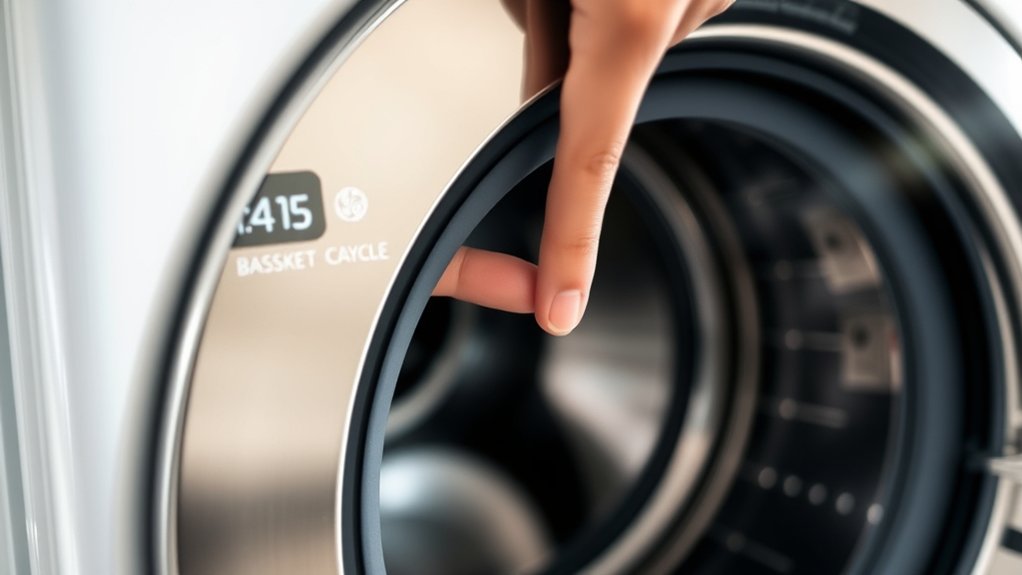
Before you start the Basket Clean cycle, double-check that the washer basket is completely empty. This helps ensure the cleaning is really effective.
Next, pour one cup of bleach, vinegar, or a specialized cleaner right into the basket.
Once you’ve done that, go ahead and close the lid.
Now, select the Basket Clean cycle on your GE Profile washer. Just press Start and let the cycle run all the way through without interruption.
Easy as that!
Preparing Washer Basket
Although the washer basket may look clean, you’ll need to empty it completely to prepare for the Basket Clean cycle. Remove all clothes, detergent pods, and other items to guarantee an unobstructed cleaning process.
Next, pour 1 cup (250 ml) of bleach, vinegar, or a recommended washing machine cleaner directly into the washer basket. This step is vital for effective disinfection and residue removal.
After adding the cleaner, securely close the lid to prevent interruptions during the cycle.
Make sure the washer basket is properly sealed and free of obstructions before selecting the Basket Clean cycle on the control panel.
Try to avoid opening or pausing the cycle once it starts, as this can compromise the thorough cleaning of your washer basket.
Running Clean Cycle
Since you’ve already emptied the washer basket and added the cleaning solution, you can now initiate the Basket Clean cycle on your GE Profile washer.
Make sure you’ve poured 1 cup (250 ml) of bleach, vinegar, or a designated cleaner directly into the wash basket before closing the lid.
Next, select the Basket Clean cycle on your GE Appliances control panel and press Start. Avoid interrupting the cycle; let it run to completion to guarantee effective cleaning.
During this process, the washer agitates and rinses thoroughly, breaking down residue and buildup.
Once finished, you might notice a bleach smell inside the washer. This confirms the cycle has sanitized the interior properly.
Regularly running the Basket Clean cycle maintains your GE Profile washer’s performance and hygiene.
It’s a simple step that keeps your machine running smoothly and smelling fresh.
Cleaning Without the Basket Clean Cycle
When you need to clean your GE Profile washing machine without using the basket clean cycle, start by unplugging the unit to guarantee safety.
Begin washing machine cleaning by filling the washer with hot water, then add ¾ cup of baking soda or vinegar. Run the longest wash cycle available to break down buildup and eliminate odors within the interior of your washer.
Afterward, wipe the door seal, gasket, and dispensers thoroughly with a microfiber cloth to remove mold, mildew, and detergent residue.
Keep the lid or door open after the cycle finishes to promote air circulation and dry out any remaining moisture.
If unpleasant odors persist, just repeat this process to make sure all internal components are fully cleaned and rinsed. This way, you maintain ideal washer performance and hygiene without relying on the basket clean cycle.
How to Manually Clean the Drum and Dispenser
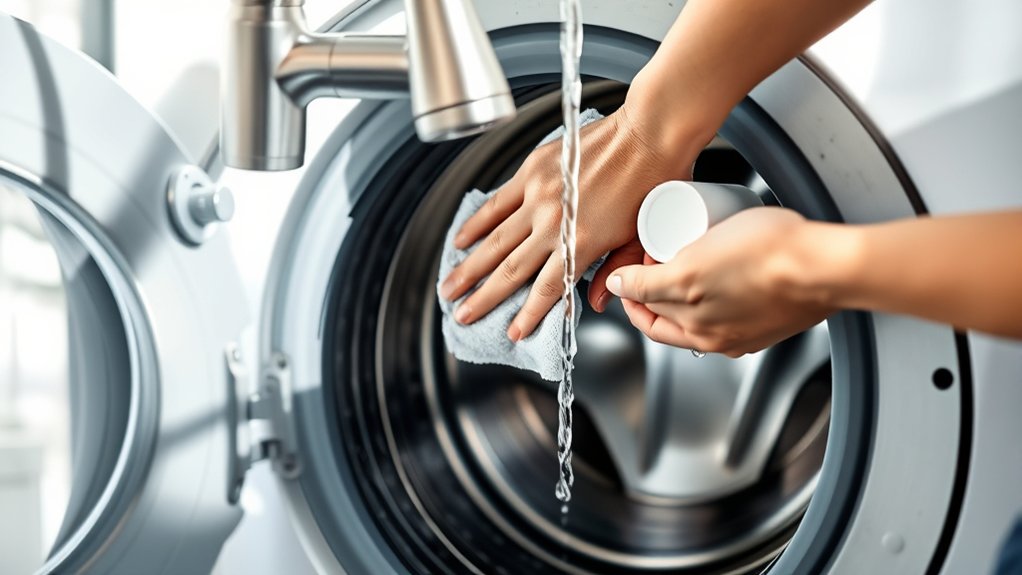
How exactly do you manually clean the drum and dispenser of your GE Profile washing machine? Start by filling the drum with hot water and adding 3/4 cup white vinegar or a washer cleaning solution. Run a long cycle to break down residues.
Next, remove the detergent dispensers and soak them in warm, soapy water. Scrub thoroughly to remove buildup.
Remove detergent dispensers and soak in warm, soapy water, then scrub thoroughly to eliminate buildup.
For stubborn grime, apply a baking soda and water paste to the drum and dispensers, then scrub and rinse.
Don’t forget to wipe down the rubber door seal, gasket, and accessible parts with a damp cloth to clear mold and soap scum.
After cleaning, dry the dispenser area and door seal thoroughly to prevent mold growth and keep things fresh.
This detailed cleaning keeps your washer efficient and hygienic.
How to Prevent and Remove Odors in Your GE Profile Washer
To keep your GE Profile washer smelling fresh, it’s important to tackle common issues like trapped moisture and residue buildup in the drum and drain hose. These are often the main culprits behind unwanted odors.
One easy way to prevent smells is by regularly cleaning the washer basket. Just run the appropriate cleaning cycle and use the right cleaning agents to get rid of any odor-causing deposits.
Also, don’t forget to check and maintain the drain hose from time to time. Making sure water flows properly through it can really help reduce any musty smells that might develop.
Causes Of Washer Odors
Since trapped moisture and soap residue create an ideal environment for mold and mildew growth inside your GE Profile washer’s drum and seals, you’ll often notice odors developing if these areas aren’t regularly cleaned.
Washer odors primarily stem from this buildup, especially when the lid or door stays closed post-wash, limiting airflow and raising humidity. Bacteria and mold flourish in these damp conditions, causing musty smells.
Moreover, issues with the drain hose, like siphoning or stagnant water, can retain and introduce foul odors.
To combat this, regularly run hot water cycles using vinegar or specialized cleaners to break down residues and kill odor-causing bacteria.
Maintaining airflow by leaving the door open after use also helps prevent mold and mildew, ensuring your washer remains fresh and odor-free.
Cleaning Basket Procedures
Although odors can develop quickly in your GE Profile washer, you can effectively prevent and remove them by following specific cleaning basket procedures. Start by running a hot water cycle with one cup of baking soda or a designated cleaner to neutralize odors and break down residue inside the wash basket. Use the Bulky Items cycle with Smart Dispense off for thorough cleaning.
Always keep the washer lid open between uses to enhance air circulation and let moisture evaporate. This helps prevent mold growth.
Also, regularly wipe the rubber gasket, door seal, and dispensers to remove trapped dirt and soap scum, which contribute to unpleasant smells.
Drain Hose Odor Solutions
How do odors develop in the drain hose of your GE Profile washer, and what can you do to prevent them? Odors often arise when the drain hose is pushed too far into the stand pipe, causing siphoning that lets drained water flow back into the washer.
To prevent this, secure the drain hose to the side of the stand pipe with a clip. This stops water backflow and musty smells from forming.
Regularly inspect the drain hose for debris or mold buildup. Clean it thoroughly to keep odors at bay. You can also use odor-eliminating products like Glisten Washer Magic or Tide Washing Machine Cleaner to remove buildup inside the hose.
Proper installation and routine maintenance of the drain hose are critical. They help prevent stagnant water and unpleasant mildew odors in your GE Profile washer.
Routine Maintenance Tips to Prevent Mold and Mildew
To prevent mold and mildew from developing in your GE Profile washing machine, you should keep the washer lid open after each use. This helps promote air circulation and reduces moisture buildup inside the drum and gasket. Doing this regularly helps eliminate odors and keeps the interior dry.
Keep your GE Profile washer lid open after use to promote airflow and prevent mold and odors.
Here are some routine maintenance tips to keep your washer fresh and clean:
- Regularly wipe the door seal and gasket with a damp cloth to remove detergent residue and mold spores.
- Pour 3/4 cup of vinegar into the drum and run a hot water cycle once a month to inhibit mold growth.
- Avoid leaving wet clothes inside the washer for long periods because that can cause moisture to build up.
After each use or cleaning, make sure to thoroughly dry the drum and door area to keep things moisture-free. You can also use specialized washer cleaners from time to time to get a deeper clean and eliminate odors.
Following these simple steps will help your GE Profile washing machine stay fresh and mold-free!
Troubleshooting Common Cleaning Issues With Your GE Profile Washer
Maintaining proper cleaning routines helps minimize mold and odor issues, but sometimes your GE Profile washer may still have cleaning problems. If you notice persistent odors, make sure to clean and dry the door gasket and dispensers regularly.
Also, be sure to select the correct washing cycle, like Bulky Items or Heavy Duty, with hot water and the right cleaners. Check the drain hose and filter for clogs or residue that can reduce how well your washer cleans.
If cycles don’t complete, double-check that your settings are correct and that nothing is interrupting the cycle. Running an empty hot water cycle with 3/4 cup vinegar or a commercial cleaner can help get rid of mold and mildew odors.
| Issue | Solution |
|---|---|
| Persistent odors | Clean/dry gasket and dispensers |
| Ineffective washing | Use proper cycle & hot water |
| Drain clogs/residue | Inspect & clean drain hose and filter |
| Cycle interruption | Check settings and avoid interruptions |
Frequently Asked Questions
Can I Use Vinegar and Bleach Together in My GE Profile Washer?
You shouldn’t use vinegar and bleach together in your GE Profile washer. Mixing them creates harmful chlorine vapors and neutralizes their cleaning effectiveness.
Instead, run separate cleaning cycles. Use one with vinegar to remove odors and minerals, and another with bleach for disinfecting.
Always rinse thoroughly between cycles to avoid chemical reactions.
This approach keeps your washer safe, protects its components, and ensures effective cleaning without risking damage or health hazards.
How Often Should I Deep Clean My GE Profile Washing Machine?
You should deep clean your GE Profile washing machine at least once a month, or every two weeks if you use it frequently or notice mold and odors. Regularly running cleaning cycles or manually cleaning with vinegar or specialized tablets prevents residue buildup, mold, and mildew.
Staying consistent with this maintenance keeps your washer running smoothly. It improves laundry cleanliness and extends your machine’s lifespan.
Does Cleaning the Dispenser Affect Detergent Efficiency?
Yes, cleaning the dispenser directly impacts detergent efficiency. When you remove residue and buildup, detergent can dissolve properly and reach your clothes evenly.
If the dispenser is clogged or dirty, detergent might stick or break down prematurely, which reduces its cleaning power.
By keeping the dispenser clean, you make sure the right amount and concentration of detergent is released consistently.
This helps maintain ideal wash performance and also prolongs your machine’s effectiveness over time.
What Causes White Residue Buildup Inside the Drum?
White residue builds up inside your drum mainly because of excess detergent or fabric softener that doesn’t rinse out fully. Hard water minerals can also react with detergents, creating chalky deposits.
Using too much high-sudsing detergent or washing frequently on low temperatures prevents complete residue dissolution.
Also, clogged drainage or malfunctioning parts cause leftover detergent to settle inside. You should adjust detergent amounts and run maintenance cycles to prevent buildup.
It’s all about finding the right balance and keeping your machine in good shape.
Can Fabric Softener Cause Odors in My GE Profile Washer?
Oh sure, your GE Profile washer loves a spa day with fabric softener until it turns into a moldy, smelly swamp. Yes, fabric softener can cause odors by building up in dispensers and trapping moisture, which encourages mildew growth.
You’ll want to clean those dispensers regularly and avoid overusing softener. Reducing or skipping it altogether helps prevent residue buildup.
That way, you keep your washer fresh and odor-free. Practical maintenance beats funky smells every time.
Conclusion
Now that you’ve mastered cleaning your GE Profile washer, you’ll keep it running smoothly, like a well-oiled Victorian clock. Regularly use the basket clean cycle or manual methods and apply recommended agents to prevent mold, odors, and buildup.
Stay vigilant with routine maintenance to avoid common issues. By following these detailed, practical steps, your washer will maintain peak performance and longevity.
This will save you time and costly repairs down the line.