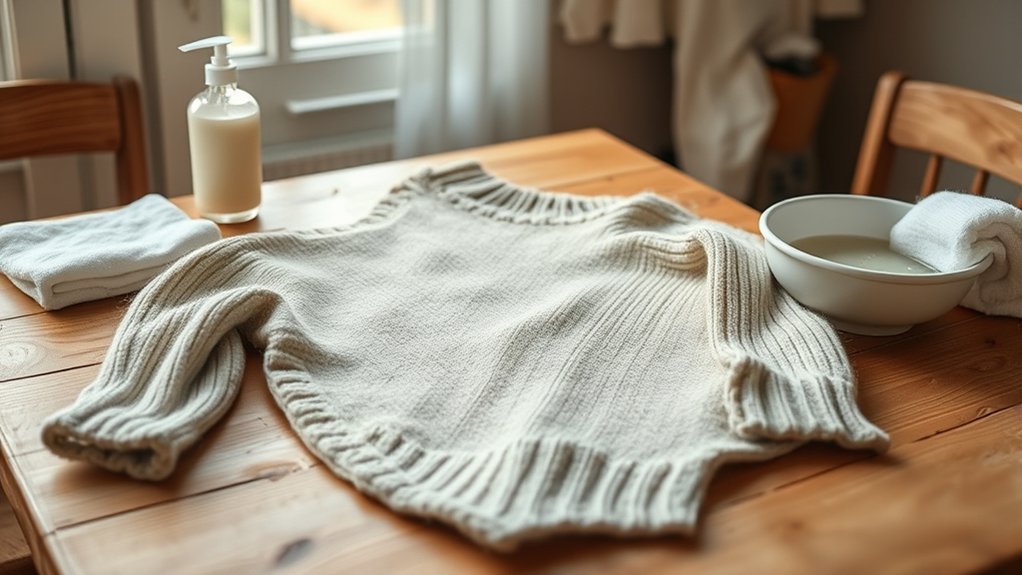
How To Dry Clean Wool At Home – Safe Guide
You can safely dry clean wool at home by focusing on lightly soiled pieces without intricate details. Start by checking the care label and spot testing with a wool-safe detergent to prevent damage. Use gentle wool-approved stain removers, dab stains carefully, and rinse with cool water.
Always dry wool flat away from heat, reshape it, and consider steaming lightly to refresh. Avoid harsh chemicals and wringing to preserve fibers.
Keep following for detailed methods to keep your wool flawless.
When to Dry Clean Wool at Home
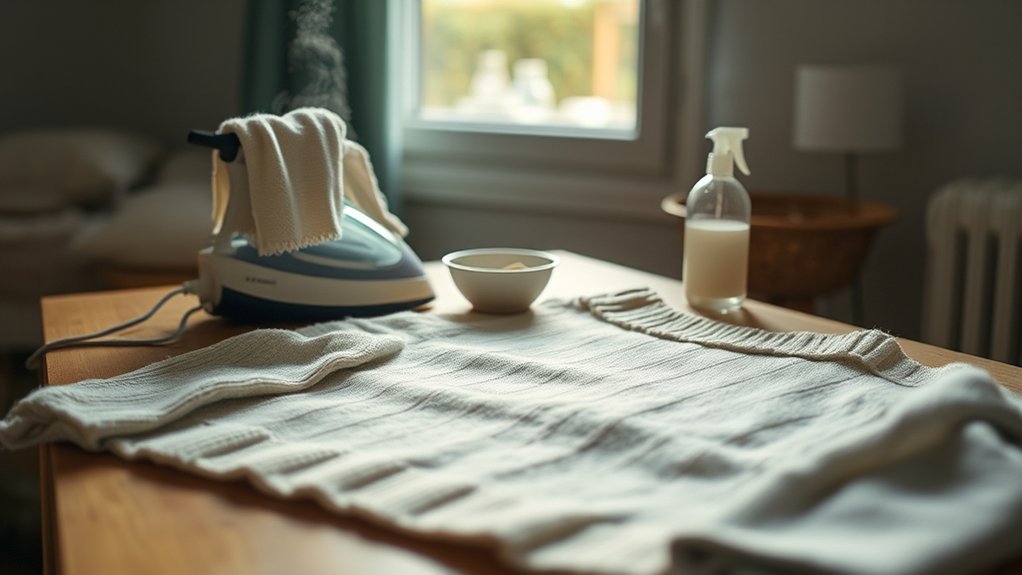
When should you choose to dry clean wool at home? You should reserve at-home dry cleaning for lightly soiled wool garments that don’t have intricate embellishments or delicate fabrics.
If your wool item shows heavy stains or soiling, professional dry clean services are safer.
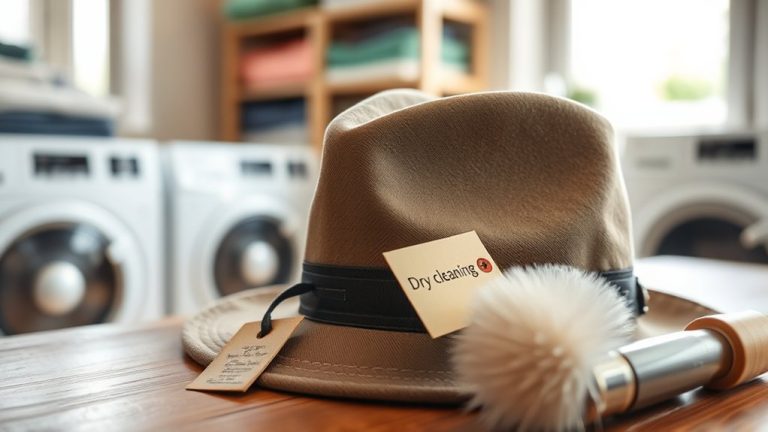
Always follow the “Dry Clean Only” label instructions to avoid shrinking or felting. Structured pieces, like wool suits, require careful handling to maintain shape; these are best left to professionals.
However, for freshening up or spot cleaning, home methods can suffice without risking damage.
Incorporate these wool care tips to extend your garments’ life while ensuring you don’t compromise delicate fabrics.
Knowing when to dry clean at home versus seeking professional help guarantees your wool remains pristine and well-maintained.
Preparing Wool Garments for Cleaning
Before you begin cleaning, carefully check the care label on your wool garment to determine whether dry cleaning or hand washing is appropriate. Properly preparing wool garments for cleaning is essential to protect their fibers and maintain quality.
Start by removing loose dirt or stains with a gentle brush or damp cloth to prevent setting.
Begin by gently brushing or dabbing away dirt and stains to avoid permanent marks.
Next, spot test a small, hidden area using a wool-safe detergent or white vinegar to confirm colorfastness and fabric integrity.
Turn the garment inside out to protect the outer fibers and any decorative details during cleaning.
When drying, lay the wool flat on a clean towel or drying rack, smooth out wrinkles, and reshape it to preserve its original form.
This careful preparation guarantees effective and safe cleaning. Taking these steps might seem like extra work, but it really helps keep your wool looking great for a long time.
Choosing the Right Detergents and Stain Removers for Dry Cleaning Wool
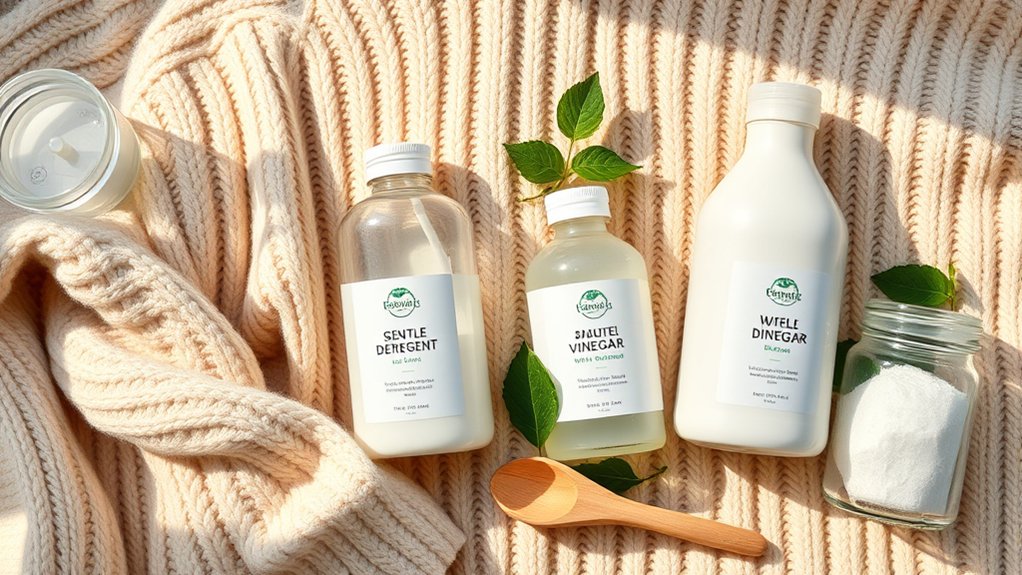
After preparing your wool garment properly, selecting the right detergents and stain removers will guarantee you clean it effectively without causing damage. Use a wool detergent that’s WoolSafe-approved or Woolmark-approved. These options ensure gentle cleaning tailored for delicate fabrics.
These detergents protect the fibers and maintain the garment’s integrity. For stains, choose stain removers specifically formulated for wool, like gentle dab-on solutions or WoolSafe-approved products. Avoid harsh chemicals like bleach or strong solvents since they weaken fibers and cause discoloration.
Before applying any stain remover, test it on a hidden area to check for colorfastness. For spot cleaning, go for a mild, pH-neutral detergent designed for delicate fabrics.
This way, you preserve your wool’s softness and durability throughout the process.
How to Spot Clean Wool Without Damage
How exactly do you spot clean wool without causing damage? Start by selecting a wool-safe stain remover or a mild detergent diluted with cool water. Always test the stain remover on an inconspicuous area to prevent discoloration.
When you spot clean, apply the solution gently using a clean, damp cloth or sponge. Avoid rubbing, as it can distort or felt the wool fibers.
For stubborn stains, let the solution sit for a few minutes before blotting with a dry cloth to lift excess liquid and residue.
After treatment, lay the wool flat to air dry, preserving its shape and preventing shrinkage. Following these steps ensures your wool garment remains intact and vibrant without risking damage during spot cleaning.
Hand Washing Wool: Step-by-Step Guide
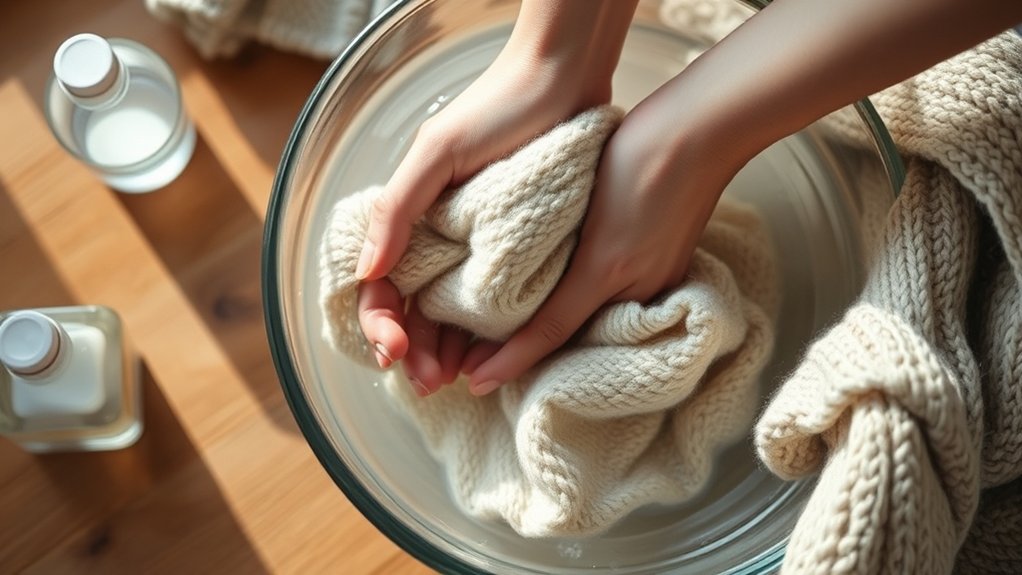
Start by filling a basin with cool water and adding a wool-safe detergent. This will get your garment ready for washing.
Then, gently submerge the wool—make sure not to scrub or twist it, as that can damage the fibers.
After letting it soak, rinse it thoroughly.
When you’re done, carefully press out the excess water.
Finally, lay the item flat to dry and reshape it to keep its form.
Preparing Wool For Wash
Before you begin washing your wool garment by hand, carefully check the care label to confirm hand washing is recommended.
Once you’re sure, fill a clean sink or basin with cool or lukewarm water.
Add a wool-safe detergent designed specifically for delicate fibers.
Gently submerge the wool item, avoiding any scrubbing or twisting. This helps prevent felting or shrinking.
Let the garment soak for 5 to 10 minutes so the detergent can really get into the fibers.
After soaking, rinse the wool carefully with clean, cool water until all the detergent is gone.
Finally, press out the excess water gently without wringing. This keeps the garment’s shape and integrity intact.
Proper preparation guarantees your wool stays soft and undamaged throughout the hand wash process.
It’s worth taking these steps to keep your wool looking great!
Gentle Washing Techniques
Why treat wool with extra care during washing? Wool fibers are delicate and can easily shrink or felt if handled roughly. To hand wash wool properly, soak your garment in cool water mixed with a wool safe detergent for 5 to 10 minutes.
Avoid agitation or scrubbing to prevent damage. After soaking, gently press out excess water without wringing or twisting. Rinse thoroughly in clean, cool water to remove all detergent residue.
Next, roll the garment carefully in a clean towel to absorb moisture.
Finally, focus on shaping wool by reshaping it while damp, then lay it flat to dry. This gentle washing method preserves the wool’s original form and softness, ensuring your garment lasts longer and maintains its quality.
Proper Wool Drying
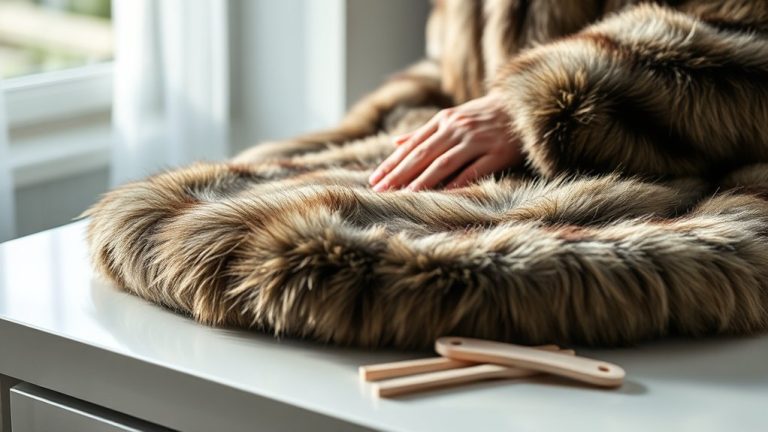
Once you’ve gently squeezed out excess water from your wool garment, it’s essential to lay it flat on a clean, dry towel and carefully reshape it to its original form. Flat drying prevents stretching and helps maintain the garment’s shape.
Place the wool in a well-ventilated area with good air circulation, away from direct sunlight or heat sources, to air dry effectively. Avoid hanging wool garments, as this can cause distortion.
Once completely dry, use steaming to remove wrinkles and refresh the fabric.
| Step | Action |
|---|---|
| 1 | Lay flat on dry towel |
| 2 | Reshape to original form |
| 3 | Air dry in ventilated space |
| 4 | Steam to remove wrinkles |
Drying Wool Properly to Avoid Shrinkage
You should always lay your wool flat on a clean towel to air dry. This helps keep its shape and stops it from shrinking.
And try not to wring your garment—that can damage the fibers and make it lose its shape. Instead, gently press out the extra water before drying to keep the wool in good condition.
Flat Air Drying
Although drying wool might seem straightforward, improper methods can easily cause shrinkage or distortion. To dry wool garments correctly, opt for flat drying. Lay your wool items on a clean, dry surface or a drying rack, making certain they’re evenly supported.
Before placing them down, reshape each piece to its original form to maintain its structure. Avoid hanging wool garments, as this can stretch the natural fibers and ruin their shape.
Keep your wool away from direct sunlight and heat sources during drying to prevent fading and felting.
Avoid Wringing Damage
Since wool fibers are delicate and prone to felting, wringing your garment can cause irreversible shrinkage and damage. Avoid twisting or squeezing wool when drying, as this distorts fibers and ruins the fabric’s texture.
Instead, gently press out excess moisture by sandwiching the wool between two clean towels and applying light, even pressure.
Never rely on a traditional spin cycle. Its intense agitation can shrink and deform wool.
After pressing, lay your wool flat on a dry towel to continue drying, making sure you don’t hang it while it’s still dripping wet.
The weight of water can stretch and distort the fabric.
By carefully pressing out moisture without wringing, you preserve wool’s shape and softness, preventing damage during the drying process.
It’s all about being gentle and patient with your wool items.
Steaming Wool to Freshen and Remove Wrinkles
When you want to freshen your wool and remove wrinkles without harsh chemicals, steaming offers an effective solution. Use a handheld steamer or a steam iron on low heat with the steam function. Hold it a few inches away from the wool to avoid water spots or damage.
Always test steam on a hidden area first to ensure it reacts well. After steaming, let the wool cool and dry fully to preserve its refreshed look and shape.
| Step | Details |
|---|---|
| Tool | Handheld steamer or steam iron |
| Heat Setting | Low heat with steam activated |
| Distance | A few inches from wool |
| Test Area | Small, inconspicuous spot |
| Post-Steaming Care | Cool and dry completely |
Storing Wool After Cleaning to Maintain Quality
After steaming your wool to refresh its fibers and remove wrinkles, proper storage helps preserve its quality over time. To protect wool effectively, store it in breathable containers like cotton or linen bags. These materials prevent moisture buildup and mold growth.
Avoid plastic bags because they trap humidity, which can cause yellowing or mildew. Fold your garments loosely to maintain their shape and prevent stretching. You might want to add natural repellents like cedar chips or lavender sachets—they help control odor and keep moths away.
Always make sure your wool is completely dry before storing it to avoid fiber damage.
Here are some simple steps to follow for ideal storage:
- Use breathable containers to prevent moisture
- Fold loosely for shape maintenance
- Add natural repellents for odor control and pest protection
- Confirm wool is fully dry before storage
Frequently Asked Questions
Can I Machine Dry Clean Wool at Home Safely?
No, you can’t safely machine dry clean wool at home. The heat from machine drying will shrink and damage the fibers, ruining your garment.
Instead, try gentle hand washing with cold water and a wool-specific detergent.
After washing, lay the item flat on a clean towel to air dry.
Avoid tumble dryers or any hot air because they can permanently distort wool’s shape and texture.
Always treat wool with care to keep it looking great.
How Often Should I Dry Clean Wool Garments?
You should dry clean wool garments only once or twice a year, unless they get heavily soiled or stained. Overdoing it weakens fibers and dulls softness.
Instead, air your wool regularly and spot clean minor stains to extend time between cleanings.
If you wear the garment frequently or in harsh environments, you might need to dry clean more often. But always avoid excessive cleaning to preserve its quality and longevity.
Taking good care of your wool helps it last longer and stay looking great.
Are All Wool Types Suitable for Home Dry Cleaning?
Not all wool types are suitable for home dry cleaning. You should avoid home methods for delicate, heavily structured, or embellished wool garments.
Merino wool is softer and often safe to hand wash but may not handle traditional dry cleaning well.
Coarser wools like Tweed usually need professional care to maintain their texture.
Always check the care label before attempting home dry cleaning to prevent damage or shrinking. It’s better to be safe than sorry when it comes to your wool garments!
Can Dry Cleaning Remove Moth Larvae From Wool?
Yes, dry cleaning can remove moth larvae from wool, but professional dry cleaning is more effective than home kits. The specialized solvents penetrate wool fibers and kill larvae and eggs, preventing damage.
If you rely on home dry cleaning, you mightn’t reach all larvae deep inside the fabric.
To fully protect your wool, combine dry cleaning with airtight storage and moth repellents. This helps stop infestations before they spread.
Is It Safe to Use Homemade Wool Cleaning Solutions?
You might think homemade wool cleaning solutions are a clever shortcut, but they often fall short of being truly kind to your wool. They can upset the delicate balance wool needs, risking damage or shrinking.
Instead, stick to commercial wool detergents designed specifically for gentle care. This guarantees your wool stays soft, clean, and intact without unwanted residue or fiber weakening.
Your wool deserves that trusted, professional touch.
Conclusion
You can safely dry clean wool at home by following careful steps. Did you know that 90% of wool shrinkage happens due to improper drying? This really shows why gentle drying and steaming are key to keeping your garment’s shape and texture.
By preparing your wool properly, choosing the right detergents, and handling stains carefully, you’ll extend your wool’s life. Plus, you’ll keep it looking fresh without those costly trips to the dry cleaner.