How To Clean Automatic Washing Machine Top Loader – Guide
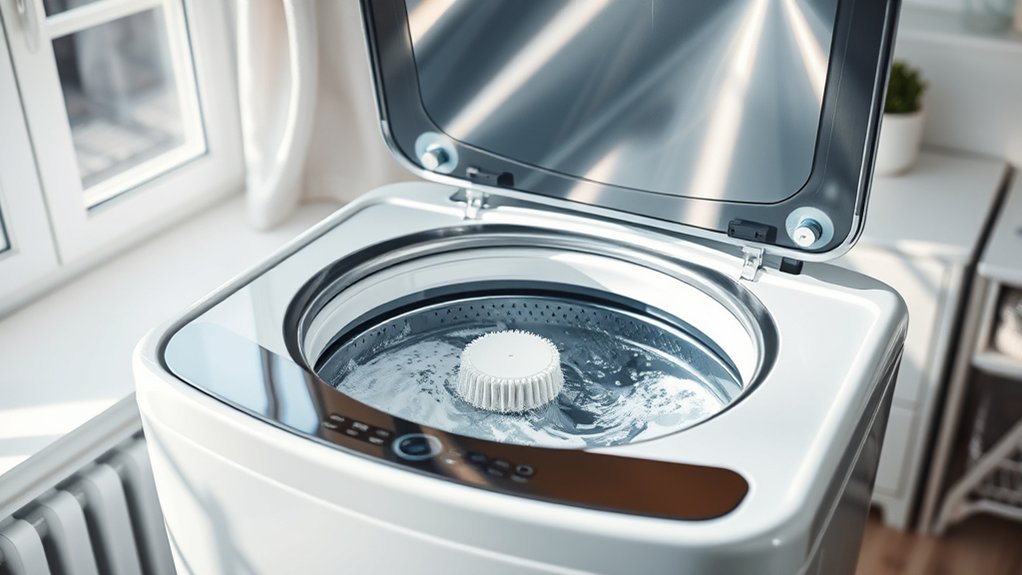
To clean your top load washing machine, start by emptying the drum and checking the seals for any residue or mold. Next, run a hot water cycle with two cups of vinegar or a commercial cleaner. This helps dissolve buildup and get rid of odors.
Remove any detachable dispensers and soak them for a while. Then, scrub the agitator gently with mild detergent. Don’t forget to wipe down the drum, seals, and the exterior of the machine thoroughly.
Avoid using harsh chemicals, and leave the lid open afterward to let everything dry properly. If you follow these steps regularly, your washer will perform at its best and last longer. There are also more detailed techniques you can try to keep your machine in great shape.
Why Clean Your Top Load Washing Machine Regularly
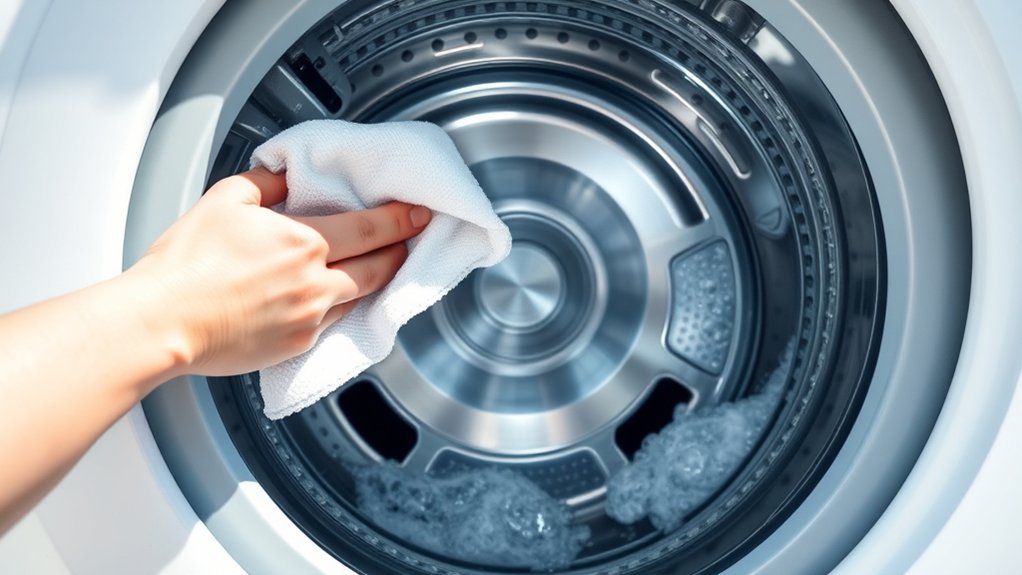
Although it’s easy to overlook, cleaning your top load washing machine regularly prevents detergent residue, lint, and mineral buildup that can degrade its performance. You’ll want to schedule monthly maintenance to eliminate mold and mildew, which thrive in moist areas like the drum and seals.
Regularly cleaning your top load washer prevents buildup and mold, keeping it running efficiently and fresh.
These contaminants cause unpleasant odors and can transfer onto your laundry, compromising hygiene. Addressing mineral deposits also helps avoid internal corrosion, which leads to mechanical failures.
By removing these residues, you guarantee efficient operation, reducing energy and water consumption. Regular cleaning extends your washer’s lifespan and prevents costly repairs.
Keeping your machine free from buildup and biological growth not only maintains ideal function but also assures cleaner, fresher laundry every cycle. So, prioritize this maintenance to protect your appliance and your clothes. It’s a simple step that makes a big difference!
Choosing the Best Cleaning Supplies for Your Washer
You’ll want to use specialized cleaning tablets like Affresh because they do a great job breaking down detergent residues and mineral buildup.
If you’re looking for a natural option, white vinegar is a safe choice that helps dissolve deposits and eliminate odors without harming your machine.
Just remember to steer clear of harsh chemicals and don’t use too much soap.
And it’s always a good idea to check your washer’s manual first to make sure the cleaners you pick won’t damage any parts.
Recommended Cleaning Products
When selecting cleaning products for your top-loading washing machine, make sure they’re specifically formulated or safe for use with your model. This helps prevent damage and keeps your washer performing well. Using the right products can make a big difference.
Try specialized cleaning products like Affresh tablets. They target detergent buildup effectively without harming any components. White vinegar, diluted 1:1 with water, is great too. It dissolves mineral deposits and neutralizes odors, which really complements the cleaning process.
Baking soda is another safe option. It acts as a deodorizer and boosts vinegar’s cleaning power when used together. Just avoid dish soap since it creates too many suds and can damage your washer’s mechanisms.
Always check your washing machine’s user manual to make sure the products you use are compatible. Following the manufacturer’s instructions helps maintain your washer’s function and longevity.
Safe Homemade Solutions
Because homemade solutions use natural ingredients, they offer a safe and effective way to clean your top-loading washer without harsh chemicals. Before applying any cleaning solutions, check your washing machine’s user manual to make sure they’re compatible and won’t cause damage.
For deep cleaning and getting rid of odors, try mixing equal parts warm water and vinegar. You can add baking soda to break down mineral deposits and neutralize smells. Just avoid using dish soap since it creates too many suds and can mess with your washer’s function.
Here are some key homemade cleaning solutions to keep in mind:
- White vinegar: dissolves mineral buildup and eliminates odors
- Baking soda: boosts deodorizing and scrubbing power
- Mild, non-abrasive agents: protect rubber seals and internal parts
These options help keep your washer in great shape while making sure it gets really clean.
Avoid Harmful Chemicals
Natural cleaning solutions like vinegar and baking soda provide a safe baseline, but selecting the right cleaning supplies goes beyond just avoiding harsh chemicals. You should use only gentle cleaning agents approved by your washer’s manufacturer to prevent damage and guarantee ideal cleaning.
Avoid abrasive cleaners or strong acids, as these harsh chemicals can degrade rubber seals and internal components over time. Instead, opt for eco-friendly products such as vinegar, baking soda, or specialized washer cleaners like Affresh, which are formulated to maintain your machine safely.
Always read product labels carefully to confirm compatibility with your specific washer model. Also, limit bleach use strictly to the recommended amounts and frequency to avoid corrosion and premature wear.
This approach helps preserve your washer’s integrity while delivering effective cleaning results. It’s all about keeping things gentle and safe for your machine!
Preparing Your Washer: Emptying, Inspecting, and Setting Cycles
Before you start cleaning your top-loading washing machine, make sure to empty the drum completely of any clothes, lint, or debris. This ensures effective cleaning without interference.
Next, take a good look around for any visible residue, mold, or buildup around the door seal, detergent dispenser, and inside the drum. Proper inspecting helps you spot and target problem areas easily.
Finally, set your washer to the hottest water temperature and choose the longest or deep-clean cycle available. If your machine doesn’t have that cycle, just fill the drum manually with hot water for a thorough clean.
Key steps to remember:
- Empty the washer drum fully to avoid contamination.
- Inspect all seals and dispensers for residue or mold buildup.
- Choose the hottest water setting and longest cycle for deep cleaning.
Run a Hot Water Cycle With Vinegar or Washer Cleaner
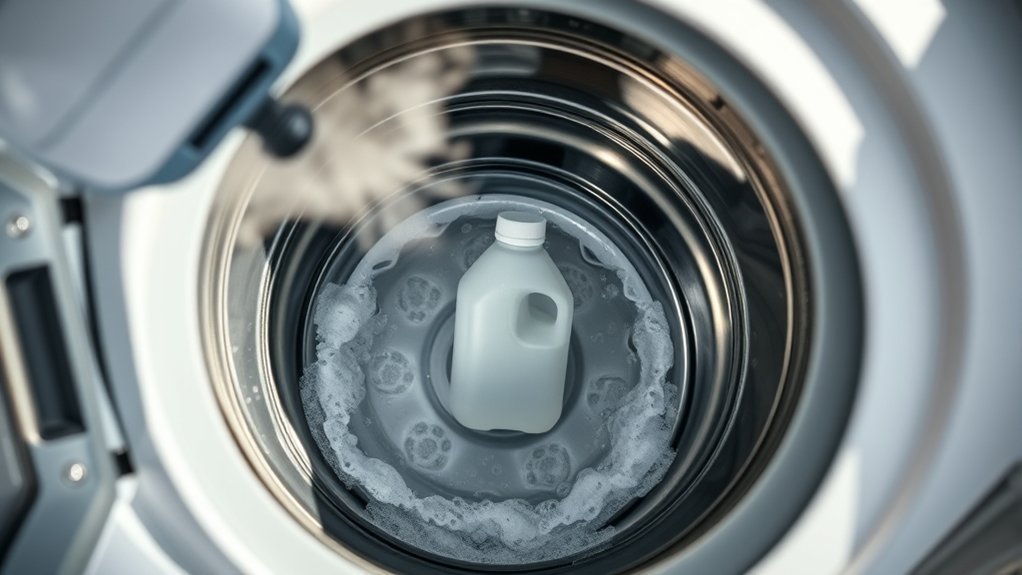
You’ll want to choose the hottest water cycle you have. This helps break down mineral deposits and soap scum inside your washer more effectively.
Add two cups of white vinegar or a commercial washer cleaner to the drum. This really helps get rid of buildup and any odors lingering inside.
For the best results, try pausing the cycle halfway through. Let the solution soak for a bit before finishing the full run. It makes a noticeable difference!
Hot Water Cycle Benefits
Why should you run a hot water cycle with vinegar or a specialized washer cleaner? The hot water cycle effectively dissolves mineral deposits and detergent residues that build up inside your washer. This process is key for a thorough clean because it gets rid of odors caused by mold and bacteria growing in the drum and other parts.
When you run this cycle regularly, you break down stubborn grime and stains on the drum and seals, keeping things hygienic. It also stops buildup that can mess with your washer’s performance and shorten its lifespan.
Plus, it deodorizes the machine so your laundry always smells fresh. Adding a hot water cycle to your maintenance routine makes vinegar or washer cleaners work even better, keeping your washing machine clean and running smoothly.
Choosing Effective Cleaners
How exactly do you choose the most effective cleaner for your top-loading washing machine? Start by deciding between white vinegar and a commercial washer cleaner designed specifically for residue removal. Both options excel at dissolving mineral deposits, detergent buildup, and odors inside the drum.
Use 2 to 4 cups of white vinegar or one washer cleaner tablet per cleaning cycle. Make certain your washer is empty so the cleaner can fully contact all internal surfaces.
Select the hottest, longest cleaning cycle available to maximize detergent residue breakdown and sanitize the drum thoroughly.
After the cycle finishes, wipe down the drum and door seal to remove any lingering residues and prevent mold growth. This method guarantees ideal maintenance and prolongs your machine’s efficiency.
It’s a simple routine that really pays off in the long run.
Clean the Detergent and Fabric Softener Dispensers
Although detergent and fabric softener dispensers often go unnoticed, cleaning them every 30 days is essential to prevent buildup and odors that can affect your washer’s performance. Start by removing dispensers if your machine allows.
Soak them in hot water to loosen residue buildup from detergent and fabric softener.
If your dispensers aren’t removable, don’t worry. Just use a damp cloth or cleaning wipes to clean them thoroughly. Avoid dishwashers since they might cause damage.
After cleaning, make sure to reinstall the dispensers securely. This helps maintain proper function and prevents leaks. Follow these steps for maximum maintenance:
- Soak removable detergent dispensers in hot water for 15-20 minutes.
- Wipe non-removable fabric softener dispensers carefully with a damp cloth.
- Ensure all parts are dry before reinstallation to avoid moisture retention.
Doing this routine keeps your dispensers clean and your washer running efficiently.
How to Clean the Agitator (If You Have One)
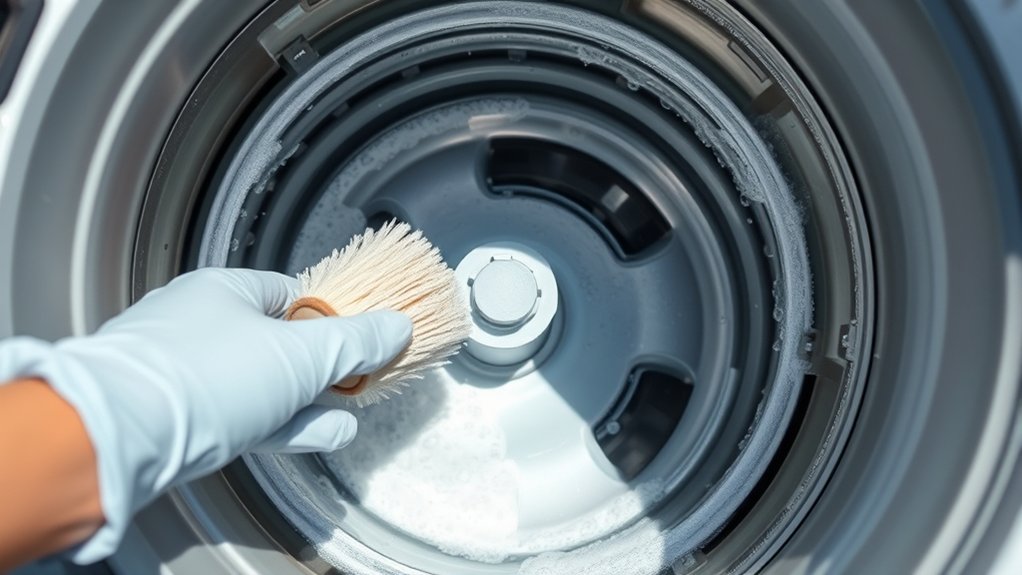
Before you start cleaning the agitator, remove the fabric softener dispenser and any detachable parts to access all crevices. Check your washer’s manual to see if the agitator cap is removable and follow proper removal instructions.
Fill the agitator with warm water and a cleaning solution like vinegar or mild detergent to loosen grime and residue. Use a brush or cloth to scrub inside the agitator’s crevices thoroughly.
Rinse all parts well with warm water to remove cleaning solution and debris. Finally, reassemble the agitator, guaranteeing all removable parts are securely in place before running the washer.
| Step | Action | Tip |
|---|---|---|
| 1 | Remove removable parts | Check manual for cap removal |
| 2 | Fill agitator with solution | Use warm water for loosening |
| 3 | Scrub crevices | Use brush or cloth |
| 4 | Rinse thoroughly | Ensure no residue remains |
| 5 | Reassemble agitator | Secure all parts properly |
Wipe Down the Drum, Door Seal, and Exterior Surfaces
Once you’ve thoroughly cleaned the agitator, move on to wiping down the drum, door seal, and exterior surfaces. Start by using a damp cloth or microfiber wipe to clean the inside of the drum, removing lint and residue.
After cleaning the agitator, wipe the drum, door seal, and exterior with a damp cloth to remove residue.
Next, focus on the rubber door seal. Pay close attention to folds and crevices where mold and debris can hide.
Finally, wipe down the exterior surfaces, including control panels and sides, with a soft, damp cloth.
If you notice stubborn stains on the door seal or exterior surfaces, try applying a mild cleaner or vinegar solution.
Make sure to dry the door seal and exterior surfaces thoroughly to prevent moisture buildup.
Doing this regularly helps keep your machine running efficiently and hygienically.
This detailed cleaning routine will help your washing machine stay in excellent condition.
Tips to Keep Your Washer Smelling Fresh Between Deep Cleans
To maintain a fresh-smelling washer between deep cleans, you should leave the lid open after every use to promote air circulation and prevent mold growth. Incorporate this into your regular cleaning routine by promptly removing wet clothes and wiping down the drum to eliminate lingering moisture.
Frequently clean the door seal and gasket with a damp cloth to remove detergent residue that can cause odors. For odor prevention, sprinkle baking soda inside the drum weekly to absorb unpleasant smells.
Furthermore, run an empty hot water cycle with vinegar or a specialized washer cleaner monthly to maintain interior freshness. These steps ensure effective odor prevention and help keep your top loader washer smelling clean and hygienic between deep cleans.
Cleaning Mistakes to Avoid for a Long-Lasting Washer
Maintaining a fresh-smelling washer involves more than regular cleaning. It also means avoiding common mistakes that can shorten your machine’s lifespan. One critical error is using too much detergent. This leads to residue buildup that hurts performance and encourages mold growth.
Also, using harsh chemicals like abrasive cleaners or dish soap can damage the drum, seals, and internal parts. Another common mistake isn’t leaving the lid open after cleaning. When you keep the lid closed, it stops proper drying and helps mold develop.
To keep your washer in good shape, avoid these pitfalls:
- Use only the recommended amount of detergent to prevent buildup.
- Don’t use harsh chemicals; stick with cleaners approved by the manufacturer.
- Always leave the lid open after cleaning to let air circulate and dry things out.
Following these simple steps will help your top loader stay efficient and last longer.
Frequently Asked Questions
Can I Use Bleach and Vinegar Together to Clean My Washer?
You shouldn’t use bleach and vinegar together to clean your washer. Mixing them produces harmful chlorine gas and reduces their cleaning effectiveness.
Instead, use bleach in one cleaning cycle to disinfect and break down residues.
Then, in a separate cycle, run vinegar to remove mineral deposits and odors.
Always follow your washer’s manufacturer instructions to avoid damage or unsafe chemical reactions during cleaning.
It’s better to be safe and keep your washer working well!
How Often Should I Replace My Washing Machine’s Water Filter?
You should replace your washing machine’s water filter every 6 to 12 months to keep it running at its best.
If you have hard water or frequently wash heavily soiled clothes, it’s a good idea to check the filter more often.
Look out for signs like reduced water flow or strange odors—these usually mean it’s time for a replacement.
And don’t forget to check your user manual for the specific replacement schedule for your machine.
Regularly changing the filter stops mineral buildup, which helps your washing machine run efficiently.
Plus, it keeps your laundry fresh and clean every time.
Is It Safe to Clean My Washer With Baking Soda?
Yes, you can safely clean your washer with baking soda, but use it in moderation. Add about half a cup directly into the drum or detergent dispenser.
Then, run a hot water cycle to help dissolve soap scum and mineral deposits without harming the components.
Just be careful not to use too much, as that might cause buildup in pipes or dispensers. It’s always a good idea to check your washer’s manual first to make sure baking soda is compatible with your specific model.
That way, you’re cleaning safely and effectively.
What Should I Do if My Washer Still Smells After Cleaning?
If your washer still smells after cleaning, try running a hot water cycle with a cup of white vinegar or a specialized washer cleaning tablet to get rid of any leftover residues.
Make sure to check the rubber door seal and detergent dispenser carefully—they can hide mold or soap scum that causes odors.
Also, double-check that the drain hose is clear and properly positioned to avoid any standing water.
Leaving the lid open after cycles can help improve airflow and keep things fresh.
You might need to repeat deodorizing treatments like baking soda or use products like Glisten Washer Magic regularly to keep smells at bay.
It’s all about staying on top of the cleaning so the smell doesn’t come back.
Can Hard Water Damage My Top-Loading Washing Machine?
Yes, hard water can damage your top-loading washing machine. Mineral buildup from calcium and magnesium deposits can clog valves, hoses, and dispensers, which reduces performance.
It also causes soap scum that leaves residue on clothes and inside the drum.
Over time, these minerals can corrode metal parts and shorten your washer’s lifespan. To prevent damage, you might want to install a water softener.
Or you can regularly use descaling products designed specifically for washing machines.
Conclusion
By regularly cleaning your top loader, you’ll keep your machine running smoothly, like a well-oiled engine. Picture crystal-clear water swirling inside a spotless drum, free from detergent buildup and grime. With every hot cycle and wiped surface, you’re extending your washer’s life and boosting its performance.
Stay vigilant and avoid common mistakes. Your washer will continue to deliver fresh, clean laundry, cycle after cycle, with efficiency and reliability you can count on.