How To Clean Dry Wall – Easy Guide
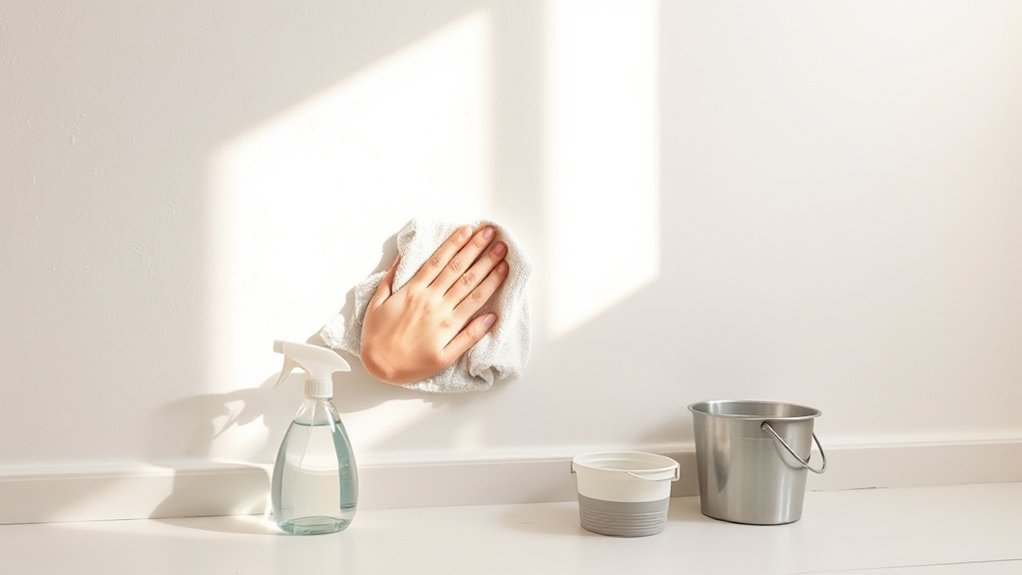
To easily clean drywall, start by dusting walls with a vacuum or microfiber cloth, working top to bottom. Use a mild solution like warm water with dish soap or vinegar on a damp cloth for stains, avoiding harsh chemicals.
Gently scrub tougher spots with a baking soda paste, then rinse and dry. Protect floors with drop cloths and test cleaners on hidden areas first.
For lasting results, learn how to prep, remove stains safely, and touch up paint afterward. It’s easier than you might think once you get the hang of it!
When and Why You Should Clean Drywall
Although drywall might seem low-maintenance, you should clean it regularly to remove dust, dirt, and stains that build up over time and dull its appearance. Drywall cleaning is especially important in high-traffic areas and kitchens where grime accumulates faster.
You don’t want stains on drywall to set in, so address visible marks or discoloration promptly for effective cleaning without damaging the surface.
After applying fresh paint, cleaning helps eliminate dust and smudges that settle, keeping the finish pristine. Regular dust removal not only improves your walls’ look but also extends drywall’s lifespan by preventing dirt buildup that can cause deterioration.
What Supplies You Need for Drywall Cleaning
To clean drywall effectively, you’ll want to have the right tools on hand. A vacuum with a dust brush attachment is great for getting rid of loose dust.
Microfiber cloths work well for wiping down surfaces, and a soft-bristled wall brush can help you reach those tricky spots.
You’ll also need some mild cleaning solutions and damp sponges for any stubborn stains that just won’t come off with dry cleaning.
Plus, tack cloths or lint-free cloths are perfect for catching any leftover dust after you’ve finished.
And don’t forget to protect yourself and your space! Gloves will keep your hands safe, and drop cloths are essential to prevent any mess from getting on your floors or furniture while you work.
Essential Cleaning Tools
You’ll need a few essential tools to clean drywall effectively without causing damage. Start with a vacuum fitted with a dust brush attachment or use a microfiber duster to gently remove loose dust and cobwebs.
For hard-to-reach spots, a soft-bristled brush or an extension pole with a microfiber cloth works well without harming the surface.
To capture fine dust particles without leaving streaks, use a lint-free tack cloth. When dirt is stubborn, reach for a damp microfiber cloth lightly moistened with water to avoid soaking the drywall.
Avoid abrasive tools that could scratch or damage the paint.
With these supplies—dust brush, microfiber cloth, tack cloth, soft-bristled brush, and damp microfiber—you’re set to keep your drywall clean and well-maintained. It’s pretty straightforward once you have the right tools on hand.
Recommended Cleaning Solutions
After gathering the right tools, selecting the proper cleaning solutions will make your drywall cleaning more effective and safe. For routine cleaning, use a mild detergent mixed with warm water to gently lift dirt without causing damage.
If you’re dealing with tougher grime, a vinegar solution diluted with water works well to break down buildup. It also helps prevent damage to paint finishes. Just remember to avoid harsh chemicals or abrasive scrubbers since they can harm drywall surfaces.
| Cleaning Solution | Best Use |
|---|---|
| Mild detergent | Routine cleaning |
| Vinegar solution | Deeper grime removal |
| Warm water | Rinsing and wiping dry |
Keep clean, damp cloths ready to wipe away residue. Also, have dry towels on hand to thoroughly dry the surface after cleaning.
Protective Preparation Materials
Although drywall might seem delicate, gathering the right protective preparation materials guarantees you clean effectively without causing damage. Start by laying drop cloths to shield your floors and nearby furniture from water or cleaning spills.
Use a vacuum with a dust brush attachment or a soft dust brush to remove loose dust and cobwebs gently.
When wiping, choose microfiber cloths. They’re soft and won’t scratch the surface.
Prepare gentle cleaning solutions, like warm water mixed with a few drops of dish soap or white vinegar, to tackle dirt without harsh chemicals.
Before applying any solution broadly, always do a test patch on a hidden spot to assure it won’t discolor or harm your drywall.
These steps protect both your drywall and surroundings during cleaning. Taking a little extra time upfront really pays off in the end.
You’ll keep your walls looking great and avoid any accidental damage.
How to Prepare Your Walls and Room for Cleaning
Before you start cleaning your drywall, clear the area by moving furniture, wall hangings, and décor away from the walls to give yourself easy access. Next, lay drop cloths or old towels on the floor to protect surfaces from dust and cleaning solutions.
Clear the area and protect floors with drop cloths before cleaning your drywall for easy access and safety.
To prepare your walls for cleaning, dust them thoroughly using a vacuum with a brush attachment or a tack cloth to remove cobwebs and loose debris.
Take a close look at the paint finish, and test any cleaning solution on a small, hidden spot first. This way, you can avoid damage or discoloration.
Finally, make sure the room has proper ventilation by opening windows or turning on fans. Good ventilation helps your walls dry faster after cleaning, which makes the whole process more effective and safe.
Best Techniques for Dusting and Light Drywall Cleaning
When dusting and lightly cleaning drywall, you’ll want to start from the top and work your way down. This helps prevent spreading dust onto areas you’ve already cleaned. Begin by using a vacuum with a dust brush attachment to gently remove loose dust from corners and surfaces.
Next, follow up with a tack cloth to pick up fine dust without damaging the paint. For regular maintenance, wipe walls with a microfiber cloth. You can slightly dampen it if needed to trap stubborn particles and avoid streaks.
| Tool/Material | Purpose | Tips |
|---|---|---|
| Vacuum with dust brush | Remove loose dust | Use gentle strokes |
| Tack cloth | Pick up fine dust | Avoid residue |
| Microfiber cloth | Regular dusting & cleaning | Slightly damp for tough dust |
These steps make light drywall cleaning efficient and safe. Give them a try and see the difference!
How to Remove Stains and Tough Marks From Drywall
You’ll often come across common stains on drywall, like scuffs, coffee spills, or even red wine. Each of these might need a slightly different way to clean them up.
It’s best to start with something gentle, like a damp sponge and a bit of mild soap. If the stains are stubborn, you can try more targeted treatments, like a baking soda paste or hydrogen peroxide.
Just make sure you test whatever method you choose on a hidden spot first—this way, you protect the drywall’s finish while still getting those stains out effectively.
Identifying Common Stains
How do you tackle the variety of stains that often appear on drywall? Identifying common drywall stains is the first step to effective cleaning. You’ll face water stains, grease marks, crayon stains, and other tough marks, each needing specific care.
Recognizing these helps you choose the right cleaning solutions without damaging your walls. Water stains usually show as discoloration and respond well to mild soap or vinegar.
Grease marks appear shiny or oily and need degreasing agents or dish soap.
Crayon stains are waxy and best removed with a magic eraser or rubbing alcohol.
Food spills and other stains might require a gentle baking soda paste.
Knowing these drywall stains lets you prepare the proper cleaning approach for a spotless wall.
Effective Cleaning Solutions
Identifying the type of stain on your drywall sets you up for effective cleaning, but choosing the right solution makes all the difference in removing marks without damage. For general stain removal, mix warm water with a few drops of dish soap or white vinegar. Apply this with a damp cloth to gently lift dirt.
For tougher marks, create a baking soda paste by mixing baking soda with water. Then, scrub the area lightly using a soft sponge.
Grease or oily stains respond well to a damp cloth with mild detergent, which cleans without harming the paint.
Always rinse the cleaned area with a clean, damp cloth and dry it immediately to prevent streaks. These cleaning solutions ensure stain removal while preserving your drywall’s finish. It’s pretty simple once you know the right approach!
Gentle Removal Techniques
When stains or tough marks appear on your drywall, choosing gentle removal methods protects the surface while restoring its appearance. Start with a soft cloth dampened with a mild cleaning solution, such as diluted dish soap or white vinegar, to lift stains without harming the drywall finish.
For stubborn spots, lightly dab with isopropyl alcohol on a cotton swab, testing first in an inconspicuous area. Avoid harsh chemicals or abrasive tools that can damage paint or drywall texture.
- Use a soft cloth for gentle removal to prevent scratches
- Apply mild cleaning solution for effective stain removal
- Test stronger agents like nail polish remover carefully
- Rinse and dry thoroughly to safeguard the drywall finish
Following these steps ensures safe, effective stain removal on drywall. It’s really about being gentle and patient to keep your walls looking their best.
Picking Cleaning Solutions That Protect Painted Drywall
Although it might be tempting to reach for strong cleaners, you should stick to mild solutions like warm water mixed with a few drops of dish soap or white vinegar to protect your painted drywall.
Harsh chemicals, such as bleach or ammonia-based cleaners, can cause discoloration and weaken the paint over time.
Before applying any cleaner broadly, test it on a small, hidden area to make sure it won’t cause damage.
Use gentle tools like microfiber cloths or soft sponges to avoid scratching or removing paint.
Keep your cloth barely damp, not soaking wet, to prevent water infiltration that could lead to paint peeling or drywall damage.
Choosing mild cleaning solutions and gentle tools helps maintain the finish and longevity of your painted drywall.
How to Clean Drywall Without Damaging Paint
If you want to clean drywall without damaging the paint, start by using a soft microfiber cloth or a gentle sponge dampened with plain water. This approach guarantees gentle cleaning, ideal for painted drywall.
To effectively clean walls and prevent damage, keep these tips in mind: wring out your cloth or sponge thoroughly to avoid excess moisture soaking the drywall. Skip harsh cleaners like bleach or abrasives that can strip paint.
For stubborn spots, mix a small amount of mild soap with water and wipe gently in circular motions. Always dry the area immediately with a clean, dry cloth to prevent streaks or water marks.
Following this method helps maintain your painted drywall’s appearance while guaranteeing safe, effective cleaning walls with water and mild soap. It’s really the best way to keep things looking fresh without any risk.
Tips for Touching Up Paint After Cleaning Drywall
Cleaning drywall carefully helps preserve the paint, but sometimes spots might still need a little touch-up afterward. Keep leftover or matching paint handy for any wall repair needed after cleaning. Use a small brush or sponge to apply touch-up paint, focusing on blending it smoothly into the existing wall.
Feather the edges with a dry brush to hide the boundary and achieve a seamless finish. Make sure the wall is completely clean before starting your paint touch-up so the new paint adheres well.
Allow the touch-up paint to dry fully before deciding if another coat is necessary. This careful blending and layering will restore your wall’s appearance without obvious repairs. It helps maintain a uniform and polished look.
How to Maintain Clean Drywall for Long-Lasting Results
To keep your drywall looking fresh and lasting longer, you should regularly dust it using a vacuum fitted with a soft brush attachment to prevent dirt buildup. This simple step plays an essential role in drywall maintenance.
Regularly dust drywall with a vacuum and soft brush to maintain its fresh appearance and durability.
For effective gentle cleaning and stain prevention, follow these tips:
- Use a damp microfiber cloth with mild soap and water, avoiding excess moisture.
- Always test cleaning solutions in a hidden spot to avoid discoloration.
- Wipe away smudges and fingerprints promptly with a soft cloth.
- Steer clear of harsh chemicals and abrasive tools that damage paint and surface finish.
Consistent dust removal and careful cleaning help you achieve long-lasting results, preserving the drywall’s appearance and integrity over time. It’s all about those small, regular efforts that make a big difference!
Frequently Asked Questions
Can I Use Bleach to Disinfect Drywall?
You can use bleach to disinfect drywall, but you need to be very careful. Dilute it heavily, about one part bleach to ten parts water. Avoid applying it directly or in large amounts.
Always rinse the area thoroughly afterward to prevent damage. Bleach can weaken drywall paper and cause discoloration. So, testing a small, hidden spot first is essential.
Honestly, safer alternatives like vinegar or commercial disinfectants might be better choices. They’re less likely to harm your drywall and still get the job done.
How Often Should I Deep Clean Drywall?
You should deep clean your drywall about every 6 to 12 months. No less, or dust and grime will throw a party on your walls!
If your home’s a whirlwind with kids or pets, clean every 3 to 6 months.
Keep an eye out for stains or dust buildup. Regular dusting and spot cleaning help stretch the time between deep cleans.
This routine keeps your drywall looking fresh and lasting longer.
Are There Specific Drywall Areas Prone to Mold?
Yes, you’ll find mold commonly growing in drywall seams, corners, and behind fixtures where moisture builds up. Bathrooms, basements, and any poorly ventilated spots are especially vulnerable.
If you notice discoloration or a musty smell, check these areas carefully.
To prevent mold, inspect these spots regularly, fix leaks promptly, and improve ventilation. Staying proactive helps you avoid costly damage and maintain a healthy home environment.
Can Wallpaper Be Cleaned Like Drywall?
You can clean wallpaper like drywall, but it’s not always a perfect match, like comparing apples to oranges. You’ll want to use a damp microfiber cloth or sponge gently, especially on delicate or textured wallpaper. Avoid soaking it or using harsh chemicals, as that can cause damage.
For tough stains, try a mild soap solution. But always test a hidden spot first to keep your wallpaper looking fresh without peeling or tearing.
Just take it slow and be gentle, and your wallpaper will stay in great shape.
Is It Safe to Clean Drywall in Humid Climates?
Yes, you can safely clean drywall in humid climates, but you have to be cautious. Use a damp, not wet, cloth to avoid adding too much moisture, which can cause mold or damage.
After cleaning, dry the area thoroughly.
Applying mold-resistant paint or sealant helps protect the surface.
Regularly inspect your drywall for any moisture buildup or mold.
Clean promptly to keep it in good condition despite the humidity.
Just stay on top of it, and you’ll be fine!
Conclusion
Cleaning drywall might not save the world, but it sure can transform your space from a dusty disaster to a fresh, flawless haven. By following these simple steps, you’ll tackle every smudge and stain without a hitch, like a pro wielding a magic eraser.
Keep your walls looking spotless and paint intact, and you’ll never dread that unexpected guest or last-minute photo op again. Clean drywall isn’t just clean; it’s a game changer for your home’s vibe!