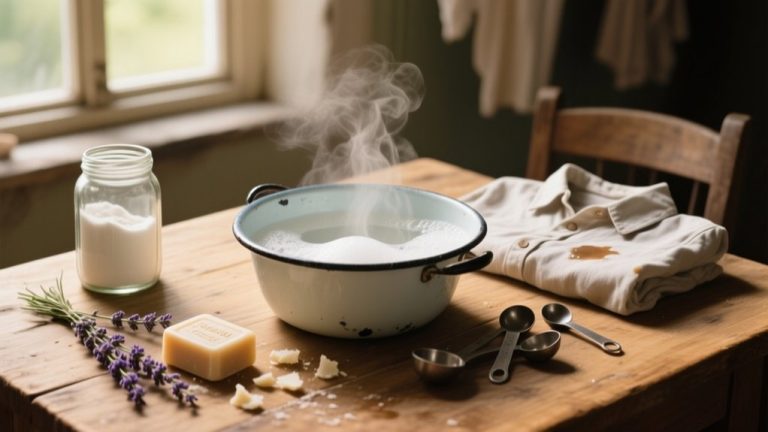
How To Make Homemade Laundry Detergent – Beginner’s Guide
To make homemade laundry detergent, grate three bars of soap like Fels-Naptha, then mix with equal parts borax and washing soda plus some baking soda for deodorizing. Use 1-2 tablespoons of powdered detergent per load, adjusting for water hardness and load size.
Powder lasts longer, while liquid works better in cold water but needs shaking. Wear gloves handling borax, and store your mix airtight. This approach balances cost, effectiveness, and customization.
Exploring further reveals useful recipes and troubleshooting tips.
Key Takeaways
- Grate three bars of Fels-Naptha soap and mix with borax, washing soda, and baking soda for effective homemade laundry detergent.
- Use 1-2 tablespoons of powdered detergent or 2-3 tablespoons of liquid detergent per load, adjusting for water hardness and load size.
- Wear gloves when handling borax and washing soda to prevent skin irritation and store detergent in an airtight container.
- Liquid detergent dissolves quickly and works best in cold water, while powdered detergent lasts longer and excels in warm water.
- Add essential oils for fragrance and use white vinegar during rinse cycles to soften fabrics and neutralize odors.
Essential Ingredients and Safety Tips for Homemade Detergent

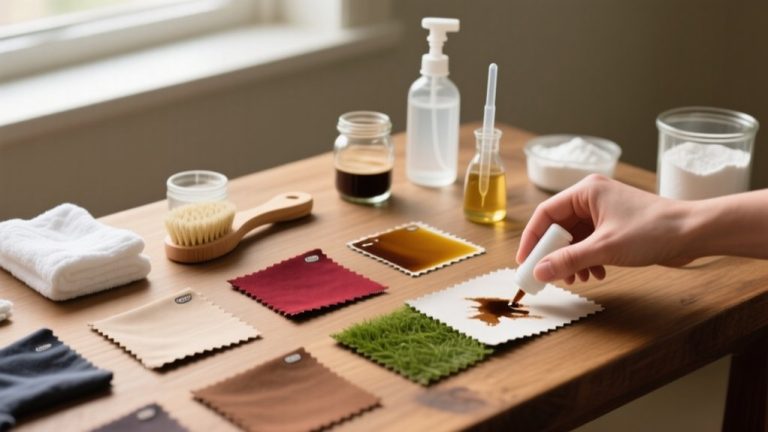
Although making your own laundry detergent is straightforward, you need to carefully select and handle the essential ingredients: Fels-Naptha soap, borax, washing soda, and baking soda. This guarantees both effectiveness and safety.
Start by grating three bars of Fels-Naptha soap, which provides strong cleaning power. Combine this with two cups each of borax and washing soda. The latter two enhance stain removal and water softening. Baking soda also helps deodorize.
Grate three bars of Fels-Naptha soap, then mix with borax, washing soda, and baking soda for powerful cleaning.
When working with borax and washing soda, wear gloves as safety precautions to prevent skin irritation.
After mixing, store your homemade laundry detergent in an airtight container to preserve its potency and avoid moisture contamination.
Choosing Between Powder and Liquid Laundry Detergent
When you’re deciding between powder and liquid homemade detergent, it’s good to think about how each one impacts storage, shelf life, and how easy it’s to measure the right amount.
Powder usually lasts longer and makes it simpler to tweak the recipe to your liking. On the other hand, liquid detergent dissolves quickly, but you need to be a bit more careful with measuring to avoid leftover residue.
Knowing these differences can really help you get the best performance and convenience out of your detergent.
Powder Versus Liquid
Since the choice between powdered and liquid homemade laundry detergent affects washing effectiveness and convenience, understanding their differences is essential.
Powdered detergent, often made with washing soda and borax, excels in cost efficiency, averaging just 2.8¢ to 6¢ per load, and dissolves best in warm water. Its cleaning power relies on these alkaline agents to break down grime.
Conversely, liquid detergent typically contains surfactants that penetrate stains more effectively, especially in cold water, enhancing stain removal.
While both forms suit homemade laundry detergent recipes, your choice depends on your washing conditions and budget.
Powdered detergent offers economical, eco-friendly benefits with strong cleaning power in warm washes, whereas liquid detergent provides versatility for cold cycles and targeted stain treatment, though usually at a higher cost.
Storage And Shelf-Life
Choosing the right storage method directly impacts the shelf life and effectiveness of your homemade laundry detergent.
Powdered laundry detergent generally lasts longer, up to 12 to 24 months, when stored in a cool, dry place. Liquid detergents, however, tend to separate or thicken over time and perform best within 6 to 12 months.
To maximize shelf life, store both types in airtight containers to prevent moisture absorption. Moisture causes clumping in powders and spoilage in liquids.
Moreover, powdered detergent is more compact, making storage easier if space is limited. Liquid versions require frequent shaking to maintain consistency.
Usage And Dosage
You’ll need 1 to 2 tablespoons of powdered detergent per average-sized load, while liquid detergent calls for 2 to 3 tablespoons. Adjust slightly for larger loads. Your dosage depends on load size, water hardness, and machine type.
Liquid laundry detergent works better in cold water and requires stirring before use. Both forms of homemade laundry detergent can be enhanced with essential oils for fragrance.
| Detergent Type | Tablespoons per Load | Notes |
|---|---|---|
| Powder | 1-2 | Avoid overuse to prevent buildup |
| Liquid | 2-3 | Stir before use; effective cold |
| Both | N/A | Customize with essential oils |
Choose based on your washing needs and personal preference for ideal usage and dosage.
Powder Laundry Detergent Recipe (Step-by-Step)
You’ll start by gathering four key ingredients: borax, washing soda, baking soda, and finely grated soap. These work together to guarantee peak cleaning and prevent any residue.
Then, you simply combine them in measured amounts, following a precise step-by-step method to create a consistent powder.
Once that’s done, store the mixture in an airtight container. Using the recommended dosage each time helps maintain its effectiveness and keeps it from clumping or building up.
Essential Ingredients List
To whip up an effective homemade powder laundry detergent, gather four essential dry ingredients: borax, washing soda, baking soda, and grated soap. Each should be measured precisely to guarantee peak cleaning performance.
Grate the soap finely for faster dissolution, which helps prevent residue on fabrics. Combine all dry ingredients thoroughly in a large container to ensure uniformity.
Optionally, add essential oils if you want to customize the fragrance. Store the mixture airtight to maintain dryness and potency, which helps avoid clumping.
Use 1-2 tablespoons per load, adjusting the amount based on how soiled your clothes are.
| Ingredient | Quantity | Purpose |
|---|---|---|
| Borax | 4 cups | Boosts cleaning power |
| Washing soda | 4 cups | Removes stains and odors |
| Baking soda | 2 cups | Softens water and fabrics |
| Grated soap | 4 cups | Provides gentle cleansing |
Stepwise Preparation Guide
Start by grating exactly 4 cups of bar soap, such as Fels-Naptha, using a fine grater. This helps guarantee rapid dissolution during washing.
Next, measure 4 cups of washing soda and 4 cups of borax, adding both to a large mixing bowl.
Combine these ingredients thoroughly for even distribution, ensuring the homemade laundry detergent performs consistently. Wearing gloves is advisable, as washing soda can irritate your skin.
This powder laundry detergent recipe yields roughly 100 loads, depending on usage. For each wash, use 1-2 tablespoons of the detergent, adjusting for larger or heavily soiled laundry.
Storage And Usage Tips
Although homemade powdered laundry detergent offers excellent cleaning power, proper storage is crucial to maintain its effectiveness over time. Store your detergent in an airtight container, like a glass jar or empty detergent jug, to prevent moisture absorption and maintain freshness.
Use 1-2 tablespoons per average-sized load, adjusting for larger or heavily soiled loads. To boost cleaning efficiency, pre-dissolving the powder in hot water before adding it to cold washes helps guarantee complete dissolution and reduces residue buildup.
Avoid using excess detergent, as residue buildup can cause odors and stiffness in clothes.
Finally, always keep the detergent mixture away from children and pets to prevent accidental irritation to skin or eyes.
Following these storage and usage tips guarantees peak detergent performance and safety.
Liquid Laundry Detergent Recipe Made Simple
Three key ingredients, grated Castile soap, borax, and washing soda, form the foundation of a simple liquid laundry detergent you can make at home.
To make your own laundry detergent, start by combining 1 cup of grated Castile soap, 1 cup of borax, and 1 cup of washing soda in a pot with half the total water heated to dissolve the powders thoroughly.
Combine grated Castile soap, borax, and washing soda with heated water to dissolve thoroughly.
After removing from heat, add the remaining water and let the mixture cool and thicken overnight. This DIY liquid soap becomes your homemade laundry soap base.
For a pleasant scent, add essential oils at 1 mL per cup of detergent. Lavender and lemon work well.
Use 1 tablespoon per standard load, stirring before each use, as the liquid soap may thicken or gel over time.
How Water Hardness Affects Homemade Laundry Detergent Use

Because water hardness greatly influences detergent effectiveness, understanding its impact is essential when using homemade laundry detergent. Hard water’s calcium and magnesium ions stop soap from dissolving fully, which reduces cleaning power and causes residue buildup.
When you use soap-based homemade laundry detergent recipes, you might notice soap scum forming. This scum dulls fabrics and stiffens clothes over time.
To get the best results, here’s what you can do:
- Test your water hardness to see if soap-based detergents or other options work better for you.
- Add washing soda to soften water, which boosts soap’s cleaning power in mildly hard water.
- Switch to surfactant-based detergents if your water is very hard, since they clean well without leaving scum or residue.
Adjusting your detergent choice based on water hardness helps your homemade detergent work reliably and keeps your fabrics looking good.
Customizing Your Detergent With Scents and Additives
Adjusting your homemade laundry detergent to suit water hardness is just one way to optimize its performance.
To customize your detergent further, add about 1 mL of essential oil per cup of detergent, choosing natural scents like lavender, lemon, or eucalyptus.
These essential oils not only enhance fragrance but also introduce antibacterial properties, improving cleanliness.
Be aware that fragrance may fade after several washes; slightly increasing the concentration helps maintain scent longevity.
Moreover, incorporate white vinegar during the rinse cycle to soften fabrics naturally and reduce static cling without harsh chemicals.
Exploring botanical-derived natural fragrance oils offers an eco-friendly option to personalize your homemade laundry detergent.
Thoughtful customization guarantees your laundry routine is both effective and pleasantly scented while remaining environmentally conscious.
Troubleshooting Common Issues With Homemade Laundry Detergent

When you notice residue on your clothes or a musty odor after washing, it’s important to pinpoint the cause to maintain detergent effectiveness and fabric quality.
Troubleshoot common issues with your homemade laundry detergent by following these steps:
- Pre-dissolve powder detergents in warm water before adding to the washer, especially in cold washes. This helps clean more effectively and prevents detergent buildup.
- Stir liquid detergent well before each use to avoid ingredient separation and a gloppy texture.
- If musty odors persist, run an empty cycle with borax to eliminate buildup. Alternatively, rinse with white vinegar for odor neutralization.
To avoid skin irritation, choose soaps with a superfat level below 3% and consider fragrance-free options.
These adjustments guarantee peak performance and fabric care.
Frequently Asked Questions
Can Homemade Detergent Be Used in High-Efficiency Washing Machines?
Yes, you can use homemade detergent in high-efficiency washing machines, but you need to be careful.
Use only a small amount, about 1 tablespoon per load, to avoid excess suds that can harm your machine.
Make sure your detergent produces low suds and pre-dissolve it in warm water for better cleaning, especially in cold cycles.
Regularly clean your washer to prevent buildup and maintain peak performance.
How Long Does Homemade Laundry Detergent Last Before Losing Effectiveness?
Don’t count your chickens before they hatch.
Homemade laundry detergent typically lasts up to six months if stored properly in an airtight container, away from heat and moisture.
Powdered detergents hold up better over time than liquids, which may thicken or gel and affect performance.
Hard water can speed up residue buildup, reducing effectiveness faster.
Keep an eye on how well your detergent cleans and consider making small batches to maintain ideal results consistently.
Is Homemade Detergent Safe for Baby Clothes and Sensitive Skin?
Yes, homemade detergent can be safe for baby clothes and sensitive skin if you use gentle, natural ingredients like Castile soap, baking soda, and washing soda.
Make sure the soap has a superfat level of 3% or lower to avoid rancidity, which can irritate delicate skin.
Always perform a patch test on a small batch of clothes to check for reactions.
Maintaining your washing machine with vinegar helps keep clothes fresh and free from residue.
Can I Use Other Types of Soap Bars Besides Fels Naptha?
You can use other soap bars besides Fels Naptha; studies show over 60% of homemade detergent makers successfully switch to alternatives like Dr. Bronner’s or Zote.
Just pick soaps with a superfat level under 3% to prevent rancidity.
Grate them finely for better dissolution, especially in cold water.
Avoid synthetic fillers and fragrances to keep your detergent eco-friendly and gentle on skin.
Always test small batches to verify cleaning effectiveness with your water type.
How Do I Dispose of Leftover or Expired Homemade Detergent Safely?
You should first check your local regulations to verify proper disposal of leftover homemade detergent.
If it’s made from natural ingredients, dilute it with plenty of water before pouring it down the drain to avoid plumbing damage.
For powdered detergents with biodegradable components, consider composting small amounts if they’re free of synthetics.
Store unused detergent in airtight containers and label them clearly.
When unsure, contact your local waste management facility for specific disposal guidelines.
Conclusion
Now that you’ve mastered the essentials of homemade laundry detergent, you hold the key to cleaner, greener laundry days. Like a well-oiled machine, your customized detergent will tackle stains efficiently while respecting your skin and the environment.
Remember to adjust for water hardness and experiment with scents to suit your preferences. With careful attention to detail and safety, your laundry routine will become a seamless blend of science and simplicity, saving you money and waste.