What Laundry Detergent Is Safe For Septic Systems – Guide
To protect your septic system, choose laundry detergents that are biodegradable, phosphate-free, and low-sudsing, such as Seventh Generation Free & Clear or ECOS Free & Clear. Avoid harsh chemicals like chlorine bleach and synthetic fragrances because they harm beneficial bacteria essential for waste breakdown.
Liquid detergents and detergent sheets dissolve well, minimizing residue buildup. Managing your laundry habits and selecting septic-safe fabric softeners also support system health.
Explore further to understand ideal detergent formats and maintenance tips.
Key Takeaways
- Use biodegradable, low-sudsing detergents free from phosphates, chlorine bleach, synthetic fragrances, and non-biodegradable compounds to protect septic bacteria.
- Liquid detergents and detergent sheets dissolve completely, minimizing residue and septic system disruption compared to powders or pods.
- Recommended septic-safe detergents include Seventh Generation Free & Clear, ECOS Free & Clear Liquid, and Earth Breeze Sheets.
- Spread laundry loads throughout the week, limit to one load per day, and use high-efficiency washers to reduce strain on septic systems.
- Avoid detergents that don’t dissolve well in hard water to prevent clogs and soap scum buildup that harm septic functionality.
Why Choosing Septic-Safe Laundry Detergent Matters
Because harsh chemicals in traditional laundry detergents can disrupt the beneficial bacteria that break down waste in septic systems, choosing septic-safe detergents is crucial to maintain system function.
When you use septic-safe laundry detergent, you support the microbial ecosystem critical for efficient waste decomposition.
Using septic-safe detergent helps preserve the vital microbes that efficiently break down waste.
Many conventional detergents contain phosphates and chlorine bleach, substances that alter the septic tank’s pH and inhibit bacterial activity.
Biodegradable detergents, designed to break down quickly, reduce the risk of sediment buildup and pipe clogging, protecting your system’s integrity.
Selecting products with certifications like EPA Safer Choice guarantees your detergent is both effective and environmentally responsible.
Which Ingredients Harm Your Septic System?
When you select a laundry detergent, it’s important to understand which ingredients can damage your septic system.
Phosphates, for example, disrupt the bacterial balance critical for waste breakdown. This causes nutrient imbalances and promotes algae overgrowth in nearby water bodies.
Chlorine bleach poses a significant threat even in small amounts. It kills the beneficial microorganisms that maintain septic function.
Synthetic fragrances also present a risk. They biodegrade slowly and may harm the septic bacteria, impairing the system’s efficiency.
Furthermore, non-biodegradable compounds like optical brighteners and petroleum-derived surfactants can accumulate. This further stresses your septic system and impacts the surrounding environment.
Avoiding these harmful ingredients helps preserve the natural processes essential to your septic system’s health and longevity.
Best Detergent Formats for Protecting Your Septic System
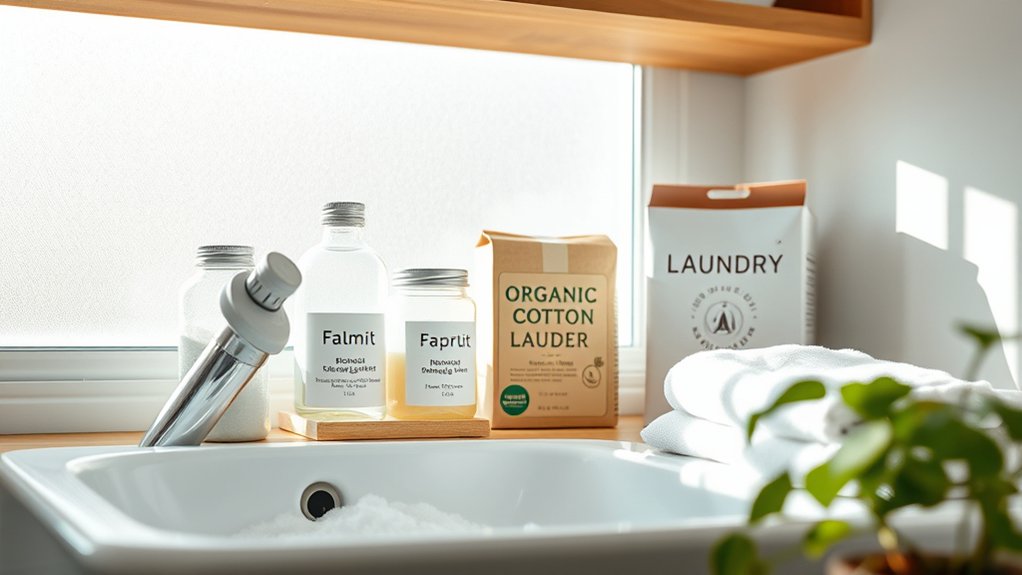
You’ll want to pick detergent formats that dissolve fully to keep your septic system free from residue buildup.
Liquid detergents usually work best because they dissolve completely in any water temperature. On the other hand, powder detergents need warm or hot water to dissolve properly; otherwise, they might cause clogs.
Pods and detergent sheets are super convenient, but they can affect your septic system differently.
Liquid Versus Powder
Several types of laundry detergents exist, but choosing the right format is essential for protecting your septic system’s health.
Liquid detergents dissolve completely in both hot and cold water, reducing sediment buildup and preventing mechanical clogs that can harm your septic tank.
In contrast, powdered detergents often contain non-biodegradable fillers that may not fully dissolve, especially in cold washes, leading to hard clogs.
While powdered detergents produce less foam and might suit aerobic treatment units, liquid detergents generally offer better safety for gravity-fed septic systems.
To maintain your system’s microbial balance, always use a septic safe detergent in the recommended amounts.
Pods And Sheets
Laundry pods may seem convenient, but they often pose risks to septic systems because undissolved residue can disrupt the beneficial bacteria colonies essential for waste breakdown.
While some pods safe for septic use exist, you must verify they dissolve fully to prevent damage.
Alternatively, detergent sheets like Earth Breeze offer a septic-safe laundry detergent option, as they dissolve completely in water, minimizing residue and bacterial shock.
Unlike powdered detergents, which may contain fillers causing clogs, detergent sheets provide a low-impact, biodegradable format ideal for septic systems.
When choosing between pods and sheets, prioritize products explicitly labeled septic-safe to maintain system health and functionality.
This evidence-based approach helps protect your septic system without sacrificing cleaning effectiveness or convenience.
Top 6 Septic-Safe Laundry Detergents to Consider in 2026
Choosing the right detergent plays an essential role in maintaining your septic system’s health while ensuring effective cleaning.
When selecting among septic safe laundry detergents, your choice should balance cleaning power with biodegradability to protect your septic.
Consider these top options for 2026:
1. Seventh Generation Free & Clear
97% plant-based, EPA and USDA certified, costing about $0.18 per load.
2. ECOS Free & Clear Liquid
Carbon neutral, fragrance and dye free, priced around $0.13 per load.
3. Earth Breeze Sheets
Biodegradable laundry sheets that dissolve completely, approximately $0.18 per load.
These detergents minimize harmful additives, supporting your septic system’s functionality while delivering effective laundry results.
Laundry Habits That Protect Your Septic System
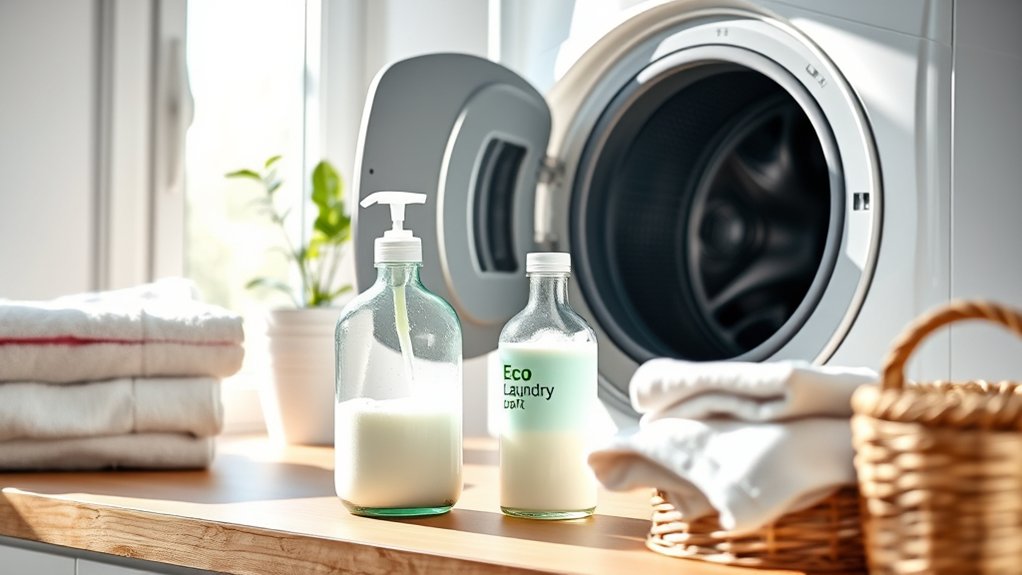
Although it might be tempting to run multiple loads in quick succession, spreading them throughout the week helps prevent overwhelming your septic system with excessive water.
Limiting laundry loads to one per day allows the beneficial bacteria in the tank enough time to break down organic matter effectively.
Washing full loads instead of several smaller ones maximizes water efficiency, which is critical to protect your system.
Using a detergent safe for septic systems further minimizes chemical disruption to the bacterial balance.
Upgrading to a high-efficiency washer can reduce water usage per load, lessening stress on your system.
Moreover, regularly cleaning your lint trap and installing a lint filter on the washer discharge line helps capture synthetic fibers that could impair septic function.
These habits collectively sustain your septic system’s health over time.
Are Pods and Sheets Safe for Septic Systems?
How safe are detergent pods and sheets for your septic system?
Laundry pods often contain concentrated surfactants and plastic coatings that may not fully dissolve. This can cause residue buildup, which risks disrupting your septic tank’s safety.
In contrast, detergent sheets typically dissolve more completely. But their septic safety depends on the ingredients used.
Consider these points for safer detergent choices:
- Laundry pods safe for septic systems are rare because of potential chemical shocks and film residue.
- Detergent sheets from reputable brands dissolve evenly, reducing septic disruption.
- Still, verify their formulations.
- Always check for manufacturer septic-safe certifications to avoid harmful additives that can compromise septic health.
Septic-Safe Fabric Softener Alternatives That Work
You’ll want to skip liquid fabric softeners because they’ve chemicals that can harm the good bacteria in your septic system.
Instead, try using dryer sheets or natural options like white vinegar in the rinse cycle. Both of these soften your clothes without messing with your septic system.
Another great choice is wool dryer balls. They’re chemical-free and help reduce static and drying time, all while keeping your septic system healthy.
Liquid Softener Alternatives
Many common liquid fabric softeners contain cationic surfactants that can disrupt the beneficial bacteria in your septic system. This can impair its ability to break down waste effectively.
To protect your septic health, consider these liquid softener alternatives that soften clothes without harm:
- Use white vinegar during the rinse cycle. It naturally softens fabrics, reduces static, and is fully biodegradable, posing no risk to septic systems.
- Employ dryer balls made from natural materials like wool. They physically soften clothes and cut drying time without releasing chemicals.
- Avoid liquid fabric softeners containing harsh surfactants. Instead, focus on septic-safe options that maintain the microbial balance essential for waste breakdown.
Dryer Sheet Options
Besides liquid softeners, the choice of dryer sheets can greatly impact your septic system’s health. Opting for biodegradable dryer sheets made from plant-based materials reduces the introduction of synthetic dyes and fragrances that may disrupt septic processes.
Alternatively, dryer balls crafted from 100% New Zealand wool offer a septic-safe solution by naturally softening clothes, minimizing static cling, and cutting drying time by up to 40%. These benefits not only protect your septic system but also improve energy efficiency.
Moreover, you might consider homemade fabric softeners using baking soda or essential oils to avoid harmful chemicals.
Remember to clean your lint trap after every load and consider installing an inline lint filter to prevent debris buildup, further safeguarding your septic system’s function and longevity.
How Well Water Affects Your Detergent Choice and Septic System
Since well water often contains high mineral content and varying pH levels, it directly influences how your laundry detergent works and the health of your septic system.
Hard water reduces detergent effectiveness, so choosing septic-safe detergents made for these conditions is essential. High mineral content can cause soap scum buildup, which can impair your septic system’s function.
Hard water hampers detergent performance and can lead to soap scum buildup, affecting septic system health.
To optimize detergent choice and protect your septic system:
- Test your well water’s mineral content and pH to understand specific challenges.
- Use low-sudsing, plant-based detergents formulated for hard water to boost cleaning and reduce residue.
- Avoid detergents that don’t dissolve well in hard water to prevent clogs and microbial imbalance in the septic tank.
These steps help maintain efficiency and prolong your septic system’s lifespan.
When to Call a Plumber for Septic Issues
How do you know when your septic system needs professional help? If you hear gurgling in your plumbing or smell sewage near your washing machine, these signs suggest septic system issues.
Frequent backups, slow drains, wet spots, or lush grass over the drain field also indicate a possible blockage or malfunction. If your septic tank hasn’t been pumped within three to five years, schedule a plumber inspection.
Prompt plumbing intervention can prevent serious damage.
| Warning Signs | Possible Cause | Action Needed |
|---|---|---|
| Gurgling plumbing sounds | Septic system blockage | Call a plumber |
| Wet spots on yard | Drain field malfunction | Immediate inspection |
| Slow drains after laundry | Full septic tank | Schedule pumping |
Frequently Asked Questions
Can Septic-Safe Detergents Help Reduce Laundry Water Usage?
Yes, septic-safe detergents can help reduce your laundry water usage. They’re often more concentrated, so you use less detergent per load, which lowers the water needed for rinsing.
When combined with high-efficiency washers, you’ll see 20-30% less water used per cycle.
Also, many work well in cold water, cutting down energy and water consumption.
Are Homemade Detergents Safe for Septic Systems?
About 60% of septic system failures link to improper detergent use. Homemade detergents can be safe if you avoid harsh chemicals, phosphates, and synthetic fragrances that disrupt bacteria.
Using natural soap like castile soap in moderation supports microbial health since it biodegrades well.
However, ingredients like washing soda and borax might harm your system by altering pH levels.
Always avoid fillers, and regularly monitor your septic tank’s condition to prevent issues.
How Often Should Septic Tanks Be Pumped When Using Septic-Safe Detergents?
You should pump your septic tank every 3 to 5 years even if you use septic-safe detergents. These detergents help reduce harmful chemicals but don’t eliminate sludge buildup entirely.
Factors like household size and water usage can affect this timeline, so monitor your system for slow drains or odors.
Regular pumping maintains bacterial activity and prevents system failure, keeping your septic system functioning efficiently over time.
Do Septic-Safe Detergents Affect the Scent or Cleanliness of Clothes?
You might notice septic-safe detergents keep your clothes smelling more like a fresh breeze than a flower garden, thanks to their gentle, plant-based formulas.
Despite the subtler scent, they clean just as thoroughly, tackling stains and grime effectively.
Studies show these detergents maintain fabric brightness and freshness without harsh chemicals, preserving both your clothes and septic system.
Can Septic-Safe Detergents Prevent Septic System Odors?
Yes, septic-safe detergents can help prevent septic system odors by preserving the beneficial bacteria that break down waste and control smells.
When you use biodegradable, low-sudsing detergents free of harsh chemicals, you maintain the pH balance and avoid residue buildup that triggers odors.
However, you still need to manage laundry loads and maintain your septic system regularly to effectively minimize foul smells over time.
Conclusion
Choosing the right laundry detergent for your septic system isn’t just a small step. It’s the foundation that keeps your system running smoothly. Avoid harsh chemicals like phosphates and opt for biodegradable, septic-safe options to protect your system’s delicate balance.
Remember, even the gentlest detergent can’t fix poor laundry habits. Treat your septic system like a garden: with the right care and choices, it will thrive for years, saving you time and costly repairs.