What Laundry Detergent Has Enzymes – A Closer Look
You’ll find enzyme laundry detergents contain protease, lipase, alpha-amylase, and other enzymes that target protein, fat, and starch stains for efficient cleaning. These detergents work best in warm water, breaking down complex stains into smaller molecules while minimizing harsh chemicals and environmental impact.
They’re ideal for everyday fabrics like cotton but not suited for delicate fibers such as silk or wool. If you want to optimize stain removal and fabric care, exploring their specific uses and limitations will prove valuable.
Key Takeaways
- Enzyme laundry detergents contain protease, lipase, and amylase enzymes for targeted stain removal of proteins, fats, and starches.
- These detergents work best in warm water, enhancing enzyme activity and enabling effective low-temperature cleaning.
- They are biodegradable, phosphate-free, and safer for sensitive skin, promoting eco-friendly and gentle cleaning.
- Enzyme detergents are ideal for everyday fabrics like cotton and synthetics but should be avoided on delicate fibers such as silk and wool.
- Proper storage in cool, dark places and following usage guidelines ensure enzyme detergents maintain effectiveness and fabric safety.
What Is an Enzyme Laundry Detergent?
Although you mightn’t notice them, enzyme laundry detergents use biological catalysts to break down specific stains at a molecular level, greatly enhancing cleaning efficiency.
An enzyme laundry detergent incorporates targeted cleaning enzymes like protease for protein stains, lipase enzymes for greasy residues, and amylase to tackle starch stains.
These enzymes accelerate stain removal without relying on harsh chemicals, enabling effective cleaning at lower wash temperatures and reducing energy consumption.
Because they’re biodegradable and lack phosphates or optical brighteners, these detergents support eco-friendliness.
Furthermore, enzyme detergents minimize skin irritation risks, making them suitable for sensitive skin and safe around babies or pets.
How Enzyme Detergents Work
You’ll find that enzyme detergents contain specific catalysts like protease, alpha-amylase, lipase, and mannanase. Each one targets different stains—protein, starch, fat, and sugar, respectively.
These enzymes work by breaking down complex stain molecules into smaller fragments at a molecular level. This makes the stains much easier to wash away during rinsing.
It’s pretty interesting to understand how this process works because it also explains why enzyme detergents need precise temperature and handling conditions.
If the conditions aren’t right, the enzymes won’t work as efficiently, and your clothes mightn’t get as clean as you’d like.
Enzyme Types Explained
When you use enzyme detergents, specific enzymes like protease, lipase, and alpha-amylase target distinct stain types by breaking down their molecular structures. Protease specializes in degrading protein stains such as blood and sweat, enhancing stain removal efficiency.
Lipase catalyzes the breakdown of greasy food stains and oils, greatly improving cleaning effectiveness on lipid-based residues. Alpha-amylase focuses on starch stains from foods like pasta and gravy, converting complex carbohydrates into smaller fragments for easier rinsing.
Moreover, pectate lyase addresses pectin-based stains found in fruit and vegetable residues, broadening the spectrum of enzyme types in detergents.
These enzymes act as biological catalysts, accelerating stain molecule decomposition at a molecular level, which optimizes the overall stain removal process and elevates detergent performance in diverse cleaning scenarios.
Targeted Stain Breakdown
Understanding the specific roles of enzymes like protease, lipase, and alpha-amylase sets the stage for grasping how enzyme detergents achieve targeted stain breakdown.
Enzymatic detergent leverages these specific enzymes to catalyze the decomposition of complex stain molecules, optimizing stain removal.
You’ll find protease breaks down protein-based stains such as blood and eggs.
Lipase targets greasy, lipid-based stains for effective removal.
Alpha-amylase hydrolyzes starch stains from foods like pasta and gravy.
Warm water enhances enzymatic activity, increasing cleaning efficacy while enabling energy-efficient washes at lower temperatures.
Enzyme Action Process
Although enzyme detergents contain complex mixtures, their action process hinges on specialized enzymes catalyzing the breakdown of stain molecules into smaller fragments that rinse away easily during the wash cycle.
Detergent enzymes break down various stains: protease targets protein-based stains, lipase acts on greasy residues, alpha-amylase degrades starches, and pectate lyase removes fruit-derived stains.
This enzyme action process enhances stain removal efficiency by fragmenting molecules, boosting the detergent’s cleaning power. Operating effectively at lower temperatures, these enzymes enable significant energy savings by reducing reliance on hot water.
However, using warm water optimizes enzyme activity without risking degradation.
Understanding this precise biochemical mechanism helps you appreciate how enzyme detergents deliver superior cleaning performance while conserving energy.
Common Enzymes and What They Do
Since different stains require specific treatments, laundry detergents incorporate a variety of enzymes tailored to target distinct types of residues.
You’ll find that protease enzymes break down protein-based stains like blood and egg, enhancing effective stain removal.
Lipase targets greasy food residues by degrading fats, while alpha-amylase tackles starch stains from substances such as gravy or cereal.
Moreover, pectate lyase focuses on fruit residues like berries and tomatoes, and mannanase excels at removing sticky sugars found in ketchup and ice cream.
These enzymes work synergistically to optimize cleaning efficiency.
- Protease: breaks down protein-based stains
- Lipase: degrades greasy food residues
- Alpha-amylase: hydrolyzes starch stains
- Pectate lyase & Mannanase: remove fruit residues and sticky sugars
This enzyme diversity guarantees precise and effective stain removal.
Benefits of Using Enzyme Laundry Detergents
When you choose enzyme laundry detergents, you benefit from targeted stain removal that breaks down proteins, fats, and starches efficiently through specialized enzymes like protease and lipase.
This precision enhances cleaning performance and allows effective stain removal at lower temperatures, which considerably reduces energy consumption.
Enhanced cleaning at lower temperatures significantly cuts energy use and boosts stain removal efficiency.
Enzyme laundry detergents also require less product per load, promoting water conservation and cost savings. Their biodegradable and biobased formulations contribute to eco-friendliness, minimizing environmental impact.
Moreover, these detergents exhibit lower potential for skin irritation, making them ideal for sensitive skin, baby clothes, and pet textiles.
When to Avoid Enzyme-Based Detergents: Fabric and Stain Limits
Enzyme-based detergents offer impressive stain removal on many fabrics, but their application has clear limitations. You should avoid enzyme-based detergents on delicate fabrics, especially protein-based fabrics like silk, wool, and cashmere. Enzymes can cause fiber degradation and damage with regular washing.
While these detergents excel at cleaning and removing protein-based stains such as blood or egg, using them on sensitive textiles risks compromising fabric integrity. To protect delicate items, follow care instructions closely and opt for specialized detergents like Heritage Park Silk, designed to be gentle yet effective.
- Avoid enzyme detergents on protein-based fabrics to prevent damage
- Use enzyme detergents primarily for everyday fabrics like cotton and synthetics
- Follow care instructions to maintain fabric longevity
- Select specialized detergents like Heritage Park Silk for delicate cleaning needs
Choosing the Right Enzyme Detergent
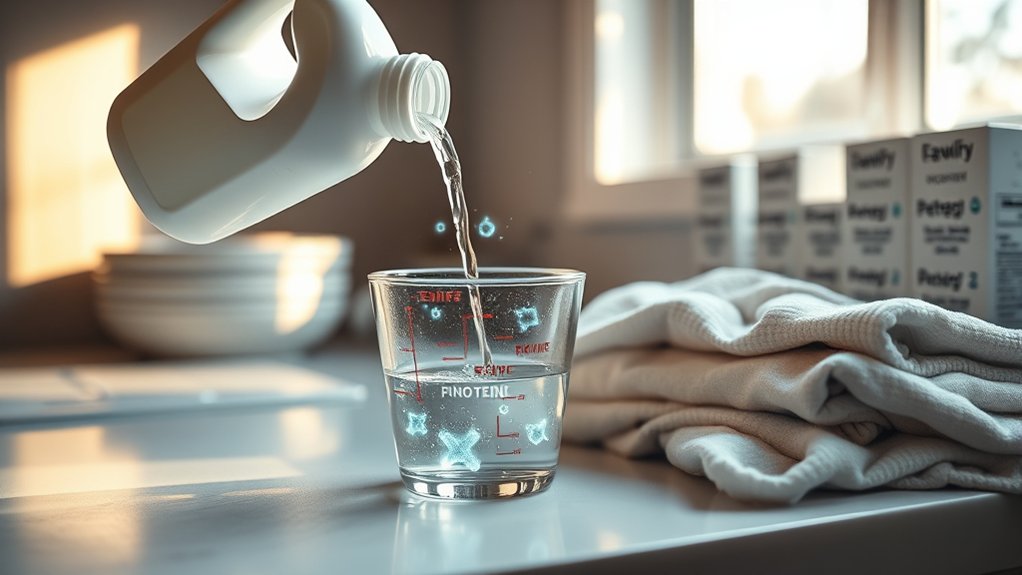
Although selecting the right enzyme detergent might seem straightforward, understanding the specific enzyme blends and their stain-targeting properties is essential for peak cleaning performance.
Enzyme-based laundry detergents like Heritage Park All-Purpose Laundry Detergent combine protease, lipase, and alpha-amylase to tackle protein, grease, and starch stains efficiently.
You should consider fabric types carefully; enzyme detergents suit cotton and synthetics but not protein-based fabrics such as silk and wool, which require non-biological detergents.
These formulations maintain effectiveness even in cold water, optimizing energy efficiency without compromising stain removal.
Always follow usage instructions precisely, as concentrated enzyme detergents typically require only a capful per load, ensuring cost-effective and thorough cleaning.
Choosing the right enzyme detergent hinges on matching enzyme specificity to your laundry needs and fabric compatibility.
How to Use Enzyme Detergents for Best Results
To maximize the cleaning power of enzyme detergents, you should use warm water since it greatly boosts enzyme activity and stain removal efficiency.
Using warm water enhances enzyme activity, significantly improving stain removal efficiency in your laundry.
When you clean your clothes, prewashing with an enzyme presoak enhances stain penetration.
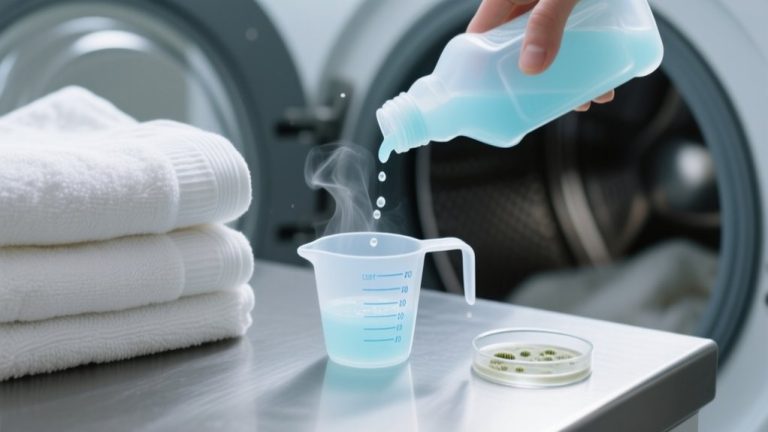
Measure detergent accurately. Eight milliliters suits medium loads, and you can adjust that amount depending on soil level and load size.
Always spot test on delicate fabrics to prevent damage, especially protein-based materials like silk or wool. Avoid high temperatures during storage to preserve enzyme effectiveness.
- Dilute enzyme detergent in warm water for prewashing tough stains.
- Let enzyme presoak sit for at least an hour before laundering.
- Use the provided beaker to dose detergent accurately.
- Store enzyme detergents in a cool, dark place away from heat.
These steps guarantee superior results in your laundry’s stain removal process.
Frequently Asked Questions
Are Enzyme Detergents Safe for Septic Systems?
Yes, enzyme detergents are safe for septic systems when you choose ones labeled as septic-safe. They contain biodegradable enzymes that break down organic matter without harming beneficial bacteria essential for waste decomposition.
Using these detergents regularly can actually enhance your septic system’s efficiency by maintaining healthy bacterial activity and reducing clogs.
Just avoid harsh chemicals, and you’ll support your system’s function and longevity with enzyme-based laundry detergents.
Can Enzyme Detergents Cause Allergies or Skin Irritation?
You might assume enzyme detergents always cause irritation, but they’re generally hypoallergenic and designed to break down stains, not harm your skin.
Still, you could react to specific enzymes or additives.
To stay safe, test a small patch first, especially if you have sensitive skin.
Dermatologist-tested, fragrance-free enzyme detergents minimize irritation risks, making them suitable for most users, including babies and pets.
How Should Enzyme Detergents Be Stored for Longevity?
You should store enzyme detergents in a cool, dark place to prevent enzyme degradation from heat and light exposure.
Keep the container tightly sealed to avoid moisture intrusion, which compromises enzyme activity.
Avoid placing them near harsh chemicals that can destabilize enzymes.
Also, guarantee low humidity to prevent clumping.
Finally, regularly check expiration dates and use the detergent within its recommended timeframe to maintain maximum stain-fighting efficiency and enzyme stability.
Do Enzyme Detergents Work in Cold Water?
You might think enzyme detergents need a roaring fire to activate, but they actually work well in cold water.
Enzymes like protease and lipase remain active, breaking down protein and grease stains efficiently, even at low temperatures.
This lets you save energy while preserving fabric integrity.
Though enzyme activity slows in cold water, modern formulations compensate, maintaining stain removal power without the need for hot water.
Are Enzyme Detergents Environmentally Friendly?
Yes, enzyme detergents are environmentally friendly. They use biodegradable, biobased ingredients that reduce environmental impact.
You’ll benefit from lower washing temperatures, cutting energy use and emissions.
These detergents avoid harsh chemicals like phosphates and chlorine, protecting aquatic life. Their concentrated formulas mean you use less product, reducing packaging waste.
Certifications such as USDA Biobased and EPA Safer Choice confirm their sustainable, eco-conscious design.
You’ll contribute to greener laundry practices by choosing them.
Conclusion
Think of enzyme laundry detergents as precision tools in your cleaning arsenal. Each enzyme acts like a specialized key releasing stubborn stains.
Like a locksmith selecting the right key, you’ll get the best results by matching enzymes to fabric and stain types. But just as a delicate lock needs careful handling, some fabrics require gentler care.
Using enzyme detergents wisely guarantees your laundry is expertly treated, combining scientific efficiency with fabric-friendly precision every wash.