How To Use Bleach In Laundry – Smart Tips
To use bleach smartly in laundry, first check your garment’s care label to verify it’s bleach-safe. Avoid bleach on wool, silk, and spandex. Use chlorine bleach for whites and tough stains, diluted properly, and color-safe bleach for colored fabrics.
For standard washers, add ⅓ to ⅔ cup diluted bleach when the drum is half full. In HE washers, use ¼ cup in the dispenser. Always run an extra rinse cycle and test fabrics first to prevent damage.
There’s more to learn about protecting clothes and your washer.
Key Takeaways
- Always check fabric care labels to confirm bleach compatibility before use to avoid damaging delicate materials like wool or silk.
- Use chlorine bleach for whitening whites and tough stains, and color-safe bleach for colored fabrics to prevent fading.
- Add bleach to the washer drum when it is half full of water for proper dilution and effectiveness.
- Use recommended bleach amounts: ⅓ cup for standard washers and ¼ cup for HE washers, adjusting by load size and soil level.
- Rinse the washer after bleaching by running an empty hot cycle with vinegar or baking soda to remove residue and prevent odors.
How To Check Fabric Care Labels For Bleach Safety

Before using bleach on any garment, you should always check the fabric care label for bleach safety instructions.
Locate the label, usually found inside the garment, and look for symbols related to bleach. A plain triangle means bleach is safe, while a crossed-out triangle indicates you should avoid using bleach.
Check the inside label for bleach symbols: a plain triangle means safe, a crossed-out triangle means avoid bleach.
Pay attention to any wording like “non-chlorine bleach” or “color-safe bleach,” which tells you what types of bleach are compatible.
Remember, some fabrics like wool, silk, or spandex aren’t bleach-safe. If you’re unsure about a fabric’s bleach compatibility, test a small, hidden area first.
Following these steps guarantees you use bleach safely and avoid damaging your clothes while keeping them clean and fresh.
Which Clothes Are Safe To Bleach?
Once you know how to identify bleach-safe fabrics from their care labels, you can determine which clothes you can safely bleach.
White cotton, polyester, and linen are typically bleach-safe fabrics that can handle chlorine bleach without damage.
Avoid using bleach on wool, silk, spandex, and leather, as these materials can be ruined.
If you want to bleach colorfast fabrics, always do a patch test on a hidden area first to check for discoloration.
Remember, chlorine bleach works only on white items. Using it on colored clothes risks irreversible fading.
For colored and white fabrics alike, non-chlorine bleach is a safer, versatile option.
Choosing Chlorine Vs. Color-Safe Bleach For Laundry
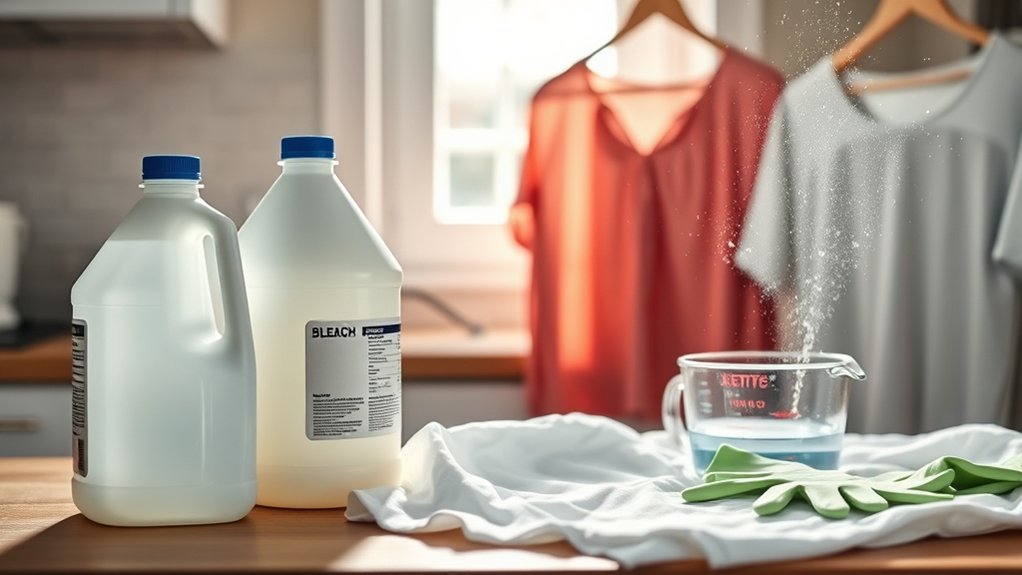
You’ll want to use chlorine bleach when you need to whiten your whites or deal with really tough stains. Just be careful with delicate fabrics—it can be a bit harsh.
On the other hand, color-safe bleach is much gentler and works well on most colors. It brightens your clothes without causing any fading.
Just remember to always check the care labels and follow the instructions to keep your clothes looking their best.
Chlorine Bleach Uses
Although chlorine bleach excels at whitening and disinfecting whites by breaking down stains into colorless particles, it’s important to choose the right type of bleach based on your laundry needs.
Chlorine bleach is your go-to for tough stains on white fabrics, as it effectively removes stains and sanitizes.
However, before using it, always check fabric care labels to confirm the fabric can handle chlorine bleach. Avoid it on delicate materials like wool, silk, and spandex.
Use about ½ cup for standard washers or ¼ cup for high-efficiency machines.
Add chlorine bleach to the washer’s bleach dispenser or dilute it in water. Never apply it directly to fabric to prevent damage.
Following these steps helps you safely maximize chlorine bleach’s stain-removing power.
Color-Safe Bleach Benefits
When you need to clean colored fabrics without risking damage or fading, color-safe bleach offers a reliable alternative to chlorine bleach. Unlike chlorine bleach, which can harm or fade colors, color-safe bleach uses oxygen to lift stains gently, preserving fabric compatibility.
It’s suitable for both colored and white laundry, making it a versatile choice for regular use.
Consider these color-safe bleach benefits:
- Safe on most colored fabrics without causing fading
- Effective at removing stains without harsh chemicals
- Less likely to weaken fabric fibers compared to chlorine bleach
- Compatible with a wider range of laundry loads, including mixed colors
Always check care labels and do a patch test to guarantee fabric compatibility, whichever bleach you choose.
How Much Bleach To Use In Standard And HE Washers
When you’re using bleach in a standard washer, start with about ⅓ cup for lightly soiled loads. If you’re dealing with tougher stains, you can increase that to ⅔ cup.
Just be careful not to go over these amounts, as too much bleach can damage your clothes.
Now, if you have a high-efficiency (HE) washer, the amount changes a bit. You’ll want to use around ¼ cup or simply follow the max fill line on the bleach dispenser.
This helps avoid using too much bleach, which can be harsh on your laundry and your machine.
And don’t forget—always check your washer’s instructions and the fabric care labels on your clothes.
That way, you’ll make sure you’re bleaching safely and effectively every time.
Recommended Bleach Amounts
Knowing the right amount of bleach to use in your washer guarantees effective cleaning without damaging your clothes.
Using the recommended amounts assures your laundry detergent works well alongside the bleach solution. Here’s a practical guide to help:
For standard washers, use ⅓ cup of bleach for lightly soiled loads and up to ⅔ cup for heavier ones.
In HE washers, stick to ¼ cup or follow the max fill line on your bleach bottle.
Always dilute bleach; never apply it full-strength directly to fabrics.
Check your bleach product packaging for specific instructions and measurements.
Standard Washer Guidelines
Although bleach is a powerful cleaning agent, you need to use it carefully in both standard and high-efficiency (HE) washers to avoid damaging your clothes. Always check care labels first to confirm fabrics are bleach-safe.
Add bleach to the washer’s bleach dispenser or when the drum is half full. Never put it directly on clothes. Use a heavy-duty cycle with hot water and an extra rinse for best results.
| Washer Type | Bleach Amount |
|---|---|
| Standard | ⅓ cup lightly soiled, up to ⅔ cup heavy-duty |
| HE | ¼ cup for sanitizing, max fill line for others |
Following these guidelines protects your fabrics and maximizes cleaning power.
High Efficiency Washer Tips
Since high-efficiency (HE) washers use less water than standard models, you need to adjust the amount of bleach accordingly to prevent fabric damage and guarantee effective cleaning.
When using bleach in your HE laundry, it’s essential to follow specific guidelines to protect fabrics and assure sanitation.
Use a maximum of ¼ cup bleach for sanitizing in HE washers. For lightly or heavily soiled loads, fill bleach to the dispenser’s max fill line.
Always add bleach to the dispenser or when the drum is half full for proper dilution.
Avoid pouring full-strength bleach directly on fabrics to prevent damage.
Selecting The Right Wash Cycle For Bleach Use
When you use bleach in your laundry, selecting the right wash cycle is essential to maximize stain removal and sanitizing effects. For best results, choose a heavy-duty cycle with hot water, as this combination boosts bleach’s cleaning power.
If your washer offers a “Whites” cycle, use it. It’s specifically designed to optimize bleach performance on white fabrics.
Always add an extra rinse cycle to remove any bleach residue and protect your clothes from damage.
If you have a high-efficiency (HE) washer, pick the appropriate cycle and avoid overloading. This helps guarantee proper water circulation and bleach distribution.
Finally, consult your washer’s owner’s manual for specific cycle recommendations tailored to your machine’s bleach compatibility. This approach guarantees your clothes get thoroughly cleaned and safely treated.
How To Add Bleach In Standard And HE Washers
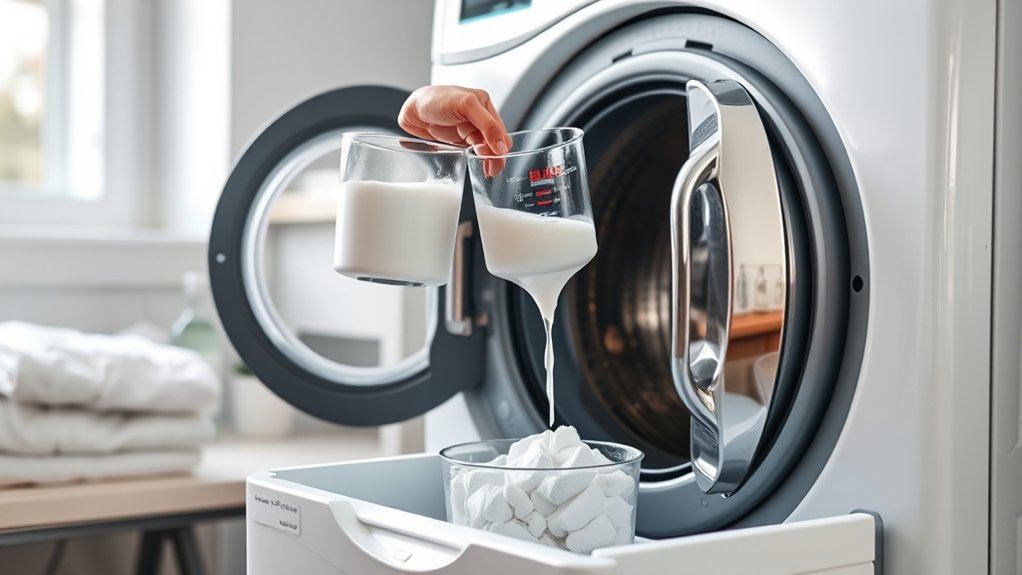
When adding bleach to your laundry, it’s important to use the right method depending on your washer type. For standard washers, you’ll want to add the bleach directly into the drum. It’s pretty straightforward.
Now, if you have a high-efficiency (HE) washer, things are a bit different. You should use the designated bleach dispenser instead of putting bleach directly into the drum. This helps the machine distribute the bleach properly without damaging your clothes.
Also, don’t forget to follow the dosage guidelines. Using the right amount not only protects your fabrics but also ensures your clothes come out clean and fresh every time.
Bleach Addition Methods
Adding bleach correctly in your laundry routine helps protect your fabrics and guarantees effective sanitizing. To add bleach properly, you’ll need to understand your washer type and use the bleach dispenser or compartment correctly.
Here’s how to add bleach to remove stains while keeping your clothes safe:
For standard washers, add ¼ cup of bleach into the bleach dispenser or pour it into the wash water when the drum is half full.
In HE washers, always use the designated bleach compartment and never exceed the max fill line.
Keep the bleach dispenser clean to maintain proper bleach dilution during the wash. Avoid pouring undiluted bleach directly onto clothes; always dilute it in water or use the dispenser.
Following these steps helps you safely add bleach and maximize stain removal.
Washer Compatibility Tips
Although bleach is a powerful cleaning agent, you need to use it correctly based on your washer type to avoid damaging your clothes or machine. Always check your washer’s owner’s manual for bleach compatibility and instructions. Use bleach only on bleach-safe fabrics like whites and colorfast items, and avoid overloading to guarantee proper circulation.
| Washer Type | When to Add Bleach | Recommended Amount |
|---|---|---|
| Standard | When drum is half full | ⅓ cup |
| HE (High-Efficiency) | In bleach dispenser | ¼ cup |
| Both | Use bleach-safe fabrics only | Check owner’s manual |
Following these washer compatibility tips helps protect your laundry and appliance while maximizing bleach’s effectiveness.
Dosage Guidelines
Since the right bleach dosage varies by washer type and soil level, you’ll want to measure carefully to protect your clothes and machine. Following bleach dosage guidelines guarantees effective cleaning without damage.
When you add bleach, always use liquid bleach and avoid applying it directly onto fabrics.
For standard washers, use ⅓ cup of liquid bleach for lightly soiled loads and up to ⅔ cup for heavily soiled ones.
In HE washers, add ¼ cup of bleach for sanitizing, or fill the dispenser to the max line for regular cleaning.
Always add bleach when the washer is halfway filled with water to guarantee proper dilution.
Use the bleach dispenser if available; it automatically mixes bleach safely during the cycle.
Tips To Avoid Fabric Damage When Using Bleach
Before you use bleach on your laundry, always check the care labels to verify the fabric can handle it. Materials like wool, silk, and spandex are especially vulnerable to damage. Confirm that your clothes are bleach-safe before proceeding.
Always use the recommended bleach amounts, usually ⅓ cup for standard washers and ¼ cup for HE machines, to avoid fabric damage caused by overuse.
Never apply bleach directly to dry fabrics; dilute it in water or add it only when the washer is filled to prevent spotting or discoloration.
Conduct a patch test on an inconspicuous area to confirm colorfastness.
Safe Bleach Pretreatment For Laundry Stains
Checking fabric care labels and testing bleach on a small area help you avoid damage when using bleach.
Before you pretreat stains, always check the fabric care label to confirm bleach compatibility.
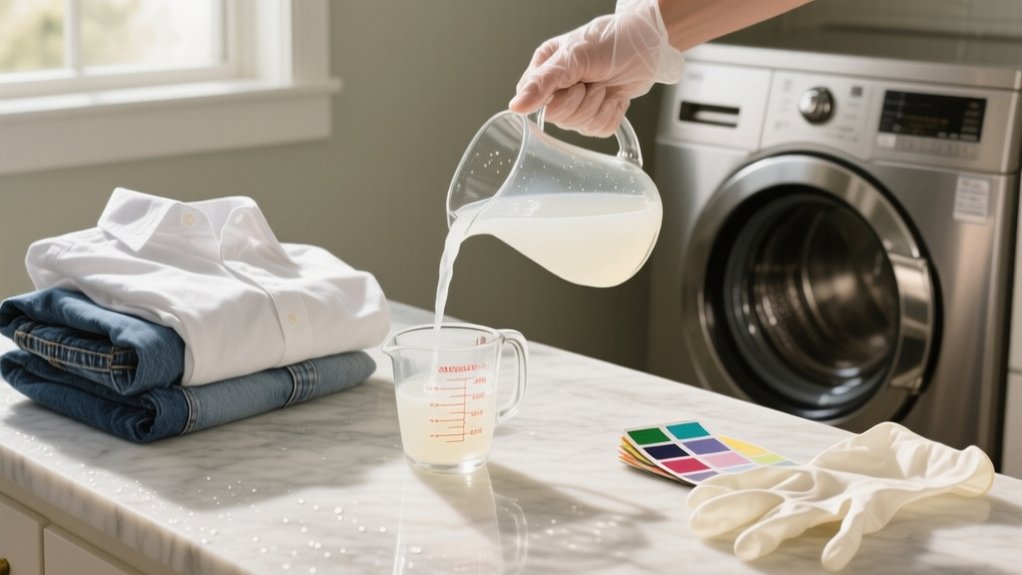
To pretreat stains safely, dilute bleach by mixing ¼ cup bleach with ¾ cup water.
Apply this solution carefully with a clean cloth, working from the edges toward the center to prevent spreading.
Let it sit for at least 30 minutes to effectively break down the stain.
Here are key steps to follow:
- Check the fabric care label before use
- Dilute bleach properly before application
- Test on a hidden spot to avoid fabric damage
- Apply gently, letting it sit for 30+ minutes
Following these guidelines helps you pretreat stains safely and protect your clothes.
How To Clean Your Washer After Using Bleach
Although bleach breaks down during the washing cycle and leaves no residue, you should still clean your washer regularly to prevent odors and buildup.
To clean your washer effectively, run an empty hot water cycle with a cup of vinegar or baking soda to eliminate any lingering smells.
Pay special attention to the bleach dispenser, cleaning it routinely to avoid buildup and guarantee it functions properly.
If you have a front-load washer, wipe down the rubber gasket and door with a damp cloth to remove any bleach residue.
Always follow your washer’s manual for specific cleaning instructions related to bleach use.
Environmental Benefits Of Using Bleach In Laundry
Keeping your washer clean after using bleach helps maintain its efficiency, but understanding bleach’s environmental impact is just as important.
When you use bleach, you’re choosing a product that’s safe and environmentally friendly. It breaks down into harmless salt and water, which means less pollution. Plus, bleach is free of elemental chlorine, reducing harmful effects on ecosystems.
Using bleach in cold water also saves energy, giving you a lower overall environmental impact.
Here’s why bleach is an eco-smart choice:
- Sodium hypochlorite oxidizes stains effectively, reducing the need for harsher chemicals
- Breaks down quickly, minimizing harmful residues in wastewater
- Safe for aquatic life due to its breakdown products
- Works well in cold water, saving energy without compromising cleanliness
Frequently Asked Questions
Can Bleach Be Safely Mixed With Other Laundry Detergents?
You shouldn’t mix bleach directly with other laundry detergents because it can reduce their effectiveness and cause harmful reactions.
Instead, add bleach separately using your washer’s bleach dispenser if it has one.
Always check product labels to verify compatibility, especially with color-safe or oxygen bleaches.
Adding bleach separately prevents fabric damage and gas emissions, keeping your laundry safe and clean without compromising detergent performance.
How Long Should Bleach Sit on Clothes Before Washing?
You should let bleach sit on clothes for at least 10 minutes before washing. Coincidentally, this timing not only sanitizes but also helps disinfect fabrics effectively.
For tougher stains, you might soak items for 30 minutes. Always dilute bleach properly and test a small area first.
Does Bleach Remove All Types of Stains Effectively?
Bleach doesn’t remove all types of stains effectively. It works best on organic stains like food or drink but struggles with oil-based stains and some inks or dyes.
You should use chlorine bleach only on whites, while color-safe bleach suits colored fabrics without fading. Always test a small area first to avoid damage.
For best results, add bleach after the wash starts so it mixes well with water and detergent.
What Are the Health Risks of Using Bleach in Laundry?
If you’re aiming to host a symphony of coughing, skin rashes, and eye irritation, keep dousing your laundry with bleach in a closed room.
Otherwise, wear gloves, guarantee good ventilation, and never mix bleach with ammonia or acids. Those combos release toxic fumes.
Prolonged exposure can cause burns and allergic reactions.
Can Bleach Be Used in Cold Water Washing Cycles?
Yes, you can use bleach in cold water cycles effectively. Just add it when your washer is about half full to guarantee proper dilution.
Make sure fabrics stay in contact with the bleach solution for at least 10 minutes to sanitize properly. Always check care labels first, since some materials don’t tolerate bleach well.
Using bleach in cold water helps preserve fabric quality while still whitening and removing stains efficiently.
Conclusion
Using bleach in laundry can be safe and effective when you follow fabric care labels and choose the right type, like color-safe bleach for delicate fabrics. For example, Sarah switched to color-safe bleach for her workout clothes, keeping them bright without damage.
Remember to measure bleach carefully, select proper cycles, and clean your washer afterward. These smart habits protect your clothes, extend their life, and even benefit the environment by reducing harsh chemical use.