When To Add Bleach To Laundry – A Quick History
You should add bleach to your laundry when the washer is half full to guarantee it contacts fabrics properly for at least 10 minutes. This maximizes stain removal and whitening while protecting clothes.
This practice has roots in ancient textile care and became standardized with sodium hypochlorite bleach in the 1930s. Using bleach at the right time prevents fabric damage and boosts cleaning efficiency.
Keep following for practical tips on timing, washer types, and safe bleach use.
Key Takeaways
- Bleach use in laundry dates back to Ancient Egypt, evolving from plant ash mixtures to sodium hypochlorite bleach in the 18th century.
- Sodium hypochlorite became widely used for laundry bleaching and disinfecting by the 1930s with products like Clorox™.
- Add bleach when the washer drum is half full to ensure effective stain removal and fabric protection.
- For HE washers, use the bleach dispenser without exceeding the fill line, and never add bleach directly onto fabrics.
- Proper bleach timing and dilution prevent fabric damage and maximize cleaning by allowing at least 10 minutes of bleach contact.
Bleach’s History In Laundry
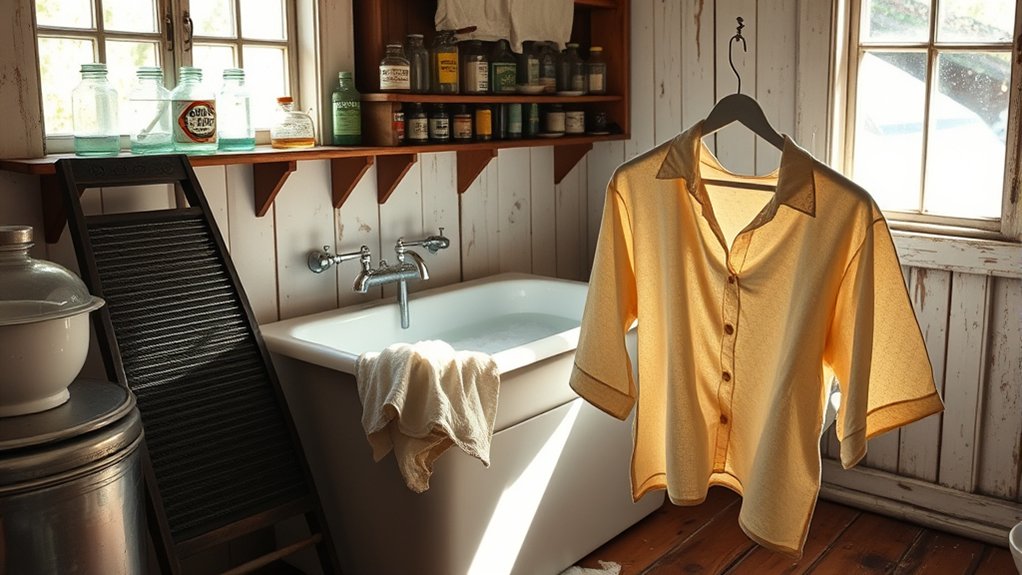
Although bleach is a common household product today, its role in laundry dates back thousands of years to ancient Egypt. There, launderers used water mixed with plant ashes to whiten fabrics.
The history of bleach advanced markedly in the late 18th century when Swedish chemist Carl Wilhelm Scheele discovered chlorine. This discovery revolutionized textile processing.
In the late 18th century, Carl Wilhelm Scheele’s discovery of chlorine revolutionized textile processing.
By the 1930s, commercial bleach products like Clorox™ became widely available. They transformed household laundry by offering effective stain removal and disinfection.
The 20th century introduced sodium hypochlorite, a safer bleaching agent that breaks down into salt and water. This improved both efficiency and safety.
Today, you’ll find bleach in various forms, including color-safe options. These ensure effective cleaning while catering to diverse household laundry needs.
Why Timing Bleach Matters
Understanding bleach’s historical development helps appreciate why its proper use matters today, especially regarding timing. When you add bleach at the right point in your laundry cycle, you guarantee effective stain removal and protect your fabrics. Timing affects how well bleach sanitizes and cleans.
Consider these key points:
- Add bleach when the washer drum is half full to avoid fabric damage.
- Ensure bleach contacts laundry for at least 10 minutes for disinfection.
- Follow your washer’s instructions closely to maximize cleaning and fabric care.
- Avoid adding bleach too early or too late, as it reduces effectiveness and stain removal.
Proper timing transforms bleach from a risk to a reliable cleaning ally in your laundry routine.
How To Add Bleach In Standard Vs. HE Washers
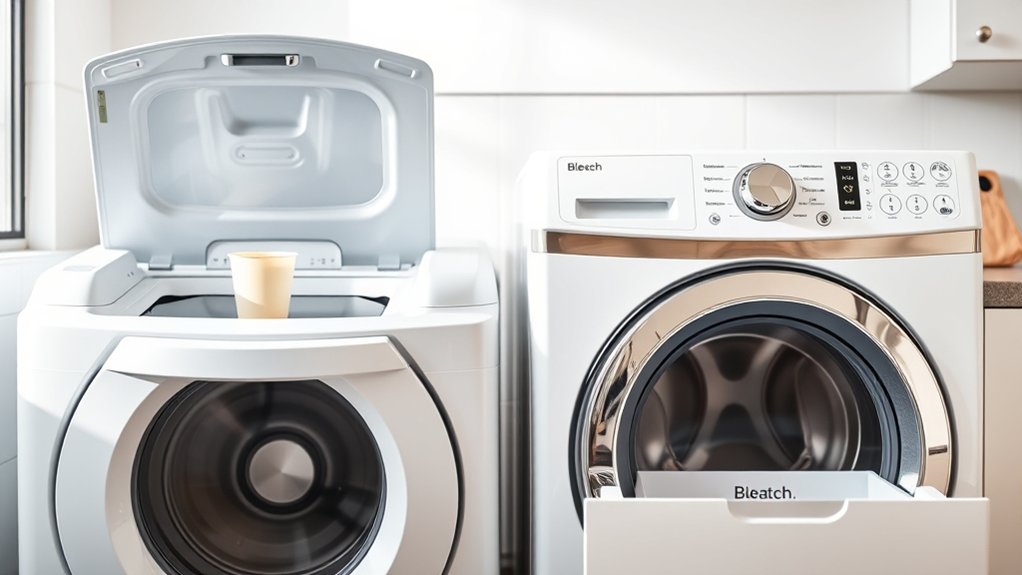
When you’re adding bleach to a standard washer, it’s best to wait until the drum is about half full. This helps prevent any damage to your clothes and ensures the bleach spreads out evenly.
Now, if you have a high-efficiency (HE) washer, things are a little different. You should always use the bleach dispenser and never pour more than the fill line. Usually, about a quarter cup before you start the cycle is just right.
Also, don’t forget to follow your washer’s loading instructions. For the best clean, choose a heavy-duty cycle with hot water. That way, your clothes come out fresh and bright every time!
Bleach Addition Timing
If your washer doesn’t have a bleach dispenser, add bleach once the drum is halfway full to confirm it dilutes properly and works effectively.
For high-efficiency washers, pour bleach into the labeled compartment, never exceeding the fill line, usually about ¼ cup.
Always start your wash cycle with detergent before adding bleach to protect fabric and boost cleaning power.
Follow your washer’s instructions closely to avoid damage.
- Add detergent first to activate cleaning agents.
- Pour bleach in at the proper time or compartment.
- Verify bleach is fully diluted before it contacts fabric.
- Consult your washer’s manual for bleach-specific guidance.
Timing bleach addition verifies your laundry is sanitized without harming fabric or the washer.
Dispenser Usage Differences
Although both standard and high-efficiency washers require bleach for effective sanitizing, how you add it differs markedly between the two.
In standard washers, you should add bleach directly to the drum when it’s half full to guarantee proper dilution and even distribution.
Select a heavy-duty cycle with hot water and an extra rinse for best results.
For high-efficiency washers, always pour bleach into the bleach dispenser up to the manufacturer’s fill line, usually about ¼ cup. This prevents bleach from contacting fabrics prematurely and protects your bleach-safe fabrics.
Avoid overloading washers since overcrowding hinders bleach circulation and reduces effectiveness.
Proper use of bleach dispensers in HE washers and careful bleach addition in standard washers guarantee your laundry is sanitized without damaging clothes or the machine.
Washer Loading Guidelines
Properly loading your washer plays a crucial role in maximizing bleach effectiveness and protecting your clothes. Following the right guidelines guarantees your fabrics stay safe while getting clean.
- For standard washers, add bleach when the drum is half full. This allows ideal dilution during the wash cycle.
- In HE washers, always pour bleach into the designated dispenser before starting to guarantee safe, thorough mixing.
- Use only the recommended amounts: ⅓ cup for standard and ¼ cup for HE machines to avoid fabric damage.
- Check care labels carefully. Avoid bleach on wool, silk, and other sensitive fabrics to prevent harm.
Avoid overloading your washer so clothes circulate freely. This lets bleach work effectively on stains without risking fabric wear.
When To Add Bleach During The Wash Cycle
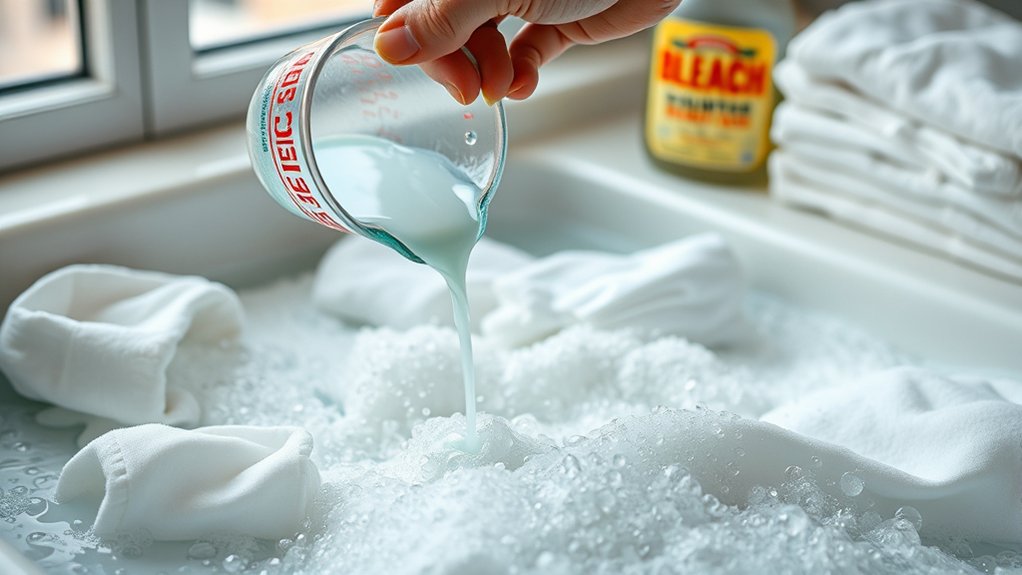
When you add bleach during the wash cycle can affect its effectiveness and the safety of your clothes. For standard washers, add bleach once the tub fills halfway to guarantee proper dilution and avoid damage.
If your machine has a bleach dispenser, pour bleach in before starting the cycle; this allows automatic, gradual dilution.
High-efficiency washers require you to use the designated bleach compartment to prevent bleach from coming into direct contact with fabrics.
Always follow recommended bleach amounts: ⅓ cup for standard washers and ¼ cup for high-efficiency washers.
To achieve effective sanitizing, make certain laundry contacts the bleach solution for at least 10 minutes during the wash cycle. Proper timing and dilution are key to safe, efficient bleach use in your laundry routine.
How Fabric Types Affect When To Add Bleach
Since different fabrics react uniquely to bleach, you need to adjust when and how you add it during laundry. Understanding fabric types helps you prevent damage and maintain colorfastness. Here’s what to keep in mind:
- Use chlorine bleach only on white cottons. Add it after the wash water is halfway full to guarantee proper dilution and avoid damage.
- Avoid bleach on sensitive fabrics like wool and silk. This helps prevent fabric weakening.
- Opt for color-safe bleach on colored fabrics to protect their hues without risking discoloration.
- Always test a hidden patch for colorfastness before applying any bleach to avoid unwanted fading.
Bleach Timing Mistakes To Avoid
Although bleach can brighten your laundry, adding it at the wrong time can cause fabric damage or reduce its effectiveness. To avoid common mistakes, always add bleach after the washer fills with water but before loading your laundry. This is typically when the drum is halfway full.
Add bleach after the washer fills but before loading laundry to prevent fabric damage and ensure effectiveness.
If your washer has a bleach dispenser, pour bleach into this compartment before starting the cycle to guarantee proper dilution. Never add bleach directly onto stains or fabrics because it can cause damage.
Also, avoid mixing bleach with detergent prior to washing, as this reduces both products’ effectiveness. Proper timing guarantees your laundry contacts the diluted bleach solution for at least 10 minutes, maximizing stain removal and sanitization while protecting your clothes.
Always dilute bleach in water or use the dispenser to keep fabrics safe.
Environmental Benefits Of Proper Bleach Use
Properly using bleach can offer significant environmental benefits by reducing the need for harsher cleaning agents that may damage ecosystems.
When you choose bleach with sodium hypochlorite, you get effective cleaning and disinfect fabrics without excessive chemicals.
Opting for unscented bleach supports eco-friendly laundry practice and minimizes ecological impact. Clorox™ bleach products break down into salt and water, making them safer for the environment.
Here’s why proper bleach use matters:
- Saves energy by working well in cold water
- Disinfects fabrics, reducing reliance on stronger chemicals
- Complies with EPA standards when unscented bleach is used
- Breaks down safely, causing less environmental harm
New Technologies For Bleach Dispensing
You’ll find that many modern washers come with automatic bleach dispensers.
These clever systems release just the right amount of bleach at the perfect time during the cycle. It’s pretty handy because it boosts efficiency by preventing overuse.
Plus, it protects your fabrics while still making sure everything gets thoroughly cleaned.
Using these features can really simplify your laundry routine.
And the best part? You get great results every time you wash.
Automatic Bleach Dispensers
When you use an automatic bleach dispenser in your washing machine, it guarantees bleach is added at just the right time and in the correct amount, usually around ¼ cup. This precise dilution at the ideal point in the wash cycle maximizes cleaning performance while reducing fabric damage.
Many high-efficiency washers feature locked dispensers that prevent bleach release before the cycle starts, enhancing safety and effectiveness. By eliminating manual bleach application, these dispensers minimize your risk of direct contact and mishaps.
Some advanced models even adjust bleach use based on load size and soil level, ensuring a measured amount of bleach every time.
- Protects your clothes from harsh bleach overexposure
- Boosts stain removal with perfect timing
- Keeps you safe from accidental splashes
- Saves bleach by tailoring amounts to each load
Efficiency In Modern Washers
Although bleach has long been a powerful cleaning agent, modern washers have transformed its use with advanced dispensing technologies that boost efficiency and safety. Today’s bleach dispensers automatically control dilution and timing, ensuring ideal stain removal while protecting fabrics.
High-efficiency washers use less water and bleach, improving efficiency without sacrificing cleanliness. Load & Go technology further simplifies your laundry routine by sensing load size and adjusting bleach accordingly. Safety features like door locks prevent accidental exposure during cycles.
These technology improvements make bleach use smarter and safer than ever.
| Feature | Benefit | Example |
|---|---|---|
| Automatic Dispensing | Precise dilution & timing | Load & Go sensors |
| High-Efficiency Use | Saves water & bleach | Uses ¼ cup bleach |
| Safety Locks | Prevents accidental exposure | Door locks during cycle |
| Pretreat Stations | Enhanced stain removal | Built-in pretreat area |
Safe And Effective Bleach Use Tips
Before adding bleach to your laundry, always check the care labels on your clothing to confirm the fabrics can handle it. Avoid delicate materials like wool, silk, and spandex.
To use bleach safely and effectively, follow these practical tips:
- Confirm your fabrics are bleach-safe by reading clothing care labels thoroughly.
- Use recommended bleach amounts: ⅓ cup for standard washers and ¼ cup for high-efficiency machines to ensure effective sanitizing without harm.
- Always dilute bleach. Mix ¼ cup bleach with 1 gallon of cool water for hand washing to protect fabric care.
- Perform a patch test on a hidden area to check colorfastness before full application.
Add bleach at the right time in the wash cycle and pair it with your laundry detergent for best results in both standard washers and high-efficiency machines.
How Bleach Became Essential For Whitening Clothes
Understanding the right way to add bleach helps you get the best results, but knowing how bleach became a staple in whitening clothes adds valuable context.
Bleach, specifically sodium hypochlorite, was first synthesized in 1789 and gained prominence during the Industrial Revolution. Its powerful whitening and disinfecting properties revolutionized laundry by making stain removal and fabric cleaning more efficient.
As bleach became widely accessible for household use by the 1930s, it transformed laundry routines. It works by converting stains into colorless, soluble particles, ensuring your fabrics come out brighter and cleaner.
Today, bleach remains essential for whitening clothes and disinfecting fabrics, giving you a reliable way to maintain the freshness and appearance of your laundry while tackling tough stains effectively.
Frequently Asked Questions
Can Bleach Remove Stains From Non-White Fabrics?
Yes, bleach can remove stains from non-white fabrics, but you need to be cautious.
Regular chlorine bleach often damages colors, so it’s best to avoid it on colored items. Instead, use color-safe or oxygen-based bleach, and always check the care label first.
Before treating the entire garment, do a patch test on a hidden spot to make sure the fabric won’t fade or get damaged.
Pre-treat stains for better results.
Is Bleach Safe for Hand Washing Clothes?
Yes, bleach is safe for hand washing clothes if you dilute it properly. About 1/4 cup per gallon of cool water works well.
Always test a small, hidden spot first to avoid discoloration.
Soak the fabric for at least 10 minutes to sanitize effectively, but never use undiluted bleach directly on clothes.
Afterward, rinse thoroughly to remove any residue and protect your fabric from damage.
How Does Bleach Affect Fabric Color Retention Over Time?
Imagine your favorite shirt slowly losing its vibrant color, coincidentally after every bleach wash. That’s because bleach breaks down dye molecules, causing colors to fade over time.
You’ll notice cotton fabrics lose color faster than synthetics like polyester.
To keep your clothes looking fresh, use bleach sparingly and opt for color-safe alternatives when possible.
Always check care labels to avoid weakening fibers and preserve your garments’ lifespan.
Can Bleach Be Mixed With Other Laundry Detergents Safely?
You shouldn’t mix bleach directly with laundry detergents because it can reduce their effectiveness and create harmful fumes.
Instead, add bleach to the washer’s bleach dispenser or after the water fills, before adding clothes.
Always check labels for compatibility since some detergents contain ingredients that react badly with bleach.
Avoid mixing bleach with ammonia or acidic products to keep your laundry safe and your fabrics undamaged.
What Are the Alternatives to Chlorine Bleach for Sensitive Skin?
For sensitive skin, you can use oxygen bleach, which gently brightens without harsh chemicals.
Vinegar works well as a natural fabric softener and deodorizer, while baking soda tackles stains and odors mildly.
Hydrogen peroxide disinfects and whitens safely, too.
You might also try color-safe bleach products designed to be gentle on your skin and fabrics.
These alternatives help keep your laundry fresh without irritation.
Conclusion
Now that you know when to add bleach to your laundry, you’re armed to get your clothes brilliantly clean without damage. Timing bleach perfectly isn’t just a tip; it’s the secret weapon against stains and dull fabrics.
Whether you’re using a standard or HE washer, following these guidelines will save your clothes and the environment. Remember, proper bleach use isn’t just helpful; it’s like wielding a magic wand for laundry day!