Where To Put Laundry Detergent In Top Loader – Buying Guide
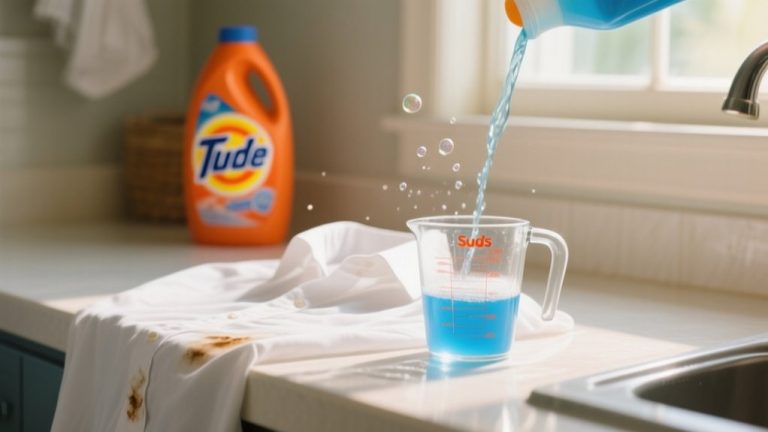
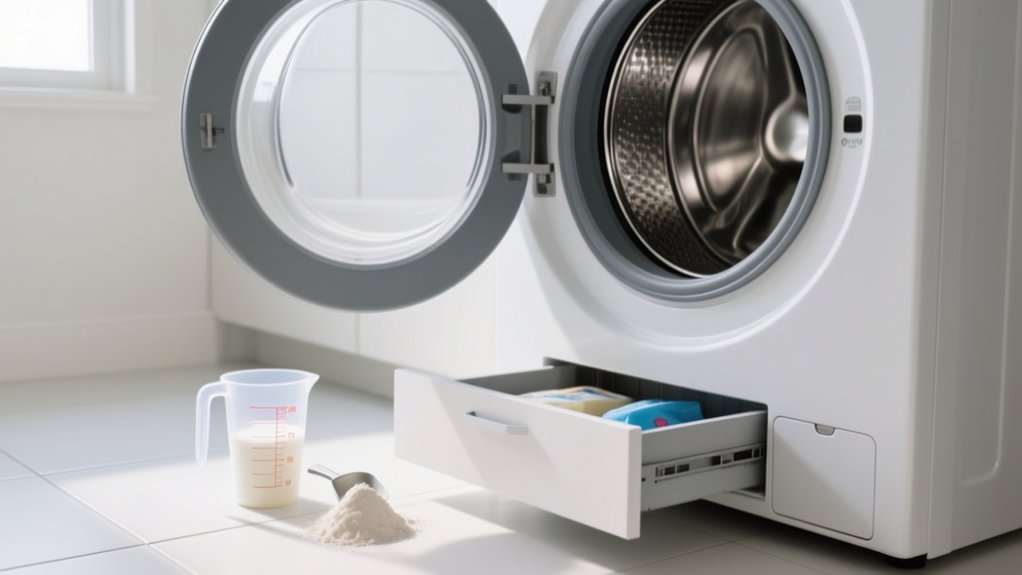
In a top load washer, you usually add detergent directly into the drum or a designated dispenser, often located in the lid or agitator. For best results, pour liquid detergent before loading clothes to guarantee even distribution.
Use the right amount, about 1/4 to 1/2 cup, to avoid suds and residue. If your washer has fabric softener or bleach compartments, add those there. Knowing these basics helps optimize cleaning and prevent common issues.
Keep exploring to learn all the tips for perfect washing.
Key Takeaways
- Add detergent directly into the drum or on top of clothes for effective cleaning in top load washers.
- Locate the detergent compartment in the lid, agitator, or use a Load & Go dispenser if available.
- Pour liquid detergent before loading clothes to ensure even distribution and proper dissolving.
- Measure detergent carefully—use 1/4 to 1/2 cup liquid or 1/2 cup powder for medium loads to avoid residue and suds.
- Always follow the washing machine manual to confirm detergent compartment location and usage instructions.
Where To Add Detergent In A Top Load Washer
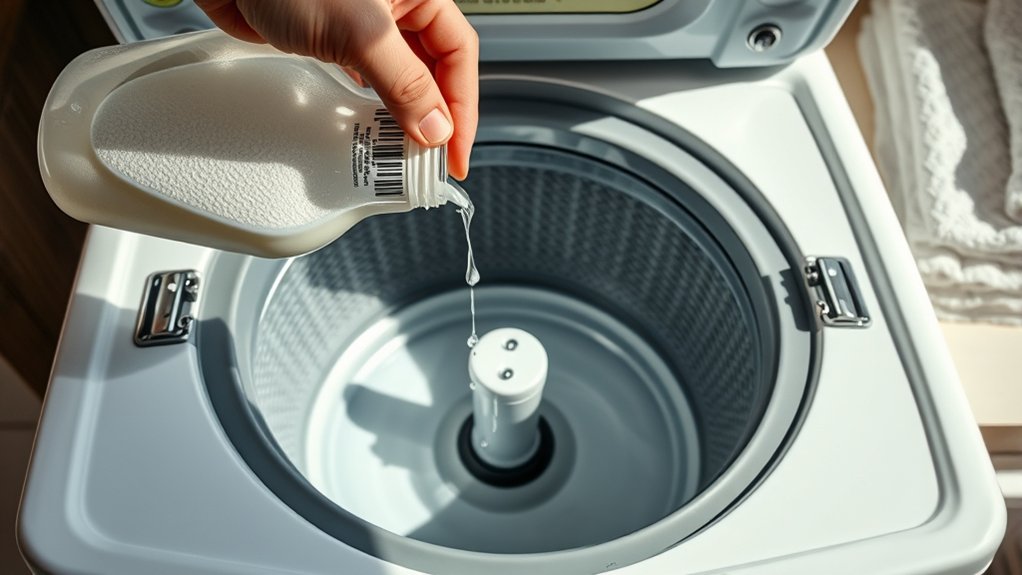
When using a top load washer, you can add detergent directly into the drum or on top of your clothes to guarantee effective cleaning. Knowing where to add detergent depends on your machine.
If your top load washer has a detergent dispenser, follow the manufacturer’s instructions for the correct placement and the correct amount of detergent. Adding detergent to agitating water before loading clothes helps distribute it evenly, ensuring proper cleaning.
Avoid using too much detergent, as excess suds can leave residue on your laundry. Always measure carefully and consider fabric care labels to choose the right detergent type and wash cycle.
Finding The Detergent Compartment On Your Top Loader
Although detergent placement varies by model, you’ll usually find a dedicated compartment for detergent in your top loader’s lid or agitator. Some machines include a designated dispenser like a Load & Go. Others require you to add detergent directly into the drum.
Knowing exactly where to add detergent helps optimize your load washer’s cleaning efficiency. Here’s a step-by-step guide to locate the detergent compartment:
| Location | Description |
|---|---|
| Lid Compartment | Built-in slot on the underside of the lid |
| Agitator Compartment | Central post with a removable cap |
| Load & Go Dispenser | Large compartment for multiple loads |
| Drum (No Compartment) | Pour detergent directly over clothes |
Always check your top loader washing machine’s manual to confirm the detergent compartment and usage instructions.
When To Add Detergent In A Top Load Washer
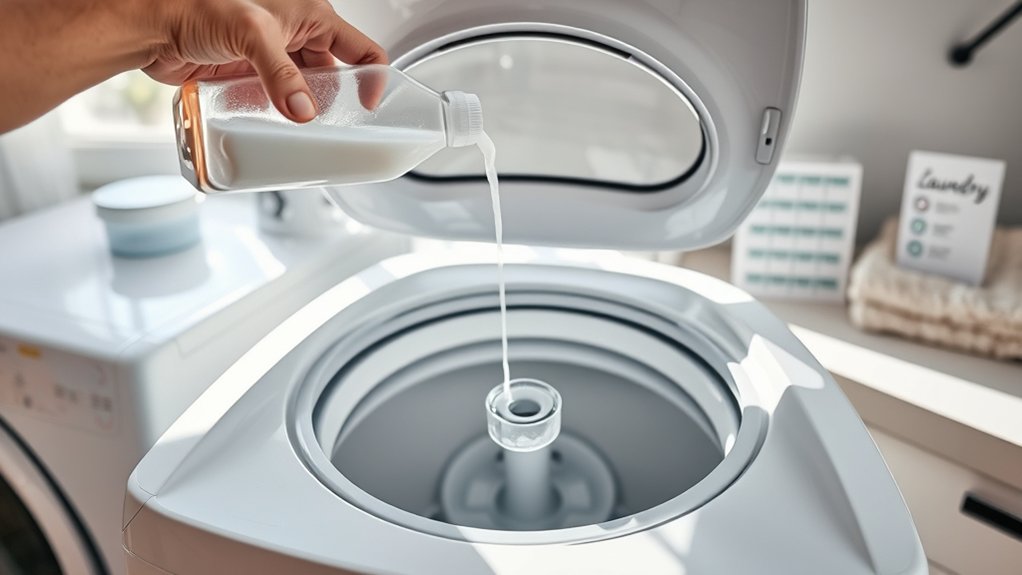
If you want your top loader to clean effectively, add detergent before loading your clothes. This step guarantees the detergent dissolves properly and achieves even distribution throughout the wash cycle.
Pour liquid detergent directly into the drum before placing your laundry in it. If your top load washer has a designated detergent dispenser, follow the manufacturer’s instructions to add detergent correctly.
Timing matters because adding detergent after loading clothes can cause uneven cleaning and leftover residue.
Also, tailor the amount of detergent to your load size to prevent excess suds that reduce washing efficiency.
How Much Detergent To Use For Top Load Washers
Using the right amount of detergent is essential for getting your top load washer to clean effectively without leaving residue or causing excess suds. Knowing how much detergent to use depends on your load size, soil level, and water hardness.
Follow the detergent packaging guidelines closely to guarantee ideal results.
Consider these points for the amount of detergent in top load washers:
- Use 1/4 to 1/2 cup of liquid detergent for a medium load, as recommended by detergent packaging.
- Measure 1/2 cup of powder detergent for regular loads, distributing it evenly in the drum.
- Avoid overusing detergent to prevent excess suds and residue.
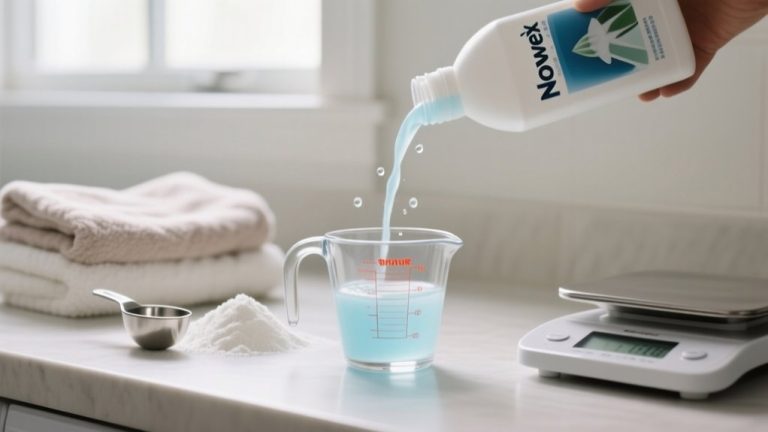
- Use a measuring cup or detergent cap for precise dosing.
Adjusting the detergent amount improves cleaning and protects your washer.
Where To Add Powder And Liquid Detergents In Your Top Loader
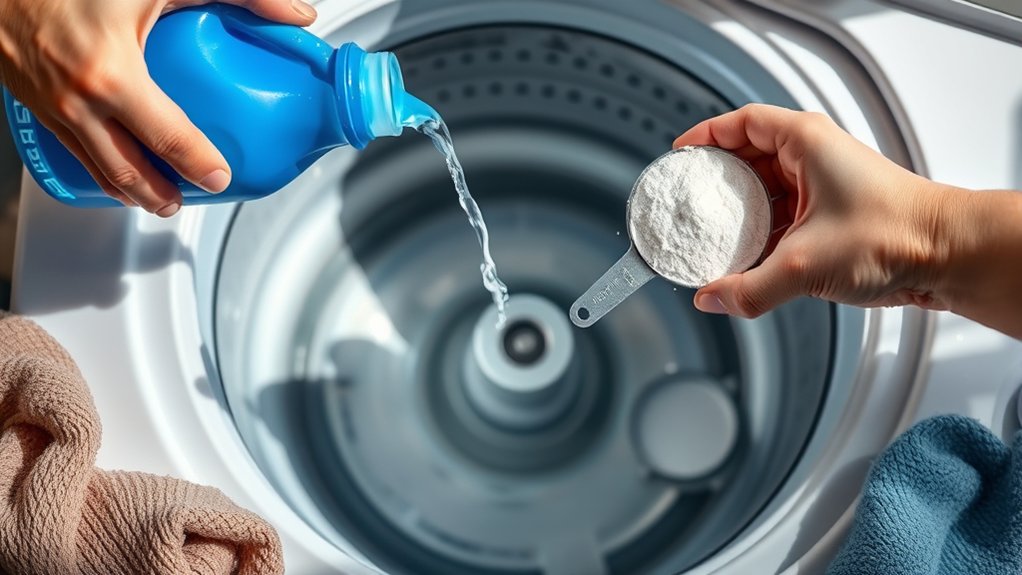
You can add powder detergent directly into the drum, or if your top loader has a designated compartment, you can use that too.
Liquid detergent works best when you pour it into the drum before adding clothes, or you can put it in the liquid detergent compartment—just be sure not to go over the fill line.
For the best results, try starting by filling the drum with water first, then add your detergent and clothes. This helps everything mix evenly.
Powder Detergent Placement
Where should you add powder detergent in your top loader for the best results? You can either pour powder detergent directly into the drum before adding clothes or use the detergent dispenser if your top load washing machine has one. Both methods guarantee even distribution during the wash cycle.
Keep these tips in mind for powder detergent placement:
Measure powder detergent according to load size and soil level to avoid residue.
Follow the manufacturer’s guidelines for detergent dispenser use.
Adding detergent directly to the drum often enhances cleaning efficiency.
Avoid overusing powder detergent to prevent excessive suds and buildup.
Always consult your washing machine’s manual to confirm the ideal powder detergent placement for your specific model.
Liquid Detergent Application
Although top loaders vary, adding liquid detergent directly into the drum or pouring it over clothes typically guarantees effective cleaning.
In a top load washing machine, some models include a detergent dispenser designed for liquid detergent, but you should always follow the manufacturer’s instructions for its use.
To confirm proper detergent distribution, avoid overloading the washer, as too many clothes can block detergent flow and cause residue.
Always measure detergent carefully based on load size and soil level to prevent excess suds and maximize cleaning efficiency.
Unlike powder detergent, which should be added to the drum first, liquid detergent’s direct application helps it dissolve quickly and reach all fabrics evenly, improving your laundry results every time.
Detergent Dispersion Tips
When adding detergent to your top loader, placing liquid detergent directly into the drum before loading clothes guarantees it disperses evenly and dissolves quickly.
For effective detergent dispersion in your top load washing machine, follow these tips:
Use the detergent compartment only for the main wash detergent; avoid bleach compartments for detergent.
Sprinkle powder detergent evenly over clothes to prevent clumping and improve cleaning.
Add detergent to the pre-wash compartment if using the pre-wash cycle for ideal initial washing.
Before loading clothes, fill the drum with water or agitate the water briefly to help detergent spread uniformly.
These steps guarantee your liquid detergent and powder detergent work efficiently, enhancing cleaning performance without damaging your machine.
Using Fabric Softener And Bleach Dispensers In Top Load Washers
You should add fabric softener to the designated dispenser to make sure it releases during the rinse cycle.
If your washer doesn’t have a dispenser, just dilute the softener before adding it manually.
When it comes to bleach, always put it in its specific compartment.
This helps avoid fabric damage and ensures the bleach is properly diluted.
And here’s a key tip: never mix fabric softener and bleach in the same compartment.
Doing so can cause harmful reactions and mess with how well your clothes get cleaned.
Fabric Softener Dispenser Tips
Since fabric softener dispensers in top load washers release the softener during the rinse cycle, you’ll want to dilute the softener with water up to the “Max Fill” line. This helps prevent clogs and guarantees even distribution.
Follow these tips for ideal use:
Always check your washer’s manual to understand the exact fabric softener dispenser location and instructions. Dilute fabric softener before adding it; this avoids clogs and guarantees smooth flow during rinsing.
Never mix fabric softener and bleach in the same compartment to prevent harmful fumes and damage.
Clean the dispenser regularly to maintain proper function and avoid residue buildup.
Proper Bleach Usage
Although bleach can effectively whiten and disinfect your laundry, improper use can damage fabrics or reduce cleaning efficiency. In a top loader, always add diluted bleach to the designated bleach dispenser to avoid direct fabric contact.
Fabric softener goes in a separate dispenser, releasing during the rinse cycle for best results. Never mix bleach and fabric softener, as this can produce harmful fumes and reduce effectiveness. Check your washing machine’s manual for model-specific instructions.
| Item | Usage Tip |
|---|---|
| Bleach | Dilute with water; add to bleach dispenser |
| Fabric Softener | Place in softener dispenser; releases in rinse cycle |
| Mixing | Avoid mixing bleach and fabric softener |
Common Detergent Mistakes In Top Load Washers
When using a top loader, understanding common detergent mistakes can save you from ineffective washes and potential damage.
Using too much laundry detergent creates excess suds, leaving residue on clothes and inside the machine.
Excess detergent causes extra suds, leaving residue on clothes and inside your washing machine.
If your washer has an agitator, pouring detergent directly onto garments rather than in the drum can cause uneven detergent distribution and reduce cleaning effectiveness.
Overloading the washer prevents proper detergent flow and risks damaging your garments.
Ignoring garments’ care labels and machine settings may lead you to use the wrong cycle or detergent type, harming delicate fabrics.
Avoid these pitfalls:
- Follow detergent measurements carefully
- Pour detergent into the drum, not on clothes
- Don’t overload the washer
- Check fabric care instructions and select proper cycles
How Detergent Placement Impacts Cleaning And Residue In Top Load Washers
Two key factors determine how well your top load washer cleans: where you place the detergent and how much you use. Proper detergent placement guarantees even distribution during the wash cycle, which boosts cleaning effectiveness and minimizes residue buildup.
In top load washers, adding detergent directly to the drum or on top of clothes works best. Agitating water before adding clothes helps disperse detergent more evenly.
Always follow the manufacturer’s instructions for detergent placement and measurement to avoid issues like suds overflow or leftover detergent on fabrics.
Remember, using too much detergent can cause residue buildup inside your machine and on your laundry, reducing performance.
Frequently Asked Questions
Can I Use Homemade Detergent in a Top-Loading Washer?
Yes, you can use homemade detergent in a top-loading washer, but make certain it’s low-sudsing to avoid excess foam.
Use finely grated ingredients like washing soda, borax, and bar soap.
Follow your washer’s guidelines to confirm compatibility, and don’t overuse.
Stick to 1-2 tablespoons per load.
Regularly clean your machine to prevent soap scum buildup.
This keeps your washer running efficiently and your clothes clean.
Does Water Hardness Affect Detergent Choice for Top Loaders?
Imagine your clothes coming out dull and coated with residue. That’s what happens when water hardness clashes with detergent. Yes, water hardness definitely affects your detergent choice for top loaders.
Hard water’s minerals interfere with cleaning, so you’ll need a detergent made to tackle those minerals. Using the right formula prevents soap scum and boosts cleaning power, ensuring your laundry looks fresh and spotless every time.
Adjust detergent amounts based on your water’s hardness for best results.
Are High-Efficiency Detergents Suitable for All Top Loaders?
Yes, you can use high-efficiency (HE) detergents in most top loaders, especially modern ones designed to save water.
If you have a traditional top loader, HE detergents still work, but using the right amount is key to avoid residue. Always check your washer’s manual to be sure.
Using HE detergent helps you get cleaner clothes with less suds and can save you money since you use less detergent per load.
How Do Detergents Affect Washing Machine Longevity?
Detergents greatly impact your washing machine’s longevity. Using too much detergent causes residue buildup and excess suds, which can damage internal parts and lead to odors.
Choosing high-efficiency detergents helps reduce foam, protecting your machine. You should always follow the manufacturer’s recommended amounts to avoid wear and tear.
Regularly cleaning the detergent drawer and drum also prevents clogs, keeping your washer running smoothly for years.
Can Detergent Cause Allergies or Skin Irritation?
About 10% of people experience allergic reactions from household products like detergent.
Yes, detergent can cause allergies or skin irritation, especially if it contains fragrances, dyes, or preservatives.
You might notice rashes, hives, or eczema flare-ups.
To protect your skin, choose detergents labeled “hypoallergenic” or “free and clear.”
Always patch test new detergents before full use to avoid unexpected reactions and keep your skin safe.
Conclusion
Knowing exactly where and when to add detergent in your top loader can boost cleaning efficiency and prevent residue buildup. Did you know using the right amount of detergent can reduce waste by up to 40%?
By adding detergent directly to the tub or dispenser at the correct time, you guarantee better fabric care and avoid common mistakes. Follow these tips to get the most out of every wash, saving both detergent and energy.