Why Does My Laundry Room Smell – Real Reasons
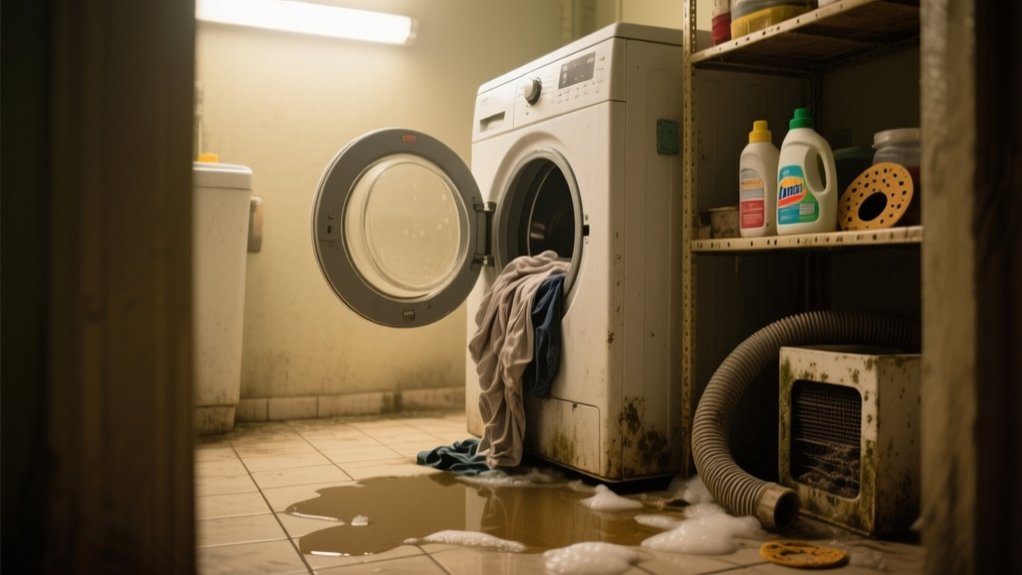
Your laundry room smells because sewer gases can escape from a dry P-trap in the floor drain, while washer hoses trap bacteria that cause odors. Mold and mildew thrive in damp washers, especially front-loaders, and leaky pipes or clogged drains release foul smells.
Poor ventilation worsens moisture buildup, fueling musty odors. You can tackle many of these issues yourself, but knowing when to call a plumber and using effective odor neutralizers can make a big difference. Learn what else might be causing that smell.
Key Takeaways
- Dry P-traps in floor drains allow sewer gases to escape, causing unpleasant laundry room odors.
- Mold and mildew buildup inside washers, especially front-loaders, produces musty smells.
- Soap scum and lint accumulation create a breeding ground for bacteria and foul odors.
- Washer hoses with trapped stagnant water promote bacterial growth and black slime formation.
- Leaky pipes or clogged drains cause persistent sewage smells and indicate plumbing issues.
Why Does My Laundry Room Smell Like Sewage?
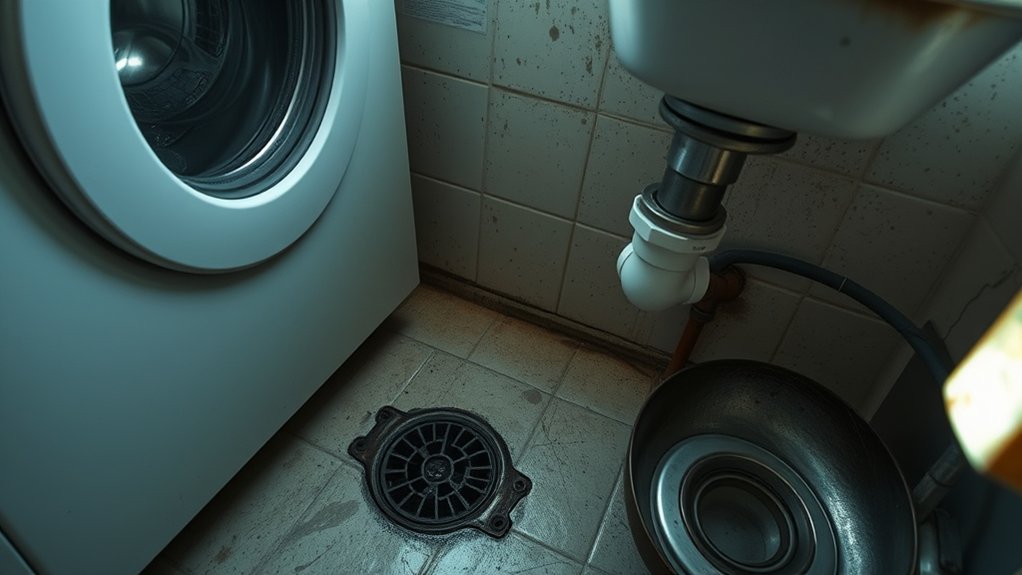
One common reason your laundry room smells like sewage is a dry P-trap in the floor drain. When this trap dries out, it no longer blocks sewer gases, allowing the unpleasant sewage smell to enter your space.
A dry P-trap in the floor drain lets sewer gases escape, causing unpleasant laundry room odors.
Besides the P-trap, clogged drain lines can cause sewer gases to back up, worsening the laundry room smelling issue.
Washer hoses can also trap stagnant water, encouraging bacteria growth that adds to foul odors.
Mold and mildew around the washing machine contribute as well, especially in damp areas.
To prevent these problems, regularly inspect and clean your washer hoses, clear drain lines, and refill the P-trap with water to maintain a proper seal against sewer gases.
Staying on top of these tasks keeps sewage smells at bay.
How a Dry P-Trap Lets Sewer Smell Into Your Laundry Room
You mightn’t realize it, but the P-trap in your laundry room’s floor drain actually relies on water to keep sewer gases from coming in.
When that trap dries out, those unpleasant odors can sneak right through and fill the space.
P-Trap Water Seal
Although it often goes unnoticed, the P-trap in your laundry room’s floor drain plays an essential role in keeping sewer odors at bay. The P-trap holds a small amount of water, creating a water seal that blocks sewer smell from escaping into your space.
When this water evaporates, the seal breaks, allowing unpleasant sewer gases to seep through. This is common in laundry rooms where floor drains aren’t used often.
To prevent a dry P-trap, pour a gallon of water down the drain monthly. This simple step refills the water seal, stopping sewer smells from invading your laundry room.
Quickly refilling the P-trap is an easy, effective fix to maintain a fresh-smelling laundry area.
Sewer Gas Intrusion
When a P-trap dries out, it loses its ability to block sewer gases from entering your laundry room through the floor drain. This dry P-trap no longer holds water, which normally seals the plumbing system and keeps sewage smells from escaping.
If your laundry room isn’t used often, the floor drain’s P-trap can dry out, letting unpleasant odors in. To fix this, simply pour water into the drain to restore the P-trap’s barrier.
Regularly maintaining the P-trap helps avoid recurring issues.
- Dry P-trap allows sewer gas intrusion
- Causes persistent sewage smells
- Occurs in rarely used drains
- Pour water monthly to maintain seal
- Persistent odors may need professional plumbing inspection
How Washer Hoses Cause Laundry Room Sewage Smells
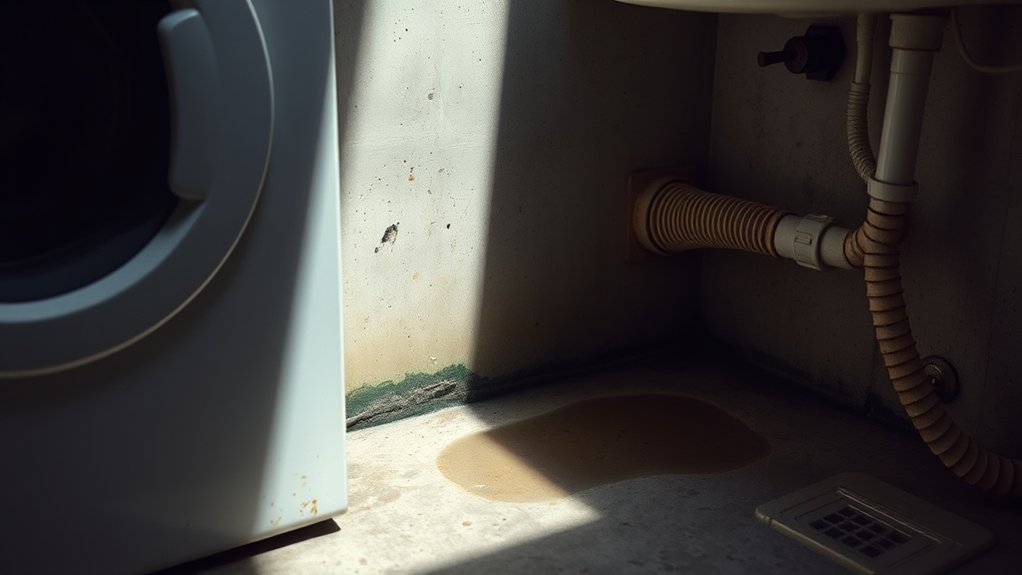
Since washer hoses often trap soap scum, lint, and bacteria, they can become a hidden source of sewage-like odors in your laundry room.
Stagnant water inside these hoses encourages bacterial growth, especially during hot water cycles, causing unpleasant odors to develop.
Rubber washer hoses are particularly susceptible to black slime buildup, which intensifies foul smells.
If your washer hoses aren’t cleaned regularly, this grime can lead to a clogged drain, further worsening odors.
To prevent this, inspect your hoses frequently and flush them with a mixture of vinegar and water or use a specialized cleaner.
Keeping washer hoses clear and dry stops bacteria from thriving and helps maintain a fresh laundry environment free from sewage-like smells.
Mold and Mildew Buildup in Washers and Dryers
If you want to keep your laundry area smelling fresh, you need to tackle mold and mildew buildup in your washer and dryer.
Mold and mildew thrive in washing machines’ damp environments, especially in front-loaders where tight seals trap moisture. This buildup causes unpleasant smells that linger.
To prevent this, focus on these key steps:
- Regularly clean the rubber door boot where mold often grows
- Avoid using excess high-efficiency detergent to reduce soap scum
- Run a sanitizing cycle with bleach or vinegar to kill mold and mildew
- Leave the washer door open after use to promote airflow
- Wipe down dryer interiors to remove moisture and prevent mildew
Leaky Pipes and Clogged Drains: Are They Causing That Smell?
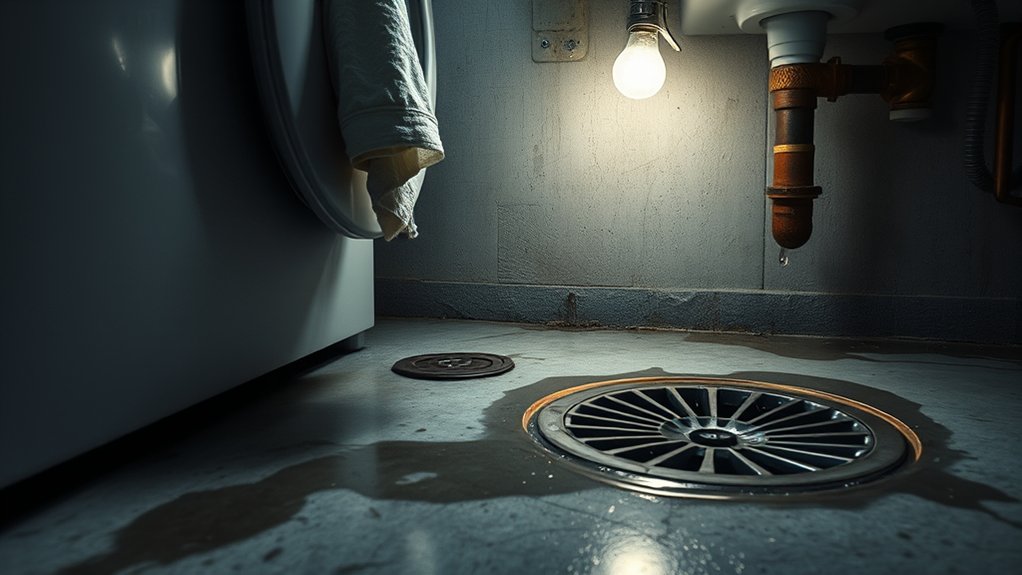
You might notice damp spots or puddles—that’s usually a sign of leaky pipes.
And if your drains are slow or making gurgling sounds, that often means there’s a blockage somewhere.
Also, keep an eye out for foul odors, especially that rotten egg smell.
That’s a big clue that sewer gas could be escaping through clogged drains.
Catching these problems early? It can save you from dealing with persistent smells and expensive repairs down the line.
Identifying Pipe Leaks
When musty or sewage-like odors linger in your laundry room, leaky pipes and clogged drains often play a key role. You need to check for leaks that create stagnant water, which promotes mold and musty smells.
Clogged drains with debris buildup trap water and cause sewage-like odors. Also, inspect vent pipes because blockages there can let sewer gases escape into your space.
Regularly inspecting your plumbing helps spot issues early, preventing structural damage and persistent smells.
Look for these signs to identify pipe leaks:
- Damp spots or water stains near pipes
- Persistent musty or sewage-like odors
- Slow drainage or gurgling sounds
- Visible mold or mildew growth
- Unusual wetness around vent pipes
Fixing these promptly keeps your laundry room fresh and damage-free.
Drain Blockage Signs
How can you tell if a drain blockage is causing that unpleasant smell in your laundry room? Look for common drain blockage signs like slow drainage or gurgling sounds from your sink or floor drain.
These symptoms often point to clogged drains, where debris buildup traps stagnant water. This creates the perfect environment for bacteria and organic matter to accumulate, leading to foul odors.
Furthermore, leaky pipes can worsen the problem by creating damp spots that encourage mold and mildew growth. Addressing these underlying issues promptly is essential to stop persistent smells and avoid costly repairs.
Regularly inspect your drains and pipes to spot blockages or leaks early. Taking these steps will help you maintain a fresh-smelling laundry room and prevent odors caused by drain problems.
Sewer Gas Intrusion
Persistent smells in your laundry room mightn’t just stem from visible clogs or leaks but could indicate sewer gas intrusion.
Leaky pipes let sewage odors escape, signaling plumbing issues.
Clogged drains trap stagnant water and sewage, releasing foul smells. A faulty vent pipe can cause sewer gases to back up, intensifying odors.
Regular plumbing checks help catch leaks and clogs early, preventing these odors from invading your space.
If smells persist despite your efforts, it’s wise to call a professional plumber to inspect drainage and venting.
- Leaky pipes allow sewage odors into the air
- Clogged drains trap sewage and stagnant water
- Faulty vent pipes cause sewer gas backup
- Regular inspections prevent sewer gas intrusion
- Professional help needed if odors persist
Soap Scum and Lint: Why They Cause Laundry Odors
Because soap scum and lint tend to build up in your washer and dryer, they create ideal conditions for unpleasant odors in your laundry room.
Soap scum accumulates on drum surfaces and inside hoses, providing a breeding ground for bacteria that cause bad smells.
Meanwhile, lint collects in dryer vents and filters, trapping moisture that leads to a musty odor and mildew growth.
Both soap scum and lint can clog drain lines, causing water to stagnate and emit foul, sewage-like odors.
To keep odors at bay, clean your washer components and dryer lint traps regularly.
Also, avoid using too much detergent to prevent excess soap scum buildup.
Managing soap scum and lint effectively helps maintain a fresher, odor-free laundry space.
Quick DIY Fixes to Eliminate Laundry Room Odors
When you want to quickly freshen up your laundry room, simple DIY fixes can make a big difference. Tackling laundry room smells often starts with basic cleaning solutions and improving ventilation.
Here are five quick steps you can take:
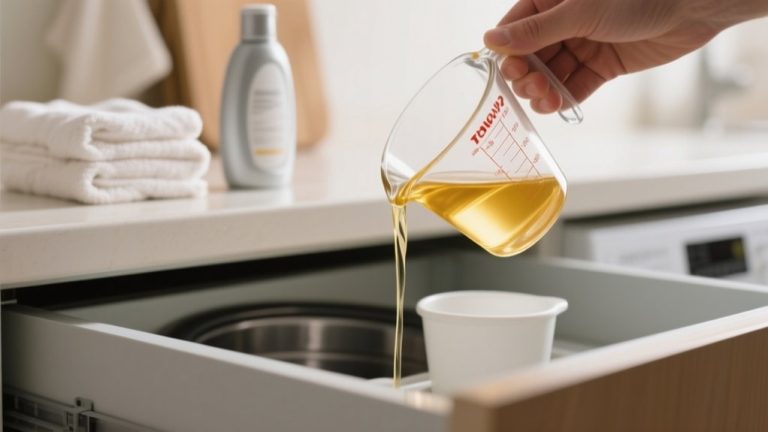
Refill the P-trap by pouring a gallon of water down the floor drain monthly to block sewer gases.
Clean washer hoses by detaching and scrubbing them with hot, soapy water to remove buildup.
Run a hot wash cycle with vinegar and baking soda to deodorize and clean your machine naturally.
Check and clean the washer filter regularly to prevent lint and residue odors.
Improve ventilation by keeping the washer door open and using exhaust fans to reduce moisture and mold.
These simple steps help eliminate odors and keep your laundry room fresh.
When Should You Call a Plumber for Sewage Smells?
If you’ve tried refilling the P-trap and cleaning the washer hoses but the sewage smell hasn’t gone away, it’s time to contemplate calling a plumber.
Persistent sewage smells often point to clogs in the drain line or blockages in the vent pipe, which can trap sewer gases. These issues require a professional inspection to diagnose and fix safely.
Also, if multiple plumbing fixtures in your home emit sewage odors, it signals a systemic problem that only a licensed plumber can address.
Ignoring these smells risks health hazards and costly plumbing damage.
While regular maintenance helps prevent odors, persistent sewage smells beyond basic cleaning mean it’s time to get expert help and guarantee your laundry room and home stay safe and odor-free.
How Ventilation Prevents Laundry Room Odors
You’ll want to focus on good airflow in your laundry room to keep humidity down and avoid those musty smells.
A vent fan comes in handy here—it helps get rid of extra moisture and heat, which not only speeds up drying but also stops odors from developing in the first place.
Plus, proper ventilation brings in fresh air, so your laundry space stays smelling fresh without needing any chemical sprays.
Importance Of Airflow
Although laundry rooms are often small and enclosed, ensuring proper airflow is essential to prevent unpleasant odors. Good ventilation helps control moisture, reducing mold and mildew growth that cause musty smells.
You can improve airflow by installing exhaust fans or opening windows to circulate fresh air and dissipate dampness. Maintaining airflow also stops detergent residue and lint buildup, common sources of odors.
Plus, ventilation prevents sewer gases from seeping in through drains or plumbing.
To keep your laundry room smelling fresh, focus on:
- Reducing humidity with proper ventilation
- Installing or using exhaust fans and windows
- Preventing lint and detergent residue buildup
- Blocking sewer gases from drains
- Regularly cleaning vent pipes for free airflow
Proper airflow is your first defense against persistent laundry room odors.
Vent Fan Benefits
Because laundry rooms often trap moisture and odors, installing a vent fan plays an essential role in keeping the space fresh. Vent fans reduce humidity levels, preventing mold and mildew growth that cause unpleasant odors.
They improve air circulation, expelling stale air and lingering smells from damp clothes and appliances. By lowering the risk of stagnant air, vent fans promote a fresher laundry environment and maintain ideal air quality, reducing sewer gas infiltration.
Plus, better airflow speeds up drying, minimizing dampness and related odors.
| Benefit | Effect |
|---|---|
| Reduces humidity levels | Prevents mold and mildew growth |
| Expels unpleasant odors | Removes stale air and smells |
| Improves drying speed | Minimizes dampness and odors |
Effective Odor Neutralization With Pura Diffusers and Other Solutions
When you want to keep your laundry room smelling fresh, using Pura diffusers offers an effective solution by neutralizing odors at the molecular level with their Open Air technology.
Pura diffusers keep your laundry room fresh by neutralizing odors at the molecular level with Open Air technology.
Their continuous operation guarantees persistent odor elimination, which is perfect for busy laundry areas.
You can choose from premium fragrances like Fresh Bergamot or Citrus Leaves to replace unpleasant smells.
Placing Pura diffusers strategically near laundry appliances and spots prone to musty odors maximizes effectiveness.
Alongside regular maintenance of your laundry appliances, they help prevent odor buildup and improve airflow.
- Pura diffusers use Open Air technology for deep odor elimination
- Continuous diffusion keeps laundry rooms consistently fresh
- Fragrance options mask and replace bad odors
- Strategic placement targets musty or sewage-like smells
- Regular appliance upkeep complements diffuser performance
Frequently Asked Questions
Can Laundry Detergents Cause Odors in My Laundry Room?
Yes, laundry detergents can cause odors in your laundry room. When you use too much detergent or the wrong type, soap scum and residue build up inside your washer, especially in front-load machines.
This buildup traps moisture, encouraging mold and mildew growth that leads to bad smells.
To prevent this, use the correct detergent amount, choose HE detergents for high-efficiency machines, and clean your washer regularly to keep your laundry room fresh.
Does Hard Water Affect Laundry Room Smells?
Yes, hard water can affect your laundry room smells. The minerals in hard water build up inside your washing machine, creating soap scum that traps bacteria and causes odors.
It also stops detergents from dissolving fully, leaving residue that smells bad.
To fix this, you should descale your machine regularly and consider using a water softener.
This helps keep your washer clean and your laundry smelling fresh.
How Often Should I Clean My Washing Machine to Prevent Odors?
You probably want to clean your washing machine monthly because who doesn’t dream of scrubbing a machine that cleans your clothes?
Running a hot water cycle with a washing machine cleaner or a vinegar-baking soda mix every 1-3 months keeps it fresh.
Don’t forget to wipe down the rubber door seal and clean the drain pump filter regularly.
Leaving the door open between washes also helps prevent odors and moisture buildup.
Can Pets Contribute to Laundry Room Smells?
Yes, pets can definitely contribute to laundry room smells. Their fur, dander, and urine can build up in your washing machine and laundry area if you don’t clean regularly.
Pet bedding, toys, and wet clothes can also trap odors and moisture, causing musty smells.
To keep your laundry room fresh, clean pet items often, dry wet clothes properly, groom pets regularly, and use odor-neutralizing products designed for pet smells.
Do Fabric Softeners Impact Laundry Room Air Quality?
You mightn’t realize it, but fabric softeners can gently complicate your laundry room’s air. They leave behind subtle chemical traces and sometimes release volatile organic compounds, which can quietly affect your indoor air quality.
While their fragrances can temporarily freshen your space, they don’t truly address underlying odors or mold.
To keep your laundry air cleaner, consider swapping them for natural options like vinegar. It’s a simple switch that makes a noticeable difference.
Conclusion
Your laundry room shouldn’t smell like a sewer, but ignoring small issues can let odors take over. While a dry P-trap or clogged drain quietly invites sewage smells, simple fixes like checking hoses or improving ventilation can quickly restore freshness.
You might think a quick spray solves it, but lasting odor control comes from addressing root causes. Don’t wait. Tackle problems early or call a plumber before the smell becomes unbearable.