Why Does My Laundry Room Smell Like Sewage – Here’s Why
Your laundry room smells like sewage because sewer gases are escaping through dry P-traps, clogged drains, or blocked vent pipes. When traps dry out, they fail to block odor.
Clogged washer hoses and drains trap stagnant water, which makes the smell worse. Blocked vents stop sewer gases from properly venting outside.
These issues often cause persistent odors, and if you ignore them, they could signal bigger plumbing problems. Understanding these causes helps you tackle the problem effectively.
Key Takeaways
- A dry P-trap allows sewer gases to escape, causing sewage odors in the laundry room.
- Clogged drains with hair and soap scum lead to stagnant water and foul sewage smells.
- Blocked vent pipes prevent sewer gases from properly venting, resulting in unpleasant odors.
- Mold and mildew buildup in washers, especially front-load models, contribute to bad smells.
- Persistent sewage odors often indicate deeper plumbing issues needing professional inspection.
Why Does My Laundry Room Smell Like Sewage?
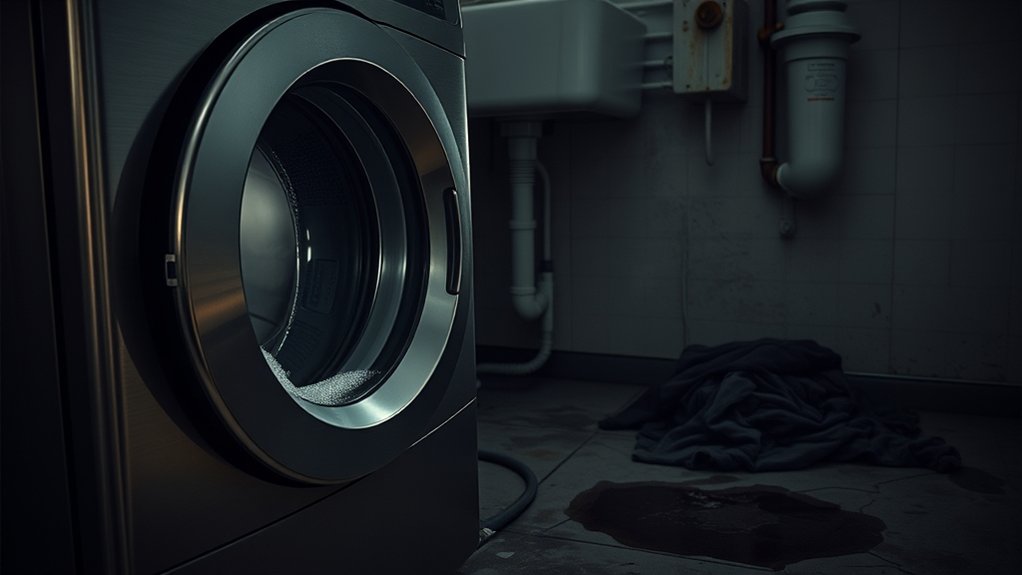
Why does your laundry room smell like sewage? One common culprit is a dry P-trap. If the P-trap dries out, it fails to block sewer gases from entering your space, causing unpleasant odors.
Another cause could be a clogged drain, where hair, soap scum, and grease build up, trapping stagnant water that emits foul smells.
Furthermore, blocked vent pipes can prevent sewer gases from escaping properly, forcing odors into your laundry room.
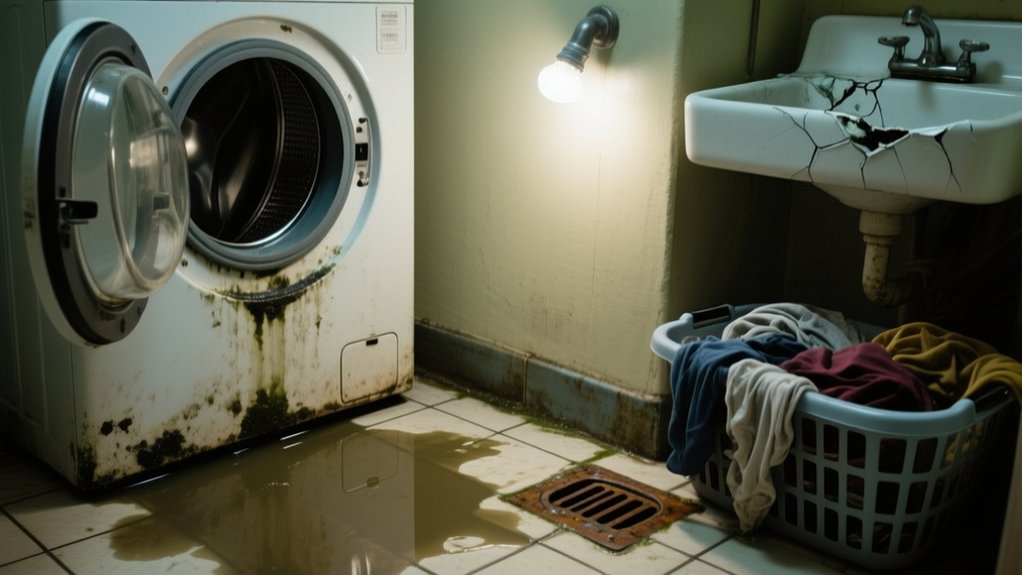
Mold and mildew growth inside washers, especially front-load models, also contributes to persistent unpleasant odors. Identifying these issues early helps you target the source.
If none of these seem to be the problem, persistent sewage smells might signal deeper plumbing problems, requiring a professional inspection.
Quick Fixes to Stop Sewage Smell in Your Laundry Room
First, make sure to refill the P-trap with water—this helps keep those nasty sewer gases from sneaking into your laundry room.
Then, give your washer hoses a good clean to get rid of any buildup that might be causing odors.
After that, take a look at your drains for any blockages. If you find any, use a plunger or a drain snake to clear them out and get rid of those trapped sewage smells.
Refill The P-Trap
If your laundry room smells like sewage, a dry P-trap is often the culprit. The P-trap’s water seal blocks sewer gases from escaping your plumbing system. When it dries out, usually due to infrequent drain use, unpleasant odors seep into the room.
To fix this, simply run water down the floor drain for about 60 seconds to refill the P-trap and restore its seal.
For ongoing prevention, pour a gallon of water monthly into seldom-used drains to keep the P-trap full.
Regularly inspecting all P-traps in your home helps catch potential odor sources early.
If refilling the P-trap doesn’t eliminate the smell, you may need to investigate further plumbing issues like clogged drains or vent pipe problems.
Clean Washer Hoses
Because rubber washer hoses can trap soap scum, lint, and bacteria, they often become a hidden source of sewage odors in your laundry room. Regular maintenance and cleaning are essential to prevent these odors.
Inspect the rubber washer hoses for black slime or mold buildup, which signals the need for immediate cleaning or replacement. Detach the hoses and flush them with hot soapy water or a vinegar-based cleaning solution to effectively remove trapped debris and bacteria.
If odors persist after thorough cleaning, replace the hoses, as worn or damaged rubber washer hoses can harbor bacteria and cause recurring smells.
Incorporate hose inspections and cleanings into your routine maintenance to keep your laundry room smelling fresh and free from sewage odors.
Check For Blockages
One of the quickest ways to stop sewage smells in your laundry room is to check for blockages in your plumbing system. Start by inspecting the P-trap under your floor drain or sink. If it’s dry, run water for about 60 seconds to refill it and block sewer gases.
Next, examine the vent pipe for debris or blockages that could trap sewage smells. If it’s inaccessible, consider hiring a professional.
Check your drains for slow drainage or standing water, which are signs of clogs you can often clear with a plunger or drain snake.
Don’t forget to monitor washer hoses for buildup, as stagnant water can worsen odors. Addressing these blockages promptly will help eliminate persistent sewage smells and maintain proper drainage and venting.
How a Dry P-Trap Lets Sewer Gas Escape and How to Refill It
When water in the P-trap evaporates, the seal breaks and sewer gases can flow freely into your laundry room. A dry P-trap loses its water barrier, allowing these gases to escape and cause persistent sewage odors.
To fix this, refill the P-trap by running water down the drain for about 60 seconds. This simple step restores the water seal, blocking sewer gases effectively.
Refill your P-trap by running water for 60 seconds to restore the seal and block sewer gases.
To prevent the trap from drying out again, regularly maintain water levels, especially in drains you rarely use. Pouring a gallon of water monthly into infrequently used drains helps keep the P-trap functional and your laundry room odor-free.
Don’t overlook this maintenance. Neglecting your P-trap leads directly to recurring sewage odors and air quality issues.
Could Clogged Washer Hoses Be Causing Your Laundry Room Odor?
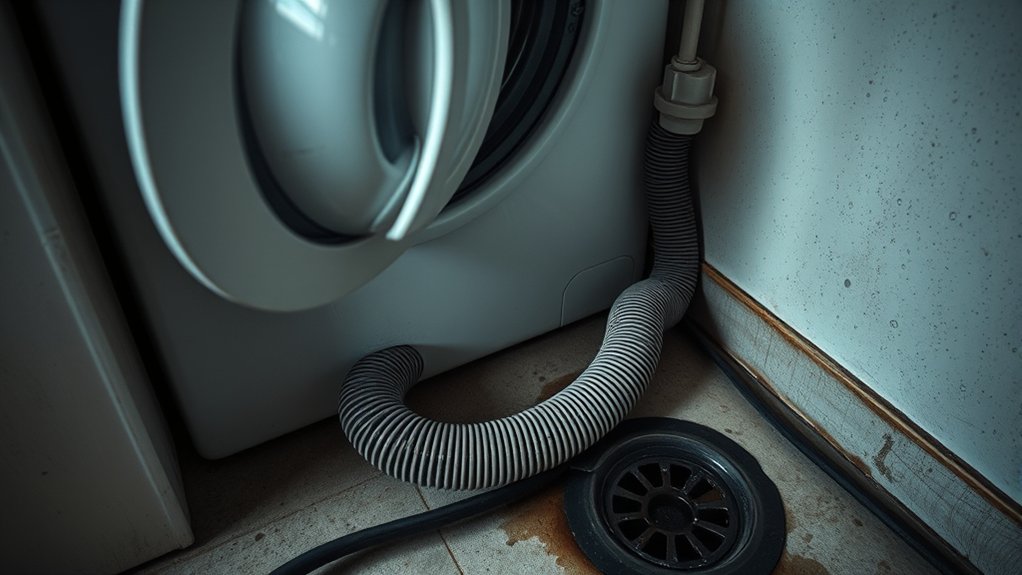
How can clogged washer hoses contribute to that persistent sewage smell in your laundry room? When clogged washer hoses trap stagnant water, bacteria thrive, releasing foul odors that mimic sewage.
Soap scum and lint buildup on rubber hoses create the perfect environment for this problem, especially during hot water cycles.
To tackle this issue, focus on:
- Conducting regular inspection of hoses for visible buildup or slow drainage
- Flushing or cleaning hoses to remove soap scum and debris
- Replacing old or damaged hoses to restore proper water flow
- Ensuring hoses are properly installed to prevent water stagnation
What Happens When Vent Pipes Are Blocked and How to Check Them
If vent pipes become blocked, sewer gases can back up into your laundry room, causing persistent foul odors.
Blocked vent pipes disrupt proper drainage by preventing air from entering the plumbing system. This allows sewer gases to escape through traps and into your home.
Common blockages include debris like leaves or animal nests.
To inspect vent pipe blockages, check the pipe’s exterior for visible debris and use a flashlight to look inside if accessible.
However, some blockages are hard to detect or clear on your own.
In those cases, a professional plumber can perform a thorough inspection and cleaning, restoring proper ventilation and preventing sewer gases from infiltrating your laundry room.
Regular maintenance guarantees vent pipes function correctly and odors stay away.
How to Clean Washer Hoses to Eliminate Sewage Odors
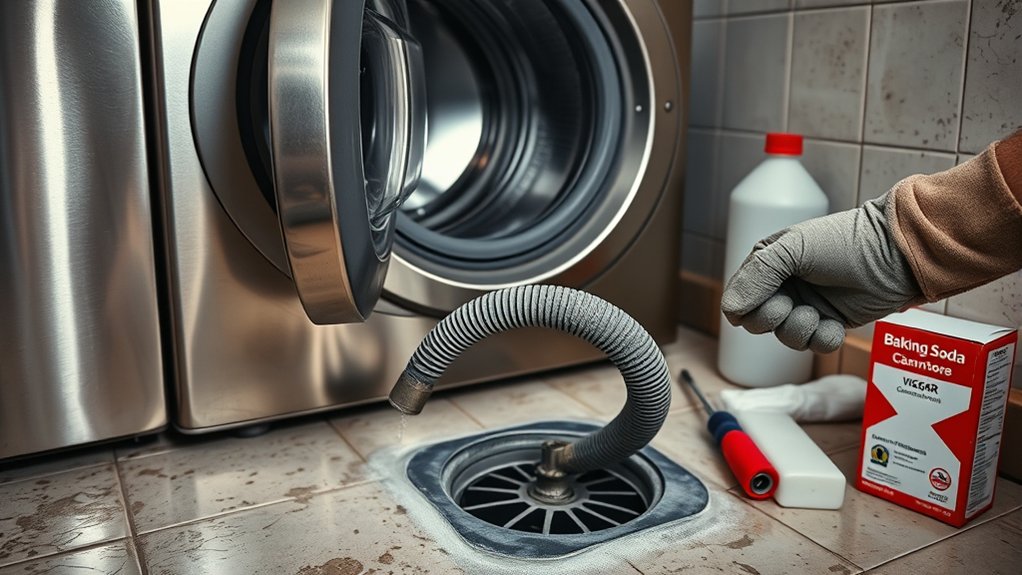
Three simple steps can help you clean your washer hoses and eliminate sewage odors effectively.
First, inspect the hoses for buildup like soap scum, lint, or mold. These can trap water and cause foul odors.
Second, detach the hoses and flush them with hot soapy water to break down bacteria and residue inside.
Third, check the hoses for kinks or damage that restrict drain line flow. Replace them if needed.
To keep odors under control, maintain regular cleaning every few months.
- Inspect hoses for buildup and mold
- Flush hoses with hot soapy water
- Check for kinks or blockages in drain line
- Replace hoses showing excessive buildup or damage
Following these steps guarantees your washer drain line stays clean and odor-free.
When to Suspect Blocked Drains or Sewer Line Problems
If your laundry room smells like sewage and the drains are slow or making gurgling noises, it’s a good idea to suspect a blocked drain or sewer line problem.
When you notice multiple fixtures giving off bad odors or you’re dealing with frequent backups, that usually means there’s a deeper issue with the sewer.
It’s important to tackle those persistent smells sooner rather than later to avoid expensive damage down the road.
And if things seem out of your control, don’t hesitate to call in a professional to take a look.
Signs of Blocked Drains
How can you tell when your laundry room’s drainage system is blocked? You’ll notice several clear signs pointing to a clog or sewer line issue. Watch for:
- Slow draining water in sinks or the washing machine, indicating restricted flow.
- Foul odors lingering near drains, a sign of trapped waste or poor venting.
- Gurgling noises coming from drains, caused by air pockets formed by blockages.
- Frequent clogs across multiple fixtures, suggesting a systemic drainage problem.
If you experience backflow issues, where water or waste reverses into your laundry fixtures, act immediately.
These symptoms mean the drainage system isn’t functioning properly and can lead to serious damage if left untreated. Identifying these signs early helps you address blockages before they escalate.
Sewer Line Problem Indicators
When sewer gases don’t vent properly or blockages form in your drain lines, you’ll often notice persistent sewage smells in your laundry room.
A key sewer line problem indicator is slow drainage across multiple fixtures, suggesting a significant blockage.
Gurgling noises from drains can signal a clogged vent pipe, preventing sewer gases from escaping and causing odors to back up.
You might also spot water pooling or unusual dampness near the laundry area, which could indicate a sewer line leak requiring urgent attention.
Don’t ignore these signs.
Contact a professional plumber promptly to inspect and address the issue.
Early detection and repair of sewer line blockages or vent pipe problems can prevent costly damage and eliminate foul odors efficiently.
Persistent Odor Troubleshooting
Persistent sewage odors in your laundry room often point to blocked drains or sewer line issues.
Start by inspecting the P-trap to verify it’s not dry or clogged. This can let sewer gases enter your space.
Persistent odors usually mean buildup like hair, soap scum, or grease that requires thorough drain cleaning.
If the smell worsens after rain, stormwater might be causing a sewer backup.
Consider these signs:
- P-trap dry or malfunctioning
- Strong, consistent sewage gases
- Odors persisting despite drain cleaning
- Smell intensifies after heavy rain
If you’ve addressed these and the smell still lingers, mold or mildew may be developing from moisture.
Or, there might be deeper sewer line damage. In that case, call a professional plumber to diagnose and fix the problem.
When to Call a Plumber for Drain and Vent Inspections
Why does that sewage smell linger in your laundry room even after you’ve checked common causes like dry P-traps or clogged washer hoses?
It’s time to call a plumber for a professional assessment. Persistent sewer gases often indicate deeper plumbing issues, such as a clogged drain line or blocked vent pipe preventing proper gas escape.
A plumber uses specialized tools to inspect and diagnose these hidden problems accurately.
If you spot water stains or mold, don’t delay. These signs point to potential structural damage and health risks.
Regular professional inspections help catch plumbing issues early, ensuring your laundry room remains odor-free and safe.
Trusting a plumber to evaluate your drain and vent system is essential when simple fixes don’t eliminate the sewage smell.
Preventive Steps to Keep Your Laundry Room Smelling Fresh
You should regularly pour water down any floor drains you seldom use to keep the P-trap filled and block sewer gases. It’s a simple trick that can make a big difference.
Also, don’t forget to clean your washer hoses every few months. This helps remove soap scum and bacteria buildup that cause those unpleasant odors.
Regular P-Trap Maintenance
Anyone can prevent sewage odors in the laundry room by maintaining the P-trap properly. The P-trap holds water that blocks sewer gases from entering your space. If it dries out, odors will escape.
To keep your P-trap functioning well, follow these maintenance steps:
- Pour a gallon of water down infrequently used drains monthly to keep the P-trap full.
- Check the P-trap regularly; if dry, refill it immediately to maintain the water barrier.
- Add a few drops of mineral oil after refilling to slow water evaporation.
- Schedule periodic plumbing inspections to detect and address potential P-trap issues early.
Washer Hose Care
Although washer hoses might seem low-maintenance, neglecting their care can quickly lead to soap scum, lint, and bacterial buildup that cause unpleasant odors in your laundry room.
Regularly inspect your washer hoses for any buildup of soap scum or signs of mold and mildew.
To prevent odor in your laundry, clean washer hoses every few months using hot soapy water. Replace them if you spot black slime or persistent mold.
Confirm hoses are properly installed and free of kinks, as trapped water promotes odor-causing bacteria.
Using high-efficiency detergent helps reduce residue buildup inside hoses.
Staying proactive with these steps will prevent mold and mildew growth, minimize odor risks, and keep your laundry room smelling fresh.
Common Plumbing Mistakes That Cause Sewage Smells in Laundry Rooms
When a dry P-trap or clogged vent pipe disrupts proper sewer gas ventilation, sewage odors can quickly invade your laundry room.
These common plumbing mistakes often cause persistent smells you can’t ignore.
Check these areas carefully:
- A dry P-trap in floor drains lets sewer gases escape. Keep it filled with water.
- Clogged vent pipes, blocked by debris or nests, prevent proper airflow and trap odors.
- Washing machine hoses that aren’t maintained can harbor mold and bacteria, causing foul smells.
- Drain lines blocked by hair, soap scum, or grease cause water stagnation and sewage smells.
Regularly inspect and maintain these components to eliminate odor sources and keep your laundry room fresh and sanitary.
Frequently Asked Questions
Can Mold Growth in Laundry Appliances Cause Sewage-Like Odors?
Yes, mold growth in laundry appliances can cause sewage-like odors. When mold thrives in damp areas like your washer’s rubber door boot or stagnant water pockets, it produces foul smells.
If you don’t clean these parts regularly or run sanitizing cycles, bacteria build up and create strong odors.
To stop this, you need to wipe down seals, clear drain filters, and leave doors open for ventilation to prevent mold and eliminate the smell.
Does the Type of Detergent Affect Laundry Room Smells?
Picture your laundry room filled with damp, musty air, clinging to every surface. Yes, the detergent you use can directly affect those smells.
Using too much or the wrong kind builds up soap scum and residue, creating a breeding ground for bacteria and mold.
High-efficiency detergents with enzymes break down grime better, cutting odors.
Switching detergents or adding a washer cleaner can help you keep that fresh, clean scent instead.
How Does Hard Water Influence Odors in Laundry Areas?
Hard water influences odors in your laundry area by leaving mineral deposits that trap soap scum and moisture.
This creates a breeding ground for bacteria and mold. These microbes cause foul, sewage-like smells.
If you use too much detergent, it worsens the buildup, making odors stronger.
To combat this, clean your washer regularly and consider installing a water softener to reduce minerals.
This will improve detergent efficiency and help keep your laundry area smelling fresh.
Can Poor Ventilation in the Laundry Room Worsen Sewage Smells?
Yes, poor ventilation can definitely worsen sewage smells in your laundry room.
When airflow is limited, moisture builds up, promoting mold and bacteria growth, which intensifies odors.
Stagnant air traps sewer gases escaping from P-traps or drains, making smells more noticeable.
To prevent this, you should improve ventilation by opening windows or installing exhaust fans.
This helps dry damp areas and disperses odors, reducing the sewage smell effectively.
Are Septic Systems a Factor in Laundry Room Sewer Odors?
Yes, septic systems can cause laundry room sewer odors. Studies show that nearly 30% of septic systems experience partial failure within 10 years, leading to gas backups.
If your septic tank is full or malfunctioning, it pushes sewer gases through your plumbing and into your laundry room.
Regular maintenance, like pumping every 3-5 years, is essential.
Have a professional inspect both your septic and plumbing systems to pinpoint and fix the source.
Conclusion
Now that you know what’s behind that awful sewage smell, don’t ignore it. It’s more than just an annoyance. A dry P-trap or clogged vent could be silently letting harmful gases into your laundry room.
If quick fixes don’t work, the problem might be deeper in your drains or sewer line. Keep your nose sharp and act fast because waiting could turn a simple fix into a costly nightmare.