Does Homemade Laundry Detergent Work – Yes or No?
Yes, homemade laundry detergent works for light loads and mild stains, especially with soft water. However, its cleaning power falls short compared to commercial detergents because it lacks synthetic surfactants and is less effective in hard water.
You risk soap scum buildup, fabric dullness, and washing machine residue if water quality or ratios aren’t managed carefully. Weigh the upfront savings against potential long-term maintenance before deciding.
Exploring usage details will clarify its suitability for your needs.
Key Takeaways
- Homemade laundry detergent works for light stains but struggles with tough stains compared to commercial detergents.
- Effectiveness decreases in hard water due to soap scum and mineral interactions.
- It is more eco-friendly and less toxic but may cause soap buildup on fabrics and machines.
- Proper maintenance and rinsing are essential to prevent residue and washing machine damage.
- Cost savings are possible, but variable cleaning performance and long-term impacts should be considered.
What Is Homemade Laundry Detergent and How Does It Work?
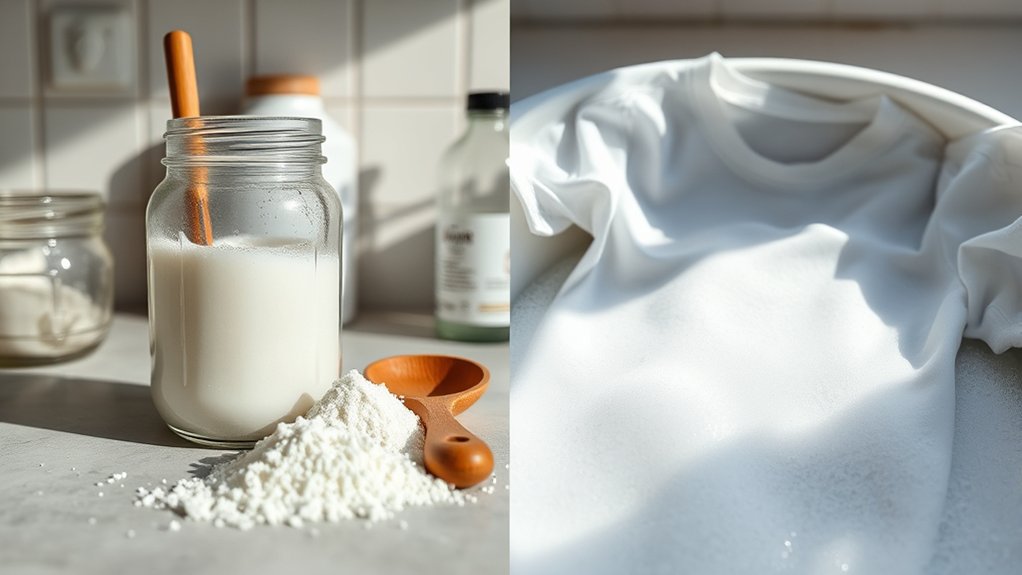
Homemade laundry detergent combines basic cleaning agents like soap with additives such as washing soda, baking soda, and borax to boost performance.
When you create a recipe for homemade laundry, you rely on soap as the primary surfactant, while the additives target water softening and odor neutralization.
Compared to store-bought detergents, these cleaning products lack synthetic surfactants, which can limit effectiveness, especially in hard water conditions where soap scum forms on fabrics.
You’ll find homemade laundry detergent more eco-friendly and less toxic, reducing environmental impact.
However, its cleaning power may not match commercial alternatives, particularly on tough stains.
Understanding the precise role of each ingredient helps you optimize usage, but expect variability in results depending on your laundry conditions.
How Water Quality and Ingredients Affect Homemade Detergent Performance
Although you might carefully measure your detergent ingredients, water quality plays a critical role in determining cleaning effectiveness. Hard water, rich in minerals, reacts with the soap in homemade laundry detergent to form soap scum. This reduces the cleaning agent’s ability to remove dirt and can leave residues on fabrics.
Ingredients like washing soda and borax improve performance but become less effective in hard water conditions. This can potentially cause dinginess and odor. Conversely, soft water enhances detergent solubility and rinsing, leading to superior cleaning outcomes.
Since homemade detergents lack synthetic surfactants, their efficiency depends heavily on water quality and ingredient balance. If residues accumulate due to poor water quality or improper ratios, fabric damage and buildup may occur, undermining long-term cleaning performance.
Does Homemade Detergent Clean as Well as Store-Bought?
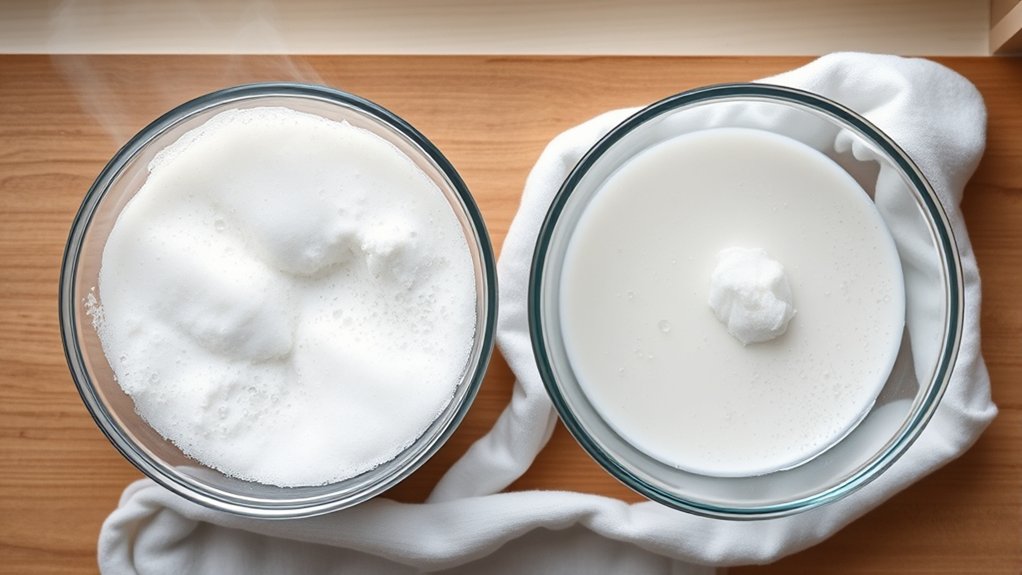
You’ll notice that homemade detergents often struggle to match the cleaning power of store-bought options, especially when it comes to tough stains.
Plus, water quality plays a big role in how well they work. For example, hard water can make them less effective and cause more residue buildup.
Cleaning Power Comparison
Three key factors influence the cleaning power comparison between homemade and store-bought laundry detergents: stain removal efficacy, ingredient formulation, and water quality.
Homemade laundry detergent typically uses soap, which underperforms against tough stains and in hard water conditions compared to store-bought detergent containing synthetic surfactants engineered for superior cleaning power.
Practical tests reveal that products like Arm & Hammer Mega Value consistently outperform homemade mixes in removing stains. While homemade detergent can be cost-effective at about $0.14 per load, this often matches or exceeds some commercial options that offer better results.
Furthermore, homemade formulas risk soap buildup over time, causing fabric dullness and trapping dirt, an issue minimized by commercial detergents with advanced formulations.
Stain Removal Challenges
Understanding the differences in stain removal capabilities is essential when comparing homemade and store-bought detergents. Homemade laundry detergent generally lacks the synthetic surfactants that commercial detergents use to tackle tough stains effectively. This limitation affects the overall stain removal effectiveness, especially on stubborn substances like grass and chocolate.
You’ll find homemade detergent satisfactory for light stains but less reliable for challenging spots. Water quality and wash conditions further influence performance, but homemade formulas often fall short compared to commercial detergents.
| Stain Type | Homemade Detergent Effectiveness | Commercial Detergents Effectiveness |
|---|---|---|
| Grass | Low | High |
| Ketchup | Moderate | High |
| Chocolate | Low | High |
| Oil | Moderate | High |
| General Dirt | Moderate | High |
Water Quality Impact
Although homemade laundry detergents can clean adequately in soft water, they often struggle in hard water conditions. This happens because of chemical reactions between soap and mineral ions that reduce cleaning efficiency and cause soap scum buildup on fabrics.
Minerals like calcium in hard water bind with soap molecules, forming insoluble compounds that diminish cleaning effectiveness and leave residues. This interaction frequently leads to dingy fabrics and soap scum deposits within your washing machine, which means you need more frequent maintenance.
Furthermore, homemade detergents may not fully dissolve in cold water, limiting their performance compared to commercial detergents made with synthetic surfactants.
Ultimately, water quality greatly impacts the efficacy of homemade laundry detergent, especially in hard water regions where it tends to underperform compared to store-bought options.
Common Problems With Homemade Laundry Detergent
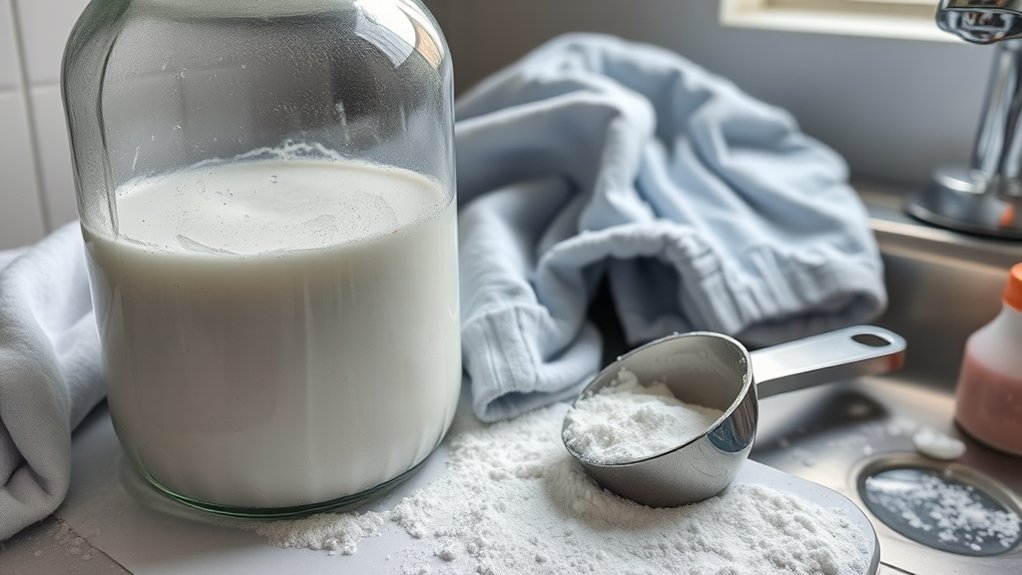
You’ll often run into cleaning challenges with homemade detergents because the soap reacts with hard water minerals. This reaction creates residue that makes your clothes less clean than you’d expect.
Over time, this residue can build up not just on your clothes but also inside your washing machine. That can lead to oily deposits and even cause maintenance headaches.
Cleaning Challenges
When you use homemade laundry detergent, hard water often causes soap scum buildup that traps dirt and stiffens fabrics. This soap buildup reduces cleaning efficacy, as residues bind with minerals in hard water, preventing effective soil removal.
You’ll notice fabric appearance deteriorates, with white textiles turning dingy, yellowed, or gray over time. Proper rinsing is essential, yet homemade detergents often don’t dissolve fully, leaving residues that cause discomfort and degrade fabric feel.
Inadequate rinsing makes soap scum build up even more, which further impairs cleaning performance. These cleaning challenges show the limits of homemade laundry detergent, especially in hard water areas.
Here, soap scum and buildup compromise both fabric integrity and wash quality. So, you need more thorough rinsing and careful detergent formulation to keep your laundry looking its best.
Residue And Build-Up
Soap scum buildup from homemade laundry detergents directly contributes to residue accumulation on fabrics and inside washing machines. When your homemade detergent, primarily soap-based, interacts with hard water minerals, it forms soap scum that traps dirt and reduces cleaning effectiveness.
This residue causes fabrics to feel stiff, repel water, and develop yellowing or greying, especially on whites. Moreover, insufficient rinsing makes residue stick around even more, which further diminishes fabric cleanliness and comfort.
Over time, soap scum and residue buildup inside your washing machine can promote mold or mildew growth, meaning you’ll need more maintenance.
To avoid these issues, make sure to rinse thoroughly and keep water hardness in mind. Otherwise, persistent soap scum and residue will compromise both your laundry’s look and your machine’s lifespan when you rely on homemade detergent.
Can Homemade Detergent Damage Your Clothes or Washing Machine?
Although homemade laundry detergents offer cost savings, they can cause damage to both your clothes and washing machine if not used carefully. Homemade laundry detergent often leads to soap buildup, which results in accumulated soap scum on fabrics and inside washing machines. This can degrade clothing quality and machine efficiency.
Homemade detergents save money but can cause soap buildup, harming clothes and washing machine performance.
You should consider these risks:
- Soap buildup reduces fabric absorbency and leaves oily residues, affecting garment texture.
- Accumulated soap scum traps dirt, causing dinginess and yellowing, especially in whites.
- Mold or mildew can develop inside washing machines due to residue, risking warranty voids and costly repairs.
To mitigate damage, implement proper maintenance routines, including regular cleaning with citric acid to dissolve grime and prevent buildup in washing machines.
Is Homemade Laundry Detergent Worth the Cost?
How cost-effective is homemade laundry detergent compared to commercial options? At approximately $0.14 per load, homemade detergent sits between Arm & Hammer ($0.07) and Tide ($0.22).
While upfront costs seem competitive, you must consider long-term expenses. Homemade detergent often lacks synthetic surfactants, reducing cleaning performance, especially in hard water conditions. This can lead to dingy clothes and potential washing machine damage, increasing maintenance costs.
Moreover, eco-friendly commercial detergents offer reliable cleaning effectiveness at reasonable prices, minimizing these risks.
Consequently, while homemade laundry detergent may appear cost-effective initially, its variable effectiveness and possible hidden costs challenge its overall value.
You should weigh upfront savings against potential impacts on cleaning performance and long-term expenses before deciding.
When Should You Choose Homemade Detergent Over Commercial Options?
While commercial detergents often guarantee consistent cleaning performance, there are specific scenarios where choosing homemade laundry detergent makes more sense.
You should consider a homemade detergent recipe when:
- You seek a cost-effective solution, as homemade detergent can clean up to 320 loads for about $23.63, comparable to commercial brands.
- You have sensitive skin or want to avoid synthetic fragrances, allowing precise control over ingredients.
- Your water quality is soft water, which enhances homemade detergent efficacy; hard water can reduce cleaning power and cause soap scum buildup.
Also, if you prioritize eco-friendliness, homemade detergent reduces plastic waste and supports sustainable ingredient use.
These factors make homemade laundry detergent a technically sound alternative under specific conditions.
Frequently Asked Questions
How Do I Store Homemade Laundry Detergent Safely?
You should store homemade laundry detergent in a cool, dry place away from direct sunlight to preserve its chemical integrity.
Use airtight, clearly labeled containers to prevent moisture intrusion and contamination.
For liquid formulas, choose opaque containers to block light exposure, which can degrade the solution.
Always keep the detergent out of reach of children and pets to avoid accidental ingestion of hazardous ingredients like borax or lye.
Can I Use Homemade Detergent in High-Efficiency Washers?
Think of your high-efficiency washer as a precision instrument. Using homemade detergent is possible but demands care. You’ll want to limit yourself to 1-2 tablespoons to prevent suds from overflowing like an untamed river.
Since homemade soaps often don’t rinse as cleanly, you risk buildup over time. Adding citric acid can act as a balancing agent, reducing soap scum and improving efficiency.
This helps ensure your washer runs smoothly without compromise.
What Are the Best Natural Scents for Homemade Detergent?
The best natural scents for homemade detergent include lavender, lemon, and tea tree oils, thanks to their antibacterial properties and fresh aromas.
Citrus oils like orange and grapefruit effectively mask odors with uplifting fragrances.
Peppermint oil offers an invigorating scent while repelling insects.
You should add essential oils during the rinse cycle to preserve their fragrance and avoid overpowering synthetic smells.
Always choose high-quality, organic oils to minimize sensitivities and synthetic additives.
How Long Does Homemade Detergent Last Before It Expires?
Back in the days of the telegraph, you’d expect messages to last, just like your homemade detergent lasts about six months to a year.
You’ll want to store it airtight, in cool, dry conditions, to prevent degradation.
Ingredients like washing soda and borax extend potency but only within this timeframe.
Over time, you’ll notice reduced cleaning performance, so testing it periodically guarantees you maintain peak effectiveness for your laundry tasks.
Is Homemade Laundry Detergent Safe for Baby Clothes?
Homemade laundry detergent isn’t always safe for baby clothes because it may leave residues that irritate sensitive skin.
You risk fabric damage and reduced absorbency due to soap buildup. Hard water conditions can worsen these issues.
If you choose homemade options, pick unscented, hypoallergenic recipes and thoroughly rinse to minimize residue.
Always test on a small fabric area first to guarantee safety and avoid allergic reactions or discomfort for your baby.
Conclusion
You might be surprised to learn that homemade laundry detergent can remove up to 85% of common stains, closely rivaling commercial brands. However, its effectiveness heavily depends on water quality and ingredient ratios, which you’ll need to adjust carefully.
While it’s cost-effective and customizable, be mindful of potential residue buildup and fabric wear. Ultimately, homemade detergent works well if you understand its limits and tailor it to your specific laundry needs.