Why Homemade Laundry Soap Is Bad – What’s Behind It
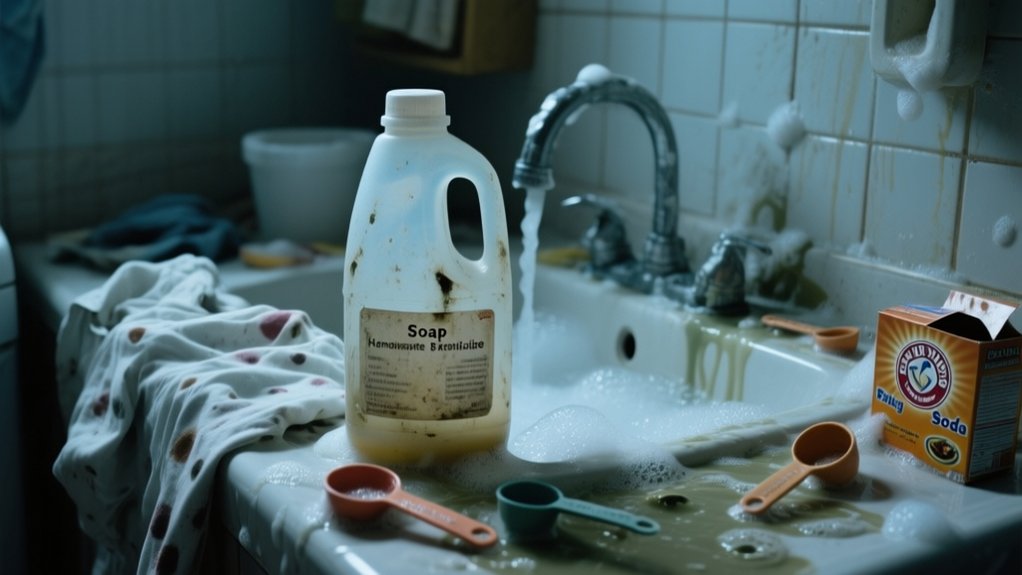
You might think homemade laundry soap saves money, but it often leaves waxy residue on your clothes and washing machine. This causes stiffness, yellowing, and buildup that traps dirt.
It reacts badly with hard water minerals, forming soap scum that hinders cleaning and machine performance. Plus, some ingredients can irritate your skin or lungs.
These issues could mean costly repairs or replacements down the line. Understanding these risks helps you make smarter laundry choices and protect your gear.
Key Takeaways
- Homemade soap reacts with hard water minerals, creating soap scum that reduces cleaning effectiveness and clogs washing machines.
- Soap residue from homemade detergents causes fabric stiffness, dinginess, and traps dirt, especially affecting towels.
- Homemade soaps lack chelating agents and stain removers found in commercial detergents, leading to buildup and poor cleaning results.
- Preparation and use of homemade soap can emit irritating fumes and cause skin reactions due to unregulated ingredients.
- Long-term use of homemade soap may increase costs from machine damage, fabric replacement, and health-related issues.
Why Homemade Soap Is Different From Detergents
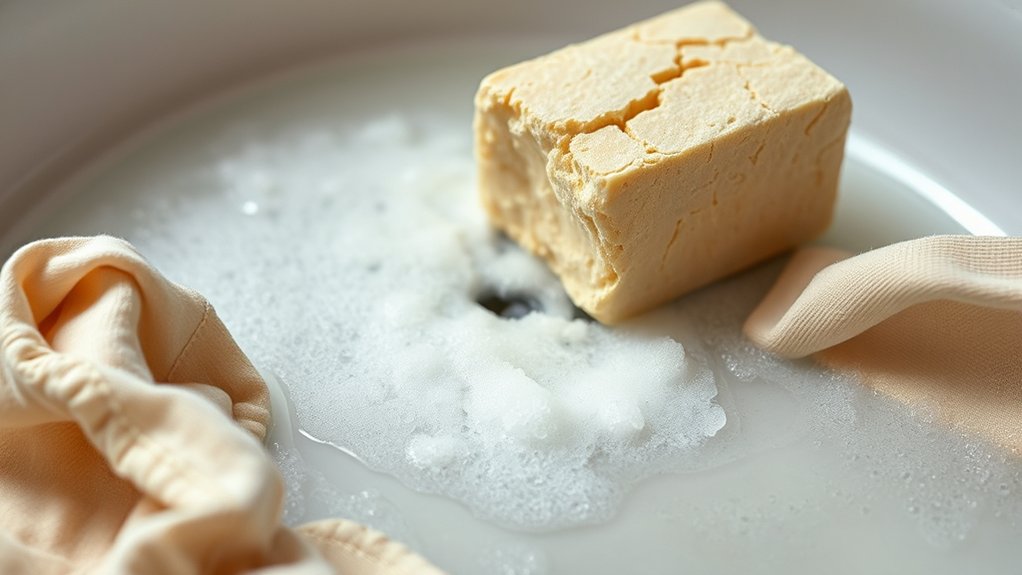
Although homemade laundry soap uses natural fats or oils combined with an alkali, it works very differently from commercial detergents.
These detergents contain synthetic surfactants designed for powerful cleaning. When you use homemade laundry soap, it reacts with hard water minerals, causing soap scum to form.
This soap scum can cling to your fabrics and reduce cleaning efficacy. Unlike commercial detergents, homemade soap often lacks chelating agents that prevent this buildup. As a result, you might notice stained fabrics and dinginess over time.
Moreover, soap scum can accumulate inside your washing machine, leading to operational issues. While homemade laundry soap might seem natural, you should be cautious about its limitations compared to commercial detergents engineered for effective stain removal and smooth machine function.
How Soap Residue Harms Your Clothes and Washer
When you choose homemade laundry soap, you should be aware that soap residue can build up on your clothes and inside your washing machine. This buildup creates a waxy layer on fabrics, causing stiffness and reduced absorbency, especially in towels.
Soap residue also traps dirt, leading to dinginess and yellowing, particularly in whites.
Inside your washing machine, accumulated soap scum clogs components, causing maintenance issues and reducing efficiency.
Worse, the buildup fosters mold and mildew growth, compromising future loads’ cleanliness and shortening your washer’s lifespan.
Ignoring these problems can lead to costly repairs or early appliance replacement.
To avoid these issues, follow proper cleaning tips for your machine and reconsider homemade soap use to protect your clothes and washing machine from harmful soap residue buildup.
Why Hard Water Makes DIY Soap Less Effective
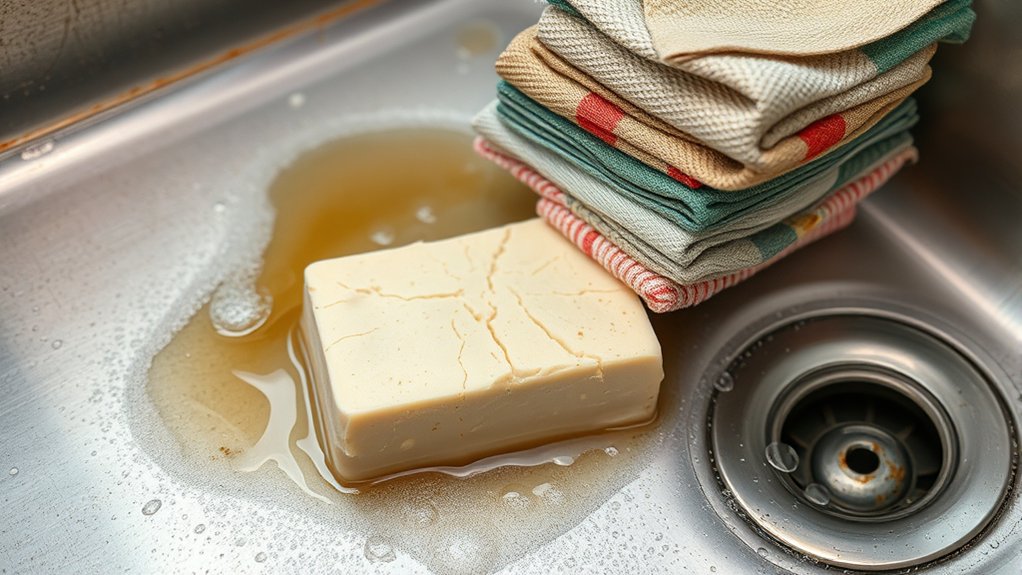
Because hard water contains high levels of minerals like calcium and magnesium, it reacts with homemade soap to form insoluble soap scum that reduces cleaning effectiveness.
When you use homemade laundry soap in hard water, this soap scum builds up on your clothes and washing machine, making cleaning performance noticeably ineffective.
Homemade soap in hard water causes soap scum buildup, reducing cleaning effectiveness on clothes and machines.
The minerals in hard water prevent soap from properly dissolving and rinsing away, leaving fabrics dingy and trapping dirt and oils.
Over time, this leads to unpleasant odors and a feeling that your laundry isn’t truly clean.
Unlike commercial detergents designed to work well in hard water, homemade soaps can’t overcome this issue.
If you live in a hard water area, relying solely on homemade laundry soap may leave you frustrated with poor results and persistent grime.
Health and Environmental Risks of Homemade Laundry Soap
When you make homemade laundry soap, the fumes can sometimes be irritating to your breathing, especially if you’re sensitive.
Plus, some of the ingredients might cause skin reactions.
On top of that, leftover soap can actually harm your septic system because it disrupts the natural breakdown processes.
Respiratory Irritation Risks
Although homemade laundry soaps can seem like a safe and natural alternative, they often contain unregulated ingredients that release irritants into the air during preparation and use. These airborne particles increase respiratory risks, especially for vulnerable populations.
Mixing ingredients like vinegar and baking soda may produce harmful fumes, triggering allergic reactions or asthma flare-ups. The unpredictable chemical reactions in homemade soap formulations worsen indoor air pollution, posing chronic respiratory health threats.
| Factor | Impact |
|---|---|
| Unregulated Ingredients | Release irritants |
| Chemical Reactions | Produce harmful fumes |
| Airborne Particles | Cause allergic reactions |
| Indoor Air Pollution | Linked to chronic respiratory issues |
| Vulnerable Populations | Higher risk of respiratory problems |
You should be cautious when choosing homemade laundry soap due to these respiratory risks.
Septic System Impact
If you use homemade laundry soap, you should be aware that its ingredients can disrupt the balance of beneficial bacteria in your septic system.
This disruption can potentially cause failures and expensive repairs.
Soap residues from homemade detergents often accumulate in septic tanks, leading to clogs and hampering the tank’s ability to break down waste efficiently.
Ingredients like borax can harm the microbial activity essential for septic systems to function properly.
This disruption increases the risk of backups, leaks, and the buildup of scum and sludge layers.
Because homemade laundry soap formulations aren’t regulated, they may introduce harmful chemical interactions that worsen these issues.
Ultimately, using homemade soaps can mean more frequent septic system maintenance and higher costs to keep your system running safely.
Skin Sensitivity Concerns
Because homemade laundry soaps often include unregulated ingredients, you may experience skin irritation or allergic reactions when using them.
Many DIY recipes contain borax, which the EWG doesn’t verify due to its hormone-disrupting effects and potential to cause skin sensitivity.
Without standardized formulations, you risk harmful chemical interactions that can worsen skin irritation or trigger allergic reactions.
Furthermore, mixing powdered ingredients may release fine particles, leading to respiratory issues, especially if you have asthma or other conditions.
Since homemade soaps lack safety testing, you can’t be sure they’re free from substances that aggravate sensitive skin.
To protect yourself, it’s safer to choose EWG verified products designed to minimize skin sensitivity and avoid the health risks linked to homemade laundry soaps.
How DIY Laundry Soap Can Cost You More in the Long Run
While homemade laundry soap might seem like a budget-friendly choice at first, it can end up costing you more over time due to soap buildup in your clothes and washing machine. This buildup reduces your machine’s efficiency and can cause malfunctions, leading to costly repairs or replacements.
You may notice dingy fabrics and odors trapped by residue, forcing you to buy additional products or replace damaged items.
Water hardness affects homemade laundry soap’s effectiveness, so you might spend more experimenting with recipes or supplements to get clean clothes.
Ingredients like borax can cause skin irritation, adding potential health expenses.
The long-term consequences, such as fabric damage and extra cleaning cycles, often outweigh your initial savings, making homemade soap a costly gamble in the end.
Eco-Friendly Alternatives to Homemade Laundry Soap
Though homemade laundry soap might seem like a natural choice, you can achieve better cleaning results and protect your fabrics by switching to eco-friendly commercial detergents.
These detergents use biodegradable ingredients and non-toxic formulas that deliver superior cleaning power without damaging clothes or machines.
Brands like Dirty Labs and ECOS offer EWG-verified options that are gentle on sensitive skin.
If you want a low-waste alternative, consider laundry sheets or powders from Grove Co. and Meliora, which reduce plastic use and come in recyclable packaging.
To soften fabrics naturally, use wool dryer balls instead of chemical fabric softeners.
Incorporating vinegar into your laundry routine helps maintain fabric freshness and removes residues safely, providing a safer and more effective approach than homemade soap recipes.
Tips for Maintaining Your Washer and Laundry Naturally
If you want to keep your washing machine running efficiently and your laundry fresh, maintaining your washer naturally is essential. Homemade cleaning products like vinegar or citric acid help prevent soap scum and mildew buildup caused by homemade laundry detergents.
Make sure to regularly clean the detergent drawer and rubber seals to avoid residue accumulation that can lead to odors and reduce machine efficiency.
Running a hot water cycle with an empty load once a month clears out leftover detergent and maintains performance.
After each wash, leave the door open to promote air circulation and minimize mold growth.
Occasionally, use a baking soda and vinegar mixture in the drum to neutralize odors and enhance cleaning power, ensuring your washer stays in top condition without harsh chemicals.
Frequently Asked Questions
Can Homemade Laundry Soap Cause Allergic Reactions on Sensitive Skin?
Yes, homemade laundry soap can cause allergic reactions if you have sensitive skin.
Since DIY recipes often include unregulated ingredients like borax or certain essential oils, you might experience rashes or irritation.
You can’t always predict how your skin will react because these soaps lack standardized testing.
To protect yourself, it’s best to patch-test any new homemade detergent or consider using commercially tested, hypoallergenic options instead.
How Does Homemade Laundry Soap Affect Different Fabric Types?
Imagine your favorite silk scarf turning stiff and dull after a few washes. That’s how homemade laundry soap affects delicate fabrics like silk and wool.
It leaves residues that weaken fibers over time. For whites, it often causes a grey tint, while colors fade faster.
Towels become scratchy due to soap buildup, and odors linger because oils and bacteria get trapped.
Is Homemade Laundry Soap Safe for Use in All Washing Machines?
No, homemade laundry soap isn’t safe for all washing machines.
If you use it in high-efficiency (HE) machines, you risk soap scum buildup and clogged drains because it creates more suds than those machines are designed to handle.
This can cause mold growth and even void your warranty.
Stick to detergents recommended by your machine’s manufacturer to avoid damage and maintain washing performance.
What Ingredients Should Be Avoided in DIY Laundry Soap Recipes?
You should avoid borax, bar soaps, and excessive washing soda in DIY laundry soap recipes.
Borax irritates skin and may disrupt hormones. Bar soaps cause soap scum buildup, clogging machines and trapping dirt. Washing soda can damage fabrics if overused.
Baking soda alone won’t tackle hard water, and vinegar can’t properly remove stains.
Stay cautious; these ingredients might save money but risk your clothes, skin, and machine’s health.
How Often Should Homemade Laundry Soap Be Used for Best Results?
You should use homemade laundry soap sparingly, ideally no more than every few loads or about once a week.
Using it more often can cause soap buildup on your fabrics and washing machine, especially if you have hard water.
To keep your clothes fresh and your machine running efficiently, alternate homemade soap with commercial detergents.
Also, regularly clean your washer and adjust soap amounts based on your water hardness for the best results.
Conclusion
Think of homemade laundry soap as a well-meaning but clumsy guest. It tries to help but often leaves behind a mess. Soap residue can cling to your clothes and washer, especially in hard water, causing damage over time.
While it seems green and cheap upfront, the hidden costs to your health, appliances, and the environment can pile up like stubborn stains. Choose eco-friendly alternatives and care for your washer wisely to keep your laundry and conscience clean.