Does Lysol Laundry Sanitizer Kill Mold – Surprising Answer
You can kill most mold spores on clothes using Lysol Laundry Sanitizer, especially when added during the rinse cycle with hot water for better effectiveness. It targets surface mold and reduces musty odors but isn’t designed for deep or heavy mold infestations. Those may need pre-treatment or specialized methods.
Lysol supports bacteria reduction and fabric hygiene but works best combined with moisture control and proper laundering. Explore further to understand its limitations and ideal usage for moldy clothes.
Key Takeaways
- Lysol Laundry Sanitizer kills mold spores by breaking down cell walls during the wash cycle, primarily targeting surface mold.
- It reduces musty odors and kills 99.9% of bacteria and viruses but is not specifically designed for deep mold infestations.
- Pre-treating moldy clothes with vinegar, hydrogen peroxide, or Borax enhances mold removal effectiveness when combined with Lysol sanitizer.
- Using hot water and adding Lysol during the rinse cycle improves mold spore elimination on fabrics.
- Addressing moisture issues and maintaining dry laundry environments prevent mold regrowth and support sanitizer effectiveness.
How Lysol Laundry Sanitizer Kills Mold Spores
Lysol Laundry Sanitizer kills mold spores by penetrating and breaking down their cell walls during the wash cycle. When you add it to the rinse cycle of your washing machine, it guarantees sufficient contact time with fabrics, which is vital to effectively kill mold spores.
Using hot water enhances this action, improving the sanitizer’s ability to remove the mold. However, you shouldn’t rely solely on Lysol Laundry Sanitizer; addressing underlying moisture issues is essential to prevent mold regrowth.
Hot water boosts sanitizer effectiveness, but tackling moisture is key to stopping mold from returning.
While Lysol Laundry Sanitizer efficiently neutralizes mold spores on clothing, it doesn’t eliminate the root causes of mold growth, such as persistent dampness.
Consequently, combining proper washing techniques with moisture control gives you the best results in sanitizing laundry and maintaining mold-free fabrics.
Effectiveness of Lysol Laundry Sanitizer Against Mold on Clothes
You should know Lysol Laundry Sanitizer kills many bacteria and viruses, but it’s not specifically made to remove mold spores that are deeply embedded in fabrics.
It can help reduce those musty mold odors, though, which is a plus.
That said, you’ll want to think about whether your fabric can handle it and probably do some pre-treatment to get rid of mold effectively.
And hey, always check the care labels on your clothes before using it—no one wants to accidentally ruin a favorite shirt!
Mold Removal Efficiency
Although Lysol Laundry Sanitizer effectively kills 99.9% of bacteria and viruses, its performance against mold on fabrics depends on the mold species and fabric type. For effective mold removal, you should pre-treat heavily infested areas before washing.
Lysol Laundry Sanitizer works best when added during the rinse cycle and combined with hot water to inhibit mold growth and reduce odors.
However, it primarily targets surface mold and may not penetrate deeply into fabrics infested with persistent mold.
In such cases, you might need specialized treatments or professional cleaning to achieve complete mold eradication.
Following the manufacturer’s instructions guarantees peak results, but don’t rely solely on Lysol Laundry Sanitizer for severe mold issues, as its mold removal efficiency varies based on contamination severity and fabric characteristics.
Fabric Safety Considerations
When treating mold on clothes, verifying fabric safety means sticking to the recommended Lysol Laundry Sanitizer dosage and checking your garment’s care instructions.
Lysol Laundry Sanitizer kills 99.9% of mold spores in both hot and cold water, making it versatile for many fabric types.
But fabric safety depends on confirming that the sanitizer suits your textiles, since some delicate materials mightn’t handle chemical additives well.
Following the recommended dosage is key; using too much can damage fabric, while too little won’t fully eliminate mold.
Regular use not only removes existing mold but also helps reduce moisture retention, which prevents future growth.
Best Ways to Use Lysol Laundry Sanitizer on Moldy Clothes
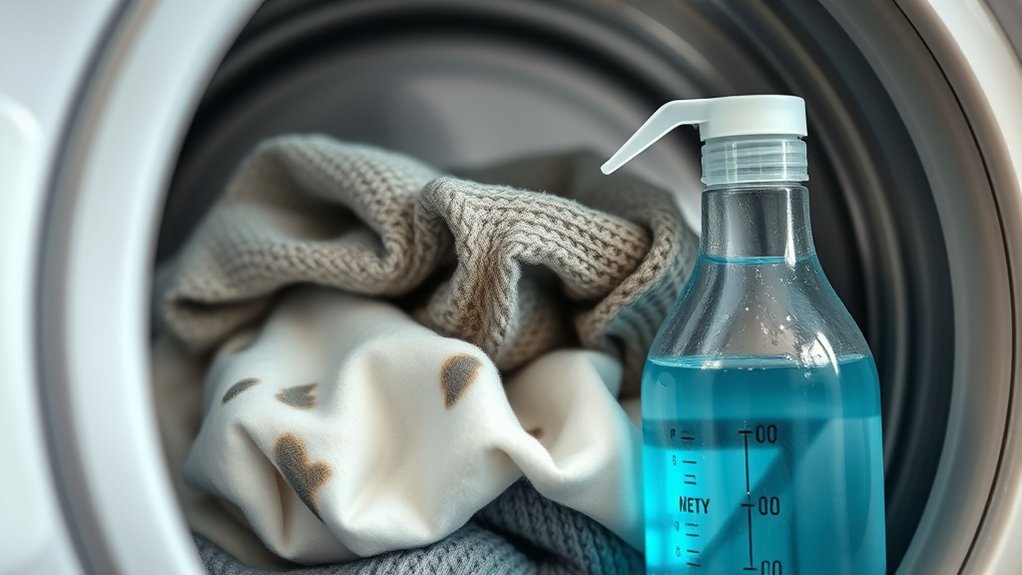
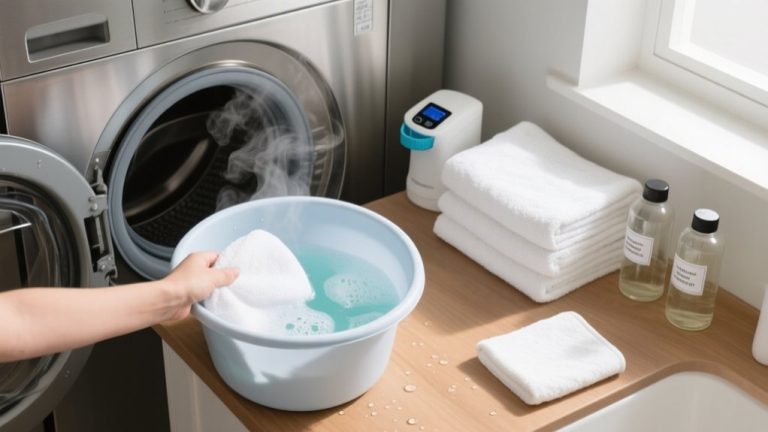
Since Lysol Laundry Sanitizer isn’t specifically formulated to eliminate mold, you should pre-treat moldy clothes to achieve ideal results. Start by mixing Lysol Laundry Sanitizer with warm water and soaking the affected garments for at least 30 minutes.
This pre-treating moldy clothes step enhances effective mold removal before laundering. Always adhere to the product label instructions to guarantee proper dilution and avoid fabric damage.
After soaking, wash the clothes as usual, incorporating Lysol Laundry Sanitizer in the rinse cycle to help prevent the spread of mold spores and reduce reoccurrence risks.
Avoid applying the sanitizer directly to delicate fabrics without a patch test.
Limitations of Lysol Laundry Sanitizer on Moldy Clothes
Even though Lysol Laundry Sanitizer effectively kills 99.9% of bacteria and viruses, it doesn’t fully address mold on fabrics because it isn’t formulated to penetrate mold spores embedded deep within materials.
Its efficacy in mold removal is limited, especially on porous materials where mold infiltrates fibers.
You’ll need to focus on pre-treating clothes with specialized mold cleaning solutions or natural agents like vinegar and baking soda to disrupt mold colonies before using Lysol Laundry Sanitizer.
Relying solely on Lysol may only mask odors without eradicating spores, increasing the risk of recurring mold issues.
Furthermore, Lysol Laundry Sanitizer doesn’t prevent mold regrowth if moisture problems persist.
Thus, integrating targeted mold removal steps alongside Lysol is essential for thorough decontamination of moldy clothes.
When to Call a Pro for Moldy Clothes
If you notice mold covering more than 10 square feet on your clothes, or if it keeps coming back even after you’ve cleaned them, it might be time to call in a professional.
Sometimes, home cleaning methods—even using products like Lysol Laundry Sanitizer—just aren’t enough to completely get rid of mold on porous fabrics.
Dealing with severe mold infestations quickly is important because it helps prevent health issues and stops the damage from spreading further.
Signs Of Severe Infestation
When mold growth covers more than 10 square feet on your clothing, you should call a professional for remediation. This level of infestation requires specialized treatment.
Recognizing signs of severe infestation guarantees you seek professional help promptly, minimizing health risk and fabric damage.
Watch for these critical indicators:
- Persistent musty odor after washing, signaling deep mold penetration.
- Extensive mold growth on porous fabrics like cotton or wool, which resist typical cleaning.
- Respiratory issues or allergies triggered by handling moldy clothes, indicating a health risk.
If mold reappears after cleaning, it suggests unresolved moisture problems requiring expert assessment.
Addressing these signs early prevents further contamination and safeguards both your health and clothing integrity.
Limits Of Home Cleaning
Although Lysol Laundry Sanitizer effectively eliminates 99.9% of bacteria and viruses, it may not neutralize all mold species, especially those embedded deeply in porous fabrics.
When mold covers more than 10 square feet or permeates materials like upholstery, home cleaning methods fall short.
Mold problems in porous fabrics often require professional mold remediation for thorough treatment.
Professionals use specialized tools and techniques to address both visible mold and underlying moisture sources, preventing recurrence.
Washing moldy clothes at high temperatures may not restore fabric integrity if mold damage is extensive, making replacement necessary.
You should call a pro when mold persists despite cleaning or affects large areas, as Lysol Laundry Sanitizer alone can’t assure complete remediation in severe cases.
Prioritize professional intervention to guarantee safe, effective mold removal beyond the limits of home methods.
Better Ways to Remove Mold From Clothes
Mold removal from clothes requires targeted treatments beyond standard sanitizers like Lysol Laundry Sanitizer, which effectively kills bacteria and viruses but doesn’t specifically address mold.
Removing mold from clothes needs specialized treatments beyond regular sanitizers like Lysol Laundry Sanitizer.
To clean mold efficiently, you need a precise solution for mold and pre-treating methods.
- Pre-treating: Apply a 1:1 vinegar and water solution to affected areas to break down mold spores before washing.
- Boost cleaning: Add one cup of Borax to your laundry to remove mold stains and deodorize fabrics.
- Soaking: Immerse clothes in warm water with hydrogen peroxide for several hours to kill mold without harming fabric color.
While Lysol Laundry Sanitizer helps reduce bacteria, these steps are essential for removing mold and ensuring your clothes are truly clean.
Preventing Mold Growth in Laundry and Machines
To prevent mold growth in laundry and washing machines, you need to maintain a dry and clean environment that stops fungal development.
Regularly clean your front-loading washer with a dishwasher tablet in hot water to remove mold buildup effectively.
Always inspect damp clothing for mold before washing, as contaminated items can spread mold and mildew across the load.
Immediately hang wet towels and clothes to avoid moisture buildup, which is a key factor in mold growth.
Wipe down shower surfaces with a squeegee after use to reduce humidity. This improves air quality and helps prevent mold.
Launder vinyl shower curtains every 3 to 5 uses to eliminate mold transfer risks.
Lysol can help sanitize and maintain these surfaces, supporting your efforts to keep mold from growing in laundry areas.
Tips to Keep Laundry Fresh and Mold-Free
When you regularly wash machine-washable fabrics like towels and shower curtains every 3 to 5 uses, you greatly reduce the risk of mold growth and odor development.
To keep laundry fresh and prevent mold, consider these evidence-based tips:
- Use Lysol Laundry Sanitizer in your washing machine cycle to clean and disinfect fabrics by killing mold spores and bacteria effectively.
- Immediately hang wet towels after use instead of leaving them damp on the floor. This minimizes environments that promote mold growth.
- Maintain your washing machine by running a hot water cycle with a dishwasher tablet regularly. This helps clean and disinfect internal components, preventing mold build-up.
Implementing these steps guarantees your laundry remains mold-free, fresh, and hygienic while optimizing the laundry sanitizer’s efficacy.
Frequently Asked Questions
Can Lysol Laundry Sanitizer Be Used on Non-Fabric Household Items?
You shouldn’t use Lysol Laundry Sanitizer on non-fabric household items.
It’s specifically formulated for fabrics and lacks claims for sanitizing hard surfaces like plastics or metals.
Applying it to these materials may cause damage or ineffective disinfection.
Instead, choose products designed for hard surfaces, such as Lysol Disinfectant Spray, to guarantee proper sanitation.
Always follow label instructions to maintain safety and effectiveness when cleaning non-fabric items.
Is Lysol Laundry Sanitizer Safe for Use Around Pets and Children?
Yes, Lysol Laundry Sanitizer is generally safe around pets and children if you follow the label instructions carefully.
You must use the correct dilution, rinse thoroughly, and guarantee proper ventilation to prevent irritation or inhalation risks.
Keep pets and kids away during application to avoid direct contact with concentrated chemicals.
Always consult the product label for detailed safety guidelines, as misuse can lead to adverse effects despite the sanitizer’s designed safety for household use.
How Does Lysol Laundry Sanitizer Compare to Bleach for Disinfecting Clothes?
Lysol Laundry Sanitizer disinfects clothes effectively but is gentler than bleach, preserving colors and fabric integrity.
You’ll need to allow a 10-minute contact time for ideal germ elimination.
Bleach works faster but risks fabric damage and requires careful handling.
Bleach is more cost-efficient per load, but Lysol offers a safer alternative for sensitive fabrics.
Both can be combined strategically, balancing disinfection strength and fabric care.
Can Lysol Laundry Sanitizer Remove Odors Caused by Mold?
You can reduce, mask, and control odors caused by mold using Lysol Laundry Sanitizer, but you can’t fully eliminate the mold itself. This product targets bacteria and viruses effectively, helping neutralize musty smells.
However, embedded mold spores may persist, so you’ll need specialized mold removers for complete eradication.
For best results, pre-treat moldy fabrics before washing with Lysol Laundry Sanitizer, following all usage guidelines precisely.
Does Lysol Laundry Sanitizer Have Any Environmental Impact?
Yes, Lysol Laundry Sanitizer does have environmental impacts. When you use it, quaternary ammonium compounds may affect aquatic ecosystems if improperly disposed.
However, the product is biodegradable, so it breaks down into less harmful substances over time.
Some formulas include synthetic fragrances and dyes that could contribute to water pollution.
Lysol’s efforts to improve sustainability through eco-friendly packaging and manufacturing help reduce your overall environmental footprint.
Use it responsibly to minimize impact.
Conclusion
While Lysol Laundry Sanitizer can greatly reduce mold spores on your clothes, it’s not a magical fix for deep-seated mold issues. Think of it as a strong ally in your laundry routine rather than a solo hero.
For stubborn mold, professional intervention or specialized treatments might be necessary. By combining Lysol with proper washing habits and preventative measures, you can keep your wardrobe comfortably fresh and free from unwelcome microbial guests.