Does Lysol Laundry Sanitizer Kill Ringworm – Fact Check
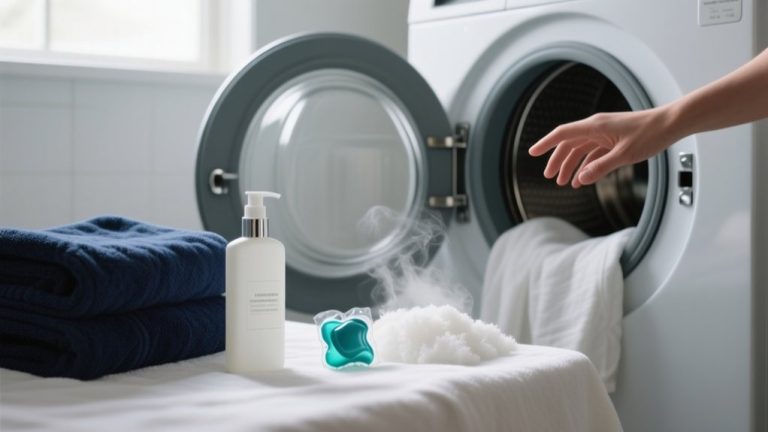
You can trust Lysol Laundry Sanitizer to kill 99.9% of ringworm spores when used as directed. It works in all wash cycles, especially when added during the rinse phase.
It doesn’t require high temperatures alone but achieves the best results combined with hot water and proper agitation. While it’s effective, it’s not a standalone solution. Pair it with antifungal detergent and thorough drying for ideal spore elimination.
Keep going to understand its full role and limitations in preventing ringworm spread.
Key Takeaways
- Lysol Laundry Sanitizer kills 99.9% of ringworm spores when used as directed, reducing fungal infection risks via laundry.
- It works best when added during the rinse cycle and combined with hot water above 140°F for maximum spore elimination.
- Using Lysol Laundry Sanitizer alone is insufficient; proper washing with antifungal detergent and mechanical agitation is essential.
- Regular use of the sanitizer, alongside thorough drying in a heated dryer, helps prevent ringworm transmission through fabrics.
- Effectiveness depends on correct concentration, contact time, and washing practices; it is not a complete substitute for antifungal detergents.
Lysol Laundry Sanitizer’s Effectiveness Against Ringworm Fungi
Although ringworm fungi are resilient, Lysol Laundry Sanitizer effectively kills 99.9% of these spores when used according to instructions. You can trust Lysol Laundry to sanitize contaminated fabrics without relying on high-temperature washes, as it works in all wash cycles.
For maximum efficacy, add the sanitizer to the fabric softener compartment or during the rinse cycle, ensuring prolonged contact with fabrics. This method guarantees ideal fungal spore elimination.
Furthermore, Lysol Laundry Sanitizer is safe for sensitive skin, making it appropriate for households with allergy-prone individuals. Regular use reduces the risk of ringworm transmission through contaminated fabrics, providing a reliable barrier against fungal infections.
Best Laundry Practices to Remove Ringworm Spores
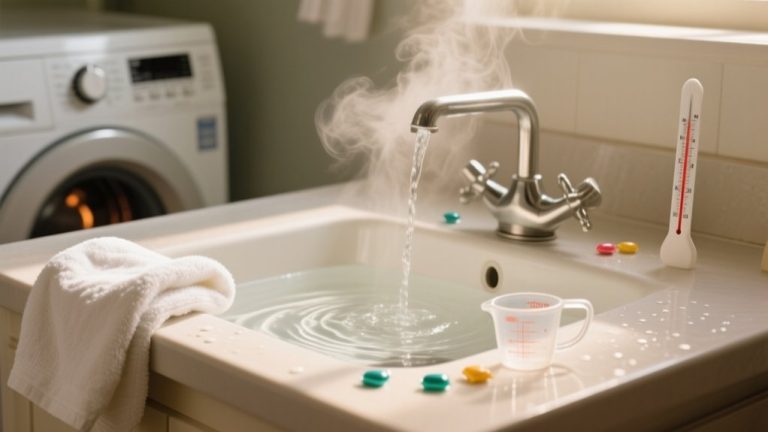
You should wash any laundry that might be contaminated separately, using hot water above 140°F. This temperature is key to effectively killing ringworm spores.
It also helps to use an antifungal detergent along with Lysol Laundry Sanitizer because together, they boost the chances of getting rid of the fungus completely.
Also, try not to overload your washing machine. Giving your clothes enough room means they’ll get properly agitated, which is important for cleaning.
After washing, make sure to dry everything thoroughly for about 40 to 50 minutes—that final step really finishes the job by fully decontaminating your laundry.
Effective Washing Techniques
When dealing with fabrics contaminated by ringworm spores, ensuring thorough mechanical agitation during washing is essential to dislodge and remove *Microsporum canis*.
You should separate contaminated laundry from unexposed items to avoid cross-contamination.
Evidence supports washing items twice, even in cold water, to markedly reduce or eliminate fungal spores.
While hot water at 60°C can improve decontamination, studies confirm cold water washes remain effective and energy-efficient.
Incorporating a laundry sanitizer enhances this process by targeting residual fungi and bacteria that mechanical action alone may miss.
Detergent and Sanitizer Choices
Since effective decontamination depends on targeting residual fungal spores, selecting appropriate detergents and sanitizers is essential for removing ringworm from laundry. You should use a high-efficiency laundry detergent combined with Lysol Laundry Sanitizer, which kills 99.9% of bacteria and fungi even without hot water.
Adding two capfuls of Lysol Laundry Sanitizer during the rinse cycle guarantees peak sanitization. Wash contaminated items separately to prevent cross-contamination.
| Detergent Type | Sanitizer Recommendation |
|---|---|
| High-efficiency laundry detergent | Lysol Laundry Sanitizer (2 capfuls) |
| Regular detergent | Lysol Laundry Sanitizer |
| Sensitive fabric detergent | Lysol Laundry Sanitizer |
This combination maximizes fungal spore elimination while preserving fabric integrity, providing a thorough and evidence-based laundry hygiene approach.
How Water Temperature and Agitation Help Remove Ringworm Spores
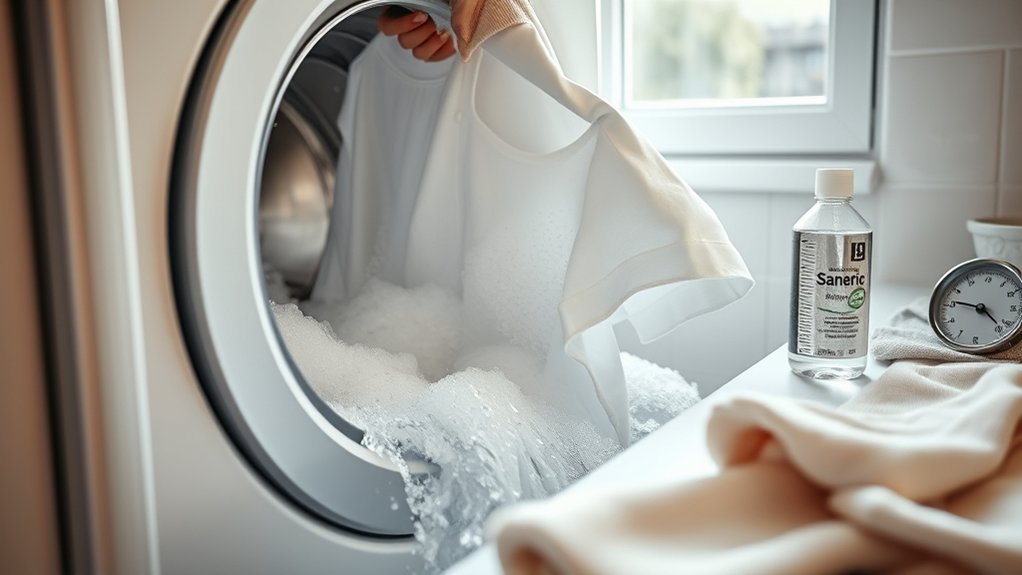
Although ringworm spores can be resilient, using water temperatures above 140°F greatly boosts their removal by killing fungal spores during the wash cycle. Hot water effectively denatures fungal proteins, contributing to spore inactivation.
Equally important is mechanical agitation, which physically dislodges spores from fabric fibers, increasing the likelihood of complete decontamination. Evidence shows that combining hot water with vigorous mechanical agitation outperforms either approach alone.
Moreover, smaller laundry loads allow for maximum agitation and thorough exposure to water and detergent. While cold water washes with multiple cycles can reduce spores, hot water remains the most reliable method.
To maximize ringworm spore removal, you should use hot water and guarantee sufficient mechanical agitation during washing, thereby enhancing the overall efficacy of the laundering process.
Limitations of Lysol Laundry Sanitizer for Ringworm Prevention
While Lysol Laundry Sanitizer eliminates 99.9% of bacteria and fungi, its effectiveness against ringworm spores depends on factors like concentration and contact time.
Lysol Laundry Sanitizer kills 99.9% of bacteria and fungi but varies in effectiveness against ringworm spores.
You should note that Lysol Laundry Sanitizer isn’t a complete substitute for antifungal detergents formulated specifically for dermatophytes.
Its efficacy increases when combined with hot water washing, which enhances fungal spore elimination.
However, relying solely on Lysol Laundry Sanitizer without proper mechanical agitation and thorough drying may leave some spores viable on fabrics.
To maximize prevention, follow manufacturer dosing instructions precisely and use hot water cycles.
Despite its extensive antimicrobial action, Lysol Laundry Sanitizer has limitations in fully eradicating ringworm spores, so integrating thorough laundering practices remains essential for effective ringworm prevention.
Comparing Lysol to Other Antifungal Laundry Detergents
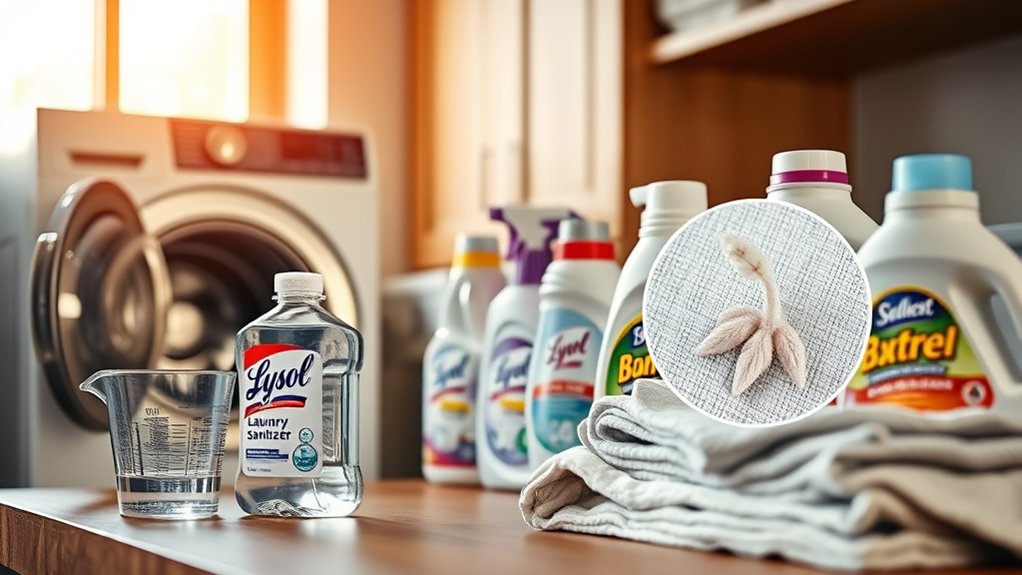
Understanding how Lysol Laundry Sanitizer compares to other antifungal laundry detergents helps you make informed choices in managing ringworm contamination.
Lysol Laundry Sanitizer effectively kills 99.9% of bacteria and fungi, including ringworm spores, and works efficiently at all wash temperatures.
Compared to specialized antifungal detergents like Tide Hygienic Clean and Persil, Lysol offers a unique formulation targeting both bacteria and fungi without bleach.
Key comparisons include:
- Effective disinfection at any wash temperature
- Dual action against bacteria and fungi
- Bleach-free formulation suited for sensitive fabrics
Using Lysol Laundry Sanitizer alongside regular detergents enhances fabric cleanliness and supports fungal infection control, making it a viable alternative to traditional antifungal detergents.
Tips for Safely Handling Laundry Exposed to Ringworm
Since ringworm spores can easily transfer through fabrics, you should always wash contaminated laundry separately to prevent cross-contamination. Use hot water above 140°F to maximize fungal spore elimination.
Add Lysol Laundry Sanitizer to your wash cycle to kill 99.9% of germs effectively. After washing, dry items thoroughly in a dryer, as heat further destroys spores.
Regularly disinfect your washing machine and laundry area to reduce reinfection risks.
| Step | Best Practice |
|---|---|
| Washing | Use hot water (>140°F) |
| Sanitizing Additive | Add Lysol Laundry Sanitizer |
| Drying | Thoroughly dry in a heated dryer |
Following these steps guarantees safe handling of laundry exposed to ringworm and minimizes spore transmission.
How Lysol Laundry Sanitizer Works Against Microbes in Laundry
Because Lysol Laundry Sanitizer is formulated to kill 99.9% of bacteria and fungi, it effectively reduces microbial contamination, including ringworm spores, in your laundry.
It works efficiently in both hot and cold wash cycles, so there’s no need for high temperatures.
You can add it during the rinse cycle or directly into the drum, which helps ensure optimal fabric sanitization.
Clinical evidence supports its ability to lower microbial load without compromising fabric integrity or skin sensitivity.
Key points include:
- Effectiveness in hot and cold water, providing versatile use
- Application during the rinse cycle for thorough disinfection
- Clinically proven to reduce bacteria and fungi on fabrics
This precise formulation enhances laundry hygiene by targeting microbes like ringworm spores effectively.
Frequently Asked Questions
Can Lysol Laundry Sanitizer Be Used on All Fabric Types?
You can use Lysol Laundry Sanitizer on most fabric types like cotton, polyester, and blends without issue.
However, you should always check the care labels first because some delicate or specialty fabrics mightn’t tolerate sanitizers well.
Following the manufacturer’s instructions is essential to avoid damage and get the best sanitizing results.
Using it during the rinse cycle works effectively for standard and HE machines, ensuring thorough sanitization.
Is Lysol Laundry Sanitizer Safe for Use With Children’s Clothing?
Yes, you can safely use Lysol Laundry Sanitizer on children’s clothing when following the manufacturer’s instructions.
It’s dermatologically tested, free from bleach, and formulated to be gentle on fabrics and sensitive skin.
Adding it during the rinse cycle guarantees effective sanitization without irritation risks.
Always adhere to dosing guidelines to maintain safety and efficacy, especially for children’s garments, minimizing potential skin reactions while thoroughly sanitizing.
How Long Should Laundry Soak With Lysol Laundry Sanitizer?
You should soak your laundry with Lysol Laundry Sanitizer for at least 16 minutes, no less!
This duration confirms the sanitizer has enough time to eliminate stubborn germs and fungi effectively.
Skimping on soak time reduces its proven disinfecting power.
Follow the manufacturer’s instructions precisely, using the recommended dosage to maximize results.
This careful timing assures thorough sanitization, helping you maintain a hygienic laundry routine backed by scientific evidence.
Does Lysol Laundry Sanitizer Have a Strong Chemical Smell?
Yes, Lysol Laundry Sanitizer has a strong chemical smell because of its active ingredients, including quaternary ammonium compounds.
When you use it, especially in higher concentrations or in poorly ventilated spaces, the scent becomes more noticeable.
However, the odor usually fades once the laundry dries, leaving fabrics fresh.
If you’re sensitive to strong smells, you might want to use the product sparingly or look for unscented alternatives to minimize discomfort.
Can Lysol Laundry Sanitizer Be Combined With Bleach Safely?
Sure, you could try mixing Lysol Laundry Sanitizer with bleach if you enjoy toxic fumes and reduced effectiveness.
But seriously, don’t do it. Combining these two creates harmful chemical reactions and compromises their disinfecting power.
Stick to the manufacturer’s guidelines: use Lysol in the rinse cycle separately, and bleach only on appropriate fabrics.
This way, you guarantee safe laundry practices and effective sanitation without risking your health.
Conclusion
While Lysol Laundry Sanitizer shows some ability to reduce microbes, it’s not a silver bullet against ringworm fungi. Like a lighthouse guiding ships through fog, it helps but doesn’t guarantee complete safety without proper washing techniques.
Hot water, thorough agitation, and antifungal detergents remain essential. Don’t rely solely on Lysol; combine methods to truly protect your household.
Evidence points to a layered approach as your best defense against persistent ringworm spores in laundry.