Where To Buy Washing Machine For Laundry Business – Guide
When buying a washing machine for your laundry business, start by evaluating your daily laundry volume to choose the right capacity (typically 25-60 lbs) and guarantee dryer sizes match. Verify installation needs, like power supply and clearance space, and prioritize suppliers with strong warranties and reliable support.
Look for durable, ENERGY STAR-rated models with smart features to boost efficiency. Consider transparent pricing and financing options. Keep exploring to discover how to optimize your purchase and installation for long-term success.
Key Takeaways
- Choose suppliers with proven industry experience and strong reputations for quality commercial laundry machines.
- Verify warranty terms, after-sales service, and ongoing maintenance support before purchasing.
- Ensure equipment capacity matches your daily laundry volume, considering hotel occupancy or business scale.
- Confirm supplier offers ENERGY STAR-rated, durable machines with smart controls for efficiency and customization.
- Check installation requirements, delivery logistics, and financing options to fit your operational needs and budget.
Assessing Your Commercial Washing Machine Capacity
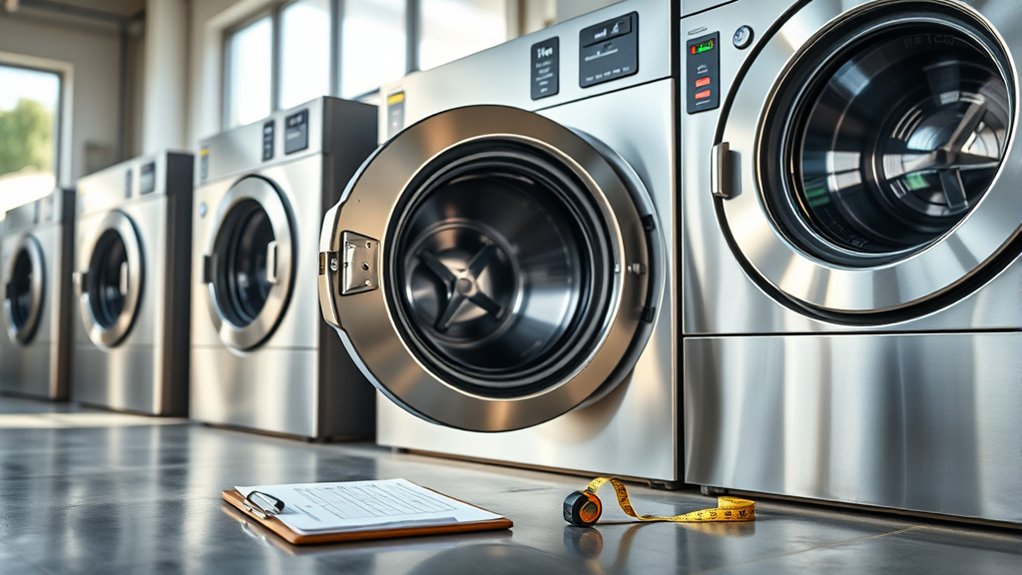
When evaluating your commercial washing machine capacity, you’ll need to carefully analyze your daily laundry volume to avoid inefficiencies.
Commercial washers come in various capacities, commonly 25 lb, 40 lb, and 60 lb models, allowing you to match equipment precisely to your laundry demands.
Tracking wash cycles daily for at least 30 days helps you understand peak and average loads so you can select the right size.
Remember, mismatched washer capacity leads to increased costs and reduced effective performance.
For example, hotels require 8-12 pounds of laundry per occupied room daily, highlighting the importance of load profiling.
Also, verify your dryers have 1.25 to 1.5 times the washer’s capacity to maintain efficiency.
Careful assessment guarantees your commercial washers operate at peak performance while controlling expenses.
Understanding Installation and Delivery Requirements
Three critical factors determine a smooth installation and delivery process for commercial washing machines: power supply compatibility, physical clearance, and delivery access.
First, verify the power requirements. Most units need 208-240V single-phase or 480V three-phase configurations.
Next, measure clearance zones precisely. Front-load washers require 3-4 feet clearance, while dryers need 18-24 inches behind for ventilation.
Confirm the delivery route can accommodate the machine’s size, especially if entryways exceed standard 36-inch doors.
For installation, determine if your model requires reinforced concrete bases. Hard mount machines do, while soft mounts offer more floor flexibility.
Don’t overlook local codes, which may demand specific ventilation or utility setups, particularly in healthcare settings.
Planning these details upfront guarantees efficient installation and avoids costly delays or modifications.
Finding Reputable Commercial Laundry Equipment Suppliers
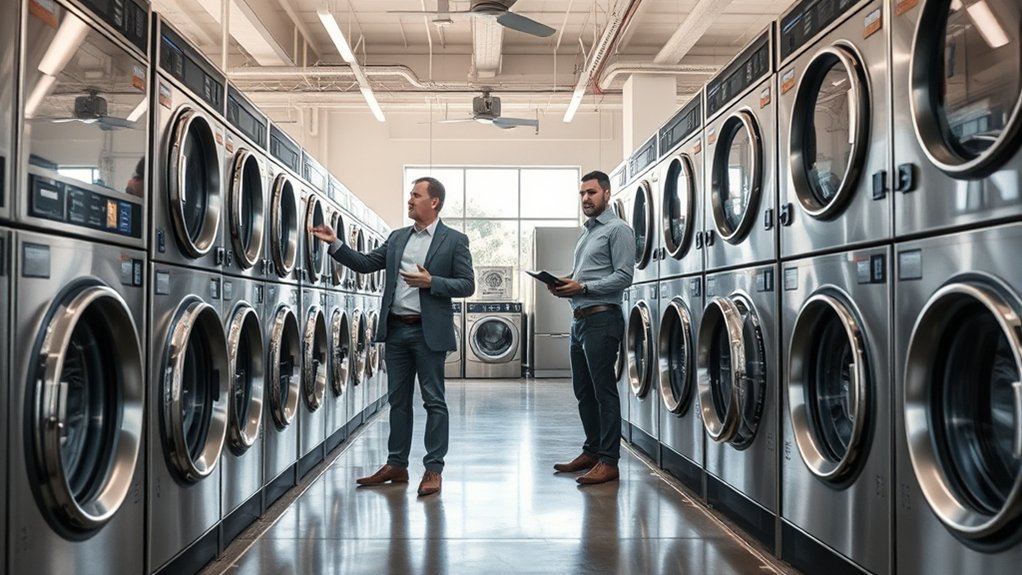
When you’re picking a commercial laundry equipment supplier, it’s a good idea to start by checking how long they’ve been around and what kind of reputation they’ve for quality. You want to be sure you’re dealing with someone reliable.
It’s also important to look for a supplier that offers strong warranties and dependable manufacturer support. This way, you can minimize downtime and keep your investment protected.
Don’t forget to make sure they’ve clear service policies.
Plus, having a team that knows their stuff when it comes to ongoing maintenance and repairs can make a big difference down the line.
Supplier Credentials Verification
Although finding a commercial laundry equipment supplier might seem straightforward, verifying their credentials is essential to guarantee you invest in reliable machines and services.
Ensuring supplier credentials helps maintain quality commercial standards, performance, and reliability. It also helps control your operating costs.
Check these three important factors:
- Experience and Certifications: Choose suppliers with a proven track record, such as those established decades ago. Also, verify industry certifications that show compliance with safety and quality standards.
- Customer Feedback: Review testimonials to assess consistent performance and reliability over time.
- Distribution and Support Network: Confirm they offer timely delivery and installation to avoid operational delays.
Warranty And Support
How can you guarantee your investment in commercial laundry equipment remains protected and efficient over time? Start by choosing a supplier that offers a robust warranty, typically 5 to 10 years on major components. This ensures long-term reliability and helps minimize repair costs.
Prioritize suppliers with a proven track record dating back to the early 1900s. Such longevity signals quality and customer trust.
Also, assess the level of manufacturer support, including remote technical assistance and local service options, so you can reduce downtime swiftly.
Furthermore, select suppliers who provide extensive training and maintenance guides. These resources help your staff operate machines efficiently and extend the equipment’s lifespan.
Finally, make sure you get transparent pricing to avoid hidden fees, enabling better financial planning.
A reputable supplier’s warranty and support are critical to safeguarding your commercial laundry business investment.
Comparing Online Retailers, Local Stores, and Distributors
Choosing where to buy your washing machine depends on several key factors, including selection, service, and cost. You’ll want to weigh the benefits of online retailers, local stores, and distributors carefully:
- Online Retailers offer extensive selections and competitive pricing, plus home delivery. However, warranty and support may require managing remote customer service.
- Local Stores let you inspect machines firsthand, access immediate purchases, and receive personalized warranty and support, including local maintenance.
- Distributors provide specialized expertise and bulk discounts, ideal if you need commercial-grade equipment for multiple locations.
Consider installation services and warranty responsiveness when choosing.
Your decision should align with your business’s operational needs and after-sales support expectations.
Evaluating Durability and Energy Efficiency
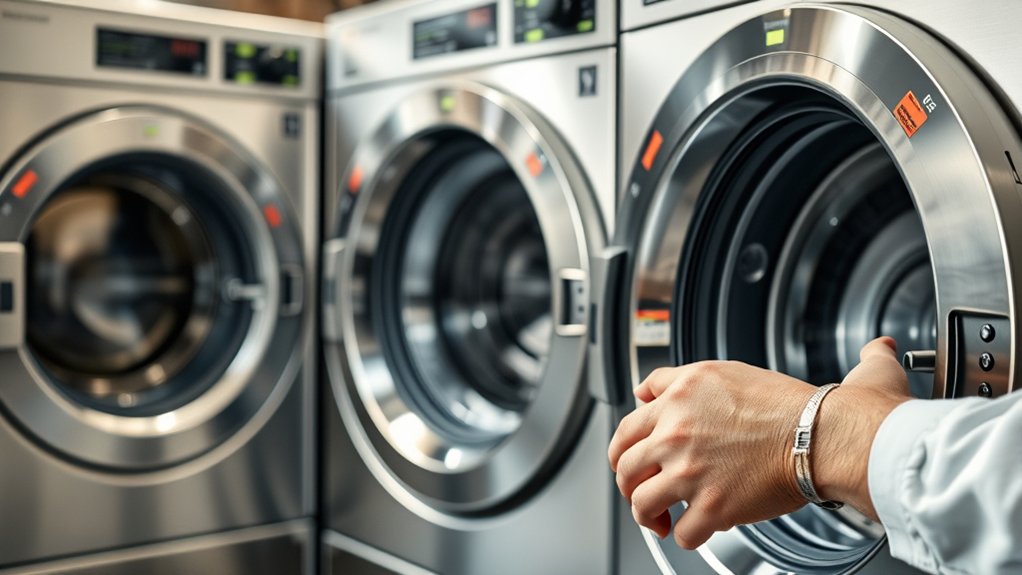
When you evaluate washing machines for your business, durability and energy efficiency should top your priorities. Choose commercial washing machines built with metal components to withstand heavy-duty use and guarantee long-lasting durability.
Look for ENERGY STAR-rated models to reduce utility costs without sacrificing performance. Machines with programmable controls let you customize wash cycles, conserving water and energy while addressing specific laundry needs.
Advanced features like high G-force extraction shorten drying times, further boosting energy efficiency.
Don’t overlook regular maintenance. Inspecting hoses and cleaning filters preserves durability and keeps energy use efficient.
Prioritizing these factors guarantees you invest in equipment that supports operational efficiency and cost savings, making your laundry business more competitive and sustainable in the long run.
Financing Commercial Washing Machines and Transparent Pricing
You’ll want to explore flexible payment options, like leases or loans, to make those upfront costs easier to manage when buying commercial washing machines.
It really helps to look for transparent pricing—not just the purchase price, but also ongoing expenses like water, energy, and maintenance.
When you understand the total cost of ownership, it’s much easier to pick the most cost-effective solution for your business.
Flexible Payment Options
How can businesses acquire high-quality commercial washing machines without straining their budgets? Flexible financing options are key.
Many suppliers offer plans tailored to your cash flow cycles, helping you manage upfront costs while minimizing the total cost of ownership.
Leasing options also provide lower monthly payments and let you upgrade as your business evolves.
Consider these three points:
- Evaluate flexible financing options that align with your operational cash flow.
- Explore leasing options to reduce initial expenses and maintain equipment currency.
- Choose suppliers with transparent pricing models to avoid hidden fees and unexpected costs.
Upfront Transparent Pricing
Transparent pricing is essential for businesses aiming to purchase commercial washing machines without surprises. When you opt for upfront transparent pricing, you gain full visibility into the total cost of ownership, not just the machine’s price but installation, water, energy, and maintenance expenses.
This clarity helps you avoid hidden fees and dealer markups, making your budgeting more accurate. Many suppliers offer direct-to-business sales with transparent models, so you know exactly what you’re paying for.
Plus, flexible financing options let you invest in quality commercial laundry equipment without straining your cash flow. By understanding all costs upfront, you can make informed purchasing decisions that align with your business goals and guarantee long-term operational efficiency.
Managing Total Ownership
When considering commercial washing machines, managing the total cost of ownership goes beyond just knowing the sticker price. You need to evaluate ongoing expenses, including utilities, maintenance, and repairs over the machine’s lifespan.
Prioritize energy-efficient machines. They often have higher upfront costs but save considerably on utility bills within 3-5 years. Transparent pricing is essential; it reveals the true financial commitment without hidden dealer markups.
To make purchasing easier, explore flexible financing options like leasing or payment plans.
Here’s how to manage total ownership effectively:
- Calculate Total Cost of Ownership by adding upfront costs plus projected operating expenses.
- Choose energy-efficient machines to lower long-term utility bills.
- Use flexible financing options to spread costs and improve cash flow.
This strategy guarantees you make informed, cost-effective decisions.
Warranty and After-Sales Support Essentials
Because investing in commercial washing machines represents a significant expense, you’ll want to prioritize warranty coverage and after-sales support to protect your business. A strong warranty typically covers major components for 5 to 10 years, shielding you from manufacturing defects and reducing long-term costs.
Look for suppliers offering extended warranty options to extend this protection. Reliable after-sales support, including remote technical assistance and local technicians, is essential for minimizing downtime and maintaining operational efficiency.
Confirm your warranty includes regular maintenance services, which prolong machine lifespan and optimize performance. Thoroughly review warranty terms and support availability before purchasing to avoid unexpected repair costs and confirm your equipment remains dependable.
Prioritizing these essentials safeguards your investment and keeps your laundry business running smoothly.
Smart Technology Features in Commercial Washers
Three key smart technology features can transform how you manage commercial washers, boosting efficiency and customer satisfaction.
Implementing these features in your high-efficiency washers will make a significant difference:
1. Remote Monitoring and Fleet Management
Track performance and troubleshoot issues from anywhere.
This helps reduce downtime and maintenance costs.
2. Programmable Controls
You can customize wash cycles for different fabric types and load sizes.
This enhances cleaning effectiveness and operational flexibility.
3. Flexible Payment Options with Data Analytics****
Let customers pay via coin, card, or mobile app while analyzing usage patterns.
This helps optimize pricing and machine utilization.
Choosing the Right Washer by Your Business Type
You’ll want to match your washer’s load capacity precisely to your business type to get the best efficiency and durability.
For instance, laundromats usually need high-capacity machines because they handle a lot of loads quickly. On the other hand, healthcare facilities often require specialized washers that have strong extraction capabilities to maintain hygiene standards.
Knowing these specific needs makes it easier to pick equipment that fits your operation perfectly, so you’re not wasting resources or dealing with unnecessary downtime.
It’s all about finding the right balance for your business.
Business Type Needs
When selecting a washing machine for your business, understanding the specific demands of your industry is essential to guarantee efficiency and durability.
Commercial washers vary widely, so matching them to your operational needs guarantees peak performance.
- High-Volume Laundromats: Choose high-capacity machines (40-60 lbs) designed for rapid turnaround and heavy usage. This helps meet constant customer demand without downtime.
- Multi-Housing & Small Businesses: Opt for compact washers or stackable units that save space yet deliver reliable cleaning for varied, moderate loads.
- On-Premises Laundry: Select washers with programmable controls tailored for diverse fabrics and high-volume cycles. This ensures fabric care and sanitation.
Load Capacity Matching
Matching the load capacity of your washing machines to your business type guarantees maximum efficiency and cost-effectiveness.
In a commercial laundry operation, selecting load washers with the correct capacity is essential.
For laundromats, choose washers with 1.25 to 1.5 times the capacity of your dryers to guarantee ideal cleaning and drying cycles.
If you run an on-premises laundry, calculate peak daily laundry weights, such as 8-12 pounds per occupied hotel room, to determine the right size.
Multi-housing setups work best with a mix of capacities to meet varied tenant demands.
Avoid oversized machines that waste floor space and increase utility costs.
Tips for Smooth Installation and Maintenance
Although selecting the right washing machine is essential, guaranteeing smooth installation and ongoing maintenance plays an equally important role in maximizing performance and longevity.
When installing commercial washers, pay close attention to space requirements and power specifications to avoid future issues and control utility costs.
1. Proper Installation: Provide 3-4 feet clearance for front-load washers and 18-24 inches for dryers to guarantee ventilation and service access.
Verify your facility’s 208-240V power supply and gas availability if applicable.
2. Routine Maintenance: Schedule regular cleaning of drain traps and hoses to prevent clogs and extend machine lifespan.
3. Documentation and Support: Keep detailed maintenance logs and leverage manufacturer resources for troubleshooting.
This allows local technicians to maintain equipment without voiding warranties.
Frequently Asked Questions
What Type of Detergent Works Best for Commercial Washing Machines?
You’ll want to use high-efficiency (HE) detergents designed for commercial machines since they produce fewer suds and clean effectively with less water.
Concentrated formulas work best to save space and lower costs without sacrificing power.
Make sure the detergent has a balanced pH to protect fabrics, and consider stain-specific options if you handle varied or heavily soiled loads.
This approach maximizes cleaning efficiency while cutting operational expenses.
How Often Should Commercial Washers Be Serviced to Prevent Breakdowns?
You should service commercial washers every 6 to 12 months to avoid breakdowns, but if your machines see heavy use, quarterly servicing is ideal.
Regular maintenance like cleaning drain traps, inspecting hoses, and checking for leaks can extend your washer’s lifespan considerably.
Keep a detailed maintenance log to track service history and spot recurring issues early.
Sticking to this schedule reduces unexpected downtime and keeps your operation running smoothly.
Can Commercial Washing Machines Handle Specialty Fabrics Like Wool or Silk?
Yes, commercial washing machines can handle specialty fabrics like wool or silk when you use the right settings. Many models offer programmable cycles designed for delicate fabrics, adjusting spin speed and wash duration to prevent damage.
You should always check the manufacturer’s guidelines and fabric care labels to align machine settings accordingly.
Using high-efficiency front-load washers with gentle agitation and controlled temperatures helps preserve your specialty fabrics’ quality and longevity.
Are There Any Tax Benefits for Purchasing Commercial Laundry Equipment?
You can deduct up to $1,160,000 in equipment purchases under Section 179, making commercial laundry investments tax-smart.
Using accelerated depreciation like MACRS lets you write off more in early years, boosting cash flow.
Some states even offer sales tax exemptions, and energy-efficient machines may qualify for additional credits.
Keep detailed purchase records to maximize these benefits and simplify tax filing.
It’s a practical way to reduce your overall costs considerably.
What Safety Features Should I Look for in Commercial Washing Machines?
You should look for commercial washing machines with door lock mechanisms that prevent operation when open, ensuring safety.
Choose models with advanced vibration control to reduce noise and movement.
Built-in safety alarms alert you to malfunctions, while emergency stop buttons let you quickly halt cycles if needed.
Also, check for water leak detection systems to prevent facility damage and maintain a secure environment for your staff and equipment.
Conclusion
So, you’re ready to plunge into buying a commercial washing machine. Easy, right? Just pick any shiny model and watch your laundry business soar. Except, as you now know, it’s not that simple.
You’ll need to balance capacity, energy use, installation, and warranties. All while managing suppliers and tech features. But hey, if you enjoy surprises and costly downtime, ignoring these tips might just be your best strategy.
Otherwise, choose wisely and wash smart.