
What Is Concentrated Laundry Detergent – Meaning & More
Concentrated laundry detergent contains a higher ratio of active ingredients, letting you use less product per load without sacrificing cleaning power. It combines potent surfactants and enzymes to effectively remove stains, dirt, and odors while reducing packaging waste and environmental impact.
These formulas are often biodegradable and designed for sensitive skin, delivering cost-effective, eco-conscious results. Precise dosing and proper use maximize benefits. Exploring these details will reveal how to optimize your laundry routine sustainably and efficiently.
Key Takeaways
- Concentrated laundry detergent has a higher ratio of active ingredients, requiring less detergent per load while ensuring effective cleaning.
- It contains surfactants, enzymes, and builders that break down stains and soften water for optimized washing performance.
- Compared to regular detergents, concentrated formulas reduce packaging waste and minimize chemical residues on fabrics.
- Proper dosing and using cold water saves energy and reduces environmental impact with concentrated detergents.
- Transitioning involves starting with small doses, adjusting as needed, and choosing eco-friendly, biodegradable, and certified products.
What Is Concentrated Laundry Detergent and How It Works
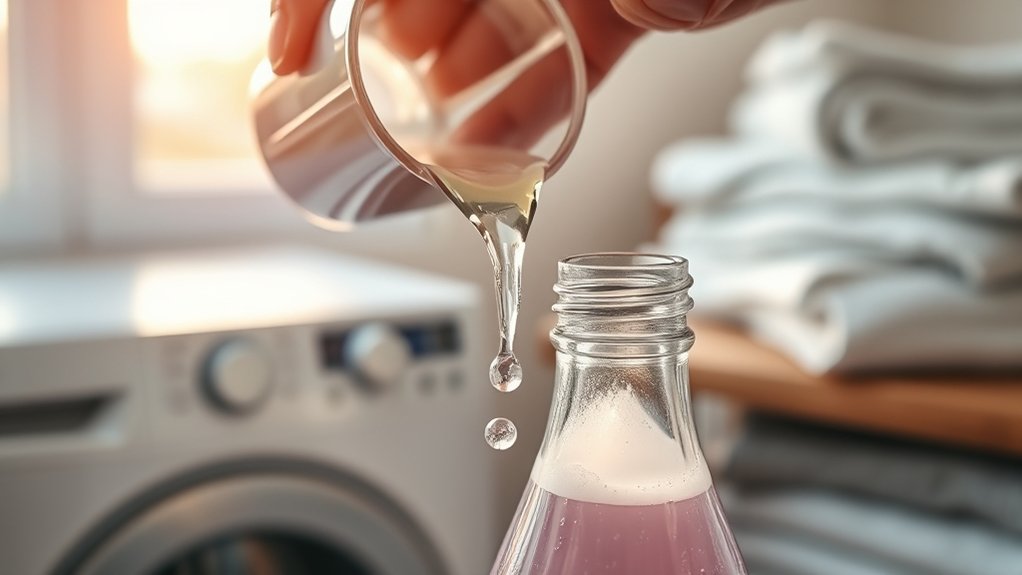
Although concentrated laundry detergent contains a higher ratio of active ingredients than standard formulas, it requires you to use less detergent per load while maintaining cleaning effectiveness.
Concentrated laundry detergent leverages a dense mix of surfactants and enzymes, active cleaning ingredients that break down stains, dirt, and odors efficiently.
Concentrated detergents use powerful surfactants and enzymes to effectively eliminate stains, dirt, and odors.
This formulation guarantees effective cleaning with minimal dosing, maximizing performance in both high-efficiency and traditional washing machines, even at reduced water levels.
By using smaller quantities, you reduce packaging waste and minimize environmental impact, as less plastic and storage space are needed.
However, precise dosing is critical.
Overdosing can cause residue buildup, while underdosing compromises cleaning power.
Understanding how these components interact allows you to achieve peak performance, balancing sustainability with stain removal and fabric care.
How Concentrated Detergents Differ From Regular Laundry Detergents
Understanding how concentrated detergents operate sets the stage for comparing their composition and performance to regular laundry detergents. Concentrated detergent formulas boast a higher ratio of active cleaning ingredients, requiring less product per load.
They feature lower water content, resulting in smaller packaging that’s environmentally friendly. This streamlined formulation enhances stain removal and reduces chemical residues on fabrics, delivering superior cleaning power.
Regular detergents, by contrast, contain more water and dilute active ingredients, increasing product volume but lowering efficiency.
| Feature | Concentrated Detergent |
|---|---|
| Active Cleaning Ingredients | High ratio |
| Product Usage | Less product per load |
| Packaging Size | Smaller, reduces waste |
| Chemical Residues | Minimal, gentler on fabrics |
| Stain Removal | Efficient in cold and hot water |
You’ll find concentrated detergents more cost-effective and eco-conscious compared to regular detergents.
Key Ingredients in Concentrated Laundry Detergents

Because concentrated laundry detergents rely on enhanced cleaning power, their formulations include specific key ingredients that target various types of stains and fabric conditions.
You’ll find surfactants as the primary agents; they lift dirt and grease from fibers, ensuring efficient soil removal.
Enzymes complement surfactants by breaking down protein-based stains like food or sweat, increasing effectiveness on tough stains.
Builders such as phosphates or citrates soften water, optimizing surfactants’ performance across different water conditions.
Many concentrated detergents incorporate biodegradable components to minimize environmental impact and prevent harmful residues.
For sensitive skin, hypoallergenic, dye-free formulations often replace fragrances, maintaining cleaning power without irritation risks.
Understanding these ingredients helps you select a detergent that balances efficacy, environmental responsibility, and skin compatibility.
Benefits of Using Concentrated Laundry Detergent for Your Clothes and Home
When you choose concentrated laundry detergent, you benefit from its superior cleaning power that removes stains effectively with smaller doses per load.
Concentrated detergents deliver effective stain removal through a higher concentration of active ingredients, ensuring fresher, cleaner clothes with less residue on clothes, which reduces skin irritation risks.
Higher active ingredient levels in concentrated detergents mean cleaner clothes with less residue and reduced skin irritation risks.
Their cost-effective nature stems from lasting longer despite higher upfront costs, lowering overall expenses.
Compact packaging supports sustainable practices by minimizing plastic waste and transport emissions, contributing to a reduced environmental impact and lower carbon footprint.
Furthermore, these detergents enhance energy efficiency by performing well in cold water, cutting energy use related to heating.
Proper Use and Measurement of Concentrated Detergent

You should measure concentrated detergent precisely using the manufacturer’s dosing tools. This helps avoid excess residue and ensures your clothes get the best clean.
Also, using cold or lukewarm water helps the detergent dissolve better. That means you save energy without losing any cleaning power.
It’s a good idea to adjust the amount of detergent based on how big your load is and how hard your water is.
Doing this not only boosts cleaning efficiency but also takes good care of your fabrics while conserving resources.
Accurate Dosage Techniques
Although concentrated laundry detergents offer powerful cleaning in smaller quantities, achieving accurate dosage is essential to avoid residue buildup and guarantee ideal fabric care.
To ensure peak cleaning, follow these steps for accurate dosing:
- Use the manufacturer’s recommended amount as your baseline. Employ the provided measuring tools for precision.
- Adjust the detergent volume according to load size; smaller loads need less, while heavily soiled or large loads require the full dose.
- When shifting to concentrated detergent, start with the smallest recommended dose. Then, adjust gradually based on washing performance and absence of detergent residues.
- Regularly inspect clothes for detergent residues post-wash to confirm you’re using the correct amount. This helps prevent over- or under-sudsing.
Applying these techniques helps you maintain fabric integrity and maximizes detergent efficiency.
Energy-Saving Washing Practices
Since concentrated laundry detergents deliver effective cleaning at lower volumes, using them properly in cold or lukewarm water greatly reduces energy consumption by eliminating the need for hot water cycles.
You should practice accurate measurement with specially designed caps or markings to prevent overuse, which guarantees ideal sudsing and maximizes cleaning efficiency.
This precision reduces detergent residue, leading to fewer rinse cycles and further energy savings.
Incorporate energy-saving habits like washing full loads and selecting shorter wash cycles to enhance resource conservation.
Proper dosing tailored to load size and water hardness leverages the high-efficiency properties of concentrated detergent, minimizing mechanical wear on your machine.
These environmentally friendly practices collectively reduce your ecological footprint while maintaining superior cleaning performance.
Environmental Advantages of Concentrated Laundry Detergent
You’ll reduce plastic waste by choosing concentrated laundry detergent because its packaging is much more compact and uses a lot less material.
Plus, it helps lower water consumption—not just when you’re washing your clothes but also during the manufacturing process. This is great for conserving a resource we all rely on.
All in all, these efficiencies make concentrated detergents a smart and practical choice if you want to minimize your environmental impact.
Reduced Plastic Waste
When you choose concentrated laundry detergent, you directly reduce plastic waste by cutting packaging size nearly in half compared to traditional detergents. This reduction in packaging means a smaller environmental footprint.
Here’s how concentrated detergent helps reduce plastic waste:
- Packaging size drops by up to 50%, which minimizes plastic production and disposal.
- Lighter, compact containers lower transportation emissions and conserve fuel.
- Eco-friendly detergent options use sustainable materials, cutting down harmful plastic pollution.
- Using concentrated formulas means less overall product consumption, which decreases landfill waste and supports a sustainable lifestyle.
Lower Water Consumption
Although traditional laundry detergents contain large amounts of water, concentrated formulations greatly reduce water consumption during both production and use. By using concentrated detergent, you reduce overall water usage considerably.
This formulation minimizes excessive rinsing, helping you conserve water without compromising effective cleaning. Furthermore, concentrated detergents enable efficient cleaning in cold water, which reduces energy usage by lowering water heating demands.
| Benefit | Impact |
|---|---|
| Lower water consumption | Up to 30% reduction vs. traditional detergent |
| Compact packaging | Less plastic waste, promotes sustainable laundry practices |
| Minimizes rinsing | Conserves water during washing cycles |
Adopting concentrated detergent supports sustainable laundry practices by conserving water resources and reducing environmental impact.
How to Choose the Right Concentrated Laundry Detergent for You
How do you determine which concentrated laundry detergent fits your needs best? Focus on these key factors to optimize cleaning power and fabric care:
1. Choose a biodegradable, environmentally conscious formula with certifications like EcoCert or Green Seal.
These guarantees help ensure safety and sustainability.
2. Evaluate stain-fighting properties for heavily soiled loads.
Or, if you have sensitive skin, select hypoallergenic options.
3. Opt for compact packaging to reduce plastic waste and support eco-friendly practices.
4. Use the correct dosage based on your water hardness and laundry load size.
Start with the smallest recommended amount and adjust as needed.
Tips for Successfully Transitioning to Concentrated Laundry Detergent
Selecting the right concentrated laundry detergent sets the foundation for effective cleaning and fabric care, but modifying your laundry routine guarantees you maximize its benefits. Start with the smallest recommended dose to assess effectiveness based on water hardness.
Use provided measuring tools precisely to avoid detergent residues and reduce waste. Adjust dosage incrementally for ideal cleaning and monitor fabric condition.
Shifting may require lowering wash temperatures, promoting energy savings and fabric longevity. Prioritize products with eco-friendly certifications to align with sustainable practices.
| Step | Action | Benefit |
|---|---|---|
| 1 | Start with minimal dosage | Assess water hardness |
| 2 | Use measuring tools accurately | Prevent detergent residues |
| 3 | Adjust dosage gradually | Achieve ideal cleaning |
| 4 | Lower wash temperature | Energy savings |
| 5 | Check eco-friendly certifications | Support sustainability |
Frequently Asked Questions
Can Concentrated Detergents Be Used in All Washing Machine Types?
Yes, you can use concentrated detergents in all washing machine types, including front-load, top-load, and high-efficiency (HE) machines.
Just make sure you follow the manufacturer’s dosage instructions carefully to avoid over-sudsing. Over-sudsing can harm your machine and reduce cleaning efficiency.
Concentrated formulas dissolve well in all water temperatures, ensuring peak performance regardless of your machine or cycle choice.
They also support energy savings and reduce environmental impact.
Are Concentrated Laundry Detergents Safe for Sensitive Skin?
Concentrated laundry detergents can be gentle whispers on your skin rather than harsh storms. They’re often formulated with fewer fillers and hypoallergenic ingredients, reducing irritation risks.
You’ll want to choose “free and clear” versions to avoid dyes and fragrances that trigger sensitivities. Start with a small dose to monitor your skin’s reaction.
Their streamlined composition leaves less residue, scientifically minimizing allergic responses and ensuring safer, effective cleaning for sensitive skin.
How Should Concentrated Detergent Be Stored to Maintain Effectiveness?
You should store concentrated detergent in a cool, dry place, away from direct sunlight and heat sources to prevent chemical degradation.
Always secure the cap tightly after each use to minimize exposure to air and moisture, which can reduce potency.
Keep it out of reach of children and pets for safety.
Use the detergent within the recommended timeframe on the label, as prolonged storage decreases cleaning effectiveness.
Can Concentrated Detergents Be Used for Hand Washing Clothes?
Yes, you can use concentrated detergents for hand washing clothes. You’ll need to dilute about one tablespoon in a sink full of water to guarantee effective cleaning without leaving residue.
These detergents dissolve rapidly in both cold and warm water, efficiently targeting stains and odors.
Make sure you follow the manufacturer’s dilution guidelines to avoid fabric damage and optimize cleaning performance while minimizing water and detergent use.
Do Concentrated Detergents Have an Expiration Date?
You won’t find a glaring expiration date screaming at you from concentrated detergent bottles. They don’t come with one.
However, you should ideally use them within 1 to 2 years for peak performance, as their active ingredients slowly degrade.
Store them cool and dry to preserve efficacy.
If you notice changes in smell or texture, it’s a sign the detergent’s cleaning power has diminished, so it’s time to replace it.
Conclusion
Choosing concentrated laundry detergent lets you leverage its lightweight, lasting, and labor-saving qualities. By measuring meticulously and mastering its method, you minimize waste while maximizing wash power.
Concentrated formulas cut carbon footprints and clutter, offering cleaner clothes with less environmental cost. Shift thoughtfully, tailoring your technique to detergent type, and you’ll transform your laundry routine into a streamlined, sustainable system that supports both your wardrobe and the wider world.