Can You Mix Bleach And Hydrogen Peroxide For Laundry – Tips
You shouldn’t mix bleach and hydrogen peroxide for laundry because their reaction produces toxic chlorine gas. This gas can cause severe respiratory issues and damage your fabrics.
If mixed accidentally, evacuate the area, ventilate well, and seek medical advice if symptoms appear. Use 3% hydrogen peroxide safely by applying it alone in a well-ventilated space and wearing gloves.
Consider alternatives like sodium percarbonate for gradual stain removal without hazard. Understanding these precautions guarantees safer, more effective laundry care and stain treatment techniques.
Key Takeaways
- Never mix bleach and hydrogen peroxide as it produces toxic chlorine gas, posing severe respiratory and eye irritation risks.
- Use 3% hydrogen peroxide alone for stain removal, stored in its original brown bottle and applied in a well-ventilated area with gloves.
- Alternatives like sodium percarbonate and natural stain removers (baking soda, lemon juice, vinegar) offer safer, eco-friendly cleaning options.
- Enzyme-based and oxygen-based cleaners are effective, fabric-safe, and environmentally friendly alternatives that avoid hazardous chemical reactions.
- If accidental mixing occurs, evacuate immediately, ventilate the area, rinse exposed skin or eyes, and seek medical help if symptoms persist.
Why You Should Never Mix Bleach and Hydrogen Peroxide
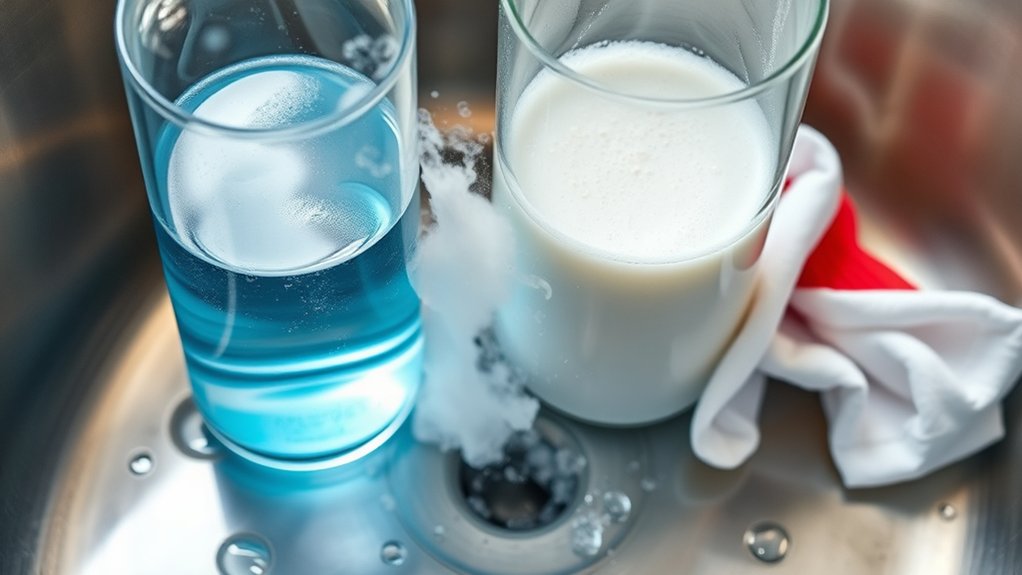
Although both bleach and hydrogen peroxide are effective disinfectants, you should never mix them because doing so produces toxic chlorine gas. When bleach and hydrogen peroxide combine, a chemical reaction releases chlorine gas, evidenced by bubbling and a sharp chlorine odor.
This gas poses severe respiratory risks, causing burning eyes, throat irritation, coughing, and difficulty breathing, especially in enclosed spaces like bathrooms or kitchens.
To guarantee safety, avoid simultaneous use of bleach and hydrogen peroxide. Instead, apply one product, let it dry completely, and then use the other.
Understanding the chemical incompatibility between bleach and hydrogen peroxide is critical to prevent hazardous exposure. Proper handling and separation of these agents maintain their disinfectant efficacy without risking toxic gas generation or harmful health effects.
What Happens When Bleach and Peroxide Mix?
When you mix bleach and hydrogen peroxide, they react instantly to produce chlorine gas, a highly toxic substance. This rapid chemical reaction releases visible bubbling and emits a strong chlorine odor, signaling the formation of hazardous gases.
Chlorine gas results from the oxidative interaction between sodium hypochlorite in bleach and hydrogen peroxide, creating an unstable environment. If you mix bleach and hydrogen peroxide, you generate this harmful gas that can accumulate quickly, especially in enclosed spaces.
Mixing bleach and hydrogen peroxide produces toxic chlorine gas that builds up rapidly, especially in enclosed spaces.
The reaction compromises safety and cleaning efficacy, producing byproducts that are incompatible with standard laundry processes.
Understanding this reaction helps you avoid dangerous exposure and guarantees you use each chemical separately or with compatible agents, maintaining safe, effective cleaning without risking chlorine gas release.
Health Risks of Mixing Bleach and Hydrogen Peroxide
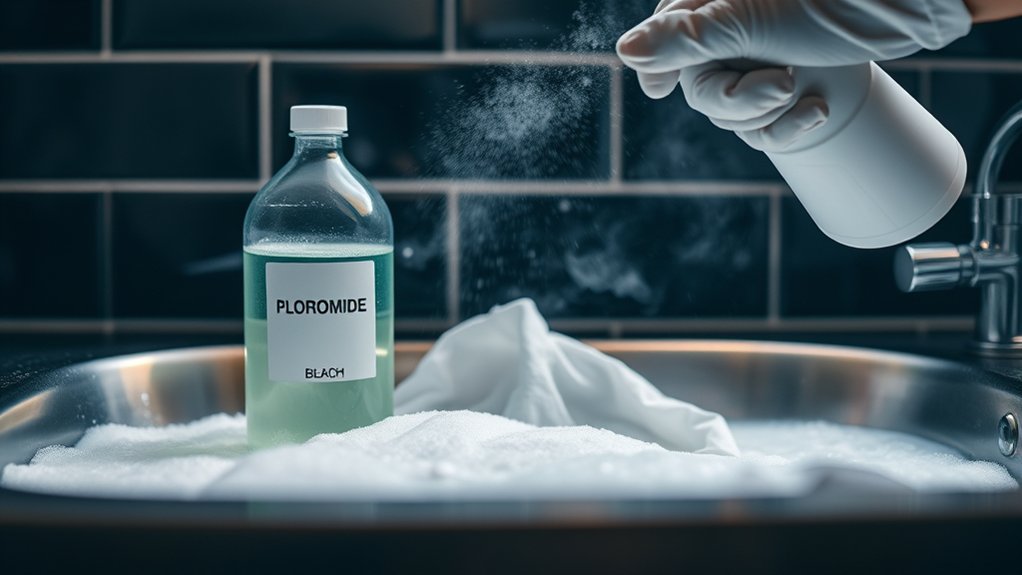
When you mix bleach and hydrogen peroxide, a rapid oxidation-reduction reaction happens, producing toxic chlorine gas.
This gas is really dangerous for your lungs—it can cause irritation, coughing, and make it hard to breathe.
Toxic Gas Formation
Because mixing bleach and hydrogen peroxide triggers a rapid oxidation-reduction reaction, you release toxic chlorine gas (Cl2) alongside oxygen gas. This toxic gas formation produces visible bubbling and a sharp chlorine odor, signaling immediate danger.
Without proper ventilation, chlorine gas accumulation intensifies health risks, especially in confined spaces. You must evacuate and ventilate areas promptly to minimize exposure.
| Aspect | Details |
|---|---|
| Reaction Type | Oxidation-reduction |
| Gases Released | Chlorine (Cl2), Oxygen (O2) |
| Hazard Indicators | Bubbling, Chlorine odor |
| Risk Environment | Enclosed spaces, poor ventilation |
| Safety Measures | Immediate evacuation, proper ventilation |
Respiratory Health Hazards
Though you mightn’t immediately notice, inhaling chlorine gas produced by mixing bleach and hydrogen peroxide poses serious respiratory health hazards. This toxic gas causes severe irritation to the respiratory tract, including coughing, throat irritation, and difficulty breathing.
In enclosed spaces with limited ventilation, chlorine gas concentration rises rapidly, escalating the risk of acute respiratory distress and long-term complications. Immediate symptoms often include burning eyes, shortness of breath, and throat discomfort, signaling the need for urgent evacuation and fresh air exposure.
The rapid chemical reaction generates visible fizzing and bubbling, indicating chlorine gas release.
To mitigate these respiratory health hazards, you must strictly avoid combining these chemicals and guarantee proper ventilation when using cleaning agents, thereby preventing inhalation of harmful chlorine gas.
What to Do If You Accidentally Mix Bleach and Hydrogen Peroxide
If you accidentally mix bleach and hydrogen peroxide, evacuate the area immediately to avoid inhaling toxic chlorine gas. Open windows to increase ventilation.
This reaction often happens if both agents enter the bleach compartment at the same time. It releases chlorine gas, which you’ll notice by bubbling and a strong odor.
Exposure symptoms include coughing, difficulty breathing, and eye or throat irritation. If you experience any of these, contact Poison Control.
For skin or eye contact, rinse thoroughly with water. Seek medical care if irritation continues.
| Step | Action | Purpose |
|---|---|---|
| 1 | Evacuate area | Avoid chlorine gas inhalation |
| 2 | Open windows | Increase ventilation |
| 3 | Rinse affected skin/eyes | Remove chemical residues |
| 4 | Monitor symptoms | Detect chlorine gas exposure |
| 5 | Contact Poison Control/doctor | Obtain medical guidance |
How to Use Hydrogen Peroxide Safely in Laundry
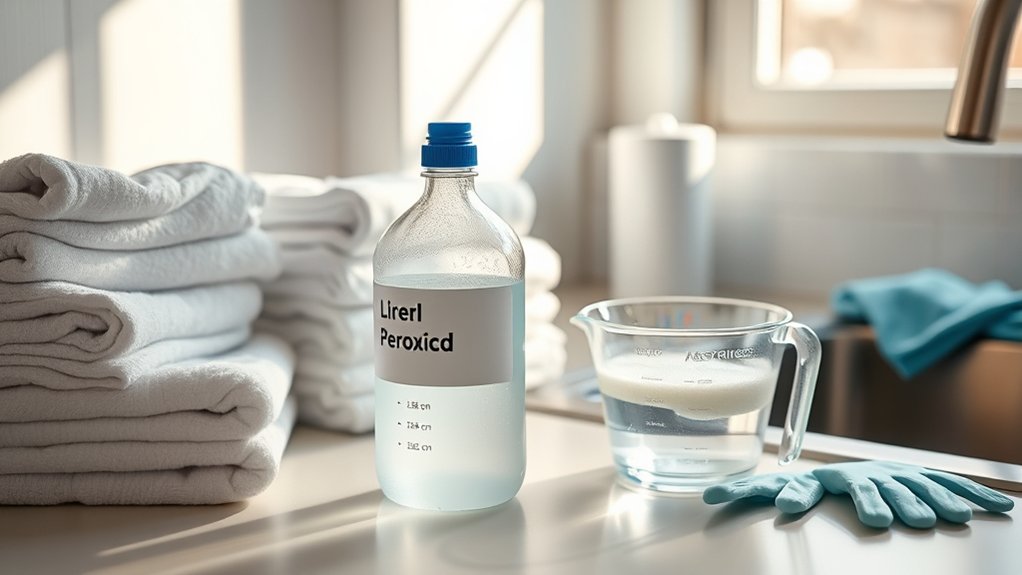
When using hydrogen peroxide in your laundry, always separate it from bleach to prevent the formation of toxic chlorine gas.
Use 3% hydrogen peroxide as an effective stain remover by applying it directly onto organic stains like blood or coffee before washing.
For whitening, add one cup of 3% hydrogen peroxide to the bleach compartment or soak whites in cold water with it.
Store hydrogen peroxide in its original brown bottle to protect it from light degradation and maintain potency.
Avoid mixing it with ammonia or vinegar to prevent hazardous reactions.
Wear gloves to minimize skin irritation and make sure the area is well-ventilated during use.
Comparing Hydrogen Peroxide and Bleach for Laundry Whitening
Because hydrogen peroxide breaks down into water and oxygen, it offers a safer and more environmentally friendly option for laundry whitening compared to bleach. When you use hydrogen peroxide, you avoid the harmful chlorinated byproducts associated with chlorine bleach, reducing health and environmental risks.
Hydrogen peroxide effectively targets stains like blood and coffee, while chlorine bleach primarily whitens whites and risks discoloring colored fabrics. Additionally, hydrogen peroxide is gentler on fabrics and less likely to cause skin or respiratory irritation.
For enhanced whitening, adding 1 cup of 3% hydrogen peroxide during laundry is effective and safer than handling corrosive chlorine bleach.
To conclude, hydrogen peroxide provides a technically superior, safer alternative for laundry whitening, balancing efficacy with reduced fabric damage and environmental impact.
Using Sodium Percarbonate Instead of Liquid Hydrogen Peroxide
Although liquid hydrogen peroxide is widely used for laundry whitening, sodium percarbonate offers a practical and efficient alternative. It releases hydrogen peroxide upon dissolving in water.
When you use sodium percarbonate, you leverage a compound that not only brightens fabrics but also deodorizes and removes stubborn stains effectively. It activates at lower temperatures, making it energy efficient for cold water loads.
Moreover, sodium percarbonate is environmentally friendly, breaking down into harmless substances.
Consider these advantages of sodium percarbonate over liquid hydrogen peroxide:
- Releases hydrogen peroxide gradually for sustained whitening
- Functions effectively in cold water, conserving energy
- Decomposes into water, oxygen, and soda ash, minimizing environmental impact
Avoid mixing sodium percarbonate with acids to maintain safety and efficacy during laundry.
Tips to Boost Laundry Cleaning Without Mixing Chemicals
To enhance your laundry’s cleaning power without risking hazardous chemical reactions, focus on using individual agents like hydrogen peroxide and oxygen-based boosters separately but strategically. Apply 3% hydrogen peroxide directly on tough stains before washing, or add 1 cup to the bleach compartment for whitening.
Use oxygen-based boosters alongside your laundry detergent to tackle odors and stains safely. Soaking whites in a cold water and hydrogen peroxide mix further boosts stain removal.
| Method | Application Detail |
|---|---|
| Spot Treatment | 3% hydrogen peroxide on stains |
| Whitening | 1 cup hydrogen peroxide in bleach compartment |
| Odor & Stain Removal | Oxygen-based booster + detergent |
| Soaking | Whites in cold water + hydrogen peroxide |
Use these tactics separately to optimize cleaning without chemical hazards.
Alternatives to Bleach and Hydrogen Peroxide for Tough Stains
You can tackle tough stains effectively by using natural stain removers like baking soda, lemon juice, and white vinegar. These work because they offer specific chemical actions, such as abrasion and mild acidity, which help lift the stains.
Another great option is enzyme-based alternatives. They specifically target protein-based stains by breaking down the organic matter right at the molecular level, making those stubborn spots easier to remove.
Plus, oxygen-based agents like sodium percarbonate are worth considering. They provide a safer oxidative bleaching process that not only helps remove stains but also preserves the fabric’s integrity.
Natural Stain Removers
When tackling tough stains without relying on bleach or hydrogen peroxide, you can turn to several natural alternatives. These combine chemical effectiveness with gentler ingredients. They work well on organic stains and provide a safer, eco-friendly approach to stain removal.
Baking Soda: Creates a mildly abrasive paste that lifts grease and coffee stains by breaking down organic compounds without harsh chemicals.
White Vinegar: Its acetic acid content penetrates and dissolves stain molecules, neutralizing odors and loosening residues.
Lemon Juice: The citric acid acts as a natural bleaching agent, brightening fabrics and weakening organic stains for easier removal.
Using these natural agents lets you avoid the risks of mixing hydrogen peroxide with bleach while still keeping your stain treatment effective.
Enzyme-Based Alternatives
Although bleach and hydrogen peroxide provide powerful stain removal, enzyme-based alternatives offer a targeted approach by breaking down specific molecules like proteins, starches, and fats.
Enzyme-based cleaners utilize protease for protein stains (e.g., blood), amylase for starch-based stains (e.g., food), and lipase for fats (e.g., grease).
These enzymes catalyze the breakdown of complex stain molecules into soluble fragments, enhancing removal efficiency. Compared to chlorine-based agents, enzyme-based products are safer, biodegradable, and gentler on most fabrics.
They perform best in warm water, which activates enzymatic reactions, while cold water may reduce their effectiveness.
However, you should always verify fabric care labels, as delicate materials may still be sensitive to enzyme action despite their generally milder profile.
This makes enzyme-based cleaners a technically sound alternative to harsher chemicals for tough stains.
Oxygen-Based Cleaning Agents
Since oxygen-based cleaning agents release hydrogen peroxide when they dissolve in water, they offer a powerful yet gentler alternative to traditional bleach for tackling tough stains.
These agents, like sodium percarbonate, break down into non-toxic byproducts, making them safer for you and the environment. Unlike chlorine bleach, they don’t emit harmful fumes and are safe on colored and delicate fabrics.
Consider these advantages of oxygen-based cleaning agents:
- Effectively remove organic stains like blood, wine, and food residues without damaging fabric
- Biodegradable composition guarantees eco-friendly cleaning
- Compatible with natural cleaning agents, boosting stain removal without chemical risks
What to Do If Hydrogen Peroxide Gets on Your Clothes
How should you respond if hydrogen peroxide accidentally contacts your clothing? Immediately rinse the affected area with cold water to prevent discoloration or fabric damage.
Next, blot the spot with a clean towel to absorb excess liquid and minimize the risk of staining. Then, wash the garment as usual, but avoid hot water since it can set any remaining discoloration.
If discoloration persists, just repeat rinsing and washing. It’s always a good idea to test hydrogen peroxide on a hidden area of fabric first to see how it reacts.
| Step | Action | Purpose |
|---|---|---|
| 1 | Rinse with cold water | Prevent discoloration |
| 2 | Blot with clean towel | Absorb excess hydrogen peroxide |
| 3 | Wash normally (no hot water) | Remove residue without setting |
| 4 | Inspect for discoloration | Assess stain removal |
| 5 | Repeat if necessary | Guarantee complete stain removal |
Frequently Asked Questions
Can Hydrogen Peroxide Damage Colored Fabrics?
Yes, hydrogen peroxide can damage colored fabrics by causing bleaching or discoloration. You should always dilute it and test on a hidden area first, especially with darker or vibrant colors.
Higher concentrations or prolonged exposure increase the risk.
Synthetic materials are more vulnerable to damage, so proceed cautiously. Using hydrogen peroxide improperly can weaken fabric fibers or alter colors.
Precise application and concentration control are essential to avoid unwanted damage.
How Long Should Hydrogen Peroxide Sit on Stains?
You should let hydrogen peroxide sit on stains for about 30 minutes to 1 hour to enhance its effectiveness.
For tougher stains like blood or coffee, soaking the fabric overnight in a diluted solution improves results.
Always avoid hot water when rinsing afterward, as it can set stains.
Testing a small area first helps prevent discoloration, especially on colored fabrics.
This method guarantees peak stain removal without damaging your garment.
Is Hydrogen Peroxide Safe for Septic Systems?
Yes, hydrogen peroxide is safe for septic systems when used in concentrations of 3% or lower. It breaks down into water and oxygen, avoiding damage to beneficial bacteria critical for waste breakdown.
Unlike bleach, it doesn’t disrupt microbial activity, so it helps preserve septic function.
You should use it moderately to prevent chemical buildup, ensuring effective odor control and cleaning without compromising your system’s efficiency or health over time.
Can You Store Hydrogen Peroxide With Other Laundry Products?
You shouldn’t store hydrogen peroxide with other laundry products, especially bleach or ammonia. This is because mixing them can cause hazardous chemical reactions that produce toxic gases.
Keep hydrogen peroxide in its original opaque container, and make sure it’s stored away from light, heat, and moisture. This helps preserve its stability.
Also, organize and label your storage area clearly. That way, you can prevent accidental mixing or misuse.
Proper segregation guarantees safety and keeps hydrogen peroxide effective for your laundry needs.
What Concentration of Hydrogen Peroxide Is Best for Laundry?
You should use 3% hydrogen peroxide for laundry, as it effectively removes stains and disinfects without harming fabrics.
Higher concentrations, like 35%, demand careful dilution and handling to prevent damage.
Using sodium percarbonate is another option for tough stains.
Always test hydrogen peroxide on a small fabric area first to avoid discoloration.
This concentration balances efficacy and safety, making it ideal for routine laundry applications.
Conclusion
Mixing bleach and hydrogen peroxide is like igniting a volatile chemical storm. Dangerous fumes and harmful reactions erupt, risking your health and damaging fabrics.
Instead, picture your laundry as a delicate ecosystem. Treat each chemical with care and precision. Use hydrogen peroxide separately or opt for safer alternatives like sodium percarbonate.
By understanding these reactions and handling chemicals responsibly, you’ll protect your clothes, your space, and your well-being. This way, you get clean results without hazardous surprises.