How To Whiten Laundry – Step-by-Step Guide
To whiten your laundry, start by sorting whites from colors and checking care labels. Pretreat stains with cool water, baking soda paste, or hydrogen peroxide for tough spots. Use detergents with optical brighteners and add oxygen bleach for extra brightness.
Wash whites in hot water on suitable cycles, then dry them outside or on low heat to protect fabrics. Avoid fabric softeners to prevent yellowing. Following these steps keeps whites bright and fresh. Explore more tips to maintain their brilliance longer.
Key Takeaways
- Separate white clothes from colors and sort by soil level before washing to prevent dye transfer and maintain brightness.
- Pretreat stains with baking soda paste or hydrogen peroxide, then rinse thoroughly to enhance stain removal.
- Use detergents with optical brighteners and oxygen bleach to boost whiteness without damaging fabrics.
- Wash whites in hot water for heavy soils or warm water for delicates, following care label instructions.
- Dry whites in direct sunlight or low heat to naturally brighten and protect fabric integrity while avoiding fabric softeners.
How to Sort Clothes for the Best Whitening Results
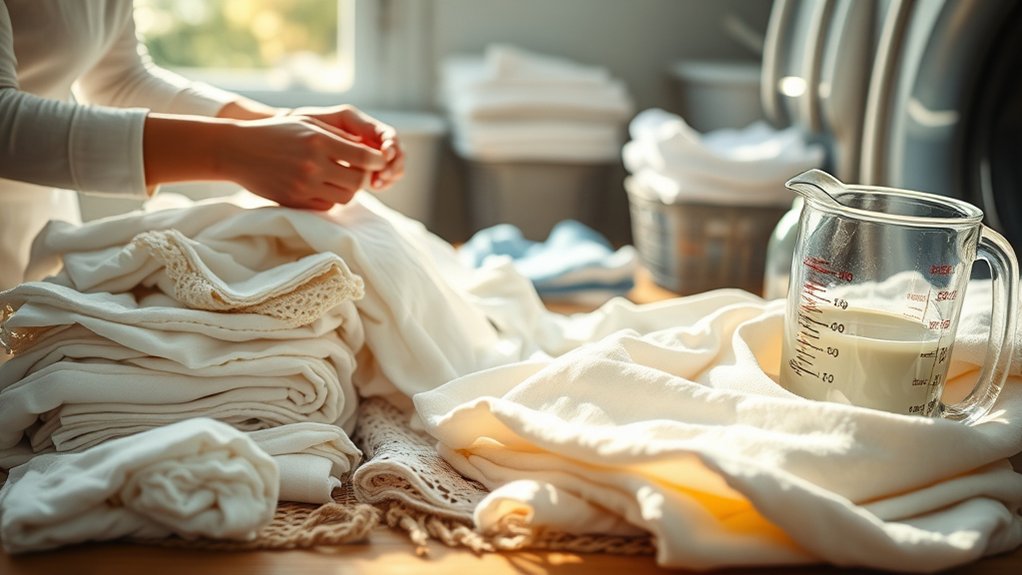
When you want to keep your whites bright, start by sorting clothes carefully. Always separate white clothes from colored items to avoid dye transfer, which can dull whites.
Next, check care labels to understand specific washing instructions, as delicate fabrics may need gentle cycles or lower temperatures.
Sort your whites into heavily soiled, lightly soiled, and delicate fabrics groups to apply the right washing method for each.
Before washing, pre-treat stains using a stain remover or a baking soda paste to boost stain removal.
Regularly washing white items together helps maintain brightness and prevents detergent residue buildup, which can cause yellowing.
Following these steps guarantees your whites stay fresh, clean, and brilliantly bright over time.
How to Pretreat Stains on White Laundry
Although pretreating stains on white laundry may seem time-consuming, it’s crucial for keeping your clothes bright and spotless. Proper pretreatment prevents stains from setting and preserves fabric care.
Pretreating stains is essential for maintaining bright, spotless whites and protecting fabric integrity.
Follow these steps for effective stain removal:
- Immediately flush the stain with cool water from the inside out to prevent setting.
- Check the fabric care label before applying any stain remover or liquid detergent directly on the stain; let it soak for 10 minutes.
- For tough stains, apply a baking soda paste and let it sit for at least 30 minutes before rinsing.
- Use 3% hydrogen peroxide on protein-based stains like blood; dab, wait 5 minutes, then rinse thoroughly.
This targeted approach guarantees your white laundry stays fresh and stain-free.
How to Pick the Best Detergent and Whitening Agents
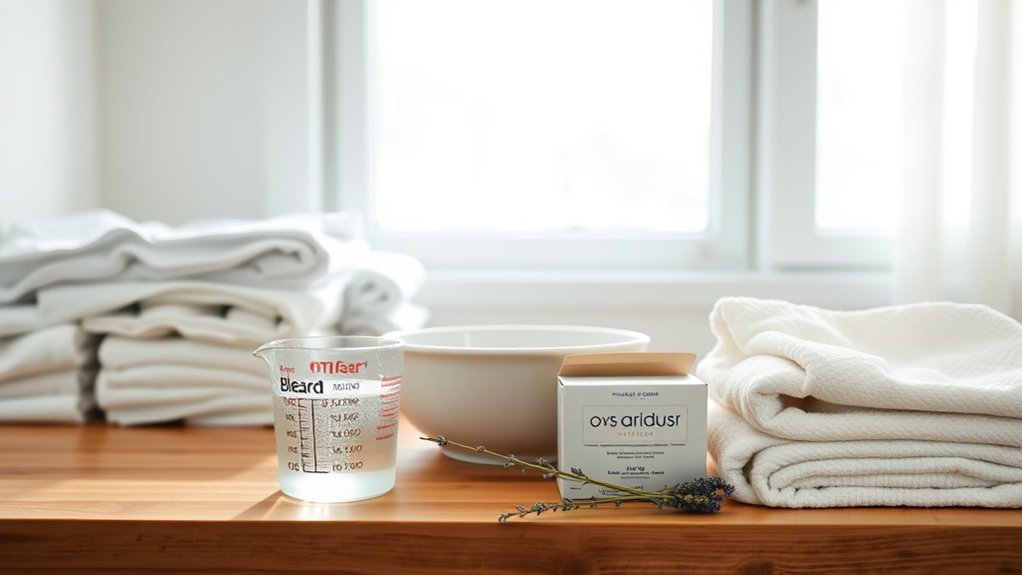
Because the right detergent and whitening agents can make all the difference, you’ll want to choose products designed specifically for white laundry. Look for detergents with optical brighteners. They enhance brightness and counteract yellowing.
Enzyme-based detergents work well to break down protein stains, keeping whites clean without harsh scrubbing. Pay attention to pH levels. A balanced pH lifts stains effectively while preserving fabric integrity, especially for delicate fabrics.
If you prefer safer, eco-friendly options, select biodegradable detergents that still deliver strong whitening results. Incorporate whitening agents like oxygen bleach, which boosts brightness without damaging fibers.
Avoid harsh chemicals, and save baking soda for later steps. Choosing the right combination guarantees your whites stay bright, stain-free, and long-lasting.
Using Baking Soda to Whiten Clothes
Adding baking soda to your laundry routine can greatly boost the whitening power of your detergent.
Baking soda is an effective method to whiten clothes without causing fabric damage. Here’s how to use it:
Baking soda safely whitens clothes while protecting fabric integrity—here’s the best way to use it.
- Add half a cup of baking soda to the washing cycle along with your regular detergent to enhance cleaning performance.
- For stubborn stains, make a paste of 1 tablespoon baking soda and 1 tablespoon water, then apply directly to the stain.
- Baking soda neutralizes odors, keeping your clothes fresh.
- Regular use helps maintain brightness and prevents yellowing over time.
How to Use Oxygen Bleach Without Damaging Clothes
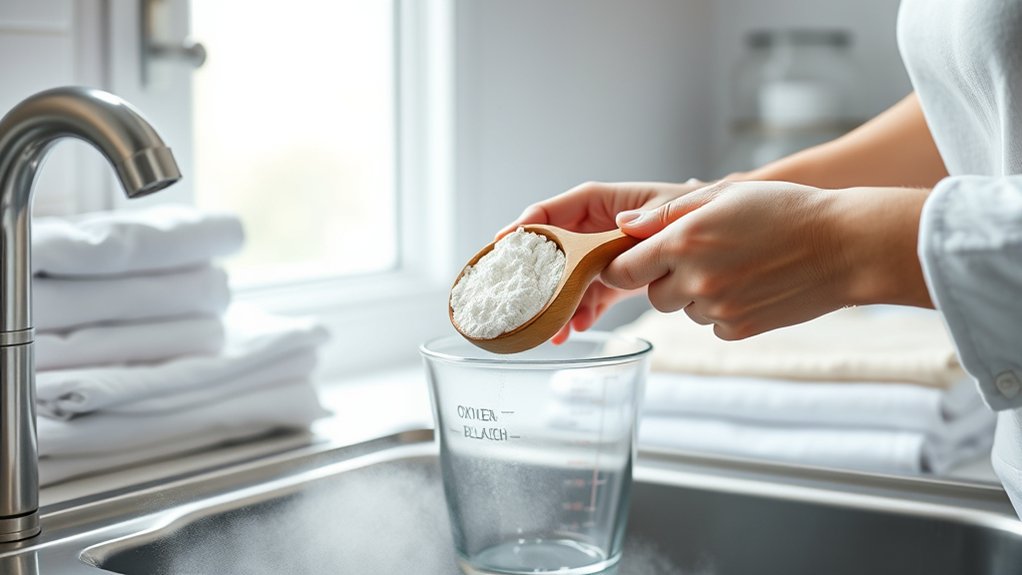
To use oxygen bleach safely, start by diluting it exactly as the package says. Don’t go over the recommended amounts—sticking to the instructions really helps keep your clothes safe.
It works best on fabrics like cotton and synthetics, so those are the ones you want to focus on.
But be careful with delicate materials like silk or wool—it’s best to avoid using oxygen bleach on those.
If you’re dealing with tough stains, try soaking your clothes in the solution for at least four hours.
Just don’t leave them in for too long, or you might end up damaging the fabric.
Proper Dilution Techniques
When you use oxygen bleach, following the correct dilution ratios is essential to protect your clothes while effectively removing stains. Proper dilution techniques prevent fabric damage and discoloration, especially on cotton and polyester. Here’s how to do it right:
- Always mix one cup of oxygen bleach with a gallon of warm water to guarantee effective stain removal without harming fabric.
- Pre-dissolve oxygen bleach in warm water before adding it to your laundry to avoid clumping and guarantee even distribution.
- Test fabric by applying the diluted solution to a small, hidden area to check for adverse reactions before full application.
- After washing, rinse thoroughly to remove any residue that could weaken fibers or cause discoloration.
Following these steps guarantees safety and efficiency when using oxygen bleach.
Suitable Fabric Types
Although oxygen bleach works well on many fabric types, you should always check care labels before use to avoid damaging delicate materials like silk or wool.
Oxygen bleach is safe for suitable fabric types such as cotton, polyester, and blends, making it a versatile choice compared to harsher options like chlorine bleach.
By following care labels carefully, you’ll protect delicate fabrics and maintain fabric integrity while whitening your laundry. Always dilute oxygen bleach according to instructions to prevent concentrated spots that might harm fibers.
Regular use helps maintain brightness without the risks associated with chlorine bleach’s harsh chemicals.
Safe Soaking Duration
If you want to brighten your white laundry without risking damage, soaking it in an oxygen bleach solution for at least four hours is key. For heavily soiled items or stubborn stains, an overnight soak works best.
Follow these steps to protect fabric integrity:
- Check care labels to verify compatibility with oxygen bleach.
- Mix 1 cup of oxygen bleach per gallon of water to prepare the soak.
- Soak the laundry for a minimum of four hours, extending to overnight if needed.
- Rinse thoroughly after soaking to remove bleach residue, then run a regular wash cycle using hot water and a high-quality detergent.
This method guarantees effective whitening while preserving your clothes’ quality.
Selecting the Right Wash Cycle and Water Temperature for Whites
Since fabric types vary widely, you’ll want to check care labels carefully before selecting your wash cycle and water temperature. Use hot water (130°F–140°F) for heavily soiled whites to maximize detergent effectiveness, but switch to cold or warm water (90°F–110°F) for delicate fabrics.
Always separate colors to prevent dye transfer and maintain brightness. Choose a wash cycle that matches fabric durability: gentle for delicates, regular for sturdy fabrics. Opt for high-quality detergent with optical brighteners to enhance whiteness during washing.
| Fabric Type | Wash Cycle | Water Temperature |
|---|---|---|
| Delicate Fabrics | Gentle | Cold/Warm (90°F-110°F) |
| Cotton/Heavy | Regular | Hot (130°F-140°F) |
| Mixed Whites | Normal | Warm (110°F) |
This approach keeps your whites bright and fabric longevity intact.
Best Drying Methods to Keep Whites Bright
Three key drying methods help keep your whites bright and fresh. To whiten clothes effectively and maintain brightness, follow these steps:
- Hang outside to dry whenever possible. UV rays act as a natural alternative to bleach by breaking down stains and helping brighten white fabrics.
- Dry whites separately from colored clothes to avoid any color transfer that could dull their brightness.
- If you use a dryer, select a low heat setting to protect fabric integrity and prevent shrinkage.
- Avoid fabric softeners, which can leave residues causing yellowing. Instead, try white vinegar as a natural alternative.
Always remove your whites promptly. Folding immediately preserves their shape and brightness.
These methods help you maintain brightness and keep your whites looking fresh longer.
Preventing Yellowing and Maintaining Bright Whites
If you want to keep your whites bright and avoid that annoying yellowing, try starting with a good pre-soak to loosen up any stains before you wash. It really helps!
And whenever you can, dry your clothes out in the sunlight. The UV rays work naturally to fight off discoloration, which is pretty handy.
Oh, and one more thing—skip the fabric softeners. They might make your clothes feel nice, but over time, they can build up and actually make your whites look dull.
Pre-Soaking Whites
Although pre-soaking might seem like an extra step, it plays an essential role in preventing yellowing and keeping your whites bright. Pre-soaking boosts cleaning performance by lifting dirt, neutralizing odors, and dissolving stains before laundry.
Follow these steps for effective pre-soaking:
- Fill a basin with warm water and add ½ cup baking soda to remove stains and neutralize odors.
- Mix in 1 cup distilled white vinegar to break down detergent buildup and restore brightness.
- For stubborn stains, include oxygen bleach to enhance stain removal while preserving fabric integrity.
- Soak for at least 30 minutes, then rinse thoroughly to eliminate residues and prevent discoloration.
Incorporate pre-soaking into your routine to maintain bright whites and extend your laundry’s freshness.
Sunlight Drying Benefits
When you dry your whites in direct sunlight, you harness the natural bleaching power of UV rays to break down stains and boost brightness without harsh chemicals. Sunlight helps reduce yellowing by counteracting detergent buildup and environmental dullness.
It also kills bacteria, keeping your white fabrics fresh while preserving fabric integrity. Drying clothes outside saves energy costs, making it eco-friendly and economical. However, be cautious with delicate fabrics; use shorter drying times to prevent fading or damage.
| Benefit | Practical Tip |
|---|---|
| Natural bleaching | Hang white fabrics in direct sun |
| Reduce yellowing | Sunlight counters detergent dullness |
| Preserve fabric | Limit sun exposure for delicate fabrics |
Avoiding Fabric Softeners
Sunlight helps brighten your whites naturally, but what you add during the wash cycle also affects their appearance.
Avoiding fabric softeners is key to preventing yellowing and maintaining brightness. Fabric softeners cause residue buildup on fibers, leading to a dull appearance and trapping dirt and detergent residues.
To keep whites vibrant, follow these steps:
- Skip fabric softeners to prevent dullness and preserve fabric integrity.
- Use white vinegar as a natural alternative to soften clothes without residue buildup.
- Regularly clean the washing machine to avoid transferring softener residues onto laundry.
- Never mix fabric softeners with bleach, as this can create harmful fumes and damage fabrics.
Frequently Asked Questions
Can Whitening Agents Damage Colored Fabrics?
Yes, whitening agents can damage colored fabrics. Chlorine bleach often causes fading or discoloration, so you should avoid it on non-white items.
Even hydrogen peroxide, if not diluted, can lighten colors unintentionally. Optical brighteners might also fade colors over time.
To protect your clothes, always test any whitening agent on a hidden spot first.
Safer alternatives like baking soda or vinegar usually won’t harm your colored fabrics.
How Often Should I Whiten My Laundry?
You should whiten your laundry about once every 3-4 washes to keep whites bright and fresh.
For heavily used items like towels or bed linens, whitening weekly helps prevent dullness.
Immediate stain treatment and adding baking soda or vinegar regularly can reduce how often you need whitening.
Seasonal whitening every few months also combats yellowing effectively.
This routine helps maintain your whites without overusing harsh chemicals.
Are There Natural Alternatives to Chemical Whiteners?
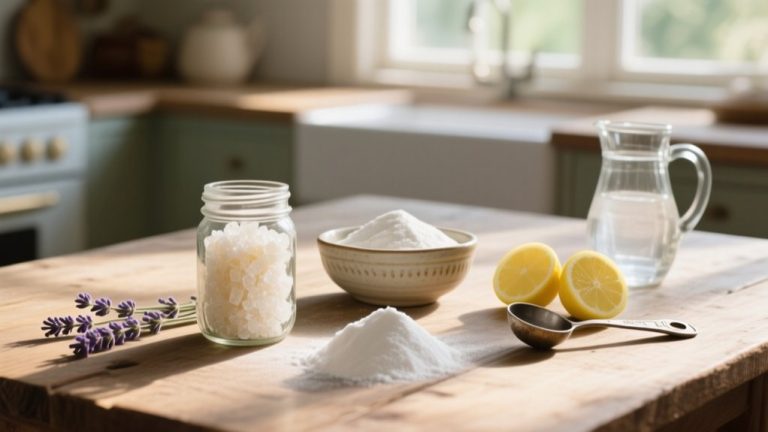
Yes, you can use natural alternatives like baking soda, white vinegar, and lemon juice.
Baking soda boosts whiteness and removes odors when added to your wash cycle.
White vinegar breaks down detergent buildup and softens fabric during the rinse.
Lemon juice works well as a mild whitener if you soak clothes and sun-dry them.
These options are gentle, effective, and avoid harsh chemicals, making your laundry routine safer and eco-friendly.
Can Whitening Products Cause Skin Irritation?
Whitening products can be a double-edged sword, like a bright flash that stings your skin. Yes, they can cause irritation, redness, or even allergic reactions, especially if you have sensitive skin.
You should always rinse clothes thoroughly to wash away leftover chemicals. If you have allergies or skin conditions, do a patch test first.
Taking these steps helps protect your skin while keeping your laundry bright and fresh.
What Should I Do if Whites Still Look Dingy After Washing?
If your whites still look dingy after washing, try soaking them in a baking soda solution overnight to lift stains.
Add oxygen bleach during the wash cycle for deeper cleaning without fabric damage.
Rinse with distilled white vinegar to remove buildup and brighten fabric.
Hang your clothes in direct sunlight to naturally whiten them.
For persistent yellowing, consider using a bluing agent to enhance brightness visually.
Conclusion
Just like restoring a vintage white shirt to its original glow, whitening your laundry takes care and the right steps. By sorting properly, pretreating stains, choosing effective detergents, and using gentle whitening agents like baking soda or oxygen bleach, you’ll keep your whites bright without damage.
Remember, the right wash cycle and drying method seal the deal. Stick with these tips, and your whites will shine as brilliantly as a classic Hollywood star.