How Much Powder Laundry Detergent To Use – Full Breakdown
You should use 1 to 2 tablespoons of powder detergent per load, adjusting for load size. Smaller loads need about 1 tablespoon, while extra-large loads may require up to 2.
Consider your machine type. Top-loaders and front-loaders both typically use 1-2 tablespoons, with HE washers needing careful dosing to avoid excess suds.
Also, increase detergent by 25-50% for hard water and reduce it for delicate fabrics. Proper dosing prevents residue and saves money.
For a full guide on optimizing detergent use, keep exploring these tips.
Key Takeaways
- Use 1 to 2 tablespoons of powder detergent per load, adjusting for load size and soil level for optimal cleaning.
- Top-loaders require detergent directly in the drum; front-loaders use the detergent drawer for accurate dosing.
- Increase detergent by 25-50% when washing with hard water to compensate for reduced cleaning efficiency.
- For heavily soiled or large loads, use up to 2 tablespoons; reduce to 1 tablespoon for delicate or lightly soiled fabrics.
- Avoid overuse to prevent residue buildup, fabric stiffness, and wasted detergent; always measure and follow machine compatibility guidelines.
Recommended Powder Detergent Amounts by Load Size
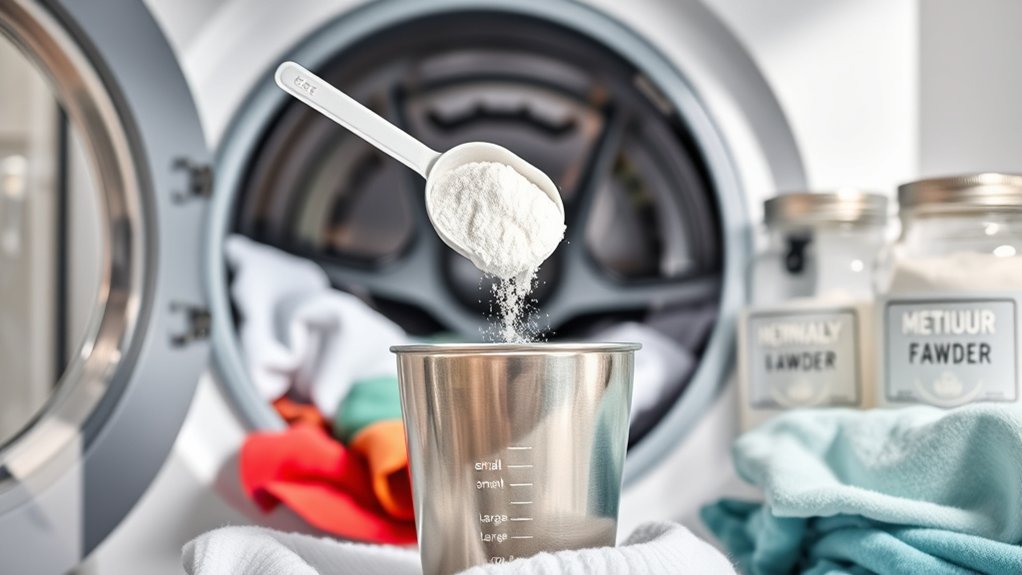
When measuring powder detergent, start by matching the amount to your load size for the best results.
For a small load, about one-third full, use roughly 1 tablespoon of powdered detergent to avoid excess residue while ensuring effective cleaning.
For small loads, use about 1 tablespoon of powdered detergent to clean effectively without residue.
Medium loads, filling half to two-thirds of the machine, also need 1 tablespoon for optimal efficiency.
When handling large loads, around three-quarters full, increase the amount to 1.5 tablespoons to accommodate the volume.
For extra-large loads, completely full machines, use up to 2 tablespoons of powdered detergent to guarantee thorough cleaning without over-sudsing.
Always adjust the amount based on the soil level of your laundry; heavily soiled items may require a bit more detergent to maintain cleaning effectiveness and achieve the best results.
Powder Detergent Dosage by Machine Type
When you’re using a top-loader, just add 1-2 tablespoons of powder detergent directly to the drum for regular loads.
If you’ve got bigger or dirtier loads, you can add a bit more.
For front-loaders, the detergent goes in the designated drawer, but you’ll follow pretty much the same dosage guidelines.
And when it comes to high-efficiency washers, they use less water, so it’s best to stick to 1-2 tablespoons.
This helps avoid too many suds and makes sure your clothes get properly cleaned.
Top Loader Measurements
Although top-loading machines vary in size, you should use 1 to 2 tablespoons of powder detergent for small to medium loads and up to 3 tablespoons for large or heavily soiled ones. Always add powder detergent directly into the washing machine drum to enhance effectiveness.
Adjust detergent dosage by increasing 25-50% if you have very hard water. Check fabric care labels to verify compatibility and avoid excess amounts that cause residue buildup. Regular drum cleaning helps maintain peak washing performance.
| Load Size | Detergent Amount |
|---|---|
| Small Load | 1 tablespoon |
| Medium Load | 1-2 tablespoons |
| Large Load | Up to 3 tablespoons |
| Hard Water | Increase dosage by 25-50% |
| Fabric Care Labels | Follow instructions |
Front Loader Dosage
Front loader machines require you to add powdered detergent to the designated drawer, using formulas specifically made for high-efficiency (HE) washers that use less water.
The recommended dosage for a regular load is 1-2 tablespoons of powdered detergent, adjusted based on load size and soil level.
For heavily soiled items, increase the dosage to 2-3 tablespoons to achieve ideal cleaning results.
Always check fabric care labels before washing, as delicate fabrics may need less detergent to prevent damage.
To guarantee effective cleaning and minimize residue, dissolve detergent in water before adding your clothes.
Following these guidelines will help you use the right amount of powdered detergent in your front loader machines, ensuring thorough cleaning while protecting your fabrics and the washer’s performance.
HE Washer Guidelines
High-Efficiency (HE) washers need careful dosing of powdered detergent to avoid over-sudsing and guarantee maximum cleaning.
When using powdered detergent in HE washers, always place it in the detergent drawer, not directly in the drum.
For small loads, use just 1 tablespoon of powdered detergent to assure effective cleaning without leaving residue.
Regular loads require 1 to 2 tablespoons, while large loads can use up to 3 tablespoons.
Extra-large loads may need as much as 4 tablespoons.
Remember to check the detergent packaging for specific dosage instructions since formulations vary by brand.
This practical approach helps you optimize detergent use and protect your machine.
For a detailed guide, see How Much Powder Laundry Detergent To Use – Full Breakdown, focusing on HE washers and appropriate tablespoons per load size.
Adjust Powder Detergent for Water Hardness
Since water hardness directly affects how well your detergent works, you’ll need to adjust the amount of powder detergent you use accordingly.
Soft water requires less detergent, so cutting back prevents excess suds and saves money.
Using less detergent with soft water avoids excess suds and helps you save money.
In contrast, hard water binds with detergent, reducing cleaning efficiency and often demanding a 25-50% increase in detergent dosage for ideal cleaning.
For moderately hard water, stick to the package’s recommended detergent use, but if your water is very hard, make necessary adjustments beyond those guidelines.
Testing water hardness with affordable strips from hardware stores helps you determine the right detergent dosage.
Adjust Powder Detergent for Fabric and Soil Level
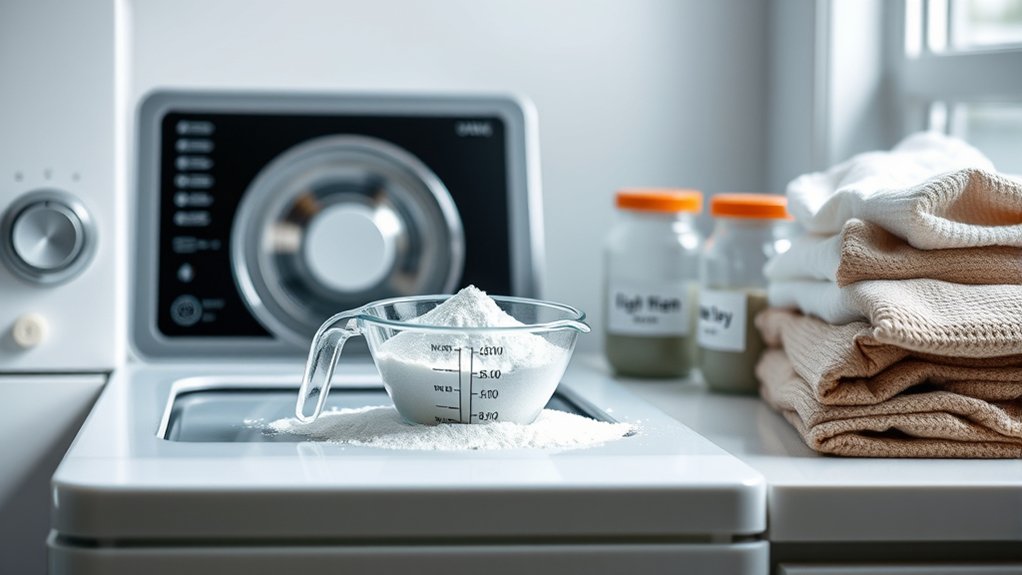
You’ll want to adjust your powder detergent depending on the fabric type and how dirty your clothes are to get the best results.
For example, heavily soiled items like jeans usually need more detergent.
On the other hand, delicate fabrics call for less detergent to avoid any damage.
Also, if you pretreat tough stains, you can cut down on the amount of detergent needed during the wash.
Fabric Type Considerations
Although it might seem simple to measure detergent, adjusting the amount based on your fabric type and soil level guarantees better cleaning and garment care.
For heavy fabrics like towels and jeans, use 1.5 to 2 tablespoons of powder detergent for effective cleaning.
Lighter fabrics such as shirts usually need only 1 tablespoon.
Delicate fabrics like silk and wool require a reduced detergent amount, about 1 tablespoon or less, to prevent damage and residue buildup.
Always check care labels, as certain detergent types and amounts suit specific materials better.
Using the right detergent amount for your fabric type and soil level not only ensures effective cleaning but also helps prolong garment life.
Avoid overusing detergent on delicate or lightly soiled items to protect fibers and maintain fabric quality.
Soil Level Impact
When fabrics carry heavy soil or stains, you’ll need to increase the amount of powder detergent to guarantee thorough cleaning. The soil level directly impacts detergent quantity. Heavily soiled items like jeans and towels typically require 1.5 to 2 tablespoons, while lightly soiled fabrics need about 1 tablespoon for effective cleaning.
Consider these points to optimize your cleaning results:
- Pre-treating stains with a small amount of powder detergent can reduce detergent needed during washing.
- In hard water areas, increase powder detergent by 25-50% to combat mineral buildup.
- Always follow fabric care labels to avoid damage and adjust detergent accordingly.
- For lightly soiled clothes, avoid excess detergent to prevent residue buildup and maintain fabric integrity.
Adjusting powder detergent based on soil level guarantees efficiency and fabric care.
Pretreatment Benefits
Increasing powder detergent based on soil level improves cleaning, but pretreating stains can boost results even more. When pretreating stains, you enhance cleaning effectiveness by applying powdered detergent directly, especially on heavily soiled fabrics.
Make sure to dissolve detergent completely in water to avoid residue and protect fabric integrity. For delicate fabrics, use less detergent to prevent damage. Adjust detergent quantity according to soil level for best stain removal efficiency.
| Soil Level | Detergent Amount | Application Method | Fabric Type | Notes |
|---|---|---|---|---|
| Light | Small | Diluted | Most fabrics | Minimal concentrated application |
| Moderate | Moderate | Direct pretreatment | Most fabrics | Effective stain targeting |
| Heavy | High | Concentrated application | Heavily soiled | Boosts stain removal |
| Delicate | Low | Gentle, diluted | Silk, wool | Maintains fabric integrity |
| All | Fully dissolved | Pre-soak or spot treat | All fabrics | Prevents residue buildup |
Using Concentrated Powder Detergents Effectively
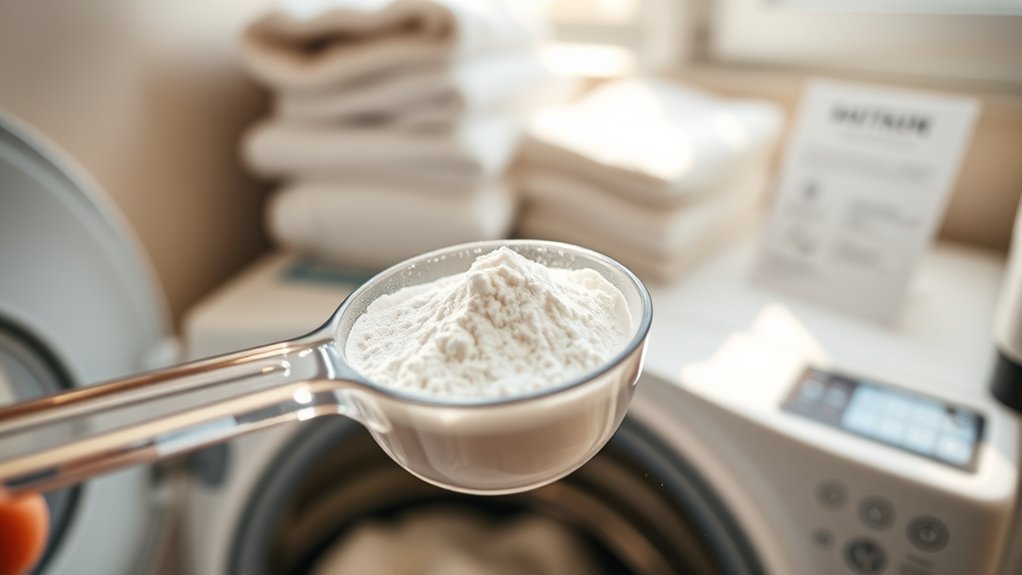
If you want to get the best results from concentrated powder detergents, you’ll need to use smaller amounts, typically just 1 to 2 tablespoons per standard load.
Using the correct amount of laundry detergent prevents over-sudsing and guarantees effective cleaning, especially on heavily soiled loads.
Hard water requires increasing the dosage by 25-50% to overcome mineral interference.
Always follow detergent dosage recommendations to avoid soap residue and stiff fabrics.
To use concentrated powder detergents effectively:
- Measure concentrated powder accurately with a scoop or spoon
- Adjust dosage for hard water conditions
- Use minimal amounts to prevent over-sudsing
- Target heavily soiled loads for maximum cleaning power
This approach helps you get ideal results without wasting detergent or compromising fabric quality.
Measuring Powder Detergent Accurately for Best Results
Three key factors help you measure powder detergent accurately for the best laundry results: using the provided scoop, adjusting for load size, and considering water hardness.
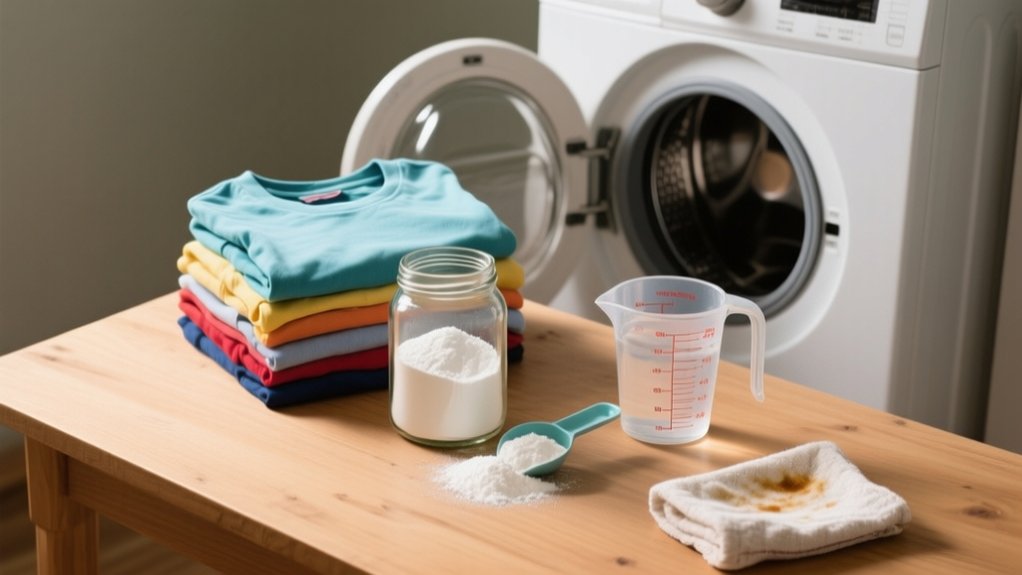
Always use the measuring scoop included with your detergent and fill it to the top for accurate dosing.
Use the provided scoop and fill it completely to ensure precise detergent measurement every time.
For a standard load in a top-loader, 1 to 2 tablespoons usually suffice, while heavily soiled loads may need up to 3 tablespoons.
In high-efficiency washers, limit detergent to 1 to 2 tablespoons to avoid excessive suds.
Don’t forget to adjust your detergent by 25-50% if you have hard water.
Check fabric care labels for special guidance, especially with delicate fabrics, to protect your clothing while ensuring a thorough clean.
Accurate measuring prevents waste and maintains fabric integrity.
Avoid These Common Powder Detergent Mistakes
While it might be tempting to use more powder detergent for a deeper clean, overusing it can actually trap dirt in your clothes and cause stiffness and unpleasant odors.
Many assume that more detergent means cleaner clothes, but excessive suds from overusing powdered detergent lead to ineffective cleaning.
To avoid mistakes, focus on properly measuring powdered detergent and placing it in the detergent drawer, not directly on clothes.
If you have hard water, increase detergent by 25-50% to compensate. For HE machines, use only HE-compatible powders to prevent over-sudsing.
Measure detergent based on load size: 1 tablespoon for small, up to 4 for extra-large.
Never add powder directly to clothes. Use HE-compatible powders in high-efficiency washers.
Test water hardness to adjust detergent amounts properly.
How Proper Powder Detergent Use Saves Money and Protects Clothes
Proper powder detergent use directly impacts both your laundry budget and the longevity of your clothes. Knowing how much powder laundry detergent to use helps you avoid detergent buildup and excessive suds. These issues can damage fabric life and reduce cleaning efficiency.
Adjust detergent amounts based on load size and water hardness to save money and improve results. Proper dosing also prevents soap residue in your washer, keeping odors at bay.
| Factor | Recommendation |
|---|---|
| Load Size | 1 tbsp small, 1.5 tbsp large |
| Water Hardness | Increase detergent by 25-50% |
| Detergent Costs | Save 50-66% with correct use |
Frequently Asked Questions
Can Powder Detergent Be Used for Hand Washing Clothes?
Yes, you can definitely use powder detergent for hand washing clothes. Just make sure to dissolve it completely in water before adding your garments to avoid residue.
Use about a teaspoon for small basins and up to a tablespoon for larger ones. Adjust the amount depending on fabric type and soil level.
Remember to rinse thoroughly to remove all detergent, ensuring your clothes stay soft and your skin irritation-free.
How Should Powder Detergent Be Stored for Best Longevity?
You’d think powder detergent loves humidity, but it actually hates it. Store it in a cool, dry place away from damp spots like bathrooms or near your washer.
Keep the container tightly sealed or transfer powder to an airtight container to prevent clumping and loss of cleaning power.
Don’t forget to check the expiration date. Expired detergent won’t do your laundry any favors.
Treat it right, and it’ll stay effective longer.
Is Powder Detergent Safe for Septic Systems?
Yes, powder detergent is safe for septic systems when you use it correctly.
Choose biodegradable, phosphate-free powders that break down easily and won’t harm the bacteria your septic system relies on.
Always stick to the recommended amount to avoid buildup or clogs.
You should also maintain your septic tank regularly by pumping and monitoring it.
This way, your system stays healthy and functions efficiently without detergent-related issues.
Can Powder Detergent Cause Allergies or Skin Irritation?
Powder detergent can definitely cause discomfort, especially if you’ve sensitive skin. Ingredients like enzymes, dyes, and fragrances often trigger itching, redness, or rashes.
To protect yourself, you should pick hypoallergenic or fragrance-free options.
Always perform a patch test on a small skin area before full use to spot any sneaky sensitivities. Taking these practical precautions helps you avoid unwanted allergic reactions and keeps your skin feeling safe and soothed.
What Ingredients Are Commonly Found in Powder Laundry Detergents?
You’ll find surfactants in powder detergents that break down grease and dirt, making your clothes cleaner.
Builders soften hard water, boosting cleaning power. Enzymes target tough stains like proteins and fats, improving results.
Some powders include bleaching agents to brighten whites without harming fabric. Fragrances add scent, while fillers enhance texture, but they might irritate sensitive skin.
Knowing these ingredients helps you choose the best detergent for your needs.
Conclusion
Now that you know how to measure and adjust powder detergent just right, you’ll keep your clothes fresh without wasting a single scoop. Remember, a little goes a long way. Don’t bite off more than you can chew by overusing detergent.
By following these tips, you’ll save money, protect your fabrics, and get the best clean every time. Stick to these guidelines, and your laundry routine will run like clockwork.