Does Vinegar Kill Fungus In Laundry – The Real Answer
You can use vinegar’s 5% acetic acid to disrupt fungal cell membranes and lower pH, which helps kill many common fungi in laundry. Soaking moldy clothes overnight enhances penetration, but vinegar won’t completely eliminate all fungal types or resilient spores alone.
For thorough fungus removal, combine vinegar with detergent, baking soda, or other antifungal methods. If you need to tackle stubborn mold or want to understand the best practices and alternatives, there’s more to contemplate.
Key Takeaways
- Vinegar’s 5% acetic acid disrupts fungal cell membranes, killing many common fungi in laundry but not all types of spores.
- Soaking moldy clothes overnight in vinegar enhances its antifungal penetration and effectiveness.
- Combining vinegar with baking soda and detergent improves odor removal and thorough fungal elimination.
- Vinegar alone is insufficient for stubborn or resilient fungal spores embedded deep in fabrics.
- For best results, use vinegar as part of a broader laundry routine including hot water and commercial antifungal additives.
How Vinegar Kills Fungus in Laundry
Vinegar’s antifungal action primarily stems from its 5% acetic acid content, which disrupts fungal cell membranes on fabric surfaces.
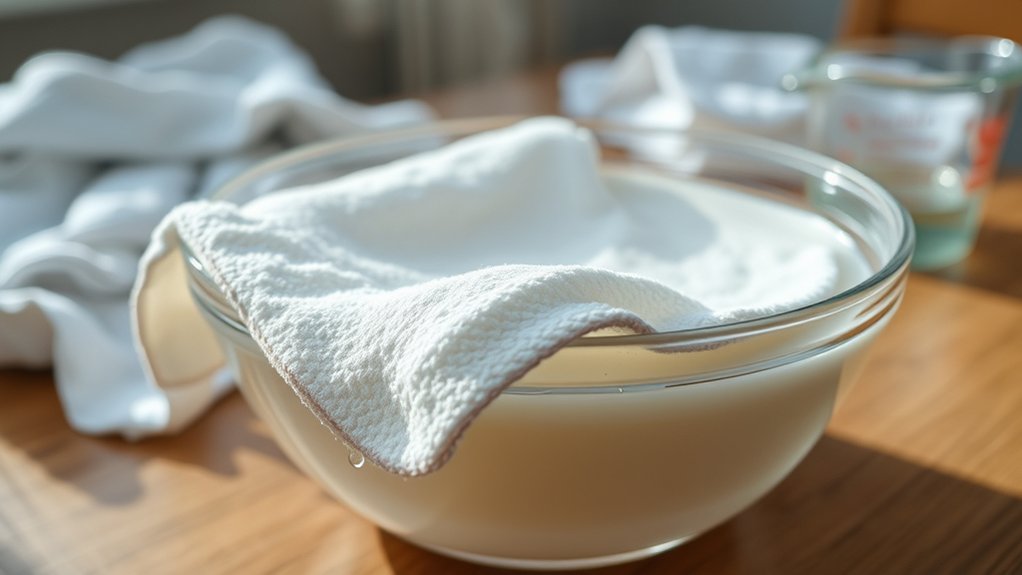
When you soak moldy clothes in a vinegar solution overnight, the acetic acid penetrates fungal spores, compromising their structural integrity and reducing mold presence.
Soaking moldy clothes overnight in vinegar weakens fungal spores and helps diminish mold effectively.
This acidic environment alters the pH, destabilizing cellular components critical to fungal survival.
Moreover, combining vinegar with baking soda balances pH levels, enhancing odor removal linked to fungal growth.
However, vinegar alone doesn’t provide a complete cleanse; you need to use it alongside detergent to guarantee thorough fungal elimination.
Does Vinegar Kill All Fungus in Laundry?
Although vinegar’s acetic acid disrupts many fungal cells on fabrics, it doesn’t eliminate every type of fungus present in laundry. You should understand that vinegar’s antifungal efficacy varies depending on fungal strain and fabric conditions.
Consider these points:
- Vinegar (5% acetic acid) kills several common fungi but isn’t universally effective.
- Its antifungal action improves when clothes are soaked overnight in vinegar solution.
- Vinegar alone may not eradicate resilient fungal spores embedded in fabric fibers.
- Combining vinegar with detergent enhances removal of oils and residues that protect fungi.
So, while vinegar is a valuable antifungal agent in laundry, it can’t guarantee complete fungal eradication.
You should use it as part of a broader cleaning approach rather than relying solely on vinegar for total fungus elimination.
Best Ways to Use Vinegar for Laundry Fungus
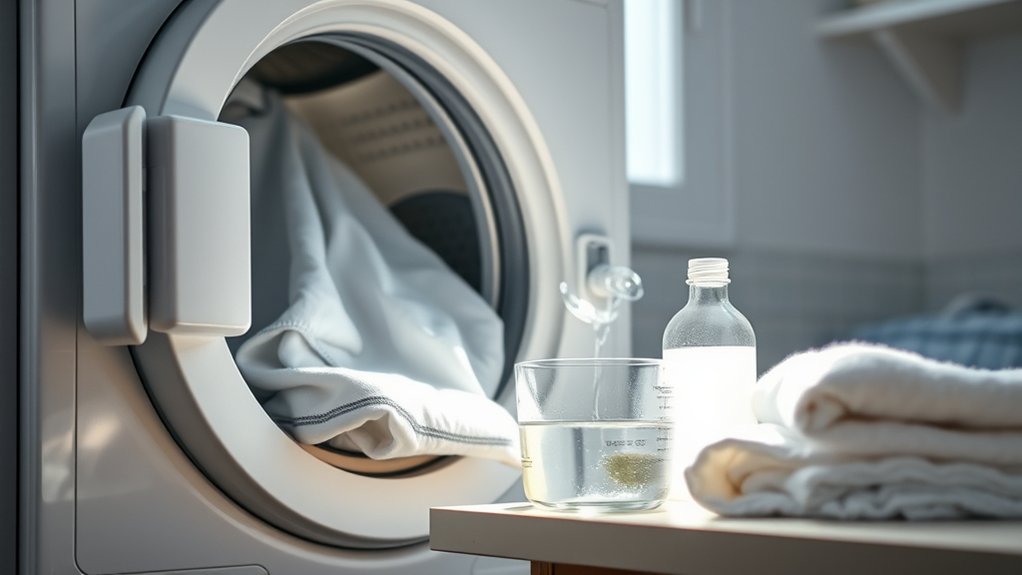
If you’re dealing with laundry fungus, a simple and effective trick is to soak your clothes overnight in a 5% acetic acid vinegar solution before washing. This really helps to reduce the fungus.
You can also combine vinegar with baking soda. This combo balances pH levels and helps neutralize those stubborn odors, making it even better at controlling fungus.
And if you want to go a step further, try using lemon solutions. Lemons have natural antifungal properties that work great alongside vinegar to keep your laundry fresh and fungus-free.
Vinegar Soak Method
When treating laundry fungus, soaking moldy clothes overnight in a 5% acetic acid vinegar solution disrupts fungal growth and loosens residues that harbor odors.
The vinegar soak method is a straightforward, effective approach to tackle mildew on fabrics.
To optimize this method, follow these steps:
- Fill a bucket with enough water to fully submerge the affected garments.
- Add a generous amount of 5% acetic acid vinegar to create a potent antifungal solution.
- Soak the clothes overnight, allowing the vinegar to penetrate and break down soap residue and fungal biofilms.
- After soaking, run a regular wash cycle with detergent to guarantee complete removal of loosened fungus and residues.
This method maximizes vinegar’s antifungal properties and improves laundry freshness.
Combining Vinegar And Baking Soda
Since vinegar and baking soda each target different aspects of fungal contamination, combining them enhances their effectiveness against laundry fungus. Vinegar’s acetic acid kills fungi, while baking soda’s mild abrasiveness lifts mold and neutralizes odors.
Applying a vinegar and baking soda mixture to moldy fabric areas, letting it sit 15 minutes, then scrubbing improves fungal stain removal. Soaking clothes in vinegar overnight softens fungal colonies for detergent wash. Using warm water amplifies antifungal action.
Here’s a summary of their combined effects:
| Component | Function | Benefit |
|---|---|---|
| Vinegar | Antifungal, acidic | Kills fungi, breaks residue |
| Baking Soda | Mild abrasive, deodorizer | Lifts mold, neutralizes odors |
| Warm Water | Enhancer | Maximizes reaction, cleans better |
This synergy makes vinegar and baking soda a precise, effective antifungal laundry solution.
Lemon Solution Benefits
A lemon solution leverages natural antifungal and antimicrobial properties to effectively combat laundry fungus. Its acidic nature, similar to acetic acid in vinegar, disrupts fungal cell membranes.
To maximize lemon solution benefits, follow these steps:
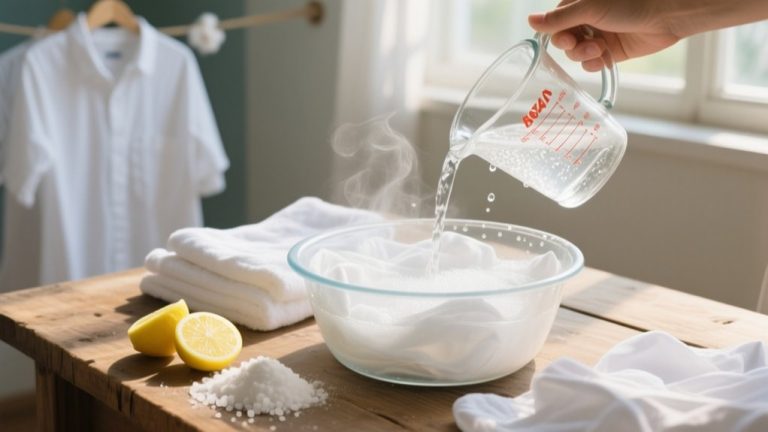
- Mix warm water with fresh lemon juice to create the solution.
- Soak affected clothes for 30 minutes to allow penetration.
- Gently scrub moldy areas with a brush during soaking for enhanced efficacy.
- Wash fabrics using detergent afterward to guarantee complete removal of residues.
This method optimizes fungal elimination while maintaining fabric integrity. Regular application prevents fungal regrowth and preserves freshness.
Compared to vinegar’s acetic acid, lemon solution adds natural antifungal agents, making it a valuable complementary approach in your laundry routine.
How Soaking Clothes in Vinegar Breaks Down Mold
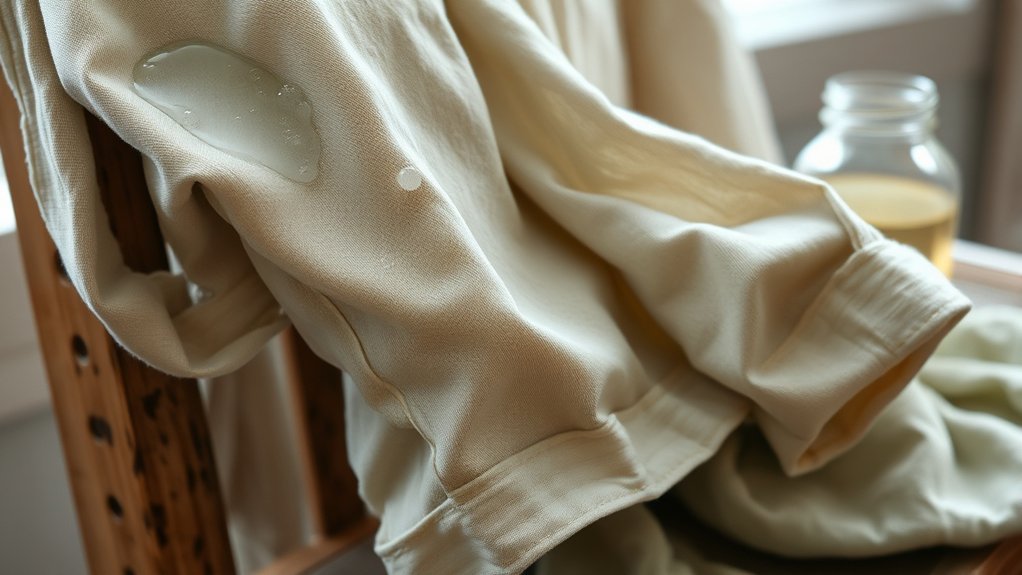
You can get rid of mold on clothes by soaking them in a vinegar solution that’s about 5% acetic acid. The vinegar’s antifungal properties help break down the fungal cell membranes.
For best results, leave the clothes submerged overnight. This gives the vinegar plenty of time to eliminate the mold spores before you wash the clothes with detergent to get rid of any leftover residue.
If you soak your clothes carefully and use the right techniques, you’ll effectively break down the mold without damaging your fabric.
Vinegar’s Antifungal Properties
When you soak clothes in vinegar, the acetic acid penetrates fungal cell walls, disrupting their structure and effectively breaking down mold and mildew.
Vinegar’s antifungal properties arise primarily from its 5% acetic acid concentration, which:
- Disrupts fungal cell walls, inhibiting growth and survival.
- Eliminates fungal spores and associated odors during extended soaking.
- Reduces soap buildup on fabrics, enhancing absorbency and odor removal.
- Supports standard laundry methods by providing significant antifungal action, though it’s not a complete disinfectant.
Mold Breakdown Mechanism
Vinegar’s antifungal properties set the stage for its effectiveness in breaking down mold on fabrics. The mold breakdown mechanism primarily relies on vinegar’s 5% acetic acid concentration, which lowers the pH to about 2.5. This creates an acidic environment that disrupts mold cellular structures and neutralizes fungal spores.
When you soak clothes in warm vinegar solution, the heat improves penetration into fabric fibers, enhancing antimicrobial action. This process not only kills active mold but also helps dissolve soap residues that usually trap spores, promoting deeper mold removal.
Effective Soaking Techniques
Although mold can cling stubbornly to fabric fibers, soaking clothes overnight in a 5% acetic acid vinegar solution effectively disrupts mold colonies by lowering the pH and penetrating fibers. This antifungal action alters the fabric environment, making it inhospitable to mold growth.
To maximize the effectiveness of this cleaning method, follow these steps:
- Prepare a soaking solution with a sufficient concentration of 5% vinegar.
- Submerge the mold-affected clothes fully to guarantee even exposure.
- Allow an overnight soak to enable acetic acid penetration and mold breakdown.
- Follow soaking with a regular detergent wash to remove loosened mold and residues.
This soaking method integrates well with other cleaning methods, enhancing mold removal and fabric freshness efficiently.
Combine Vinegar and Baking Soda to Remove Fungus
Since vinegar and baking soda each contribute unique antifungal and cleaning properties, combining them enhances the removal of fungus from laundry.
When you combine vinegar and baking soda, the acetic acid in vinegar disrupts fungal cell structures, while baking soda balances pH and traps odors.
Their reaction produces carbon dioxide, which mechanically lifts mold and fungus from fabric fibers.
To optimize results, soak moldy clothes overnight in a vinegar solution, then wash with ½ cup of baking soda. This sequence reduces soap buildup and fungal residues effectively.
The synergistic effect of these natural agents improves freshness and inhibits mold growth, making this combination a technically sound method for fungal decontamination in laundry without relying on harsh chemicals.
How Vinegar Compares to Other Antifungal Laundry Agents
When evaluating antifungal laundry agents, you’ll find that vinegar’s acetic acid concentration of approximately 5% offers moderate antifungal effects but falls short compared to commercial solutions.
Vinegar can help remove odors and soap residues, indirectly reducing fungal growth, yet it lacks the potency for thorough disinfection.
Vinegar aids odor removal and reduces fungal growth but isn’t strong enough for complete disinfection.
Consider these comparisons:
- Bleach effectively removes mold and stubborn stains but is unsuitable for colored fabrics.
- Baking soda enhances antifungal action when combined with vinegar, improving cleaning efficacy.
- Lemon solutions provide natural antifungal benefits and can complement vinegar treatment.
- Commercial antifungal detergents contain specialized agents designed for deep fungal eradication.
While vinegar can help remove mild mold and odors, relying solely on it won’t guarantee complete fungal elimination in laundry applications.
Alternatives When Vinegar Can’t Remove Stubborn Fungus
If vinegar fails to eliminate stubborn fungus in your laundry, you’ll need to explore more potent alternatives. Baking soda, lemon juice, and bleach offer stronger antifungal action. Commercial antifungal additives also enhance your laundry detergent’s efficacy.
Hot water washing (≥130°F/54°C) boosts fungus elimination, especially when combined with appropriate detergents or additives.
| Alternative | Application Method | Notes |
|---|---|---|
| Baking Soda | Dissolve in water, scrub after 15 min | Effective on moldy spots |
| Lemon Juice | Soak clothes 30 min in lemon solution | Natural antifungal, gentle |
| Bleach | Use on white garments only | Powerful, avoid color damage |
| Commercial Additives | Add to wash cycle with laundry detergent | Specifically targets mold and mildew |
These options give you precise solutions when vinegar alone isn’t enough.
Tips to Keep Laundry Fungus-Free Using Vinegar
Although vinegar’s antifungal properties stem from its acetic acid content, you’ll achieve the best results by soaking moldy garments overnight in a vinegar solution before laundering. People use vinegar not only for fungus control but also to improve fabric absorbency and reduce soap build-up, especially in thick materials like towels.
To keep your laundry fungus-free using vinegar, follow these tips:
- Soak clothes in a 1:4 vinegar-to-water ratio overnight to maximize antifungal action.
- Wash with regular detergent after soaking to remove loosened mold residues.
- Add baking soda during washing to balance pH and trap odors effectively.
- Avoid overusing vinegar to prevent fabric damage and maintain material integrity.
Implementing these steps guarantees efficient fungal reduction and fabric maintenance.
Frequently Asked Questions
Can Vinegar Damage Certain Types of Fabric During Fungal Treatment?
Yes, vinegar can damage certain fabrics during fungal treatment.
You should avoid using it undiluted on delicate materials like silk and wool, as its acidity (pH 2.5) weakens fibers and may cause deterioration.
Prolonged exposure risks color fading, especially on untreated dyed fabrics.
To protect your laundry, dilute vinegar with water and test a small area first.
Make sure you rinse thoroughly to prevent sour odors and fabric degradation.
How Long Does Vinegar Take to Kill Fungus in Laundry?
You’ll need to soak your laundry in vinegar for at least 30 minutes to effectively kill fungus.
The antifungal action of acetic acid increases with contact time, so soaking overnight boosts efficacy against mold and mildew spores.
Shorter exposures won’t provide sufficient time for vinegar to disrupt fungal cells.
After soaking, make sure to wash your clothes with detergent to remove any remaining fungi and odors, ensuring a thorough cleanse.
Is Vinegar Safe to Use With Colored Clothes to Remove Fungus?
You can use vinegar on colored clothes to help remove fungus, but you need to be cautious.
Vinegar’s acidity might cause fading or discoloration over time, so always test it on a small, hidden area first.
It’s best to combine vinegar with detergent and avoid relying on it alone.
This approach balances antifungal benefits while protecting fabric integrity, ensuring you effectively reduce fungal presence without damaging your garments.
Can Vinegar Eliminate Fungus Odors Without Washing Afterward?
You can’t fully eliminate fungus odors with vinegar alone. A 5% acetic acid solution inhibits some fungi but doesn’t guarantee total odor removal without washing.
Vinegar helps neutralize odors by breaking down residues, but it doesn’t eradicate all odor-causing microbes. To get rid of fungal odors effectively, you need to soak laundry in vinegar and then wash it thoroughly.
Skipping the wash leaves behind residual odors and fungal traces, which makes vinegar much less effective.
Does Vinegar Affect the Lifespan of Washing Machines When Used Frequently?
Yes, using vinegar frequently in your washing machine can reduce its lifespan. The acidic nature of vinegar degrades rubber seals and hoses, causing premature wear.
Furthermore, mineral deposits may build up, especially with hard water, impairing performance. Over time, vinegar residue can accumulate, affecting efficiency.
Manufacturers often advise against regular vinegar use as it may void warranties and lead to maintenance issues.
You should balance vinegar use with proper maintenance to protect your machine.
Conclusion
Just like a skilled alchemist transforms base metals into gold, you can turn your laundry from fungal-ridden to fresh using vinegar’s antifungal properties. While vinegar won’t conquer every stubborn spore alone, combining it with methods like baking soda boosts its efficacy.
Understanding vinegar’s chemical action helps you wield it precisely, ensuring your clothes stay clean and safe. In your fight against laundry fungus, vinegar is a powerful tool but know when to call in reinforcements.