When To Use Laundry Sanitizer – Timeline & Facts
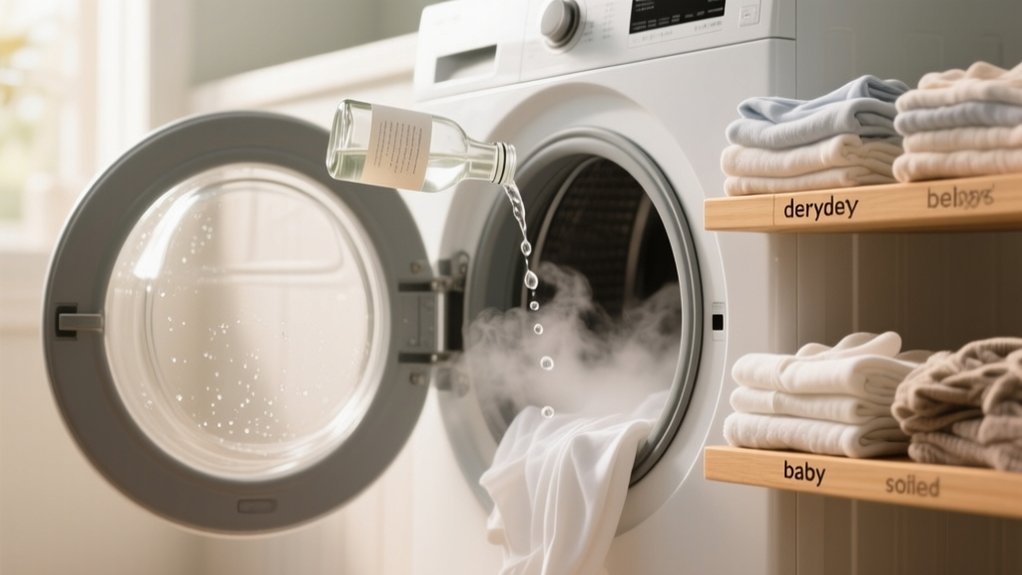
You should use laundry sanitizer when dealing with damp, heavily soiled, or sweat-heavy fabrics, especially after illness to prevent recontamination. It’s ideal for children’s clothes, sportswear, towels, and bedding that need extra bacterial protection.
Add it during the rinse cycle for best results, and avoid substituting it for detergent. Not every load needs sanitizing, but knowing when and how to use it can enhance cleanliness and fabric care.
Discover more about effective use and choosing the right sanitizer.
Key Takeaways
- Use laundry sanitizer during the rinse cycle to effectively eliminate bacteria and odors on damp or heavily soiled fabrics.
- Apply sanitizer after illness to prevent recontamination and ensure higher hygiene levels in clothing and bedding.
- Target children’s clothes, sportswear, towels, and bedding for extra protection against bacteria and persistent odors.
- Avoid using sanitizer as a detergent substitute; it complements detergent for enhanced fabric disinfection.
- Use sanitizer selectively, especially for sweat-heavy or body fluid-exposed items, rather than with every wash cycle.
What Is Laundry Sanitizer And Why Use It?
Laundry sanitizer is a powerful additive designed to tackle bacteria on fabrics that regular detergent can’t fully eliminate. You’ll find it especially useful for items that are damp, heavily soiled, or exposed to body fluids. Think sportswear, children’s clothes, and bedding.
Unlike detergent, laundry sanitizer doesn’t remove dirt or grime. Instead, it targets odor, moisture, and harmful bacteria to boost fabric hygiene.
Many laundry sanitizers, like Lysol® Laundry Sanitizer, work effectively in cold water and are safe for both standard and HE machines without damaging your fabrics.
You don’t need to use laundry sanitizer every time you wash. But it provides essential extra protection when you want to guarantee a higher level of cleanliness and fabric safety.
When To Use Laundry Sanitizer For Best Results
Knowing when to use laundry sanitizer can make a significant difference in maintaining fabric hygiene.
You should use laundry sanitizer for loads containing damp-smelling items, sweat-heavy fabrics, or garments exposed to body fluids to guarantee thorough disinfection.
Use laundry sanitizer for damp, sweat-soaked, or body fluid-exposed fabrics to ensure complete disinfection.
It’s especially important after illness to eliminate harmful bacteria and prevent recontamination.
When to use laundry sanitizer also includes washing children’s clothes, sportswear, bedding, and towels, as these often harbor bacteria and benefit from extra hygiene.
For best results, always add laundry sanitizer during the rinse cycle, since it’s designed to work effectively at that stage and isn’t a detergent substitute.
How Laundry Sanitizer Kills Bacteria
Although detergents remove dirt and stains, they don’t effectively eliminate the bacteria lurking in your clothes.
That’s where Lysol® Laundry Sanitizer steps in.
Here’s how laundry sanitizer kills bacteria:
- It targets and destroys 99.9% of bacteria, ensuring harmful microorganisms don’t survive the wash.
- Its active ingredients work during the rinse cycle, penetrating fabric fibers without damaging them.
- It functions effectively in both cold and hot water, compatible with standard and HE machines.
Best Laundry Loads To Sanitize
After understanding how laundry sanitizer targets and eliminates bacteria, it’s important to recognize which types of laundry benefit most from this added protection.
You should prioritize sanitizing laundry loads like children’s clothing, which often harbor harmful bacteria from spills and accidents.
Sportswear is another key category, as it traps sweat and bacteria after intense workouts.
Bedding and towels also require regular sanitizing laundry care since moisture creates a breeding ground for bacteria, leading to odors and potential health issues.
Furthermore, any clothes worn during illness should be sanitized to minimize germ spread.
Finally, synthetic fabrics that tend to trap odors benefit greatly from sanitizing laundry, ensuring freshness and hygiene.
Focusing on these items helps maintain a healthier home environment.
How To Use Laundry Sanitizer Correctly In Your Washer
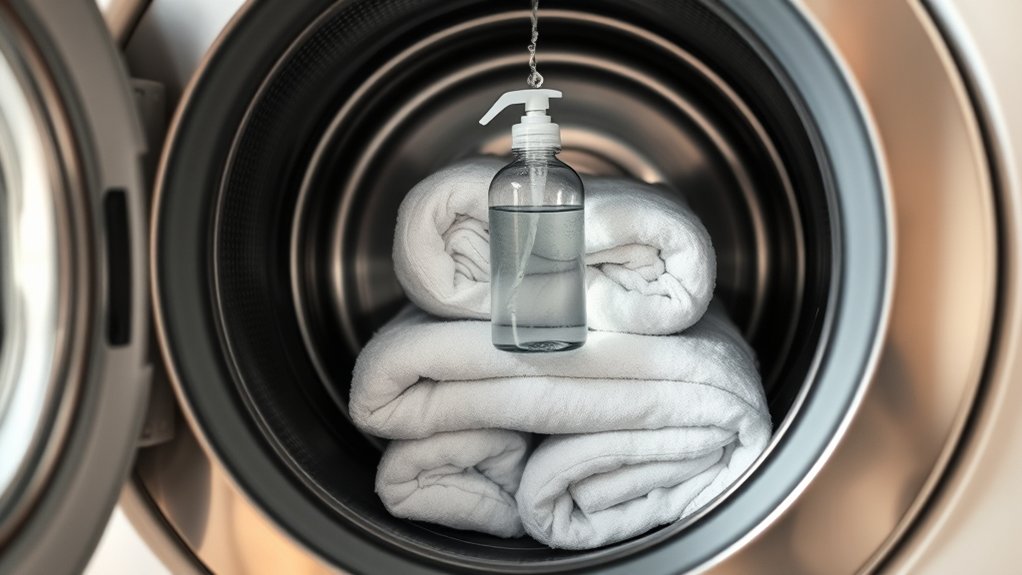
Using laundry sanitizer correctly requires following a few key steps to maximize its effectiveness.
First, always use laundry sanitizer alongside detergent, as it doesn’t clean dirt or grime on its own.
Second, add the sanitizer during the rinse cycle in the designated compartment, following the product label’s instructions precisely.
Third, verify the rinse cycle runs at least 16 minutes to allow the sanitizer to thoroughly kill bacteria.
Here’s a simple checklist to guide you:
- Use 2 capfuls per load, or follow your sanitizer’s specific guidelines.
- Confirm fabric compatibility by checking care labels before adding sanitizer.
- Combine with detergent for a complete clean and sanitize process.
Can Laundry Sanitizer Replace Detergent Or Bleach?
Now that you know how to add laundry sanitizer to your wash, you might wonder if it can stand in for detergent or bleach.
Laundry sanitizer is designed to reduce bacteria and odors but isn’t a substitute for detergent, which removes dirt and oils.
You should always use laundry sanitizer alongside detergent to guarantee your clothes are truly clean.
Unlike bleach, laundry sanitizer is usually bleach-free and safe for colored fabrics, providing a hygiene boost without fading or whitening.
It works well in cold water and in both standard and HE machines, but relying on it alone won’t clean your laundry properly.
For best results, add laundry sanitizer during the rinse cycle to complement your detergent and enhance fabric sanitation.
How To Tell If Your Laundry Needs Sanitizing
Although not every load requires it, you should sanitize your laundry when clothes or linens carry damp odors, heavy sweat, or visible soil that can harbor bacteria.
Knowing when to sanitize laundry helps maintain hygiene and freshness.
Consider these key indicators:
- Your laundry has a persistent damp smell or heavy sweat stains, signaling bacterial buildup.
- Items like bedding, towels, or clothing used during illness need sanitizing to prevent germ spread.
- Synthetic fabrics or sportswear exposed to body fluids often retain odors and bacteria, benefiting from sanitizing.
Common Laundry Sanitizer Mistakes To Avoid
If you want your laundry sanitizer to work effectively, you must avoid common mistakes that undermine its purpose.
One frequent laundry sanitizer mistake is using it as a detergent substitute. Always combine it with detergent for proper cleaning and sanitization.
Another mistake is adding the sanitizer at the wrong cycle. Most require addition during the rinse cycle to maximize effectiveness.
Avoid overusing sanitizer, as this increases costs without extra benefits on routine loads.
Also, check fabric care labels before use. Some sanitizers can damage delicate fabrics or colors.
Finally, don’t assume all sanitizers work the same way. Always follow the specific product instructions to guarantee ideal results.
Steering clear of these laundry sanitizer mistakes ensures your laundry stays clean and safe without damage or wasted resources.
How To Handle Laundry After Illness
Handling laundry after illness requires careful steps to prevent the spread of germs and protect your household.
To manage this effectively, follow these key steps:
Avoid shaking dirty laundry to minimize airborne contaminants.
Keep soiled items separate from clean ones to prevent cross-contamination.
Use detergent initially, then add laundry sanitizer as appropriate to thoroughly disinfect fabrics exposed during sickness.
Wash your hands thoroughly after handling contaminated laundry.
Make sure all items are completely dried to prevent bacterial growth and odors.
How To Choose The Right Laundry Sanitizer
You’ll want to pick a laundry sanitizer that works well with the fabrics you’re washing so you don’t accidentally damage them.
It’s also a good idea to check the ingredients and make sure the sanitizer is suitable for your type of washer. That way, you get the best results.
Fabric Compatibility
Although choosing the right laundry sanitizer might seem straightforward, guaranteeing fabric compatibility is essential to protect your clothes and maintain their quality. When selecting a sanitizer, always check the product label for fabric compatibility, especially with delicates and colors.
To help you make the best choice, consider these key points:
- Opt for sanitizers labeled “color-safe” to prevent discoloration on sensitive fabrics.
- Choose products like Lysol® Laundry Sanitizer, which are effective on various fabrics, including baby clothes and delicates.
- For synthetic fabrics, pick sanitizers effective in cold water to preserve fabric integrity while eliminating odors and bacteria.
Always perform a patch test on a small, hidden area to avoid adverse reactions.
Prioritizing fabric compatibility guarantees your laundry sanitizer is both safe and effective.
Sanitizer Ingredients
When choosing a laundry sanitizer, understanding the active ingredients is essential to guarantee effective bacteria elimination without damaging your fabrics.
Focus on sanitizer ingredients like quaternary ammonium compounds or hydrogen peroxide, known for their strong disinfecting properties.
Opt for products labeled color-safe or bleach-free to protect colored fabrics while still sanitizing effectively.
Always review the product label carefully for usage instructions and recommended dosages. This guarantees ideal performance and fabric safety.
Tailor your choice to specific laundry needs, such as sanitizing items used during illness or those with persistent odors.
Washer Type Compatibility
Since washing machines vary, choosing a laundry sanitizer that matches your washer type, whether standard or high-efficiency (HE), is essential for effective cleaning and fabric care.
Ensuring washer type compatibility prevents damage to your machine and fabrics while maximizing sanitizer performance.
When selecting the right laundry sanitizer, consider these points:
- Confirm the product is labeled compatible with your washer type, as some sanitizers are designed specifically for standard or HE machines.
- For HE washers, add the sanitizer to the fabric softener compartment or during the rinse cycle, following manufacturer instructions.
- Opt for bleach-free formulas to protect colored fabrics without compromising sanitizing power.
Frequently Asked Questions
Can Laundry Sanitizer Cause Fabric Damage Over Time?
Yes, laundry sanitizer can cause fabric damage over time, especially if you use harsh chemical-based products repeatedly.
Even natural alternatives like vinegar or hydrogen peroxide might weaken fibers if you apply them excessively or incorrectly.
To protect your clothes, always follow the manufacturer’s instructions and test sanitizers on a small, hidden area first.
Choosing bleach-free sanitizers can also help minimize color fading and fabric wear, preserving your garments longer.
Is Laundry Sanitizer Safe for All Water Temperatures?
You might think laundry sanitizer only works in hot water, but it’s actually safe and effective across all temperatures, including cold.
While hot water can boost cleaning power, many sanitizers kill 99.9% of bacteria even in cold water, protecting your fabrics and saving energy.
Just remember to check the label, since some formulas recommend specific temperatures.
Using sanitizer correctly keeps your laundry hygienic without risking fabric damage.
How Does Laundry Sanitizer Affect Sensitive Skin?
Laundry sanitizer generally won’t irritate your sensitive skin if you use it as directed. Many formulas are designed to be gentle and free from harsh chemicals or dyes.
However, since everyone’s skin reacts differently, you should test it on a small fabric patch first.
Make sure you rinse your laundry thoroughly to avoid residue, which can cause irritation.
Always check product labels for hypoallergenic options to keep your skin safe.
Can Laundry Sanitizer Be Used in Both Standard and High-Efficiency Washers?
Yes, you can use laundry sanitizer in both standard and high-efficiency washers. It’s designed to work effectively in either machine type.
Just add two capfuls to the fabric softener compartment or during the rinse cycle.
Make certain your rinse cycle lasts at least 16 minutes to get the best sanitizing results.
Following the label instructions precisely guarantees you maximize its cleaning power, regardless of your washer type.
Does Laundry Sanitizer Have a Scent That Lingers on Clothes?
Yes, laundry sanitizer does have a scent that lingers on clothes, but it’s usually mild and fresh rather than strong.
You’ll notice a clean fragrance, like Crisp Linen, that enhances freshness without overpowering.
Keep in mind, the scent lasts less than fabric softeners and varies by fabric type and wash conditions.
To get the best scent and sanitization, make sure you follow the product’s usage instructions carefully.
Conclusion
Now that you know when and how to use laundry sanitizer, you can keep your clothes feeling fresh and your home a little safer. Think of it as giving your laundry a gentle guard against unwanted guests like bacteria and germs.
By choosing the right sanitizer and using it properly, you’re ensuring your fabrics get the care they deserve without overdoing it. Remember, a little extra attention goes a long way in keeping your laundry truly clean.