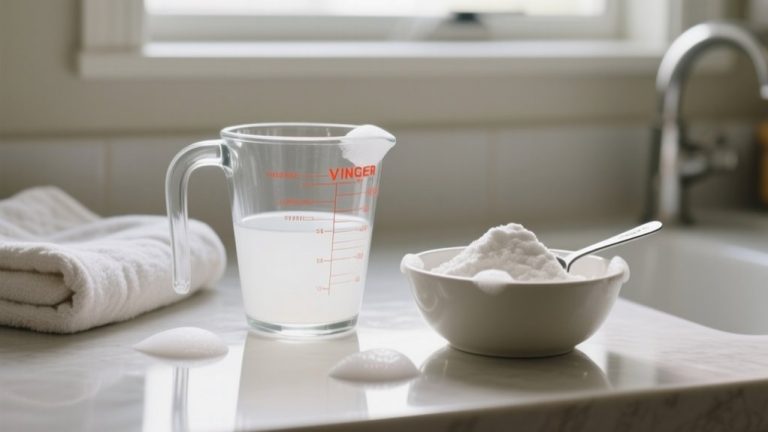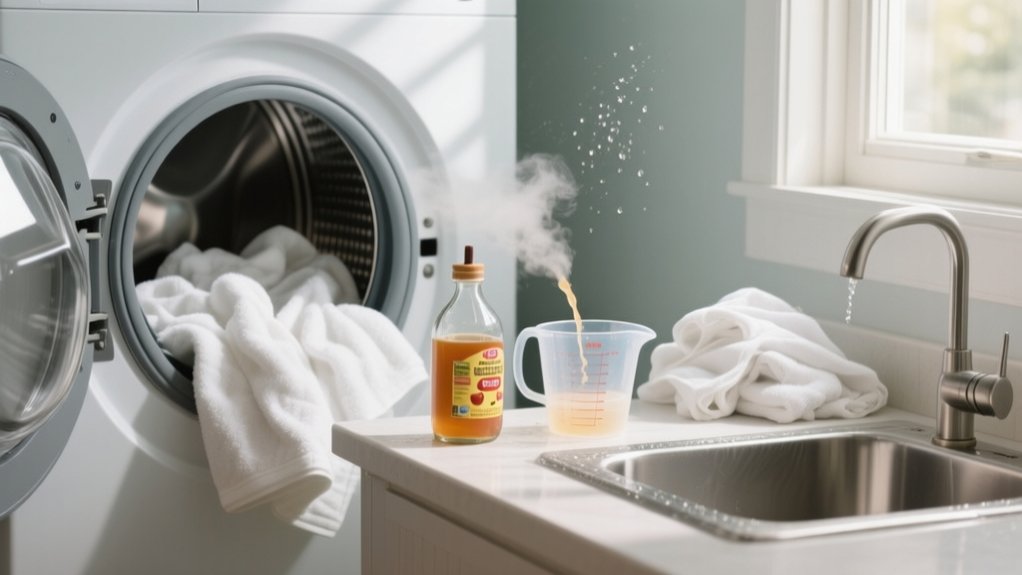
Does Vinegar Sanitize Laundry – Myth or Fact
You might think vinegar sanitizes laundry, but it doesn’t meet EPA standards for killing 99.9% of bacteria and viruses. Vinegar’s acetic acid can reduce some microbes and soften fabrics but lacks the potency to fully sanitize or protect vulnerable individuals.
Stronger agents like hydrogen peroxide or bleach are necessary for effective sanitization. Vinegar works best as a rinse aid and odor reducer. But if you want thorough cleaning and disinfection, there are safer and more efficient alternatives to explore.
Key Takeaways
- Vinegar contains acetic acid but does not meet EPA standards for effective sanitization of laundry.
- It cannot reliably kill 99.9% of bacteria or viruses on fabrics.
- Vinegar is best used as a rinse aid to soften fabrics and reduce soap residue, not as a sanitizer.
- Stronger agents like bleach or hydrogen peroxide are necessary for proper laundry sanitization.
- Vinegar may reduce minor bacterial loads but should not replace recommended disinfectants in critical hygiene situations.
Can Vinegar Really Kill Germs and Sanitize Your Laundry?
How effective is vinegar at killing germs and sanitizing your laundry? Vinegar contains acetic acid, which offers some antimicrobial properties but doesn’t meet the EPA’s standard of eliminating 99.9% of bacteria and viruses. This means vinegar alone can’t reliably sanitize laundry or eradicate all pathogens, especially viruses.
While vinegar helps reduce soap buildup and can improve fabric feel, it falls short as a sanitizer. For effective laundry sanitation, agents like hydrogen peroxide or bleach are recommended due to their proven efficacy against a broader range of germs.
You can use vinegar as a rinse aid to enhance freshness and reduce odors by breaking down detergent residues, but it shouldn’t replace proper sanitizing agents.
Combining vinegar with deep-cleaning detergents and appropriate wash cycles improves overall laundry hygiene.
How Does Vinegar Compare to Commercial Detergents for Cleaning?
You’ll find that vinegar, with its acidic pH of 2.5, isn’t as effective as commercial detergents at breaking down oils and grime. That’s because detergents usually have a higher alkaline pH around 10, which helps them tackle those tough stains better.
Now, vinegar can be pretty handy for reducing soap residue and making fabrics feel softer.
But it’s important to remember that vinegar doesn’t replace detergents when it comes to cleaning power or getting rid of germs.
Vinegar Versus Detergent
Although vinegar has some cleaning properties due to its acidity, it doesn’t match the effectiveness of commercial laundry detergents in removing oils, grime, and stains from fabrics.
Vinegar’s pH of 2.5 limits its ability to break down oily residues compared to laundry detergent’s alkaline pH around 10, which enhances stain and odor removal.
While vinegar helps eliminate soap build-up and softens fabrics, it lacks the surfactants and enzymes that detergents contain for thorough cleaning effectiveness.
Consequently, vinegar can’t replace detergent as the primary cleaning agent in laundry.
Instead, you should use vinegar as a supplement to your detergent to improve freshness and fabric feel without compromising the removal of dirt and stains.
This approach optimizes your laundry routine based on the distinct roles of each product.
Cleaning Effectiveness Comparison
When comparing vinegar to commercial detergents for cleaning, you’ll find that vinegar’s acidic pH of 2.5 limits its ability to break down oils and stains as effectively as detergents, which have an alkaline pH near 10 designed to target grime and residues.
A cleaning effectiveness comparison shows that commercial detergents are specifically formulated to remove oils, dirt, and stains, while vinegar primarily acts as a fabric softener and odor neutralizer.
You can use vinegar to aid in breaking down soap build-up and improve fabric feel, but it doesn’t replace the cleaning power of detergents.
For best results, it’s best to use vinegar as a supplement to commercial detergents rather than a substitute, especially when tackling tough stains and odors.
Why Add Vinegar to Your Laundry? Key Benefits Explained
Vinegar offers multiple scientifically supported benefits when added to your laundry. Using vinegar helps naturally soften fabrics by breaking down residues without harsh chemicals.
Adding vinegar also removes soap buildup left by detergents, which improves fabric texture and absorbency, especially in thick materials like towels. Vinegar’s acetic acid brightens whites and colors by reducing yellowing and food stains, such as ketchup.
Furthermore, adding vinegar helps dissolve residues that hold odors, making it effective as a pre-treatment for underarm smells. For sensitive skin, vinegar serves as a hypoallergenic alternative, minimizing irritation while maintaining cleanliness without relying on strong detergents.
Consequently, incorporating vinegar into your laundry routine can enhance softness, cleanliness, and fabric longevity through scientifically validated mechanisms.
Does Vinegar Effectively Remove Odors From Laundry?
You won’t find that vinegar alone completely gets rid of odors in your laundry. However, it does help reduce detergent buildup, which often traps smells in your fabrics.
By breaking down these residues, vinegar can actually make your clothes smell fresher after a proper wash.
If you really want to boost odor removal, try using vinegar as a rinse or mix it with baking soda. Together, they work better to tackle those stubborn smells.
Vinegar’s Odor Removal
Although vinegar is often touted as a natural deodorizer, it doesn’t directly eliminate odors from laundry.
Vinegar’s acetic acid primarily targets soap and detergent residues that can trap odors rather than neutralizing the odors themselves.
For effective odor removal, consider these points:
Vinegar dissolves soap build-up, reducing odor retention caused by residue. It works best combined with a proper detergent, not as a standalone cleaner.
Applying undiluted vinegar to specific odor-prone areas, like underarms, before washing can help.
Vinegar alone doesn’t chemically neutralize odor molecules; it only indirectly improves freshness by cleaning fabrics.
Indirect Freshness Benefits
Removing odors from laundry involves more than just neutralizing smell molecules; it requires addressing the residues that trap these odors within fabric fibers.
Vinegar can help remove soapy build-up, which often holds unpleasant smells, by dissolving detergent residues thanks to its acetic acid content.
While vinegar alone isn’t a primary odor remover, it supports keeping your laundry fresh by reducing these odor-trapping deposits. For example, soaking towels in undiluted vinegar targets soap deposits rather than odors directly.
To enhance effectiveness, combining vinegar with baking soda balances pH and traps odors more efficiently.
Using vinegar alongside a suitable detergent provides a more thorough approach to freshness, but relying solely on vinegar won’t fully eliminate odors from fabric.
How to Use Vinegar Without Damaging Fabrics or Machines
When using vinegar in laundry, it’s essential to test its effects on fabric colorfastness by applying it to a small, hidden area first to prevent potential damage.
With vinegar on hand, you can safely enhance your laundry routine by following these guidelines:
Add ½ cup of distilled white vinegar to the fabric softener dispenser to release it during the rinse cycle. This softens fabrics without harsh chemicals.
Never mix vinegar with chlorine bleach. This combination produces harmful fumes and degrades fabrics.
Periodically run an empty cycle with 2 cups of vinegar to remove mineral buildup and soap scum from your machine.
Keep an eye on how detergent and vinegar interact because vinegar’s acidity can affect detergent performance if used incorrectly.
These practices guarantee you protect both fabrics and your washing machine effectively.
When Is Vinegar Not Enough for Sanitizing Laundry?
Vinegar can improve fabric softness and help maintain your washing machine, but it won’t fully sanitize your laundry. It lacks effectiveness against many viruses and stronger bacteria and doesn’t meet the EPA’s requirement for disinfectants to kill 99.9% of pathogens.
When you’re dealing with serious illnesses or high germ levels, relying on vinegar alone just isn’t enough for sanitizing. It offers limited antimicrobial effects, mostly against minor bacteria, so it shouldn’t replace traditional disinfectants.
For serious illnesses or high germs, vinegar’s limited antimicrobial power can’t replace traditional disinfectants.
If you need thorough sanitizing, especially to protect vulnerable individuals or prevent contamination, using stronger agents like bleach or hydrogen peroxide is the way to go.
In these cases, vinegar’s sanitizing ability falls short, and disinfectants with proven efficacy are necessary to make sure your laundry is properly sanitized.
Safer Vinegar Alternatives to Bleach for Laundry Sanitizing
Although bleach remains a powerful disinfectant, you can choose safer alternatives like hydrogen peroxide, pine oil, baking soda, or white vinegar to sanitize your laundry effectively without harsh chemicals.
When using your washing machine, consider these options:
Use 3% hydrogen peroxide in the wash cycle to target viruses, bacteria, and fungi without harming most fabrics.
Add distilled white vinegar during the rinse cycle to reduce minor bacterial loads and enhance fabric freshness, especially for colored clothes.
Incorporate baking soda with detergent to balance pH and improve odor and residue removal, aiding in sanitization.
Apply pine oil in a second wash cycle for mild sanitizing effects, noting it’s less effective against human pathogens.
Combining these with warm water and an effective detergent maximizes laundry sanitization safely.
Frequently Asked Questions
Can Vinegar Be Used With All Types of Washing Machines?
Yes, you can use vinegar with all types of washing machines, including front-loading and top-loading models.
Adding distilled white vinegar during the rinse cycle optimizes its function as a fabric softener and odor neutralizer without harming your machine or clothes.
However, vinegar shouldn’t replace detergent, as it lacks sufficient sanitizing properties.
Regular use can help maintain your washer by dissolving soap scum and mineral deposits, supporting machine longevity and performance.
Does Vinegar Help Soften Clothes During the Wash?
You know what they say: “A stitch in time saves nine.” Adding half a cup of white distilled vinegar during the rinse cycle softens your clothes effectively.
Scientifically, vinegar’s acetic acid breaks down detergent residues and mineral deposits, preventing stiffness. This improves fabric texture and absorbency, especially in cotton and towels.
Vinegar acts as a natural, eco-friendly fabric softener without harsh chemicals, making your laundry feel soft and fresh every wash.
Can Vinegar Cause Colors to Fade in Laundry?
Yes, vinegar can cause colors to fade if you use it excessively or apply it directly to colored fabrics. Its low pH of 2.5 can break down dye molecules over time, leading to fading.
However, when you add vinegar in moderation, such as during the rinse cycle, it helps remove detergent residues that dull colors, enhancing vibrancy.
Always test on a small, hidden area first to guarantee your fabric’s colorfastness.
How Does Vinegar Affect the Lifespan of Washing Machines?
Think of vinegar as a gentle shield guarding your washing machine’s heart. By running an empty cycle with two cups of vinegar every three months, you prevent mineral buildup and soap scum from clogging essential parts.
This maintenance reduces wear, cuts down repairs, and keeps dispensers clean.
Scientifically, vinegar’s mild acidity dissolves deposits, helping your machine operate efficiently and extending its lifespan considerably. You’re investing in longevity with every vinegar cycle.
Is It Safe to Mix Vinegar With Other Laundry Additives?
You shouldn’t mix vinegar with all laundry additives because it can cause harmful reactions or reduce cleaning effectiveness.
For example, never combine vinegar with chlorine bleach. It produces toxic chlorine gas.
Using vinegar with hydrogen peroxide can work, but only if applied separately to avoid neutralizing each other.
Always use distilled white vinegar in moderation, and test mixtures on a small fabric area first to prevent damage or color loss.
Conclusion
You can count on vinegar’s value for vanquishing odors and providing a gentle, green cleaning boost, but don’t count on it completely sanitizing your laundry. Scientific studies show vinegar’s limited lethality against certain germs compared to commercial detergents and disinfectants.
When washing with vinegar, weigh its well-documented benefits against its weaknesses. For truly thorough textile treatment, supplement vinegar with proven sanitizers to guarantee safety and spotless results every single time.