Can You Use Apple Cider Vinegar In Laundry – What to Know
You can definitely use apple cider vinegar in your laundry to freshen clothes, soften fabrics, and cut through stubborn odors naturally. Just add ½ to 1 cup during the final rinse cycle and avoid mixing it with bleach or ammonia to keep it safe.
It works best on natural fibers like cotton but can stain delicate fabrics if you’re not careful. Using it properly can brighten colors and break down residue. There’s more to explore on how to get the best results.
Key Takeaways
- Apple cider vinegar (ACV) freshens clothes, softens fabrics, and neutralizes odors when added during the final rinse cycle.
- Use ½ to 1 cup of ACV per load, diluted with water, and avoid mixing it with bleach or ammonia.
- ACV works best on natural fibers like cotton and linen but may stain delicate fabrics such as silk or wool.
- Test ACV on a hidden spot before use and use cold water to preserve colors and reduce residue.
- ACV can also clean washing machines by running a hot cycle with 2 cups poured into the detergent drawer.
How Apple Cider Vinegar Helps Your Laundry
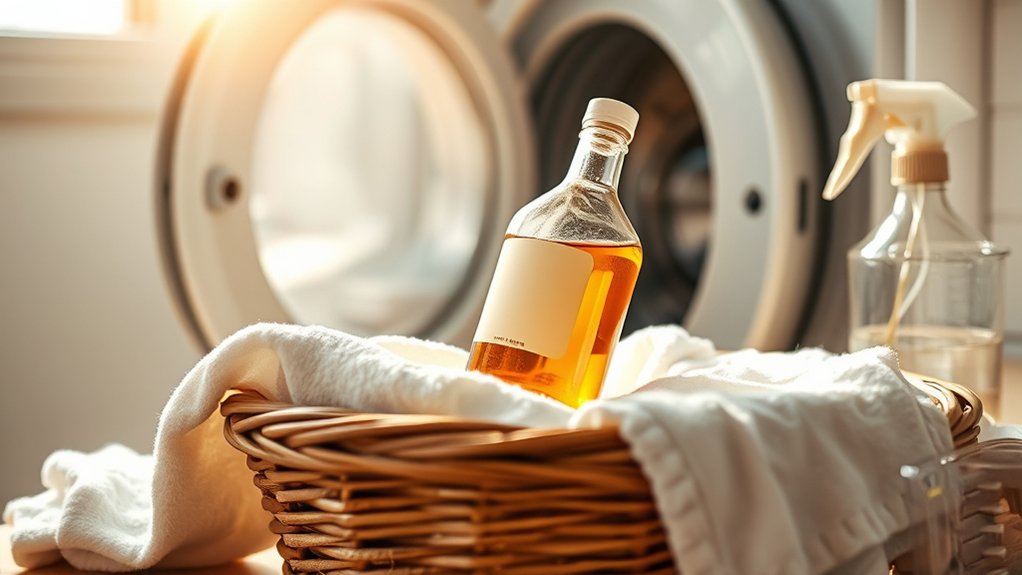
When you add apple cider vinegar (ACV) to your laundry routine, you’ll notice how effectively it freshens clothes by cutting through stubborn odors. It’s perfect for musty gym wear and other smelly items.
ACV’s natural acidity helps soften fabrics while neutralizing odors, which enhances your laundry’s overall freshness. It works gently yet powerfully in stain removal, breaking down dirt and grime without harsh chemicals.
Apple cider vinegar softens fabrics and neutralizes odors while gently breaking down stains without harsh chemicals.
Using ACV also brightens whites and revives dull fabrics, giving your clothes a cleaner, crisper look.
Plus, it acts as a natural alternative to commercial fabric softeners, helping reduce detergent buildup and pet hair cling.
How to Use Apple Cider Vinegar Safely and Effectively
Adding apple cider vinegar (ACV) to your laundry can boost freshness and fabric care, but using it properly guarantees you get the best results without damage.
To use ACV safely and effectively, follow these guidelines:
Add ½ to 1 cup of ACV during the final rinse or through the fabric softener dispenser for ideal odor and stain removal.
Test ACV on a hidden spot of delicate fabrics to avoid discoloration from its light brown tint.
Never mix ACV with bleach, ammonia, or baking soda in your laundry to prevent harmful reactions.
Also, dilute ACV in water when pre-treating stains to minimize fabric risk.
Use ACV especially in the last rinse cycle to target musty odors in gym clothes effectively.
Apple Cider Vinegar Dosage and When to Add It
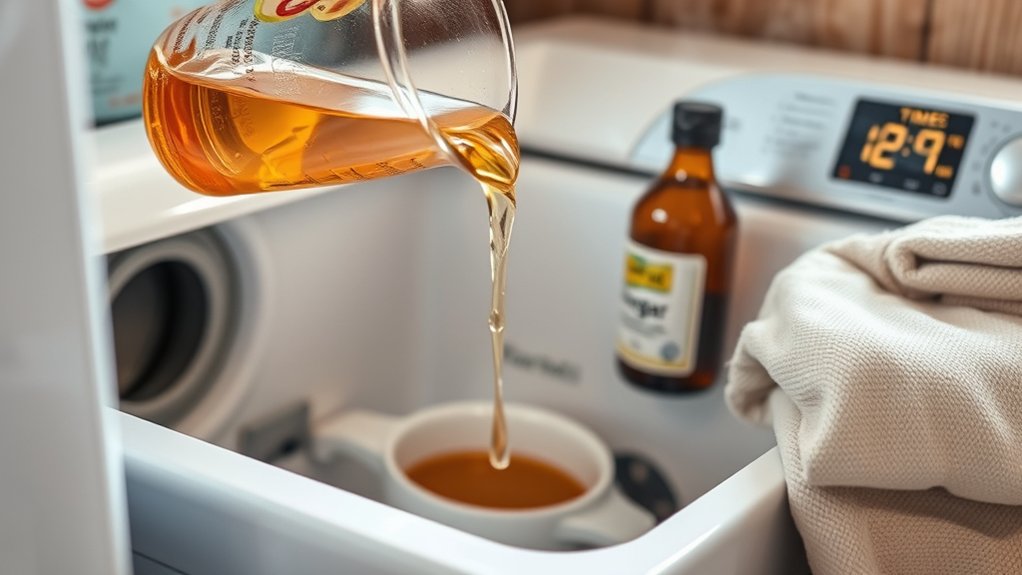
Using between ½ cup and 1 cup of apple cider vinegar (ACV) per load guarantees your laundry benefits from its odor-fighting and fabric-softening properties without risking damage. You can add ACV directly to the wash or, better yet, during the last rinse cycle to neutralize detergent residues and soften fabrics.
When washing delicate fabrics, reduce the dosage to 1-2 tablespoons of ACV and add it only in the final rinse, especially if you’re hand washing. Avoid mixing ACV with bleach or ammonia, as this creates harmful fumes.
For best results, use ACV with cold water to preserve colors and protect your clothes. This straightforward dosage and timing help you get the most out of apple cider vinegar (ACV) alongside your laundry detergents safely and effectively.
Best and Worst Fabrics for Apple Cider Vinegar
Although apple cider vinegar (ACV) works well with many fabrics, you should be cautious when applying it to delicate materials like silk and wool. Its natural color can cause staining. Always test ACV on a hidden spot before using it widely.
ACV softens natural fibers and works as a gentle alternative to fabric softeners, but it may leave residue on synthetic fibers, reducing its effectiveness. Avoid ACV on heavily soiled or delicate materials to prevent damage.
- Ideal for natural fibers like cotton and linen
- Softens fabrics without harsh chemicals
- Can stain delicate materials such as silk and wool
- Less effective on synthetic fibers due to residue build-up
- Not recommended for heavily soiled or fragile fabrics
Use ACV thoughtfully to protect your laundry’s quality.
Remove Stains and Brighten Colors With Apple Cider Vinegar
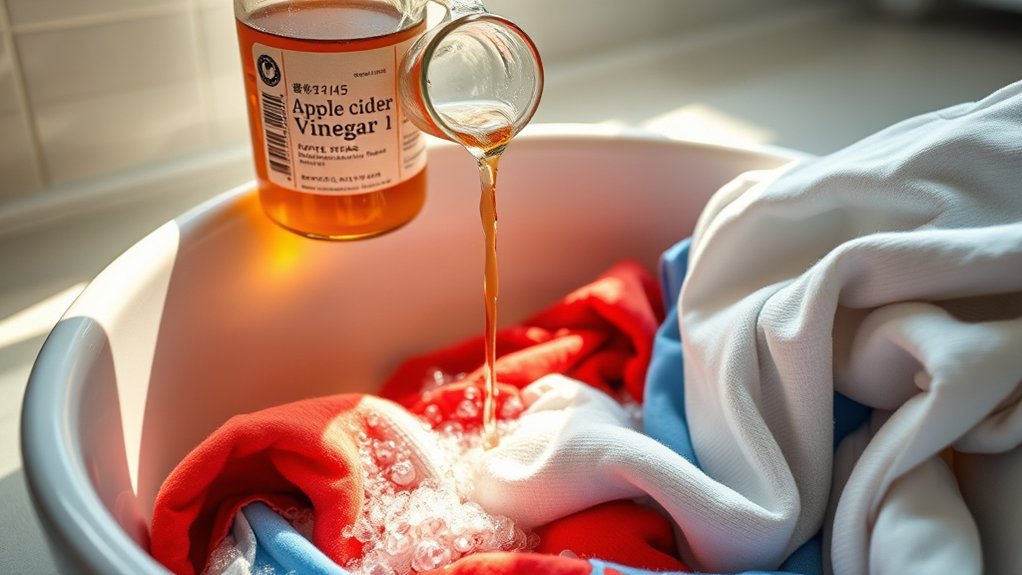
You can use apple cider vinegar’s natural acidity to gently remove stains and brighten your fabrics without any harsh chemicals. It’s pretty simple—just soak your items in it or add some vinegar during the rinse cycle. This helps lift dirt and keeps your colors looking vibrant.
Just a quick tip: make sure to test it on a small area first, especially if you’re dealing with delicate clothes. That way, you can keep your clothes safe while still giving them a good clean.
Natural Stain Removal
When tackling stubborn stains and dull fabrics, apple cider vinegar offers a natural and effective solution. Incorporating apple cider vinegar (ACV) into your laundry routine supports natural stain removal without harsh chemicals.
Its acidity breaks down grime and neutralizes odors, making it ideal for rejuvenating odor-prone clothes. For instance, soaking coffee or tea stains in a mix of 1/3 cup ACV and 2/3 cup water helps lift spots gently.
Adding ACV during rinsing also brightens colors and removes yellowing caused by detergent buildup.
Here’s how ACV aids your laundry routine:
- Breaks down dirt and grime naturally
- Soaks out coffee and tea stains
- Neutralizes stubborn odors
- Revives dull fabrics
- Brightens colors during rinse cycles
Using ACV is a safe, practical way to handle stubborn stains effectively.
Fabric Brightening Benefits
Beyond tackling stains, apple cider vinegar also plays a powerful role in brightening fabrics and restoring their original vibrancy. You can soak garments in a solution of 1 gallon warm water and 1 cup apple cider vinegar to lift dull colors effectively.
The natural acidity targets stains like coffee and juice gently, without harsh chemicals. Adding ½ cup of apple cider vinegar during the rinse cycle works as a natural fabric softener and helps prevent yellowing, keeping whites and colors lively.
It also breaks down detergent buildup that often causes fabric dullness, ensuring your clothes look crisper and brighter after washing.
For best results, always combine apple cider vinegar with cold water to protect fabric integrity while enhancing brightening and stain removal.
Safe Application Tips
Although apple cider vinegar is a natural and effective laundry aid, you should always test it on a hidden fabric area before full use to prevent any potential discoloration or damage.
When using ACV for laundry tasks, follow these safe application tips to protect your clothes and get the best results:
Pretreat stains by soaking garments in a ⅓ cup ACV and ⅔ cup water mixture for 15 minutes.
Add ½ cup of ACV to the fabric softener compartment during the last rinse cycle to brighten colors.
Use ACV in the rinse cycle to neutralize stubborn odors like sweat or mildew.
Avoid direct application of undiluted ACV on delicate fabrics.
Always rinse thoroughly after ACV treatment to prevent residue buildup.
These tips guarantee you safely harness ACV’s natural cleaning power without damaging fabrics.
Apple Cider Vinegar vs. White Vinegar: Which Is Better?
When you’re deciding between apple cider vinegar and white vinegar for laundry, it’s good to think about both how well they clean and how safe they’re for your clothes.
White vinegar is great at breaking down detergent buildup and getting rid of stains.
On the other hand, apple cider vinegar is effective at neutralizing odors but can sometimes stain lighter fabrics.
Knowing these differences makes it easier to choose the right vinegar to keep your clothes looking their best.
Cleaning Effectiveness Comparison
If you want to tackle tough stains and detergent buildup in your laundry, white vinegar usually delivers better cleaning power than apple cider vinegar. White vinegar acts as a cleaning powerhouse, effectively breaking down residues and brightening fabrics.
Meanwhile, apple cider vinegar shines in odor removal, neutralizing stubborn smells but isn’t as strong against grime. When choosing between the two, consider fabric compatibility and potential staining.
- White vinegar’s clear solution reduces discoloration risk
- Apple cider vinegar’s brown tint may stain lighter fabrics
- White vinegar safely cleans most fabric types and colors
- Apple cider vinegar excels at deodorizing smelly garments
- Combining both can optimize stain removal and odor control
Ultimately, white vinegar offers stronger cleaning, while apple cider vinegar supports odor removal in laundry.
Fabric Safety Considerations
Choosing the right vinegar for your laundry involves more than just cleaning power and odor control; fabric safety plays a key role.
When deciding between apple cider vinegar and white vinegar, you should consider the risk of staining. Apple cider vinegar’s light brown color and tannins can cause discoloration, especially on delicate fabrics.
White vinegar, on the other hand, is colorless and safe for a wider range of materials, making it a better option for fabric safety.
If you have sensitive skin, white vinegar is also less likely to leave residue that might irritate.
To avoid any surprises, always test apple cider vinegar on an inconspicuous area first. This way, you protect your clothes while still enjoying vinegar’s cleaning benefits.
How to Avoid Staining Clothes When Using Apple Cider Vinegar
Because apple cider vinegar has a natural light brown tint, you’ll want to dilute it with water before adding it to your laundry to prevent staining.
To avoid staining clothes when using apple cider vinegar (ACV), always dilute it, typically one part ACV to two parts water.
Before treating an entire garment, test on an inconspicuous area to check for discoloration.
Use ACV during the rinse cycle rather than directly on fabrics to guarantee even distribution and minimize risks.
For delicate fabrics, limit ACV to a small amount in rinse water.
- Dilute ACV before use
- Test on an inconspicuous area
- Add ACV during the rinse cycle
- Use minimal ACV for delicate fabrics
- Store diluted ACV in a labeled bottle to avoid accidental full-strength use
These steps help you avoid staining while benefiting from ACV in laundry.
Make Your Clothes Soft Naturally With Apple Cider Vinegar
Once you’ve taken steps to prevent staining with apple cider vinegar, you can also use it to naturally soften your clothes.
Apple cider vinegar works as an effective fabric softener by breaking down buildup from detergents that often leave fabrics stiff. Simply add ½ cup of ACV to the fabric softener compartment during the rinse cycle.
Apple cider vinegar softens fabrics by breaking down detergent buildup—add ½ cup during the rinse cycle for best results.
It helps restore the fluffiness of your natural fabric without harsh chemicals. Beyond softening, ACV neutralizes stubborn odors, leaving your laundry fresh-smelling and crisp.
It’s especially great for maintaining the absorbency of towels and the softness of linens.
Using apple cider vinegar regularly offers a gentle, plant-based alternative that keeps your clothes feeling comfortable and smelling clean, making it a smart addition to your laundry routine.
How to Deep Clean Your Washing Machine With Apple Cider Vinegar
Two cups of apple cider vinegar can transform your washing machine into a cleaner, fresher appliance.
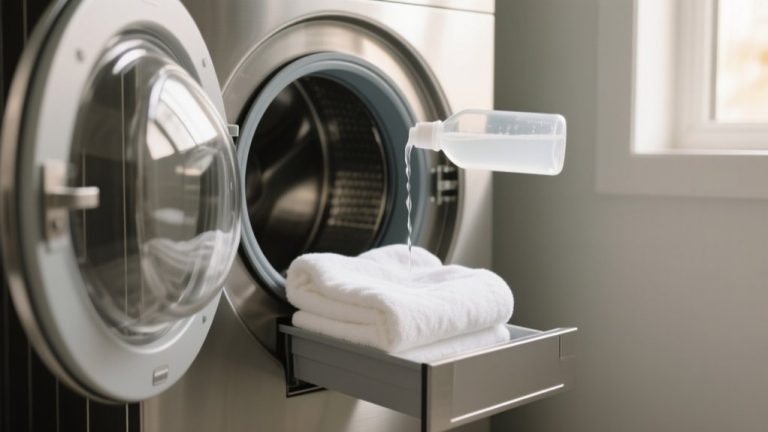
To deep clean your washing machine, pour the ACV into the detergent drawer and run a hot water cycle. This process tackles limescale, mold, bacteria, and odor removal, leaving your machine spotless.
After the cycle, spritz the interior with a water-and-white vinegar mix for enhanced cleaning. Regular use keeps buildup at bay and maintains your machine’s performance.
Here’s what you’ll achieve with apple cider vinegar:
- Eliminate soap residue and grime
- Remove unpleasant odors
- Kill mold and bacteria
- Clean hard-to-reach areas like dispensers
- Extend your washing machine’s lifespan
Using apple cider vinegar this way is practical, effective, and safe for a deep clean every few weeks.
Frequently Asked Questions
Can Apple Cider Vinegar Damage Washing Machine Parts Over Time?
Yes, apple cider vinegar can damage washing machine parts over time if you use it excessively or undiluted.
The acids in ACV may corrode rubber seals and lead to mineral buildup, which affects your machine’s efficiency.
To protect your washer, dilute ACV with water and use it sparingly.
Always check your machine’s manual since some manufacturers advise against acidic substances, recommending white vinegar instead to avoid potential damage.
Is Apple Cider Vinegar Safe for All Water Types in Laundry?
Using apple cider vinegar in laundry is as safe as a gentle rain across all water types, including hard and soft water.
You’ll find its natural acidity helps break down detergent residues and minerals effectively. Just dilute it before adding to avoid staining.
It softens hard water and boosts cleaning power without harming fabrics or machines.
Still, always check your garment care labels to be sure it suits delicate materials.
Can Apple Cider Vinegar Be Used With Fabric Dye or Treatments?
You can use apple cider vinegar with fabric dye or treatments, but you need to be cautious.
Its tannins and color might cause uneven staining or fading, so always test it on a small, hidden area first.
Diluting ACV can reduce risks, but white vinegar is usually safer for preserving colors.
Check your fabric’s care label or manufacturer advice before using ACV to avoid damaging special dyes or finishes.
Does Apple Cider Vinegar Affect the Scent of Laundry Detergent?
Apple cider vinegar won’t overpower or mask your laundry detergent’s scent. Instead, it helps neutralize lingering odors from detergent or fabric softeners, enhancing overall freshness.
When you add it during the rinse cycle, it breaks down residue that can cause musty smells, letting your detergent’s fragrance come through more clearly.
Just make sure to dilute the vinegar properly to avoid any unwanted vinegar scent on your clothes.
How Does Apple Cider Vinegar Interact With Bleach in Laundry?
Mixing apple cider vinegar with bleach in laundry is like mixing fire and water. It creates harmful chlorine gas.
You shouldn’t combine them because the acetic acid in vinegar reacts with bleach’s sodium hypochlorite, releasing toxic fumes.
Always use them separately to keep your laundry safe.
If you accidentally mix them, leave the area immediately and ventilate to avoid inhaling dangerous gases.
Safety comes first when handling these cleaners.
Conclusion
Using apple cider vinegar in your laundry is like giving your clothes a fresh breath of nature. It brightens, softens, and cleans without harsh chemicals, making your laundry routine simpler and greener. Just remember the right dosage and fabric types to avoid any mishaps.
Embrace this natural solution to keep your clothes vibrant and your washing machine spotless. Small steps like these lead to a cleaner, healthier home. Give it a try and see the difference yourself!