What Is At The End Of A Laundry Chute – Everything to Know
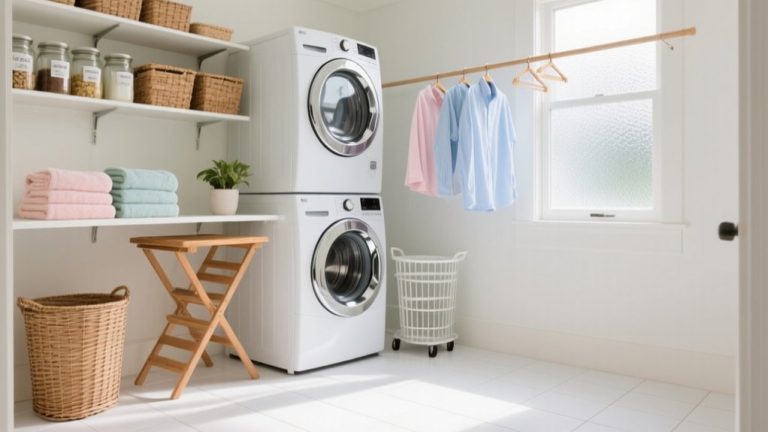
At the end of your laundry chute, you’ll find a dedicated landing area designed to safely collect your clothes. This space is typically a fire-resistant, well-ventilated room or cupboard close to your laundry room, sized to prevent jams and overflow.
It includes self-closing, solid doors for safety and uses smooth materials like tile for easy cleaning. Organized storage options help keep laundry contained and accessible.
Keep going to discover smart designs and maintenance tips that enhance chute efficiency and safety.
Key Takeaways
- The end of a laundry chute typically leads to a dedicated landing area near the laundry room for easy collection and sorting.
- Landing areas are designed with fire-resistant materials and self-closing doors to comply with safety standards.
- The chute exit opening measures between 12×12 and 14×14 inches to prevent jams and allow smooth laundry flow.
- Landing spaces include storage solutions like stackable bins or baskets to organize laundry efficiently.
- Regular maintenance ensures the chute and landing remain clean, safe, and functional for ongoing use.
What Does a Laundry Chute Landing Area Look Like?

When you open the laundry chute’s landing area, you’ll often find a dedicated space like a laundry room or cupboard where clothes gather after their trip down the chute. You want this landing area to be close to the laundry room to reduce the effort of moving clothes.
It should be spacious enough to hold bulk items without causing jams or overflow. Fire safety is essential here, so the landing area usually features fire-resistant materials to meet building codes and protect your home.
Many people install baskets or bins in this space to keep laundry organized and make collection easier.
Ensuring the landing area is practical, accessible, and safe will streamline your laundry routine and maintain compliance with safety standards.
Designing Functional Laundry Chute Exits
You’ll want to design the laundry chute exit so it connects directly to your laundry room. This makes access easy and keeps things efficient.
Also, make sure the exit door is self-closing and solid. Position it at a comfortable height to meet safety codes and usability needs.
Thinking about these factors helps keep your chute safe, accessible, and functional every day.
Exit Design Options
Although the ideal placement for a laundry chute exit is close to or directly above your laundry room, the design of the exit itself plays an essential role in guaranteeing smooth and safe operation.
You’ll want exit openings sized between 12×12 and 14×14 inches to prevent jams and allow laundry to flow freely.
Choosing the right access door style, whether flush-mount, hinged cabinet, or pull-out drawer, affects both function and how well it blends with your space.
Use fire-resistant construction materials for the chute and install self-closing doors made from solid metal to meet safety standards.
Thoughtful design guarantees your chute exit fits your home’s layout while keeping laundry collection efficient and secure.
Safety And Accessibility
Since safety and accessibility are critical, designing your laundry chute exit requires careful attention to door construction, size, and placement.
Use self-closing, solid doors made from fire-resistant materials to prevent accidental access and meet building codes.
Verify the exit opening is at least 12 by 12 inches, or larger, to reduce jams and improve safety.
Position the chute exit near your laundry room to enhance accessibility and streamline laundry transport from upper floors.
The chute should end in a fire-rated room separated by fire-resistant construction, maintaining overall fire safety.
Regularly inspect and maintain the exit to keep it clear of blockages and verify door mechanisms function smoothly.
Prioritizing these elements guarantees a safe, accessible, and code-compliant laundry chute exit in your home.
Materials and Structures for Laundry Chute Landings

Three key considerations shape the design of laundry chute landings: the choice of materials, structural dimensions, and safety features.
When you plan the landing area, prioritize durable, smooth materials like tile or vinyl. This guarantees easy cleaning and helps prevent damage.
The landing area should be at least 24 inches by 24 inches. This gives you enough space for laundry baskets without overflow.
Safety is just as important. Install fire-rated enclosures to meet building codes and reduce fire risks.
Proper ventilation prevents moisture buildup and odors. Good lighting helps you see clearly when retrieving laundry.
Key points to focus on for your laundry chute landing include:
- Durable, easy-to-clean materials used for the landing area
- Adequate landing dimensions for baskets or bins
- Fire-rated safety enclosures
- Proper ventilation and lighting
Best Laundry Collection Solutions at Chute Landings
You’ll want to pick chute landing containers that fit your space but still hold plenty of laundry to keep things manageable.
Think about space-saving options like stackable bins or slim baskets that can slide easily into tight spots.
When you choose the right containers, it makes collection simpler and laundry day way less of a hassle.
Chute Landing Containers
When you set up a chute landing container, you create a dedicated spot that catches laundry right at the chute’s base. This keeps your space organized and efficient.
Chute landing containers handle dirty laundry in laundry rooms by providing a sturdy, reliable landing zone that prevents mess and damage.
Choose containers made from durable plastic or metal, sized to hold multiple loads without overflowing. Many feature lids to keep dirty laundry out of sight and dust-free.
For best results, place your container directly under the chute to reduce impact and scatter.
Consider these key points:
- Durable materials resist frequent use
- Large enough to hold several loads
- Lids keep laundry contained and clean
- Proper placement minimizes mess
This setup streamlines laundry collection and keeps your laundry rooms tidy.
Space-Efficient Laundry Solutions
Setting up a sturdy container at the chute’s base is just the start of keeping your laundry area organized.
To maximize space, consider installing a built-in cabinet or shelving with a self-closing mechanism that neatly conceals your laundry basket.
This setup lets you drop clothes directly into designated compartments, streamlining sorting by color or fabric type right at the chute landing.
A trap door opening into the storage cupboard can keep the floor clear, maintaining a tidy appearance while improving workflow.
Positioning the chute exit close to your washing machine reduces the effort needed to transport laundry, saving you time.
With these space-efficient laundry solutions, you’ll create an orderly, practical area that handles dropped clothes effortlessly and keeps your laundry routine smooth and clutter-free.
How to Prevent Laundry Jams in Your Laundry Chute Landing

Although laundry chutes make transporting clothes easier, preventing jams requires attention to the chute landing area.
To keep your laundry chute functioning smoothly, focus on these key steps:
Make sure the landing area is spacious enough, ideally at least 24 by 24 inches, to accommodate bulky items without clogging.
Regularly inspect and clean the chute to remove lint buildup that can cause blockages and jams.
Use a chute with a smooth, straight design, avoiding sharp bends that might snag clothes.
Install a downward-opening trap door for easy access to dislodge stuck items when necessary.
Tips to Keep Laundry Chute Landings Clean and Hygienic
Keeping your laundry chute landing clean and hygienic requires regular attention to prevent lint buildup and odors. Inspect the area often and use a vacuum or lint brush monthly to keep the chute clean.
Place a washable mat or bin at the landing to catch laundry, making cleanup easier. Using antimicrobial materials helps reduce mold and bacteria growth.
Also, keep the pathway around the chute exit clear of clutter for safe, easy access.
| Task | Frequency | Tools Needed |
|---|---|---|
| Inspect lint and debris | Weekly | Flashlight |
| Vacuum chute landing | Monthly | Vacuum or lint brush |
| Use washable mat/bin | Ongoing | Washable mat/bin |
| Clean antimicrobial areas | Monthly | Mild cleaner |
| Clear pathway | Daily | None |
Laundry Chute Landing Safety and Building Codes
Maintaining a clean and hygienic laundry chute landing is important, but safety and compliance with building codes play an equally essential role to protect your home. For proper laundry chute landing safety, you need to follow the International Residential Code (IRC) guidelines closely. This means using fire-resistant materials for the landing and verifying the chute doesn’t open into sleeping areas.
Ensuring laundry chute landings are clean, safe, and IRC-compliant protects your home effectively.
Keep these key points in mind: install self-closing, solid access doors, preferably metal, to prevent unauthorized access and fire hazards.
Confirm chute openings meet local code sizes, typically 4 to 12 inches, to avoid blockages. Position the chute termination in a designated laundry space separated by fire-rated construction.
Conduct regular inspections to identify and fix potential safety issues promptly.
Following these standards will keep your laundry chute landing safe and code-compliant.
Creative Storage Ideas for Laundry Chute Landings
When you transform your laundry chute landing into a well-organized storage area, you make laundry day easier and more efficient.
Start by placing baskets or bins to catch laundry as it comes down, allowing quick sorting.
Incorporate built-in shelves or cabinetry nearby to store detergent, fabric softener, and other supplies, keeping the space tidy and accessible.
Install hooks or pegs on the wall for hanging laundry bags or cleaning tools, maximizing vertical space.
Adding a small bench or stool creates a convenient spot to fold or sort clothes before moving them to the laundry room.
Use decorative storage solutions like labeled bins or stylish boxes to blend functionality with aesthetics.
These creative storage and organizational solutions optimize your laundry chute landing perfectly.
Frequently Asked Questions
Can Pets Access the Laundry Chute Landing Area?
Yes, pets can access the laundry chute landing area if the exit door isn’t securely closed or child-proofed.
You should carefully design the chute’s exit to limit accessibility and regularly inspect it to guarantee it remains secure.
Installing self-closing doors or child-proof locks will help keep your pets out.
Also, make sure everyone in your household knows to keep the chute doors shut to prevent your curious pets from getting inside.
How Do You Handle Odors at the Laundry Chute End?
Did you know that 60% of laundry chute odors come from trapped lint and moisture? To handle odors at the chute end, you should clean the area regularly and use an odor-neutralizing spray made for fabrics.
Make sure your laundry room has good ventilation to keep the air fresh. Installing a removable lint trap helps catch debris before it causes smells.
Finally, inspect the chute often to prevent blockages and keep airflow smooth.
Is a Laundry Chute Safe for Delicate Fabrics?
A laundry chute can be safe for delicate fabrics if you take precautions. Make sure the chute has smooth surfaces and gentle angles to reduce friction.
Avoid sending fragile items like silk or lace directly; use protective bags instead. Keep the chute wide enough, around 14 inches, to prevent snagging.
Regularly clean it to stop lint buildup.
For extra care, consider carrying delicate fabrics manually to avoid damage altogether.
Can Laundry Chutes Be Retrofitted Into Older Homes?
Wondering if you can retrofit a laundry chute into your older home? Absolutely, you can!
It’s smartest to do it during major renovations when walls are open, making installation easier.
You’ll need to check your home’s framing and follow building codes, especially fire safety rules.
Costs vary from $1,000 to $5,000 depending on complexity.
Using durable materials like stainless steel and ensuring proper alignment will make your chute last longer and work smoothly.
What Is the Average Cost to Install a Laundry Chute?
You can expect to pay between $1,000 and $5,000 to install a laundry chute.
The price depends on how complex the job is and whether you need structural changes.
If you’re adding it during a renovation, costs might be lower.
Keep in mind, standalone chutes or those requiring demolition or fire-rated walls will cost more.
Choosing materials and access door styles also affects your total expense.
Conclusion
At the end of your laundry chute, you’ll find more than just a landing. It’s where convenience meets potential chaos. While it’s a simple drop zone, it can quickly become a cluttered mess without thoughtful design and maintenance.
By choosing the right materials, storage solutions, and safety measures, you turn that often-overlooked space into a functional, clean hub. So, don’t just drop laundry. Create a landing area that works as hard as you do.