How To Strip Laundry In Bathtub – Full Tutorial
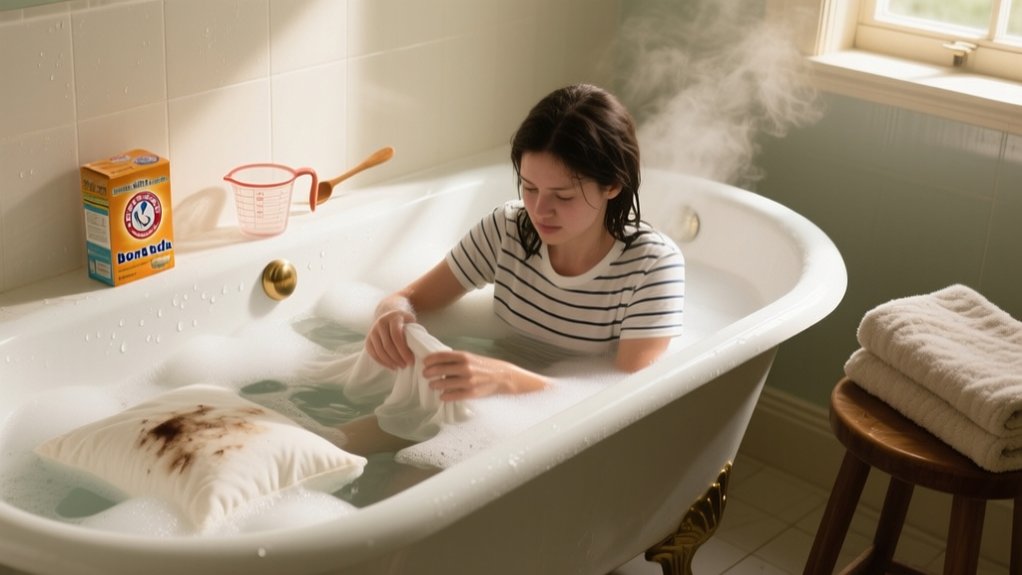
To strip laundry in your bathtub, start by thoroughly cleaning it and filling it halfway with hot water. Add ¼ cup washing soda, ¼ cup borax, and ½ cup powdered detergent. Then fully submerge thick, colorfast items like towels or sheets.
Soak for 4-5 hours, stirring occasionally. Afterward, rinse items until water runs clear and dry them completely in a ventilated area. Follow fabric care guidelines to avoid damage. Keep going if you want to master every step and avoid pitfalls.
Key Takeaways
- Mix ¼ cup washing soda, ¼ cup borax, and ½ cup powdered detergent in hot water filling half the bathtub.
- Soak thick, colorfast laundry like towels and sheets fully in the solution for 4-5 hours, stirring occasionally.
- Drain the tub and rinse laundry under running water until it runs clear, repeating rinses or using a washing machine rinse cycle.
- Avoid stripping delicate, wool, spandex-containing, or dark-colored fabrics to prevent damage and dye bleeding.
- Dry soaked laundry in a ventilated area, gently squeezing out water, and strip every 1-3 months for best fabric freshness.
What Is Laundry Stripping?
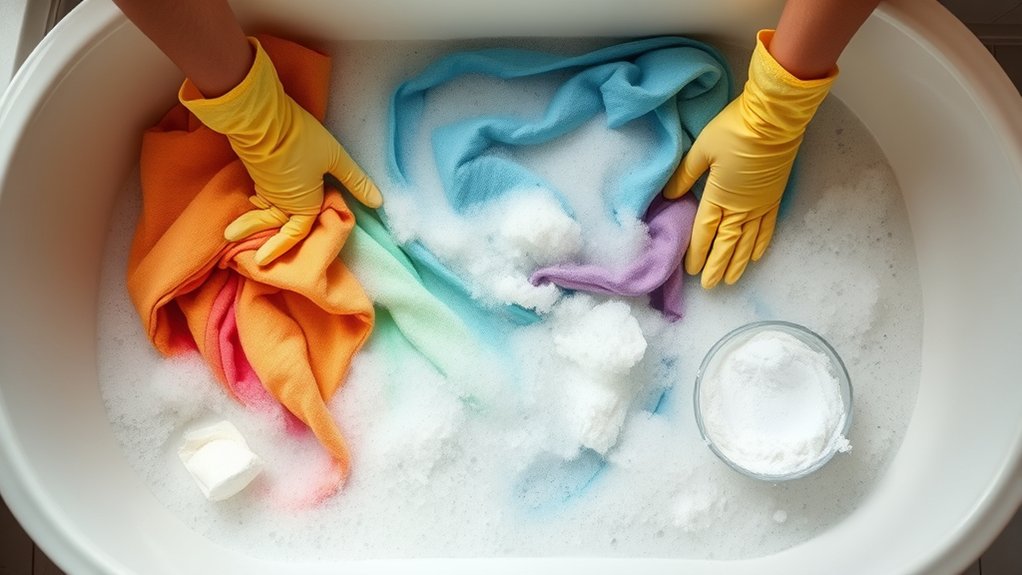
Laundry stripping is a powerful method that targets deep-seated residue on your fabrics, like body oils, detergent, and fabric softener buildup.
This laundry stripping process involves soaking towels and sheets in a hot water solution blended with borax, washing soda, and powdered detergent.
Soak towels and sheets in hot water mixed with borax, washing soda, and powdered detergent for deep cleaning.
Over several hours, the solution works to remove residue that regular washing can’t fully eliminate. You’ll notice dark, murky water as proof that the deep cleaning is successful in lifting stubborn detergent build-up and grime.
This technique refreshes and restores fabric softness and brightness, especially for thicker items prone to accumulation.
Which Laundry Items Can You Safely Strip?
You’ll want to focus on thick, colorfast fabrics like towels, sheets, and duvet covers. These handle hot water well and benefit the most from stripping.
On the other hand, it’s best to avoid delicate items, workout clothes with spandex, and dark textiles. Hot water can damage or fade these.
Suitable Fabrics For Stripping
Although many fabrics can benefit from stripping, you should focus on light-colored towels, sheets, and pillowcases that tolerate hot water without risking color bleeding or damage.
Suitable fabrics include cotton comforters and duvet covers, which absorb residue effectively. Heavy fabrics like bath towels and washcloths also benefit from stripping since they accumulate more buildup over time.
Before you start, always check care labels to confirm the items can safely endure hot water soaking. Avoid anything delicate or prone to dye transfer.
By selecting the right materials, you guarantee thorough cleaning without compromising your laundry’s integrity.
Using appropriate fabrics maximizes the effectiveness of stripping while protecting your textiles from damage.
Fabrics To Avoid
Since the stripping process involves hot water and strong solutions, you should avoid delicate fabrics like silk and lace that can easily get damaged. These materials lose their texture and may weaken during stripping.
Also, steer clear of wool items, as the process strips away lanolin, reducing softness and durability.
Fabrics containing spandex or elastane, such as workout gear, don’t hold up well either. The solution’s pH can break down their elasticity.
Be cautious with dark-colored fabrics too, since hot water can cause dye bleeding, ruining lighter items if stripped together.
Always check care labels to confirm if your fabrics tolerate hot water and harsh detergents.
Avoiding these fabrics guarantees your laundry stripping is both effective and safe.
Hot Water Safety Checks
How can you be sure your laundry items will hold up in hot water during stripping? Always start by checking the care labels; they tell you if the fabric tolerates hot water without damage.
Keep these four points in mind:
- Light-colored towels and sheets are perfect for stripping laundry since they handle hot water well.
- Avoid dark fabrics because hot water can cause dye bleeding.
- Skip delicate fabrics like wool and spandex-containing workout clothes. They risk shrinkage, lanolin loss, or material degradation.
- Never strip items labeled for cold water washes; hot water can distort or shrink them.
What Ingredients Do You Need for Laundry Stripping?
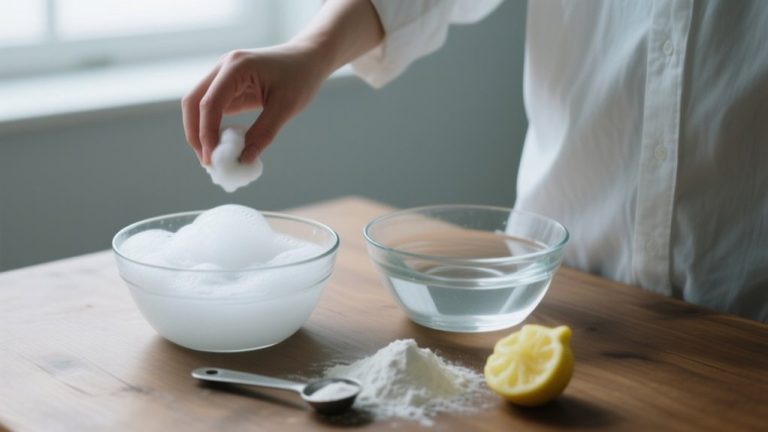
To strip your laundry effectively, you’ll need three essential powdered ingredients: Borax, washing soda, and a powdered detergent without bleach.
Hot water is super important because it activates these ingredients and helps loosen all that buildup in your fabrics.
Just a heads up—make sure to avoid any detergents with bleach, since they can actually damage your clothes during the stripping process.
Essential Powdered Ingredients
A successful laundry stripping session hinges on using three essential powdered ingredients: sodium borate (Borax), sodium carbonate (washing soda), and powdered laundry detergent. These work together to remove buildup from detergent, fabric softeners, and body oils trapped in your fabrics.
For a standard bathtub, follow this precise ratio:
- ¼ cup washing soda. It breaks down residues and softens water.
- ¼ cup sodium borate (Borax). This boosts cleaning power and helps remove hard water minerals.
- ½ cup powdered detergent. Choose one without bleach to protect fabric fibers.
- Optional: ¼ cup Calgon to enhance mineral removal, especially in hard water areas.
This combination penetrates textile fibers efficiently, making sure your laundry stripping effectively eliminates unwanted buildup.
Hot Water Importance
Although the right ingredients are essential for effective laundry stripping, hot water plays an equally critical role in the process.
Hot water helps dissolve Borax, washing soda, and powdered detergent in your laundry stripping recipe, activating the cleaning agents so they penetrate fabric fibers deeply.
This cleaning method breaks down oils, detergent buildup, and stubborn fabric softener residues that ordinary washing misses.
For every half-full bathtub, use ¼ cup Borax, ¼ cup washing soda, and ½ cup powdered detergent in hot water to maximize residue removal.
Always check your fabrics’ care labels first because hot water can damage delicate items.
Using hot water not only dissolves ingredients properly but also guarantees the stripping solution works efficiently, leaving your laundry truly clean and refreshed.
Avoiding Bleach Detergents
Three key ingredients form the foundation of effective laundry stripping: Borax, washing soda, and powdered detergent without bleach.
Avoiding bleach detergents is essential to protect fabric integrity and maintain colors. Here’s what you need to know:
- Use ¼ cup of Borax to soften water and break down residues.
- Add ¼ cup of washing soda to boost cleaning without harming fabrics.
- Include ½ cup of powdered laundry detergent, ensuring it’s free from bleach.
- Always check the detergent’s ingredient list to confirm no bleach or harsh chemicals are present.
How to Prepare Your Bathtub and Laundry for Stripping
Before you begin stripping your laundry, make sure you thoroughly clean your bathtub to prevent any dirt or residue from contaminating your fabrics.
Use a non-abrasive cleaner to guarantee the surface is spotless and safe for your laundry.
Next, gather Borax, washing soda, and powdered laundry detergent. These ingredients create the effective stripping solution.
Fill your bathtub about halfway with hot water because the heat is essential for dissolving these agents properly.
Before submerging your laundry, always check the care labels to confirm the items can handle hot water without damage.
Select towels, sheets, or similar items, and fully immerse them in the water to maximize residue removal.
Proper preparation of both your bathtub and laundry guarantees the stripping process works efficiently and protects your fabrics.
How to Soak Laundry in Your Bathtub
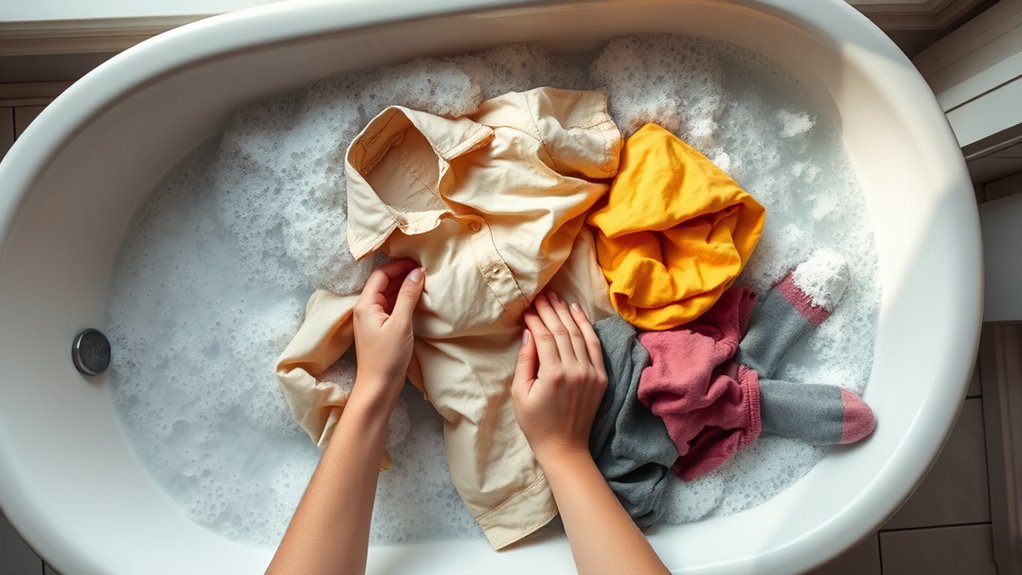
Start by filling your bathtub halfway with hot water, making certain the temperature is suitable for the fabrics you plan to soak. Knowing how to soak laundry in your bathtub correctly is essential to strip your laundry effectively.
Follow these steps:
- Add ¼ cup of Borax, ¼ cup of washing soda, and ½ cup of powdered laundry detergent to the water.
- Stir the water gently to dissolve the washing soda and detergent completely.
- Submerge your laundry items fully, swishing them around to saturate every fiber.
- Let the laundry soak for 4-5 hours, stirring occasionally to break down buildup.
This process guarantees the water and cleaning agents penetrate deeply, maximizing your laundry stripping results.
How to Rinse and Wash Laundry After Stripping
Once your laundry has soaked for several hours, it’s time to remove the solution and rinse your items thoroughly. Start by draining the bathtub, then rinse each piece under clean, running water to remove all traces of the stripping solution.
Make sure your laundry is thoroughly rinsed, continuing until the water runs clear to indicate no cleaning agents remain. Use the rinse cycle if you transfer items to a washing machine afterward for added cleanliness.
Rinse laundry until water runs clear, ensuring all cleaning agents are removed before machine washing for extra freshness.
Check for any lingering stains or odors, repeating rinsing if necessary to remove stains fully. Gently squeeze out excess water without wringing to protect fabric fibers.
Finally, hang your clean laundry in a well-ventilated space, allowing it to dry completely before storage to prevent mold and mildew growth.
Tips to Avoid Damage and Dye Bleeding
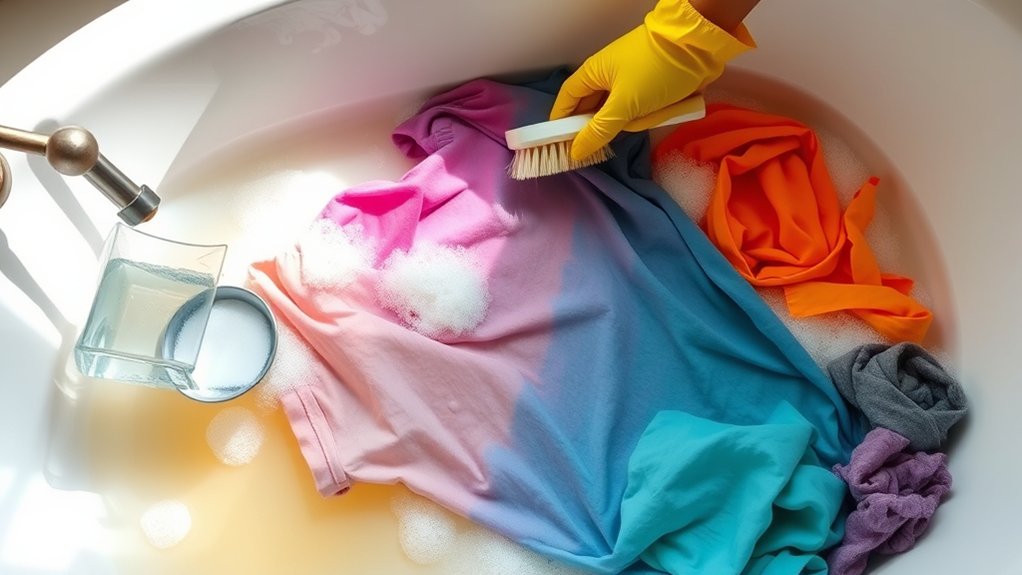
Although stripping laundry can refresh your fabrics, taking precautions is essential to avoid damage and dye bleeding.
Follow these tips to protect your clothes:
Always check care labels before stripping to confirm fabrics tolerate hot water and won’t shrink or bleed.
Avoid mixing colored and white fabrics to prevent dye transfer and discoloration during soaking.
Limit soaking time for delicate items to protect fibers from weakening and damage.
Perform a patch test on a small, hidden area of vibrantly colored fabrics to detect potential dye bleeding before fully stripping.
How Often Should You Strip Laundry for Best Results?
How often should you strip your laundry to keep it fresh and clean? For best results, aim to strip towels and sheets every 1-3 months, especially if you live in an area with hard water that causes buildup.
If you use items like gym towels or bedding frequently or they’re heavily soiled, consider stripping them monthly.
Pay attention to signs like towels feeling stiff, less absorbent, or holding stubborn odors. These indicate it’s time to strip, regardless of the schedule.
To extend time between stripping sessions, use less detergent and add extra rinses during regular washing.
This helps prevent buildup that dulls fabric and traps odors, keeping your laundry truly fresh and clean with less frequent but effective stripping.
Frequently Asked Questions
Can Laundry Stripping Remove Mildew Smells Effectively?
Yes, laundry stripping can effectively remove mildew smells.
When you soak your clothes in a hot water mixture with agents like Borax and washing soda, it breaks down the buildup of oils, detergent, and mold spores trapped in the fabric.
You’ll want to let your items soak for 4-5 hours to allow the solution to penetrate deeply.
Make sure you rinse thoroughly afterward to avoid any residue that could cause odors to linger.
Is Laundry Stripping Safe for Delicate Fabrics?
You shouldn’t strip delicate fabrics because 85% of experts agree it can cause damage.
Hot water and harsh chemicals often weaken fibers like wool, silk, and lace, ruining their texture and softness.
Dark or vibrant colors may bleed, and stretchy materials lose elasticity.
Always check care labels first.
If you want to refresh delicates, opt for gentler methods like hand washing with mild detergent instead of stripping.
How Do You Dispose of the Dirty Stripping Water?
You should pour the dirty stripping water down a drain connected to a proper wastewater system.
Avoid dumping it on your garden or lawn since the concentrated detergent and minerals can damage plants and soil.
Let the water cool before disposal to protect your plumbing from sudden temperature changes.
Use a bucket for easier control, and always check local regulations to verify you’re disposing of the water responsibly and legally.
Can Laundry Stripping Be Done in a Washing Machine?
Yes, you can strip laundry in a washing machine, especially if it’s front-loading with a soak cycle.
Use the same stripping ingredients and avoid overloading to allow proper water circulation.
However, keep in mind that washing machines often don’t reach or maintain the high temperatures needed for the most effective stripping.
Always check your fabric’s care labels first to avoid damage from prolonged soaking or heat exposure.
Will Laundry Stripping Cause Colors to Fade Over Time?
Yes, laundry stripping can cause colors to fade over time, especially on dark or vibrant fabrics.
The hot water and high pH stripping solution can break down dyes, leading to color loss.
To protect your clothes, avoid stripping colored items with whites.
Check care labels for heat sensitivity and use this method sparingly.
Maintaining proper laundry habits helps preserve colors and reduces the need for stripping in the first place.
Conclusion
Now that you know how to strip laundry in your bathtub, you’re armed with a powerful way to refresh your clothes deeply. Think of it as giving your laundry a fresh start, wiping away hidden grime and buildup.
Just follow the steps carefully, and you’ll keep your fabrics bright and fresh without damage. Remember, like any good ritual, consistency is key. Strip wisely, and your laundry will thank you with every wear.