Does Laundry Detergent Kill Mold – Yes or No?
No, regular laundry detergent alone doesn’t kill mold spores effectively because it lacks antimicrobial ingredients needed to eliminate and prevent mold growth. While hot water helps reduce mold viability, it’s not enough without specialized detergents containing active agents like tea tree oil or citrus extracts.
These antimicrobial detergents encapsulate and neutralize spores more efficiently. Proper washing temperature, additives, and machine maintenance also play key roles. Understanding these factors will clarify how to tackle mold in your laundry effectively.
Key Takeaways
- Regular laundry detergents do not effectively kill mold spores; they mainly remove dirt and stains.
- Antimicrobial detergents with active agents like tea tree oil can kill and prevent mold regrowth.
- Hot water alone reduces mold viability but requires antimicrobial detergents for thorough elimination.
- Specialty detergents form micelles that encapsulate and neutralize mold spores during washing.
- Proper washing, rinsing, and drying combined with antimicrobial detergents ensure effective mold removal.
How Laundry Detergent Removes Mold From Clothes
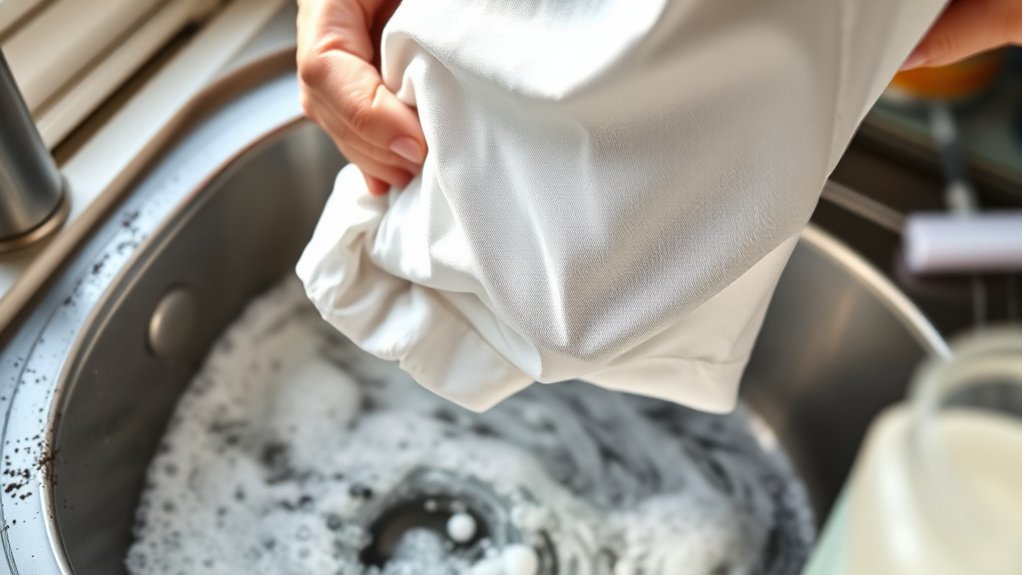
Laundry detergents with antimicrobial properties effectively remove mold from clothes by encapsulating mold spores in micelles, which water then rinses away during the wash cycle.
During the washing process, agitation enhances detergent penetration into fabric fibers, breaking down mold colonies embedded within.
Agitation boosts detergent absorption, effectively disrupting and removing mold deeply embedded in fabric fibers.
Using the hottest water temperature permitted by the garment’s care label greatly improves mold removal, as heat reduces mold viability when combined with detergent.
After washing, thorough rinsing is essential to eliminate residual detergent and any remaining mold spores, ensuring truly clean clothes.
Consistently using mold-targeting laundry detergents, especially those with active agents like tea tree oil or citrus extracts, helps prevent mold regrowth on fabrics.
Can Regular Detergent Alone Kill Mold Spores?
Although regular detergent effectively removes dirt and stains, it doesn’t reliably kill mold spores because it lacks antimicrobial agents designed to neutralize microbial activity. When you use standard laundry detergent in your washing machine, it primarily targets soil and oils, not the microbial structures of mold.
Hot water improves removal efficiency by disrupting mold, but without antimicrobial ingredients, spores may survive the rinse cycle. This means relying solely on regular detergent could leave behind viable mold spores, risking regrowth.
| Factor | Impact on Mold Spore Removal |
|---|---|
| Laundry Detergent | Removes dirt, lacks antimicrobial action |
| Mold Spores | Resistant to non-antimicrobial cleaning |
| Antimicrobial | Essential for neutralizing spores |
| Hot Water | Enhances mold structure breakdown |
| Rinse Cycle | Removes residual spores and detergent |
Why Some Detergents Work Better Against Mold
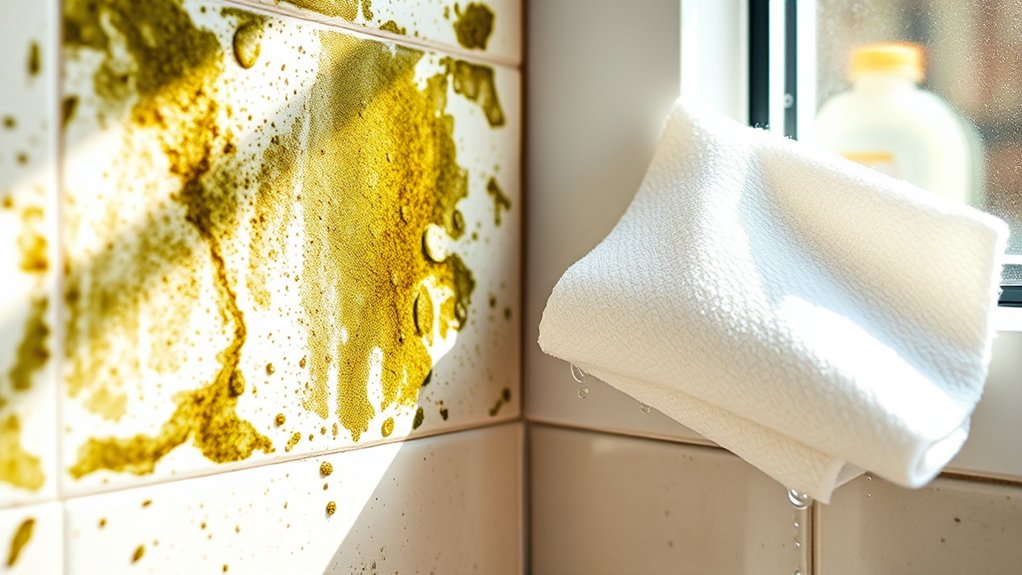
Because mold spores resist standard cleaning agents, detergents with antimicrobial properties outperform regular formulas in mold removal. Laundry detergents containing citrus seed extracts or tea tree oil specifically neutralize mold spores, enhancing efficacy.
These detergents form micelles that encapsulate soil and contaminants, improving mold removal during the washing process. Furthermore, natural ingredients like Hypotonic Electrolytic Hypochlorous Acid provide potent action against mold and mycotoxins, reinforcing the cleaning solution’s effectiveness.
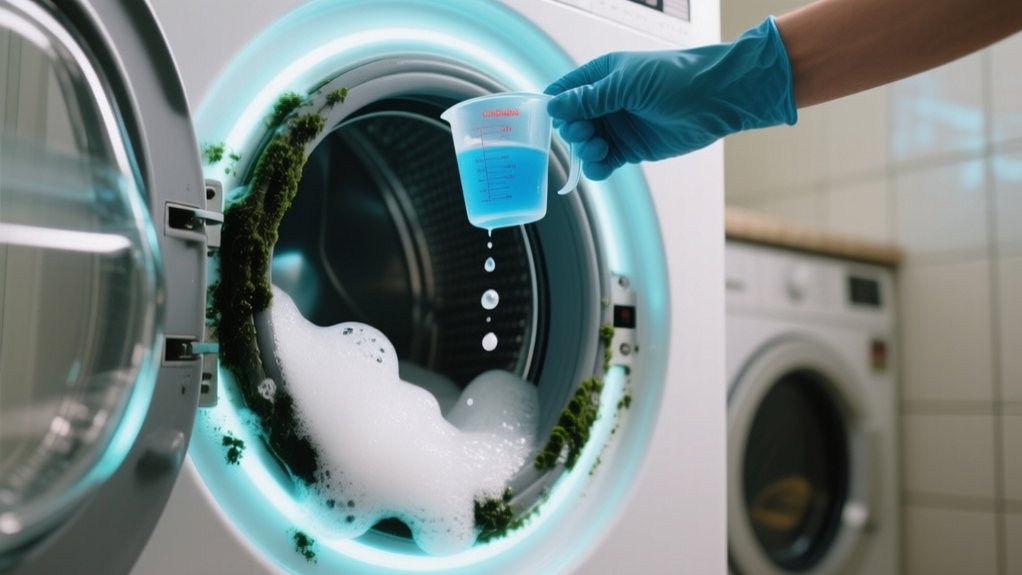
To maximize results, verify your washing machines are regularly cleaned, preventing mold buildup that can undermine detergent performance. Proper rinsing further eliminates micelles and debris from fabric fibers, optimizing the mold removal process.
Choosing detergents formulated with targeted antimicrobial agents and natural ingredients offers a scientifically supported approach to combat mold efficiently in laundry routines.
How Water Temperature Boosts Mold Removal
You’ll find that washing clothes at around 130°F (54°C) actually disrupts mold spores’ structure and makes your detergent work even better.
This can lead to up to a 99% reduction in mold presence. Just make sure your fabrics can handle this kind of heat so you don’t end up damaging them.
Using hot water like this really boosts mold removal way beyond what detergent can do on its own.
Hot Water Effectiveness
How does water temperature influence mold removal during laundry? Hot water, typically above 140°F (60°C), greatly reduces mold spores’ viability. When you combine hot water with antimicrobial laundry detergents, the heat activates effective detergents, enhancing mold removal.
Washing fabrics in hot water, following the care label to avoid damage, dissolves oils and residues that harbor mold. Studies show washing at 160°F (71°C) further decreases mold presence compared to cooler washes.
However, heat alone may not eradicate deeply embedded spores. You need both heat and effective detergents for thorough mold elimination.
| Water Temperature | Mold Spore Viability | Detergent Activation |
|---|---|---|
| Cold (<80°F) | High | Low |
| Warm (80-140°F) | Moderate | Moderate |
| Hot (>140°F) | Low | High |
Safe Heat Application
When you apply hot water above 130°F (54°C) during laundry, you greatly boost mold removal by denaturing mold proteins and disrupting their cellular structures.
This temperature enhances the ability of detergent to kill mold effectively while improving cleaning by dissolving oils and dirt that harbor spores.
Many fabric care labels recommend hot water for mold-affected items, underscoring its essential role in mold remediation.
However, thorough washing and rinsing are critical to expel dead spores and residues fully.
While lower temperatures may protect delicate fabrics, they reduce the efficacy of mold removal.
To maximize mold removal during laundry, combine hot water with an appropriate detergent and guarantee complete cleaning cycles.
This evidence-based approach ensures you effectively kill mold and maintain fabric hygiene.
Using Additives and Specialty Detergents to Fight Mold
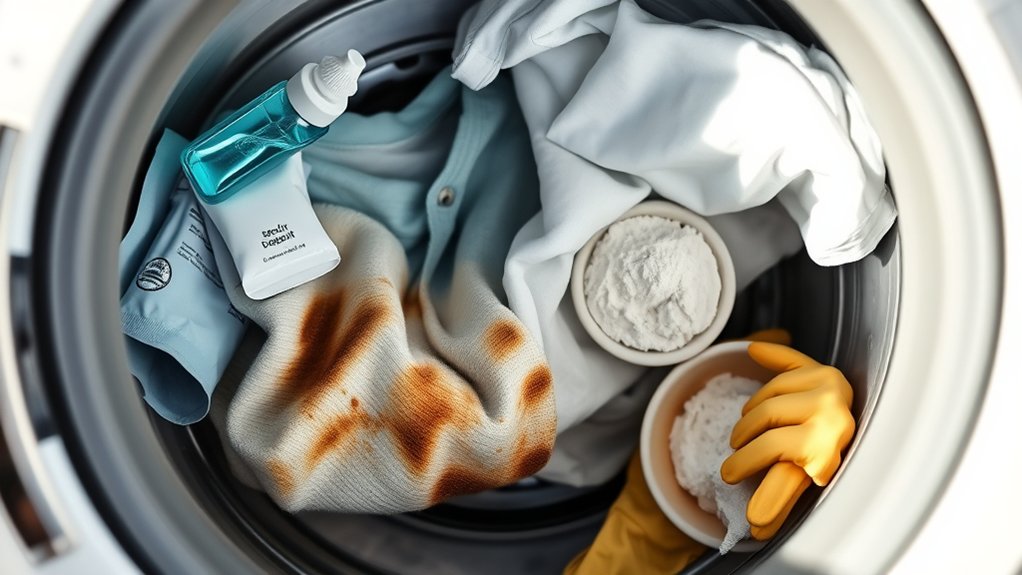
Although many standard detergents clean effectively, they often lack antimicrobial agents necessary to neutralize mold spores and odors in laundry.
Specialty detergents like EC3 Laundry Additive contain targeted antimicrobial ingredients that specifically remove the mold or mildew embedded in fabrics.
Specialty detergents such as EC3 Laundry Additive target and eliminate mold and mildew deeply embedded in fabrics.
When added during the rinse cycle, EC3 leverages natural extracts such as grapefruit seed and tea tree oil to enhance mold eradication.
These natural extracts provide proven antifungal benefits, making them superior to conventional detergents lacking such properties.
Utilizing specialty detergents or incorporating natural additive solutions strengthens your laundry’s ability to combat mold, especially if you’re sensitive to mold or have a compromised immune system.
Consistent use of these products guarantees a more effective and lasting defense against mold contamination in your laundry routine.
Front Load vs. Top Load Washers: Which Cleans Mold Better?
Why does the choice between front load and top load washers matter for mold removal? Front load washers use less water, which can cause moisture retention and mold growth if maintenance lapses. Top load washers typically avoid water accumulation, reducing mold risk.
Both washer types agitate effectively to clean mold but differ in maintenance needs. Proper rinsing efficiency is critical in removing mold spores irrespective of washer type.
| Feature | Front Load Washers | Top Load Washers |
|---|---|---|
| Water Usage | Low, higher moisture retention | Higher, less water accumulation |
| Mold Growth Risk | Higher without maintenance | Lower due to water drainage |
| Maintenance | Frequent rubber seal cleaning | Less frequent maintenance |
| Rinsing Efficiency | Effective if adequately rinsed | Effective with thorough rinsing |
Your cleaning routine impacts mold removal more than washer type.
Natural and DIY Laundry Detergents for Mold Removal
You can boost mold removal by adding natural ingredients like tea tree oil and citrus seed extracts—they’re known for their antifungal powers.
When you’re whipping up your own DIY detergent, try mixing Dr. Bronner’s Sal Suds with baking soda and a few drops of essential oils. This combo works great as an antimicrobial formula.
Not only do these ingredients help zap mold spores, but they also tackle odors and keep your fabrics fresh and mold-free for longer.
It’s a simple way to keep your laundry clean and naturally protected!
Natural Additives Effectiveness
How effective are natural additives in combating mold during laundry? Natural additives like tea tree oil exhibit strong antimicrobial properties, effectively inhibiting mold growth. Vinegar acts as a natural disinfectant, reducing musty odors but offers limited mold removal on its own.
Baking soda excels at odor elimination but is less potent against mold. Combining these additives in DIY detergents enhances mold-fighting capabilities while keeping fabrics safe. Here’s a concise comparison:
| Additive | Effectiveness Against Mold |
|---|---|
| Tea Tree Oil | Strong antimicrobial, inhibits mold growth |
| Vinegar | Reduces musty odors, limited mold removal |
| Baking Soda | Odor removal, moderate mold inhibition |
| Citrus Seed Extract | Antimicrobial, supports clean laundry |
You can optimize mold removal by selecting additives based on fabric and mold type.
DIY Detergent Ingredients
Although commercial detergents often contain harsh chemicals, you can create effective DIY laundry solutions for mold removal using natural ingredients.
Key DIY detergent ingredients include plant-based surfactants like those in Dr. Bronner’s Sal Suds, which enhance cleaning power against mold spores.
Adding baking soda helps neutralize odors and improves cleaning effectiveness, but use it moderately to prevent fabric damage.
Incorporate tea tree oil, a natural antimicrobial, to boost mold-fighting capabilities without relying on synthetic chemicals.
A proven formula combines 5.3 oz Sal Suds, 5.3 oz baking soda, and 30 drops of tea tree oil diluted in distilled water.
Always test your homemade detergent on a small fabric area first to confirm no discoloration or damage occurs.
This approach offers an effective, evidence-based alternative for removing mold naturally.
Essential Oils Benefits
When tackling mold in laundry, incorporating essential oils like tea tree and citrus seed extracts greatly enhances the antimicrobial effectiveness of DIY detergents. Essential oils possess proven antimicrobial properties that actively inhibit fungal growth and mold spores on fabrics.
Tea tree oil, in particular, exhibits potent antifungal effects, supported by studies confirming its ability to disrupt mold proliferation during laundry.
By blending essential oils with natural cleaning agents such as baking soda and vinegar, you create a synergistic formula that considerably improves mold removal efficacy.
This approach not only targets mold but also reduces reliance on harsh chemicals, promoting a safer cleaning environment.
Using essential oils in your laundry routine guarantees effective mold remediation while benefiting from their natural cleaning power and pleasant aromatic qualities.
Preventing Mold Growth on Clothes and in Your Washer
Because damp environments promote mold growth, you must guarantee clothes dry completely before storing them and maintain adequate airflow to reduce moisture retention. To prevent mold and the accompanying musty odor, use laundry detergent with antimicrobial properties that eliminate mold spores during washing.
Regularly clean your washing machine, focusing on seals and drum areas, to inhibit mold buildup. Managing indoor humidity below 60% also helps prevent mold growth.
| Task | Method | Benefit |
|---|---|---|
| Dry Clothes | Thorough drying before storage | Prevents fabric mold |
| Clean Washer | Regular cleaning of seals/drum | Stops mold buildup |
| Use Detergent | Antimicrobial laundry detergent | Kills mold spores |
These steps collectively help you maintain mold-free clothes and a hygienic washing machine.
Frequently Asked Questions
Can Mold on Clothes Cause Health Problems?
Yes, mold on clothes can cause health problems. When you wear mold-contaminated fabrics, you risk allergic reactions, respiratory issues like asthma exacerbation, and skin irritations.
Prolonged exposure to mold spores and mycotoxins released from these clothes may lead to neurological symptoms such as headaches and cognitive impairments.
To protect your health, you should remove mold effectively using appropriate washing methods and antimicrobial detergents to minimize these risks.
How Quickly Does Mold Grow on Damp Fabrics?
Mold can start growing on damp fabrics within 24 to 48 hours under ideal conditions like warmth and high humidity.
If you leave wet clothes in poorly ventilated or moist environments, spores rapidly colonize the fabric.
Even minimal moisture from sweat or rain can trigger this growth if the fabric isn’t dried properly.
To minimize mold risk, you should wash and dry fabrics promptly, ensuring moisture doesn’t linger longer than a day or two.
Is It Safe to Wear Clothes With Mold?
You shouldn’t wear clothes with mold because they can trigger allergic reactions, respiratory issues, and worsen sensitivities.
Mold produces mycotoxins that compromise your health if inhaled or ingested.
Even if you wash with antimicrobial detergent, any residual mold spores still pose risks until completely removed.
To protect yourself, always thoroughly wash and dry moldy fabrics before wearing them again, ensuring you minimize exposure to harmful contaminants and safeguard your well-being.
Can Mold Return After Washing Clothes?
Yes, mold can return after washing clothes if you don’t address moisture sources.
Detergents remove visible mold but may not eliminate all spores, especially if fabrics stay damp.
You need to dry clothes thoroughly using heat or sunlight and store them in low-humidity environments.
Without proper drying and ventilation, mold spores can regrow, so controlling moisture and humidity is essential to prevent mold recurrence on cleaned garments.
How to Dispose of Moldy Clothes Safely?
To dispose of moldy clothes safely, first isolate them from clean laundry to prevent cross-contamination.
Wear gloves and a mask to protect yourself from spores.
If mold is extensive, seal the items in a plastic bag to contain spores before disposal.
Check local regulations for hazardous waste guidelines, especially for heavily contaminated clothing.
For mildly affected clothes, wash and dry them thoroughly before discarding to reduce mold presence and spore spread.
Conclusion
You can’t rely on regular laundry detergent alone to kill mold spores effectively. It’s like using a flashlight in broad daylight. Higher water temperatures and specialty additives are key to breaking down mold’s stubborn defenses.
Front load washers often outperform top loads in mold removal due to better water circulation. To protect your clothes and washer, use targeted solutions and maintain cleanliness regularly.
This evidence-based approach guarantees mold doesn’t stand a chance in your laundry routine.