What Kind Of Vinegar For Laundry – Straight Answer
You should use distilled white vinegar for laundry because it brightens clothes, removes odors, and softens fabrics without leaving a strong smell. Add ½ to 1 cup during the rinse cycle for best effects.
Avoid using it on delicate fabrics like silk or wool to prevent damage. Don’t mix it directly with detergent or baking soda for ideal cleaning.
If you want to keep your washing machine fresh and learn handy tips, there’s more useful info ahead.
Key Takeaways
- Use distilled white vinegar for laundry as it brightens, deodorizes, and softens fabrics effectively without lingering smells.
- Add ½ to 1 cup of distilled white vinegar during the rinse cycle for best results.
- Avoid using vinegar on delicate fabrics like silk, wool, and elastic materials to prevent damage.
- Do not mix vinegar directly with detergent or bleach to maintain cleaning effectiveness and safety.
- Distilled white vinegar is an eco-friendly, cost-effective alternative that maintains fabric integrity and washing machine efficiency.
Why White Distilled Vinegar Is the Best Choice for Laundry
When it comes to laundry, white distilled vinegar stands out as the best choice because it brightens whites and colors without leaving any lingering smell. Its acetic acid content boosts cleaning performance by breaking down mildew and stubborn odors effectively.
White distilled vinegar brightens fabrics and eliminates odors naturally with its powerful acetic acid content.
You can use white distilled vinegar as a natural fabric softener, which softens clothes and reduces static cling safely on most fabrics. Adding it during the rinse cycle enhances freshness and overall cleanliness.
Beyond its effectiveness, white distilled vinegar offers a cost-effective, eco-friendly alternative to harsh chemical cleaners, making it a practical, versatile option for your laundry routine.
Trusting white distilled vinegar guarantees your clothes come out cleaner, fresher, and softer without compromising fabric integrity or environmental safety.
How White Vinegar Brightens Clothes and Removes Odors
White distilled vinegar doesn’t just soften fabrics. It also brightens your clothes and tackles stubborn odors. The acetic acid in distilled white vinegar breaks down yellowing and removes stains and odors from sweat, smoke, and mildew. This restores vibrancy to both whites and colors.
For effective cleaning, add half a cup of vinegar during the rinse cycle. It eliminates musty smells and refreshes damp towels without leaving any lingering scent. This natural deodorizer is safe for most fabrics and helps maintain your laundry’s freshness over time.
Using distilled white vinegar regularly is an eco-friendly way to keep your clothes looking bright and smelling clean. It’s a practical addition to your laundry routine for stain removal and odor control.
How to Use White Vinegar Safely in Your Laundry
Although vinegar is a powerful natural cleaner, you’ll need to use it carefully to protect your clothes and washing machine. When adding vinegar, use distilled white vinegar during the rinse cycle. About ½ to 1 cup works well to soften fabrics and remove odors effectively.
Always check fabric care labels, since vinegar can bleach or damage delicate materials. Avoid mixing vinegar and baking soda directly with laundry detergent because this can reduce the detergent’s effectiveness and interfere with cleaning solutions.
For stain pretreatment, dilute vinegar with water in a spray bottle and apply it before washing.
To maintain your machine, run an empty cycle with 2 cups of vinegar every three months to clear soap scum and mineral buildup.
These steps guarantee safe, efficient use of vinegar in your laundry routine.
When Should You Avoid Using Vinegar on Fabrics?
You should avoid using vinegar on delicate fabrics like silk, wool, and elastic materials because it can weaken the fibers and reduce their elasticity.
It’s a good idea to be careful when applying vinegar directly in your washing machine, too, since it might cause corrosion over time.
Always check the care labels on your clothes before adding vinegar to your laundry.
That way, you can prevent any damage or unwanted color changes.
Fabric Types To Avoid
If your laundry includes delicate fabrics like silk or wool, steer clear of vinegar since its acidity can weaken these protein-based fibers and ruin their texture.
Vinegar might seem like a natural alternative to fabric softeners, but it’s not safe for all materials.
Avoid using vinegar on clothes with elastic fibers such as spandex, as it can break down their stretch and fit.
Also, fabrics with special finishes, like water-repellent coatings, may lose their effectiveness when exposed to vinegar.
Be cautious with brightly dyed garments too.
Vinegar’s low pH can cause colors to fade or bleed.
Always check care labels before adding vinegar to your wash, especially for delicate fabrics, to prevent unintended damage and keep your clothes in good shape.
Risks Of Direct Use
Knowing which fabrics to avoid when using vinegar helps minimize risks, but it’s equally important to understand when direct use of vinegar can cause problems.
Using vinegar straight in your washing machine may corrode internal parts over time, risking costly damage.
Vinegar can also bleach or discolor fabrics with pH-sensitive dyes, so you should avoid applying it directly to such items.
While elastic materials like spandex are weakened by vinegar, reducing their lifespan, delicate fabrics such as silk and wool can suffer texture and appearance damage.
Always check fabric care labels before using vinegar, as acidic treatments may cause permanent harm.
Being mindful of these risks guarantees you protect both your fabrics and washing machine when using vinegar in laundry.
Elastic And Delicate Care
Although vinegar offers many benefits for laundry, it’s best to avoid using it on elastic and delicate fabrics. Vinegar’s low pH can weaken elastic materials, causing fibers to deteriorate over time.
When it comes to delicate fabrics like silk and wool, vinegar may alter colors or damage protein-based fibers, leading to discoloration or weakening. Always check care labels before adding vinegar to your wash; some fabrics simply aren’t compatible and could suffer permanent damage.
Since vinegar can bleach pH-sensitive dyes, it’s risky to use it on any delicate item without confirming its safety first. For these fabrics, consider gentler alternatives to maintain their quality and longevity.
Being cautious helps you protect your wardrobe while still enjoying vinegar’s laundry benefits elsewhere.
Can You Mix White Vinegar With Detergent or Baking Soda?
How should you use white vinegar with detergent or baking soda in laundry? Avoid mixing vinegar directly with detergent because its acidity reduces how well the detergent works. Also, vinegar and baking soda neutralize each other, so combining them doesn’t give you any extra cleaning power.
Instead, use vinegar during the rinse cycle to remove odors and stains. Use baking soda in the wash cycle to control suds and freshen fabrics.
| Combination | Result |
|---|---|
| Vinegar + Detergent | Reduced cleaning effectiveness |
| Vinegar + Baking Soda | Neutralization, no benefit |
| Vinegar alone | Removes odors and stains |
Use vinegar and baking soda separately to get the best laundry results without compromising cleaning efficiency.
Using White Vinegar to Maintain Your Washing Machine
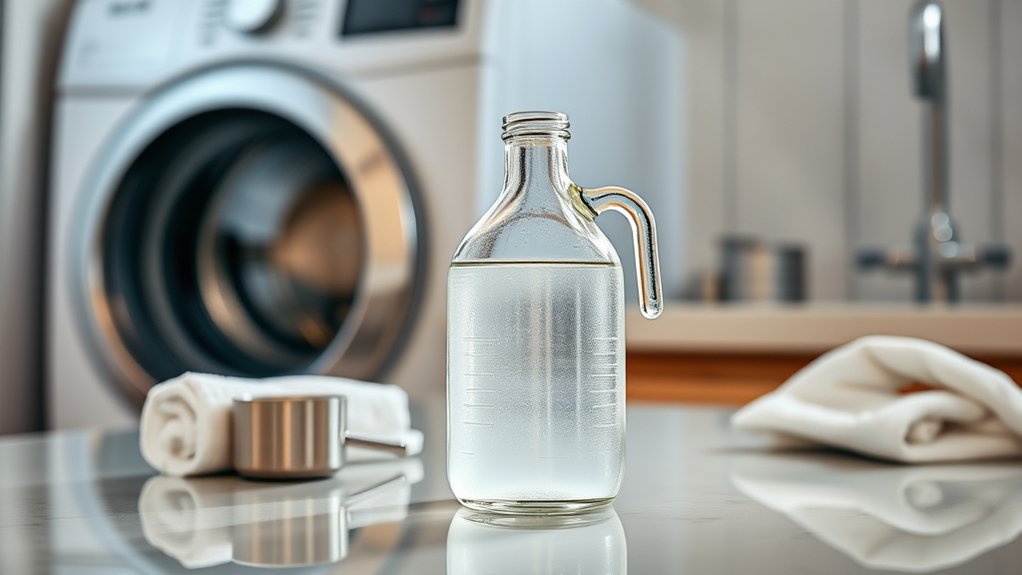
Besides improving your laundry results, white vinegar also plays a key role in keeping your washing machine clean and odor-free.
To maintain your washing machine, run an empty cycle every three months using two cups of white vinegar.
Run an empty cycle with two cups of white vinegar every three months to keep your washing machine fresh.
This natural cleaning product effectively dissolves soap scum and mineral build-up, which can reduce your machine’s efficiency.
White vinegar also cleans detergent dispensers and eliminates unpleasant odors like mildew from the drum.
Unlike harsh cleaning products, it prevents corrosion and prolongs your washing machine’s lifespan.
By integrating white vinegar into your routine maintenance, you avoid costly repairs and keep your appliance running smoothly.
This simple, eco-friendly method guarantees your washing machine stays fresh and efficient without relying on chemical cleaners.
How Much Does White Vinegar Cost and Where to Buy It
You can usually find white vinegar priced between $2 and $5 per gallon at grocery stores, big-box retailers, and online.
If you want to save a bit, look for store brands—they often offer good quality without the higher price.
And if you use vinegar a lot for laundry or cleaning, buying in bulk is definitely a smart move.
It saves you money in the long run and means fewer trips to the store.
White Vinegar Price Range
White vinegar usually costs between $2 and $5 per gallon, depending on the brand and where you buy it. Understanding the white vinegar price range helps you choose the most economical option for laundry and other uses.
Here’s what to evaluate:
- Store brands often provide a more economical option compared to name brands without sacrificing quality.
- Buying in bulk can lead to significant savings, lowering the price per ounce and stretching your budget further.
- Prices may fluctuate seasonally, sometimes dropping during summer when vinegar is in higher demand for cleaning.
Common Purchase Locations
Several common locations stock vinegar for laundry, each offering different price points and options to fit your needs. You’ll find vinegar in grocery stores and supermarkets, usually in the condiment aisle, priced between $2 to $5 per gallon.
Big-box stores like Walmart and Costco sell larger quantities, making it more cost-effective. Specialty health food stores carry organic or non-GMO varieties, which cost a bit more. Online retailers provide convenient options, sometimes with bulk discounts.
| Location | Price Range | Notes |
|---|---|---|
| Grocery Stores | $2 – $5 per gal | Easy to find, standard brands |
| Big-Box Stores | $3 – $7 (bulk) | Larger sizes, cost-effective |
| Online Retailers | Varies | Convenient, bulk deals |
| Health Food Stores | $4 – $8 | Organic, non-GMO options |
| Supermarkets | $2 – $5 per gal | Wide availability |
Budget-Friendly Buying Tips
Finding affordable vinegar for your laundry doesn’t have to be complicated. White vinegar usually costs between $2 and $5 per gallon, making it a budget-friendly choice.
To save even more, consider these tips:
- Buy in bulk: Purchasing larger quantities lowers the cost per unit, especially if you do frequent laundry.
- Shop around: Check grocery stores, big-box retailers, and online marketplaces like Amazon for competitive prices.
- Use coupons and sales: Keep an eye out for promotions and store-brand options that offer quality vinegar at reduced prices.
Eco-Friendly Benefits of Using White Vinegar in Laundry
Although many laundry products contain harsh chemicals, you can soften your clothes naturally by using white vinegar. White vinegar acts as a natural fabric softener, making it an eco-friendly choice for your laundry tasks.
It eliminates odors like sweat and mustiness without leaving any vinegar smell behind. Plus, it brightens whites and restores colors, serving as a cost-effective alternative to synthetic products.
Beyond cleaning, white vinegar helps maintain your washing machine by breaking down soap scum and mineral buildup. This keeps the machine running efficiently and extends its lifespan.
Since it’s biodegradable, white vinegar reduces your environmental impact compared to many commercial laundry additives. Using it regularly supports a greener, healthier laundry routine without compromising cleaning power.
Tips for Getting the Most Out of White Vinegar in Your Wash
When you want to maximize the benefits of white vinegar in your laundry, using distilled white vinegar is key because it brightens fabrics effectively without leaving any odor.
To get the most out of it, follow these tips:
- Add ½ to 1 cup of vinegar during the rinse cycle to soften fabrics and reduce static. You can also combine baking soda and vinegar in your wash for extra cleaning power, especially on stubborn stains.
- Pre-treat tough stains by soaking garments in a vinegar-water mix before washing.
- Never mix vinegar and bleach directly, as this creates harmful fumes. Instead, use vinegar separately to maintain your washing machine by running an empty cycle with 2 cups of vinegar every three months.
Always check care labels to avoid damage to delicate fabrics.
Frequently Asked Questions
Can Vinegar Damage Washing Machine Seals or Hoses?
Yes, vinegar can damage your washing machine seals and hoses over time.
The acetic acid in vinegar may corrode rubber components, causing leaks and weakening parts.
If you use vinegar regularly inside your machine, you risk long-term wear and possible warranty issues.
Instead, use vinegar sparingly as a pre-treatment for stains or occasional freshening.
Avoid adding it directly to your washer to protect its seals and hoses.
Does White Vinegar Work Better Than Commercial Fabric Softeners?
Yes, white vinegar often works better than commercial fabric softeners. You’ll get natural softness and reduced static cling without harsh chemicals or strong scents.
It brightens your whites and colors, which many commercial softeners don’t do. Plus, it’s cost-effective, saving you money in the long run.
Just add half a cup during the rinse cycle, and you’ll notice fresher, softer laundry without residue buildup.
How Does Vinegar Affect Synthetic Versus Natural Fabrics?
Vinegar is a double-edged sword when it comes to laundry. You’ll find it’s gentle on synthetic fabrics like polyester and nylon, effectively removing odors without causing much harm.
However, with natural fabrics such as cotton or linen, vinegar’s acidity can weaken fibers and dull colors over time.
Can Vinegar Help Remove Mildew Stains From Clothes?
Yes, vinegar can help remove mildew stains from your clothes. You should pre-soak the affected items in a mixture of white distilled vinegar and water before washing.
The vinegar’s acetic acid breaks down mildew and neutralizes musty odors.
Adding half a cup of vinegar during the wash cycle also helps restore freshness and fluffiness, especially for towels.
Regular use can prevent mildew buildup after your clothes get damp.
Is It Safe to Use Vinegar in All Types of Washing Machines?
Using vinegar in your washing machine is generally safe, like adding a splash of lemon to brighten tea, but you should use it carefully.
It works well in most machines, including HE models, if you add it during the rinse cycle.
Avoid pouring vinegar directly into the wash or using it excessively, as it can damage some components and fabrics.
Always check your machine’s manual and fabric labels before use to stay safe.
Conclusion
Think of white distilled vinegar as your laundry’s trusty gardener, cleansing, brightening, and revitalizing each fabric like nurturing soil for blooming flowers. You’ll want to avoid harsh treatments that could wilt delicate fibers, but with vinegar’s gentle care, your clothes stay vibrant and fresh.
Use it wisely, mixing where safe, and even your washing machine will thank you. Embrace this simple, eco-friendly helper and watch your laundry routine flourish with ease and savings.